

When you’re working with a tiny pantry, the challenge isn’t just about fitting things in – it’s about creating a space that’s organized, beautiful, and actually works for your daily life. Whether you’re dealing with a small kitchen corner, a hallway closet, or even an office break area, the right design can transform cramped storage into a functional mini-grocery aisle.
This guide isn’t a rulebook. It’s a collection of practical ideas you can adapt to your space, whether you’re renting or renovating. I’ll walk you through different pantry types, explain what makes each one work, and share real solutions you can implement without major construction.
Tiny Pantry Design Ideas For 2026 Trends
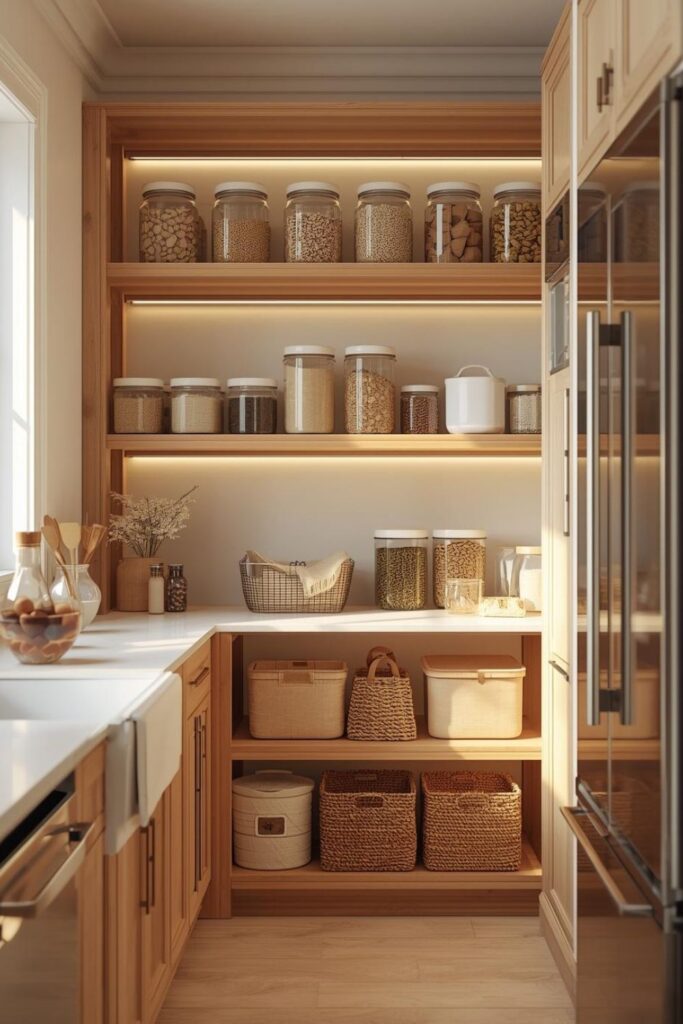
The 2026 pantry is all about clean lines, hidden clutter, and smart multi-tasking storage. The goal? A pantry that looks like a seamless part of your kitchen, not an afterthought tacked onto the wall.
Design It As A Kitchen Extension
The best small pantries don’t look separate. Here’s how to create that flow:
- Match your kitchen cabinets: Use the same cabinet colors and hardware
- Keep it shallow: Floor-to-ceiling storage works better than deep shelves
- Mix door styles strategically: Glass or fluted doors at eye level for pretty items, solid doors above and below for bulk storage
This creates visual continuity. Your pantry becomes part of the kitchen story, not a separate chapter.
Pin this seamless design idea! 📌
Lighting Makes Or Breaks The Space
In a tiny pantry, poor lighting turns frustration into your daily routine. Here’s the lighting layering system that works:
Under every shelf:
- Install slim LED strip lights
- They eliminate shadows and make labels readable
- Battery-operated options work if you can’t hardwire
Overhead:
- One bright, diffused ceiling light
- Position it to complement your food packaging colors
- Consider a motion sensor for hands-free convenience
Good lighting isn’t luxury – it’s necessity. You’ll spot that can of tomatoes instantly instead of digging through dark corners.
The Smart Shelving System
Forget one-size-fits-all shelves. Your pantry needs flexibility:
Adjustable shelves with:
- Narrow spacing (8-12 inches deep)
- Mix of open wood shelves for visibility
- Small metal rails to prevent jars from sliding
- Pull-out trays at waist height for heavy flour bags and sugar containers
Organization tools that actually work:
- Clear, labeled containers
- Lazy Susans for corner spaces
- Stackable bins for small packets
The Decanting Zone
Here’s a game-changer most people miss: create a shallow landing zone (10-12 inches deep) specifically for unloading groceries.
Why it works:
- Set bags down immediately when you walk in
- Sort items before storing
- Keeps your main kitchen counter clear
Place this zone at a comfortable height where you can easily reach in and organize.
Use Every Surface
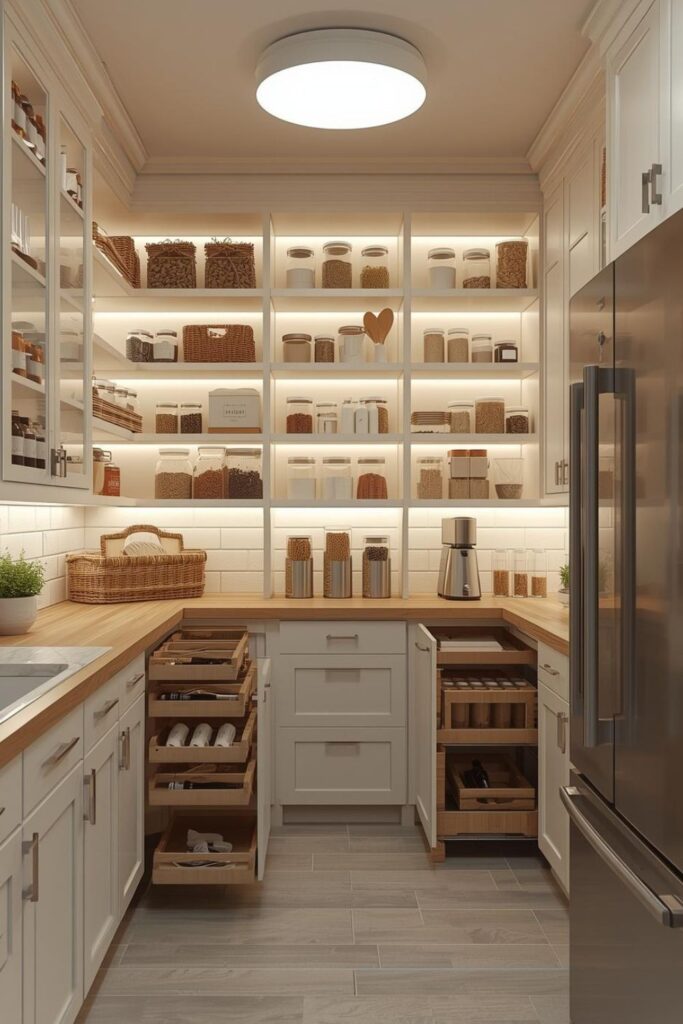
Don’t waste the inside of your pantry door! Add:
- Narrow racks for spices and oils
- Hooks for measuring spoons, oven mitts, or reusable bags
- Slim baskets for foil, plastic wrap, and parchment paper
This simple addition can free up 12+ inches of shelf space inside.
Save this door organization hack! 📌
2026 Color & Material Trends
Design magazines are showing clear direction this year:
Popular choices:
- Warm wood tones (oak or ash shelves)
- Light painted finishes (greige or creamy white cabinet frames)
- Soft metallic hardware (brushed nickel or champagne gold)
These create a peaceful, timeless look that won’t feel dated in a few years.
The Visibility Revolution
People are tired of cluttered countertops. The 2026 solution? Everything gets a labeled home at eye level.
Benefits of eye-level organization:
- You see what you have at a glance
- No more buying duplicates
- Reduced food waste
- Less visual chaos
When everything has a designated spot, excessive purchasing can’t create disorder.
Smart Pantry Placement
Position your pantry strategically:
Next to the fridge: Natural workflow when cooking Near appliances: Build a mini coffee station inside Under the lowest shelf: Add slim rolling crates for bulk items like bottled water or pet food
These integrations make your pantry work harder without taking up more space.
Creative Tiny Pantry Designs That Maximize Every Inch
When you’re working with limited space, creativity beats square footage every time. The secret? Learning to see potential storage in places others overlook.
Hunt For Hidden Spaces
Start by examining every corner of your kitchen area:
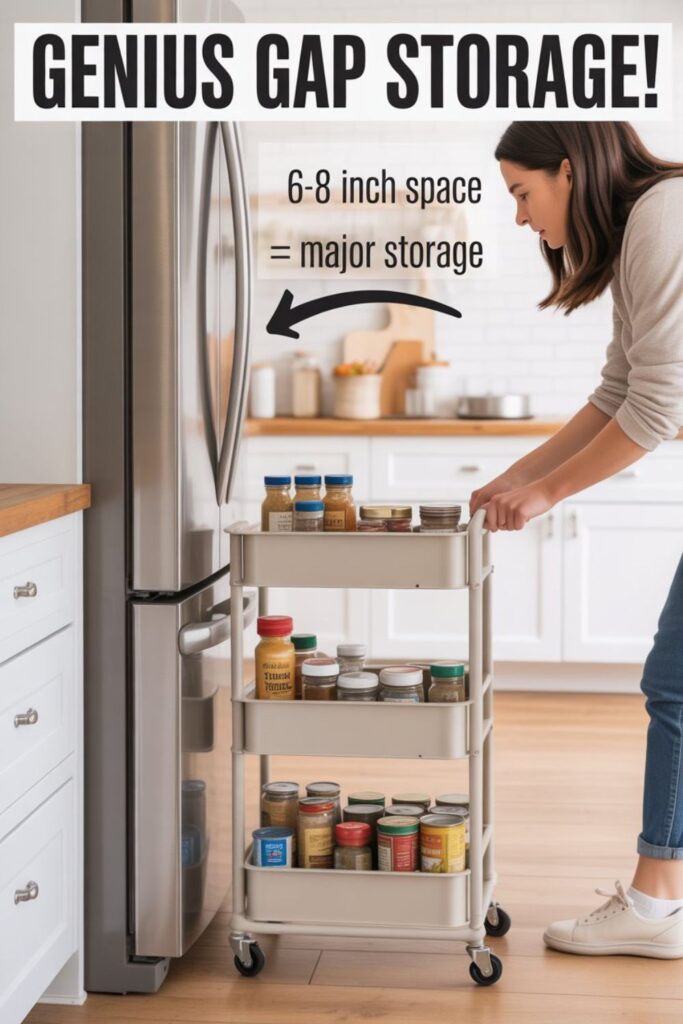
Behind doors: Shallow areas perfect for slim shelving Next to the fridge: Often wasted space that can hold a pull-out pantry Under stairs: Dead zones that can become functional storage Narrow wall sections: Even 6-8 inches of depth works for single-row storage
The goal isn’t cramming things in drawers. It’s converting neglected spaces into accessible, organized storage.
Pin this space-finding strategy! 📌
Flexible, Modular Solutions
The best creative pantries adapt to your changing needs:
Install a track system:
- Vertical wall rails with adjustable brackets
- Move shelves up or down as needed
- Add or remove shelves based on what you’re storing
Door-mounted storage:
- Narrow racks for spices and oils
- Easy to install, no major renovation needed
- Keeps frequently-used items visible
Shallow shelves work better:
- 4-6 inches deep maximum
- Single-row storage means nothing gets lost behind
- You can see every jar and can at once
The Sliding Cart Solution
If you have a gap between your fridge and wall, a rolling cart is your best friend:
Why carts work:
- 3-4 tiers of storage
- Slides out when needed
- Tucks away completely when not in use
- Perfect for small kitchen layouts
Think Vertical
Most people underuse their wall height. Here’s how to fix that:
Floor-to-ceiling approach:
- Install shelving that reaches the ceiling
- Keep a slim step stool nearby (hang it on a hook)
- Store seasonal items on top shelves
- Place daily items between shoulder and hip height
The “eye-level is prime real estate” rule: Most-used items belong between your shoulders and hips. This reduces reaching, bending, and visual clutter.
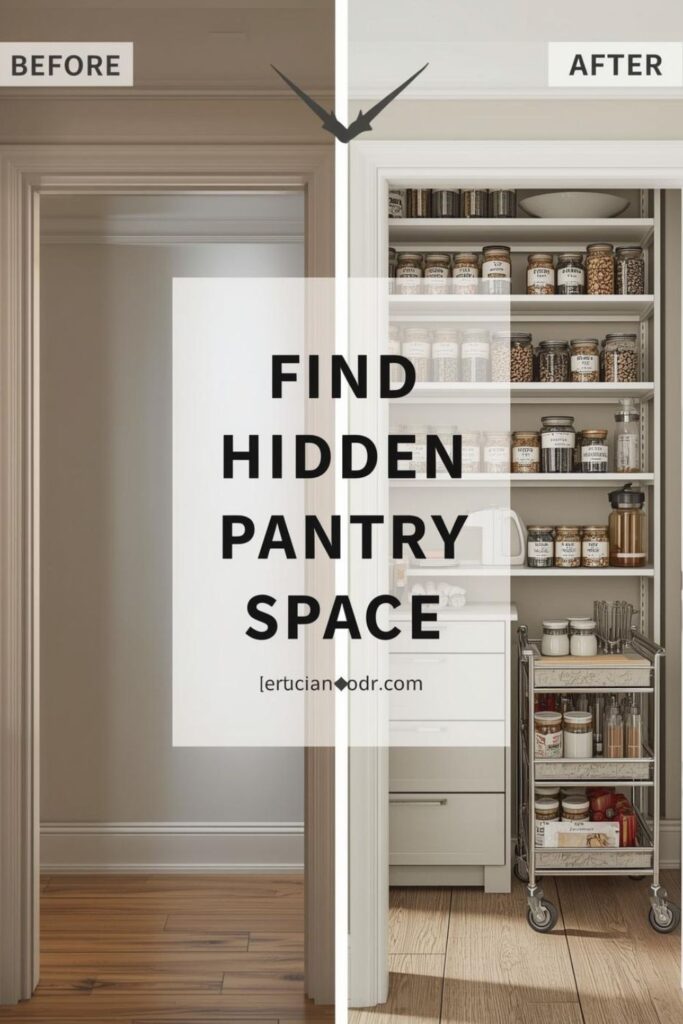
Real-World Example
I once helped transform a blank apartment wall into a fully functional pantry:
What we did:
- Floor-to-ceiling shelves on the entire wall
- Narrow bins along the baseboard for bulky items
- Small ladder that hooks onto the wall
- Everything organized by frequency of use
The result? A pantry that felt as natural as built-in furniture.
Save this vertical storage idea! 📌
Container Strategy Matters
Creative storage can look messy without the right containers:
Choose cohesive containers:
- Similar styles and colors
- Clear or frosted materials
- Simple, readable labels
- Matching sizes where possible
Leave breathing room:
- Don’t fill every inch
- Plan empty space for seasonal items
- Prevents the “overstuffed closet” feeling
Beyond Shelves
Expand your storage toolkit:
Ceiling-mounted options:
- Hanging racks for pots or long tools
- Magnetic knife strips (frees up drawer space)
- Hooks for bulky items
Vertical organizers:
- Tiered shelf risers for canned goods
- Stackable drawer units for small packets
- Corner lazy Susans for hard-to-reach spots
The key: Match shelf depths, heights, and containers to what you actually buy and cook. A thoughtfully designed pantry wall becomes as functional as any built-in closet.
Smart Tiny Kitchen Design With Pantry Solutions
A smart pantry isn’t just storage – it’s part of your kitchen workflow. Think of it as one point in the triangle between your fridge, prep area, and stove.
Workflow Over Distance
In a small kitchen, every extra step matters. Position your pantry:
Within the cooking triangle: Not on a distant wall Next to the fridge: Natural flow when grabbing ingredients Near the stove: Quick access to spices and oils
Even two extra steps get tiring when you cook daily.
Pin this workflow layout! 📌
Built-In Pantry Components
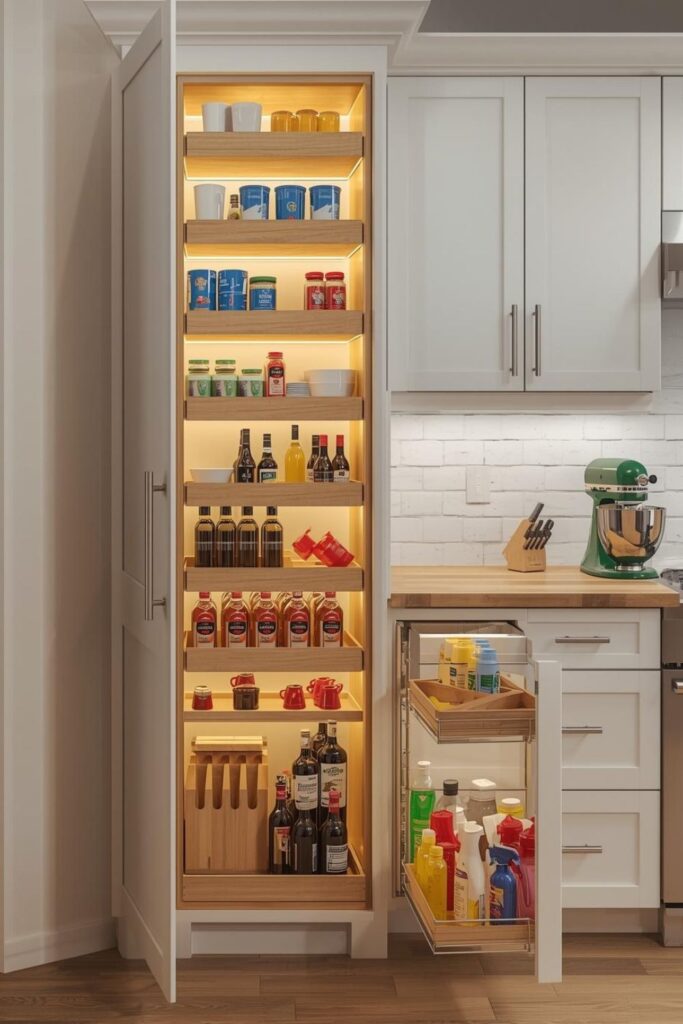
Here’s what makes a kitchen pantry truly smart:
Tall pull-out columns:
- Full-height storage that slides out
- Everything visible at once
- No crawling into dark cabinets
Deep drawers with dividers:
- Better than standard shelves
- Bring items to you instead of reaching back
- Perfect for small kitchen layouts
Upper cabinets with lift-up doors:
- For items used less often
- Keeps them accessible but out of daily view
- Saves door-swing space
Zone Your Pantry By Function
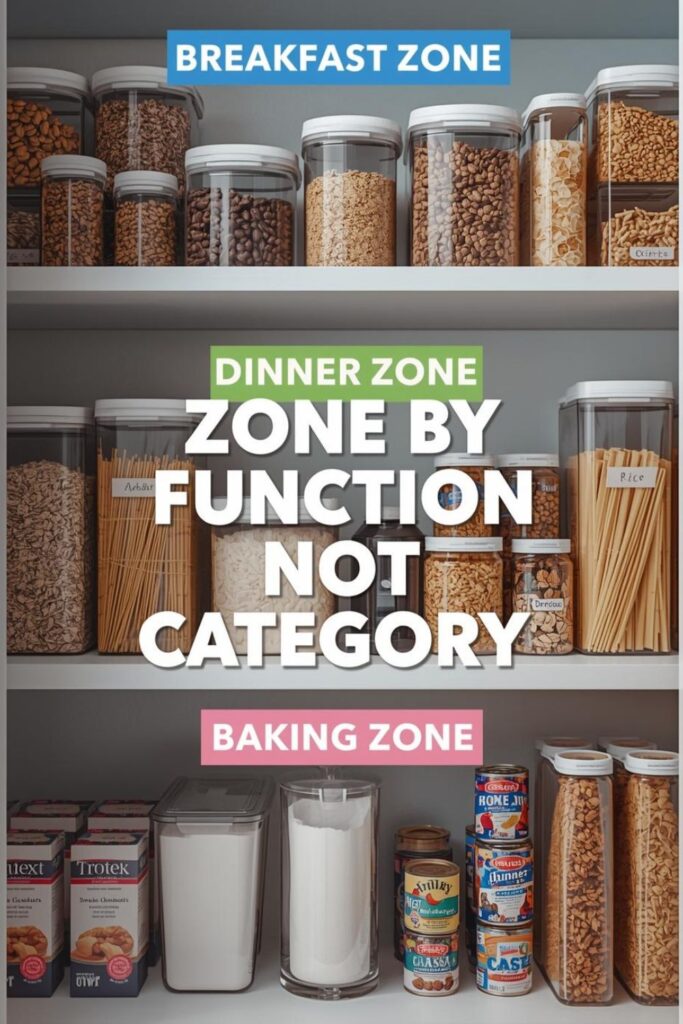
Organization experts swear by functional zones:
Breakfast zone:
- Cereals, oats, coffee, tea
- Keep it together near your morning prep area
Dinner base zone:
- Pasta, rice, canned tomatoes, broths
- Position near your stove
Baking zone:
- Flour, sugar, baking powder, chocolate chips
- Group all baking supplies in one spot
This zoning means family members can grab what they need without asking where things are.
Drawers Beat Shelves
In tight spaces, pantry drawers outperform shelves:
Why drawers win:
- Pull items toward you
- See everything at once
- No digging through layers
- Nothing gets lost in the back
Consider converting some shelf space to deep pull-out drawers.
Lighting & Visibility
Cabinet lighting is essential:
- Under-shelf LED strips
- Bright, wipeable interior surfaces
- Motion-activated options for convenience
Add small details:
- Rails to hang cups or measuring scoops
- Keeps these items near the stove
- Reduces trips back and forth
Save this zoning system! 📌
Match Your Real Habits
The smartest pantries reflect how you actually live:
If you snack a lot:
- Create a dedicated snack zone
- Separate from main ingredients
- Easy for kids or guests to access
If you love tea and coffee:
- Design a skinny cabinet with pull-out shelves
- Teas, coffee, mugs all in one spot
- Keeps the main pantry free for cooking supplies
If you meal prep:
- Add space for containers
- Zone for batch-cooked ingredients
- Easy-access shelves at eye level
Small Appliance Integration
Don’t forget your countertop gadgets:
Hidden appliance garage:
- Concealed counter behind a pocket door
- Toasters, blenders, air fryers stay plugged in
- Close the door when not in use
Essential features:
- At least one electrical outlet inside
- Proper ventilation for heat
- Easy-to-clean surfaces
The Details That Matter
Small touches make big differences:
Safety & function:
- Soft-close hinges for quiet operation
- Wipeable surfaces for easy cleaning
- Proper ventilation to prevent odors
Accessibility:
- Pull-out shelves at various heights
- Clear sight lines to all items
- Easy-grip hardware
A smart kitchen pantry works with your cooking style, not against it. The best design feels intuitive from day one.
Space-Saving Tiny Pantry Closet Design Concepts
A closet-style pantry, when designed floor-to-ceiling, becomes one of your most efficient storage solutions. The key is treating every surface – back wall, side walls, and door – as usable space.
Think In Sections
Break down your pantry closet into zones:
Back wall: Primary storage with various shelf depths Side walls: Narrow shelving for single-row items Door interior: Slim racks and hooks Floor space: Keep open or use for roll-out crates
Leave enough middle space to reach in comfortably, even if it’s a reach-in design rather than walk-in.
Pin this sectional approach! 📌
Lighting Is Critical
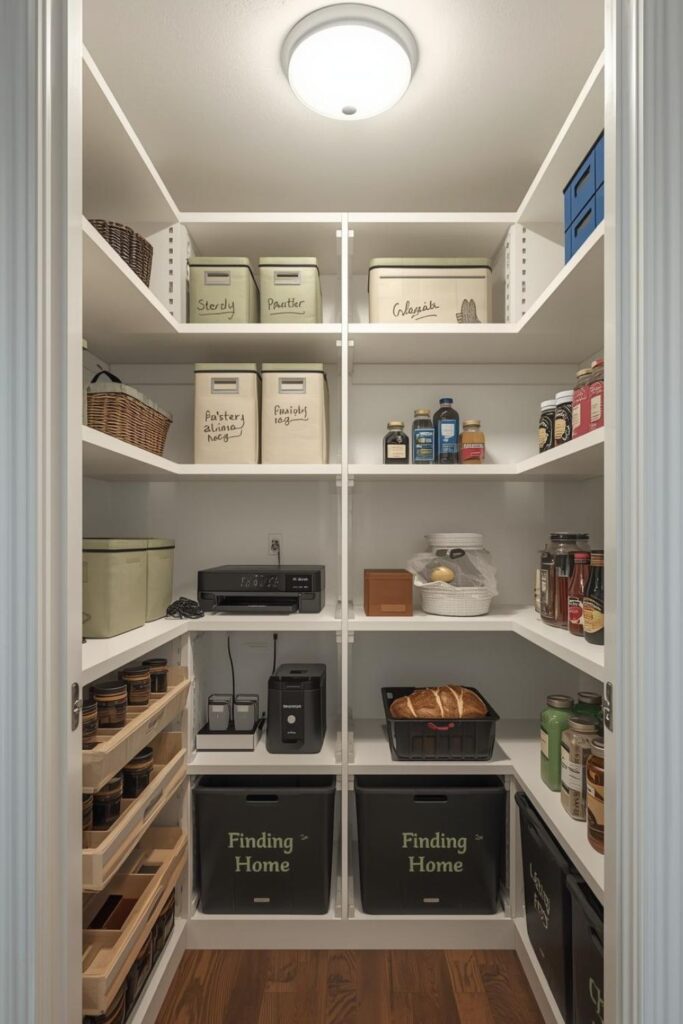
Closet pantries tend to be dark:
Overhead solution:
- Strong but diffused light fixture
- Consider a motion sensor that activates when door opens
- Makes a huge difference in usability
Why motion sensors help:
- Hands are usually full of groceries
- No fumbling for light switches
- Energy-efficient
Vertical Space Planning
Organize by height and frequency:
Top shelves:
- Seasonal items (holiday baking dishes, party supplies)
- Light items only (nobody wants to drop heavy things from above)
- Clear bins so you can see what’s stored
Middle shelves (eye to hip level):
- Daily dry goods
- 10-12 inch deep shelves work well
- Clear containers with labels
- Most-accessed items here
Inside door:
- Slim racks for spices, oils, foil, wraps
- Uses often-wasted vertical surface
- Everything at eye level
Floor level:
- Taller bottles and jars
- One or two rolling crates for bulk items
- Heavy items (safer at bottom)
The Walk-In Pantry Dream
A well-designed closet can feel as functional as a walk-in:
What makes it work:
- Numbered or labeled baskets
- Uniform container sizes
- The “see-through” rule: only store what’s visible
Designer quote worth remembering: “The best storage makes you feel like you’re shopping your own home.”
That’s exactly what a good pantry closet does. You should scan tonight’s dinner ingredients without searching.
Door Selection Matters
Your door choice affects functionality:
Standard swing door:
- Traditional, takes up floor space when open
- Full door-back available for storage
Bifold door:
- Folds back on itself
- Saves some swing space
- Slightly limits door storage
Pocket door:
- Slides into the wall
- Maximum floor space efficiency
- Requires wall cavity (not always possible)
Choose based on your available space and how much you want to use the door’s interior for storage.
Keep It Serene
Organization systems need to last:
Use simple systems:
- Clear bins for categories
- Consistent labeling
- Nothing stored unless it’s visible
Avoid chaos:
- Don’t overstuff shelves
- Leave some empty space
- Regular 5-minute weekly resets
A chaotic closet defeats the purpose. The system should feel effortless to maintain.
Transformation Potential
People are often amazed at how much a simple closet can hold when properly organized. The difference between a messy closet and a functional pantry? Intentional design with the right shelving and lighting.
Position your closet pantry near the kitchen if possible. It becomes a natural extension for overflow storage and bulk items, completely eliminating counter clutter.
Modern Tiny Walk In Pantry Design Inspirations
Even a small walk-in pantry can feel modern and luxurious with thoughtful design and consistent finishes. The key is making it feel like an extension of your kitchen, not a storage closet.
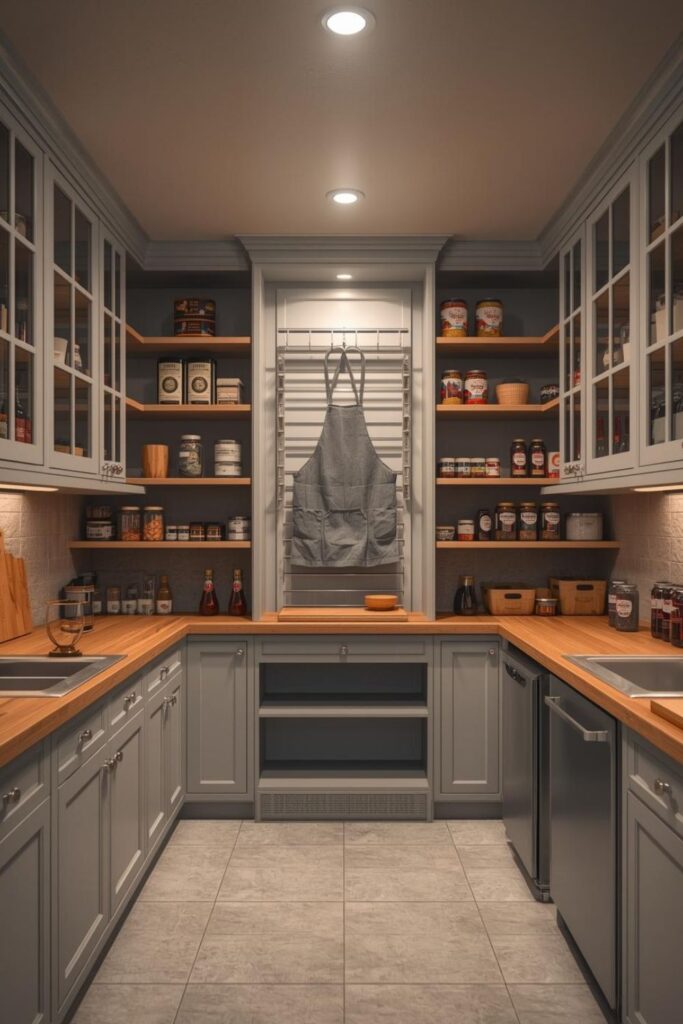
The Three-Wall Approach
When space allows a walk-in:
Shelving layout:
- Shelves on three sides (U-shape)
- Small standing area in the middle
- Enough space to turn around comfortably
Modern aesthetic:
- Flat-front shelves in light paint colors
- Thin black or stainless steel accents
- Clean, built-in handles (no protruding hardware)
The overall feel? Minimalist with clear visual hierarchy.
Pin this modern layout! 📌
Smart Shelf Configurations
Make the most of your walk-in dimensions:
U-shaped shelving strategy:
- Deeper shelves on back wall (12-14 inches)
- Shallower side shelves (6-8 inches)
- Prevents the space from feeling tight
- Easier to reach everything
Step stool solution:
- Keep a slim, attractive step stool
- Hang it on a hook when not in use
- Makes top shelves accessible without crowding
Flooring That Connects
Don’t treat your pantry floor as an afterthought:
Best options:
- Continue your kitchen flooring (tile or luxury vinyl)
- Creates visual flow
- Easy to clean
- Aesthetically connects the spaces
Optional addition:
- Small, low-pile washable rug in the center
- Adds warmth and comfort
- Makes it feel more like a room
Balance Display And Concealment
The most effective modern pantries mix open and closed storage:
Upper cabinets with glass fronts:
- Display attractive serveware
- Pretty jars and containers
- Creates visual interest
Lower cabinets with solid doors:
- Hide bulk packaging
- Store less attractive items
- Maintains clean aesthetic
One homeowner described their walk-in as feeling “like a small boutique, not a dark basement.” That’s the goal.
Consistent Details Matter
Small touches create cohesion:
Shelf heights:
- Keep consistent spacing
- Adjustable is even better
- Adapt to what you actually store
Corner solutions:
- Lazy Susans for corner spaces
- Prevents dead zones
- Everything stays accessible
Concealment cabinet:
- One tall cabinet with solid door
- Hides mismatched packaging
- Keeps overall look clean
Lighting Layers
Proper lighting transforms a closet into a room:
Natural light option:
- Small window if possible
- Makes enormous difference in feel
Artificial lighting:
- Ceiling-mounted fixture
- LED strips along shelves
- Eliminates all shadows
Good lighting makes your pantry inviting to enter, not a dark space you avoid.
Modern Technology Integration
Bring your pantry into 2026:
Practical additions:
- Small tablet or notepad mounted on wall
- Digital shopping list
- Recipe holder
Thoughtful extras:
- Charging port for devices
- Hook for reusable shopping bags
- Doesn’t add clutter but increases function
The Curation Principle
Modern design is about thoughtful choices:
What to display:
- Decant attractive products into jars
- Leave some items in original packaging
- Be intentional about what’s visible
Visual hierarchy:
- Most appealing items at eye level
- Bulk storage hidden behind doors
- Everything has its designated place
When proportions and materials are right, even a small pantry becomes a beautiful section of your home, not just utilitarian storage.
Functional Pantry Design For Tiny Homes And Spaces
In a tiny home, every inch must work hard. Your pantry needs to blend visually with your living space while storing substantial amounts of food and supplies.
Start With Prioritization
First, decide what earns dedicated pantry space:
Essential pantry items:
- Daily cooking ingredients
- Frequently used dry goods
- Small appliances you use weekly
Items to store elsewhere:
- Rarely-used specialty ingredients
- Seasonal items
- Excess packaging
In open-concept tiny homes, your pantry must look like furniture, not just storage.
Pin this tiny home approach! 📌
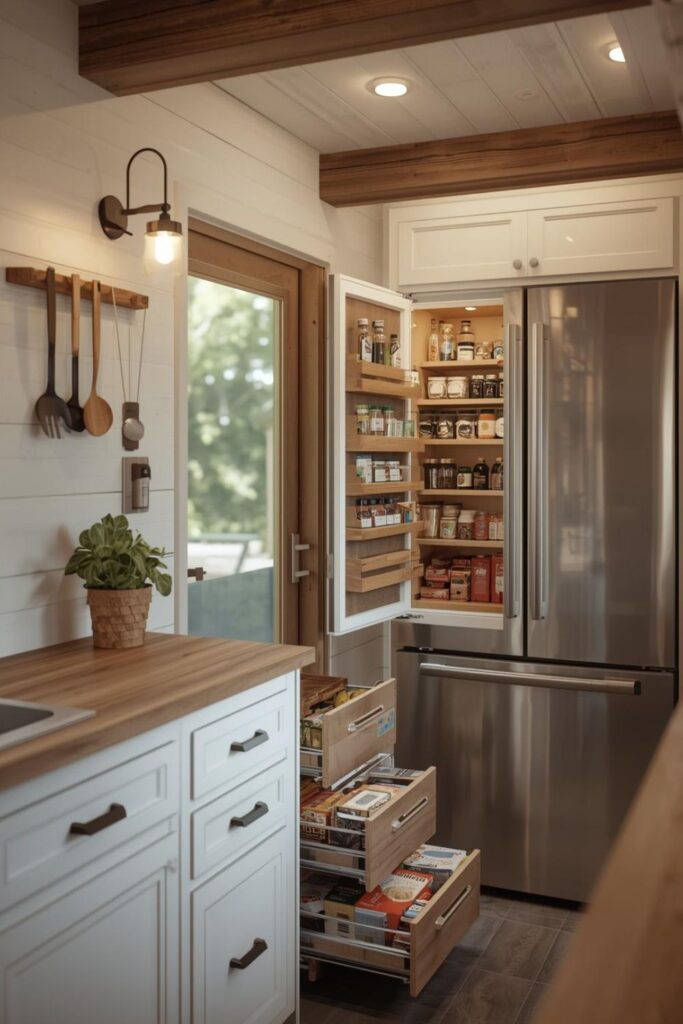
Tall And Slim Is Your Friend
Best configurations for tiny spaces:
Vertical cabinets that fit:
- Next to the fridge
- Under loft staircases
- In narrow aisles
- Between walls or appliances
Interior organization:
- Tall sections for bottles
- Low sections for root vegetables (potatoes, onions)
- Mid-height for daily dry goods
- Each zone purpose-built
Visual Integration
Your pantry should match your home’s aesthetic:
Cabinet finish options:
- Light wood (oak, pine, ash)
- Painted Shaker-style fronts
- Slab doors for modern look
Multi-function features:
- Pull-out pantries
- Fold-down surfaces for prep space
- Interior drawers for organization
Space-saving doors:
- Sliding barn-style doors
- Pocket doors that disappear into walls
- Keeps circulation flow open
These elements create an integrated system, not a clunky separate closet.
Rails And Hooks
Use every surface:
Side-mounted rail systems:
- Hooks for mugs
- Small baskets for utensils
- Hanging storage that doesn’t intrude into space
Benefits:
- Frees up interior shelf space
- Easy to access
- Flexible configuration
Flexibility Is Essential
Tiny home needs change frequently:
Adjustable shelving:
- Move heights as needed
- Accommodate different product sizes
- Adapt to changing cooking habits
Open zones:
- At least one flexible area
- Can hold occasional bulk purchases
- Seasonal items storage
Reasonable backstock:
- Limited space means limited excess
- Buy smaller quantities more often
- Reduces clutter and waste
The “Less But Better” Philosophy
This American trend fits perfectly with tiny pantries:
Quality over quantity:
- Keep only what you use and love
- Easier to organize
- More space to breathe
- Less overwhelming
When you only store items you actually use, organization becomes effortless.
Hidden Multi-Function Storage
Get creative with dual-purpose designs:
Bench with storage:
- Built-in seating
- Drawers underneath for bulk items or paper goods
- Pet food storage
- Serves two functions in one footprint
Room dividers:
- Pantry cabinet that defines spaces
- Open shelves toward kitchen
- Solid panel toward living area
- Storage plus spatial definition
Ventilation And Moisture Control
Small spaces need special attention:
Prevent moisture:
- Proper ventilation in pantry area
- Affects how long food stays fresh
- Prevents mold and odors
Air circulation:
- Vented doors or gaps
- Keeps air moving
- Especially important in humid climates
Emergency Preparedness
Tiny homes benefit from organized emergency supplies:
Designated emergency zone:
- Top shelf storage
- Labeled box with candles, batteries, extra dry goods
- Doesn’t occupy daily-use space
- Peace of mind without clutter
Planning this small safety area from the start prevents random boxes from appearing later and disrupting your organized pantry.
Stylish Tiny Office Pantry Design For Workspaces
An office pantry serves a different purpose than a home kitchen pantry, but style and efficiency matter just as much. The goal is creating a clean, professional space that feels like a restful break point during the workday.
Professional Aesthetic First
Office pantries should complement the workspace:
Design principles:
- Clean, minimal look
- Professional appearance
- Easy to maintain
- Fits with office decor
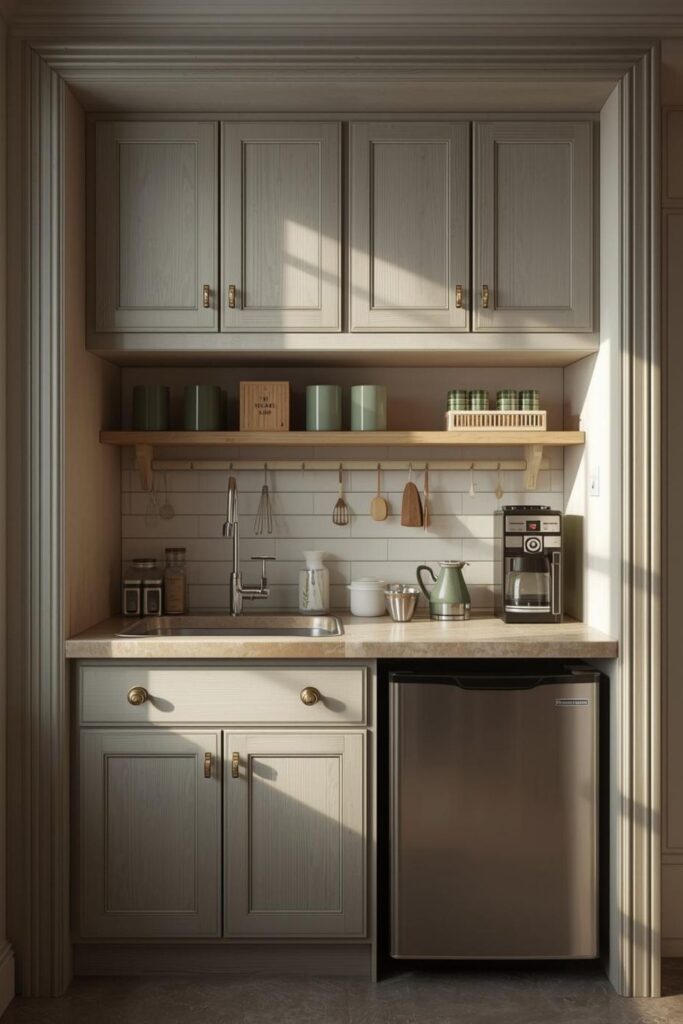
Typical setup:
- Small wall cabinet
- Tiny sink (if plumbing allows)
- Under-counter mini fridge
- Upper storage for mugs, coffee, tea, snacks
Surface materials:
- Laminate or quartz countertops
- Easy to wipe down
- Withstand frequent use
- Professional appearance
Pin this office setup! 📌
Base Cabinet Essentials
Smart organization starts at the bottom:
Include:
- Pull-out trash and recycling bins
- Keeps waste contained
- Easy access
- Out of sight when closed
Pantry cabinet with adjustable shelves:
- Tea varieties
- Coffee supplies
- Healthy snacks
- Cleaning supplies
Clear labeling system:
- Colleagues find what they need quickly
- No searching or asking
- Maintains organization
Countertop Appliance Zone
Keep it compact but functional:
Small appliance selection:
- Coffee maker or espresso machine
- Electric kettle
- Small microwave (if space allows)
Cord management:
- Outlets designed to hide cords
- No visible wire mess
- Professional, clean appearance
Optional Standing Area
If space permits:
Slim high table or ledge nearby:
- Quick standing break spot
- Enjoy coffee or snack
- Brief social interaction
- Doesn’t require much space
The goal: functional hospitality in a very small footprint.
Minimal Color Palette
Office spaces benefit from calm design:
Color strategy:
- Monochrome or two-tone palette
- Single accent color maximum
- Avoids visual chaos
- Suits diverse teams and visitors
Small details matter:
- Matching jars for sugar and coffee
- Uniform mugs
- Coordinated containers
- Shows care and maintenance
Even basic coordination elevates the space significantly.
Sound And Odor Management
Consider impact on nearby workspaces:
Sound control:
- Soft-close hinges on cabinets
- Felt pads under containers
- Reduces noise during calls or meetings
Odor management:
- Discreet ventilation
- Prevents food smells from spreading
- Keeps office atmosphere professional
Cleaning supply plan:
- Regular wipe-downs
- Prevents buildup
- Maintains fresh environment
Shared Space Etiquette
Clear systems prevent confusion:
Storage zones:
- Personal snacks section
- Communal items area
- Cleaning supplies
Organization methods:
- Simple labels
- Color-coded containers
- Clear ownership
This maintains a tidy, non-confusing space everyone can use respectfully.
Wellness Focus
Modern office design emphasizes health:
Healthy options:
- Clear canisters for nuts, granola bars
- Fresh fruit basket
- Herbal tea selection
- Filtered water access
Durable finishes:
- White or light wood
- Wipeable surfaces
- Appears fresh despite daily use
- Ages well over time
A well-designed office pantry adds comfort to the workday without creating visual clutter or occupying excessive space. It becomes an asset to productivity and workplace satisfaction.
Innovative Tiny Kitchen Pantry Design Ideas
The most innovative tiny pantries don’t look like separate closets – they’re built right into the kitchen as seamless, purposeful elements. This integrated approach makes small kitchens feel larger and more cohesive.
Built-In, Not Add-On
Start with the thinnest available wall:
Floor-to-ceiling approach:
- Shallow cabinets or open shelves
- Everything within easy reach
- Maximizes vertical space
- Feels intentional, not squeezed in
Strategic placement:
- Top shelves: Rarely-used items
- Hip to eye level: Daily ingredients
- Natural, intuitive arrangement
Mix Doors For Visual Balance
Prevent visual clutter while maintaining light:
Upper section:
- Glass-front doors for attractive items
- Creates visual interest
- Reflects light
Lower section:
- Solid cabinet doors
- Hides bulk packaging
- Maintains clean aesthetic
This combination keeps the room feeling light without exposing everything.
Pin this door mixing strategy! 📌
Slim Pull-Out Units Work Magic
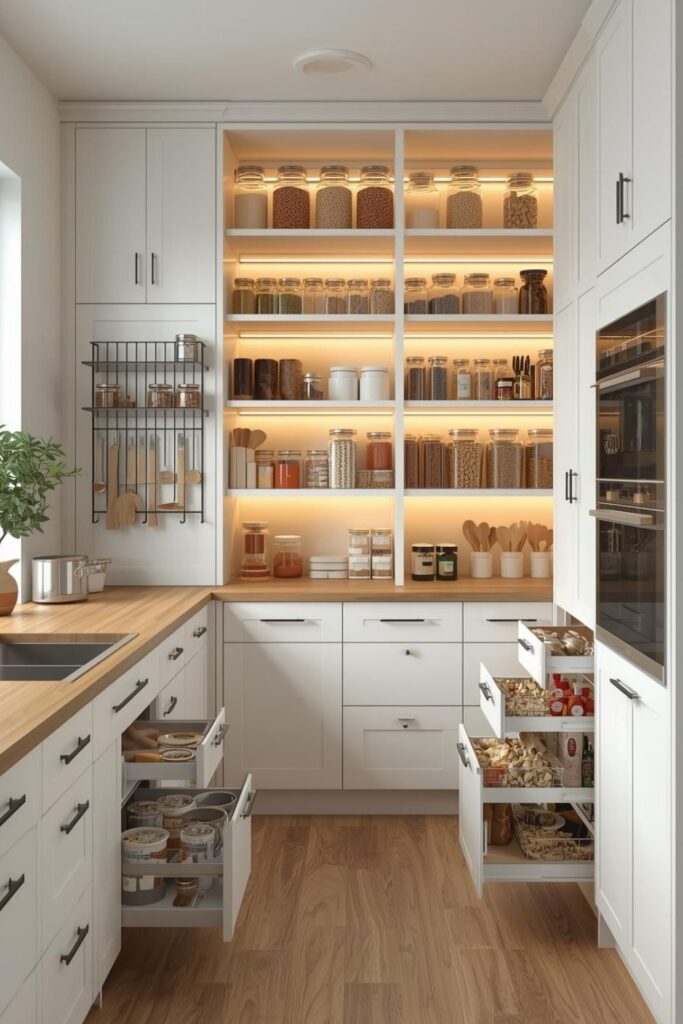
In tight kitchens, pull-outs beat standard shelves:
What to install:
- Narrow pull-out pantry columns
- Spice drawer towers (6-8 inches wide)
- Shallow shelves (one item deep)
Why they’re better:
- No items lost in back
- Everything visible at once
- Easy access without reaching
The Mini Prep Counter
Add functionality without taking space:
Shallow counter area:
- Just under one shelf section
- Place grocery bags while unloading
- Small prep zone
- 8-10 inches deep is enough
This prevents your main kitchen counter from becoming a dumping ground.
Smart Container Organization
Group by meal type and frequency:
Wire or wood baskets for:
- Snacks grouped together
- Baking supplies in one spot
- Breakfast items together
Clear jars with labels:
- Dry goods (pasta, rice, beans)
- Easy identification
- Clean, uniform look
Lighting Is Non-Negotiable
Especially important when natural light is limited:
Under-shelf LED strips:
- Illuminate even dark corners
- Make labels readable
- Creates upscale feel
Why it matters: Even the best organization fails if you can’t see what you have.
Minimal Hardware
Small details create big impressions:
Choose:
- Tiny linear pulls
- Recessed handles
- Slim profiles that don’t snag clothing
In small spaces, every protruding element matters.
Design Around Your Real Habits
The best pantries reflect actual cooking patterns:
For frequent bakers:
- Dedicated baking center
- All-purpose jars for flour and sugar
- Pull-out bin (hidden) for bulk bags
- Measuring tools nearby
For one-pot meal lovers:
- Special zone for canned goods and grains
- Easy access to cooking oils
- Spices at eye level
Two-week food audit strategy: Track what you actually use for two weeks, then design shelf heights and zones based on that reality.
Vertical Bottle Management
Bottles clutter counters fast. Create a dedicated zone:
Pull-out bottle organizer:
- Next to fridge or stove
- Adjustable partitions
- Oils, vinegars, sauces
- Frees up deep shelf space
This single addition can transform your kitchen workflow.
The Integration Principle
When your pantry looks like it was always part of the kitchen plan – matching materials, thoughtful placement, proper lighting – your entire space feels more intentional and spacious, even in tiny square footage.
Practical Tiny House Pantry Design For Small Living
In tiny house living, your pantry becomes the operational hub. It needs to blend seamlessly with your open living space while storing everything necessary for comfortable daily life.
Multi-Zone Wall System
Don’t think single cabinet – think flexible wall system:
Three distinct modules:
- Food storage (tallest section)
- Cleaning supplies (mid-height)
- Small appliances (lower section)
Visual consistency:
- All match in finish and style
- Looks intentional, not cobbled together
- Creates furniture-like appearance
This modular approach keeps the tiny living space feeling open while providing substantial storage.
Pin this modular system! 📌
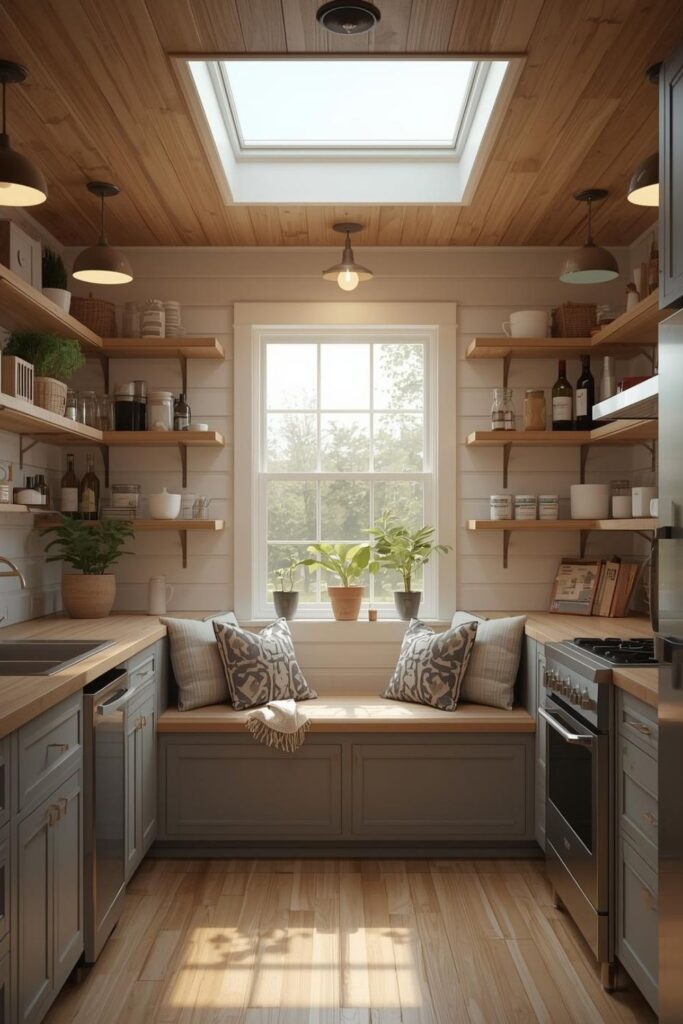
Strategic Placement Options
Tiny homes have unique architectural features to exploit:
Ideal locations:
- Wedged next to refrigerator
- Under loft staircases
- In narrow aisles
- Between wall sections
Interior planning:
- Tall sections for bottles and jars
- Low sections for root vegetables
- Mid-sections for everyday items
- Each zone purpose-designed
Cabinet Finish Integration
Your pantry should look like furniture:
Popular choices:
- Light wood (natural, warm)
- Painted Shaker fronts (classic, clean)
- Slab doors (modern, minimal)
Match or complement your tiny home’s overall aesthetic.
Space-Saving Door Solutions
Standard doors eat precious floor space:
Better options:
- Sliding barn-style doors
- Pocket doors that disappear into walls
- Bi-fold doors
- Any style that doesn’t swing out
This keeps circulation flowing when pantry is open.
Multi-Function Surfaces
Everything should serve double duty:
Fold-down surfaces:
- Become prep space when needed
- Fold up when not in use
- Doesn’t permanently occupy space
Pull-out sections:
- Extend when cooking
- Hidden when closed
- Maximizes flexibility
Rail systems with hooks:
- Side-mounted for mugs, utensils
- Small baskets hang easily
- Doesn’t intrude into walking space
The Flexibility Mandate
Tiny home life means changing needs:
Adjustable shelving:
- Move heights as requirements change
- Different seasons need different storage
- Guests mean different food quantities
One open zone minimum:
- Can accommodate bulk purchases
- Seasonal items
- Special occasion supplies
Reasonable backstock only:
- Limited space = limited excess
- More frequent, smaller shopping trips
- Reduces waste and clutter
“Less But Better” Philosophy
American tiny home movement emphasizes quality:
Core principle:
- Keep only what you use and love
- Easier to organize
- More breathing room
- Less overwhelming daily
When you eliminate unused items, organization becomes almost automatic.
Hidden Storage Integrations
Get creative with dual purposes:
Bench with built-in drawers:
- Seating for dining or entry
- Storage underneath for bulk goods
- Pet food, paper products
- Two functions, one footprint
Pantry as room divider:
- Tall cabinet defines spaces
- Open shelves face kitchen
- Solid back faces living area
- Storage plus spatial organization
Ventilation And Moisture
Critical in small, compact spaces:
Why it matters:
- Affects food freshness
- Prevents mold and odors
- Essential in humid climates
How to address:
- Vented cabinet doors or gaps
- Small fan if needed
- Air circulation prevents problems
Emergency Supply Zone
Tiny homes need organized preparedness:
Top shelf designation:
- Labeled emergency box
- Candles, batteries, flashlights
- Extra dry goods
- Water purification tablets
Benefits:
- Doesn’t occupy daily-use space
- Peace of mind
- Prevents random boxes appearing later
Planning this from the start prevents your organized pantry from becoming cluttered over time.
Clever Ideas To Organize And Decorate A Tiny Pantry
A tiny pantry can be both functional storage and a decorative showcase of your home’s style. The secret is creating visual calm through intentional choices.
Minimal Color Scheme
Control visual noise as much as physical clutter:
Container strategy:
- Cohesive colors
- Matching styles
- Clear or frosted glass
- Simple, uniform labels
Even when product packaging varies, unified containers create harmony.
The Power Of Repetition
Design principle that always works:
Repeat elements:
- Series of matching jars
- Identical baskets
- Uniform bin sizes
Creates visual rhythm that feels quiet and purposeful.
This works equally well in kitchens, hallway closets, or multipurpose storage areas.
Pin this visual harmony approach! 📌
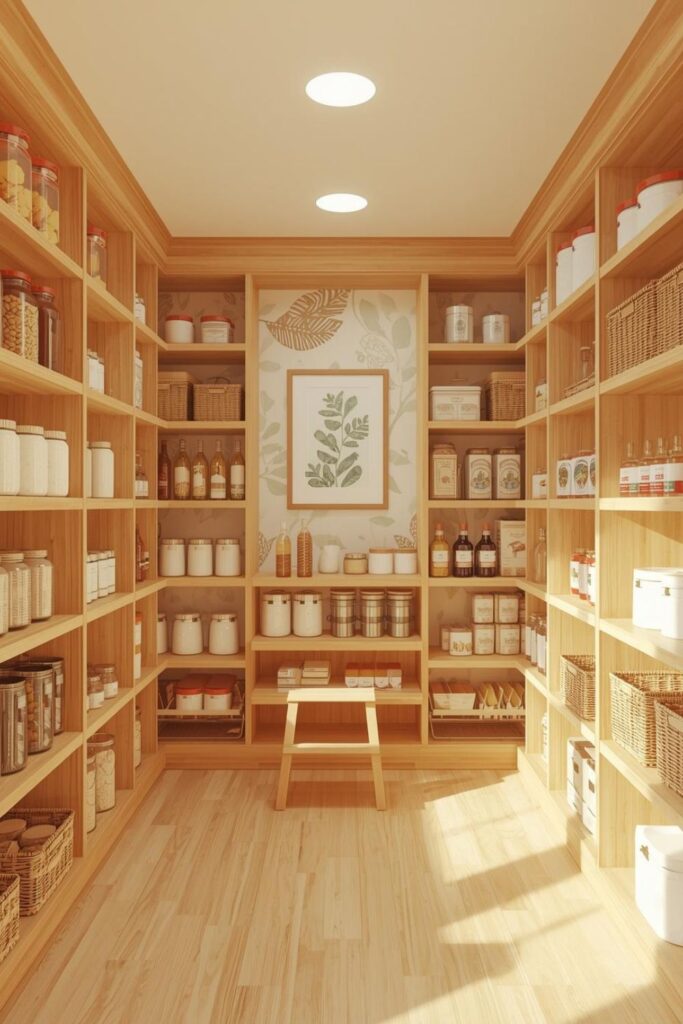
Wall-Mounted Flexibility
Maximize every surface:
Vertical components:
- Adjustable rails and brackets
- Rearrange as needs change
- Wall-mounted shelves
- Door organizers
Corner Solutions
Don’t waste corner spaces:
Lazy Susans are perfect for:
- Oils and condiments
- Items that would hide in back corners
- Easy access with one spin
Tiered Visibility
Make everything scannable:
Shelf risers for:
- Canned goods
- All labels visible at once
- No digging through layers
Stackable drawers for:
- Small packets
- Tea bags
- Spice packets
- Individual seasonings
Add Character
Transform utility into personality:
Small decorative touches:
- Peel-and-stick wallpaper on back of shelves
- Small framed print or art
- Attractive step stool that matches decor
- Becomes extension of living space
These elements turn basic pantry concepts into a space you’re happy to open.
Organization That Lasts
Systems must fit your instincts:
Work with your habits, not against them:
- If you toss snacks in bins carelessly → use one big snack basket
- If you love neat rows → invest in refillable jars
- If you’re visual → use clear everything
- If you’re label-oriented → detailed labeling system
American home organization experts emphasize: systems that fight your nature will fail within weeks.
The Five-Minute Weekly Reset
Maintenance ritual keeps things functional:
Quick weekly check:
- Straighten labels
- Wipe one shelf
- Move older items forward
- Remove any trash or empty containers
Takes five minutes, extends your organization indefinitely.
Leave Breathing Room
Overstuffed shelves feel chaotic:
Plan for:
- Some empty space on each shelf
- Room for seasonal items
- System doesn’t look congested
- Visual peace
Match Containers To Contents
Different items need different storage:
Match the container to the item:
- Tall jars for pasta
- Wide jars for cookies
- Small jars for spices
- Bins for snack packages
Right container = easy organization.
Create Zones, Not Chaos
Even in tiny spaces:
Basic zones:
- Baking supplies
- Breakfast items
- Dinner ingredients
- Snacks
- Beverages
Clear zones mean everyone knows where to find (and return) items.
The goal: a pantry that’s organized enough to be functional, decorated enough to be pleasant, and simple enough to maintain effortlessly.
Closet Transformations: Turning Small Spaces Into Pantries
Converting an unused hallway or bedroom closet into a functional pantry is one of the most satisfying small-space projects. With the right approach, a shallow closet becomes surprisingly capable storage.
Start With Structural Changes
Remove what’s there, add what you need:
First steps:
- Remove all hanging rods
- Install strong vertical support structure
- Paint interior lighter than hallway (creates depth)
- Add ventilation (louvered doors or bottom gap)
These changes transform a clothing closet into proper food storage.
Pin this transformation process! 📌
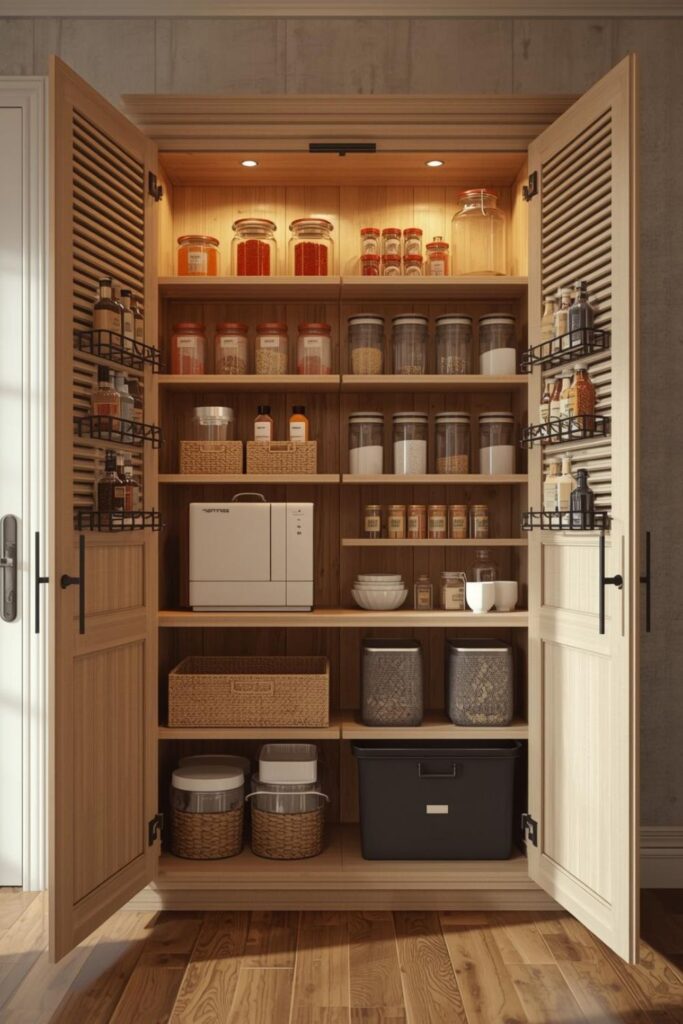
Shelf Spacing Strategy
Design shelves around actual products:
Custom spacing for:
- Tall cereal boxes (12-14 inches)
- Standard jars and cans (8-10 inches)
- Small appliances (14-16 inches at one level)
Adjustable shelves let you fine-tune as needed.
The Waist-Height Power Shelf
Add one deeper shelf:
Mid-level deep shelf serves as:
- Pull-out space
- Mini appliance station (toaster, air fryer)
- Work surface
- Temporary prep area
Essentially a mini-utility station within your pantry.
Door Interior Organization
Critical in closet conversions:
Inside door gets:
- Racks for spices, foil, parchment rolls
- Smaller condiments
- Utilizes all vertical space
- Makes everything visible
Lower Shelf Strategy
Bottom space has specific purposes:
Use for:
- Heavy products (flour bags, water bottles)
- Wire baskets for organization
- Rolling bins that pull out
- Bulk item storage
Heavy items belong at bottom for safety and accessibility.
Lighting Transforms Everything
Dark closets stay unused:
Lighting solutions:
- Motion sensor overhead light (best option)
- Battery-operated LED if no wiring
- Makes closet welcoming, not forgotten
Impact: Good lighting turns a shadowy forgotten space into a kitchen extension you actually use.
The Storage Surprise
Most people are amazed at closet capacity:
When properly designed:
- Holds as much as some walk-ins
- Everything accessible
- Organized by category
- Eliminates kitchen counter clutter
The difference? Intentional shelving design instead of random storage.
Proximity Matters
Location affects usability:
Best placement:
- Close to kitchen
- Easy access during cooking
- Natural extension of cooking workflow
American renovation programs emphasize: closets near kitchens make perfect pantry conversions for overflow and bulk storage.
Zone Mapping
Create a simple organization guide:
Small card or label on door interior:
- Baking zone (list shelf)
- Breakfast zone (list shelf)
- Snacks zone (list shelf)
- Canned goods zone (list shelf)
- Cleaning supplies (if stored here)
This “map” helps family members maintain organization without constant reminders.
Before And After Reality
The transformation potential:
Before: Dark, forgotten closet with random items After: Organized, lit, functional pantry extension
Required: Shelving, paint, lighting, organization system Time investment: One weekend typically Impact: Eliminates kitchen clutter permanently
A converted closet proves you don’t need a huge space – you need smart design and intentional organization.
Kitchen Makeover With A Built-In Tiny Pantry
When renovating a kitchen, incorporating a built-in tiny pantry creates luxurious storage without expanding square footage. The key is designing it as a cabinet extension, not an obvious addition.
Seamless Integration
Location and appearance matter:
Best positions:
- Next to refrigerator
- End of cabinet run
- Between appliances
Design principle:
- Same doors as other cabinets
- Matching trim and hardware
- Looks like it was always part of the plan
Shallow Depth Advantage
Built-in pantries work better shallow:
Why shallower beats deeper:
- See everything at once
- No digging through layers
- Items don’t hide in back
- More efficient use of space
Typically 10-12 inches deep versus standard 24-inch cabinets.
Pin this built-in approach! 📌
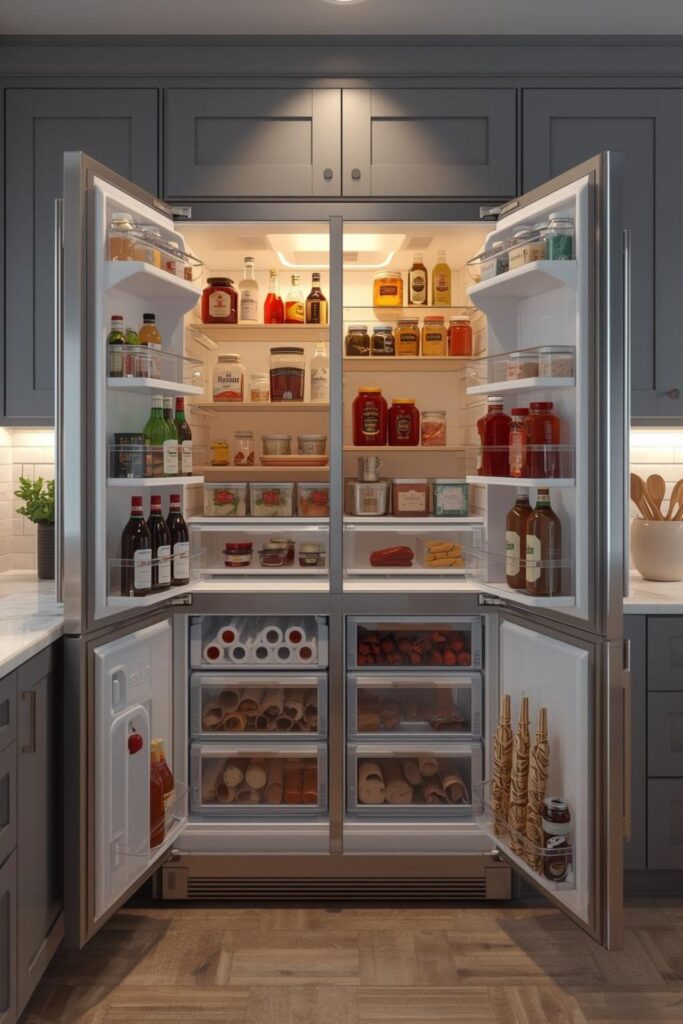
Interior Components
Mix fixed and flexible elements:
Tall cabinet contains:
- Fixed shelves for everyday items
- Pull-out shelves for heavy things
- One or two internal drawers
- Spice rack or bottle column
Mid-height pull-outs perfect for:
- Snacks and grab-and-go items
- Baking equipment
- Small appliances
- Easy access without bending
The Vertical Spice Column
Genius space-saver:
Thin vertical section with metal rails:
- Holds spice jars and small bottles
- 4-6 inches wide
- Floor to ceiling
- Makes pantry side ultra-functional
Quality Hardware Matters
Small pantries showcase details:
Invest in:
- Soft-close hinges (doors close gently)
- Quality hardware (smooth operation)
- Proper alignment (perfect fit)
In small spaces, these details are very noticeable.
Interior Lighting
What separates good from luxurious:
Lighting elements:
- LED strips under shelves
- Activated when door opens
- Makes everything visible
- Creates upscale feel
Opening well-lit cabinet doors feels special every time.
The Pantry Tower Concept
American kitchen magazines feature:
Full-height pantry towers:
- Integrated into modern cabinetry
- Floor-to-ceiling storage
- Eliminates countertop clutter
- Replaces entire base cabinet worth of space
Strategic Pantry Placement
Discuss with homeowners:
Realize that:
- Well-designed pantry tower often better than scattered cabinets
- Serves actual needs more effectively
- Creates intentional storage zone
- Simplifies kitchen organization
Waste Management Integration
Complete the system:
Adjacent to pantry:
- Narrow pull-out for recycling
- Partitioned drawer for compost
- Trash in single motion from pantry
Benefit: Packaging goes directly to waste, not via counter clutter.
During Renovation Is Perfect Timing
If you’re already replacing cabinets:
Built-in pantry makes sense because:
- Already doing cabinetry work
- Marginal cost increase
- Huge functionality gain
- Solves storage issues permanently
The most fluid storage solution happens during kitchen renovation when you’re designing the entire system.
The Professional Finish
Built-in pantries feel different:
What makes them special:
- Custom fit to your space
- Matched to your cabinets
- Professional installation
- Looks intentional and planned
It’s the difference between storage that works and storage that wows.
Compact Office Pantry Ideas For Modern Work Environments
Whether in a home office or co-working space, a compact pantry supports productivity without cluttering the professional environment. It’s about creating a mini-cafe atmosphere that feels calm and organized.
Professional First Impression
Design like a business space:
Keep it:
- Clean and organized
- Professionally styled
- Easy to maintain
- Aesthetically tranquil
The Mini-Cafe Concept
Best office pantries feel like coffee shops:
Layout includes:
- Corner or niche location
- Doesn’t spill into work zones
- Organized drink and snack station
- Easy-to-clean surfaces
Pin this office cafe style! 📌
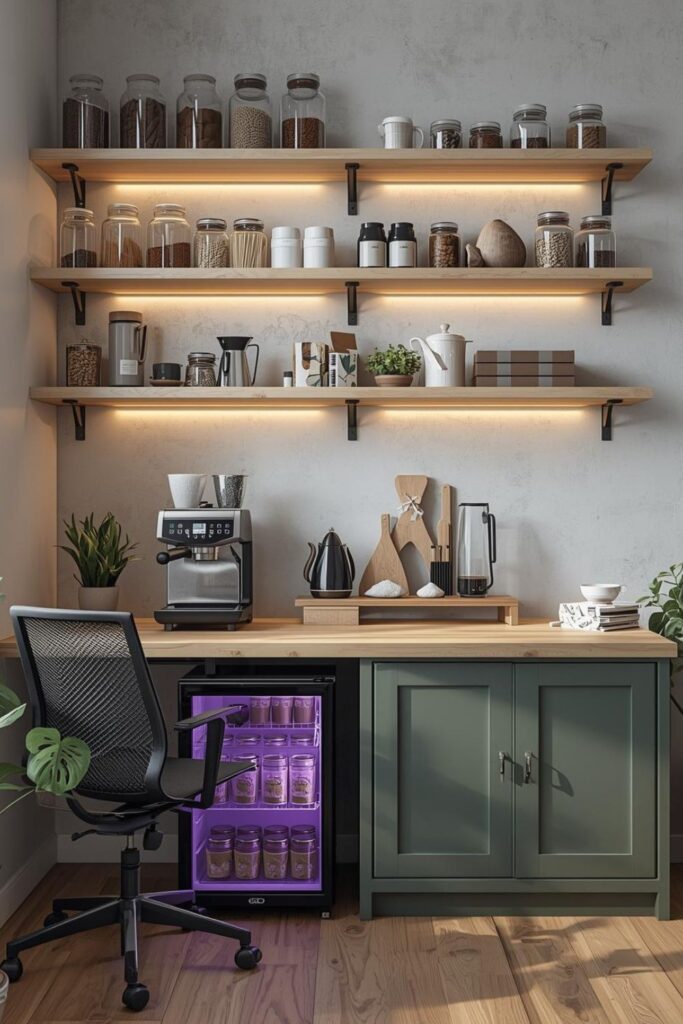
Base Cabinet Essentials
Foundation of office pantry:
Narrow base cabinet contains:
- Mini fridge
- Pull-out trash and recycling bins
- Small countertop on top
Wall cabinets or shelves above:
- Mugs and glasses
- Tea and coffee supplies
- Healthy snacks
- All visible and accessible
Appliance Zone
Keep countertop compact but complete:
Small appliances:
- Coffee maker or espresso machine
- Electric kettle
- Possibly small microwave
Cord management critical:
- Outlets positioned to hide cords
- No visible wire mess
- Professional appearance maintained
Clear Organization
Label everything for shared spaces:
Labeled containers for:
- Various teas
- Coffee supplies
- Snacks
- Cleaning supplies
Benefit: Colleagues find what they need quickly without searching or asking.
Optional Break Area
If space allows:
Slim high table or ledge nearby:
- Quick standing break spot
- Enjoy coffee without returning to desk
- Brief social interaction
- Minimal footprint
Functional hospitality in minimal space.
Minimal Color Palette
Office spaces need calm:
Design strategy:
- Monochrome or two-tone palette
- Maximum one accent color
- Avoids visual chaos
- Suits diverse people and preferences
Coordinated details:
- Matching sugar and coffee jars
- Uniform mugs
- Consistent containers
- Shows care and maintenance
Sound Control
Respect nearby work areas:
Implement:
- Soft-close cabinet hinges
- Felt pads under containers
- Quiet during calls and meetings
Odor Management
Keep food smells contained:
Solutions:
- Discreet ventilation
- Prevents smells spreading to desks
- Maintains professional atmosphere
Cleaning Plan
Regular maintenance essential:
System includes:
- Daily wipe-downs
- Weekly deep clean
- Prevent buildup
- Keep fresh environment
Shared Space Organization
Clear systems prevent confusion:
Separate zones for:
- Personal snacks (labeled by person)
- Communal items (coffee, tea, shared snacks)
- Cleaning supplies
- Color-coded or clearly labeled
Maintains tidy space everyone uses respectfully.
Wellness Focus
Modern offices emphasize health:
Stock with:
- Healthy snack options in clear containers
- Herbal tea selection
- Fresh fruit basket
- Filtered water access
Durable, clean finishes:
- White or light wood
- Wipeable surfaces
- Stays fresh-looking
- Ages well with daily use
A thoughtfully designed office pantry becomes an asset that supports long work hours, team morale, and professional atmosphere without occupying excessive space or creating visual clutter.
Walk In Tiny Pantry Concepts That Redefine Small Storage
Even a tiny walk-in pantry—just a few square feet—creates a sense of abundant storage when designed thoughtfully. Being able to step inside and see three walls of organization changes everything.
The Command Center Mindset
Think of your walk-in as kitchen headquarters:
Purpose:
- Central control point
- Complete visibility
- Everything accessible
- Organized by category
Even in small houses, a few feet of walk-in space feels surprisingly spacious.
Pin this command center concept! 📌
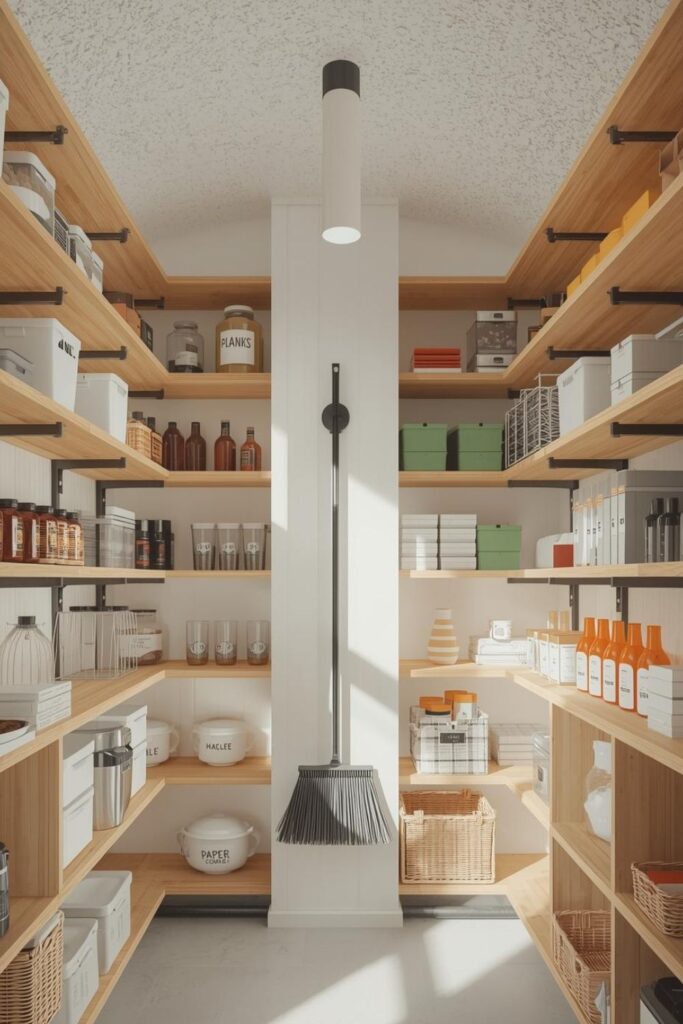
U-Shaped Shelving Layout
Maximize three walls:
Configuration:
- Shelves on three sides
- Deeper on back wall (12-14 inches)
- Shallower on sides (6-8 inches)
- Leaves space to turn around in middle
Why variable depth works:
- Back wall handles bigger items
- Side walls prevent cramped feeling
- Everything within reach
Lighting Is Everything
Transform the experience:
Lighting layers:
- Bright ceiling bulb
- LED strips along shelves
- Eliminates all shadows
Impact: Proper lighting makes it feel like a mini-room, not a storage closet.
Organization By Weight And Frequency
Strategic placement system:
Lower shelves:
- Heavy items (bulk flour, appliances)
- Beverage crates
- Large containers
- Safer at bottom
Mid-level shelves:
- Everyday items in clear containers
- Easy to grab
- Eye level visibility
Upper shelves:
- Seasonal items
- Extra paper supplies
- Party and entertaining supplies
- Lightweight only
Cleaning Tool Integration
Use door area wisely:
Slim vertical section by door:
- Brooms hung on hooks
- Mops stored vertically
- Cordless vacuum
- Cleaning tools accessible but hidden
Floor Treatment
Complete the room feeling:
Simple non-slip mat:
- Center of walking area
- Comfortable to stand on
- Easy to clean
- Defines the space
The Organization Advantage
Walk-ins prevent food waste:
How it works:
- See all inventory at once
- Don’t buy duplicates
- Use items before expiring
- Feel in control
Designers emphasize: well-organized walk-in pantries help families become more deliberate with cooking and shopping.
Clear Labeling System
Essential in any size walk-in:
Components:
- Uniform container styles
- Clear, readable labels
- Logical grouping by category
- Similar sizes where possible
Creates that “shopping your own home” feeling.
The Planning Station
Upgrade from storage to command center:
Add to wall:
- Small whiteboard or chalkboard
- Grocery lists and menu notes
- Hook for pen or marker
- Small clipboard for recipes
Impact: Transforms pantry into daily planning hub, not just storage.
Small But Mighty
The magic of walk-ins:
Even tiny footprint provides:
- Sense of order and control
- Complete visibility
- Organized categories
- Intentional storage
Requirements:
- Just a few square feet
- Good shelving
- Proper lighting
- Thoughtful organization
A small walk-in designed right beats a large closet designed poorly. It’s about smart use of space, not total square footage.
Slim Pull Out Tiny Kitchen Pantry Next To The Fridge
That narrow gap next to your refrigerator? It’s prime real estate for a slim pull-out pantry. This design turns wasted space into high-performance storage.
The Perfect Gap
Typical dimensions and benefits:
Usually 6-12 inches wide:
- Runs floor to ceiling
- Utilizes all vertical space
- Keeps food near cooking area
- Hidden when closed
Pin this gap solution! 📌
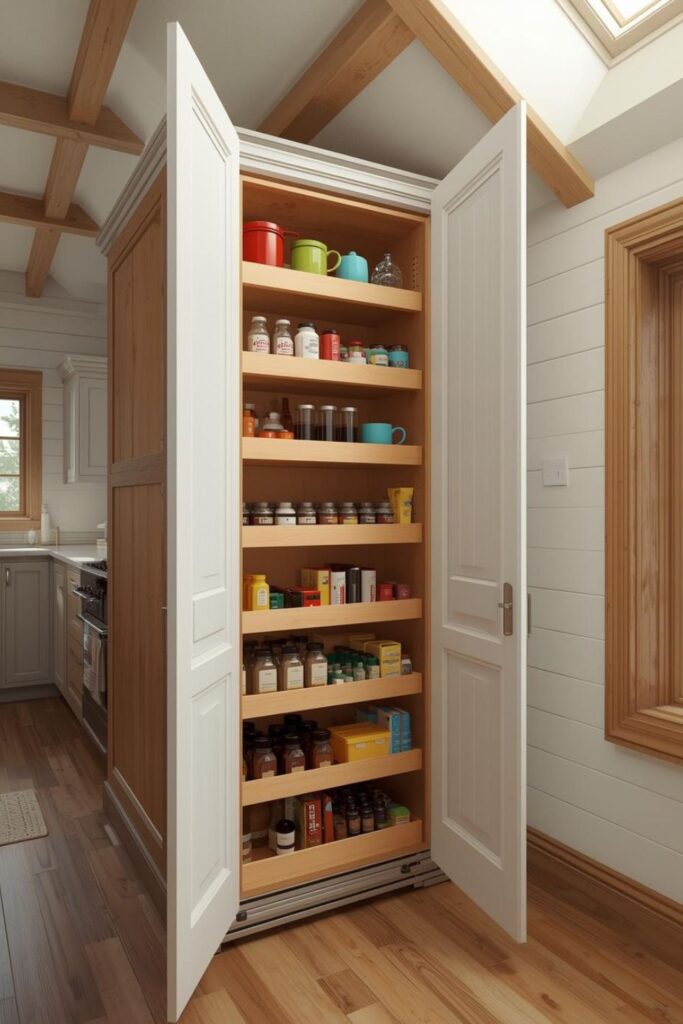
Pull-Out Mechanics
Design for smooth operation:
Interior shelving:
- Shallow metal or wooden shelves
- Rails prevent items tipping
- Adjustable heights
- Fits various product sizes
Hardware quality matters:
- Soft-close mechanism essential
- Smooth, quiet operation
- Feels managed and intentional
- Critical in open-plan spaces
Visual Integration
Make it disappear:
Cabinet front:
- Matches fridge panels
- Or matches kitchen cabinets
- Creates extended wall appearance
- Doesn’t interrupt visual flow
Handle style:
- Narrow handle
- Or internal groove
- Smooth front
- Doesn’t protrude into walkway
Organization By Height
Maximize visibility and access:
Eye level:
- Cooking oils
- Frequently-used spices
- Grains and pasta
- Easy to grab while cooking
Above eye level:
- Baking supplies (used less often)
- Specialty ingredients
- Backup packages
Below eye level:
- Heavier items
- Canned goods
- Bulk packaging
- Stable at bottom
The Visibility Principle
American interior designers emphasize:
One-jar-deep system:
- Everything visible at once
- Easy to scan inventory
- Use items before expiring
- Feel in control of kitchen
Clear, labeled containers:
- See quantities at glance
- Especially important in pull-out
- Reduces waste
- Simplifies shopping
Lighting Enhancement
Perfect this narrow space:
LED strip on one side:
- Activates when cabinet opens
- Read labels easily
- Find small items in dim kitchen
- Convenient during cooking
Interior Hooks
Maximize every inch:
Small rail or hooks inside:
- Measuring spoons
- Small scoops
- Always within reach
- Doesn’t occupy shelf space
Contrast Finish Detail
Subtle visual interest:
Slight contrast on:
- Cabinet edge
- Handle finish
- Helps identify feature
- Doesn’t interrupt kitchen calm
The Transformation
Before and after reality:
Before: Useless 8-inch gap After: Organized storage for 50+ items
This slim pull-out proves you don’t need massive square footage—you need smart design that uses every available inch.
Why It Works
The psychology of slim pull-outs:
Benefits:
- Near primary cooking zone
- Out of sight (cleaner appearance)
- Easy access (pulls to you)
- Organized (one row deep)
Turns a “tiny forgotten gulf” into a “high-performance storage tool.”
Final Thoughts
Designing a tiny pantry in 2026 isn’t about cramming more stuff into less space. It’s about creating organized, beautiful, functional storage that makes your daily life easier.
The best tiny pantries share common traits:
They’re intentional: Every inch has a purpose They’re visible: You can see what you have They’re accessible: Items are easy to reach They’re maintainable: Systems work with your habits They’re integrated: Match your home’s aesthetic
Whether you’re working with:
- A narrow closet
- A slim pull-out
- A corner nook
- A full walk-in
The principles remain the same: smart shelving, proper lighting, clear organization, and designs that fit your real cooking and shopping habits.
Start with one small change. Maybe it’s better lighting. Maybe it’s uniform containers. Maybe it’s adjusting shelf heights to match what you actually store.
Small improvements compound. Your tiny pantry can become the hardest-working, best-looking space in your home.
Pin your favorite ideas and start transforming your space today! 📌

“I share simple, beautiful and affordable home decor ideas to help you style every corner of your home with ease.