

There is something deeply satisfying about stepping outside into a backyard that feels like it was made just for you. A beautiful brick patio does exactly that — it turns an empty outdoor space into a place where memories are made, mornings feel slower, and evenings last longer. If you have been dreaming about transforming your backyard but do not know where to start, you are in the right place.
This guide is built for real homeowners with real budgets, real backyards, and real lives. Whether you want a cozy fire pit gathering spot, a polished front yard entry, or a DIY weekend project you can be proud of, these five brick patio ideas for 2026 will give you everything you need to move forward with confidence and excitement.
Brick Patio Ideas Backyards That Transform Outdoor Living Spaces
A brick patio is not just a surface — it is the foundation of your entire outdoor lifestyle. When planned well, it becomes a natural extension of your home’s interior, creating a seamless flow between inside and outside living. In 2026, homeowners are leaning into designs that feel both timeless and fresh, blending classic brick textures with clean contemporary layouts.
Start With Layout and Flow
Before you choose a single brick, think about how people will move through the space. A good layout guides traffic naturally and creates defined zones for different activities.
- Rectangular and square layouts work best for open backyards with clear sight lines to the house
- Define separate zones for dining, lounging, and open circulation
- Aim for at least 10 feet by 12 feet for a functional dining area
- Leave a minimum 3-foot pathway between furniture and walls or fences
A well-defined layout prevents the patio from feeling cluttered or disconnected from the rest of the yard.
Choose the Right Brick Pattern
The pattern you choose changes the entire personality of the space. Some patterns feel classic and structured, while others feel relaxed and organic.
- Herringbone — adds visual energy and hides minor imperfections; ideal for larger patios
- Basket weave — creates a soft, cottage-like texture; works beautifully in smaller spaces
- Running bond — clean and modern; pairs well with contemporary home styles
- Stack bond — very geometric and bold; best used as an accent rather than a full surface
For 2026, the most popular combinations involve mixing herringbone centers with running bond borders for a polished, layered look.
Select Brick Tones That Set the Mood
Color matters more than most people realize. The tone of your brick influences how warm, cool, formal, or relaxed your patio feels from every angle.
- Classic red brick — warm, inviting, traditional; pairs well with natural wood and greenery
- Grey brick — modern and sophisticated; works with black metal furniture beautifully
- Reclaimed brick — adds history and character; no two patios look the same
- Mixed tones — blending red and grey creates depth without being overwhelming
In 2026, the strongest trend is using mixed reclaimed brick for the field pattern and a clean grey border to modernize the overall look.
📌 Pin this backyard transformation guide! 📌
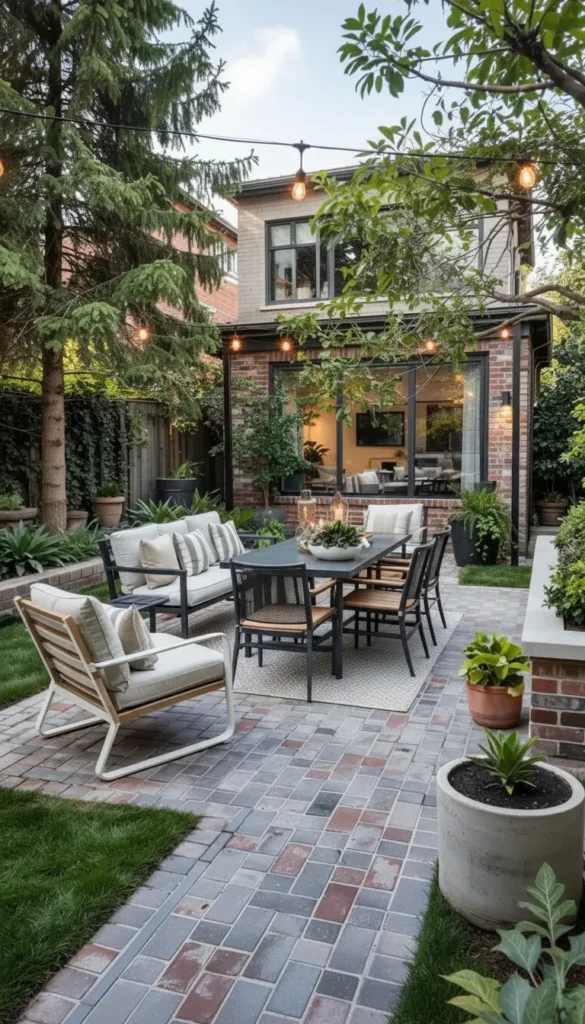
Furniture That Makes It Functional
The right furniture turns a bare brick surface into an actual living room. Choose pieces that are proportional to the patio size and weather-resistant for your climate.
- Opt for black metal or white powder-coated aluminum dining tables for durability and style
- Add lounge seating with neutral outdoor cushions to soften the masonry
- Include at least one side table per seating pair for practicality
- Use weather-resistant outdoor rugs to define zones and add warmth
Furniture selection should always happen after layout planning, not before. Measure your patio dimensions before purchasing any piece.
Add Borders and Planters for Visual Layers
A flat expanse of brick can feel unfinished without some visual anchoring. Borders and planters solve that instantly.
- Concrete and brick paver borders clearly define the patio’s edge
- Stone and brick detailing along the perimeter adds refinement
- Cement and terracotta planters introduce greenery and warm tones
- Place planters at corners and transitions to guide the eye naturally
Lighting That Extends Your Evening
A well-lit patio is a patio that gets used after 7 PM. Good lighting adds safety, ambiance, and architectural interest all at once.
- Use low-profile LED path lights along the perimeter for safety
- Add string lights overhead for a warm, social atmosphere
- Consider solar-powered stake lights for budget-friendly perimeter lighting
- Avoid harsh overhead flood lights — they kill the mood instantly
📌 Save this outdoor living strategy! 📌
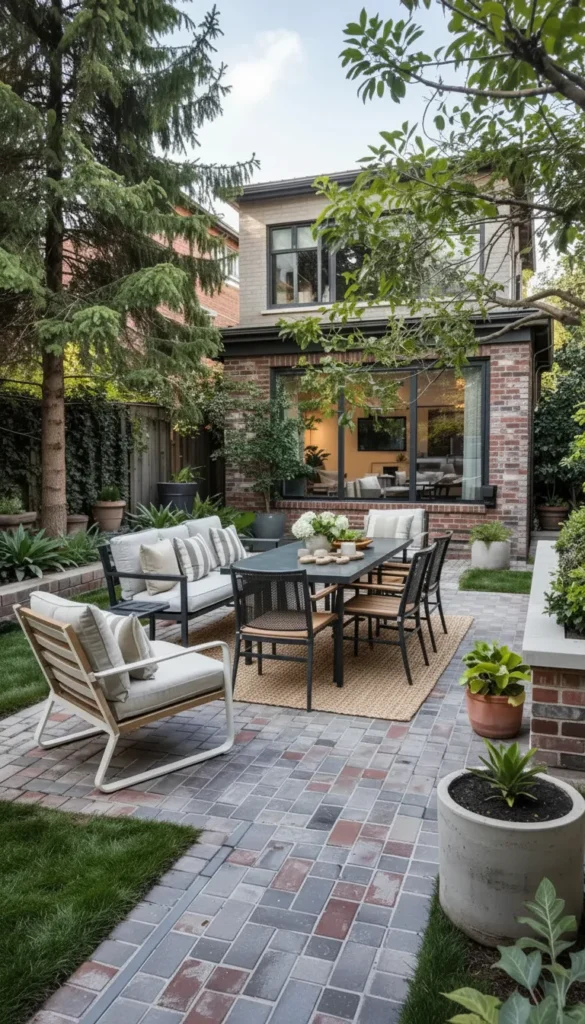
Why Proportion Is Everything
Proportion is the secret ingredient that separates a beautiful patio from a frustrating one. Always measure carefully before committing to a layout.
- The patio should feel spacious but not empty
- Seating areas should have at least 24 inches of clearance around each chair
- Pathways should never feel like an afterthought — plan them into the design from the beginning
- If the space feels too large, add a garden bed or planting border to bring the scale down
A thoughtful brick patio that respects proportion will always feel more expensive than it actually was to build.
Brick Patio Ideas On A Budget For Stylish And Affordable Outdoor Makeovers
Creating a beautiful outdoor space does not require a massive investment. With smart planning and the right material choices, you can build a brick patio that looks polished and professional without draining your savings. Budget patios done well are often the most creative ones because every decision matters.
Start With Smart Material Choices
Your material selection is where the biggest savings happen. Choosing wisely here can cut your project cost by 30 to 50 percent without sacrificing quality.
- Recycled or reclaimed brick costs significantly less than new brick and adds instant character
- Source reclaimed brick from demolition salvage yards, Facebook Marketplace, or Craigslist
- Mix reclaimed brick with affordable concrete pavers to stretch the budget further
- Avoid custom-cut or specialty shapes — standard sizes are always cheaper
Reclaimed brick also carries a warmth and texture that brand-new brick simply cannot replicate.
Keep the Layout Simple and Compact
Larger and more complex layouts cost more to build. For budget projects, simplicity is your greatest asset.
- A square or rectangular layout uses materials most efficiently with minimal waste
- For small backyards, a 10 by 10 foot patio is often enough for two chairs and a small table
- Avoid curves and circles in budget builds — they require cutting and create waste
- Every square foot you eliminate saves money on both materials and labor
A compact, well-designed patio will always outperform a large, poorly planned one.
📌 Pin this budget patio planning guide! 📌
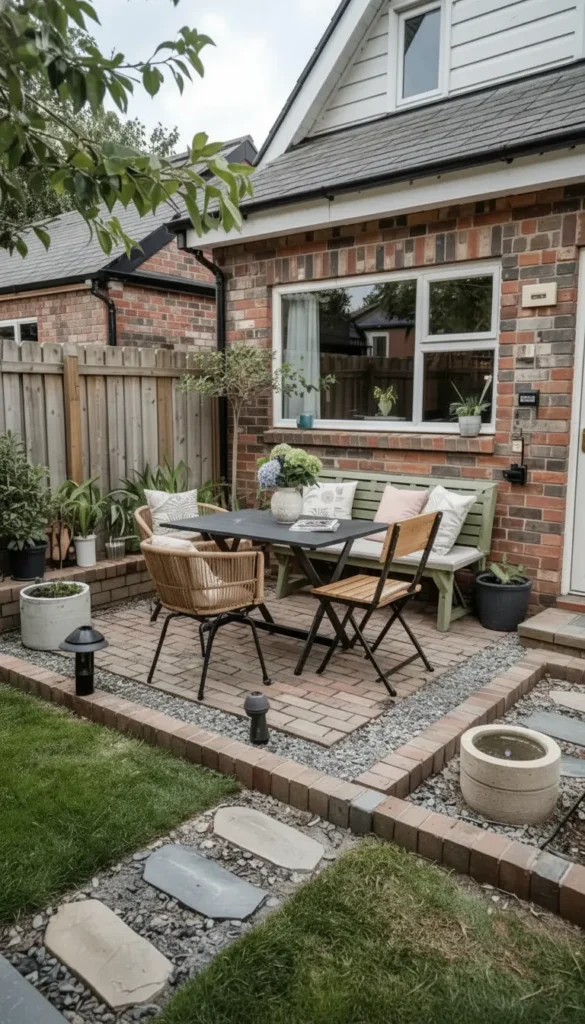
Reduce Labor Costs With DIY-Friendly Approaches
Labor is often the most expensive part of any patio installation. Taking on even part of the work yourself can lead to significant savings.
- Homeowners can handle site clearing, leveling, and base preparation with rented tools
- Laying brick in a simple running bond pattern is achievable for motivated beginners
- Hire a professional only for drainage planning if your yard has water issues
- Watch detailed tutorials from trusted sources like This Old House or Family Handyman before starting
Even taking on 50 percent of the labor yourself can cut total project costs dramatically.
Choose the Right Furniture for Less
Budget furniture does not have to look cheap. The key is choosing simple, clean designs that let the brick do the work.
- Start with one dining set and two lounge chairs — resist the urge to over-furnish
- Shop end-of-season sales at Target, IKEA, or Wayfair for quality outdoor pieces at deep discounts
- Add a compact storage bench that doubles as seating and hides cushions when not in use
- Use movable planters instead of built-in beds to keep flexibility and reduce costs
The best budget patios feel intentional, not sparse. Every piece should earn its spot.
Use Gravel and Mixed Materials Strategically
You do not have to cover every inch of your outdoor space with brick. Strategic use of gravel and mixed materials creates a high-end look at a lower total cost.
- Fill non-traffic areas with pea gravel or decomposed granite to reduce brick coverage
- Use stone and brick combinations along borders to add visual interest without extra cost
- Create a brick pathway leading to a gravel seating area for a layered, designer look
- Gravel also improves drainage naturally — an added functional bonus
Invest in the Base, Not the Decoration
One area where you should never cut corners is the base preparation. A properly built base is what separates a lasting patio from one that shifts and cracks within two years.
- Always use 4 to 6 inches of compacted gravel as the base layer
- Add 1 inch of leveled sand on top of the gravel before laying brick
- Compact each layer thoroughly using a rented plate compactor
- Skipping this step is the most expensive mistake a budget builder can make
📌 Save this affordable outdoor makeover strategy! 📌
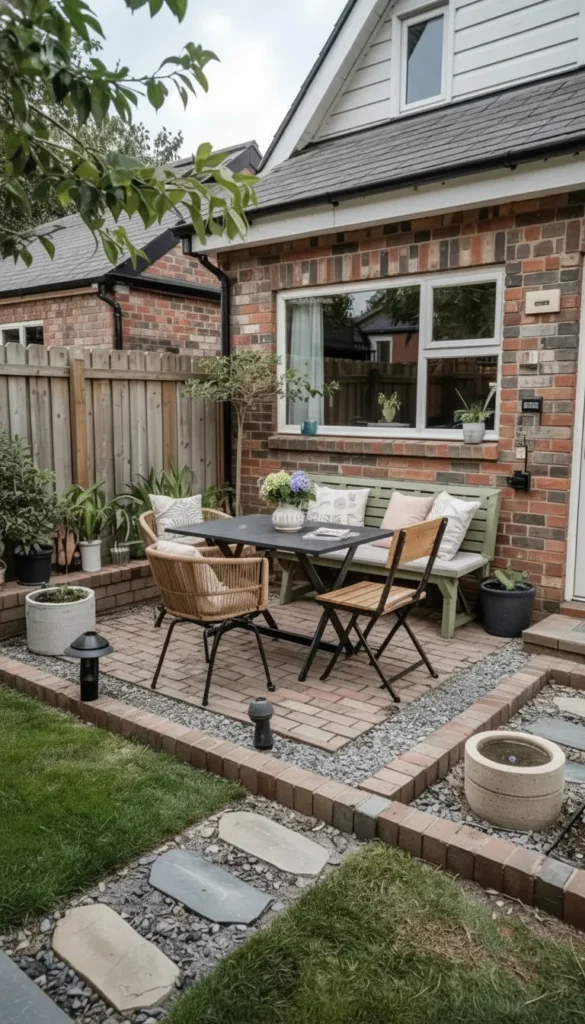
Keep Lighting Solar and Simple
Wired lighting systems require trenching, conduit, and electrician fees. Solar lighting eliminates all of that.
- Solar stake lights are easy to install and require zero ongoing electricity cost
- Use solar string lights draped from a simple wooden post system for ambiance
- Reposition solar lights seasonally to maximize sunlight exposure
- Replace individual units as needed — no rewiring required
A beautifully lit patio does not need to cost a fortune. Solar options in 2026 are brighter and longer-lasting than ever before.
Brick Patio Ideas Backyards DIY Projects For Hands-On Homeowners
There is a particular pride that comes with building something with your own hands. A DIY brick patio is one of the most rewarding weekend projects a homeowner can take on. With the right preparation, tools, and patience, the result is a permanent outdoor feature you will enjoy for decades.
Plan Your Design Before Buying a Single Brick
Rushing to the hardware store without a plan is the most common DIY mistake. Spend time designing first and shopping second.
- Sketch your patio dimensions on graph paper using a 1 inch to 1 foot scale
- Mark the location of any trees, utilities, downspouts, or drainage paths that will affect your layout
- Determine your exact brick quantity by calculating total square footage plus 10 percent for waste
- Decide on your pattern before purchasing — some patterns require more cuts than others
A solid plan eliminates costly surprises once work begins.
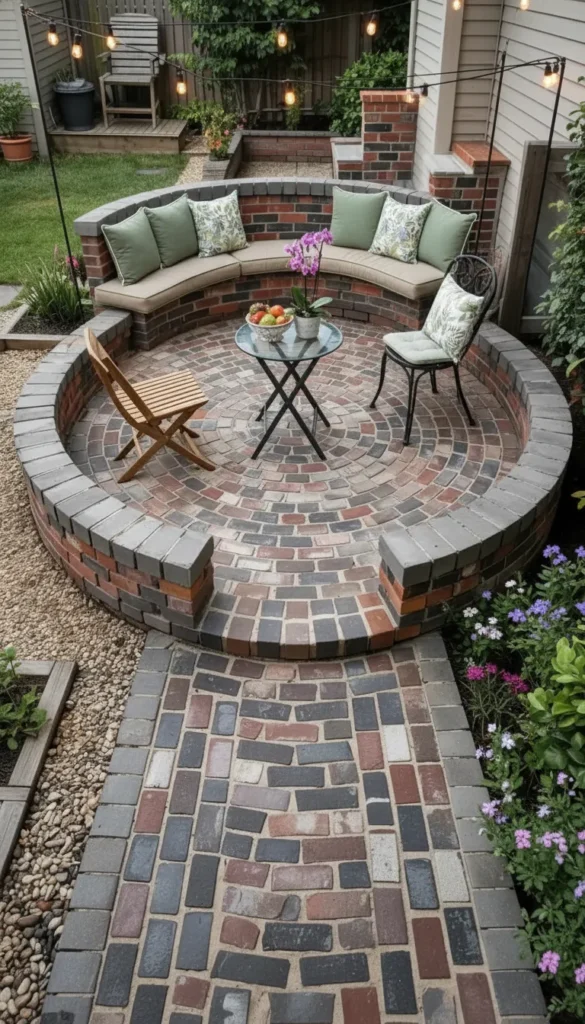
Consider a Round or Circular Layout
Round patios are surprisingly achievable for DIY builders and offer a softness that rectangular layouts cannot match.
- A round layout eliminates harsh corners that can feel rigid in natural outdoor settings
- Use a string and stake method to mark a perfect circle before excavating
- Round patios work especially well in garden-centered backyards surrounded by planting beds
- The recommended diameter for a functional round patio is 12 to 14 feet
A circular design feels organic and intentional — perfect for backyards that already have curved garden borders.
📌 Pin this DIY patio project guide! 📌
Prepare the Base Correctly
Base preparation is where DIY patios succeed or fail. There are no shortcuts here if you want the patio to last.
- Excavate 6 to 8 inches deep to allow for gravel base, sand layer, and brick thickness
- Use a 4-foot level constantly during excavation to maintain consistent depth
- Compact 4 to 6 inches of crushed gravel using a rented plate compactor
- Add 1 inch of coarse sand, screed it flat, and do not compact it — brick settles into loose sand
Many DIY patios fail within a few years because the base was rushed. Do not let that be yours.
Choose Bricks That Match Your Home Exterior
A patio that clashes with your house exterior feels disconnected and visually jarring. Coordination matters.
- Hold a few brick samples against your home’s siding, trim, and roof line before committing
- Traditional red brick suits craftsman, colonial, and farmhouse-style homes
- Grey and charcoal tones complement modern and contemporary architecture
- Reclaimed mixed brick works with almost any style because of its natural variation
When in doubt, choose the brick tone that matches the dominant color in your home’s exterior masonry.
Use Edging to Keep the Shape Defined
Without proper edging, a DIY patio will gradually shift and spread at the borders. Edging is not optional.
- Concrete and brick border edging is the most durable option for permanent patios
- Steel or aluminum landscape edging is a budget-friendly alternative that holds shape well
- Set edging before laying the field bricks, not after
- Secure edging with landscape spikes driven every 12 inches for stability
Edging also makes the finished patio look intentional and professionally installed.
Add a Built-In Bench or Seating Wall
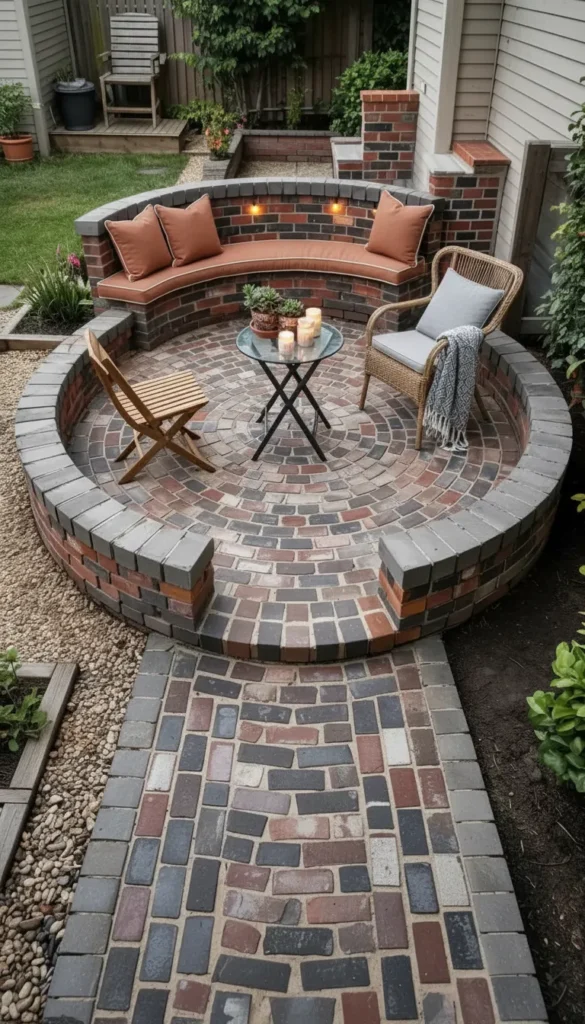
A built-in seating wall is one of the most functional upgrades a DIY builder can add. It eliminates the need for additional furniture and defines the patio boundary beautifully.
- Build the wall 2 bricks wide and 18 inches high for comfortable seating height
- Cap the top with flat stone or concrete cap pieces for a finished look
- A seating wall also doubles as a retaining edge for raised yard areas
- Add outdoor cushions on top to make the wall even more comfortable
📌 Save this DIY seating wall technique! 📌
Essential Tools to Have Ready
Starting a DIY patio without the right tools wastes time and leads to frustration. Prepare your toolkit before day one.
- Plate compactor — rent from any major hardware store; essential for base preparation
- Rubber mallet — for tapping bricks into place without cracking them
- Brick chisel and hammer — for cutting bricks to fit edges and corners
- 4-foot level and string lines — for maintaining consistent height across the surface
- Broom — for sweeping polymeric sand into joints after laying all bricks
Having the right tools makes the difference between a weekend project and a month-long struggle.
Brick Patio Ideas With Fire Pit For Cozy Outdoor Gatherings
A fire pit patio is not just a design choice — it is a lifestyle decision. It is the difference between a backyard you look at and a backyard you actually live in. In 2026, fire pit patios have become one of the most requested outdoor features because they extend the usable season of any outdoor space and create the kind of atmosphere that brings people together naturally.
Design Around the Fire Pit as the Focal Point
Everything in a fire pit patio should radiate outward from the fire. The fire is the anchor, and every other design decision serves it.
- Position the fire pit at the center or visual midpoint of the patio
- Maintain a minimum 7-foot clearance from the fire to any structure, furniture, or fencing
- Orient the patio so prevailing winds carry smoke away from the primary seating area
- Choose a round or circular patio layout to complement the fire pit’s natural shape
A fire pit that feels like an afterthought ruins the entire experience. Plan it first, build everything else around it.
Choose the Right Fire Pit Style
Not all fire pits are created equal. The type you choose should match your patio’s overall design language.
- Built-in brick fire pit — permanent, architectural, matches the patio perfectly
- Concrete fire pit bowl — modern and minimal; great for contemporary designs
- Steel ring fire pit — affordable and portable; can be moved seasonally
- Gas fire pit insert — clean, convenient, and approved for more municipalities
For brick patio installations, a built-in brick or concrete fire pit almost always looks most cohesive and intentional.
📌 Pin this fire pit patio design guide! 📌
Select Brick Tones That Create Depth
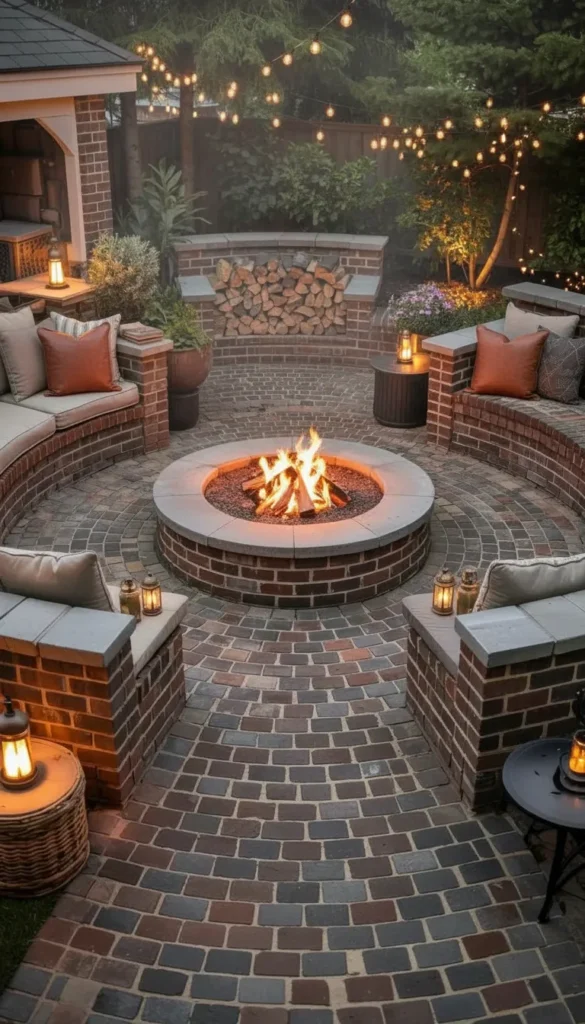
Fire pit patios benefit from layered brick tones because the visual complexity matches the dynamic nature of a fire.
- Use deep red brick for the field pattern to create warmth and richness
- Add grey accent bricks along borders and the fire pit surround for contrast
- Consider charcoal or dark brown tones for the fire pit itself to hide soot naturally
- Avoid very light or white bricks near the fire — they stain and discolor quickly
The contrast between warm red tones and cool grey accents is one of the most popular combinations for 2026 fire pit patios.
Plan Seating That Encourages Conversation
The best fire pit seating arrangements make everyone feel included and comfortable. Symmetry and spacing are the two most important factors.
- Arrange seating in a circular or semi-circular pattern around the fire
- Include built-in curved benches for a permanent, architectural feel
- Add weather-resistant lounge chairs for more casual gatherings
- Keep 18 to 24 inches of clearance between seating and the fire pit edge for comfort and safety
Built-in curved benches made from matching brick and stone cap materials create the most cohesive look and require zero maintenance.
Add Stone Caps for Durability and Elegance
Stone and concrete cap materials on seating walls and fire pit surrounds elevate the entire patio instantly.
- Bluestone caps are durable, naturally beautiful, and heat-resistant near fire pits
- Concrete caps are budget-friendly and can be ordered in custom widths
- Granite caps offer the most durability but come at a higher price point
- Cap thickness should be a minimum of 1.5 inches to handle outdoor temperature swings
Cap materials add a finished, intentional quality that separates a good patio from a great one.
📌 Save this fire pit seating strategy! 📌
Include Practical Side Tables and Storage
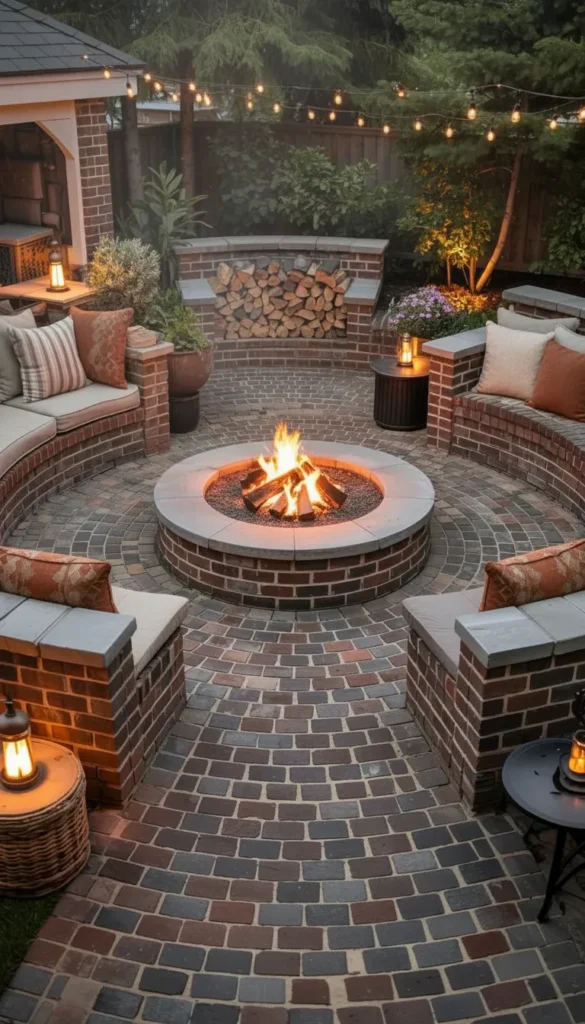
A fire pit area without surface space quickly becomes cluttered and frustrating. Side tables and storage solve this beautifully.
- Use black metal or natural wood side tables placed between every two chairs
- Add a compact firewood storage rack adjacent to the patio but outside the seating circle
- Include a waterproof storage box for fire tools, lighters, and marshmallow roasting sticks
- Keep firewood storage at least 10 feet from the fire as a basic safety measure
Organized storage keeps the patio looking clean even during active use.
Layer Lighting for Ambiance Without Overpowering the Flame
Lighting around a fire pit requires a delicate balance. Too much light drowns the fire’s glow. Too little creates safety issues.
- Use low-voltage path lights along the patio perimeter for safety
- Add string lights at a height of 8 to 10 feet overhead for a warm overhead glow
- Avoid bright spot or flood lights near the fire — they compete with the flame visually
- Consider lantern-style solar lights on seating wall caps for a soft, layered effect
The fire itself provides the most beautiful light. Your other lighting sources should only support it, never compete with it.
Brick Patio Ideas Front Yard Designs That Boost Curb Appeal
Your front yard is the first impression your home makes on every visitor, neighbor, and passerby. A well-designed brick patio in the front yard communicates that the homeowner takes pride in their property. In 2026, front yard brick patios have moved beyond simple entry walks into fully realized outdoor sitting areas that add both beauty and daily usability to the home.
Approach Front Yard Patios With Symmetry and Proportion
Front yard design operates by different rules than backyard design. Symmetry and restraint are the guiding principles.
- Use a rectangular or square layout aligned with the home’s center axis for visual balance
- Frame the patio with trimmed hedges or low evergreen shrubs to create a natural enclosure
- Keep the patio size proportional to the home’s facade — larger homes can handle a 12 by 14 foot patio, smaller homes should stay at 8 by 10 feet
- Maintain a clear, unobstructed pathway from the sidewalk to the front door
A front yard patio that overwhelms the entry feels aggressive. One that is too small feels insignificant. Proportion is everything.
Choose a Brick and Stone Combination for Refinement
Front yard patios benefit from material combinations that feel more formal than typical backyard installations.
- Combine standard brick field patterns with cut stone border edging for a refined look
- Use grey and muted red tones that complement most home facades without clashing
- Consider tumbled brick for a slightly softer, aged look that suits traditional homes
- Avoid very rustic or heavily textured brick in formal front yards — it can look unfinished
The goal is a front yard patio that looks like it was designed by a professional, even if it was not.
📌 Pin this curb appeal patio guide! 📌
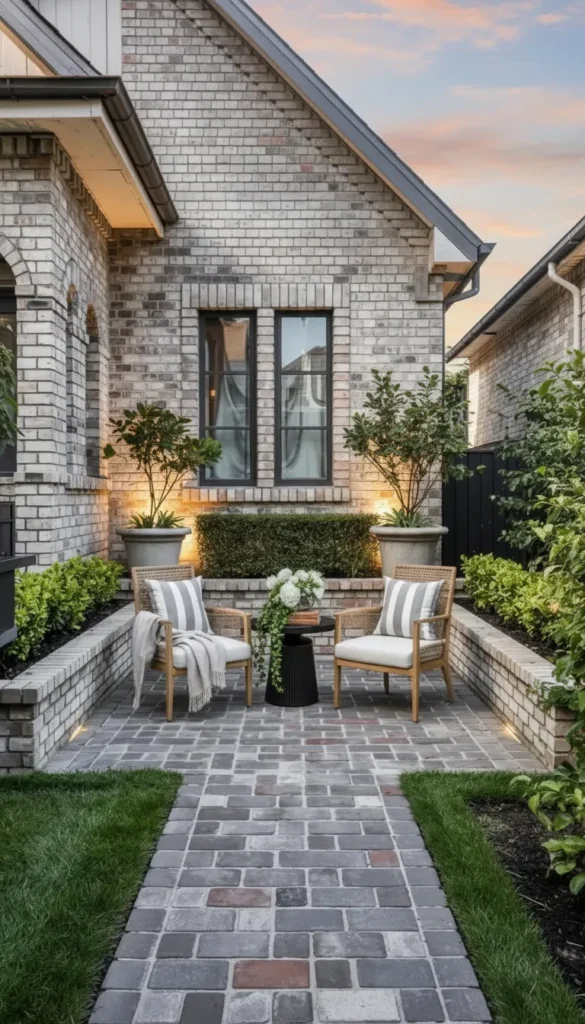
Keep Furniture Minimal and Intentional
Front yard furniture should be elegant and restrained. This is not the place for oversized sectionals or colorful umbrellas.
- Limit the furniture to two chairs and one small side table for a composed, welcoming look
- Choose furniture in black or white finishes that read clearly against the brick without competing
- Avoid furniture with overly casual or beach-themed aesthetics — they feel out of place in formal front yards
- Store cushions indoors when the patio is not in use to maintain a neat appearance from the street
Less is genuinely more in front yard design. Every piece should serve a clear purpose.
Use Matching Paver Pathways for Visual Continuity
A front yard patio that connects seamlessly to the driveway and walkway system feels intentional and cohesive.
- Use matching brick or paver materials for both the patio surface and the approach pathway
- Extend the pathway material from the sidewalk edge all the way to the front door
- Add a contrasting border strip between the pathway and any lawn areas for definition
- Avoid using three or more different pathway materials in the same front yard — it creates visual chaos
Continuity in materials is one of the most powerful and affordable ways to elevate a front yard’s overall design quality.
Add Planters That Introduce Texture Without Clutter
Planters in a front yard patio setting should feel curated, not casual.
- Use cement or stone planters in neutral tones to complement the brick without competing
- Choose architectural plants like boxwood, ornamental grasses, or columnar evergreens for structure
- Position planters symmetrically at corners or flanking the seating area for a formal arrangement
- Avoid seasonal flower-only arrangements — they look beautiful briefly and bare for months
A planted front yard patio looks alive and maintained year-round when the right plants are chosen from the beginning.
📌 Save this front yard curb appeal strategy! 📌
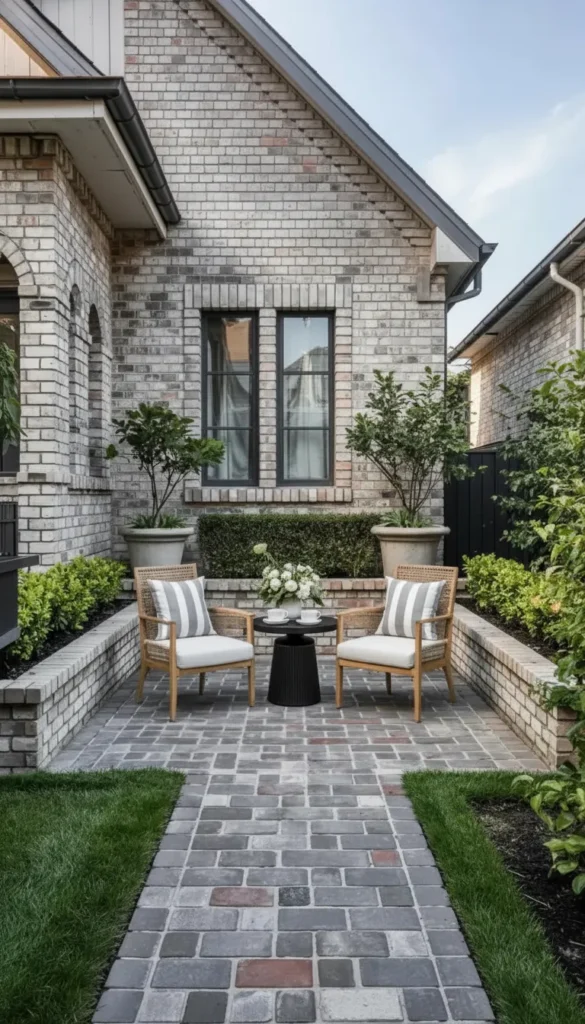
Plan Thoughtful Lighting That Highlights Architecture
Front yard lighting should serve two purposes: safety and beauty. The best front yard patio lighting does both simultaneously.
- Use low-voltage path lights along walkways and patio perimeters for visibility
- Add up-lighting at the base of the home’s facade to highlight architectural details
- Include lantern-style porch lights that coordinate with the furniture finish color
- Avoid overly bright or cold-toned bulbs — warm white LED at 2700K is the most flattering option
Good front yard lighting makes the home look welcoming at night and adds an element of security at the same time.
Consider a Water Feature If Space Allows
A small water feature can elevate a front yard brick patio from attractive to truly memorable.
- A compact wall-mounted fountain takes up almost no floor space and adds sound and movement
- Choose a fountain material — cast stone or concrete — that coordinates with the brick tones
- Position the fountain against the home’s facade or a low boundary wall to keep the pathway clear
- The sound of moving water masks street noise and creates an immediate sense of calm
Even a modest fountain investment returns significant impact in terms of atmosphere and daily enjoyment.
Conclusion
A brick patio is one of the most lasting and meaningful improvements you can make to your home. Whether you are transforming a neglected backyard, building your first DIY project, gathering around a fire with the people you love, or making your front yard the most welcoming one on the block — brick gives you a foundation that is as durable as it is beautiful.
The best patio is the one you actually build. Start with one good idea from this guide, make a plan, and take the first step. Your outdoor space is waiting, and with the right design, it will become one of your favorite places in the world.

“I share simple, beautiful and affordable home decor ideas to help you style every corner of your home with ease.