

There is something deeply moving about a living room that feels like the coast — where the light is soft, the air feels open, and every corner whispers calm. If you have ever walked into a beautifully designed coastal space and felt your shoulders instantly drop, your breathing slow, and your whole body exhale… you already know why so many people are chasing this feeling in their homes right now. That quiet, breathable, sun-kissed atmosphere is not just a design trend. It is a lifestyle. And it is closer than you think.
Summer 2026 is bringing a new wave of coastal living room inspiration — one that is less about seashells on the shelf and more about honest, elegant, livable beauty. Whether you are starting from scratch or just refreshing what you have, these five ideas will help you create a space that feels like a permanent vacation. Read every section carefully. Your dream coastal living room is already waiting for you inside these pages.
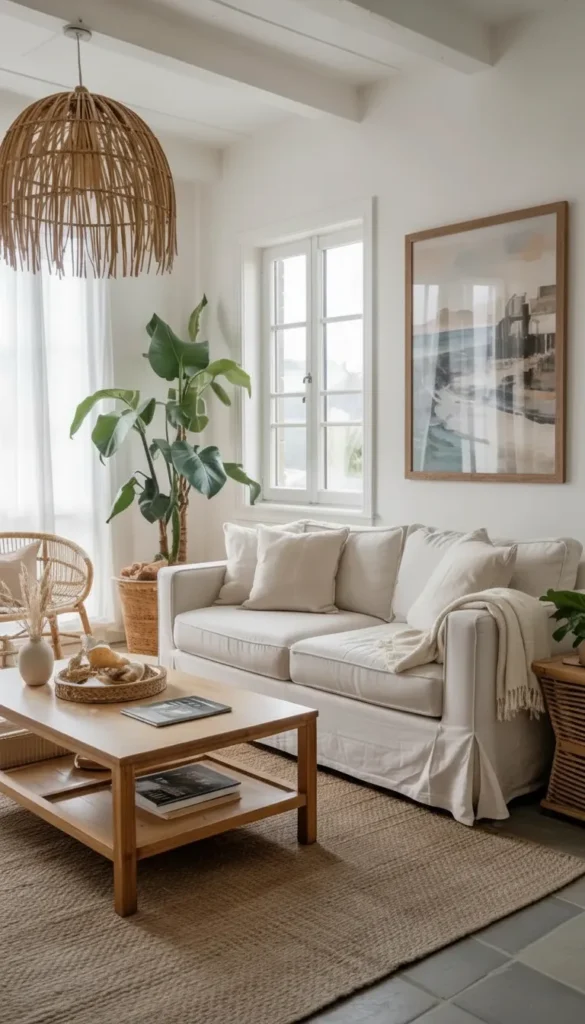
Coastal Living Room Ideas Summer 2026 With Modern Beachy Elegance And Light Tones
The foundation of every great coastal living room is light — not just sunlight, but lightness in every sense. Light tones, light furniture, light energy. When you get this base right, everything else falls into place effortlessly.
Start With Your Color Palette
Color is the single most powerful tool in coastal design. The right palette immediately signals calm, openness, and warmth.
- Soft whites — Use warm whites like linen white or sea foam white instead of stark, cold whites. They feel inviting rather than clinical.
- Pale sand tones — Think of the color of dry sand at noon. These shades work beautifully on walls, rugs, and upholstery.
- Subtle blue and green accents — Dusty teal, sage green, and muted sky blue echo natural coastal elements without screaming “beach house.”
- Avoid over-saturated colors — Deep jewel tones or dark, heavy hues fight against the airy coastal feel you are building.
The goal is a palette that feels like it belongs outdoors. Every color you choose should pass one test: does this exist somewhere on a real coastline?
Maximize Natural Light
Daylight is your most important design element. No amount of styling can replace what natural light does for a coastal room.
- Sheer curtains work better than heavy drapes — they filter light softly rather than blocking it entirely.
- Large windows should be left as unobstructed as possible. Resist the urge to hang heavy treatments over them.
- Mirrors placed across from windows bounce light deeper into the room and visually double the sense of space.
- Light-colored walls reflect more daylight than dark ones, making even a smaller room feel generous and open.
If your room has limited natural light, layer warm artificial lighting carefully. The goal is to mimic the gentle, golden quality of coastal sunlight — never harsh overhead fluorescents.
Choose Furniture That Breathes
Furniture with heavy, dark profiles will immediately undercut your coastal atmosphere. Instead, prioritize pieces that feel open and honest.
- Clean-lined contemporary sofas in linen or cotton fabrics work beautifully. Look for low profiles and slender legs.
- Light wood coffee tables — natural oak, whitewashed pine, or weathered teak all carry coastal authenticity.
- Woven textures like rattan and wicker add organic warmth and coastal character without visual weight.
- Avoid oversized, overstuffed furniture — it crowds the room and kills the airy feeling you are cultivating.
Pin this Modern Coastal Style Guide! 📌
Why Light Tones Work
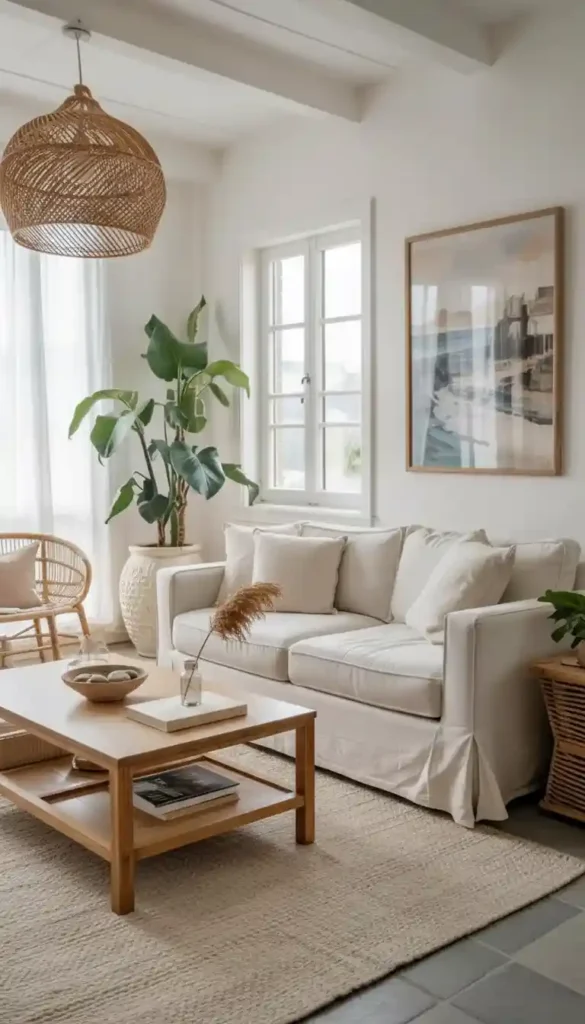
There is real science behind why coastal light-tone interiors make people feel better. Lighter spaces are processed by our brains as open, safe, and expansive. They lower stress markers and encourage a sense of ease and calm.
Beyond psychology, lighter tones are simply more versatile. They allow you to update a room seasonally with accessories — swap out cushions, throws, and small decor items — without needing to repaint or replace major furniture pieces.
Layer Textiles for Warmth and Depth
Light tones do not mean the room should feel cold or sterile. Textiles are your tool for adding warmth and personality.
- Linen throw pillows in sand, blue, or sage tones add casual sophistication.
- Chunky cotton throws draped over a sofa arm signal comfort and lived-in ease.
- Natural fiber area rugs — jute, sisal, or seagrass — anchor the room without introducing heavy pattern or color.
- Layer multiple textiles at different heights and textures to create a room that feels curated but never overdone.
Add Greenery for Life
A few well-placed indoor plants transform a coastal living room from beautiful to genuinely alive.
- Tall fiddle leaf figs or palms add vertical interest and a tropical whisper.
- Small succulents or air plants on shelves keep things low-maintenance and fresh.
- Trailing pothos from a high shelf creates flowing, natural movement.
Plants introduce green — nature’s most essential coastal accent — and they genuinely improve the air quality of your space. That is a design win and a wellbeing win in one.
Closing Principle
Modern beachy elegance is built on restraint. Every element you add should earn its place. When in doubt, remove rather than add. The most stunning coastal living rooms are the ones that leave room for air, light, and breathing.
Save this Light Tones Coastal Strategy! 📌
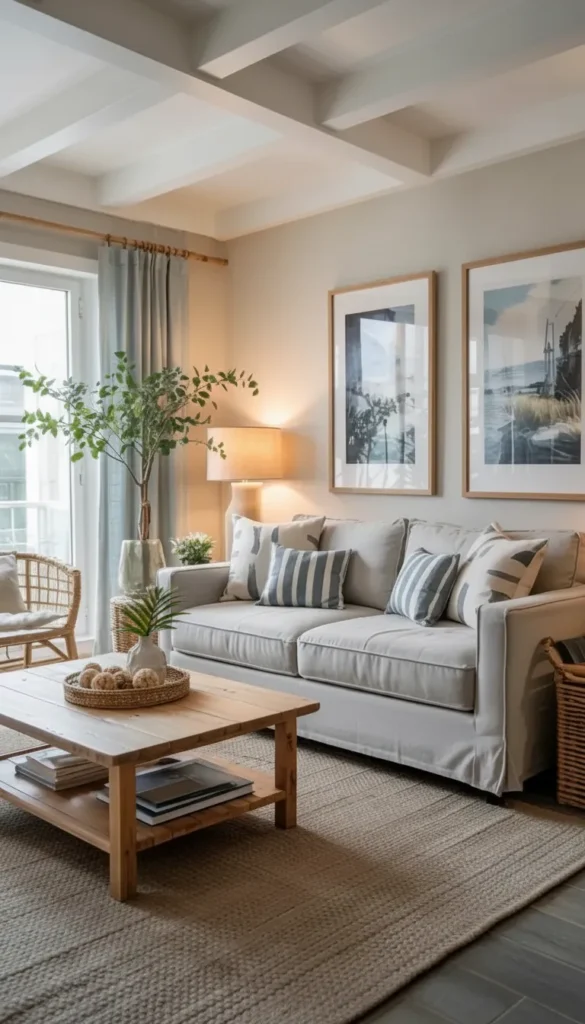
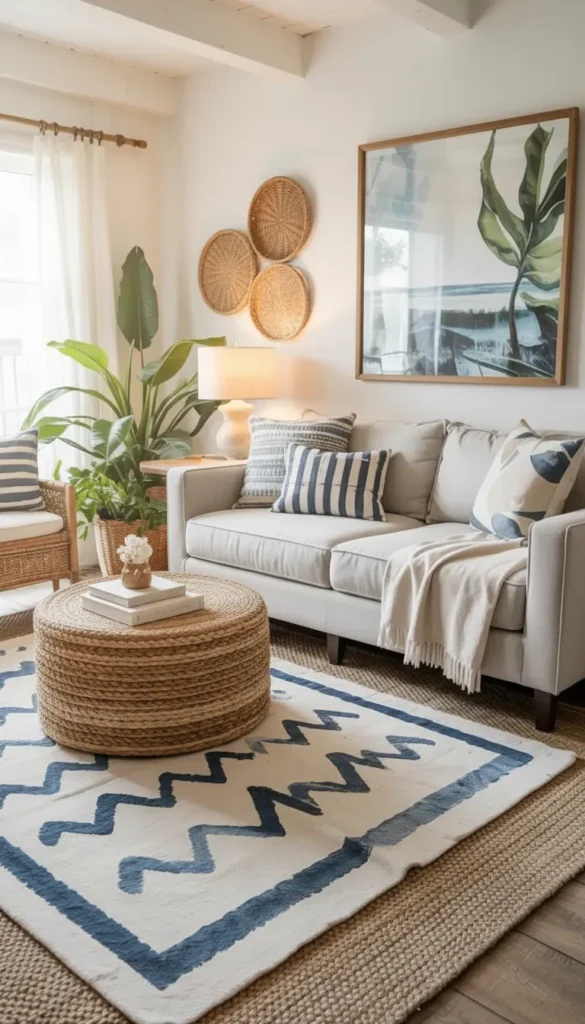
Coastal Living Room Ideas With Grey Sofa For A Calm And Contemporary Seaside Look
A grey sofa might be the smartest investment you can make for a coastal living room. It is the quiet anchor that makes everything else around it look more intentional, more considered, and more stylish.
Why Grey Works So Well in Coastal Interiors
Grey is not a boring choice — it is a strategic one. Here is why designers keep coming back to it for coastal spaces:
- Grey is the perfect neutral — It sits between warm and cool tones, making it easy to pair with coastal blues, sandy beiges, and soft greens.
- It adds depth without weight — Unlike navy or charcoal, a mid-tone grey keeps the room feeling light while giving it visual substance.
- It ages beautifully — Grey upholstery is forgiving with everyday use and continues to look refined over time.
- It is seasonally versatile — Dress it up with deeper blues for fall, lighter linens for spring. The sofa stays consistent; the accessories shift.
Build Your Foundation Around the Sofa
Think of the grey sofa as your room’s anchor point. Everything else should radiate out from it with intention.
- Pair with soft whites on walls and ceiling to maintain the airy coastal feel.
- Add muted blues — pillows, a vase, a throw — in two or three places around the room to create color cohesion.
- Use sandy beige as your secondary neutral. It warms up the grey beautifully and prevents the palette from feeling cold.
Pin this Grey Sofa Coastal Design! 📌
Choose the Right Coffee Table
The coffee table you pair with a grey sofa makes an enormous difference in the final look.
- Light oak — warm, natural, approachable. Works in almost every coastal setting.
- Weathered teak or driftwood finish — carries authentic coastal character and adds tactile interest.
- Whitewashed wood — crisp, clean, and effortlessly coastal. Pairs especially well with a soft grey sofa.
Avoid glass tops if you want warmth, or dark stained wood if you want to keep the room light. Both choices work against the coastal palette you are building.
Style Your Throw Pillows Thoughtfully
Throw pillows on a grey sofa are your biggest, most affordable opportunity to inject coastal personality.
- Start with two neutral pillows in a tone slightly lighter or darker than the sofa.
- Add one or two pillows in coastal blue or sage green for character.
- Include at least one textured pillow — woven, embroidered, or linen — for tactile depth.
- Keep pillow count to four or five maximum on a standard sofa. More than that starts to feel cluttered.
Add Metallic Accents Sparingly
Subtle metallic details can elevate a grey sofa setup from nice to genuinely sophisticated.
- Brushed brass lamp bases or table legs add warmth and visual contrast.
- Matte gold picture frames or decorative trays carry a quiet luxury.
- Avoid chrome or silver in most coastal settings — they skew too cool and modern.
One or two metallic touches are enough. This is about elegance, not flash.
Refresh Seasonally With Accessories
One of the great practical advantages of a grey sofa is how easily you can refresh the entire room without major cost.
- Summer — Light linen pillows, sheer curtains, white throws, fresh greenery.
- Fall/Winter — Deeper blue accents, chunky knit throws, amber-toned candles.
- Budget tip — Swap just the pillow covers and one throw, and your room feels entirely new. This is the grey sofa’s superpower.
Closing Principle
A grey sofa does not compete for attention — it creates the conditions for everything around it to shine. It is the most quietly confident choice you can make for a coastal living room that will look good for years.
Save this Grey Sofa Coastal Approach! 📌
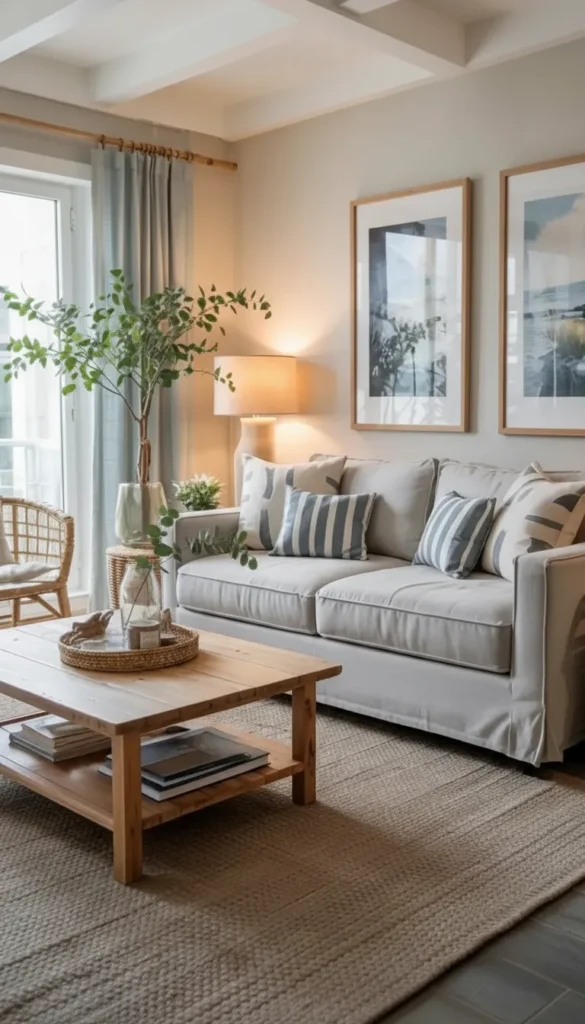
Coastal Living Room Ideas With Area Rugs For Layered Texture And Cozy Coastal Style
A rug is not just a floor covering. In a coastal living room, the right rug is the difference between a room that feels finished and one that feels like it is missing something you cannot quite name. Texture, warmth, definition — a great rug delivers all three at once.
Why Rugs Are Essential in Coastal Design
In open, airy coastal rooms — where the palette is light and the furniture is restrained — the floor becomes a major visual element. A rug grounds the space and gives it human scale.
- They define seating zones — In open-plan layouts especially, a rug communicates where the living area begins and ends.
- They add warmth — Light-toned rooms can risk feeling cold without something soft and organic underfoot.
- They introduce texture — Coastal rooms need tactile variety. A natural fiber rug delivers that beautifully.
- They reduce echo — Hard floors in open rooms create sound that feels harsh. A rug softens the acoustics and makes the space feel more intimate.
Choose the Right Rug Material
Material matters enormously in coastal spaces. You want something that feels natural, relaxed, and authentic.
- Jute — The classic coastal rug material. Warm, textured, biodegradable, and affordable. Works in almost every coastal setting.
- Sisal — Slightly more refined than jute, with a tighter weave. Excellent durability for high-traffic areas.
- Seagrass — Smooth, water-resistant, and genuinely coastal in origin. Slightly cooler underfoot than jute or sisal.
- Wool or cotton — Great as a layered top rug over a natural fiber base. Softer underfoot and available in coastal-friendly patterns.
Pin this Coastal Rug Layering Guide! 📌
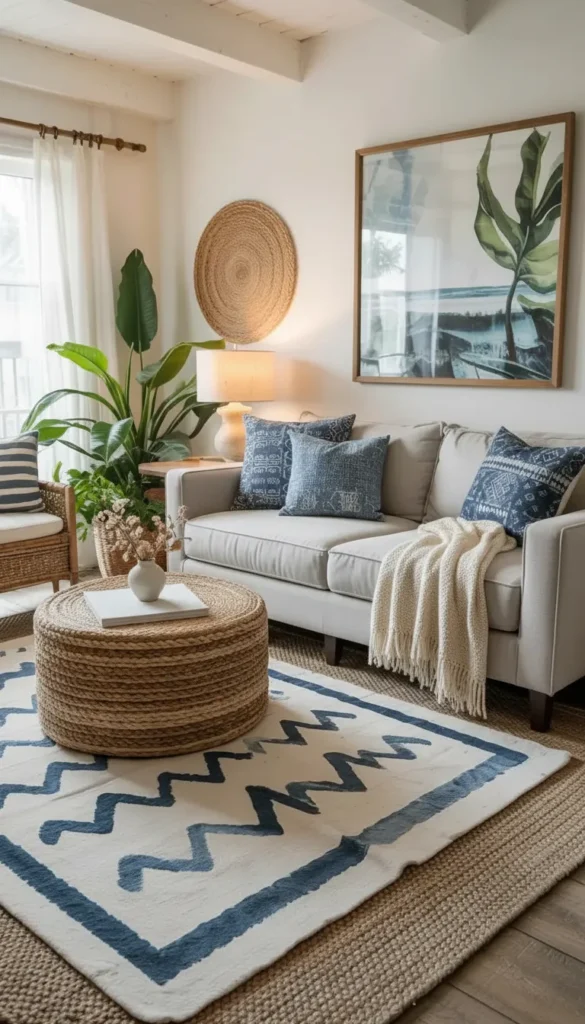
Get the Rug Size Right
This is where most people make their biggest mistake. A rug that is too small makes even a beautifully designed room look unfinished.
- Living room rule — All four legs of your sofa and chairs should sit either fully on the rug, or all furniture should have at least its front two legs on the rug. Never have all furniture floating off the rug entirely.
- Typical living room rug sizes — 8×10 feet works for most standard living rooms. 9×12 is better for larger or open-plan spaces.
- Leave 12–18 inches of bare floor between the rug edge and the wall. This framing effect actually makes the room feel larger.
Layer Rugs for Maximum Coastal Warmth
Rug layering is one of the most effective — and most underused — techniques in coastal interior design.
- Start with a large natural fiber rug (jute or sisal) as your base layer.
- Layer a smaller, softer rug on top — perhaps a cotton dhurrie with a subtle stripe or geometric pattern.
- The layered look adds incredible depth and coziness while maintaining the coastal aesthetic.
- Practical tip — Use a rug pad under both layers to prevent slipping and add cushioning.
Pattern and Color in Coastal Rugs
Not all coastal rugs need to be plain. Pattern done right adds energy and personality without disrupting the calm.
- Subtle stripe patterns — Horizontal stripes echo the ocean horizon beautifully.
- Geometric patterns — Simple, low-contrast geometrics add interest without overwhelming the palette.
- Wave or organic patterns — Abstract forms that suggest water or sand can be incredibly effective.
- Color rule — Keep rug colors within your established coastal palette. Sandy beige, soft blue, muted green, and warm grey are all safe, stylish choices.
Maintenance and Practicality
Natural fiber rugs are stunning but require a little consideration for real-life use.
- Jute and sisal are not ideal for high-moisture areas — avoid placing them directly next to doors that open to rain or in rooms with high humidity.
- Vacuum regularly — Natural fibers trap dust and debris more easily than synthetic rugs.
- Spot clean immediately — Natural fiber rugs do not respond well to soaking. Blot spills immediately with a clean cloth.
- Budget tip — IKEA, Target, and Wayfair all carry excellent jute and sisal rugs at accessible price points. You do not need to spend a fortune for quality and style.
Closing Principle
In coastal living rooms, the floor is not an afterthought — it is a design opportunity. A great rug, thoughtfully sized and carefully layered, ties the entire room together and makes every other element look more intentional.
Save this Coastal Rug Layering Strategy! 📌
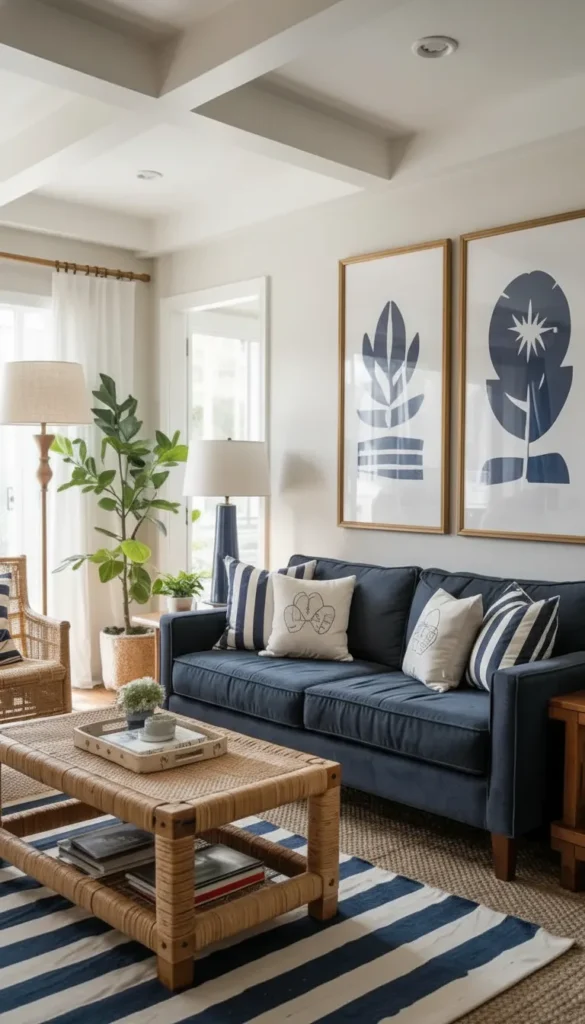
Coastal Living Room Ideas With Navy Sofa For Bold Nautical Contrast And Depth
Not every coastal living room needs to be quiet and neutral. Sometimes the most stunning coastal spaces are built around a moment of bold, confident color. A navy sofa is exactly that kind of moment — and when you style it right, it is breathtaking.
Why Navy Works in a Coastal Space
Navy blue is one of the most inherently coastal colors in existence. Think deep ocean water, the hull of a sailboat, a clear sky just after sunset. It carries that coastal DNA naturally.
- It creates instant depth — A room with a navy sofa immediately feels more considered and layered than one built entirely on neutrals.
- It acts as a grounding anchor — Just as grey does in softer palettes, navy grounds the room and gives the eye a place to rest.
- It is bold without being trendy — Navy has been a classic in coastal and preppy design for decades. It will not feel dated in three years.
- It pairs beautifully with natural materials — Light wood, rattan, and natural fiber rugs all look extraordinary next to deep navy.
Build the Right Palette Around Navy
The key to making a navy sofa work in a coastal living room is contrast and balance. Navy is rich and deep; everything else needs to pull the room back toward lightness.
- Crisp whites on walls, ceiling, and trim create the cleanest possible contrast with navy.
- Light natural wood in coffee tables, shelves, and floors warms the navy and prevents the room from feeling heavy.
- Sandy beige or warm cream as your secondary neutral softens the palette and adds coastal warmth.
- Small pops of warm brass or gold in lamp bases, picture frames, or hardware add sophistication and glow.
Pin this Navy Sofa Coastal Design! 📌
Style the Sofa With Intention
The cushions and throws you choose for a navy sofa determine whether it reads as “nautical themed” or “coastal elegant.” Aim for the latter.
- Light-colored cushions — Warm white, cream, or soft sand tones are your primary choices. They pop beautifully against the deep blue.
- One or two textured cushions — A chunky knit or a woven linen pillow adds warmth and casual sophistication.
- A soft throw in a natural, undyed linen or a warm oatmeal cotton draped casually over one arm completes the look.
- Avoid overly nautical patterns like anchor prints, sailor stripes, or ship wheel motifs — they read as costume rather than design.
Add Reflective Surfaces to Balance the Depth
Navy absorbs light. To keep the room from feeling heavy, deliberately introduce surfaces that reflect it back.
- A large statement mirror positioned across from a window bounces daylight through the room and visually lifts the depth of the navy.
- Glass vases or decorative objects catch and scatter light.
- Lighter-toned lampshades diffuse warm light softly and prevent dark corners.
Incorporate Greenery to Refresh the Palette
Plants do something extraordinary next to a navy sofa — the contrast between deep blue and fresh green is crisp, alive, and genuinely beautiful.
- A tall floor plant like a fiddle leaf fig or a monstera creates a stunning vertical element beside or behind the sofa.
- Small tabletop plants on adjacent side tables or shelves carry the green accent without overwhelming the space.
- Dried botanicals in neutral tones — pampas grass, dried eucalyptus — add organic texture with a more muted palette.
Why This Works for Ralph Lauren and Preppy Coastal Styles
The navy sofa is the natural heart of a Ralph Lauren-inspired or preppy coastal interior. This style celebrates a more structured, refined take on the coast — less barefoot-on-the-beach and more cocktails-at-the-yacht-club.
- Lean into classic shapes and clean lines in furniture throughout the room.
- Use quality materials — solid wood rather than veneer, natural linen rather than polyester blend.
- Add one or two bookish, thoughtful accessories — a stack of oversized coffee table books, a classic brass telescope, a ceramic lamp with a linen shade.
Closing Principle
A navy sofa demands commitment — and rewards it. When you build the rest of the room with confidence and care, the result is a coastal living room that feels genuinely sophisticated rather than simply pretty.
Save this Navy Sofa Bold Coastal Approach! 📌
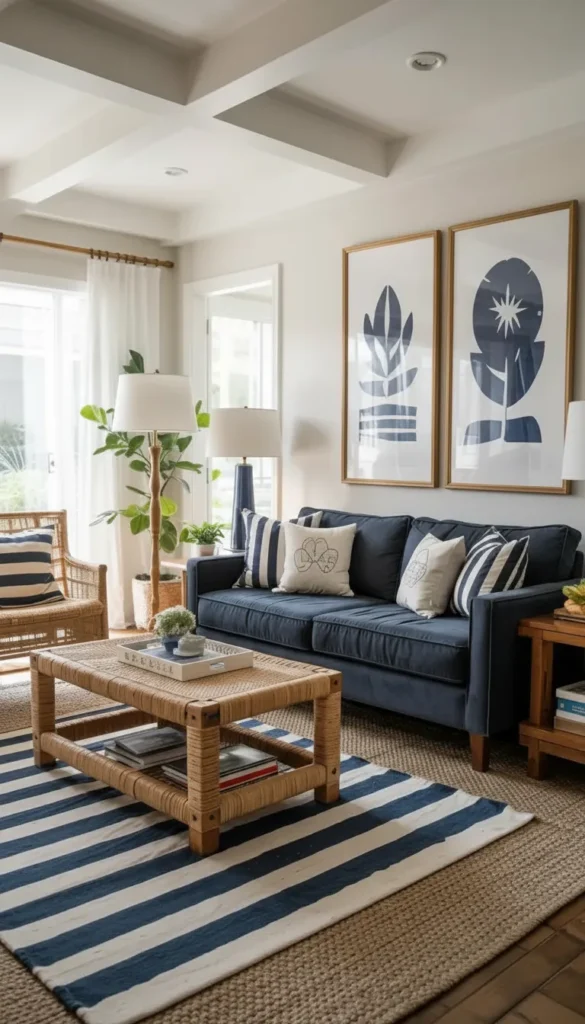
Coastal Living Room Ideas On A Budget With Affordable Beach Inspired Decor
Here is the truth that every beautiful design magazine fails to tell you: the most soulful, warm, genuinely coastal living rooms in the world are rarely the most expensive ones. They are the most thoughtful ones. And thoughtfulness costs nothing.
Start With Paint — Your Highest-Impact, Lowest-Cost Tool
If you can do only one thing to transform your living room into a coastal space, paint the walls. Nothing else you can do for the same money will have a greater effect.
- Soft white — Benjamin Moore Chantilly Lace, Sherwin-Williams Alabaster, or any similar warm white works beautifully.
- Pale sandy beige — A tone like Accessible Beige or Navajo White feels warm, grounded, and genuinely coastal.
- Muted coastal blue — A gentle, desaturated blue like Woodlawn Blue or Sea Salt immediately sets a coastal mood.
- Budget tip — Most home improvement stores now offer color-matched paint at significantly lower cost than designer brands. The color matters; the brand is secondary.
Pin this Budget Coastal Transformation Plan! 📌
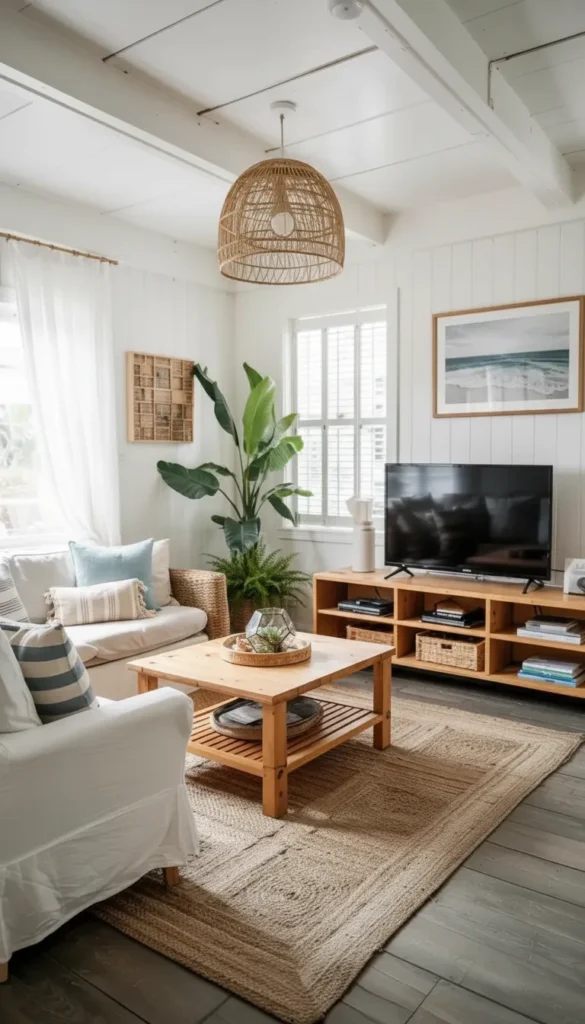
Shop Second-Hand First
Coastal design has a wonderful relationship with the idea of things that have lived a little — weathered, worn, and full of character. This makes second-hand shopping not just budget-friendly but genuinely on-brand.
- Facebook Marketplace and Craigslist — Excellent sources for solid wood furniture that can be whitewashed or lightly sanded to achieve a coastal-weathered look.
- Thrift stores — Ceramic vases, woven baskets, wooden bowls, and linen textiles are consistently available at a fraction of retail price.
- Estate sales — Often yield high-quality furniture, mirrors, and accessories at exceptional prices.
- Key pieces to hunt for — A solid wood coffee table, a simple linen-upholstered chair, a large woven basket, and a natural fiber rug. These four items form the backbone of a coastal room.
Use Slipcovers to Transform Existing Sofas
You do not need a new sofa to achieve a coastal living room. A quality slipcover can completely transform what you already have.
- White or linen-colored slipcovers are widely available and immediately signal coastal style.
- Machine-washable options — look for IKEA’s Ektorp or Kivik slipcovers, or brands like Sure Fit and Easy Fit for affordable options.
- A light cotton slipcover over a dark or patterned sofa is one of the most effective single interventions in budget coastal design.
Build Coastal Atmosphere With Affordable Accessories
Accessories are where budget coastal design either succeeds or falls apart. The key is to be intentional and restrained — a few well-chosen pieces beat a shelf full of random coastal clutter.
- Woven baskets — Available at Target, HomeGoods, and IKEA for under $20. Use them for storage and display simultaneously.
- Ceramic vases — Simple white or neutral-toned ceramic vases in varying heights create beautiful tableaux for almost nothing.
- Driftwood pieces — Found on actual beaches (free) or purchased from craft stores. Authentic, effortless coastal character.
- Candles — Warm, unscented pillar candles in sand, white, or natural beeswax tones. Group them in clusters of three for maximum visual impact.
- Indoor plants in simple pots — A pothos or snake plant in a plain terracotta or white ceramic pot costs under $15 and adds life to any room.
Organize the TV Area With Intention
A television is often the visual elephant in the room in coastal design — it does not belong on a coastline, and yet most of us have one. Here is how to integrate it gracefully on a budget.
- Mount the TV on the wall — This eliminates the bulky TV stand and frees up significant floor space.
- Use floating shelves around the TV to add coastal accessories and plants, framing the screen within a curated display.
- Woven storage baskets below or beside the TV conceal cables, remotes, and equipment while reinforcing the coastal texture palette.
- Paint the wall behind the TV a shade slightly deeper than the rest of the room — a soft driftwood grey or dusty blue creates a subtle focal point that makes the TV feel intentional rather than incidental.
Layer Lighting Without Breaking the Budget
Lighting is your secret weapon in budget coastal design. The right lighting can make a simple, affordable room feel warm, elegant, and deeply inviting.
- Table lamps from thrift stores can be repainted and given new linen shades for under $30 total.
- String lights — Used thoughtfully (not as a student dorm afterthought), warm-white string lights draped along a shelf or window create beautiful ambient light.
- Floor lamps with warm bulbs — A simple rattan or light wood floor lamp with a 2700K warm white bulb costs very little and transforms the room’s atmosphere after dark.
- Dimmer switches — Installing a dimmer on your existing light switch costs approximately $15 and gives you complete control over your room’s mood lighting.
Refresh With DIY Coastal Art
Original coastal art does not require an art gallery price tag. Some of the most beautiful coastal rooms feature simple, homemade wall art.
- Watercolor washes — Even non-artists can create beautiful abstract coastal paintings with watercolors. Blue, green, and sandy tones washed together loosely read as entirely intentional coastal art.
- Framed botanical prints — Download free vintage botanical illustrations from public domain archives, print them at your local copy shop, and frame with simple wood frames. Total cost: under $20.
- Large format photos — A single stunning coastal landscape photo, printed large and framed simply, can anchor an entire wall.
- Textured canvas — Apply textured white paint to a canvas with a palette knife, let dry, and hang. Abstract, sophisticated, and free except for canvas and paint costs.
Save this Budget Coastal Design Masterplan! 📌
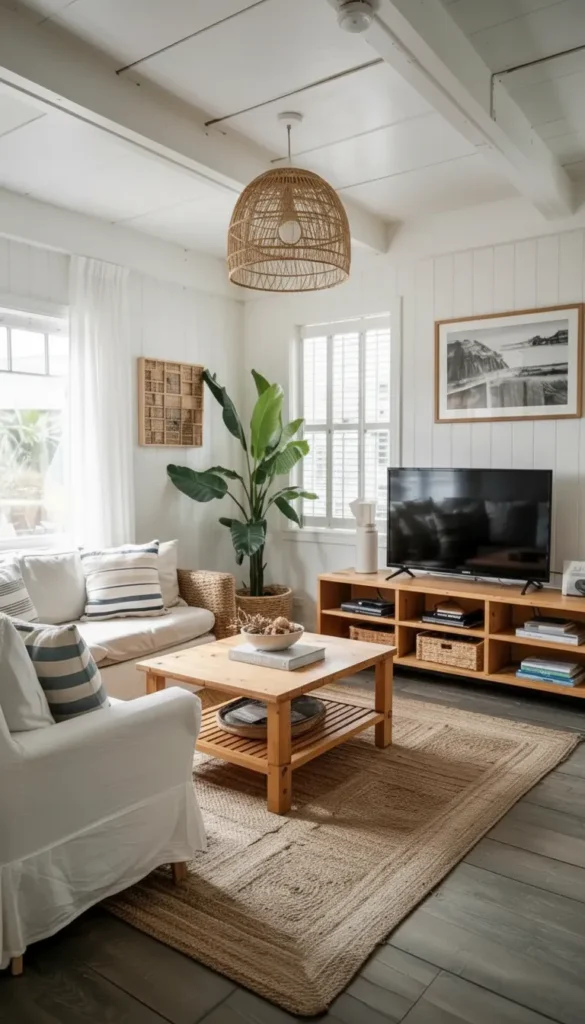
The Smart Splurge Rule
Even on a strict budget, there is wisdom in saving for one or two quality pieces that will anchor the room for years.
- The area rug — A quality natural fiber rug is worth the investment. It touches everything, both literally and visually.
- The sofa slipcover or throw pillows — These are seen and touched every day. Choose quality materials here.
- Good lighting — One beautiful lamp can elevate an entire room. Save for this one.
Everything else can be budget-friendly, second-hand, or DIY. The room will still look extraordinary.
Closing Principle
Budget coastal design is ultimately an exercise in editing — in choosing less but choosing well. A handful of natural materials, a thoughtful color palette, some thrifted treasures, and a few plants can create a living room that feels genuinely coastal, genuinely warm, and entirely yours. The coast does not care how much anything cost. Neither should you.
Conclusion
Coastal living room design in Summer 2026 is not about recreating a magazine spread. It is about creating a space that feels like the best version of rest — open, warm, honest, and beautifully calm. Whether you are working with a grey sofa and a strict budget, or investing in a bold navy centerpiece and quality natural rugs, the principles remain the same: prioritize light, embrace natural textures, choose restraint over abundance, and always leave room for air to move through the space.
Start with one idea from this guide. Just one. Make one change — paint a wall, swap your pillow covers, lay down a jute rug, move a lamp. Watch what happens to the room, and to how you feel inside it. Coastal living is not a destination. It is a decision you make in your own home, one small, thoughtful choice at a time.

“I share simple, beautiful and affordable home decor ideas to help you style every corner of your home with ease.