
There’s a moment every summer when the sun hits just right and your backyard becomes completely unusable. The chairs sit empty. The patio table bakes. The kids won’t go outside. You’ve worked hard for that outdoor space — and watching it go to waste because of the heat feels genuinely frustrating.
The good news? You don’t need a massive budget or a contractor to fix it. The right shade solution can transform your backyard from a sun-baked wasteland into your favorite room in the house. Whether you have a sprawling yard or a small urban patio, these five creative outdoor shade ideas for 2026 will help you build a space that’s cool, beautiful, and completely yours.
Creative Layered Shade Lounges For Modern Backyards
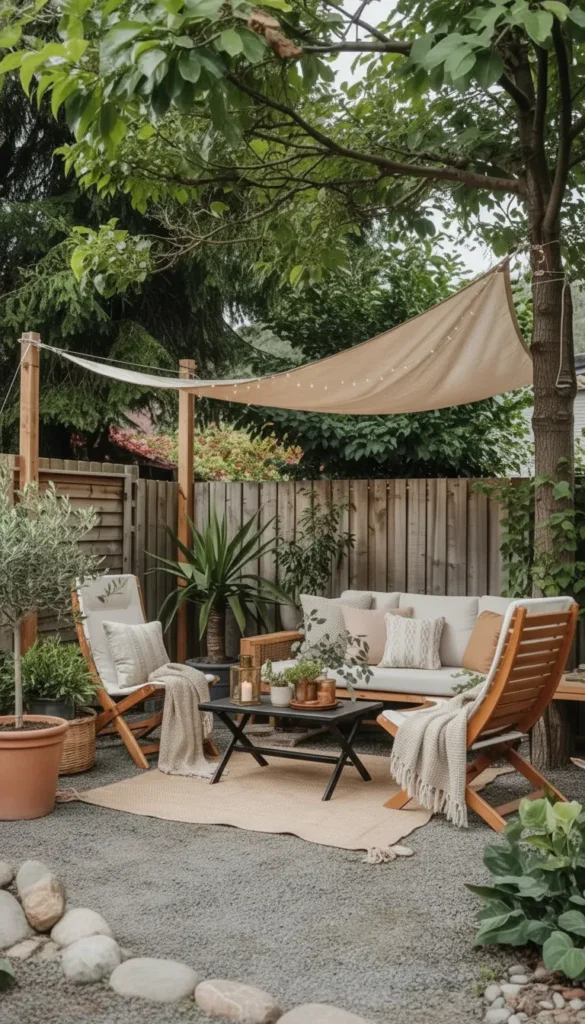
The most stunning backyard spaces in 2026 don’t rely on a single shade structure. They layer multiple elements together — fabric overhead, plants on the sides, lighting woven throughout — to create an outdoor room that feels intentional and immersive.
Why Layering Works Better Than One Big Structure
A single umbrella blocks sun from above. A layered lounge blocks it from every direction while still feeling open and breathable. This approach also gives you more design flexibility.
- Shade sails handle the overhead canopy
- Tall planters or bamboo screens filter side light
- String lights and lanterns define the space at night
- Outdoor rugs visually anchor the seating zone
When these elements work together, your backyard stops feeling like an open lawn with furniture dropped in it. It starts feeling like a destination.
Choosing Your Anchor Shade Structure
Every layered lounge needs one primary structure to build around. In 2026, the most popular anchors are fabric shade sails, wooden pergola frames, and tensioned canvas canopies.
- Shade sails are the most affordable and flexible starting point
- Pergola frames add permanent architectural beauty
- Canvas canopies offer the cleanest, most modern look
Choose based on your budget and how permanent you want the structure to feel. You can always upgrade later.
Furniture That Completes The Shaded Lounge
The right furniture makes a shaded area feel like a room. The wrong furniture makes it feel like a campsite.
- Deep outdoor sofas with thick weather-resistant cushions encourage lingering
- Low coffee tables keep the space feeling relaxed and casual
- Neutral outdoor rugs (try 8×10 feet minimum) ground the seating zone
- Side tables add function without crowding the space
Stick to weather-resistant fabrics in neutral tones — cream, warm gray, or sandy beige. These colors stay fresh-looking season after season.
Adding Natural Texture For A Warmer Feel
Shade structures can look cold and architectural without the right softening elements. Natural textures fix this instantly.
- Wicker or rattan accent chairs add organic warmth
- Potted olive trees, large ferns, or ornamental grasses soften the edges
- Wooden planters create natural visual transitions between zones
- Climbing vines on nearby fences add lush vertical depth
Pin this layered lounge concept! 📌
Lighting That Extends Your Outdoor Hours
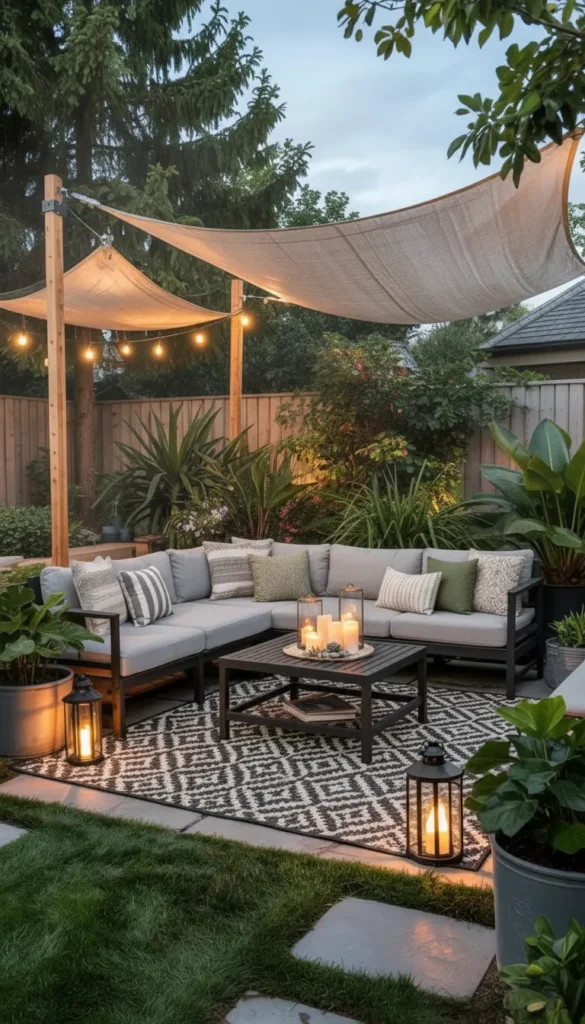
A shaded lounge is only useful during daylight if you forget about lighting. The right lights extend the space well into the evening.
- String lights draped across the canopy or between posts create a magical atmosphere
- Solar lanterns on side tables add warm, amber glow at zero operating cost
- Outdoor floor lamps with weather-resistant shades define the seating zone
- Uplighting on plants adds drama and depth after dark
Aim for warm white bulbs (around 2700K) rather than cool white. Warm light makes outdoor spaces feel cozy and welcoming rather than clinical.
The Design Principle That Ties It All Together
Think of your shaded lounge the same way interior designers think about living rooms. Every element should have a purpose — structural, functional, or aesthetic. When shade, seating, texture, plants, and lighting all work together, you’ve created something that genuinely improves your daily life.
Save this layered backyard strategy! 📌
Cheap Outdoor Shade Ideas That Actually Look Expensive
Most people assume a beautiful shaded backyard costs thousands of dollars. That assumption stops a lot of great outdoor projects before they start. The truth is, some of the most visually striking shade solutions are also the most affordable — if you know what to reach for.
The Power Of The Shade Sail
Shade sails are the single best value in outdoor shading. A quality triangular shade sail costs between $40 and $150 depending on size, and a single afternoon is all you need to install it.
- A 16×16 foot sail covers a generous patio or lounge area
- Triangular sails can be overlapped at angles for more complete coverage
- They create a clean, modern aesthetic that looks intentional and designed
- Neutral colors (sand, slate, charcoal) work best for a polished look
The key is tensioning them properly. Loose shade sails look sloppy. Tight, well-angled sails look architectural.
Building Simple Posts For Under $100
If you don’t have trees or existing structures to anchor your shade sail, build your own posts. This is a weekend project for most homeowners.
- 4×4 pressure-treated lumber posts are affordable and weather-resistant
- Set posts in concrete at least 24 inches deep for stability
- Space posts to match your shade sail dimensions
- Use eyebolts and turnbuckles for clean, adjustable tensioning
Sand and stain the posts to match your outdoor furniture for a cohesive look. The result looks like it cost three times what it actually did.
Pin this budget shade solution! 📌
Canvas and Rope Systems For A Bohemian Look
For a softer, more relaxed aesthetic, canvas fabric stretched on a rope tension system creates beautiful shade at minimal cost.
- Heavy-duty canvas ($5–$8 per yard) holds up well in most climates
- Grommets and rope create the bohemian, resort-style look that’s everywhere in 2026
- Mix two overlapping panels for a layered effect
- Natural canvas ages beautifully and only gets better looking with time
This works especially well in smaller backyards where a permanent pergola would feel too heavy.
The Furniture Formula For Budget-Friendly Setups
You don’t need expensive furniture under an affordable shade structure. The trick is choosing pieces that punch above their price point.
- Lightweight metal chairs with simple lines look modern and cost very little
- Foldable canvas loungers are comfortable and pack away when not in use
- Thrift store side tables painted in matte black or forest green look designer
- Inexpensive outdoor cushions in a solid neutral color elevate everything around them
Spend your budget on one or two quality cushions rather than multiple cheap accessories. Comfort is what keeps people coming back to the space.
Plants As Free (Or Nearly Free) Shade Boosters
Plants are one of the most underused tools in affordable backyard design.
- Large potted bamboo (available at most garden centers for $30–$60) creates instant privacy and filtered shade
- Tall ornamental grasses around the perimeter add natural enclosure
- Fast-growing climbing vines on a simple trellis create living shade walls
- Sunflowers planted along a fence block western afternoon sun naturally
Save this budget backyard shade approach! 📌
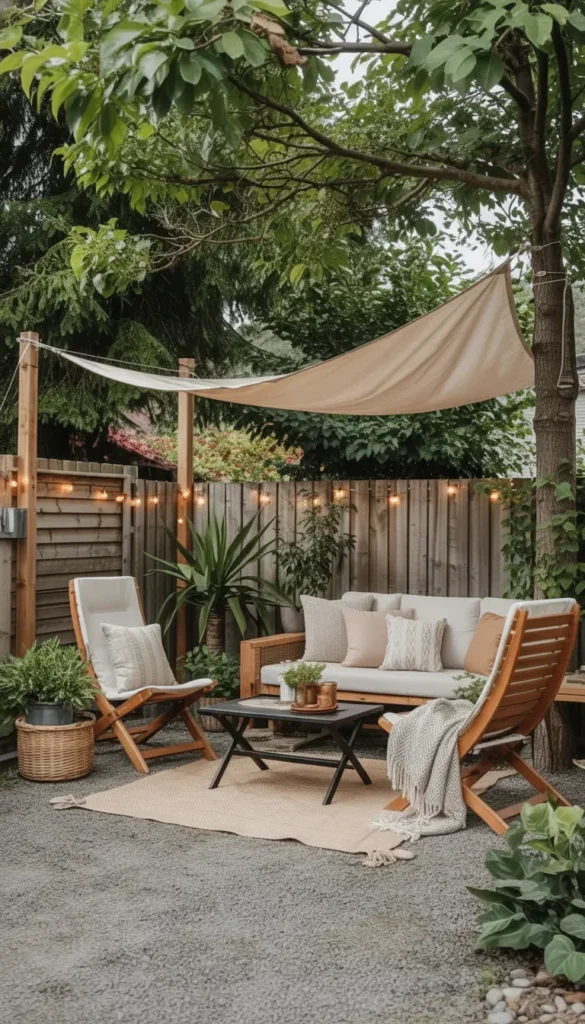
The Mindset Shift That Changes Everything
The best affordable shade setups don’t look affordable because the designer understood that placement and proportion matter more than price. A $60 shade sail at the perfect angle and height looks better than a $600 pergola in the wrong spot. Think about light angles, traffic flow, and sight lines before you spend a dollar.
Outdoor Shade Ideas For Patio Dining And Entertaining Spaces
The patio is where outdoor life actually happens — meals, celebrations, weekend breakfasts, and weeknight conversations. Shade here isn’t optional; it’s what makes all of those moments possible during the hottest part of the year.
Understanding Your Patio’s Sun Patterns
Before choosing any shade structure, spend one day observing how sun moves across your patio. This single step prevents expensive mistakes.
- Morning sun (east-facing patios) is pleasant but intense by 9–10 AM in summer
- Afternoon sun (west-facing patios) is the harshest and most important to block
- Overhead noon sun requires horizontal coverage directly above the seating area
- Partial shade from trees or buildings may mean you need less structure than you think
A sun mapping exercise takes one afternoon and saves you months of frustration with a poorly positioned shade structure.
Umbrellas: The Most Flexible Patio Shade Solution
Patio umbrellas are underrated in 2026. Modern designs go far beyond the basic center-pole style, offering genuine design flexibility.
- Cantilever umbrellas (side-pole offset designs) eliminate the awkward center pole at your dining table
- 9-foot umbrellas cover a standard 6-person dining table comfortably
- Sunbrella fabric is worth the investment — it resists fading for 5+ years
- Weighted bases (60 lbs minimum) prevent tipping in wind
Choose a color that complements your outdoor furniture rather than matching it exactly. Contrast often looks more intentional than matchy-matchy coordination.
Pin this patio dining shade guide! 📌
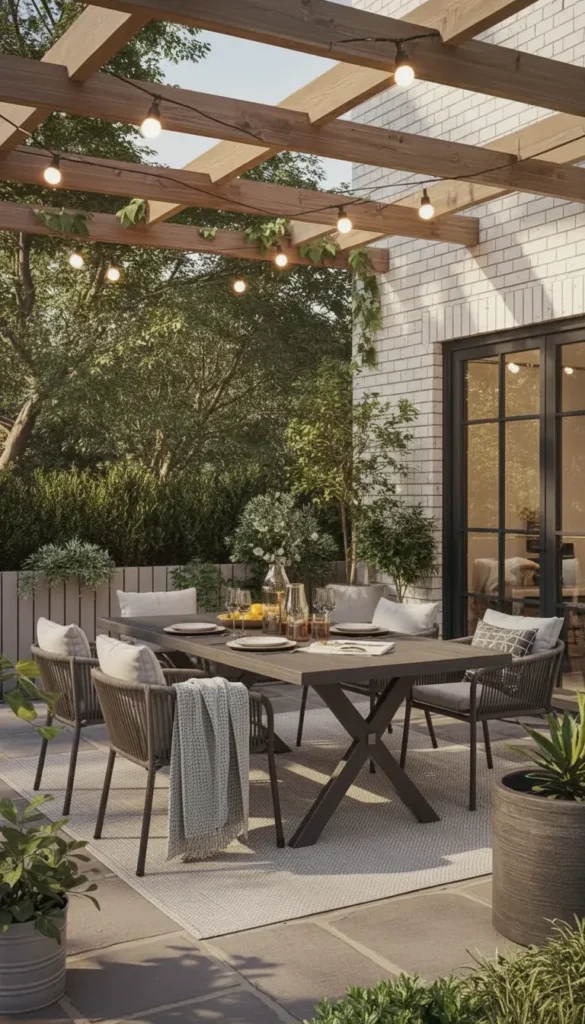
Pergola Frames Over Patio Dining Areas
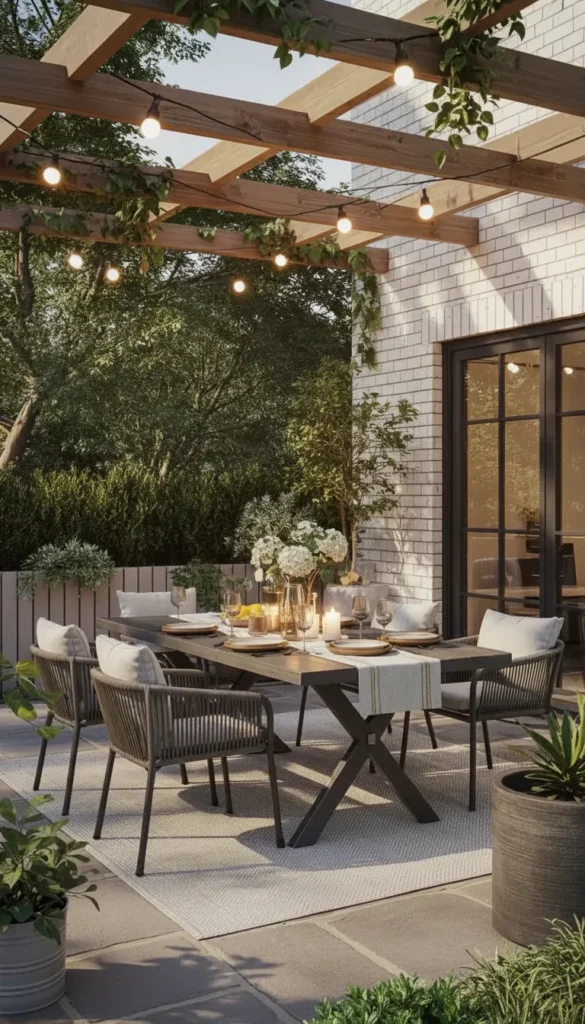
A pergola above a patio dining area creates the most architectural, designed-looking result of any shade solution.
- Position the pergola so the dining table sits centered underneath
- Overhead beams should clear seated diners by at least 7 feet (8 feet is ideal)
- Add fabric panels between beams for adjustable shade coverage
- Leave open sides to maintain the airflow that keeps dining comfortable
A 12×12 foot pergola covers a standard patio dining setup generously. Go larger (14×16) if you entertain groups of eight or more regularly.
Fabric Canopies For Clean, Modern Patio Style
Adjustable fabric canopies are trending strongly in 2026 because they offer a clean architectural look with practical flexibility.
- Retractable canvas canopies can be opened or closed in seconds
- Waterproof options mean you can leave furniture set even when rain is forecast
- Neutral colors (white, cream, warm gray) keep the patio looking fresh and bright
- Wall-mounted systems work well for covered patios attached to the house
The key advantage over umbrellas is coverage area — a single fabric canopy can shade an entire large patio without any awkward poles interrupting the space.
Layered Lighting For Evening Patio Dining
Shade structures do nothing after dark, but the right lighting makes the evening hours your favorite time on the patio.
- String lights above the dining area create a restaurant-quality atmosphere
- Hanging pendant lanterns from pergola beams add warmth and focus over the table
- Flameless pillar candles on the dining table add ambiance safely
- Solar-powered path lights define the edges of the patio space
Save this patio entertaining shade strategy! 📌
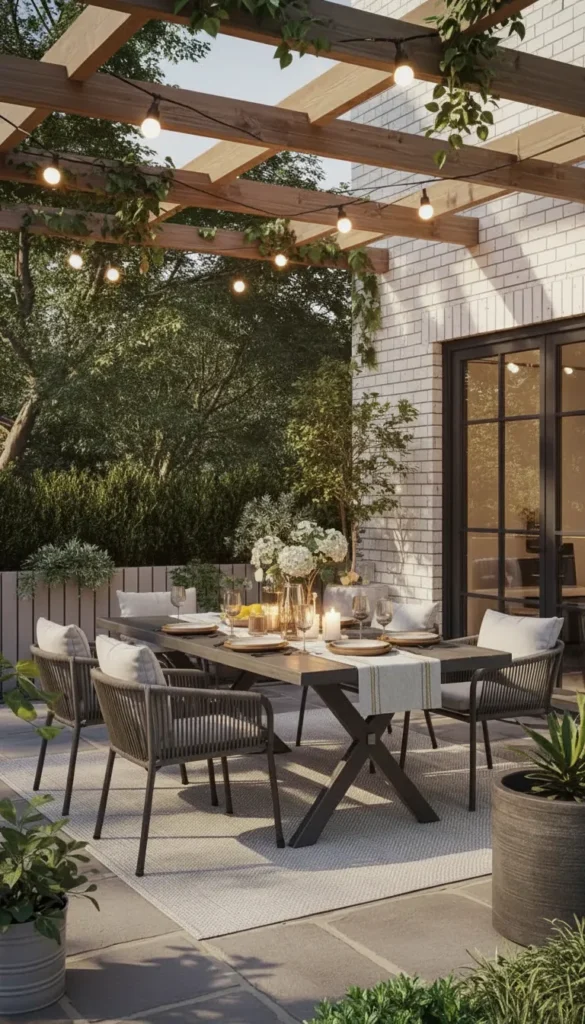
Airflow: The Design Factor Most People Overlook
A covered patio with no airflow becomes an oven. Every shade structure for dining and entertaining should be designed with cross-ventilation in mind.
- Open-sided structures allow natural breezes to pass through freely
- Elevated canopies (higher at the edges than the center) channel hot air up and out
- Misting fans add cooling power on the hottest days for around $150–$300
- Strategic plant placement on the windward side directs breezes into the seating area
A well-ventilated shaded patio will feel 10–15 degrees cooler than the surrounding yard. That difference determines whether your outdoor space gets used every day or abandoned by noon.
Cheap Backyard Shade Ideas To Cool Down Large Outdoor Areas
Shading a full backyard — not just a patio corner — feels like a big challenge. But with the right approach, you can cool down a large outdoor area quickly and affordably. The secret is thinking in zones rather than trying to cover everything at once.
Zone Your Backyard Before You Start
Large backyards work best when divided into purposeful zones with dedicated shade solutions for each.
- Active play zone for kids and pets — needs durable, freestanding shade
- Relaxation zone for adults — needs comfortable, aesthetically pleasing shade
- Dining and entertaining zone — needs overhead coverage with enough height for standing guests
- Transition zones between areas can stay open to keep the backyard feeling spacious
You don’t need to shade everything. Shading the right spots makes the whole yard feel more comfortable.
Multiple Shade Sails For Large Coverage Areas
One shade sail covers one zone. Multiple sails — overlapping at different heights and angles — can shade an entire large backyard beautifully.
- Use three to four triangular sails positioned to cover a broad area
- Vary the heights (one at 8 feet, one at 10 feet) for visual interest and better coverage
- Color coordinate sails (all the same color, or complementary tones) for a cohesive look
- Steel posts set in concrete provide the most durable anchoring for multi-sail systems
A multi-sail setup covering 400–600 square feet of backyard can be installed for $300–$600 in materials. That’s an exceptional value.
Pin this large backyard cooling strategy! 📌
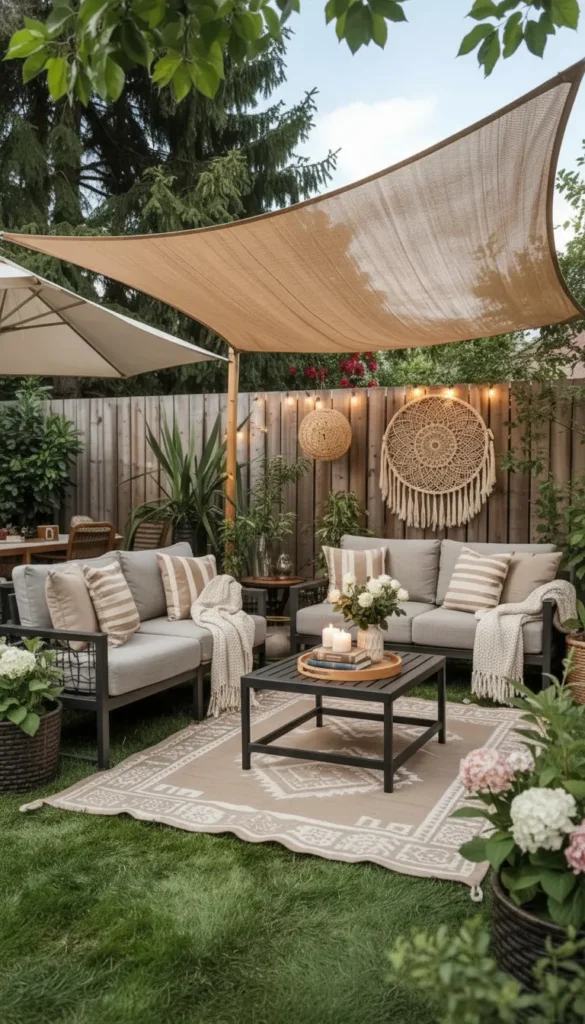
Modular Outdoor Furniture For Flexible Shade Zones
Large shaded backyard areas need furniture that can be rearranged as needs change throughout the season.
- Modular sectional sofas reconfigure for lounging or social gatherings
- Stackable chairs store efficiently during the off-season
- Folding tables allow you to expand dining capacity for entertaining
- Rolling ottomans move easily from zone to zone
Avoid heavy, fixed furniture arrangements in large shaded areas. Flexibility is what makes these spaces genuinely useful year-round.
Portable And Semi-Permanent Shade For Kid Play Areas
Children need shade during their most active outdoor hours — typically between 10 AM and 3 PM when UV exposure is highest.
- Pop-up canopy tents (10×10 feet, $80–$150) provide instant, portable shade for play areas
- Shade cloth stretched between fence posts creates semi-permanent play area coverage
- Large shade umbrellas on weighted bases can follow kids to wherever they’re playing
- Wading pool areas especially benefit from dedicated overhead shade
Choose UV-protective fabrics (UPF 50+ rating) for children’s play area shade structures. Standard fabric doesn’t block enough UV radiation for extended sun exposure.
Misting Systems And Water Features For Active Cooling
Shade blocks the sun. Misting systems actually cool the air temperature around your backyard.
- Portable misting fans ($150–$300) drop perceived temperature by 10–20 degrees
- Fixed misting line systems along fence tops or pergola beams provide whole-yard cooling
- Small water features and fountains reduce perceived heat through evaporative cooling
- Splash pads for children pull double duty as entertainment and cooling
Position misters on the upwind side of your seating areas so the cooled mist drifts naturally toward where people gather. This maximizes the cooling effect with minimal water waste.
Save this large backyard cooling approach! 📌
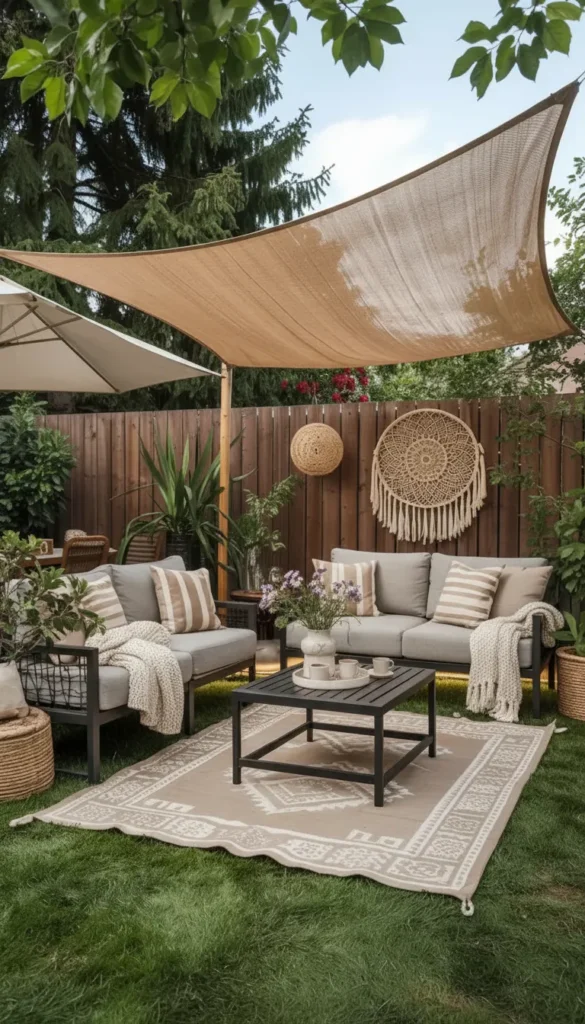
Cross-Ventilation Planning For Maximum Comfort
Shade alone won’t make a large backyard comfortable on a 95-degree day. Airflow planning is equally important.
- Identify your prevailing breeze direction (check local weather patterns for summer)
- Position shade structures so they don’t block natural airflow paths
- Leave gaps between structures to create wind channels through the yard
- Use open-weave shade cloth (30–50% shade density) rather than solid panels in key airflow zones
A large backyard with thoughtful ventilation design will stay comfortable at temperatures that would make a poorly designed space completely unusable.
Outdoor Shade Ideas With Pergola Designs For Modern And Rustic Yards
Pergolas are the gold standard of outdoor shade structures in 2026 — and for good reason. They’re architecturally beautiful, incredibly versatile, and they add genuine value to your home. Whether your style is sleek and modern or warm and rustic, there’s a pergola design that fits.
Understanding The Basic Pergola Anatomy
Before designing or buying a pergola, understand what you’re working with. A pergola has three core components.
- Vertical posts — the structural foundation; typically 4×4 or 6×6 lumber or steel
- Overhead beams — the horizontal framework that defines the roof zone
- Rafters or slats — the top layer that creates filtered shade and visual texture
Optional additions — fabric panels, climbing plants, lighting — are layered on top of this framework. Getting the base structure right is everything.
Modern Metal Pergolas For Contemporary Outdoor Spaces
Steel and aluminum pergola frames are dominating modern backyard design in 2026. They’re sleek, durable, and maintenance-free.
- Powder-coated aluminum pergolas resist rust and require no annual maintenance
- Matte black finishes create a striking, contemporary look against green landscaping
- Louvered roof systems allow precise sun and rain control with the turn of a handle
- Modern metal pergolas pair beautifully with minimalist furniture and concrete pavers
These systems typically cost $2,000–$6,000 installed. The premium price reflects genuine long-term value — they’ll outlast wood pergolas by decades in most climates.
Pin this pergola design guide! 📌
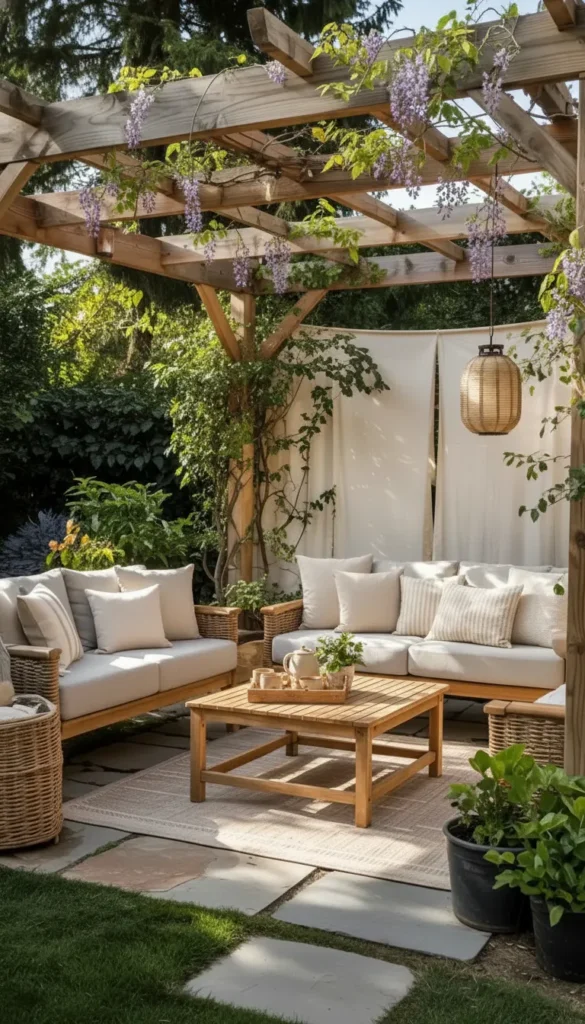
Wooden Pergolas For Rustic And Traditional Yards
Natural wood pergolas create warmth and character that metal structures simply can’t replicate.
- Cedar is the best choice for most US climates — naturally rot-resistant and beautiful
- Pressure-treated pine is the most affordable option but requires staining every few years
- Redwood is stunning and incredibly durable but expensive and harder to source
- Douglas fir offers a good balance of affordability, strength, and visual appeal
Stain or seal wooden pergolas annually to maximize their lifespan. A well-maintained cedar pergola can last 25+ years and looks better with age.
Adding Fabric Panels For Adjustable Shade
An open pergola provides filtered shade. Adding fabric panels gives you complete sun control.
- Retractable fabric panels slide open and closed along overhead tracks
- Shade cloth panels can be hung from rafters with simple hooks and removed for winter
- Outdoor curtain panels on the sides add privacy and wind protection
- Waterproof canopy fabrics extend the pergola’s use into rainy periods
Choose fabrics in neutral tones that complement your home’s exterior. Avoid trendy colors — you’ll want to love this choice for 10+ years.
Climbing Plants That Transform Pergolas Into Living Structures
The most beautiful pergolas in 2026 aren’t structures that happen to have plants. They’re living structures where plants are part of the original design.
- Wisteria creates an absolutely stunning waterfall of purple blooms in spring — and dense shade all summer
- Jasmine covers pergola beams quickly and fills the space with incredible fragrance
- Climbing roses add romantic color and work especially well on rustic wooden frames
- Grapevines provide dense shade, beautiful autumn color, and an actual harvest
Plant climbing vines at the base of pergola posts immediately after installation. Most varieties reach the overhead beams within two to three growing seasons.
Lighting A Pergola For Evening Ambiance
A pergola without lighting is underused. The right fixtures turn it into an evening gathering space that rivals any indoor room.
- Pendant lights hung from overhead beams create a chandelier effect above dining or seating areas
- String lights woven through rafters produce soft, diffused light across the entire pergola
- Wall sconces on corner posts add architectural detail and task lighting
- Smart bulbs allow dimming and color temperature control from your phone
Save this pergola enhancement strategy! 📌
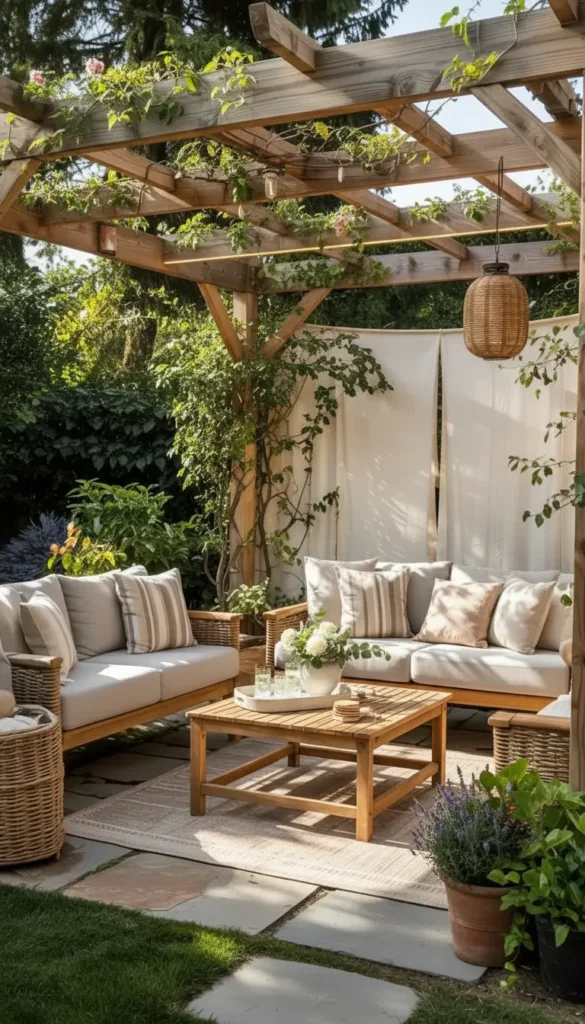
Positioning Your Pergola For Maximum Comfort And Use
Where you place your pergola determines how much it actually gets used. This decision deserves careful thought.
- Position the pergola to block the western afternoon sun — this is the harshest angle in most US regions
- Locate it close enough to the house for easy access from the kitchen when entertaining
- Allow at least 3–4 feet of clearance around the pergola perimeter for traffic flow
- Consider views from inside the house — a well-positioned pergola looks beautiful from living room and kitchen windows
The perfect pergola placement creates a space that draws you outside naturally, rather than a structure you have to consciously choose to use.
Maintenance That Keeps Your Pergola Looking New
The longevity of any pergola depends almost entirely on how well you maintain it during the first few years.
- Annual inspection of post bases for moisture damage or soil contact
- Wood structures: clean in spring, inspect for cracks, re-stain every 1–2 years
- Metal structures: check hardware for rust annually, clean with mild soap and water
- Fabric panels: remove and store during winter in most US climates
- Climbing plants: prune aggressively in late fall to prevent structural damage from weight
A maintained pergola is a permanent backyard feature. A neglected one becomes a safety hazard within five to seven years.
Conclusion
The best backyard isn’t the biggest or the most expensive — it’s the one that actually gets used. Shade is what makes that possible. When you block the brutal midday sun, create a cool, comfortable zone to gather, and design a space that feels like an intentional extension of your home, your outdoor life genuinely changes.
Start with one idea from this list that fits your budget and your yard’s biggest challenge. Whether it’s a $60 shade sail stretched between two posts or a cedar pergola wrapped in wisteria, the goal is the same: a backyard that calls you outside, keeps you comfortable, and becomes the place where your best summer moments happen. Your outdoor space is waiting — shade it well, and it will reward you every single season.

“I share simple, beautiful and affordable home decor ideas to help you style every corner of your home with ease.