

There is something about a child’s face when they plunge their hands into fresh sand for the first time. That pure, unfiltered joy — the kind no screen can replicate — is exactly what a backyard sandbox gives your family. If you have been dreaming of creating an outdoor play space that feels magical, intentional, and truly yours, you are in the right place.
This guide is for parents who want more than a plastic tub in the corner of the yard. These are 2026’s best backyard sandbox ideas — modern, safe, beautiful, and built to last. Whether you want something simple and natural or a full DIY project the whole family builds together, you will find exactly what you need right here.
Modern Integrated Sandbox Designs for 2026
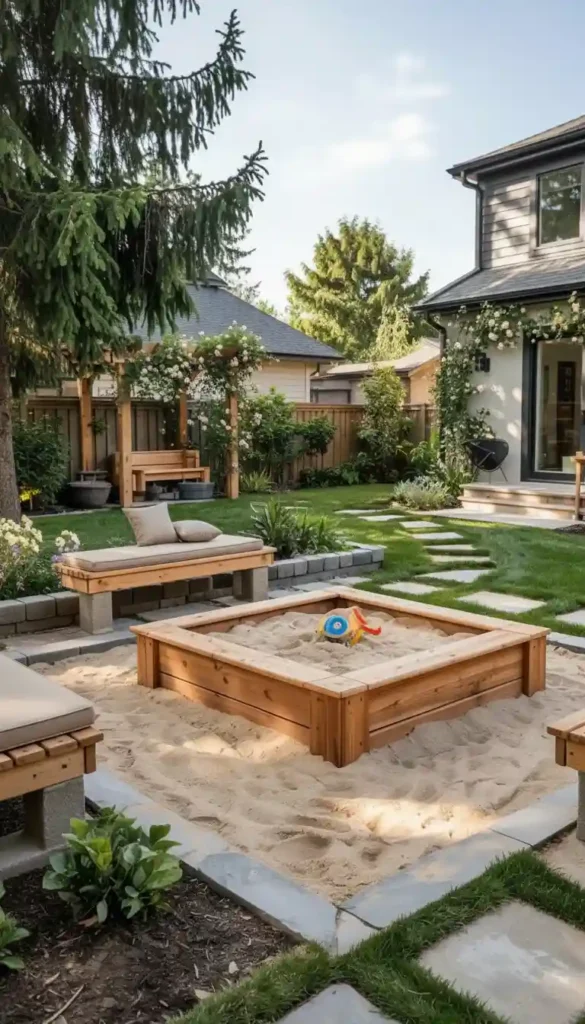
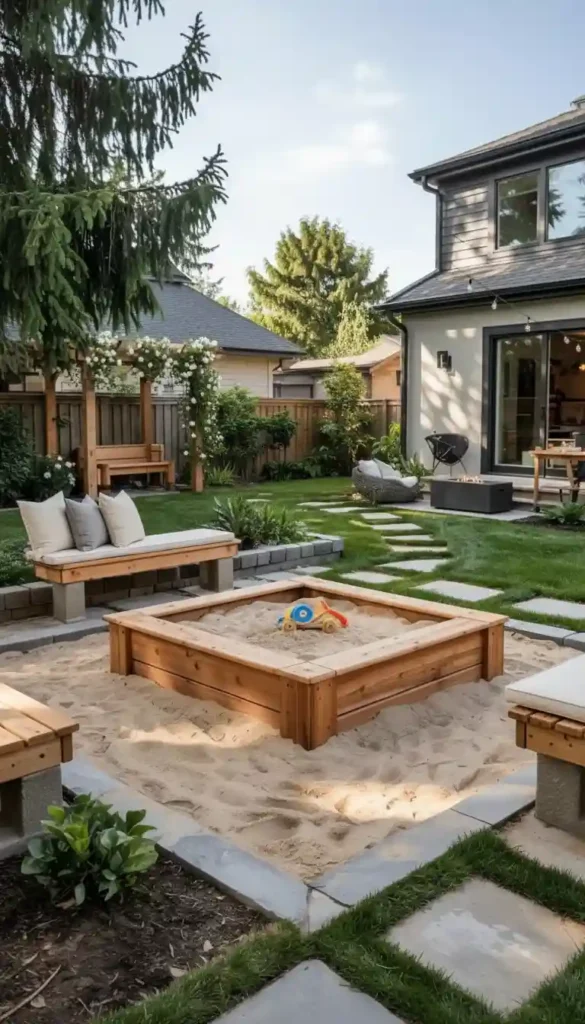
The days of the isolated, forgotten sandbox are over. In 2026, the best backyard sandbox ideas treat the play zone as a true design feature — one that complements your patio, pergola, and landscaping rather than clashing with them.
Modern families want outdoor spaces that look cohesive and feel intentional. A sandbox that blends into your yard’s overall aesthetic makes the whole space feel elevated and thought-through. It also signals to kids that their play area is important, not just an afterthought.
Choose the Right Placement First
Before anything else, placement determines how well your sandbox works.
- Position near shade — morning sun is fine, but afternoon shade protects kids from harsh UV rays
- Keep it visible from the house — supervision from a kitchen window or back porch is non-negotiable
- Avoid low spots — drainage issues will ruin even the best-designed sandbox
- Consider proximity to a water source — easy access means less mess tracked into the house
A well-placed sandbox near a shaded pergola or large tree works beautifully. It feels natural, functional, and easy to supervise.
Frame Materials That Age Beautifully
The frame is the first thing people notice, so material choice matters enormously.
- Cedar — naturally rot-resistant, smells great, ages to a silver-gray tone that looks refined
- Thermally modified wood — heat-treated for superior moisture resistance without chemicals
- Composite lumber — low maintenance, splinter-free, color-stable over years
- Avoid pressure-treated lumber with chemical preservatives near young children
Cedar in particular is a designer’s favorite because it coordinates beautifully with most deck finishes and fencing.
Match the Sandbox to Your Home’s Aesthetic
This is where modern sandbox design gets exciting.
- Use the same stain or finish color on your sandbox frame as your deck or pergola
- Choose stone edging that mirrors your patio material — travertine, bluestone, or concrete pavers all work well
- Keep the sandbox shape aligned with your yard’s geometry — rectangular for modern homes, curved for cottage gardens
- Avoid brightly colored plastic borders that clash with natural landscaping
When your sandbox looks like it belongs, it becomes a feature — not an eyesore.
Built-In Seating Around the Perimeter
Perimeter bench seating is one of the smartest upgrades you can add.
- Parents and caregivers can sit comfortably while supervising
- Kids use the benches for molding, pouring, and sorting activities
- Benches double as toy storage when hollow underneath with hinged lids
- Smooth, rounded bench edges prevent scrapes and bumps during active play
A 12-inch-wide bench seat around three sides of a 6×6 sandbox adds huge usability without much extra cost.
📌 Pin this modern sandbox design approach! 📌
Use High-Quality, Dust-Free Play Sand
Not all sand is created equal, and this decision affects your child’s health directly.
- Choose washed play sand — free of dust, debris, and fine silica particles
- Avoid construction sand or beach sand, which can contain harmful contaminants
- Look for sand labeled “natural play sand” or “washed sand” at garden centers
- Plan for approximately 1 ton of sand per 50 square feet at 6 inches deep
Dust-free sand keeps the play area cleaner and reduces respiratory irritation for sensitive kids.
Drainage Layer: The Hidden Hero
A proper drainage layer beneath the sand prevents the soggy, compacted mess that ruins sandboxes.
- Lay landscape fabric first to block weeds from below
- Add a 2-inch layer of gravel or crushed stone for drainage
- Top with your play sand — minimum 6 inches deep for satisfying digging
- Ensure the sandbox frame has small drainage gaps at the base
Families who skip the drainage layer often replace their sandbox within two seasons. Do it right the first time.
Low Voltage Lighting for Evening Play
Evening play extends the sandbox’s usability deep into autumn afternoons and summer nights.
- Install low voltage path lights around the perimeter — they are safe near children
- Solar-powered stake lights require no wiring and are easy to reposition
- String lights on a nearby pergola create a warm, magical ambiance
- Downward-facing fixtures prevent glare into children’s eyes
Lighting also improves safety by ensuring the area is clearly visible after dusk.
📌 Save this integrated sandbox strategy! 📌
The Design Principle to Remember
A sandbox designed as part of the landscape — not placed within it — will always look more refined and get used more often. When every material, color, and placement decision connects back to your broader yard aesthetic, the result feels intentional and beautiful.
Backyard Sandbox Ideas With Cover – Safe, Stylish, and Weather-Protected
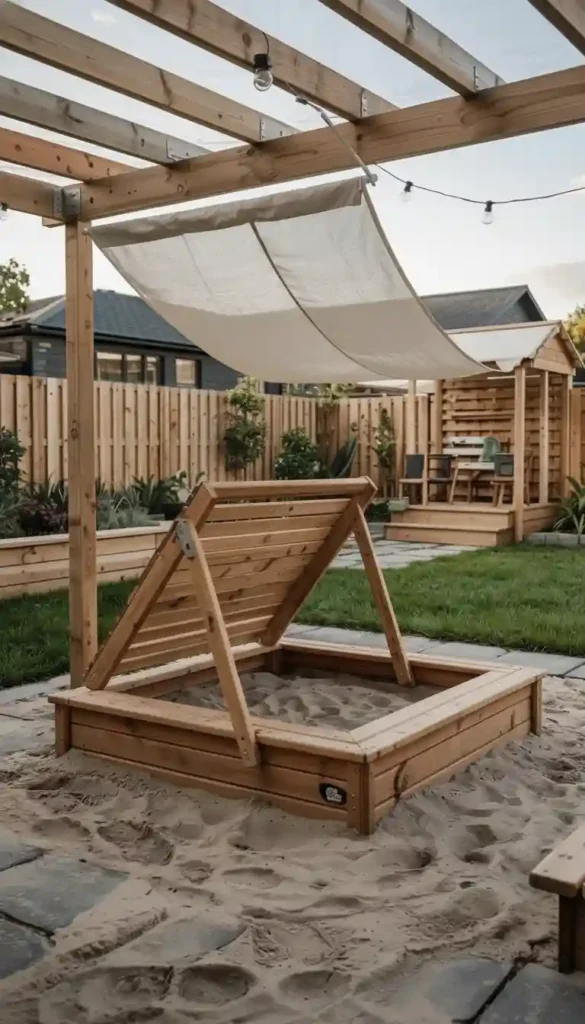
A sandbox without a cover is an open invitation for neighborhood cats, fallen leaves, and pooled rainwater. In 2026, covers have evolved from flimsy tarps to genuinely beautiful architectural additions. The right cover protects the sand and enhances the design simultaneously.
Covers are one of the most requested upgrades parents ask for after they already have a sandbox. Save yourself the trouble — plan for one from day one.
Why a Cover is Non-Negotiable
The American Academy of Pediatrics strongly recommends keeping sandbox environments clean to protect child health. Here is what an uncovered sandbox faces:
- Animal contamination — cats and raccoons treat uncovered sandboxes as litter boxes
- Debris accumulation — leaves, twigs, and dirt pollute the sand quickly
- Moisture damage — wet sand becomes compacted, moldy, and unpleasant
- UV degradation — prolonged sun exposure breaks down sand quality over time
A covered sandbox stays cleaner longer, requires less maintenance, and costs less to refresh each season.
Hinged Wooden Lids That Double as Benches
This is the most elegant and functional cover solution available.
- Build two hinged lids that fold back to become bench seats during play
- Use the same wood as the sandbox frame for a seamless look
- Add rope handles or recessed pulls for easy operation by children
- Sand the edges smooth and apply a UV-resistant exterior finish annually
When open, the lids create built-in seating. When closed, they protect the sand completely. This two-in-one design is brilliant for small yards.
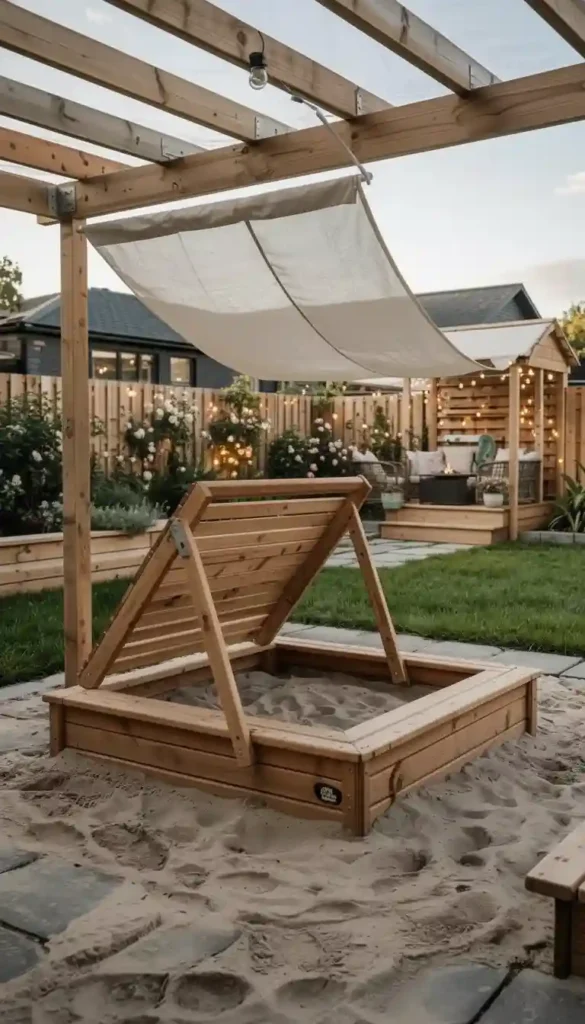
Retractable Canvas Canopies
For larger sandbox zones or covered patio areas, retractable canvas is a sophisticated option.
- Choose Sunbrella or marine-grade canvas in neutral tones — sand, slate, charcoal, or natural linen
- UV-stabilized fabric blocks up to 98% of harmful rays while allowing airflow
- Mount on a simple aluminum track system that extends and retracts smoothly
- Neutral canvas colors coordinate with nearly any outdoor furniture palette
This solution works especially well when the sandbox is integrated under an existing pergola structure.
📌 Pin this covered sandbox design! 📌
Slatted Pergola Roofs With Adjustable Louvers
For the ultimate in modern outdoor design, a louvered pergola roof above the sandbox area is stunning.
- Adjustable aluminum louvers rotate to control sun, shade, and rain protection
- Many systems are motorized and can be controlled by a smartphone app
- The slatted aesthetic is clean, contemporary, and visually appealing year-round
- When louvers close during rain, the sandbox stays perfectly dry
This is a premium investment but adds significant value and usability to the entire outdoor area, not just the sandbox.
Hardware and Safety Details
Cover hardware is a small detail that has a big impact on longevity and safety.
- Use stainless steel or powder-coated aluminum hardware — standard steel rusts quickly outdoors
- Hinges should open and close smoothly with one hand
- Add locking mechanisms for added child safety when unsupervised access is a concern
- Drainage holes in lid designs prevent water from pooling on top
Test every hinge and latch quarterly. Well-maintained hardware lasts for years without replacement.
Mesh Liner for Extra Protection
Adding a removable mesh layer beneath the main cover provides a secondary line of defense.
- Fine mesh blocks insects and small debris from entering through cover gaps
- Mesh allows airflow, which prevents mold and mildew from forming in the sand
- Removable mesh is easy to shake clean and reattach
- Works especially well in regions with heavy summer storms or dusty conditions
Think of the mesh as an air filter — it catches what the main cover misses.
📌 Save this weather protection strategy! 📌
The Cover Design Principle
The best sandbox covers look like they were designed alongside the sandbox, not added as an afterthought. When your cover material, color, and hardware all coordinate with the surrounding deck and fencing, the entire outdoor space feels thoughtfully designed and cohesive.
Backyard Sandbox Ideas for Kids – Fun, Interactive, and Age-Appropriate Layouts
A great sandbox does more than hold sand. The best ones are thoughtfully designed around how children actually play — and that changes significantly between ages two and ten. Building an age-appropriate layout means your sandbox stays relevant, safe, and engaging for years.
Child development experts consistently identify sand play as one of the most beneficial sensory activities available to young children. It builds fine motor skills, encourages creative thinking, and supports social development when children play together.
Design for the Right Age Group
Sandbox dimensions and depth should reflect the age of the primary users.
For toddlers (ages 2–4):
- Keep depth at 4–6 inches — deep enough to dig, shallow enough to be safe
- Round all frame corners and sand all edges smooth
- Smaller sandbox footprint — a 4×4 area is sufficient and easier to supervise
- Lower sandbox height of 6–8 inches from ground level for easy access
For school-age children (ages 5–10):
- Increase depth to 8–12 inches for satisfying castle and landscape building
- Larger footprint — 6×8 or 8×8 feet allows collaborative group play
- Add vertical play surfaces like chalkboard panels on one side
- Include a small water channel feature for imaginative play scenarios
Built-In Digging Stations and Play Tables
Structured play features within the sandbox dramatically increase engagement.
- A built-in play table at sandbox level lets kids stand and work on sand projects
- Raised digging stations at different heights accommodate toddlers and older kids simultaneously
- Inset mixing bowls or containers let kids separate wet and dry sand zones
- PVC pipe inserts create sand chutes and pouring channels kids love
These additions transform passive digging into structured creative play.
📌 Pin this age-appropriate sandbox design! 📌
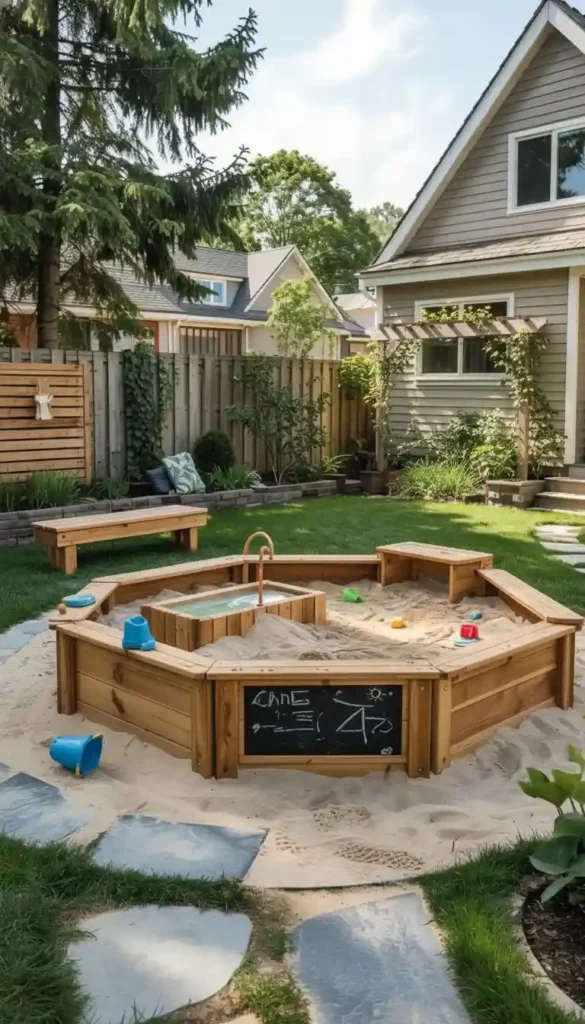
Water Channel Integration
Water and sand together create the ultimate sensory play experience.
- Run a simple PVC pipe from a nearby outdoor faucet to a small inlet at the sandbox edge
- Create a shallow channel within the sandbox that children can dam and redirect
- Use rocks and small bridges as play accessories within the water channel
- Install a drain valve so water can be emptied quickly after play
Always supervise young children around any water feature, even very shallow ones.
Chalkboard Panels and Vertical Play Surfaces
Vertical surfaces add a completely different dimension to sandbox play.
- Attach a chalkboard panel to one side of the sandbox frame for drawing and planning “construction projects”
- Add pegboard panels where kids can hang play tools like shovels, rakes, and molds
- Small shelves at the sandbox edge hold water cups and accessories within easy reach
- Magnetic boards offer another creative surface for older children
Vertical engagement keeps kids at the sandbox longer and encourages different types of play.
Safe Materials and Non-Toxic Finishes
Every surface a child touches in and around the sandbox must be safe.
- Use water-based, non-toxic exterior finishes on all wood surfaces
- Avoid oil-based stains and chemical preservatives on play surfaces
- Smooth all edges and corners — use a router bit to create a rounded profile on all frame edges
- Check for splinters seasonally and sand any rough spots immediately
- Replace damaged boards promptly — cracked wood traps bacteria and debris
Safety is not optional. It is the foundation every other design decision is built upon.
Storage Compartments Keep Play Organized
A well-organized sandbox gets used more frequently because setup and cleanup are easy.
- Build hollow bench seats with hinged lids for concealed toy storage
- Use weatherproof bins that drain water automatically
- Label storage zones with icons rather than words so young children can participate in cleanup
- Store a fine mesh strainer near the sandbox for periodic sand sifting
When cleanup takes two minutes, kids — and parents — enjoy the sandbox far more.
📌 Save this interactive sandbox layout guide! 📌
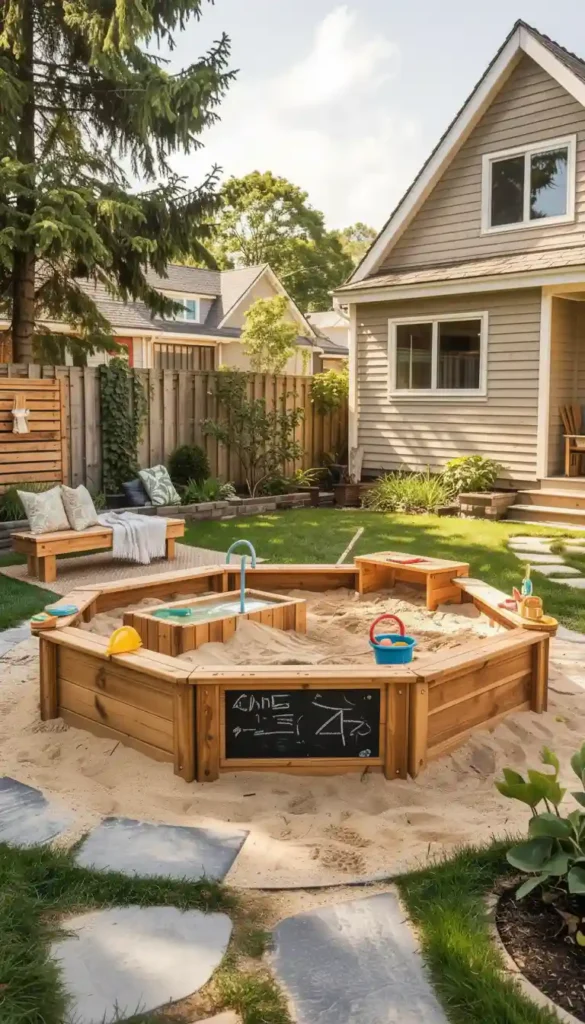
The Age-Appropriate Design Principle
The most successful sandboxes grow with the child. Design for today’s age but build flexibility in — adjustable features, expandable layouts, and modular additions allow the space to evolve as interests change. A sandbox that stays relevant at age eight is far better value than one a child outgrows at five.
Kids Sandbox Ideas Backyards – Creative Themes and Imaginative Play Zones
When a sandbox has a concept behind it — a theme, a shape, a story — children engage with it on a completely different level. Creative sandbox designs inspire longer play sessions, more collaborative storytelling, and deeper imaginative investment. In 2026, the best themed sandboxes balance creativity with timeless design.
The goal is not a cartoonish theme that dates quickly. It is a subtle concept that adds character while remaining sophisticated enough to complement your yard for years.
Theme Concepts That Work Beautifully
Choose a theme that resonates with your child’s interests and fits your yard’s aesthetic.
The Adventure Island:
- Sandbox shaped in an irregular oval to suggest an island
- Surrounding landscape features small stepping stones as “bridges”
- Driftwood logs at the perimeter create a natural border
- Small wooden sailing boats and seashells as play accessories
The Construction Site:
- Rectangular sandbox with built-in ramps at the edges
- Dump trucks, excavators, and construction toys stored in organized bins nearby
- A small raised “road” of pavers around one side
- Yellow and black safety tape detailing on the sandbox frame
The Castle Courtyard:
- Square sandbox with corner “tower” posts in matching wood
- Drawbridge-style cover that lifts with a rope
- Stone edging creates the impression of castle walls
- Medieval-themed sand molds as play accessories
📌 Pin this creative sandbox theme guide! 📌
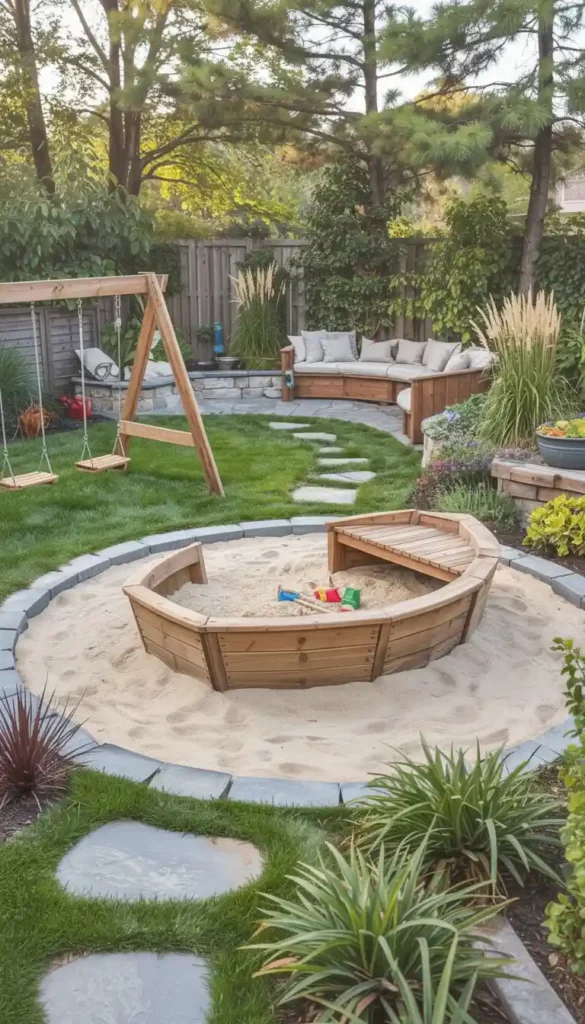
Shaped Sandbox Layouts That Inspire Play
The shape of the sandbox itself can become part of the narrative.
- Boat shape — elongated oval with a pointed bow end; children naturally assign captain, crew, and passenger roles
- Geometric forms — hexagonal sandboxes create interesting visual impact and allow kids to work in defined “zones”
- L-shaped layouts — wrap around a deck corner and create two distinct play areas within one sandbox
- Circular designs — natural and organic, coordinate beautifully with garden landscapes
Keep themed shapes structurally simple — complex outlines are harder to build, harder to cover, and harder to maintain.
Decorative Elements That Enhance Exploration
The best sandbox environments include elements just beyond the sand edge.
- Small wooden bridges between the sandbox and a nearby garden bed create transition drama
- Stepping stones leading to the sandbox feel like an adventure trail
- Ornamental grasses planted at the corners create natural privacy screening without blocking supervision sightlines
- Climbing logs nearby extend the play zone beyond the sandbox itself
- Wind chimes or sensory garden elements add auditory engagement
Every detail adds to the story without overwhelming the design.
Connect the Sandbox to a Swing Set
Combining sandbox and swing set creates a true multifunctional play zone.
- Position the sandbox at a safe distance from the swing arc — minimum 6 feet from the swing’s furthest point
- Use matching materials for both the swing set frame and sandbox frame
- Create a unified play area with a shared mulch or rubber safety surface surrounding both
- Add a small slide that ends near (but not in) the sandbox for transition play
A unified play zone keeps all the action in one area, making supervision far simpler.
Soft Landscaping as Natural Borders
Plants do the work of fencing without looking like a barrier.
- Low ornamental grasses — Miscanthus or Karl Foerster grass at corners adds movement and texture
- Lavender borders — fragrant, drought-tolerant, and visually beautiful
- Dwarf boxwood hedges — structured and evergreen; great for formal garden styles
- Native wildflower borders — encourage pollinator activity and teach children about nature
Choose plants that are non-toxic and non-thorned near play areas. Verify every plant species before planting.
📌 Save this themed sandbox design strategy! 📌
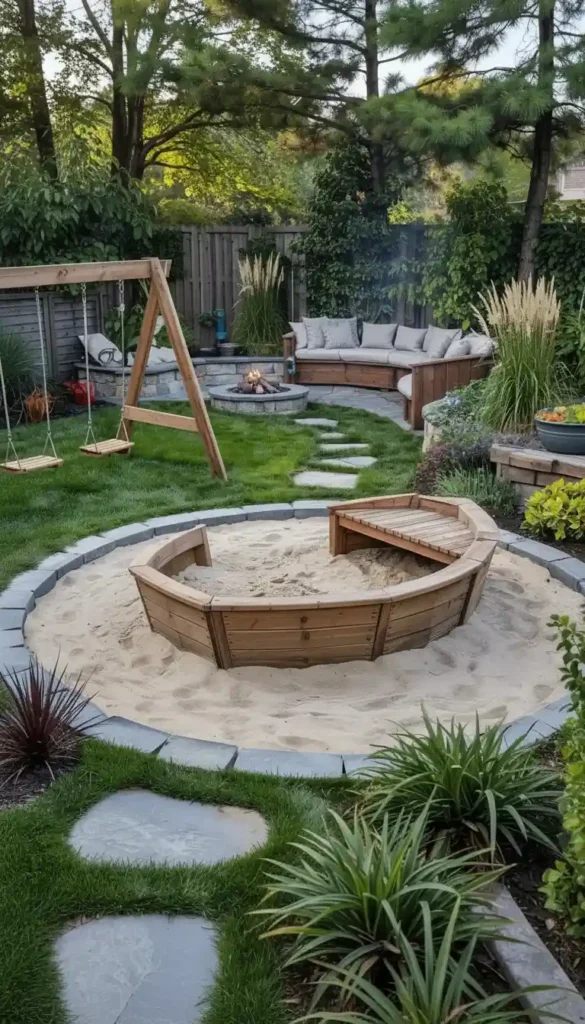
The Creative Sandbox Principle
Subtle themes age better than literal ones. A sandbox that evokes adventure is more enduring than one that depicts a specific cartoon character. The best designs suggest a story — they do not tell it in full. Leave room for the child’s imagination to complete the picture.
Natural Sandbox Ideas Backyards – Organic Materials and Earthy Textures for 2026
The strongest trend in 2026 outdoor design is the move toward natural, sustainable materials. Families increasingly want outdoor spaces that feel grounded, authentic, and connected to the environment. Natural sandbox designs deliver exactly that — and they tend to look more beautiful, not less, as they age.
Children who play in naturalistic environments show stronger sensory development and greater curiosity about the natural world. A natural sandbox is not just an aesthetic choice. It is a developmental one.
Raw Timber Frames and Reclaimed Wood
The frame material sets the entire tone of a natural sandbox design.
- Reclaimed wood beams have instant character — weathered grain, natural patina, and zero environmental cost
- Raw cedar logs used as corner posts create a rustic woodland feel
- Rough-sawn timber with a light linseed oil finish ages to a beautiful silver-brown tone
- Avoid smooth, machine-finished lumber — it looks manufactured and loses the natural aesthetic
Reclaimed wood sourced from old barn beams, railway ties (non-chemically treated), or demolished structures adds incredible character at a fraction of new lumber cost.
Natural Stone Edging and River Rock Borders
Stone edging replaces plastic and creates a grounding, organic boundary.
- River rocks arranged loosely around the sandbox perimeter create a natural transition to the garden
- Fieldstone edging — stacked flat stones — adds a cottage-garden character
- Flagstone borders coordinate beautifully with stone patios and pathways
- Pea gravel transition zones between the sandbox and lawn prevent grass intrusion without hard edges
Stone edging requires no maintenance, improves drainage at the sandbox perimeter, and looks better every year.
📌 Pin this natural sandbox design approach! 📌
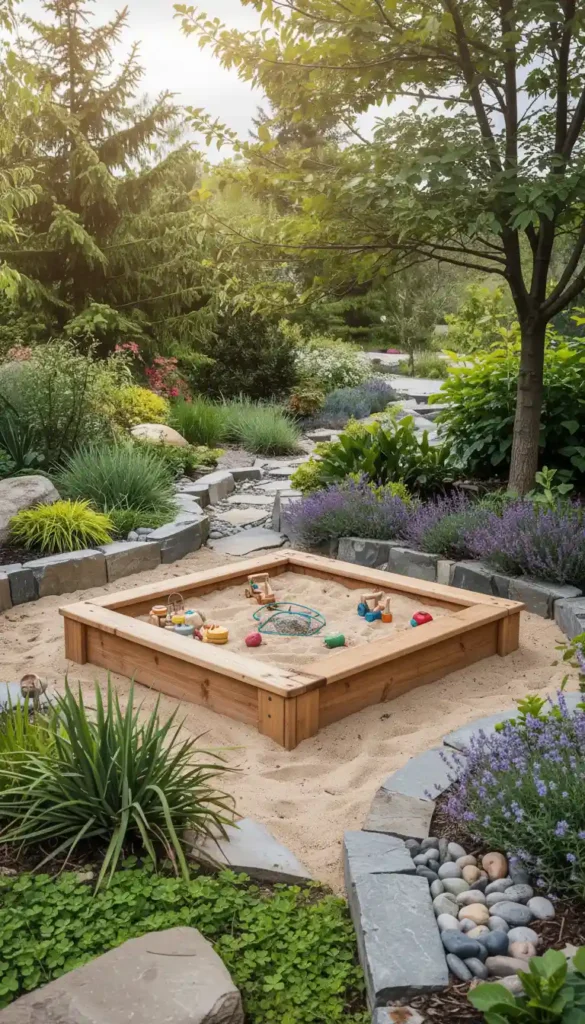
Native Plants as Living Borders
Plants create the most beautiful and functional natural boundaries.
- Native ferns thrive in partial shade near sandboxes and require no maintenance
- Ornamental sedges — low-growing, year-round green, and incredibly tough
- Wild ginger as ground cover between stepping stones adds texture and fragrance
- Serviceberry or native viburnum as backdrop shrubs provide seasonal interest
Prioritize non-toxic, non-invasive native species that support local pollinators. A sandbox surrounded by living plants teaches children environmental stewardship naturally.
Shade Trees as Organic Canopies
A mature shade tree is the most valuable and beautiful sandbox cover available.
- Plant a deciduous tree on the west or south side of the sandbox — it provides summer shade and allows winter sun
- Existing mature trees are ideal — orient the sandbox to fall under natural shade patterns
- Japanese maple is a beautiful medium-sized option for smaller yards
- Flowering dogwood or native redbud adds seasonal color while providing light, dappled shade
Confirm that no nearby tree drops berries, seeds, or sap that could contaminate the sand. Clean and sift the sand at the start of each season.
Sand Color Chosen to Complement the Landscape
Most people use standard yellow play sand, but natural alternatives create a more cohesive aesthetic.
- White silica play sand — clean, bright, and visually striking against dark timber frames
- Tan or buff play sand — coordinates beautifully with stone edging and natural soil tones
- Colored kinetic sand for a contained sensory zone within a larger natural sandbox
- Match your sand color to the surrounding gravel or stone tone for visual harmony
Whichever sand you choose, always verify it is washed, dust-free, and rated for children’s play.
Permeable Base for Rainwater Management
A natural sandbox design includes thoughtful water management.
- Install a deep permeable base — 4 inches of coarse gravel topped with landscape fabric
- Slope the sandbox base very slightly (1–2%) toward one corner to direct water away
- Add a French drain around the sandbox perimeter in areas with heavy rainfall
- Use a compostable landscape fabric rather than plastic sheeting for eco-conscious builds
Good drainage means your natural sandbox stays fresh and usable through wet seasons.
Solar Garden Lights for Natural Ambiance
Lighting in a natural sandbox design should feel organic, not industrial.
- Solar-powered stake lights with warm amber LEDs blend into garden plantings during the day
- Lantern-style garden lights on short posts coordinate with a cottage or woodland aesthetic
- String lights draped in the overhead tree branches create a magical evening atmosphere
- Pathway lights leading to the sandbox make nighttime supervision safer
Choose warm white or amber light temperatures — cool blue-white LED lighting disrupts the natural ambiance and feels harsh in garden environments.
📌 Save this natural sandbox design guide! 📌
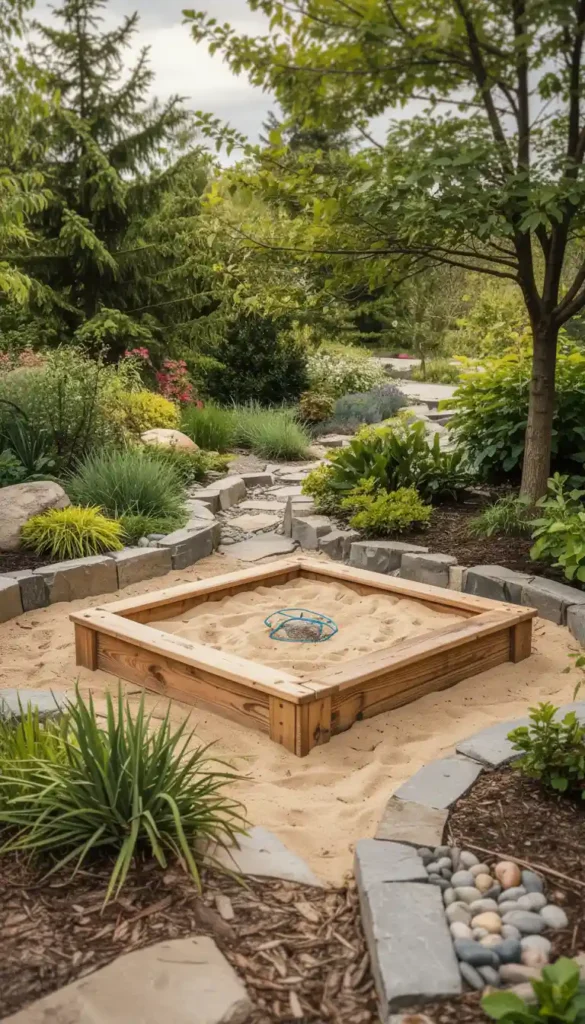
Sustainable Toy Storage
Natural design principles extend beyond the sandbox frame to everything around it.
- Teak or cedar storage crates weather beautifully and require minimal maintenance
- Galvanized metal buckets mounted on fence posts store shovels and tools with rustic charm
- Woven willow baskets work in covered outdoor areas for a natural, sustainable aesthetic
- Label storage with burned wood tags or natural twine-tied markers rather than plastic labels
Sustainable storage reinforces the natural design ethos while teaching children about environmentally conscious choices.
The Natural Sandbox Principle
A natural sandbox should feel like it grew there — not like it was dropped in from a home improvement store. When materials, plants, lighting, and layout all reflect a commitment to organic texture and earthy palette, the result is a play space that is genuinely beautiful for families and deeply engaging for children.
Conclusion
A backyard sandbox is one of the most meaningful investments you can make in your child’s outdoor life. It is where creativity is born, friendships deepen, and imaginations run completely free. The ideas in this guide — from modern integrated designs to fully natural organic builds — give you real, actionable options that work for 2026 and beyond.
Start with the design approach that feels most true to your yard and your family’s style. Whether you choose a sleek cedar sandbox with a louvered pergola cover or a reclaimed-wood natural build surrounded by native plants and river rock, the most important thing is this: build it, and they will play in it every single day.
Your backyard is waiting. Your kids are waiting. Go build something beautiful. 🌿

“I share simple, beautiful and affordable home decor ideas to help you style every corner of your home with ease.