

There’s something deeply emotional about watching your dog race across the backyard with pure joy — tail wagging, ears back, completely free. But if your yard isn’t designed with them in mind, that same joy can turn into broken plants, muddy floors, and constant cleanup stress. You deserve a yard that works for your life, not against it.
The good news? You don’t have to choose between a beautiful outdoor space and a happy, safe dog. In 2026, smart homeowners are designing backyards that are stunning AND dog-proof. This guide gives you five real, practical ideas that balance style, safety, and sanity — no matter your budget or yard size.
Dog Friendly Backyard Design Ideas – Zone Your Space for Total Harmony
The biggest mistake most pet owners make is treating the backyard as one big open space. Dogs need structure just like people do. Zoning your yard into clear activity areas is the single most effective design decision you can make.
When your yard has defined zones, everything flows better. Dogs know where to play, where to rest, and where to go potty. You know where to plant flowers without them getting destroyed. Everyone wins.
Why Zoning Works
- Dogs are creatures of habit — defined spaces reduce anxiety and destructive behavior
- Separate zones protect your landscaping from constant wear
- It makes cleaning and maintenance dramatically easier
- The yard looks intentional and designed, not chaotic
The Three Core Zones Every Dog Yard Needs
Zone 1 – The Play Area: This is where your dog burns energy. Keep this zone open, with durable ground cover like artificial turf or compacted gravel. Avoid delicate plants here entirely.
Zone 2 – The Human Lounge Area: This is your space. Use weather-resistant outdoor sofas with washable cushion covers. Add a low composite or treated wood coffee table. Keep this zone slightly elevated or separated with low edging to signal the boundary to your dog.
Zone 3 – The Transition Path: A slip-resistant paver pathway connects the zones. This protects your lawn from worn dirt tracks and gives the yard a polished, finished look.
How to Define Zones Without Spending a Fortune
- Use inexpensive landscape edging (metal or plastic) to physically separate areas
- Different ground textures signal different spaces — grass vs. gravel vs. pavers
- Low raised planters make excellent visual dividers
- A simple pergola or shade sail marks the human zone instantly
Pin this zoning strategy for your backyard makeover! 📌
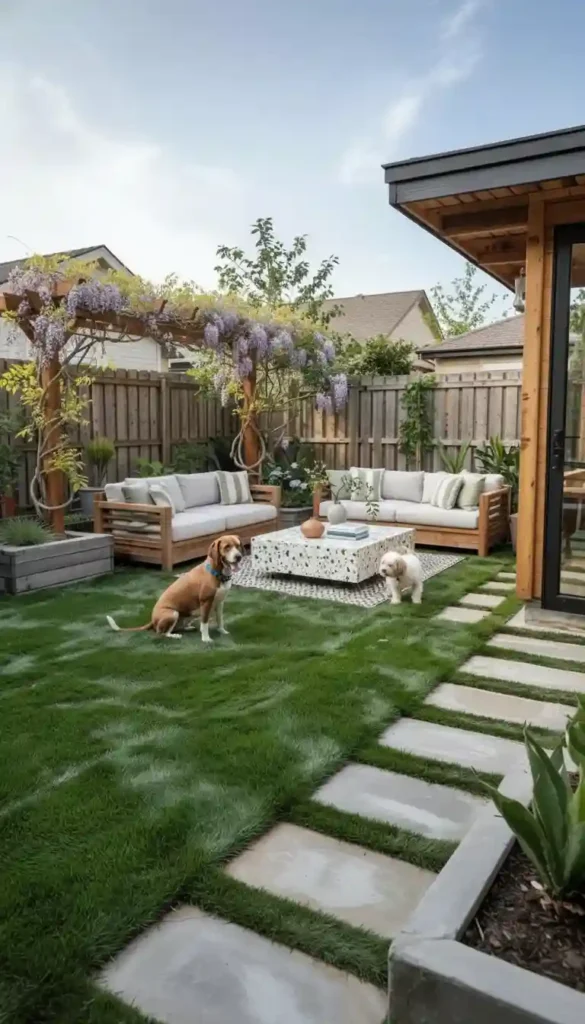
Setting Up the Perfect Human Lounge Zone
Your comfort matters too. Here’s what works best in 2026:
- Outdoor sofa: Choose all-weather wicker or powder-coated aluminum frames
- Cushions: Only use covers that unzip and machine wash — muddy paws happen
- Coffee table: Composite or treated wood handles moisture and scratches
- Flooring: Slip-resistant pavers prevent injuries for both dogs and people
Adding Shade Without Blocking the View
A covered pergola or retractable shade structure changes everything in summer. It creates a cool rest spot for your dog and a comfortable seating area for you.
- Retractable awnings are great for smaller yards
- Pergolas with climbing plants add natural beauty
- Shade sails are budget-friendly and come in multiple colors
- Always orient shade structures toward afternoon sun for maximum relief
The Drainage Plan Most Guides Skip
Here’s what most backyard design articles forget to mention: drainage. Without proper grading and water runoff management, your beautiful zones become muddy swamps after rain.
- Grade the yard so water flows away from the house and play areas
- Use permeable gravel in the dog run to allow drainage
- Install a French drain along fence lines in wet climates
- Avoid low spots where water and mud collect — these become dog magnets
Save this complete zoning guide for your yard planning! 📌
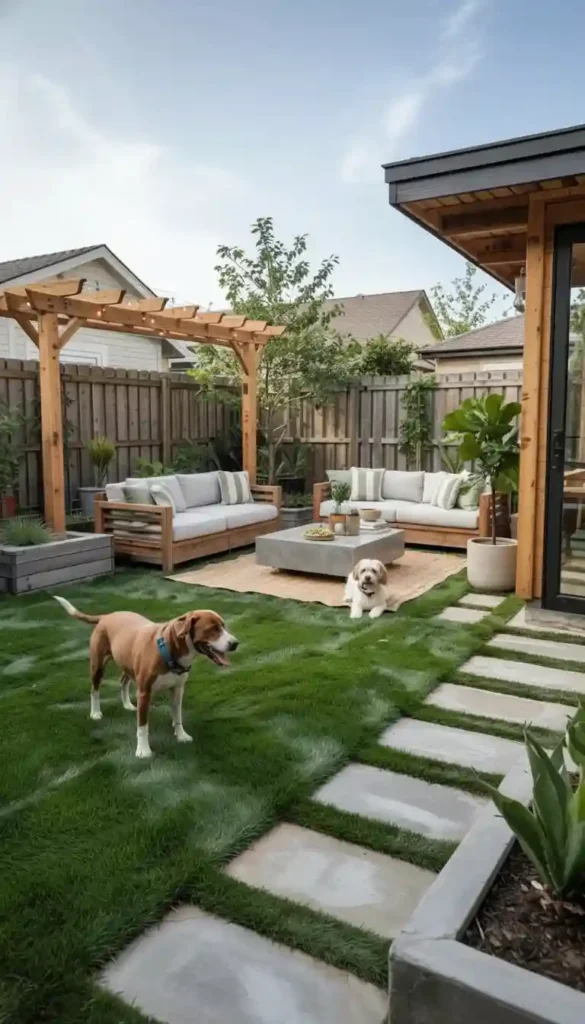
Closing Principle
A zoned yard isn’t just prettier — it’s calmer. When every part of your outdoor space has a clear purpose, both you and your dog know exactly how to use it. Start with the three zones, then build from there.
Dog Friendly Backyard Ideas on a Budget – Big Results Without Big Spending
You don’t need a designer budget to create a stunning, dog-safe yard. Smart, strategic upgrades deliver impressive results for a fraction of the cost. The key is knowing which changes have the biggest visual and functional impact.
Budget-friendly design isn’t about cutting corners. It’s about being intentional with every dollar you spend.
Start With What You Already Have
Before buying anything, evaluate your existing yard:
- Repaint fencing with a fresh coat of exterior paint — transforms the entire look for under $50
- Refresh existing mulch beds with a top layer of new mulch
- Define zones with low-cost edging materials from your local hardware store
- Rake and re-level lawn areas to improve appearance instantly
Gravel Paths Instead of Expensive Stone
One of the best budget swaps is replacing stone pavers with compacted gravel paths. Here’s why it works:
- Gravel costs 60–80% less than cut stone
- It drains naturally, preventing muddy tracks
- Dogs can’t dig it up easily if you use the right depth (at least 3 inches)
- It looks clean, modern, and intentional
Use pea gravel or decomposed granite for the most polished look. Edge it with metal landscape edging to keep it tidy.
Pin this budget landscaping approach for later! 📌
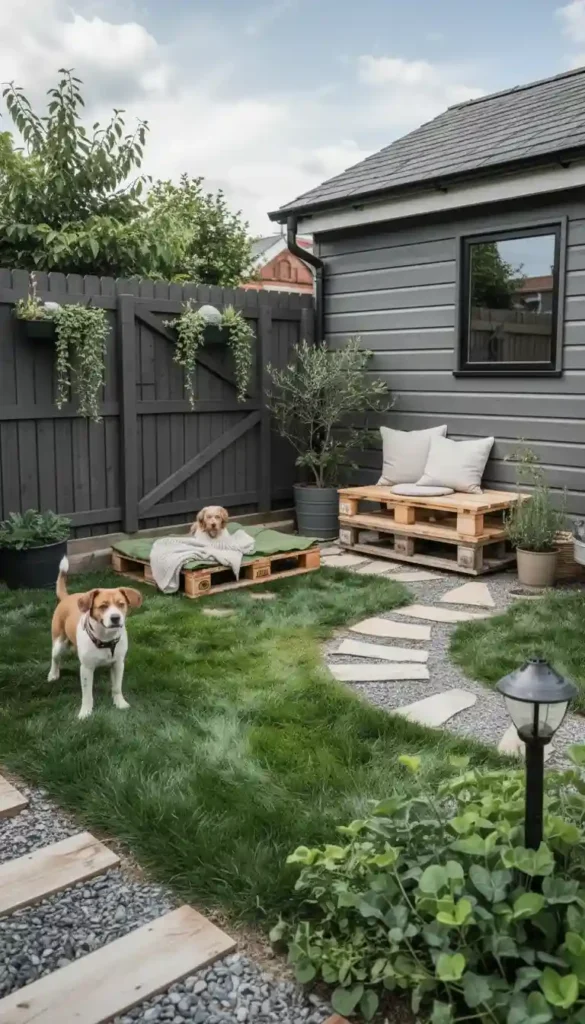
Solar-Powered Lighting – Safety on a Shoestring
Solar lights along walkways solve two problems at once: nighttime safety for your dog and beautiful ambiance for evening gatherings.
- Solar stake lights average $2–5 each
- No wiring needed — just push them into the ground
- They charge all day and illuminate automatically at dusk
- String solar lights along fences for a warm, welcoming glow
Repurposed Pallets as Dog Beds and Furniture
Wooden pallets are one of the most versatile free (or nearly free) materials available:
- Sand and seal a pallet to create a raised outdoor dog bed
- Place it in a shaded corner with an outdoor cushion on top
- Dogs love being slightly elevated — it feels secure and cool
- Stain or paint pallets to match your yard’s color palette
Grass Alternatives That Actually Survive Dogs
Traditional grass loses against heavy dog traffic. These budget-friendly alternatives hold up much better:
- Clover lawns: Grows in poor soil, stays green, withstands paw traffic, and costs less to seed than traditional turf
- Hardy grass blends: Look for “pet resistant” or “high traffic” seed mixes at garden centers
- Artificial turf: Higher upfront cost, but eliminates ongoing seeding, watering, and patching expenses
Save this budget-friendly yard transformation guide! 📌
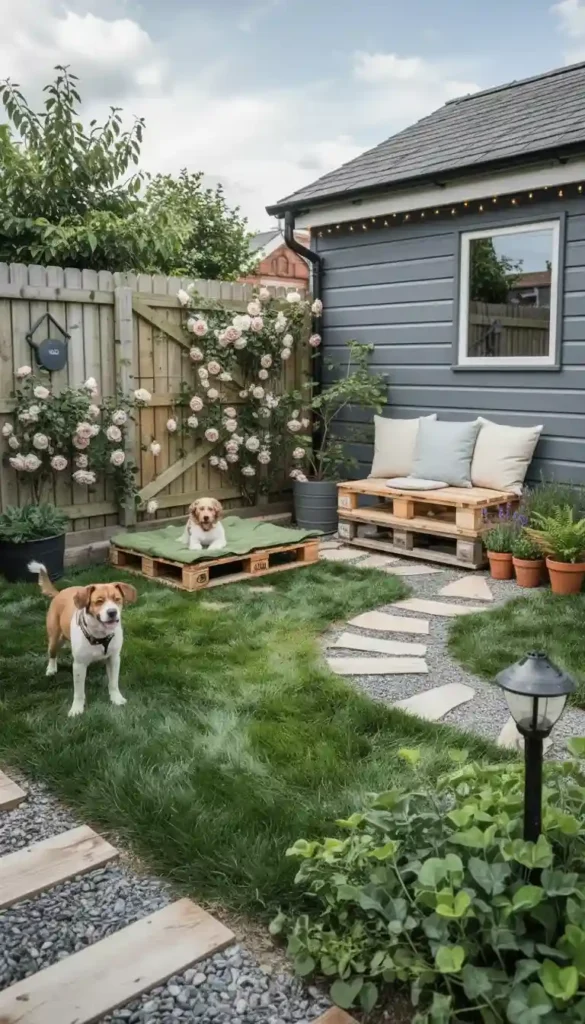
The Maintenance Calendar Nobody Talks About
A budget yard only stays beautiful if you maintain it. Build a simple seasonal calendar:
- Spring: Refresh mulch, reseed bare patches, inspect fencing for gaps
- Summer: Check drainage, clean gravel paths, trim shrubs from fence lines
- Fall: Aerate lawn, add fresh top layer of ground cover in dog zones
- Winter: Inspect and repair any storm damage before spring planting
Closing Principle
Creativity beats budget every time. The most successful pet-friendly yards aren’t the most expensive — they’re the most thoughtful. Focus on materials that are both affordable and durable, and your yard will look great for years without constant reinvestment.
Simple Backyard Ideas Dog Friendly Homeowners Will Love – Clean, Safe, and Low Maintenance
Simple is powerful. A yard with a clear, uncluttered layout is easier to maintain, safer for dogs, and genuinely more enjoyable for everyone in the family. Less clutter means fewer hazards.
When you strip away the unnecessary, what remains is a yard that functions beautifully every single day.
The Power of Open Lawn Space
Dogs need room to run. Even a modest open grass area provides:
- Space for zoomies without crashing into furniture or plants
- A visible, easy-to-clean area for daily potty monitoring
- A natural stress release that reduces destructive indoor behavior
- A safe social space for dogs to play with guests’ pets
Keep at least 60% of your yard open. Resist the urge to fill every inch with landscaping.
The Shaded Corner — One Simple Addition That Changes Everything
Every dog yard needs one dedicated shaded rest spot. This doesn’t have to be complicated:
- A market umbrella over a dog bed
- A pergola corner with a weather-resistant dog mat
- A shade sail mounted between two fence posts
- A large tree (if you already have one) with a cleared area underneath
Dogs in hot climates overheat quickly. A dedicated shade spot keeps them safe and encourages them to rest rather than dig.
Pin this simple yard layout for your dog! 📌
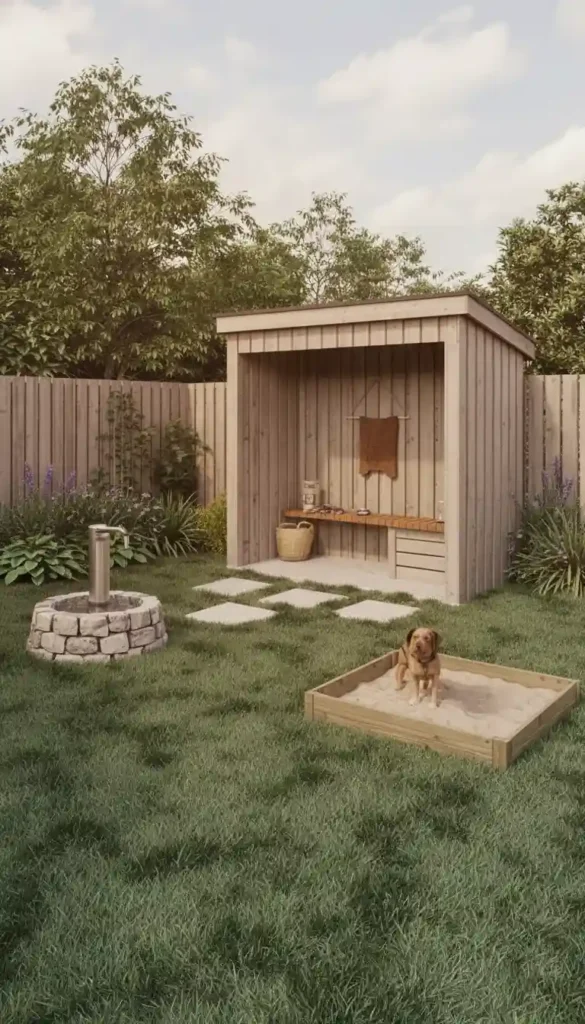
The Defined Walking Loop
A simple walking path that loops through your yard does something remarkable: it channels your dog’s natural patrol instinct into a set route, protecting your lawn edges.
- Use stepping stones, gravel, or a mowed path through longer grass
- A loop of 20–30 feet is enough for most medium to large dogs
- Position it along fence lines where dogs naturally patrol
- Add ground cover (like creeping thyme) between stones to fill gaps beautifully
The Water Station – Simple, Practical, Essential
Every dog-friendly yard needs a dedicated water point:
- Use a spill-resistant stainless steel bowl on a stone or concrete pad
- The hard surface catches spills and prevents mud
- Replace water twice daily in hot weather
- Consider a self-filling water station connected to an outdoor spigot for convenience
Bench With Storage – Organize the Chaos
A simple outdoor bench with built-in storage keeps the yard tidy:
- Store dog toys, leashes, and grooming tools in one place
- Cedar or teak wood benches handle outdoor conditions beautifully
- Position near the entry point so you can grab what you need before heading out
- Add a small hook for the leash right above the bench
Native Shrubs Along the Fence – Privacy Without Problems
Low-maintenance native shrubs provide privacy without creating hazards:
- Choose plants native to your region — they require minimal care and water
- Place shrubs along fence lines, not in open areas where dogs play
- Avoid toxic plants entirely: azaleas, oleander, and sago palm are dangerous to dogs
- Safe options include: ornamental grasses, rosemary hedges, and blueberry bushes
Save this simple dog-friendly yard checklist! 📌
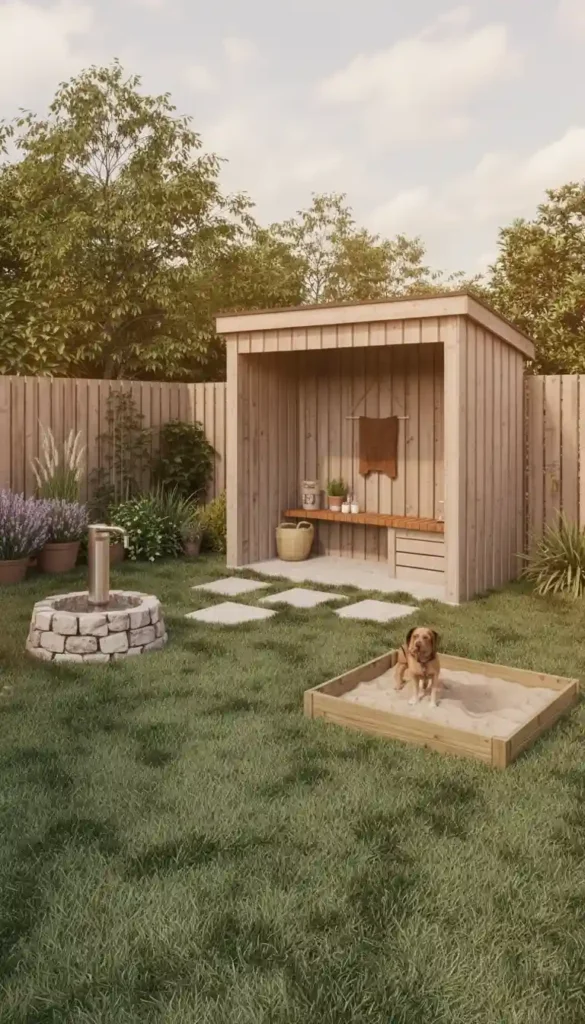
The Digging Box – Redirect the Behavior
Instead of fighting your dog’s instinct to dig, redirect it:
- Build or buy a simple wooden sandbox, filled with play sand (not builder’s sand)
- Bury toys and treats inside to attract your dog to the correct spot
- Dimensions of 4 feet x 4 feet work for most breeds
- Place it in a corner away from garden beds and lawn areas
Closing Principle
Simplicity is the ultimate sophistication in dog-friendly yard design. When every element has a clear purpose — and nothing is there just for decoration — the yard works better for everyone. Start simple, then add only what you genuinely need.
Small Backyard Ideas Dog Friendly – Smart Layouts for Compact Spaces
A small yard doesn’t mean a limited yard. Strategic planning turns even a tiny outdoor space into a dog paradise. The secret is thinking vertically, multifunctionally, and proportionally.
Compact yards force smart decisions — and smart decisions create better results than unlimited budgets ever do.
Keep the Center Open – Always
In a small yard, the center space is your most precious resource:
- Push ALL furniture, planters, and structures to the edges and fence lines
- Keep the central ground plane completely clear for dog movement
- Even a 10×10 foot open center gives most dogs room to run a short loop
- Avoid placing anything in the center that can’t be easily moved
Light Colors and Reflective Surfaces – Expand the Space Visually
Color psychology works outdoors too:
- Light-colored fencing (white, cream, pale gray) makes the yard feel larger
- Light concrete pavers reflect more light than dark stone
- Mirrors mounted on fences (in frames designed for outdoor use) double the perceived depth
- Light-toned artificial turf looks cleaner and more spacious than dark green varieties
Pin this small backyard design strategy! 📌
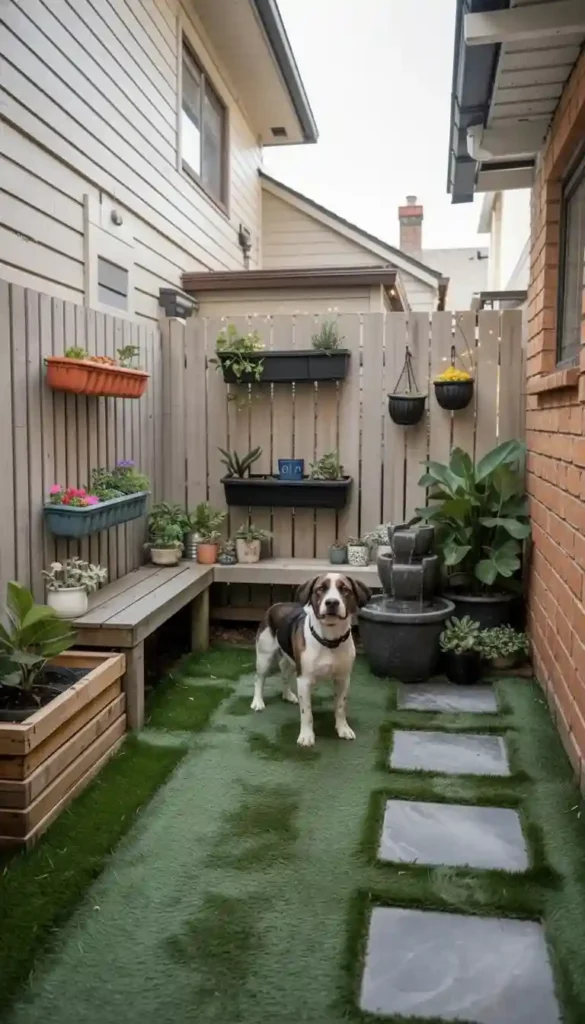
Foldable and Slim-Profile Furniture
In a small yard, furniture must earn its place:
- Folding bistro chairs can be stored flat against the fence when not in use
- A slim bench (12 inches deep) takes up far less space than a full sofa
- Wall-mounted fold-down tables are excellent for small patios
- Choose furniture in light finishes to avoid visual heaviness
Wall-Mounted Planters – Greenery Without Sacrificing Floor Space
This is one of the most impactful small-yard upgrades:
- Vertical planters attach directly to fence panels or exterior walls
- Use them for herbs, trailing flowers, or ornamental grasses
- They add color and life without any floor footprint
- Choose plastic or fiberglass over terracotta — lighter and weather-resistant
Artificial Turf for Small Yards – The Practical Choice
Small yards see intense, concentrated use from dogs:
- Artificial turf handles high-traffic, concentrated wear better than natural grass
- No bare patches, no mud, no re-seeding
- Simply rinse with a hose after use
- Modern turf looks remarkably realistic — especially in the lighter green tones
Built-In Storage Along Fence Lines
Storage is everything in a small space:
- Install low wooden storage boxes along the base of the fence
- Use weather-treated wood or composite materials
- Store dog toys, garden tools, and cushions inside
- The top of the box doubles as a seat or display surface for plants
Save this compact yard design guide for small spaces! 📌
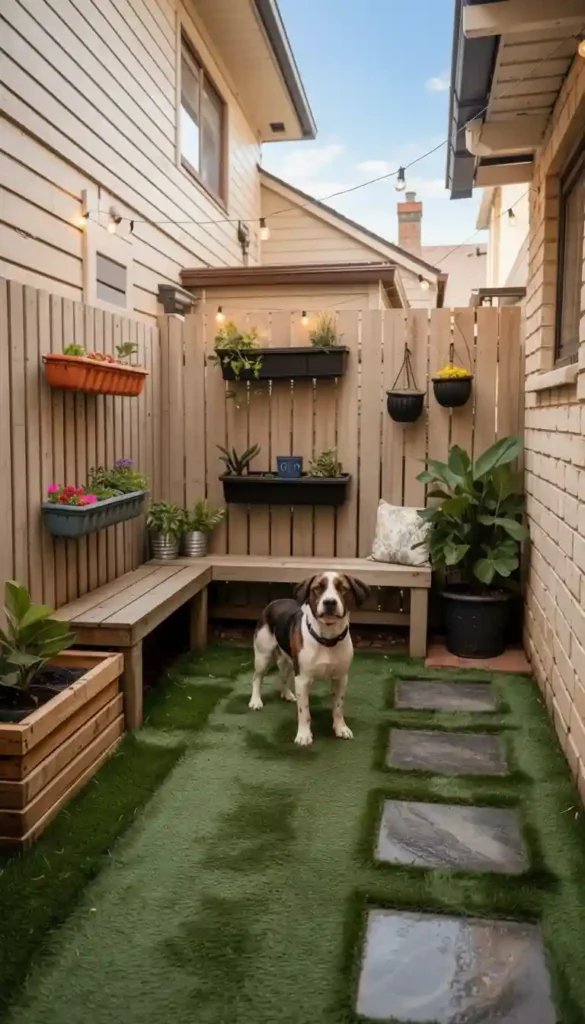
Sound Barriers for Urban Yards
Here’s what most small-yard guides skip entirely: noise. Small urban yards are often surrounded by neighbors, traffic, and construction. Noise stresses dogs.
- Dense shrubs along fence lines absorb sound naturally
- Acoustic fence panels are available at most home improvement stores
- A small water feature (fountain or bubbler) masks urban noise with white noise
- Bamboo screening is affordable, fast-growing, and excellent at noise reduction
Scale is Everything
In small layouts, proportion matters more than any individual element:
- Measure everything before you buy — a furniture piece that’s 6 inches too wide ruins the flow
- Use the 60/40 rule: 60% open space, 40% structure and greenery
- One statement plant or structure looks intentional; three competing ones look cluttered
- When in doubt, choose smaller
Closing Principle
Small yards reward precision. Every inch counts, every choice matters. By keeping the center open, going vertical, and choosing proportional furniture, you’ll create a compact yard that feels surprisingly spacious — and keeps your dog happy and active.
Dog Friendly Backyard Landscaping Design Simple Ideas – Beautiful, Durable, and Easy to Maintain
The final piece of a truly dog-friendly yard is landscaping that lasts. Beautiful plants and ground covers that can’t survive dog traffic are a waste of money and effort. The right landscaping choices make your yard look stunning while requiring minimal ongoing work.
Durability and beauty are not opposites. The right selections give you both, year after year.
Choose Ground Covers That Can Take a Beating
Not all ground covers are created equal. These options hold up best against dog traffic:
- Decomposed granite: Compacts over time, stays in place, drains excellently
- Pea gravel: Stays cool underfoot, doesn’t track into the house as much as mud
- Clover: Stays green under heavy use, fixes nitrogen into soil, is safe for dogs
- Creeping thyme: Aromatic, beautiful, and remarkably durable under paw traffic
- Buffalo grass: Native grass variety that recovers quickly from wear
Curved Pathways – Function Meets Beauty
Straight paths are efficient. Curved paths are beautiful AND functional:
- Curved pathways encourage natural movement and prevent dogs from cutting corners across garden beds
- They reduce soil erosion by slowing water runoff
- Visually, curves make a yard feel larger and more designed
- Use flagstone, stepping stones, or decomposed granite for the path surface
Pin this landscaping design approach for dog-friendly yards! 📌
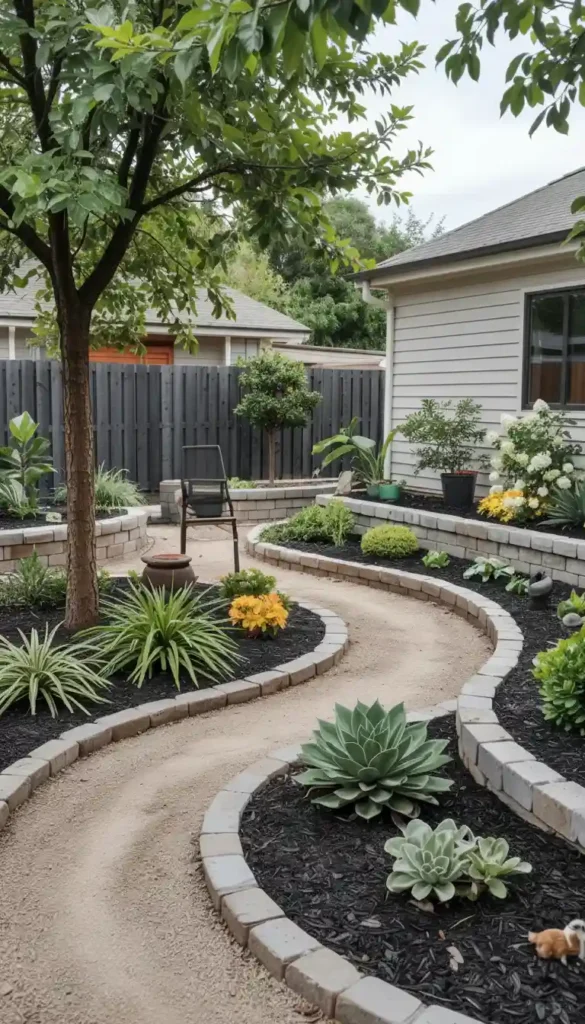
Raised Garden Beds – Protect Your Plants, Keep Your Sanity
If you love gardening, raised beds are non-negotiable in a dog-friendly yard:
- Raise beds at least 24 inches to keep most dogs out
- Use cedar, composite lumber, or galvanized steel for the frame
- Place raised beds along the perimeter, away from the main play zone
- Fill with quality soil mix and compost — the extra investment pays off in yield and appearance
Shade Trees – Long-Term Investment, Immediate Benefits
A well-placed shade tree does more than look beautiful:
- Reduces ground temperature by 10–20°F in the area beneath it
- Creates a natural rest spot for dogs during hot weather
- Adds significant property value over time
- Choose fast-growing native species: Red Maple, Eastern Redbud, or Honey Locust depending on your region
Drip Irrigation – Water Smarter, Not Harder
A drip irrigation system is one of the best long-term investments for a dog-friendly yard:
- Delivers water directly to plant roots — not to pathways or dog zones
- Reduces water usage by up to 50% compared to sprinkler systems
- Keeps pathways and play areas drier (reducing mud)
- Can be set on a timer for fully automated, hands-off watering
Durable Edging – The Detail That Pulls Everything Together
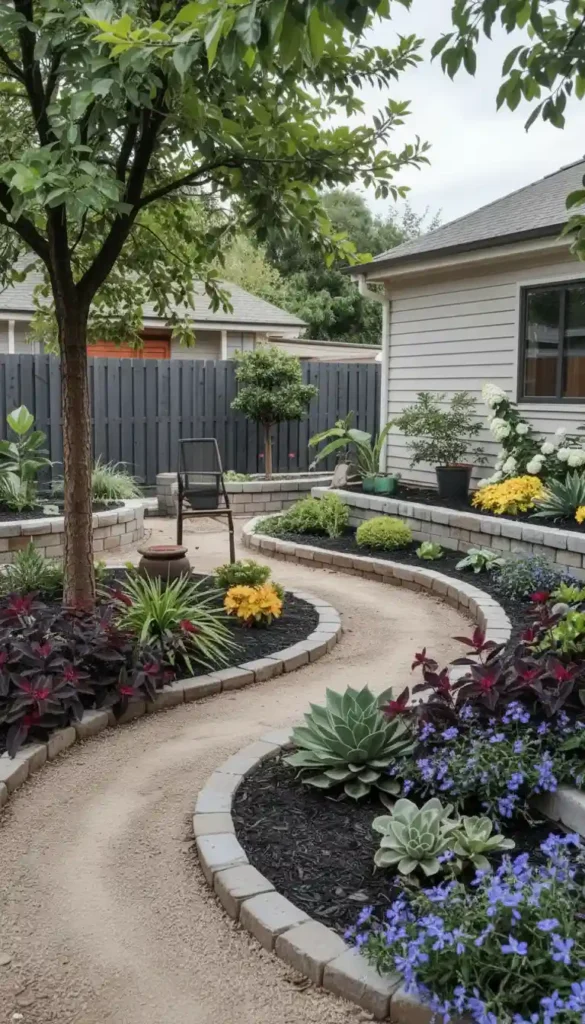
Edging separates landscaping zones and keeps everything looking sharp:
- Steel or aluminum edging is the most durable and looks cleanest
- It prevents mulch, gravel, and soil from migrating into each other
- Creates a clean visual line between lawn, path, and planting bed
- Once installed, it requires almost no ongoing maintenance
Save this complete dog-friendly landscaping checklist! 📌
Non-Toxic Sealants and Finishes – Safety First
This is one of the most overlooked aspects of dog-friendly landscaping:
- Always check that wood sealants, stains, and paints are fully cured before allowing dog access
- Choose water-based, low-VOC products whenever possible
- Avoid pressure-treated wood in areas where dogs regularly rest or chew
- Natural oil finishes (like linseed or tung oil) are the safest option for outdoor wood in dog contact areas
Grass Alternatives by Climate Zone
Different climates call for different solutions:
- Hot/dry climates (Southwest): Decomposed granite, artificial turf, or buffalo grass
- Hot/humid climates (Southeast): Zoysia grass, centipede grass, or clover blends
- Temperate climates (Midwest, Northeast): Fescue blends, Kentucky bluegrass, or creeping thyme
- Pacific Northwest: Fine fescue mixes or artificial turf due to rainfall intensity
Closing Principle
The best landscaping is the kind you forget about. When your plants are tough, your ground covers handle paw traffic, your irrigation runs automatically, and your edging stays clean — your yard takes care of itself. That’s the real goal: a beautiful space that demands your attention only when you want to be in it, not when you’re forced to fix it.
Conclusion
Creating a dog-friendly backyard in 2026 doesn’t require a massive budget or a professional designer. What it requires is intention — clear zones, smart material choices, and a commitment to designing for real life with a dog. Every one of these five ideas can be implemented independently or combined into a complete transformation.
Start with one section that resonates most with your yard and your lifestyle. Maybe it’s zoning your space, maybe it’s swapping out your ground cover, or maybe it’s finally adding that shade structure your dog desperately needs. Whatever you choose, you’re building something better — a yard where your dog is safe, your plants survive, and you actually enjoy spending time outside. That’s worth every bit of planning.

“I share simple, beautiful and affordable home decor ideas to help you style every corner of your home with ease.