

There is something deeply personal about decorating your home for Easter. It is not just about colored eggs and pastel ribbons — it is about creating a space that feels warm, hopeful, and alive after the long grey months of winter. When that first soft light of spring starts coming through the windows, you want your home to feel like it belongs to the season. You want every corner to breathe.
The challenge most homeowners face is real: you invest time and love into Easter decorating, and then the holiday passes in a weekend. Everything suddenly feels too themed, too temporary, too much. That is exactly why this guide exists. These five ideas are designed to work for Easter and keep working beautifully all spring long — so your home stays stylish, seasonal, and genuinely inviting from now through June.
Soft Florals and Pastel Layers That Carry From Easter Into Spring
This is the single most effective approach for seasonal decorating that does not feel disposable. When your color palette and materials belong naturally to spring, your Easter decor never looks out of place — before or after the holiday.
Why Soft Pastels Work So Well
The reason pastel colors feel right in spring interiors is rooted in light. After months of deep winter tones, rooms with pale yellows, blush pinks, sage greens, and soft blues feel genuinely refreshing. These shades mimic the colors that appear outside — cherry blossoms, tender new leaves, morning sky — so they feel earned rather than forced.
- Blush pink brings warmth without heaviness
- Pale yellow catches light and brightens corners
- Sage green connects the indoors to nature
- Soft blue adds calm and visual depth
When you combine these four tones in a single room, the result is a cohesive palette that does not scream “holiday.” It whispers “spring.”
How to Layer Textiles for Maximum Impact
Textiles are the fastest and most affordable way to shift a room’s feel. For Easter into spring transitions, focus on lightweight materials that add color without weight.
- Swap heavy throw pillows for linen or cotton covers in pastel tones
- Add a lightweight woven blanket draped over a sofa arm in sage or cream
- Place pastel-toned vases on surfaces — even empty, they add color
- Use a soft linen table runner instead of a full tablecloth
These swaps take under an hour and make an immediate visual difference. Best of all, nothing here looks exclusively “Easter” — it all reads as fresh spring styling.
The Role of Natural Textures
Soft colors alone can feel flat. What gives the room depth and interest is texture. Natural materials ground the pastel palette and make it feel organic rather than candy-colored.
- Woven baskets add warmth and practical storage
- Ceramic bunnies work as spring decor long after Easter
- Floral branches in a tall vase bring movement and height
- Light wood trays organize small accessories beautifully
- Neutral pottery ties everything together without competing
The goal is a room that looks like it was styled by someone who loves spring — not someone who raided a holiday aisle.
Pin this soft floral layering approach! 📌
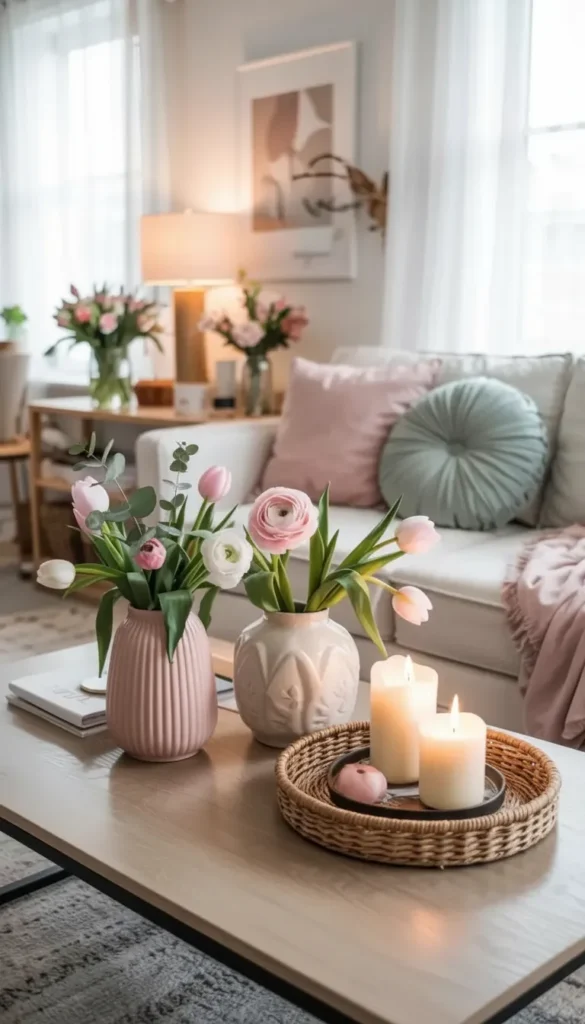
Choosing the Right Florals
Fresh flowers are the most powerful seasonal tool available. For this transition approach, choose blooms that belong to spring as a whole, not just Easter.
Best choices:
- Tulips in blush or white
- Ranunculus in cream or pale peach
- Hyacinths for fragrance and color
- Eucalyptus branches for lasting greenery
Place fresh flowers in simple glass or ceramic vases on coffee tables, entry consoles, or kitchen counters. Rotate them as they fade — a simple bouquet from a grocery store can refresh the whole look for under ten dollars.
Lighting That Enhances the Palette
One detail that designers consistently emphasize is the way lighting interacts with soft colors. Harsh overhead lighting can flatten pastels and make them look washed out. Soft, layered lighting makes the same palette feel luxurious.
- Use table lamps with linen or cream shades
- Switch to warm-toned bulbs (2700K–3000K range)
- Add small glass or reflective decor pieces to bounce light
- Place a tray with candles and greenery on a coffee table
This kind of lighting arrangement costs almost nothing to implement but significantly elevates the seasonal mood of any room.
The “Effortless, Not Staged” Principle
The best seasonal interiors feel natural. Publications focused on interior design consistently return to one idea: use real materials, real greenery, and simple accessories rather than heavily themed decorations.
What this means practically:
- Choose authentic florals over plastic or foam versions
- Select accessories that have a year-round life beyond the holiday
- Leave some negative space — not every surface needs something on it
When you follow this principle, your Easter decor does not need to be packed away on Monday morning. It just continues to live in the room as spring decor — and that is the whole point.
Room-by-Room Application Guide
Knowing how to apply soft florals and pastel layers in theory is one thing. Knowing exactly where to put what in each room is more useful.
Living Room:
- Anchor the sofa with two pastel throw pillows and one linen blanket
- Place a floral arrangement on the coffee table in a ceramic or glass vase
- Add one decorative ceramic bunny on a bookshelf as a seasonal accent
- Swap out any dark or heavy candles for cream or pale yellow alternatives
Bedroom:
- Layer pastel shams over your existing bedding — no need to replace the whole set
- Place a small bud vase with fresh flowers on the nightstand
- Add a light throw blanket in sage or blush to the foot of the bed
Entryway:
- Place a ceramic vase with branches or tall florals on the entry console
- Add a small tray with a candle, a decorative egg, and a sprig of greenery
- Swap a heavy seasonal mirror or artwork for something botanical
Each of these placements takes minutes and costs little. Together they create a home that feels completely transformed.
The Color-Blocking Approach
An advanced version of pastel layering is soft color blocking — grouping similar tones together in one zone while letting another area carry a contrasting pastel shade. This creates visual interest without chaos.
Example approach:
- Living room in blush and cream tones
- Dining area accents in sage green and white
- Entry console in pale yellow and natural wood
The colors relate to each other — they are all from the same soft spring family — but each space feels distinct. This approach works especially well in open-plan homes where multiple zones are visible from a single vantage point.
Save this seasonal layering strategy! 📌
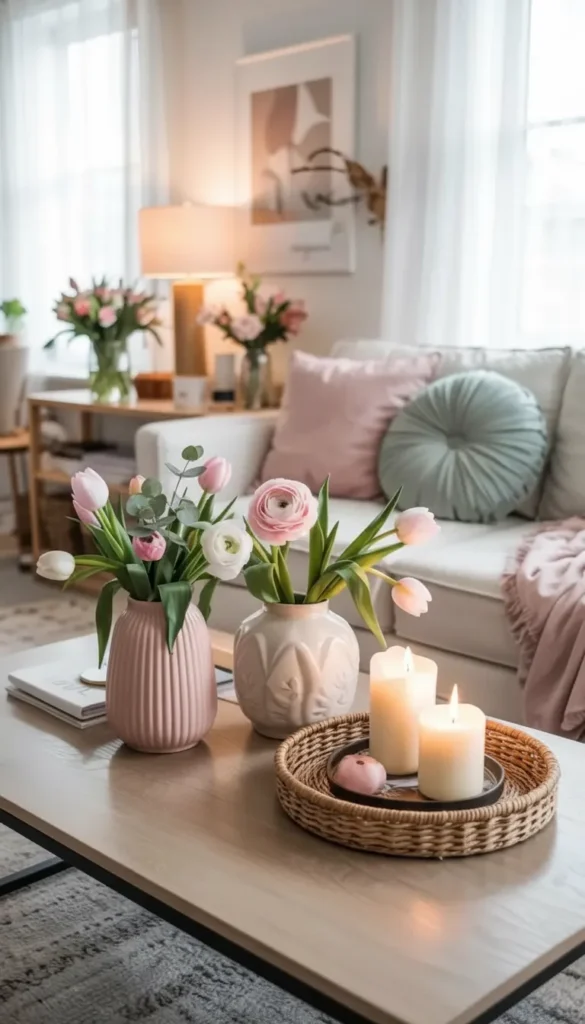
Dining Room Table Centerpiece Ideas for Spring Easter Decor With Fresh Greenery
The dining table is where Easter actually happens for most families. It is where brunch is shared, where kids hunt for eggs, where the people you love sit together. Getting the centerpiece right means creating something that enhances those moments — and then continues to look beautiful for every ordinary Tuesday dinner afterward.
Starting With the Right Foundation
Before any flowers or accessories go on the table, the foundation needs to be right. A soft neutral base sets the tone for everything layered on top.
- Use a light linen tablecloth or runner as the base
- Linen in natural, white, or oatmeal tones works for every season
- A runner allows the wood or surface of the table to show through — which adds warmth
- Avoid overly themed table linens that only work for a single holiday
This base layer is the most important investment you can make in a transitional centerpiece. Get it right and everything else layers beautifully on top.
Building the Centerpiece Structure
A successful centerpiece has three elements working together: height, texture, and color. Without all three, the arrangement tends to feel flat or unfinished.
For height:
- Use a tall glass vase with olive branches or eucalyptus
- Add candlesticks at varying heights alongside shorter elements
- One taller arrangement flanked by two lower ones creates natural visual movement
For texture:
- Combine ceramic vases with glass jars and a natural wood tray
- Mix smooth surfaces (glass, ceramic) with organic ones (greenery, wood)
For color:
- White flowers anchor the palette and work with every table setting
- Add a few pastel eggs or small Easter figurines to acknowledge the holiday
- Keep the color additions subtle — you want seasonal, not costume-party
Pin this dining table centerpiece formula! 📌
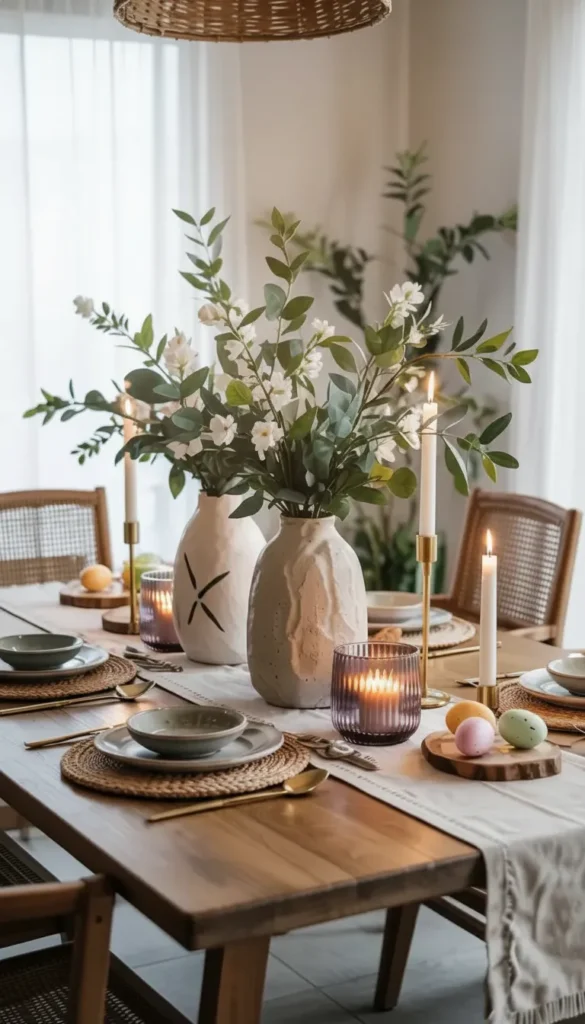
The Odd Numbers Rule
Interior designers have a consistent recommendation for table and surface styling: use odd numbers of objects. Three or five elements create visual movement across the arrangement. Even numbers tend to feel static and overly symmetrical.
Practical application:
- Three vases at different heights rather than two matching ones
- Five elements on a tray — two candles, one central bloom arrangement, two small ceramic pieces
- Five sprigs of greenery arranged loosely rather than four in a tight row
This is a small rule with a disproportionately large impact on how polished the final look appears.
Adding Easter Without Going Overboard
You want the table to acknowledge Easter without making the whole room feel like it only functions one weekend a year. The key is proportion — Easter-specific elements should be accents, not the dominant theme.
Appropriate Easter accents for a transitional table:
- A small nest with a few pastel eggs tucked into the centerpiece
- One ceramic bunny placed to the side of the main arrangement
- Pastel taper candles in neutral holders
- Subtle spring ribbon tied around a vase
What to avoid:
- Overtly cartoonish Easter figures that have no life outside the holiday
- Bright primary colors that clash with the soft spring palette
- So many Easter elements that the table loses its elegance
Making It Work for Everyday Spring Dining
After Easter brunch is cleaned up, the centerpiece should be able to stay. Here is how to make that transition seamless.
Remove the Easter-specific accents (eggs, bunnies) and replace them with:
- Additional greenery cuttings from the garden
- A small potted herb like rosemary or thyme
- A simple white flower arrangement from the grocery store
The linen runner, the mixed vases, the candles — all of those stay. The table looks spring-ready without any Easter associations. This is the whole value of building the centerpiece with a transitional structure from the beginning.
Texture at the Table Settings
One often-overlooked element is the texture of the place settings themselves. The centerpiece does not exist in isolation — it interacts with every plate, glass, and napkin on the table.
- Woven placemats in natural fibers warm up any table
- Stoneware plates in neutral tones complement spring florals beautifully
- Linen napkins rolled loosely feel more spring-like than tightly folded formal ones
- Simple glassware lets the centerpiece remain the visual focus
Seasonal Greenery That Lasts
One of the most practical choices for a spring Easter centerpiece is greenery that actually lasts through the season — not just the holiday weekend.
Long-lasting greenery options:
- Eucalyptus stems — stay fresh in water for two to three weeks and dry beautifully afterward
- Olive branches — incredibly long-lasting and architecturally interesting
- Lemon leaf — deep glossy green that provides contrast against soft florals
- Rosemary sprigs — functional, fragrant, and genuinely spring-appropriate
These are not grocery store bouquet filler. They are substantial, seasonal, and beautiful on their own. A simple arrangement of mixed greenery in a ceramic vessel makes a complete centerpiece without a single flower.
Scaling the Centerpiece to the Table
One mistake that undermines even the most beautiful centerpiece is getting the scale wrong. A centerpiece that is too small for the table disappears. One that is too large blocks conversation.
General sizing guidelines:
- For a 4-person table (36–48 inches), a centerpiece arrangement of 12–16 inches wide is ideal
- For a 6–8 person table (60–72 inches), use multiple elements spread across 24–36 inches
- Height should not exceed 12–14 inches for seated conversation — or go very tall (30 inches or more) with very slim stems so sight lines pass through easily
When in doubt, go lower and wider rather than tall and narrow. Low arrangements feel more relaxed and are easier to have conversations across.
Save this complete spring table styling approach! 📌
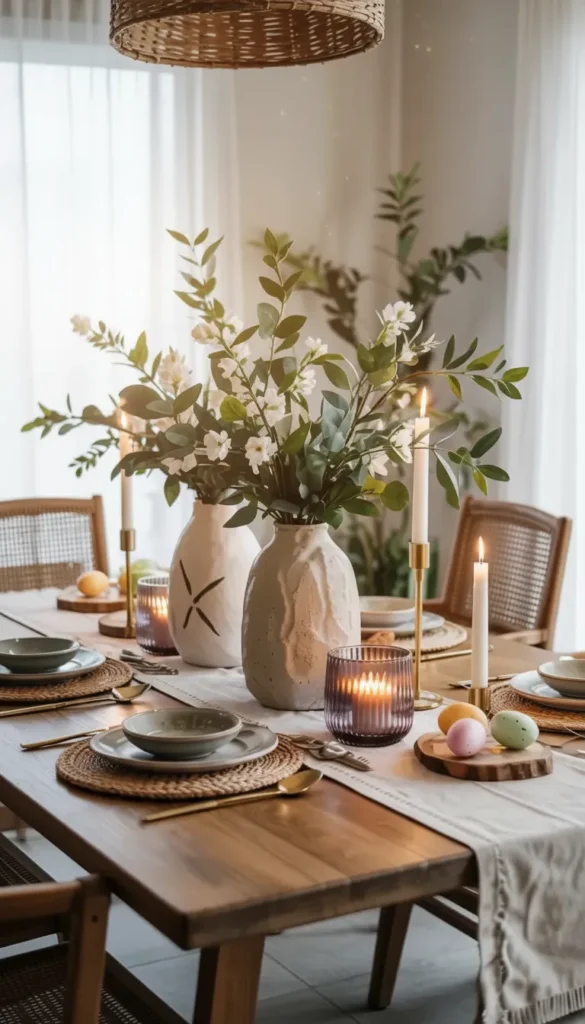
Elegant Spring Easter Mantel Decor Ideas With Light and Airy Styling
The mantel is the natural focal point of any living room. It is the place the eye goes first. For Easter into spring decorating, a well-styled mantel can anchor the seasonal mood of the entire space — and because it is elevated and visible from across the room, even small changes have significant visual impact.
The Core Philosophy: Airy Over Cluttered
The most common mistake in mantel decorating is overcrowding. When every inch is filled, the eye has nowhere to rest and the whole display feels visually heavy — the opposite of the light, airy mood that spring calls for.
The guiding principle here is intentional negative space. Every piece on the mantel should be chosen deliberately, and the space between pieces should be as considered as the pieces themselves.
- Start with fewer items than you think you need
- Add one piece at a time, stepping back to assess after each addition
- Stop before the mantel feels full
- A mantel that feels 70% full looks more elegant than one that feels 100% full
Choosing the Central Anchor Piece
Every well-styled mantel starts with one dominant central element that everything else supports. This piece provides the visual foundation for the entire arrangement.
Strong central anchor options:
- A large mirror with a simple frame
- A framed botanical print in soft spring tones
- A piece of artwork featuring florals or landscape
- An oversized ceramic vase with branches
Once the anchor is in place, all other accessories are positioned in relation to it — never competing with it, always complementing it.
Pin this mantel styling approach! 📌
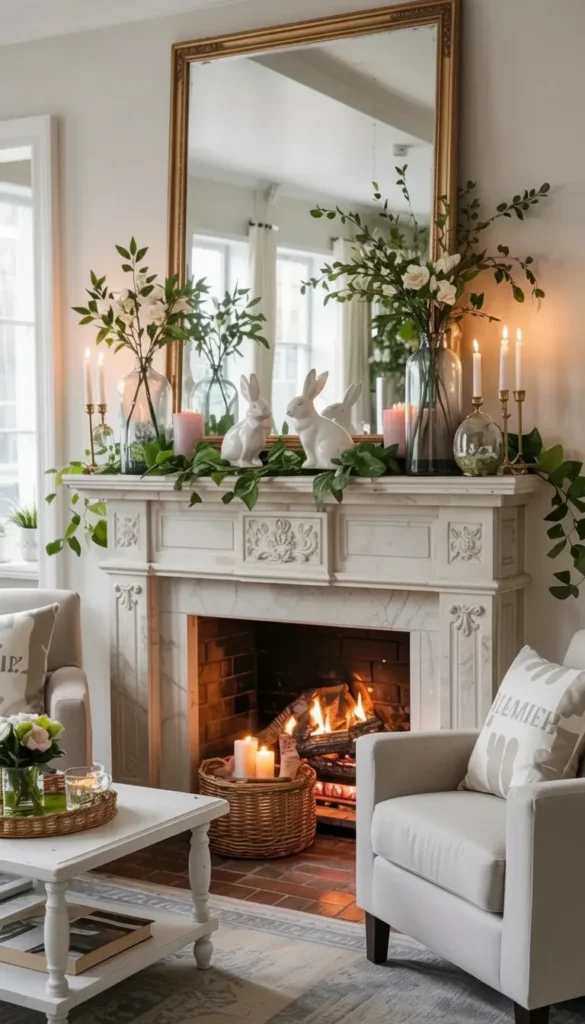
Building Out From the Center
With the anchor in place, layer accessories outward toward the edges of the mantel. The goal is a graduated arrangement with the tallest element near the center and progressively lower items toward the edges.
Recommended accessories for spring Easter mantels:
- White ceramic bunnies (works as spring decor well beyond Easter)
- Glass cloches with small moss or floral arrangements inside
- Delicate floral arrangements in small bud vases
- Candlesticks with soft pastel or cream candles
- Natural branches or moss accents for organic texture
Work in a consistent color palette. White, cream, sage, and soft blush together create a cohesive display that looks curated rather than collected.
Height Variation Is Everything
A flat mantel display — where everything is roughly the same height — looks static and uninspired. Height variation creates visual movement and makes the arrangement feel alive.
Practical ways to create height variation:
- Use books stacked under smaller vases to elevate them
- Choose candlesticks in two or three different heights
- Let flowering branches extend significantly above the mantel line
- Place low ceramic pieces at the edges to frame taller center elements
This principle applies whether you have five items on the mantel or fifteen. The variation in height is what gives the arrangement energy.
Incorporating Easter Accents With Restraint
Easter-specific decor on a mantel works best when it is subtle. One or two clearly Easter-themed pieces are charming. Five or six make the mantel look like a holiday display rather than a styled interior.
Effective Easter accents for mantels:
- One pair of small ceramic bunnies flanking the central anchor
- A glass cloche with a nest and two or three decorated eggs inside
- A pastel candle in an otherwise neutral arrangement
- A small wreath of spring flowers leaned against the mirror or wall
After Easter, remove the eggs and nest from the cloche, swap the pastel candle for cream, and the mantel continues to look beautiful as pure spring decor.
Using Reflective Elements to Brighten the Display
Natural light changes throughout the day, and a well-designed mantel responds to that movement by incorporating reflective surfaces that bounce light around the room.
- Small glass vases catch morning light beautifully
- Metallic candle holders add warm glow in the evening
- A mirrored tray as a base for grouped accessories doubles the visual depth
- Mercury glass or frosted glass pieces diffuse light softly
These elements are especially valuable in rooms that do not receive a lot of direct sunlight. They make the mantel feel luminous even on overcast spring days.
Maintaining the Mantel After Easter
The true test of a great transitional mantel is how it looks the week after Easter. If you have styled it thoughtfully, very little should need to change.
Post-Easter mantel edit — what to remove:
- Decorated eggs from inside any glass cloches
- Overtly Easter-themed figurines (cartoon bunnies, chicks)
- Pastel candles if you want a more neutral tone going forward
What to add instead:
- A potted spring plant — a small orchid, a blooming succulent, or a herb
- Fresh greenery or flowers replaced from the farmers market
- A new botanical print or piece of art for the season
With these small swaps, the same mantel framework carries you through May and into early summer with no additional effort.
Mantel Styling for Different Fireplace Sizes
Mantel width significantly affects how you should approach the arrangement. A narrow mantel of 4 feet calls for a different strategy than a wide mantel of 7 feet or more.
For narrow mantels (under 5 feet):
- Focus on one strong central anchor (mirror or artwork)
- Keep accessories to three pieces maximum
- Let height create the drama rather than width
For wide mantels (5–7+ feet):
- Create two distinct groupings on either side of a central anchor
- Use the center for the tallest, most dominant element
- Allow accessories to spread comfortably without crowding
For both widths: maintain negative space. Resist the urge to fill every inch.
Save this complete mantel decorating strategy! 📌
Spring Easter Front Porch Decor Ideas for a Warm Seasonal Welcome
The front porch is your home’s first impression. It is what visitors see before they reach the door, and it sets the expectation for everything inside. A thoughtfully decorated porch communicates that someone lives here who cares about their home — and who knows what season it is.
For Easter into spring, the porch has a unique advantage: outdoor decor naturally borrows from the living landscape around it. Flowers, greenery, and natural textures look genuinely at home outside in a way they sometimes have to work harder to achieve indoors.
Starting With a Seasonal Wreath
The wreath is the signature element of front door decor and the first place to make your spring Easter statement. A well-chosen wreath acknowledges the holiday while remaining beautiful for months.
What makes a great transitional Easter wreath:
- Greenery as the base (eucalyptus, olive, or mixed spring leaves)
- Small accent flowers in white, blush, or soft yellow
- Subtle Easter elements — a small nest, a few eggs, a simple ribbon
- Natural materials that weather gracefully outdoors
Avoid:
- Plastic Easter eggs that fade and crack in sunlight
- Overtly cartoon-style decorations
- Bright primary colors that clash with your door color
Pin this front porch wreath and planter approach! 📌
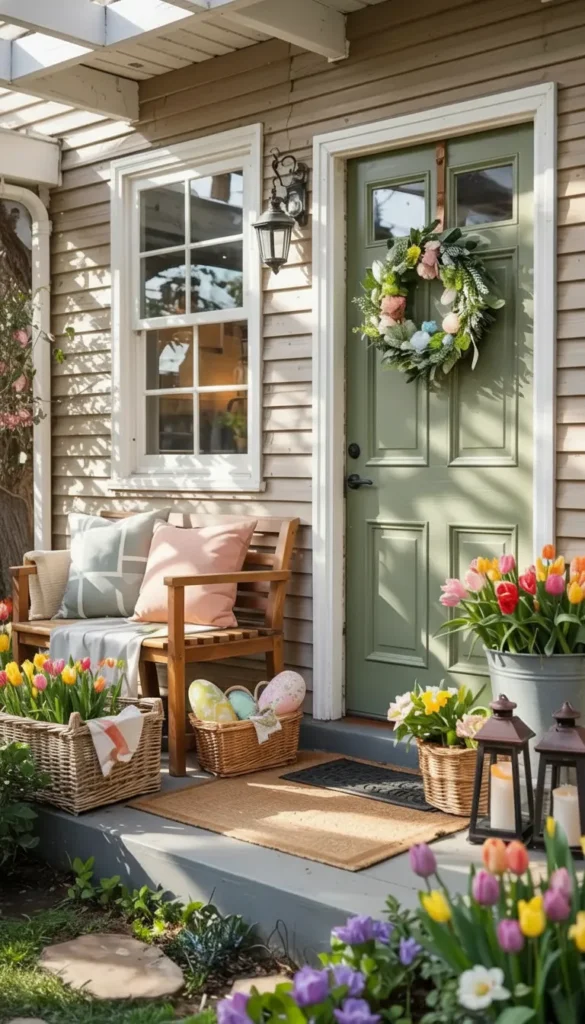
Layering Planters for Maximum Impact
Planters flanking the front door create symmetry and visual weight that makes the entrance feel intentional and welcoming. For spring, choose bulb flowers that bloom at Easter time and continue through the season.
Best spring bulb choices for entry planters:
- Tulips in white, blush, or soft purple
- Daffodils for cheerful yellow accents
- Hyacinths for incredible fragrance near the door
- Pansies as a filler plant with long bloom time
Layering technique:
- Use tall planters for the primary statement
- Add a second shorter planter or basket nearby for depth
- Tuck trailing greenery or ivy to soften the container edges
- Refresh spent blooms with new nursery plants as the season progresses
Creating Symmetry and One Focal Break
Symmetry in entryway styling creates visual harmony — matching planters, matching lanterns, matching elements on each side of the door. It signals order and intentionality.
However, pure symmetry can feel stiff. One deliberate asymmetrical element adds life.
Good asymmetrical focal breaks:
- One taller decorative planter on the left side with a shorter basket on the right
- A decorative crate or wooden bench on one side with plants on the other
- A leaning ladder with spring wreaths hanging at different heights
The key is that the asymmetry feels chosen, not accidental.
Adding a Seating Area With Seasonal Accessories
If your porch has space for even a single chair or small bench, adding a seating element transforms the space from a passageway into a destination.
- A wooden bench or Adirondack chair with pastel cushions
- A small side table holding a potted plant or lantern
- A decorative basket nearby with extra throw pillows stored inside
This arrangement tells a story — someone sits here. Someone enjoys this porch. That narrative quality makes the whole home feel more welcoming.
Incorporating Easter Elements That Last
The Easter-specific elements on a porch need to be durable. Unlike indoor decor, outdoor pieces face direct sunlight, moisture, and wind.
Durable Easter porch accents:
- Metal or ceramic decorative eggs (avoid plastic)
- Painted wooden bunny or chick figures sealed for outdoor use
- Natural fiber baskets with waterproof lining for planted arrangements
- Fabric wreaths with UV-treated materials
After Easter, simply remove the holiday-specific figures. The planters full of tulips and hyacinths, the seasonal wreath, and the layered lighting all continue to look perfect for spring.
Adding Outdoor Lanterns and Lighting
Layered outdoor lighting is one of the most commonly overlooked elements of a well-styled front porch. Lighting extends the visual impact of your decor into the evening hours and makes the home look genuinely welcoming after dark.
Effective outdoor lighting for a spring Easter porch:
- Lanterns flanking the door filled with pillar candles or battery-operated alternatives
- Solar path lights lining the walkway — subtle but effective
- String lights overhead if you have a covered porch ceiling
- Candle lanterns on porch steps or near seating areas
For safety, always use flameless LED candles in outdoor lanterns. They look identical to real candles from a distance and never blow out in the wind.
Caring for Outdoor Spring Planters
A beautiful porch display requires minimal maintenance if you choose the right plants and set them up correctly.
Care tips for spring entry planters:
- Water bulb flowers deeply every two to three days in warm weather
- Deadhead spent tulip or daffodil blooms to encourage continued flowering
- Rotate planters every few days so all sides receive even sunlight
- As spring bulbs finish, replant with annuals — petunias, geraniums, or impatiens — for summer continuity
This way your porch never has a gap in seasonal beauty. The transition from Easter planters to late spring flowering plants is seamless.
Porch Color Coordination
Your porch decor should feel connected to the color of your front door and the exterior of your home. This is an often-ignored detail that makes an enormous difference in how intentional the overall display looks.
Color pairing suggestions:
- White or cream door — virtually any pastel palette works; lean into blush and sage
- Red door — keep florals in white and cream to avoid color clash
- Blue or navy door — white tulips, cream ranunculus, and pale yellow accents are stunning
- Black door — high contrast approach works beautifully; go bold with blush and white
- Natural wood door — warm tones (peach, soft orange, butter yellow) feel organic and right
Save this front porch spring styling strategy! 📌
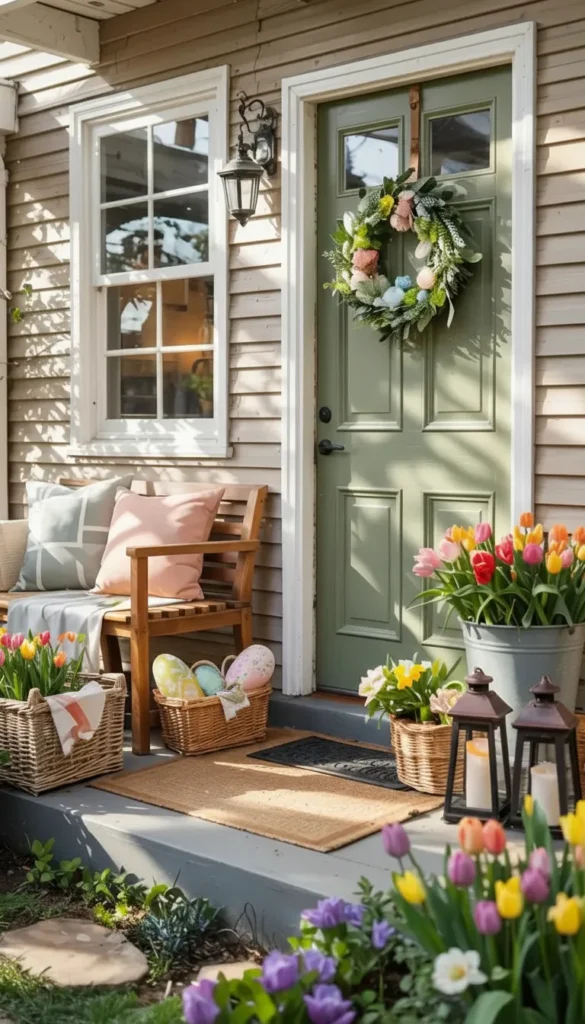
Spring Lantern Ideas for Easter Decor With Candles and Botanical Accents
Lanterns are one of the most versatile decorating tools available for spring and Easter styling. They work indoors and outdoors. They work on mantels, coffee tables, entry consoles, and porches. They introduce warmth, light, and structure wherever they are placed — and when styled with the right botanical accents, they become genuinely beautiful decorative objects rather than just functional lighting accessories.
Why Lanterns Work So Well for Seasonal Transitions
The reason lanterns are ideal for transitional decorating is their neutrality. A well-chosen lantern in a simple finish does not belong to any specific holiday or season. It belongs to a feeling — warmth, glow, intimacy.
That feeling is exactly what Easter and spring both evoke. So by placing lanterns at the center of your seasonal styling, you create decor that feels emotionally aligned with both the holiday and the season that follows.
Best lantern finishes for spring:
- White metal for a clean, fresh look
- Black iron for contrast against soft florals
- Light natural wood for warmth and organic texture
- Aged brass for a more elegant, collected appearance
Choosing What Goes Inside the Lantern
The interior of the lantern is where the seasonal styling actually happens. The lantern structure is neutral — the contents make it Easter, spring, or simply beautiful.
For Easter:
- Pillar candle surrounded by a small nest with pastel eggs
- Greenery with a few small decorated eggs tucked in
- A white candle with fresh moss and a single small bunny figurine
For ongoing spring:
- Pillar candle surrounded by fresh moss and small flowers
- Eucalyptus sprigs arranged loosely around a candle
- A potted succulent or small plant replacing the candle entirely
- Dried lavender bundles for fragrance and texture
The transition from Easter to spring requires only swapping the holiday-specific items inside. The lantern itself stays exactly where it is.
Pin this lantern styling approach for spring! 📌
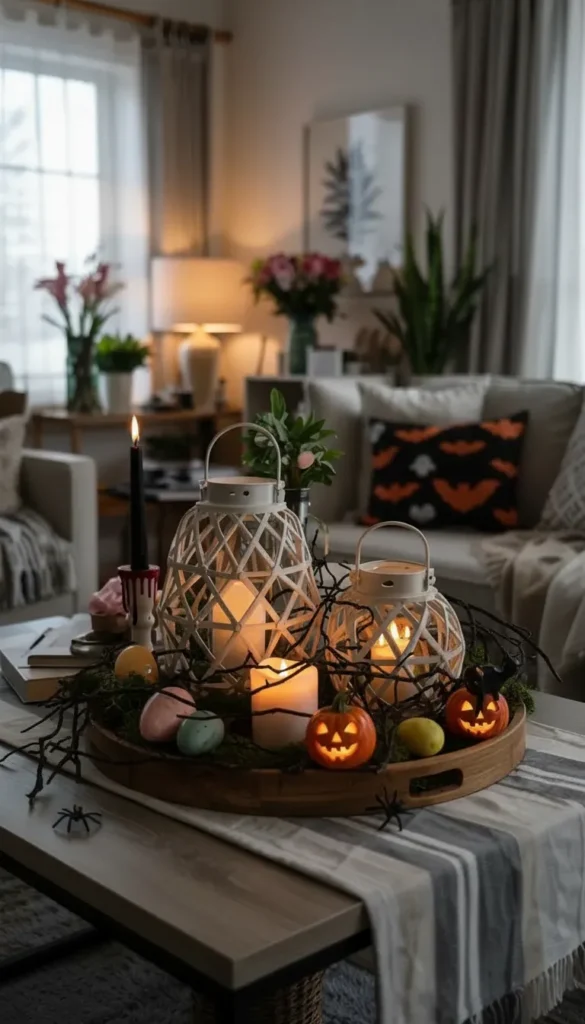
Creating a Styled Vignette Around the Lantern
A lantern placed alone on a table looks like a functional object. A lantern placed within a styled vignette looks like intentional interior design. The difference is everything else around it.
Building a coffee table lantern vignette:
- Start with a tray in natural wood, woven rattan, or marble
- Place the lantern slightly off-center within the tray
- Add a small stack of books to create height variation
- Tuck fresh or dried greenery around the base of the lantern
- Add one or two small ceramic or glass accessories
- Complete with a single bloom in a bud vase
This arrangement takes five minutes and elevates the entire living room. It also photographs beautifully if that matters to you.
Positioning Lanterns for Maximum Effect
Where you place lanterns determines how much visual impact they have. Some positions are far more effective than others.
High-impact positions:
- On a mantel — pair two lanterns flanking a central mirror or artwork
- On a coffee table — single large lantern as the focal centerpiece
- On an entry console — one tall lantern with greenery on each side
- On outdoor steps — pair of lanterns framing porch stairs
- On a dining table — cluster of three lanterns at varying heights as a centerpiece
What to avoid:
- Placing a single small lantern in an oversized space — it disappears
- Clustering too many lanterns so they compete with each other
- Positioning lanterns where they block sight lines across a table
Using Multiple Lanterns Together
A single lantern makes a statement. Multiple lanterns together create atmosphere. When grouped, the key is intentional variation — different heights, perhaps slightly different finishes within the same family, with consistent botanical styling connecting them.
Three-lantern grouping formula:
- One large lantern as the anchor
- One medium lantern placed slightly behind and to the side
- One small lantern positioned at the front edge
This staggered arrangement creates depth and feels styled rather than matched. Add greenery trailing between them to visually connect the group.
Connecting Lanterns to the Broader Decor
The most polished interiors have a consistent design thread running through every element. Lanterns connect to the broader decor when they share materials, colors, or accents with other pieces in the room.
Practical connections to establish:
- Match the lantern finish to a nearby candlestick or picture frame
- Use the same greenery inside the lantern and in a nearby vase
- Choose lantern size proportional to the surface it sits on — a lantern that is too small looks accidental
- Repeat the botanical accent (moss, eucalyptus, ranunculus) from the lantern in at least one other spot in the room
This repetition creates visual cohesion without making the design feel rigid. It is the difference between a room that looks “decorated” and a room that looks “designed.”
Tray Decor Styling With Lanterns
One of the most effective ways to elevate lantern styling is to place the lantern on a decorative tray and build a complete vignette around it. This approach — sometimes called tray vignette styling — is used by professional interior decorators to create polished, layered looks on any flat surface.
Step-by-step tray vignette with a lantern:
- Choose a tray that is at least twice the base width of your lantern
- Place the lantern slightly toward the back of the tray, not centered
- Stack two or three books of different sizes in front of the lantern
- Place a small ceramic bowl, figurine, or crystal object on the books
- Tuck fresh greenery or a small potted plant at the front edge of the tray
- Add one additional element — a single candle, a small vase, a decorative sphere
Materials that work beautifully as tray bases:
- Natural wood (warmth and organic feel)
- Woven rattan (texture and casual elegance)
- White lacquer (clean and modern)
- Marble or stone (luxury feel, works especially well for mantels and consoles)
The tray itself is doing important work: it visually groups the items and defines the vignette as intentional rather than random.
Outdoor Lantern Styling for Porches and Patios
Everything that works for indoor lantern styling translates to outdoor spaces — with a few practical adjustments.
Outdoor lantern placement ideas:
- On porch steps, one lantern per step leading up to the door
- Flanking a garden gate on each post
- On an outdoor dining table as a centerpiece cluster
- Along a fence line for evening garden parties
- On a patio side table next to seating
Outdoor-specific styling tips:
- Use weatherproof lanterns in powder-coated metal or treated iron
- Fill with battery-operated LED candles — real flame candles are unsafe in wind
- Choose greenery that handles outdoor conditions — rosemary, lavender, boxwood
- Weight lanterns with a decorative rock or sand inside if your porch gets wind
Seasonal Transitions: When to Update Your Lanterns
A useful practical framework for managing seasonal lantern styling is to plan three updates per lantern per year. Each update takes about ten minutes and keeps the look fresh without requiring new purchases.
Spring update (Easter through May):
- Fresh greenery and a few Easter eggs or nesting materials inside
- Pastel ribbon tied around the lantern handle
Late spring to early summer update (May through June):
- Remove Easter elements; replace with dried lavender or garden herbs
- Switch candle color to cream or white
Summer update (July through August):
- Fill with seashells, river rocks, or small succulents
- Consider removing the candle entirely and making the interior the display
This framework keeps your lanterns feeling current rather than forgotten through every warm-weather month.
Save this complete spring lantern styling guide! 📌
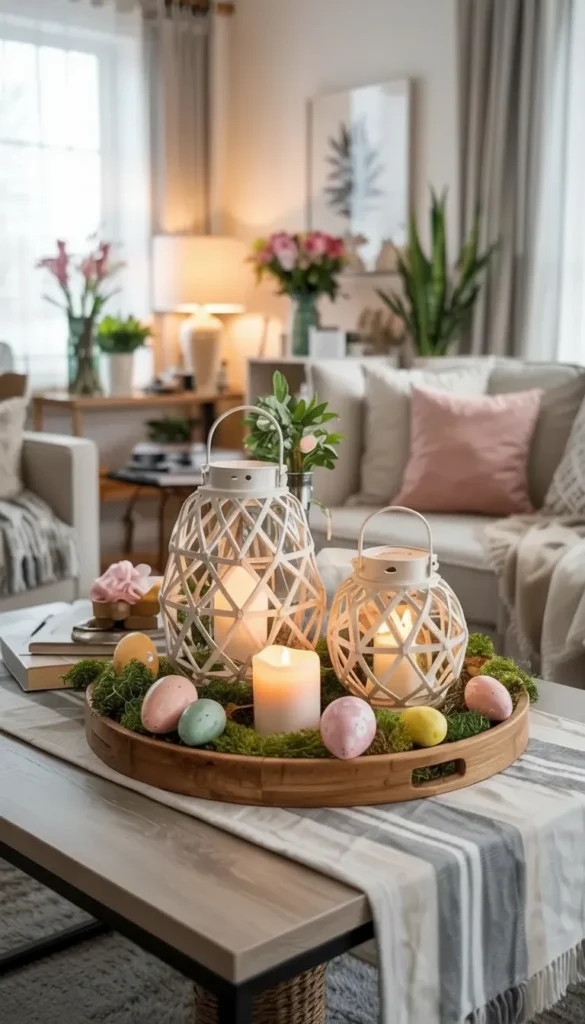
Conclusion
Easter decorating does not have to be a temporary installation that gets boxed up on Sunday night. With the right approach — soft pastels that belong to spring, natural materials that feel authentic, and accessory choices that outlive the holiday — your home can feel genuinely festive for Easter and continue to feel beautiful all season long.
The five ideas in this guide work because they are built on principles, not just products. A well-structured centerpiece, an intentionally styled mantel, a layered front porch, botanical lantern vignettes, and a cohesive soft floral palette — these are design decisions that serve you for months, not hours. Invest in them thoughtfully, and your home will feel like spring lives there — not just visits.

“I share simple, beautiful and affordable home decor ideas to help you style every corner of your home with ease.