

Your desk isn’t just where you work—it’s where you build your career, manage your life, and spend more waking hours than anywhere else in your home. In 2026, the right desk setup can be the difference between ending your day energized or exhausted, between focus that flows naturally or constant friction with your space. Whether you’re fighting for a corner in a shared apartment, designing a dedicated office that needs to look professional on video calls, or simply tired of neck pain and cable chaos, the desk you choose and how you arrange it changes everything about your workday.
I’ve watched home office design evolve dramatically, and the 2026 direction is clear: people want workstations that eliminate daily friction, spaces that feel calm instead of clinical, and solutions that work in real rooms with real constraints. This means desks that handle dual monitors without neck strain, storage that hides clutter instantly, and layouts that transition smoothly between deep focus and quick tasks. In this guide, I’m breaking down five essential workspace approaches that cover everything from productive full-room setups to ultra-compact solutions that fit in closets. Each section gives you the exact framework to create a home office that works as hard as you do while still feeling like a place you actually want to be.
Home Office Desk Ideas Work Stations For Productive Setups
Productive workstations are built on flow—how you enter the room, where natural light falls, what tools you reach for most often, and how easily you can shift between tasks. This isn’t about cramming in the biggest desk possible; it’s about creating a layout so intuitive that daily work feels effortless instead of exhausting.
The key is starting with function, then layering in warmth. A strong desk anchored to one wall, balanced by softer elements like a rug and warm lighting, creates a space that supports deep focus without feeling sterile. In 2026, more people are using subtle zoning—a slim shelf divider, a tall plant, or a different rug—to separate work from home life even in shared spaces.
Start With Flow and Light Placement
Before buying furniture, map out how you’ll actually use the room.
- Identify your entry path and ensure the desk doesn’t block natural circulation
- Locate natural light sources and position your desk to avoid screen glare
- Face perpendicular to windows when possible—light from the side reduces glare while still illuminating your workspace
- Consider privacy angles if the room is visible from hallways or shared spaces
This spatial planning prevents problems that furniture alone can’t fix.
Choose a Desk With Adequate Surface Area
Surface area determines what tasks feel comfortable versus cramped.
- Minimum 48 inches wide for a laptop and note-taking space
- 60+ inches wide if you use dual monitors or spread out materials
- 24-30 inches deep for standard monitor placement without neck strain
- Deeper surfaces (30-36 inches) if monitors need to sit further back
The right depth keeps screens at proper viewing distance, which matters more than most people realize.
Invest in True Ergonomic Seating
Your chair affects energy levels, focus, and long-term physical health.
- Adjustable seat height so feet rest flat with thighs parallel to floor
- Lumbar support that curves to match your lower back
- Armrests at elbow height to prevent shoulder tension
- Breathable fabric or mesh for all-day comfort
A proper ergonomic chair isn’t a luxury—it’s the difference between sustainable productivity and daily discomfort.
Pin this productive foundation! 📌
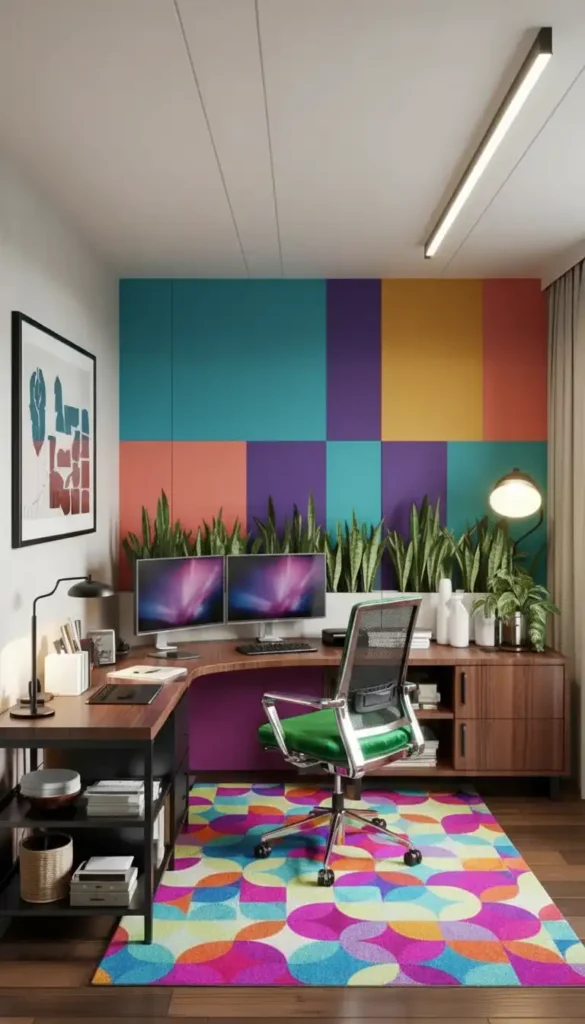
Position Monitors at Eye Level
Screen placement directly impacts neck strain and focus quality.
- Top of screen at or slightly below eye level when sitting upright
- Arm’s length distance (about 20-26 inches) from your eyes
- Dual monitor users: position monitors side-by-side with minimal gap, angled slightly inward
- Use monitor stands or arms to achieve proper height without stacking books
Correct monitor height eliminates the hunched posture that causes afternoon fatigue.
Implement Closed Storage Solutions
Visible clutter creates constant mental distraction.
- Credenza or filing cabinet to hide paperwork and supplies
- Desktop drawer units for frequently used items within reach
- Cable management trays mounted under the desk
- Closed cabinets instead of open shelving for a calmer visual field
When storage is hidden, your workspace stays minimalist and serene without daily effort.
Layer Your Lighting Strategically
Single overhead lights create harsh shadows and eye strain.
- Task lamp with adjustable arm for focused work lighting
- Ambient floor lamp to reduce contrast in the room
- Avoid overhead-only lighting which creates unflattering shadows on video calls
- Position task light opposite your dominant hand to prevent writing shadows
Layered lighting reduces eye fatigue and makes the space functional morning through evening.
Master Cable Management
Visible cables make even expensive setups look unfinished.
- Under-desk cable tray to route power strips and excess cord length
- Cable clips or sleeves to bundle cords running to the desk surface
- Wireless peripherals where practical (keyboard, mouse, headphones)
- Single power strip mounted under desk keeps everything accessible but hidden
Clean cable management is the fastest way to make your workspace look professional.
Save this workstation setup guide! 📌
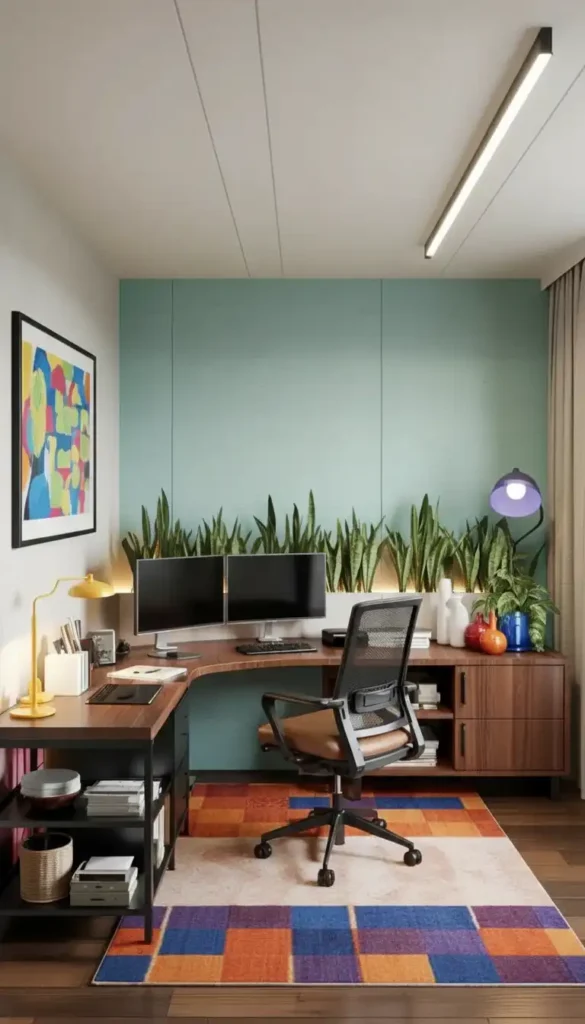
Add Professional Background Elements
If you take video calls, your background matters.
- Framed art or a curated shelf positioned behind you at camera height
- Small plant adds life without looking too casual
- Avoid busy patterns or clutter that draws attention away from you
- Ensure even lighting on your face—no strong backlighting from windows
A thoughtful background signals professionalism without requiring a dedicated office.
Include a Secondary Seating Option
If space allows, a small chair expands how you use the room.
- Accent chair for phone calls away from the desk
- Reading zone for reviewing documents or taking breaks
- Guest seating for collaborative work sessions
- Alternative posture when you need to shift out of your desk chair
This flexibility prevents burnout from being locked in one position all day.
Consider Acoustic Improvements
Hard surfaces create echo that’s exhausting during long call days.
- Area rug under the desk absorbs sound and defines the workspace
- Curtains or fabric panels soften window reflections
- Upholstered furniture adds sound absorption
- Acoustic panels if calls are a major part of your work
Better acoustics make your voice clearer on calls and reduce listening fatigue.
Modern Home Office Desk Ideas For Stylish Workspaces
Modern home offices combine clean geometry, intentional materials, and color schemes that look crisp during daylight and cozy under evening light. This aesthetic doesn’t mean cold or uncomfortable—it means every element has a purpose and visual clutter is eliminated through smart design.
The foundation is typically white walls with warm wood tones or matte black accents for depth. In 2026, modern offices are getting homier through the addition of textural elements—bouclé, linen, and layered rugs—that soften sleek furniture while maintaining that space-saving, professional aesthetic.
Select a Streamlined Desk Design
Modern desks prioritize clean lines and simple silhouettes.
- Straight edges and minimal ornamentation create contemporary feel
- Floating or wall-mounted desks maximize floor visibility
- Integrated cable management keeps the design clean
- Wood with metal legs or all-wood construction both work in modern spaces
The desk should feel architectural, like it’s part of the room’s structure rather than just furniture.
Choose an Ergonomic Chair With Modern Lines
Comfort doesn’t require sacrificing aesthetics.
- Mesh or leather construction in black, gray, or white
- Minimal branding and clean adjustment mechanisms
- Sculptural base in chrome, black, or wood
- Adjustable features hidden in the design
Modern ergonomic chairs prove you don’t have to choose between looking good and feeling good.
Incorporate Architectural Lighting
Lighting in modern spaces should look like design objects.
- Arc floor lamp creates dramatic silhouette and functional task light
- Linear pendant over the desk for even illumination
- Adjustable desk lamp in matte black or brushed brass
- LED strip lighting under shelves or behind monitors for ambient glow
The lighting becomes sculptural while still serving practical purposes.
Pin this modern workspace formula! 📌
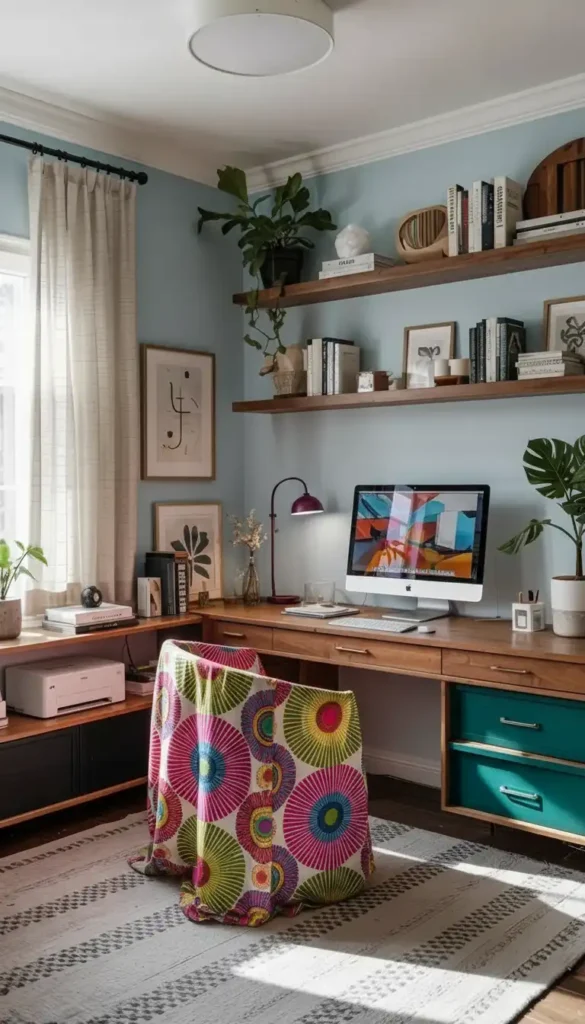
Use Floating Shelves for Storage
Wall-mounted storage keeps floors clear and sightlines open.
- Shallow shelves (8-10 inches deep) for books and small objects
- Position above or beside the desk to keep items within reach
- Limit to 2-3 shelves to avoid visual clutter
- Match wood tone to desk for cohesive look
Floating shelves provide storage without the visual weight of bookcases or cabinets.
Add a Slim Side Table
A small auxiliary surface keeps your main desk clear.
- Narrow profile (12-15 inches wide) fits beside the desk
- Holds coffee, phone, or notebooks that don’t need to be on work surface
- Metal or wood construction matching your desk aesthetic
- Mobile options on casters allow flexibility
This separation keeps personal items from crowding your active workspace.
Work With Matte Black Accents
Black elements add sophistication without heaviness.
- Matte black hardware on drawers and cabinets
- Black desk lamp or monitor arm creates focal points
- Black bookshelf or storage paired with warm wood prevents starkness
- Limit to 20-30% of room so it accents rather than dominates
Matte finishes feel more refined than glossy black and show fewer fingerprints.
Layer Textures for Warmth
Modern doesn’t mean uncomfortable—textures prevent sterility.
- Bouclé or wool seat cushion adds softness to hard chairs
- Linen curtains filter light while adding natural texture
- Jute or low-pile rug defines the workspace without visual bulk
- One plant in a simple ceramic or concrete planter
These organic elements make modern spaces feel inhabited and welcoming.
Save this modern detail strategy! 📌
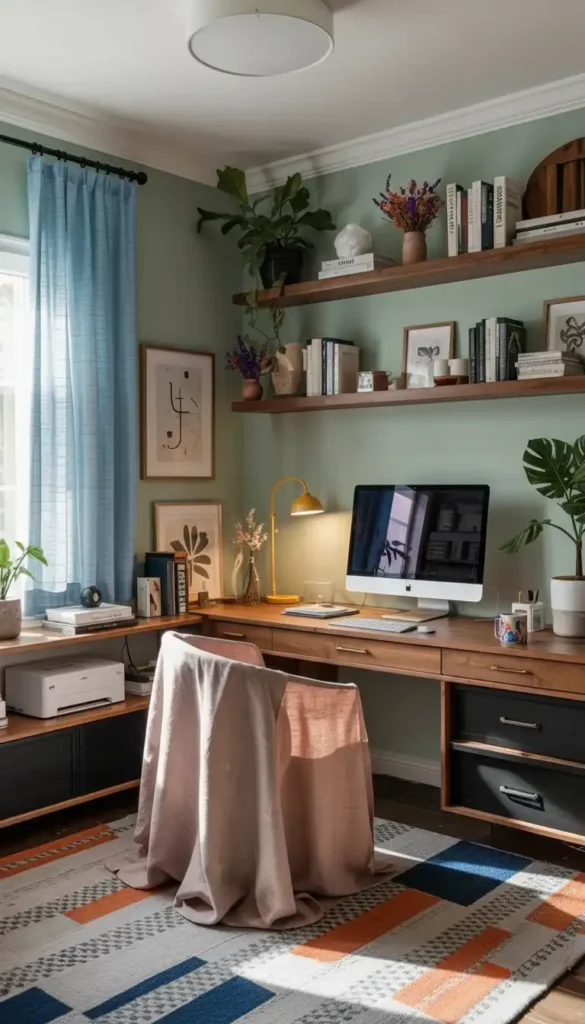
Keep Desktop Minimal
Modern aesthetics require disciplined surface management.
- Only active items on desk surface (monitor, keyboard, one plant)
- Everything else in drawers or on shelves
- Single desk mat to visually ground tools
- Cable-free appearance through management systems
A clear desktop isn’t just aesthetic—it actually improves focus and reduces decision fatigue.
Add One Statement Element
Modern rooms need one focal point to avoid feeling generic.
- Sculptural desk lamp in an interesting shape
- Large-scale art piece with minimal composition
- Designer chair in a bold color or unique form
- Architectural shelving with asymmetrical layout
This single statement piece gives the room personality while maintaining the modern framework.
Integrate Hidden Charging Solutions
Technology should be accessible but invisible.
- Built-in desk grommets for cable pass-through
- Drawer with charging station for phones and tablets
- Monitor with USB hub reduces desktop clutter
- Wireless charging pad built into desk surface
These solutions keep devices powered without sacrificing the clean aesthetic.
Minimalist Home Office Desk Ideas With Clean Lines
Minimalist offices work because nothing unnecessary survives the editing process. This approach starts with negative space and straight lines, creating environments where focus comes naturally because there’s simply nothing else competing for your attention.
The minimalist desk is positioned intentionally—centered on a wall or facing a window—with storage completely hidden to keep floors and surfaces visually clear. This is especially powerful for small space solutions because minimalist design naturally makes rooms feel larger and more breathable.
Choose a Simple, Proportioned Desk
Minimalist desks are defined by what they don’t have.
- Clean rectangular shape with no unnecessary details
- Straight legs in wood or metal with minimal joinery visible
- No built-in drawers on the desktop—storage happens elsewhere
- Warm wood or white finish keeps the palette calm
The desk should almost disappear, becoming a tool rather than a focal point.
Implement Wall-Mounted Storage
Vertical storage keeps floors clear and maintains the minimalist aesthetic.
- Peg rails for hanging bags, headphones, and accessories
- Single shelf above the desk for frequently used items
- Wall-mounted file organizer keeps papers off the desk
- Everything has a designated spot eliminating decision-making
When storage is on walls, the room feels more spacious and less cluttered.
Use Only Essential Desktop Items
Minimalist surfaces require discipline about what stays visible.
- Monitor centered on the desk
- Compact keyboard and mouse or laptop only
- Single desk mat to define the work zone
- One small plant or object for humanity, not decoration
If you don’t use it daily, it doesn’t belong on the surface.
Pin this minimalist framework! 📌
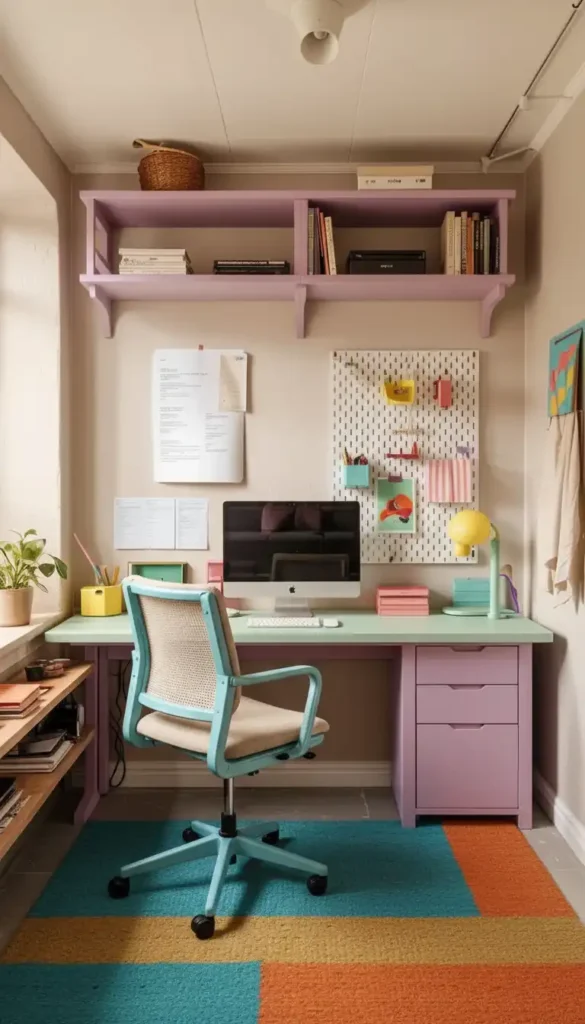
Select Neutral, Cohesive Colors
Minimalist rooms thrive on restricted palettes.
- White or light gray walls as the foundation
- Wood tone as the only “color” through desk and chair
- Black accents in lamp, hardware, or small objects
- No patterns except subtle wood grain
This restraint makes the room feel cohesive without requiring design expertise.
Incorporate One Closed Storage Piece
Minimalism requires hiding clutter, not eliminating necessities.
- Slim filing cabinet in matching finish
- Low credenza that doubles as a surface for printer or supplies
- Drawer pedestal that tucks under the desk
- Closed doors or drawers so contents aren’t visible
The storage exists but doesn’t contribute to visual noise.
Add a Single Rug for Definition
One area rug defines the workspace without adding clutter.
- Neutral color in gray, beige, or cream
- Low pile or flat weave for easy chair movement
- Extends beyond desk by 12-18 inches on all sides
- No patterns that compete for visual attention
The rug grounds the furniture and adds warmth without complexity.
Maintain Low Visual Contrast
Minimalist spaces avoid jarring differences.
- Similar value between wall, desk, and floor colors
- Gradual transitions rather than stark black and white
- Matte finishes on all surfaces to reduce glare
- Soft lighting that doesn’t create harsh shadows
Low contrast reduces eye strain during long work sessions and creates inherent calm.
Save this minimalist principles guide! 📌
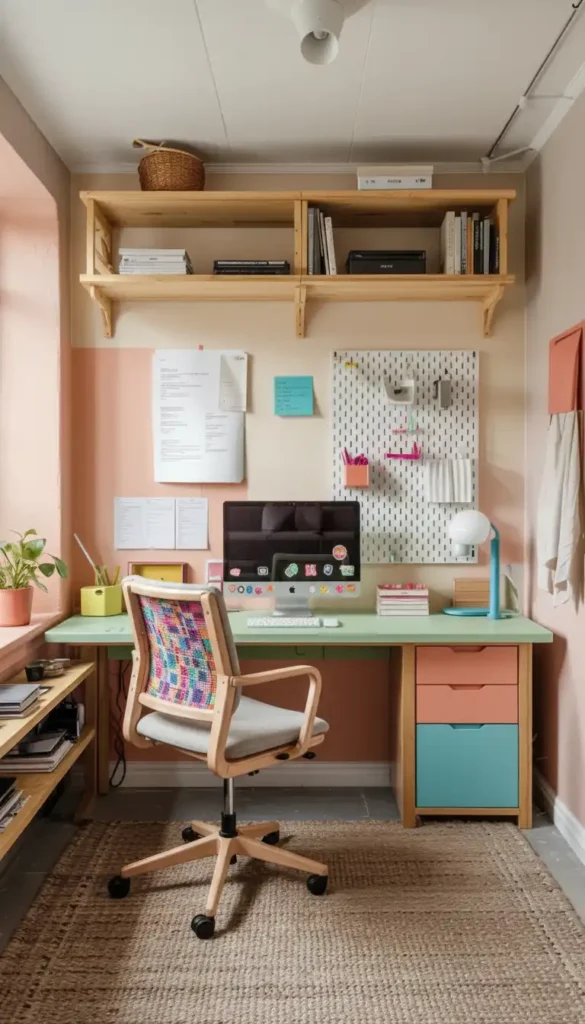
Implement Hidden Cable Systems
Visible cords destroy minimalist aesthetics instantly.
- Cable spine mounted to desk back for vertical runs
- Under-desk cable tray for power strips and excess length
- Wireless peripherals eliminate most desktop cables
- Single power cord from desk to wall as the only visible cable
Perfect cable management isn’t optional in minimalist spaces—it’s foundational.
Include Subtle Air Quality Elements
Minimalism extends to sensory experience, not just visual.
- Small air purifier in white or wood finish
- Unscented or single-note diffuser for subtle ambiance
- Living plant for natural air improvement
- Window access for fresh air circulation
Comfort and focus come from air quality as much as visual calm.
Create End-of-Day Reset Routine
Minimalist spaces stay minimal through daily practice.
- Clear desk completely before closing laptop
- File papers immediately rather than piling
- Return items to designated storage every evening
- Tidy takes 2-3 minutes when systems are in place
The minimalist aesthetic is sustainable only when maintenance is effortless.
Space Saving Home Office Desk Ideas For Small Spaces
Space-saving design is about discovering unused potential—the hallway nook, the landing area, the converted closet, or the window wall that could hold a slim desk. The secret is maintaining circulation so the desk doesn’t obstruct daily life, which means favoring shallow surfaces and vertical storage.
In 2026, small-space solutions embrace folding, sliding, and stacking designs without looking temporary or makeshift. These are intelligent micro-offices with clear boundaries that signal when work begins and ends.
Identify Unconventional Desk Locations
Small spaces require creative thinking about where desks can live.
- Hallway alcoves with 24-30 inches of width
- Closet conversions with doors removed and desk installed
- Window walls using narrow console tables
- Landing areas on staircases with minimal traffic
- Room corners with floating corner desks
The best small-space offices use areas that weren’t serving another purpose.
Choose Shallow Desk Depths
Deep desks overwhelm small spaces—shallow surfaces are more functional.
- 18-20 inch depth for laptop-only setups
- 22-24 inch depth for laptop plus small monitor
- Wall-mounted fold-down desks that completely disappear when not in use
- Console tables as desks provide work surface without bulk
Shallow doesn’t mean less functional—it means right-sized for the task and space.
Maximize Vertical Storage
When floor space is limited, build upward.
- Floating shelves stacked above desk for supplies and books
- Pegboard organization uses wall space efficiently
- Tall narrow bookcases (12 inches deep) beside the desk
- Wall-mounted file holders keep papers accessible but off surfaces
Vertical storage keeps tools visible and accessible without consuming precious floor area.
Pin this small-space solution! 📌
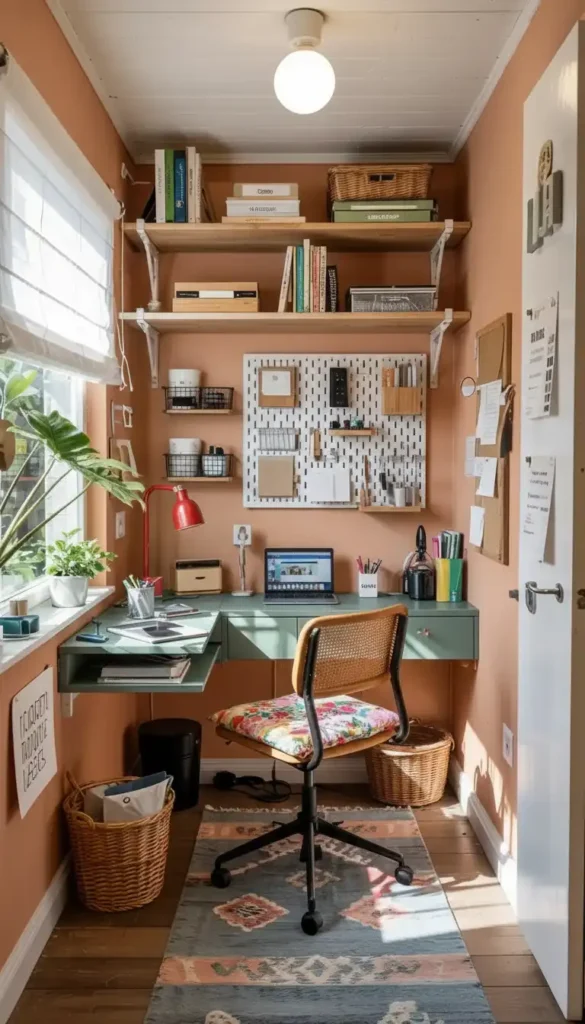
Use Wall-Mounted or Floating Desks
Eliminating visible legs makes small spaces feel larger.
- Bracket-mounted desktop appears to float on the wall
- Fold-down Murphy desk reveals workspace when needed, folds flat when not
- Simple plywood on brackets creates custom desk at any width
- Undermount drawer can attach to floating desk for storage
Floating desks create the visual illusion of more floor space even when the room is occupied.
Implement Light Colors for Expansion
Color affects perceived room size dramatically.
- White walls reflect light and expand visual boundaries
- Light wood tones keep warmth without closing in the space
- White or light gray desk maintains brightness
- Single dark accent (lamp or chair) adds depth without heaviness
Light colors make small offices feel breathable rather than cramped.
Choose Multi-Functional Furniture
In tight spaces, every piece must earn its place.
- Desk with built-in shelving eliminates need for separate bookcase
- Storage ottoman provides seating and hidden storage
- Folding chair that can serve dining room when not at desk
- Rolling cart moves between office and other rooms as needed
Furniture that serves multiple purposes maximizes utility per square foot.
Add Mirrors to Amplify Light
Strategic mirror placement doubles perceived space.
- Small mirror above or beside desk reflects window light
- Leaning floor mirror in corner creates depth
- Mirrored closet doors if desk is in bedroom
- Avoid mirrors directly behind monitor which create distracting reflections
Mirrors make small offices feel less confined and brighter throughout the day.
Save this compact workspace guide! 📌
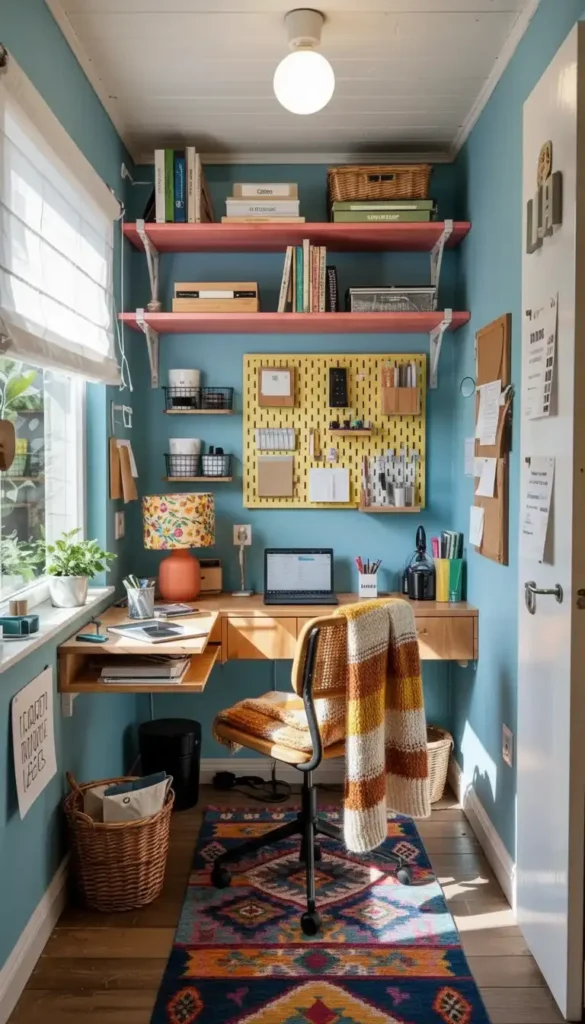
Create Visual Boundaries
Small spaces need clear work zone definition.
- Small area rug under desk chair only
- Different wall color in desk nook if space allows
- Curtain or folding screen to close off workspace visually
- Desk lamp creates pool of focused light that defines the zone
These boundaries help your brain shift into work mode even in shared spaces.
Install Task Lighting Only
General lighting isn’t necessary in tiny offices—focused light works better.
- Adjustable desk lamp provides all needed illumination
- Warm bulb (2700K) prevents small space from feeling harsh
- Avoid overhead fixtures in closet conversions where they’re unnecessary
- Position light to illuminate work without creating screen glare
Targeted lighting makes small spaces feel cozier and more intentional.
Plan for Daily Put-Away
Small-space offices become unusable fast without storage discipline.
- Single basket or bin for quick end-of-day cleanup
- Everything off the desk if workspace is in shared room
- Folding components stored neatly against walls
- 5-minute reset keeps space functional daily
The best small-space design includes a realistic maintenance plan that actually works in daily life.
Home Office Desk Ideas For Women Workstations
Workspaces designed with women in mind often prioritize comfort, aesthetic cohesion with the broader home, and layouts that support both deep focus work and quick-switching tasks. These aren’t pink offices or stereotypical spaces—they’re thoughtfully designed environments that balance professional functionality with warmth and personal style.
The approach typically includes layered lighting to reduce harsh shadows, comfortable seating with supportive ergonomics, and color palettes that feel calming during work while still looking polished on video calls. The desk integrates into the larger room style through coordinated materials and finishes.
Design for Multiple Work Modes
Women’s workstations often support varied tasks throughout the day.
- Clear desk surface for focused computer work
- Side surface for handwritten notes, planning, or creative work
- Comfortable seating that supports both typing and reading positions
- Flexibility to shift between tasks without full workspace reorganization
This versatility supports the reality of modern work that rarely fits one single mode.
Choose Desks With Built-In Organization
Integrated storage prevents surface clutter.
- Desks with drawers keep supplies accessible but hidden
- Slim filing cabinet in matching finish for papers
- Desktop organizer tray for daily essentials (pens, chargers, headphones)
- Keeps surfaces simple while maintaining functionality
Built-in organization means the workspace stays tidy without constant effort.
Select Chairs With Softer Silhouettes
Ergonomics don’t require industrial aesthetics.
- Upholstered ergonomic chairs in fabric or leather
- Curved lines instead of angular shapes
- Neutral or accent colors that coordinate with room palette
- Full lumbar and height adjustment for proper support
Comfortable doesn’t mean sacrificing style—many ergonomic chairs now offer both.
Pin this personalized workspace approach! 📌
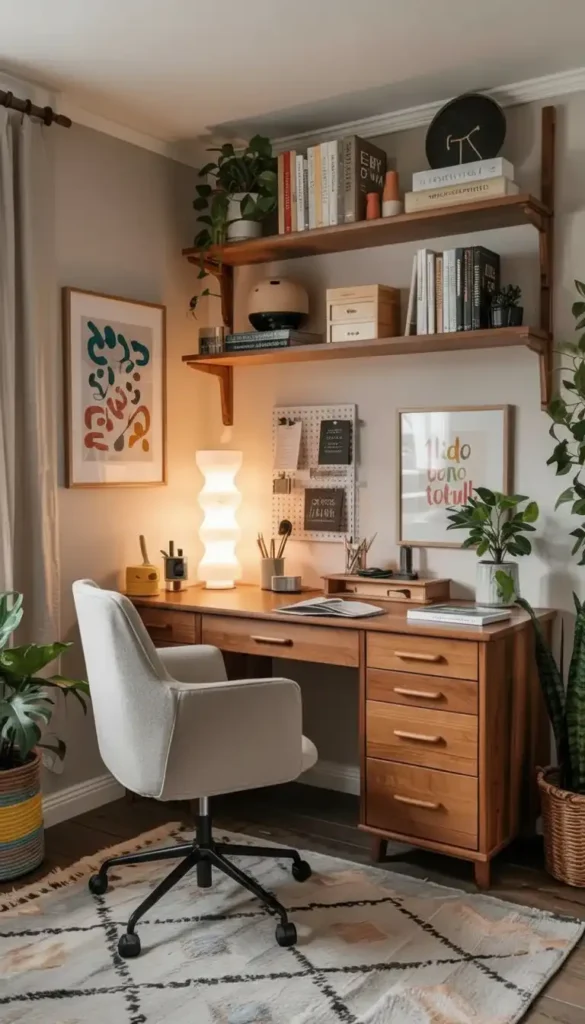
Incorporate Statement Lighting
Lighting becomes both functional and decorative.
- Sculptural desk lamp in brass, ceramic, or unique shape
- Layered lighting with ambient floor lamp plus task light
- Warm color temperature (2700K) for flattering video call lighting
- Avoid harsh overhead-only which creates unflattering shadows
Beautiful lighting improves both function and mood throughout the workday.
Add Textural Elements
Texture makes workspaces feel complete and comfortable.
- Textured rug under the desk chair
- Soft throw over chair back for cooler days
- Woven basket for storage with visual warmth
- Natural materials like wood, linen, or ceramic
These elements prevent the office from feeling too corporate or sterile.
Use Coordinated Color Palettes
Color cohesion creates professional polish.
- Select 2-3 main colors and repeat throughout the space
- Black and white for sharp, modern feel
- Beige and soft green for calm, natural aesthetic
- Match room décor so office feels integrated, not isolated
Consistent color makes even modest furniture look more expensive and intentional.
Include Inspiration Display
A curated inspiration area supports creative work.
- Small pinboard or magnetic board for rotating inspiration
- Floating shelf with meaningful objects
- Framed prints or art that motivate or calm
- Keep it current by refreshing quarterly
Inspiration that’s visible daily influences work quality and enjoyment.
Save this comfort-focused strategy! 📌
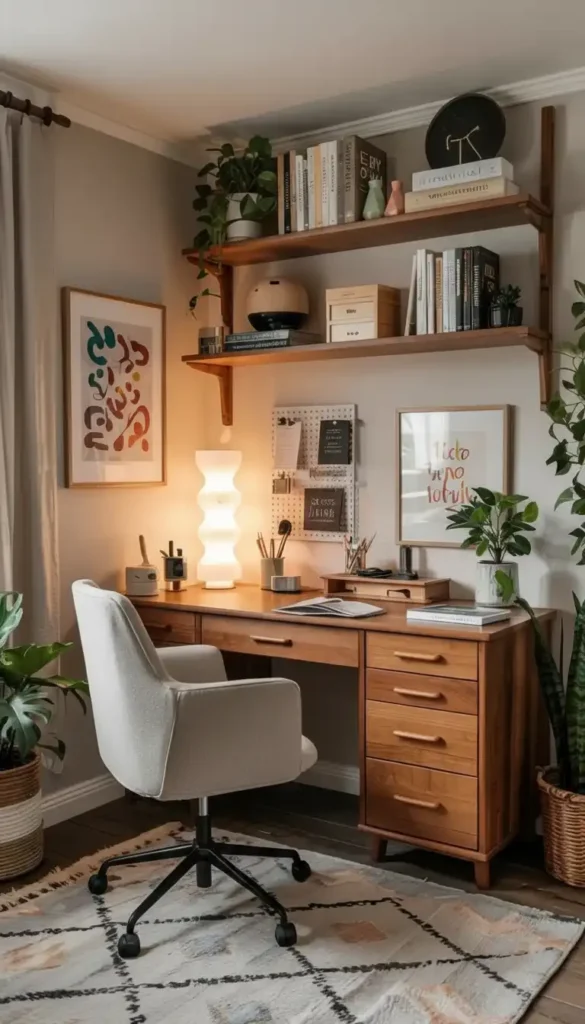
Plan for Proper Ergonomics
Comfort directly impacts productivity and health.
- Monitor at eye level to prevent neck strain
- Desk height allows elbows at 90 degrees while typing
- Feet flat on floor or on footrest
- Chair with lumbar support prevents lower back pain
Ergonomics isn’t optional—it’s the foundation of sustainable work.
Incorporate Personal Comfort Elements
Small comforts make long workdays more pleasant.
- Footrest for proper posture and circulation
- Soft seat cushion for extended sitting comfort
- Candle or diffuser (used only after work hours for clear thinking during)
- Personal mug or water bottle at designated spot
These personal touches make the workspace feel like yours, not just any office.
Create End-of-Day Transition Ritual
Psychological boundaries matter in home offices.
- Light a candle to signal work is done
- Clear desk surface completely
- Close laptop and put away to create visual finish
- Quick tidy routine takes 3-5 minutes maximum
The transition ritual helps separate work time from personal time even in shared spaces.
Conclusion
Creating the right home office in 2026 isn’t about copying a magazine spread—it’s about understanding your actual workflow, your available space, and your personal needs, then building a workspace that eliminates friction instead of creating it. Whether you’re designing a full dedicated office with dual monitors and professional storage, crafting a modern aesthetic that looks polished on video calls, embracing minimalist principles for mental clarity, maximizing a tiny corner with smart space-saving solutions, or creating a comfortable workspace tailored to your specific work style, each approach works because it solves real problems for real people.
The best home offices are the ones you can maintain. They use furniture that supports your body properly, storage that makes tidying effortless, and lighting that works from morning through evening. Start with the approach that matches your biggest challenge—if you have space, go productive; if you’re cramped, go space-saving; if you crave calm, choose minimalist. Then build it piece by piece: desk first, chair second, lighting third, storage fourth. When you get these fundamentals right, your workspace becomes a tool that amplifies your best work instead of constantly fighting against you. That’s when your home office stops being a compromise and starts being an advantage.

“I share simple, beautiful and affordable home decor ideas to help you style every corner of your home with ease.