

Living in a small space doesn’t mean sacrificing comfort or style—it means getting smarter about every square foot you have. If you’ve been staring at your cramped bedroom wondering how to fit a workspace, storage, and an actual bed without turning the room into an obstacle course, a loft bed might be the answer you’ve been avoiding because it sounds complicated or temporary. But here’s the truth: loft beds in 2026 aren’t just for college dorms anymore. They’re sophisticated, safe, and surprisingly versatile solutions that can transform a room from cluttered and chaotic to functional and breathable.
Whether you’re an adult working from a studio apartment, a parent trying to give your kid a room that works for sleep and play, or a teen desperate for a study zone that isn’t the kitchen table, the right loft bed setup creates space you didn’t know you had. In this guide, I’m walking you through five specific loft bed approaches—each tailored to different needs, age groups, and aesthetic goals. You’ll learn what actually works in small rooms with low ceilings, how to make a loft feel grown-up instead of makeshift, and the safety details that keep these setups comfortable for years, not just months. This isn’t about squeezing furniture into tight corners—it’s about designing rooms that finally feel like they have room to breathe.
Loft Bed Ideas For Small Rooms
When floor space is limited, a loft bed transforms your room from a cramped box into a layered, functional space. The key is treating the loft as an architectural element, not just elevated furniture. In 2026, the best small-room loft setups focus on clean lines, light finishes, and keeping the lower zone genuinely usable for daily activities like working, dressing, or relaxing.
Positioning The Loft Along Your Longest Wall
Placement makes or breaks how spacious a small room feels with a loft bed.
The Strategy:
- Run the bed lengthwise along the longest wall to avoid chopping the room visually
- Keep the ladder or stairs near the entry so traffic flow stays clear
- Leave at least 30 inches between the loft and opposite wall for comfortable movement
This orientation makes the room feel longer and more intentional, not crammed with furniture fighting for space.
Why It Works: Lengthwise placement follows the natural sight line when you enter, making the room read as one cohesive space instead of divided awkward sections.
Creating A Functional Lower Zone
The space under your loft shouldn’t become a dumping ground—it needs a clear purpose.
Best Lower Zone Uses:
- Work desk with wall-mounted shelves for home office or study area
- Compact wardrobe or dresser to consolidate clothing storage
- Small lounge area with a chair and side table for reading
- Dressing zone with mirror and a narrow bench
Pick one primary function for the lower area. Trying to fit everything creates visual clutter that defeats the space-saving purpose.
Essential Furniture That Maximizes Vertical Space
In small rooms, every piece needs to earn its place by working vertically.
Smart Furniture Choices:
- Built-in desk or slim console under the loft (24-30 inches deep works for most tasks)
- Tall dresser or closed wardrobe near the entry (72+ inches height)
- Wall-mounted floating shelves instead of bookcases that take floor space
- Narrow nightstand attached to loft frame or mounted on wall
Closed storage keeps the room looking calm. Open shelving works only if you’re disciplined about what goes on display.
Lighting Strategy For Loft Bed Rooms
Poor lighting turns loft setups into caves. You need multiple light sources at different heights.
The Three-Layer System:
- Ceiling fixture or recessed lights for general illumination (on dimmer)
- LED strip under loft platform to light the lower work or lounge area
- Task lamp on desk or bedside for focused reading and work
All bulbs should be warm white (2700K-3000K) to prevent harsh shadows in an already compact space.
Bedside Lighting: Add a small clip-light or wall sconce at loft level so you’re not climbing up and down just to turn off the main light.
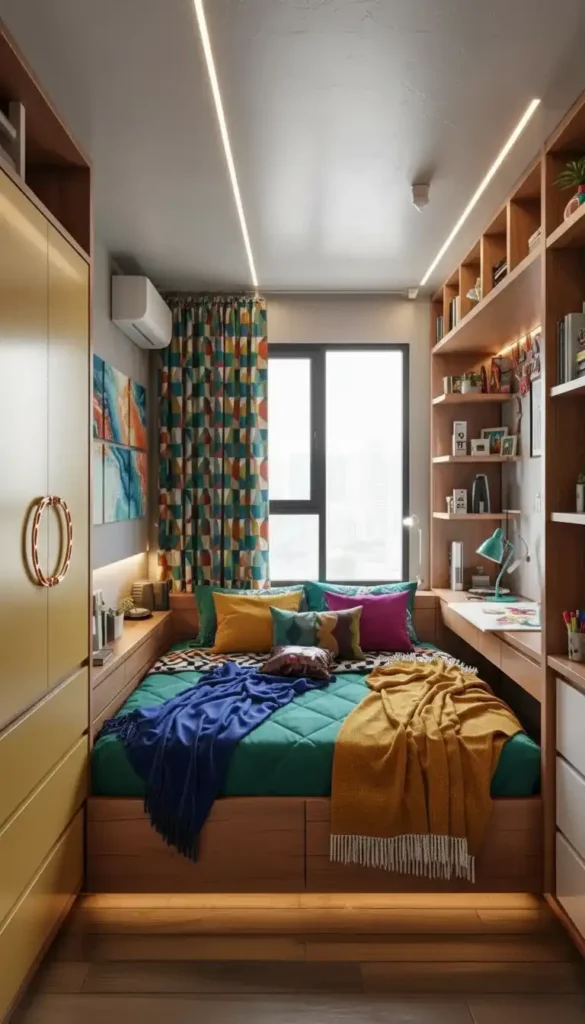
📌 Pin this small room loft layout! 📌
Choosing The Right Loft Height
Ceiling height determines everything about comfort and safety in loft setups.
Height Guidelines:
- 8-foot ceilings: Loft platform at 54-60 inches (allows sitting up in bed)
- 9-foot ceilings: Loft platform at 60-72 inches (comfortable for lower work zone)
- 10+ foot ceilings: Full-height loft at 72+ inches (room for sofa or full desk below)
Measure from floor to ceiling, subtract 36-40 inches for sitting headroom in bed, and what’s left determines your loft platform height.
Mattress Thickness Matters: Use a 6-8 inch mattress on lofts to maximize headroom. Standard 12-inch mattresses eat precious ceiling clearance.
Access Options: Ladders Versus Stairs
How you get up to the loft affects both safety and floor space.
Ladder Pros and Cons:
- Takes minimal floor space (12-18 inches)
- Can be vertical or angled
- Requires good mobility and balance
- Best for teens and adults
Stair Alternatives:
- Alternating tread stairs: Safer than ladders, take 24-30 inches of floor space
- Storage stairs: Each step becomes a drawer, maximizing function
- Built-in staircase: Most comfortable but requires 36+ inches
For small rooms, alternating tread stairs offer the best balance of safety and space efficiency.
Keeping Small Loft Rooms Visually Calm
Too much visual clutter destroys the space-saving benefit of a loft.
Simplification Rules:
- One or two accent textures maximum (wood + metal, or fabric + wood)
- Simple bedding without busy patterns—solid colors or subtle texture
- Minimal decor in the loft zone—just bedding and one small shelf for essentials
- Consistent color palette across furniture finishes
The goal is making the room feel edited and intentional, not packed with stuff.
Safety Essentials You Cannot Skip
Even in small rooms, safety features are non-negotiable.
Required Safety Elements:
- Guardrails on all open sides of loft platform, minimum 5 inches above mattress top
- Stable ladder with wide rungs (minimum 3 inches) and secure attachment
- Wall anchoring for the loft frame—never rely on weight alone
- Adequate headroom at loft level—36 inches minimum for sitting up comfortably
Test the ladder and guardrails before adding the mattress. If anything wobbles or feels unstable, fix it immediately.
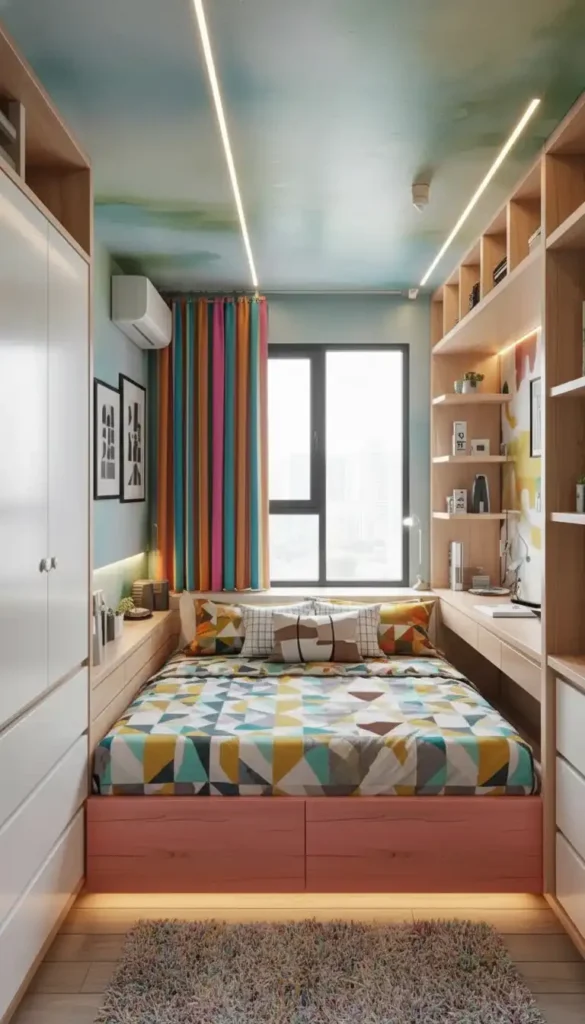
📌 Save this small room safety checklist! 📌
Planning For Airflow And Temperature
Small rooms with lofts can feel stuffy if airflow isn’t considered.
Ventilation Strategy:
- Keep loft open on at least one long side to allow air circulation
- Avoid fully enclosing lower zone with curtains—leave gaps at top and bottom
- Position bed away from radiators or heating vents by at least 24 inches
- Use a small fan in summer to keep air moving at loft level
Heat rises, so the loft zone will always be warmer than the floor. Plan bedding weight accordingly.
The Measurement Checklist Before You Buy
Never purchase a loft bed before confirming these measurements.
Critical Numbers:
- Floor to ceiling height
- Length and width of room
- Distance from loft location to doors, windows, radiators
- Guardrail height above mattress surface
- Lower zone clearance (minimum 60 inches for sitting comfortably)
Also measure doorways and stairwells if the loft frame won’t fit through assembled. Some lofts require assembly inside the room.
Small-room loft beds work when every design choice prioritizes function and visual calm. The room should feel smarter, not smaller, once the loft is in place.
Loft Bed Ideas For Adults In Compact Homes
Adult loft beds need to look intentional and sophisticated, not temporary or college-dorm improvised. In 2026, the best adult loft setups create clear separation between sleep and daytime living while maintaining grown-up aesthetics through refined materials, cohesive color palettes, and furniture that supports real routines. This is about making a compact home feel like a designed studio, not a compromise.
Creating A Refined Sleep Zone Above
The loft sleeping area should feel like an actual bedroom, not an afterthought.
Adult Sleep Zone Essentials:
- Quality mattress (6-8 inches thick for headroom, but good support)
- Hotel-style bedding with crisp sheets and a duvet, not just a comforter
- Small bedside shelf mounted to loft frame for phone, glasses, water
- Soft reading light clipped or mounted at headboard level
Material Choices: Choose loft frames in black metal, natural wood, or white powder-coat for a modern look. Avoid primary colors or overly industrial finishes.
Adult loft zones need outlets or power strips mounted at bed level. Charging devices shouldn’t require climbing down every night.
Designing A Functional Lower Work Zone
The space under an adult loft should support productivity, not just storage.
Desk Setup Requirements:
- Desk depth of 24-30 inches for laptop and monitor
- Cable management through desk grommets or mounted power strips
- Supportive office chair with proper back support (not a stool)
- Task lighting with adjustable arm for focused work
Storage Integration: Add a small filing cabinet or storage cubes under the desk for papers, supplies, and equipment. Closed storage keeps the work zone looking professional.
Desk Positioning: Face the desk toward a window if possible, or at least away from a blank wall. Facing walls feels claustrophobic during long work sessions.
Incorporating A Lounge Area Below
If you’re not using the lower zone for a desk, create an actual living space.
Lounge Setup Options:
- Small loveseat or apartment sofa (60-72 inches) with side table
- Cozy armchair with ottoman and floor lamp for reading corner
- Daybed or futon that doubles as seating and guest sleeping
Rug Definition: Use an area rug to define the lounge zone visually. This makes the space feel like a living room, not just “under the bed.”
Lighting For Lounge Areas: Add a floor lamp with dimmer and avoid relying on overhead lights. Soft, adjustable lighting makes the space feel intentional and comfortable.
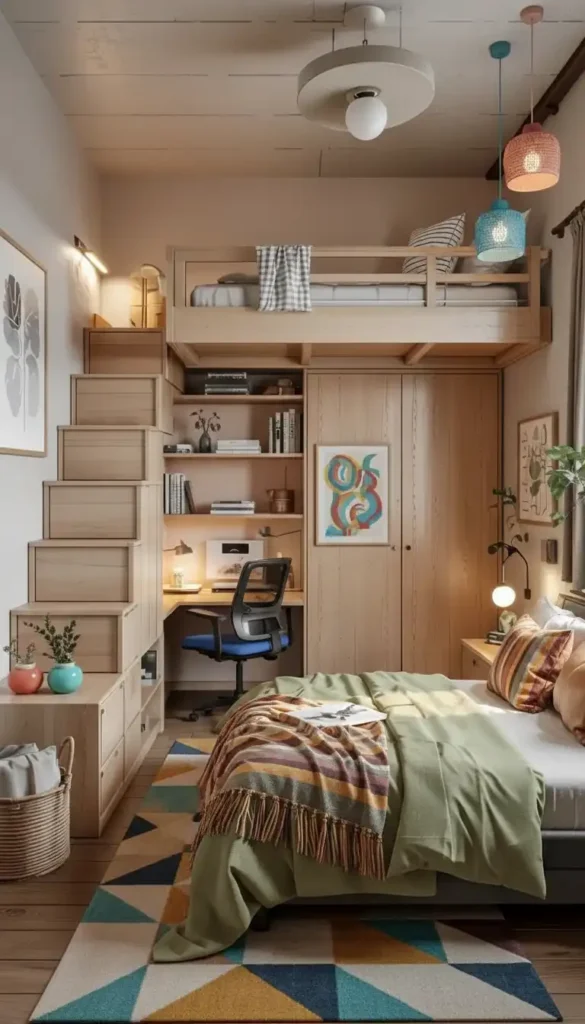
📌 Pin this adult loft layout strategy! 📌
Balancing Metal Frames With Warm Textures
Metal loft frames are durable and modern, but they can read cold without balance.
Warming Elements:
- Wool or textured throw blankets on the bed
- Natural fiber rug (jute, wool, or cotton) in the lower zone
- Wood furniture accents like desk top or shelving
- Linen or cotton curtains if you’re adding privacy panels
Bulb Temperature: Use warm white LED bulbs (2700K-3000K) in all fixtures. Cool white makes metal frames feel industrial in a harsh way.
The goal is making the loft feel sophisticated and cozy, not like unfinished warehouse space.
Guardrails That Don’t Look Juvenile
Adult loft guardrails need to be safe but visually refined.
Design Options:
- Cable railing for a modern, minimal look
- Horizontal metal bars in black or bronze
- Glass panels for an upscale feel (if budget allows)
- Simple wood rails that match the frame finish
Avoid decorative cutouts, bright colors, or ornate designs. Simple geometry reads grown-up.
Height Requirements: Guardrails should be at least 5 inches above mattress top, but 8-10 inches is better for adults who shift in sleep.
Closed Storage Solutions For Visual Calm
Adults accumulate stuff. Loft rooms stay calm only with adequate hidden storage.
Storage Priorities:
- Tall dresser or wardrobe (72+ inches) for clothing
- Closed cabinets or drawers under the desk for office supplies
- Storage ottoman or bench that hides extra bedding or seasonal items
- Wall-mounted cabinets above desk for files or supplies
What To Avoid: Open shelving full of miscellaneous items. Every open surface becomes a clutter magnet that makes the room feel smaller.
Limit open shelving to 1-2 curated displays—books, a plant, a few decorative objects. Everything else stays hidden.
Adding Sophisticated Lighting Layers
Adult loft rooms need flexible lighting for work, relaxation, and sleep.
The Complete Lighting Plan:
- Overhead recessed lights or modern fixture on dimmer for general room light
- Under-loft LED strips to illuminate work or lounge zone (warm white)
- Desk task lamp with adjustable brightness
- Bedside clip light at loft level for reading
- Floor or table lamp in lounge area for ambiance
Smart Bulbs Option: Consider smart bulbs you can control from bed or voice command. Climbing down to turn off lights gets old fast.
Making It Feel Permanent, Not Temporary
Adult loft spaces fail when they look like short-term solutions.
Permanence Signals:
- Art on walls at both loft and floor levels
- Real bedside table or shelf, not just phone on the mattress
- Quality textiles throughout—good sheets, real pillows, a proper rug
- Consistent hardware finishes across furniture and lighting
What To Skip: String lights, posters, or anything that reads “college apartment.” Choose framed art, real lamps, and adult furniture.
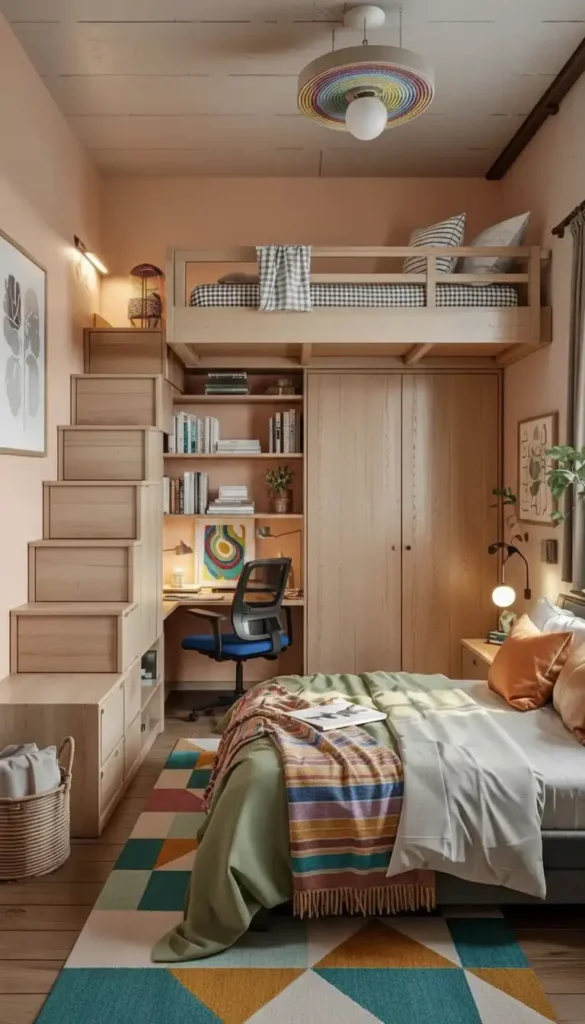
📌 Save this adult sophistication guide! 📌
Noise And Stability Considerations
Adults are more sensitive to squeaks and movement in loft beds.
Stability Upgrades:
- Wall anchoring with L-brackets into studs (not just drywall)
- Felt pads under all ladder or stair contact points
- Cross-bracing between loft frame legs if not included
- Quality hardware with lock washers to prevent loosening over time
Test the ladder and frame before adding the mattress. Any wobble gets amplified with use.
Noise Reduction: Squeaking comes from metal-on-metal contact or loose joints. Tighten everything, add rubber washers where needed, and use wood shims between frame and wall if there’s movement.
Budget Priorities For Adult Loft Rooms
If money is tight, spend strategically on what matters most.
Priority Spending:
- Stability and safety—wall anchors, quality frame, guardrails
- Lighting—multiple sources and dimmers
- Mattress quality—don’t compromise on sleep
- Desk and chair—if you’re working from home
Save Money On:
- Decorative accessories (add over time)
- Expensive bedding (mid-range is fine)
- Elaborate stair systems (alternating treads work well)
You can upgrade finishes later. Get the structure and function right first.
Adult loft beds work when they feel like designed solutions, not forced compromises. The room should support your actual life—work, sleep, and downtime—without feeling cramped or temporary.
Loft Bed Ideas For Teens Bedrooms
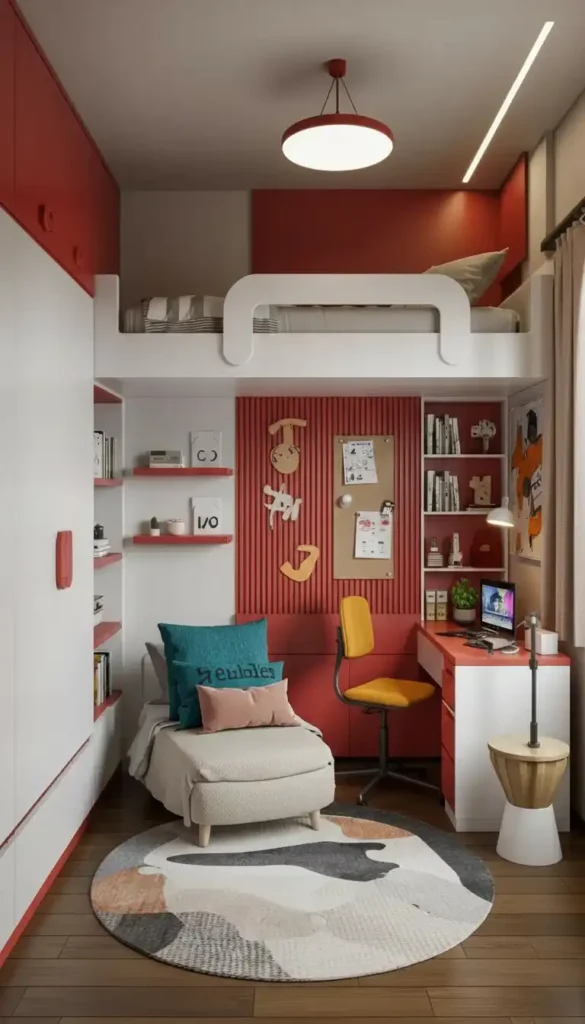
Teen loft beds need to support three realities: studying requires real focus, personal space matters more than ever, and aesthetics shift constantly. In 2026, successful teen loft setups blend clean structural backdrops with flexible styling zones, dedicated study areas, and enough storage to keep the chaos contained. This is about creating a room that supports independence and productivity without feeling like it’s designed by parents.
Prioritizing The Study Zone Below
Homework and screen time are non-negotiable parts of teen life. The desk area needs to work seriously.
Study Zone Requirements:
- Full-size desk minimum 48 inches wide for laptop, textbook, and workspace
- Ergonomic chair with adjustable height and back support
- Task lighting with adjustable brightness (LED desk lamp or swing-arm wall mount)
- Pinboard or slat wall above desk for schedules, photos, and reminders
Desk Positioning: Place the desk where natural light hits during afternoon study hours. Facing a window works better than facing a wall.
Cable Management: Teens have multiple devices. Add a mounted power strip with USB ports and cable clips to keep cords organized instead of tangled on the floor.
Building In Flexible Storage Systems
Teen rooms accumulate stuff fast. Storage needs to adapt without constant reorganizing.
Storage Mix That Works:
- Tall dresser or wardrobe for clothing (6+ drawers or hanging space)
- Open shelving (2-3 shelves) for display items that change—trophies, collections, decor
- Closed drawer units under or beside the desk for school supplies and tech accessories
- Storage bins or baskets on shelves for smaller items
The Balance: Mix closed and open storage so teens can display some personality while hiding the rest. All-closed feels sterile. All-open becomes visual chaos.
Creating A Lounge Spot That Isn’t The Bed
Teens need somewhere to hang out that isn’t their desk or bed.
Lounge Options For Limited Space:
- Bean bag or floor cushion in a corner with a small side table
- Compact armchair if floor space allows
- Floor pillows with a low bookshelf or small shelf unit as a backrest
Why This Matters: Separating study, sleep, and relaxation zones helps with focus and sleep quality. The bed shouldn’t be the default for every activity.
Add a small shelf nearby for water bottles, books, and phone charging—make the lounge spot actually functional.
📌 Pin this teen zone separation strategy! 📌
Keeping The Aesthetic Flexible
Teen tastes change fast. The structure should stay neutral while allowing personal expression.
The Framework:
- Neutral loft frame—black, white, natural wood, or gray
- Simple bedding base—solid color sheets and duvet
- White or light walls that don’t fight with changing decor
Where Personality Lives:
- Removable wall decals or posters in frames (not tape)
- LED strip accents in changeable colors
- Throw pillows and blankets on the bed in current favorite colors
- Desktop accessories and pinboard styling
This lets teens update the look without needing new furniture every year.
Lighting For Study And Sleep
Teen schedules are chaotic. Lighting needs to support late-night studying without destroying sleep quality.
Multi-Purpose Lighting Plan:
- Ceiling fixture on dimmer for general room light
- Bright desk task lamp (minimum 500 lumens) for homework
- Soft bedside light at loft level—clip light or small sconce
- Optional LED strips for ambient accent (warm white, not RGB)
Blue Light Consideration: Encourage warm bulbs and dimmer settings after 9 PM to support better sleep. Bright white light late at night messes with sleep cycles.
Safety For Active Teen Use
Teen rooms get more movement, visitors, and general chaos than adult spaces.
Reinforced Safety:
- Guardrails on all open sides minimum 8 inches above mattress
- Stable ladder or stairs with wide rungs—check tightness monthly
- Weight capacity of 400+ pounds (accounts for teens, mattress, and guests sitting on edge)
- Wall anchoring with lag bolts into studs, not toggle bolts
Teen loft beds need to handle rougher use without wobbling or squeaking.
Maximizing Vertical Wall Space
Walls are underused real estate in teen loft rooms.
Wall Utilization Ideas:
- Floating shelves at various heights for books and display items
- Pegboard or slat wall for hanging backpacks, headphones, hats
- Wall-mounted desk organizers to keep supplies off surfaces
- Large calendar or whiteboard for schedules and deadlines
Avoid Damage: Use command strips or nail-in picture hangers that are removable. Teens will want to rearrange frequently.
Tech Integration That Makes Sense
Devices are central to teen life. Make charging and use convenient.
Tech Setup:
- Charging station on the desk with multiple USB ports
- Power outlet or extension at loft level for phone overnight
- Monitor stand or laptop riser to improve desk ergonomics
- Headphone hook on desk or wall to keep them accessible
WiFi Consideration: If the loft is far from the router, consider a mesh WiFi extender in the room. Weak internet in a teen’s room creates constant frustration.
📌 Save this teen functionality checklist! 📌
Color Schemes That Work For Teens
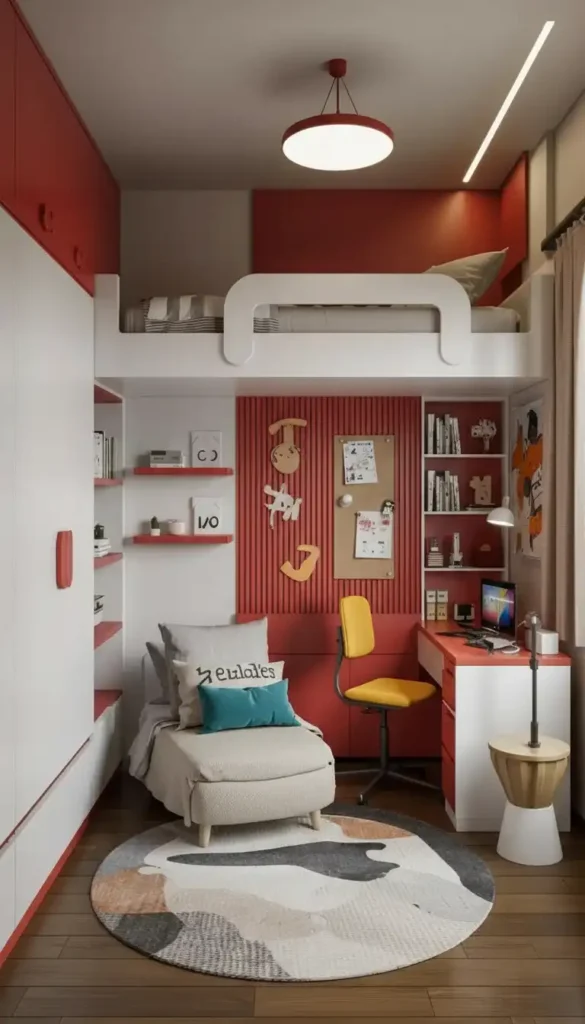
Teen aesthetic in 2026 leans toward clean backdrops with bold accent moments.
Current Color Approaches:
- Monochrome base: Black, white, and gray with one bright accent color
- Soft neutrals with pastels: Beige and cream with dusty pink or sage green
- Dark moody: Charcoal or navy with warm wood and warm lighting
Accent Colors That Trend: Neon green, burnt orange, deep purple, or electric blue—used sparingly in pillows, art, or desk accessories.
Keep the loft frame, walls, and major furniture neutral. Let textiles and decor carry the color story.
Room For Growth And Change
The loft setup should work from middle school through high school graduation.
Future-Proof Planning:
- Adjustable desk height or chair that grows with the teen
- Modular storage that can shift from school supplies to hobby gear
- Neutral bed frame that doesn’t look childish as they age
- Adequate space for potential larger monitor, printer, or other equipment
Leave one wall section blank for future changes—maybe a larger pinboard, a music setup, or an art display.
Teen loft beds succeed when they support real daily routines—studying, relaxing, storing stuff—while giving teens control over how the space looks and feels. It’s their room, not a parent’s Pinterest project.
Loft Bed Ideas For Kids Rooms
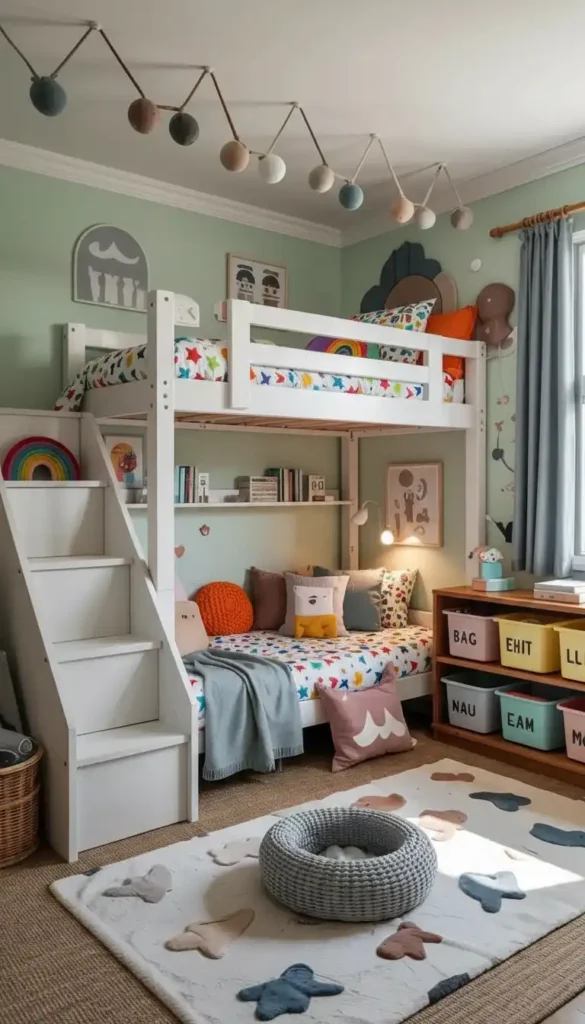
Kids’ loft beds need to balance safety, playfulness, and parent-friendly functionality. In 2026, the best kids’ loft setups feel like mini clubhouses without becoming chaotic toy explosions. The structure should be approachable and safe while creating floor space for play and keeping the room organized enough for busy mornings and bedtime routines. This is about making a room that works for kids and parents.
Age-Appropriate Loft Heights
Not all kids are ready for standard loft heights. Safety and comfort determine the right elevation.
Height Guidelines By Age:
- Ages 6-8: Low loft (40-48 inches platform height)
- Ages 9-12: Medium loft (48-60 inches platform height)
- Ages 13+: Can use standard adult-height lofts
The Safety Rule: Kids should be able to sit fully upright in bed without hitting their head. Measure from mattress surface to ceiling.
Mattress Choice: Use a 6-inch mattress for kids’ lofts to maximize headroom. Thicker mattresses reduce safety clearance at guardrails.
Making The Lower Zone Play-Friendly
The space under a kids’ loft should invite activity, not just store bins.
Lower Zone Uses:
- Reading nook with floor cushions, small bookshelf, and soft lighting
- Art corner with small table and supply storage
- Play area with toy bins and soft rug
- Cozy fort using curtains (with ventilation gaps)
Furniture Scale: Choose kid-height furniture—low shelves, small table and chairs—so children can use the space independently.
Rug Essential: A soft, plush rug in the lower zone makes it comfortable for floor play. Avoid hard, cold floors that discourage use.
Safe And Easy Access
How kids get up to the loft matters for safety and independence.
Ladder Options:
- Angled ladder: Safer than vertical (65-75 degree angle)
- Wide rungs: Minimum 3 inches deep for secure footing
- Slip-resistant: Grooved or textured surface
Stair Alternatives:
- Storage stairs: Each step becomes a drawer for toys or clothes
- Alternating tread stairs: Easier to climb than ladders
- Full staircase: Safest but requires more floor space (minimum 36 inches)
Handholds: Ensure there’s something to grip while climbing—side rails on ladders or a wall-mounted rail beside stairs.
Guardrails That Prevent Falls
Guardrails are the most critical safety feature for kids’ lofts.
Non-Negotiable Requirements:
- Guardrails on all open sides of the loft
- Minimum 5 inches above mattress top, ideally 8-10 inches
- No gaps wider than 3.5 inches between rails (prevents head entrapment)
- Secure attachment that doesn’t wobble or lift off
Monthly Check: Tighten all guardrail bolts regularly. Kids’ movement loosens hardware over time.
📌 Pin this kids’ safety checklist! 📌
Storage That Teaches Organization
Kids’ rooms stay functional when storage is simple and accessible.
Storage Setup:
- Low dresser (36 inches or under) with labeled drawers
- Open bins or baskets on shelves for toys—sorted by category
- Book ledge or rack at kid height for bedtime reading
- Hamper in a designated spot to build laundry habits
Labeling System: Use picture labels for young kids, word labels for readers. This helps kids put things away independently.
Accessible Height: Primary storage should be reachable without a step stool. Kids won’t use storage they can’t reach easily.
Creating A Calm Sleep Environment
The loft sleeping zone should feel cozy and conducive to bedtime routines.
Sleep Zone Essentials:
- Soft lighting—night light or clip lamp at loft level
- Small shelf for a water cup, lovey, or comfort items
- Gentle colors—avoid overly bright or stimulating bedding
- Comfort items—favorite pillow or blanket
Ventilation: Ensure air circulates at loft level. Add a small fan if the room feels stuffy, especially in summer.
Blackout Option: If needed for early bedtimes or morning wake-ups, add a blackout curtain or shade at the window.
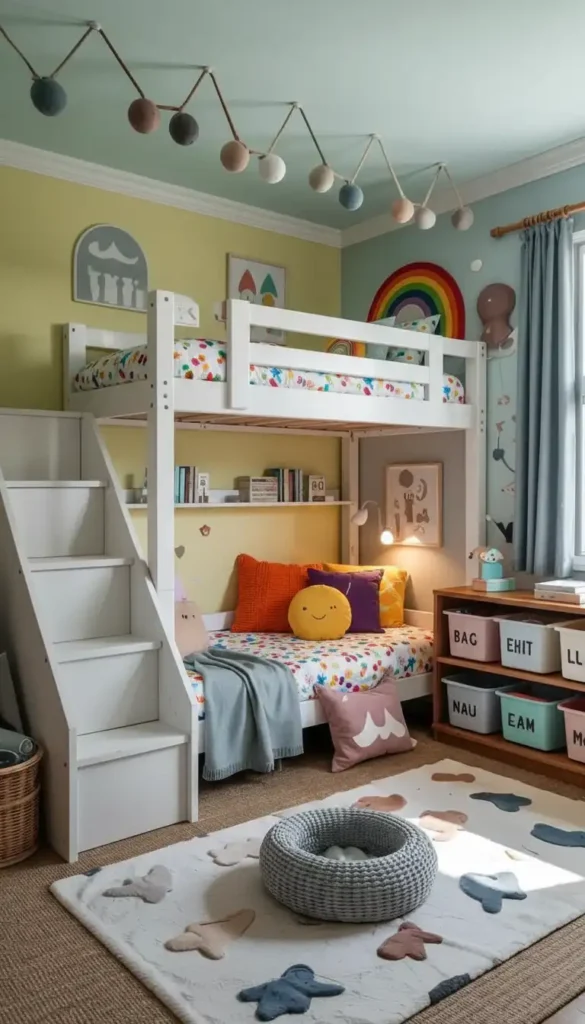
Playful Without Chaotic Decor
Kids’ rooms can be fun without becoming visually overwhelming.
Balanced Decor Approach:
- Neutral loft frame—white, natural wood, or light gray
- One accent color repeated in bedding, rug, and bins
- Simple wall art—framed prints or decals, not busy wallpaper
- Limited themes—avoid character overload that dates quickly
Growth-Friendly: Choose decor that can evolve. A neutral base with changeable accents saves money as interests shift.
Lighting For Day And Night
Kids need bright light for play and soft light for bedtime.
Layered Lighting Plan:
- Ceiling fixture with dimmer for general room light
- Task lamp for reading or homework area
- Night light with warm glow (red or orange spectrum best for sleep)
- Under-loft LED strip to softly light play area (warm white)
Safety Consideration: Avoid floor lamps that tip easily. Choose wall sconces or securely weighted lamps.
Room For Active Play And Movement
Kids need floor space to actually be kids.
Keeping Floors Clear:
- Vertical storage only in the main play zone
- Minimal furniture footprint—just essentials
- Open center area for playing, building, or moving
Soft Surfaces: Use area rugs, foam mats, or carpet to cushion falls and make floor play comfortable.
📌 Save this kid-friendly layout! 📌
Ventilation In Enclosed Lower Zones
If you’re adding curtains or panels under the loft for a cozy fort, airflow is crucial.
Ventilation Rules:
- Leave 6-inch gap at top of curtains for air circulation
- Don’t fully enclose all four sides—leave one side open
- Use breathable fabrics—cotton or linen, not vinyl
- Monitor temperature—enclosed spaces can get stuffy
Check the lower zone regularly to ensure it doesn’t feel uncomfortably warm or stuffy.
Maintenance And Adjustments As Kids Grow
Kids’ loft setups need periodic updates as children age and grow.
Regular Checks:
- Mattress thickness adjustments as clearance needs change
- Guardrail height as kids get taller
- Weight capacity verification if adding more storage or changing mattress
- Hardware tightness—bolts loosen with active use
Plan For Growth: Choose lofts that can adjust or convert as kids become teens. Some frames transition from low to high configurations.
Kids’ loft beds succeed when they’re safe, simple to maintain, and support both active play and calm sleep. The room should make daily routines easier, not harder, for both kids and parents.
Aesthetic Loft Bed Ideas For Modern Interiors
Aesthetic loft beds in 2026 are about making elevated sleeping zones look like intentional design choices, not space-saving afterthoughts. Modern loft aesthetics prioritize clean lines, cohesive materials, restrained color palettes, and enough breathing room to feel airy instead of cramped. This approach works in small apartments, studios, and even larger rooms where you want the loft to feel like a designed architectural feature rather than temporary furniture.
Choosing A Frame That Looks Designed
The loft frame itself sets the aesthetic foundation for the entire room.
Frame Materials That Work:
- Black metal tubing: Industrial-modern, pairs well with warm accents
- Natural wood (oak or ash): Scandinavian-modern, adds warmth without heaviness
- White powder-coated steel: Clean and minimal, works in bright spaces
- Mixed materials: Wood platform with metal legs for contrast
What To Avoid: Overly ornate frames, bright primary colors, or chunky designs that dominate the room visually.
Detail Matters: Look for welded joints instead of visible bolts, consistent finish quality, and proportional dimensions that don’t look cobbled together.
Creating Visual Lightness In Small Spaces
Aesthetic loft rooms need to feel open, not claustrophobic.
Strategies For Airiness:
- Light wall colors—white, warm beige, or pale gray
- Minimal loft enclosure—avoid bulky headboards or heavy curtains
- Open sides—don’t box in the loft with walls on multiple sides
- Slim furniture—streamlined desk, narrow nightstand, low-profile dresser
Negative Space: Leave visible wall and floor space. Not every surface needs furniture or decor.
The goal is making the loft feel like it floats in the room, not like it’s dominating every sightline.
Matching Materials Across The Room
Cohesive material choices make loft rooms look pulled-together instead of random.
The Material Repeating Rule: If your loft frame is black metal, echo black metal in:
- Desk legs or frame
- Lighting fixtures
- Curtain rods
- Hardware on storage pieces
Wood Tone Consistency: If you’re mixing wood, keep it in the same tone family—all warm woods (oak, walnut, teak) or all light woods (ash, maple, birch).
Accent Metal: Add one accent metal (brass, copper, or matte gold) sparingly in lighting or small hardware for warmth.
📌 Pin this material cohesion strategy! 📌
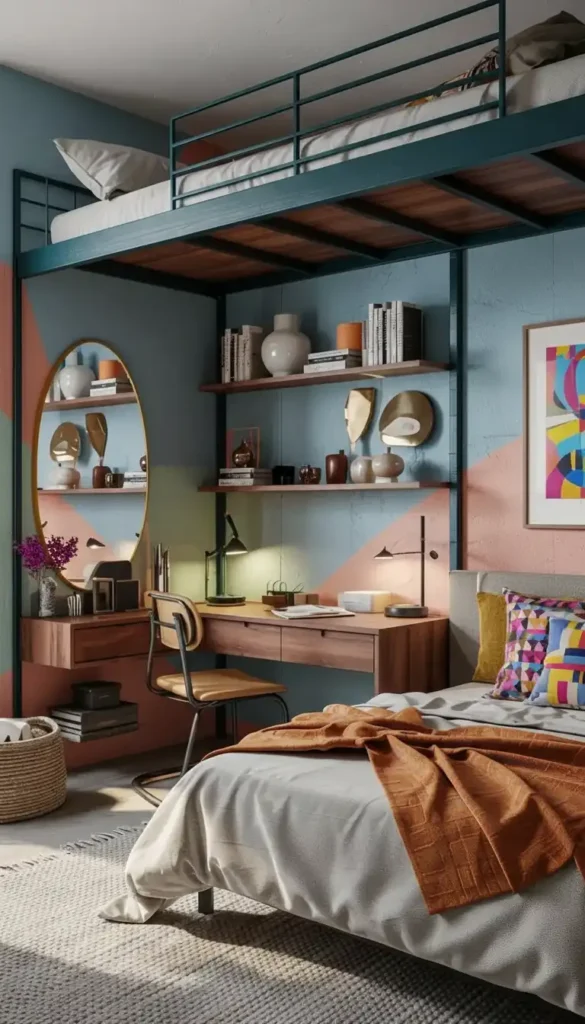
Styling The Lower Zone Like A Living Space
The area under an aesthetic loft should look as considered as the rest of your home.
Desk Setup:
- Slim desk with warm wood top and metal or wood legs
- Minimal desk accessories—one plant, one lamp, one organizer
- Ergonomic chair in a neutral color that matches the palette
Lounge Setup:
- Small sofa or armchair in a solid fabric (linen, cotton, or leather)
- Side table in matching material to loft frame
- Floor lamp with simple geometric shade
Rug Definition: Use a large area rug (minimum 6×9 feet) to define the lower zone. Choose natural fibers or solid colors that anchor the space without competing visually.
Managing Bedding For A Clean Look
Messy bedding destroys the modern aesthetic instantly.
Aesthetic Bedding Rules:
- Solid colors or simple textures—avoid busy patterns
- Crisp white or neutral sheets—beige, gray, or soft blue
- One textured layer—linen duvet or waffle weave blanket
- Minimal pillows—two sleeping pillows, maybe one accent
Daily Maintenance: Make the bed every morning. Unmade lofts are visible from every angle in the room and ruin the clean aesthetic.
Hidden Storage: Keep extra blankets and pillows in closed storage below, not piled on the bed.
Lighting As Architectural Feature
In aesthetic loft rooms, lighting isn’t just functional—it’s part of the design.
Statement Lighting Options:
- Modern pendant hung at the right height for the room (not blocking sightlines)
- Wall sconces on either side of the loft for symmetry
- LED strips hidden behind the loft platform to create a floating effect
Ambient Layers: Combine statement lighting with practical sources:
- Desk task lamp (sculptural design)
- Floor lamp with clean lines
- Bedside clip light (minimal design)
All bulbs should be warm white (2700K-3000K) for cohesive, comfortable light.
Adding Mirrors To Expand Perception
Mirrors are powerful tools in small, aesthetic loft rooms.
Strategic Mirror Placement:
- Opposite a window to bounce natural light deeper into the room
- Above a dresser as both functional and decorative element
- Leaning against a wall (large floor mirror) for a casual modern look
Frame Choices:
- Warm metal (brass, copper) for cozy modern
- Black metal for industrial modern
- Simple wood for Scandinavian modern
Avoid: Ornate vintage frames in modern loft rooms—they create style clashes.
📌 Save this aesthetic lighting and mirror guide! 📌
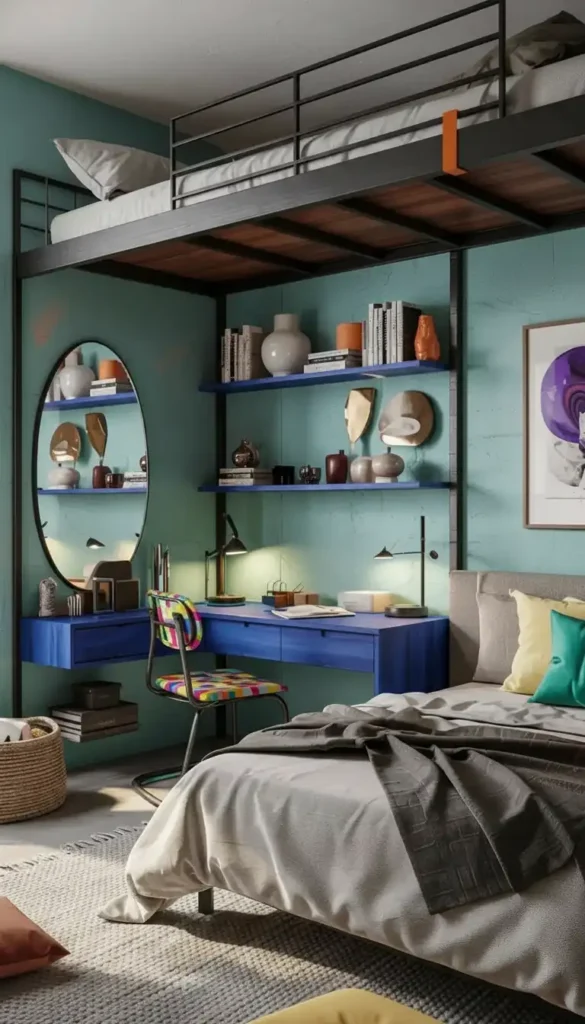
Plant Integration For Life And Texture
Plants add softness and organic texture that prevents modern rooms from feeling sterile.
Plant Placement:
- Desk corner with a small potted plant (pothos, snake plant)
- Floor plant (monstera, fiddle leaf fig) if space allows
- Hanging plant from ceiling or loft edge
Container Choice: Use simple ceramic, concrete, or woven basket planters in neutral tones. Avoid colorful plastic pots.
Light Requirements: Only add plants if the room gets adequate natural light. Fake plants work if they’re high-quality and minimal.
Wall Treatment That Supports The Aesthetic
Walls in aesthetic loft rooms should enhance, not compete with, the architecture.
Effective Wall Treatments:
- Accent wall in a warm neutral or moody color behind the loft
- Board and batten for subtle texture without pattern
- Large-scale art (one piece, not gallery wall)
- Floating shelves styled minimally with books and objects
What To Skip: Busy wallpaper, multiple small art pieces, or decorative wall decals. These fight the clean modern vibe.
Curtain And Window Strategies
Window treatments affect how bright and open the room feels.
Modern Window Approaches:
- Full-length linen curtains in white, beige, or gray
- Simple roller shades in blackout or light-filtering fabric
- No treatment if privacy isn’t an issue and light is desired
Hardware: Choose simple rods in black or brushed metal. Avoid ornate finials or heavy fabric valances.
Hanging Height: Mount curtain rods 2-4 inches below ceiling and extend 6 inches beyond window frame on each side for a high, wide look.
Controlling Visual Clutter
Aesthetic modern rooms collapse when clutter creeps in.
Clutter Prevention:
- Closed storage for 80% of items—only display what’s intentional
- Cable management—hide all cords with clips, covers, or channels
- Limited open shelving—one or two shelves maximum, styled carefully
- Daily reset—put items back in designated spots every evening
Surface Rule: Keep desk and nightstand surfaces mostly clear—just a lamp, one plant or object, and current daily essentials.
Balancing Modern With Livable
The biggest complaint about aesthetic modern loft rooms is they feel like showrooms, not homes.
Making It Livable:
- Textured throw blanket on the bed or lounge chair
- Real books on shelves, not just decorative objects
- Personal photos in simple matching frames
- Comfortable seating with soft cushions
Avoid Sterility: Don’t edit so heavily that the room has no personality. One or two meaningful personal items make the space feel inhabited.
Modern aesthetic loft beds work when every choice—frame material, color palette, furniture style, decor placement—supports a cohesive visual story. The room should feel intentionally designed, not accidentally assembled, while still being comfortable for daily living.
Conclusion
Loft beds in 2026 aren’t about making do with less space—they’re about designing smarter, more intentional rooms that actually work for how you live. Whether you’re creating a sophisticated studio, a functional teen study zone, a safe play space for kids, or a modern aesthetic statement, the right loft setup transforms a room from cramped to breathable. The difference between a loft that works and one that frustrates comes down to the details: proper height calculations, adequate lighting, smart storage, and safety features that let you use the space confidently.
Start with your biggest pain point—is it lack of workspace, storage chaos, or just feeling like there’s no room to move? Pick the loft approach that solves that problem first, then build from there with the specific strategies in this guide. Measure carefully, prioritize stability and lighting, and remember that a successful loft room should make your daily routines easier, not harder. Your small space has more potential than you think—you just need the right plan to unlock it.

“I share simple, beautiful and affordable home decor ideas to help you style every corner of your home with ease.