
Your kitchen table isn’t just where you eat—it’s where life happens. Morning coffee before the chaos starts, homework sprawled across the surface, late-night conversations that stretch longer than planned. But if your current table feels awkward, too big, too cramped, or just plain wrong for your space, every meal becomes a reminder that something isn’t working. A round kitchen table can change all of that, softening sharp corners, improving flow, and creating a gathering spot that actually feels welcoming.
That’s exactly why I’m breaking down the top 5 round kitchen table ideas for 2026 that work in real homes, not just design magazines. Whether you’re dealing with a tiny apartment kitchen, a sprawling open-concept space, or something in between, you’ll find practical solutions here. I’ll show you how to choose the right size, style your table without creating clutter, and make smart furniture decisions that support how you actually live. Let’s transform your kitchen into a space where everyone wants to pull up a chair.
Modern Round Kitchen Table Ideas For 2026
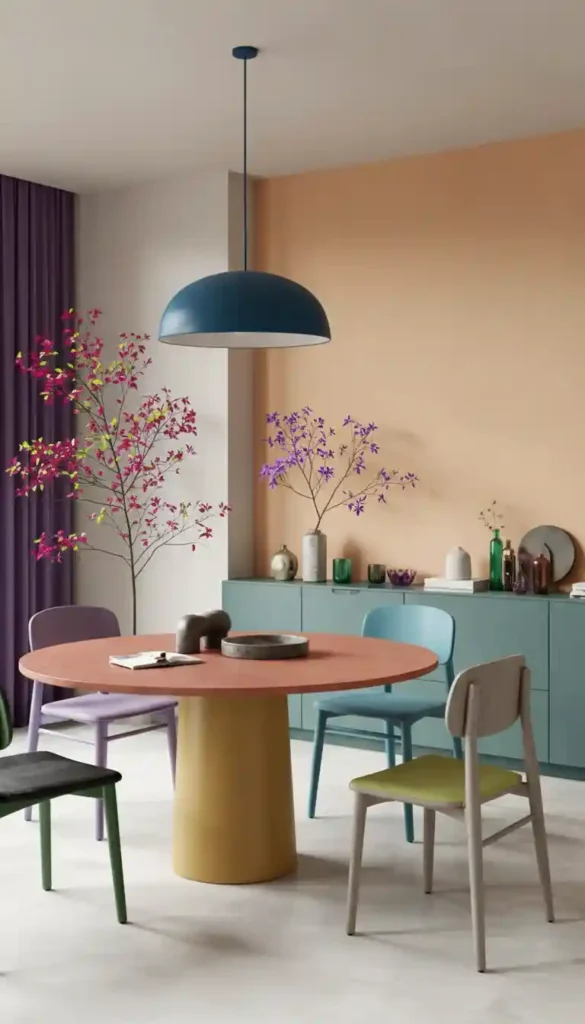
Modern round kitchen tables in 2026 focus on clean lines, minimal visual weight, and finishes that look sophisticated without requiring constant maintenance. The goal is a table that becomes your kitchen’s functional centerpiece while keeping the overall space feeling light and uncluttered.
The Pedestal Base Advantage
Pedestal and tulip bases are dominating modern kitchen design for excellent reasons.
- Maximum legroom: No corner legs to bump your knees against
- Easier seating flexibility: Fit an extra chair without leg interference
- Lighter visual footprint: Single central support makes rooms feel more open
- Contemporary aesthetic: Clean, sculptural silhouette reads unmistakably modern
This base style works especially well in open-plan kitchens where sight lines matter. The uninterrupted floor space around a pedestal base makes even modest-sized kitchens feel more spacious.
Choosing Modern Tabletop Materials
Your tabletop material sets the tone for the entire space.
Quartz-look laminate delivers the high-end stone appearance without the price tag or maintenance headaches. It’s heat-resistant, stain-resistant, and incredibly practical for daily use.
Matte stone finishes in concrete gray, soft white, or warm taupe create that contemporary gallery feel. They photograph beautifully and hide fingerprints better than glossy alternatives.
Slim-profile tops (under 1.5 inches thick) maintain the light, airy aesthetic that defines modern design. Thick, chunky tops work better in rustic or traditional spaces.
Avoid high-gloss finishes—they show every smudge and read more 1990s than 2026.
Seating Arrangements That Work
Modern doesn’t mean uncomfortable. Your chair choices matter enormously.
Four matching slim-profile chairs create cohesive symmetry. Look for chairs with open backs or minimal frames that don’t block visual flow.
Mixed-pair approach: Two chairs in one material plus two in another (same color family) adds interest without chaos. Try wood with upholstered, or metal with wood.
One curved banquette plus two chairs introduces softness and improves traffic flow. The banquette hugs the wall while chairs stay mobile for flexibility.
Keep armless chairs on the traffic side so people can slide in and out easily without chair arms catching on table edges.
Lighting That Centers the Space
A statement pendant above your round table isn’t optional—it’s essential.
Wide drum shades or globe pendants with 16-24 inch diameters work perfectly over standard 42-48 inch round tables. They provide even light without harsh shadows.
Hang 30-36 inches above the tabletop for optimal illumination without blocking sight lines across the table.
Install a dimmer switch so your kitchen can transition from bright task lighting during meal prep to soft ambient glow during dinner. This single upgrade transforms how your space functions throughout the day.
Choose fixtures in matte black, brushed brass, or soft white to complement rather than compete with your table.
📌 Pin this modern kitchen table styling approach! 📌
Supporting Furniture Placement
Don’t let your beautiful table float in isolation.
Narrow console or low cabinet nearby: Stores table linens, serving pieces, and placemats so your tabletop stays clear and ready for use.
Slim rolling cart: Perfect for coffee stations, wine storage, or extra prep space that can be moved when not needed.
Open shelving coordination: If your kitchen has open shelves, repeat one element from your table (material, color, or finish) to create visual cohesion.
Keep supporting pieces lightweight and mobile in modern spaces. Heavy, bulky furniture contradicts the airy aesthetic you’re building.
Edge Details Matter
This small detail makes a surprising difference in comfort and style.
Rounded or beveled edges feel comfortable when you lean your forearms on the table during long conversations. Sharp 90-degree edges can dig in uncomfortably.
Thin edge profiles (under 1 inch) maintain that sleek modern look. Thick, decorative edges read more traditional.
Smooth finishes without texture or grain prevent snagging on clothing and make cleanup easier.
Test the edge in person if possible—you’ll be touching it hundreds of times, so it should feel good.
Color and Finish Strategy
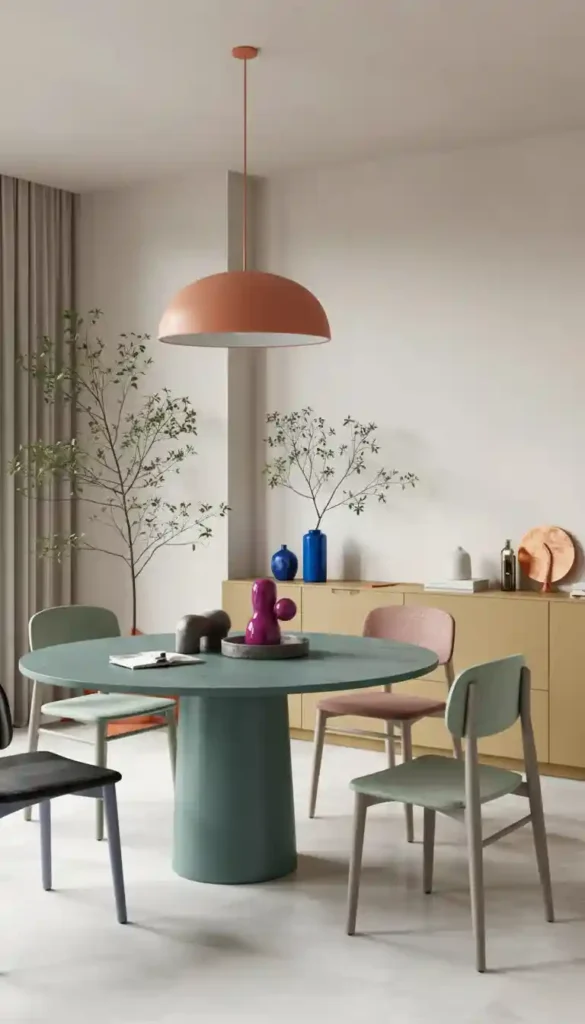
Modern palettes stay intentionally restrained.
- Base neutrals: White, soft gray, black, natural light wood
- Accent through textiles: Introduce color via cushions, a simple runner, or nearby artwork
- Matte over gloss: Reduces visual noise and hides daily wear
- Consistent undertones: Keep warm with warm or cool with cool throughout the space
This approach lets you update your look seasonally through affordable accessories rather than replacing expensive furniture pieces.
The Complete Modern Setup
Round out your modern round table with these finishing elements:
Low centerpiece strategy: A shallow bowl, compact tray, or single low vase maintains sight lines while adding personality.
Minimal decor rule: If it doesn’t serve a function or bring you genuine joy, leave it off the table. Modern thrives on restraint.
Comfortable seating priority: Choose chairs you can sit in for an hour comfortably. Beauty without comfort fails every time.
Easy maintenance materials: Your table should look great with a quick wipe-down, not require special cleaning products or constant worry.
📌 Save this streamlined modern kitchen guide! 📌
Cozy Eat In Kitchen Ideas With A Round Table
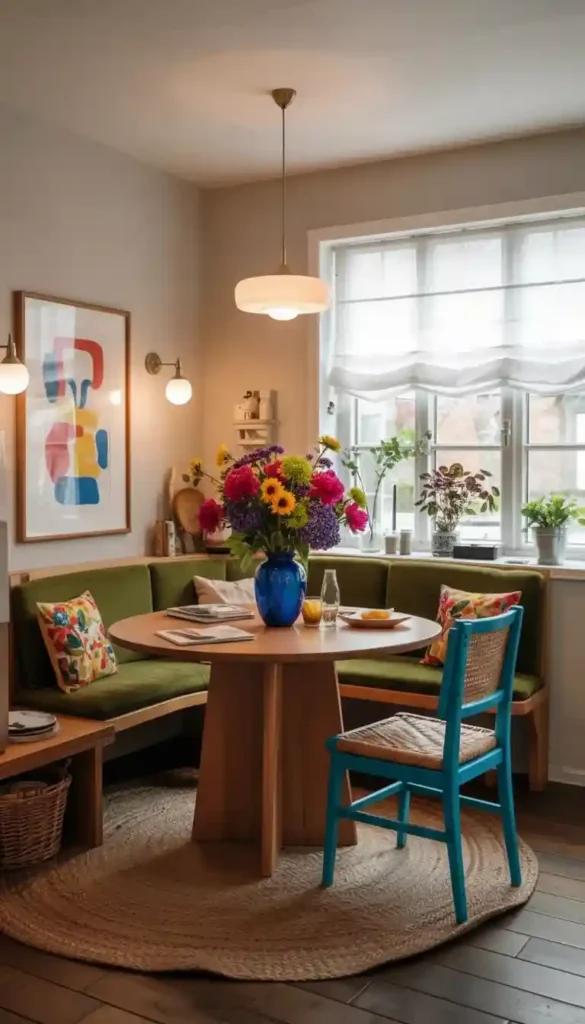
Creating a cozy eat-in kitchen means prioritizing comfort and warmth over stark perfection. Your round table should invite lingering—over morning coffee, afternoon snacks, or evening conversations that stretch past bedtime.
The Cushioned Banquette Approach
Built-in or freestanding banquettes transform round tables into genuine nooks.
- Hugs the table curve: Creates that tucked-in, intimate dining experience
- Built-in comfort: Cushioned seating invites longer stays than hard chairs
- Space efficiency: Tucks against walls, maximizing floor space
- Storage potential: Many designs include lift-up seating for hidden storage
Position your banquette on the wall side with individual chairs on the open sides for flexibility. This gives you the cozy factor without sacrificing accessibility.
Warm Wood Tops Create Atmosphere
Material choice dramatically affects how cozy your space feels.
Warm wood species like oak, walnut, or cherry bring natural warmth that white or stone tops simply can’t match.
Soft sheen finishes (satin or matte) feel more inviting than high-gloss surfaces. They’re also more forgiving with scratches and daily wear.
Visible grain patterns add organic texture and character. Each mark and variation tells a story, making your table feel less precious and more lived-in.
Choose medium to darker tones if your kitchen has plenty of natural light. Lighter woods work better in darker spaces.
Chair Selection for Long Sitting
Cozy fails immediately if your chairs are uncomfortable.
Curved backs support your spine naturally during extended sitting. Look for chairs with a gentle backward angle, not ramrod straight.
Light padding or upholstered seats make a massive difference. Even a thin cushion transforms comfort levels.
Appropriate seat depth: 16-18 inches works for most adults. Too shallow feels perching, too deep prevents you from reaching the table comfortably.
Armless or low arms: Allow you to pull close to the table without interference. Full-height arms often hit the table edge awkwardly.
Test chairs by sitting for at least five minutes. If you’re already adjusting after two minutes, keep shopping.
Layered Lighting Creates Warmth
Harsh overhead lighting kills cozy instantly.
Multiple light sources: Combine ambient ceiling light with task lighting (pendant over table) and accent lighting (under-cabinet or wall sconce nearby).
Warm color temperature: 2700K-3000K bulbs create that golden, inviting glow. Cool white (4000K+) feels clinical and unwelcoming.
Dimmable controls: Essential for transitioning from bright breakfast light to intimate dinner ambiance.
Natural light enhancement: If you have a window near your table, keep treatments light and sheer to maximize daylight while maintaining privacy.
Layer your lighting so you can adjust throughout the day based on activity and mood.
📌 Pin this cozy kitchen nook strategy! 📌
Textile Touches That Soften
Fabric introduces softness that hard surfaces can’t provide.
Washable cushion covers on banquettes or chairs should be practical, not precious. Choose durable fabrics like cotton canvas or performance linen that handle spills gracefully.
Table runner: Adds warmth without covering your beautiful tabletop. Keep it narrow (12-14 inches) so it doesn’t interfere with place settings.
Nearby throw basket: A woven basket holding a soft blanket or two makes the space feel homey and prepared for cool mornings or evenings.
Window treatments: Fabric curtains or roman shades near your table zone add acoustic softening and visual warmth.
Choose washable everything when possible. Cozy shouldn’t mean high-maintenance.
Decor That Feels Lived-In
The best cozy decor looks collected, not catalog-perfect.
- Low, touchable centerpieces: Fresh herbs in a simple pot, a wooden bowl with fruit, seasonal stems in a casual vase
- Personal elements: Family photos in simple frames nearby, kids’ artwork displayed, handmade pottery
- Functional beauty: Salt and pepper in attractive containers, a small plant that thrives in your light conditions
- Avoid tall or fragile: Everything should be easy to move aside when you need the full table surface
Keep surface decor to 2-3 small items maximum. More than that starts feeling cluttered rather than cozy.
Supporting Storage Solutions
Cozy kitchens need smart storage to avoid becoming cluttered kitchens.
Slim sideboard or credenza: Holds placemats, napkins, serving dishes, and extra mugs within arm’s reach of the table.
Rolling cart: Can store coffee supplies, tea selections, or breakfast essentials that make morning routines smoother.
Wall hooks or small shelves: Keep frequently used items accessible without taking up valuable counter or table space.
Closed storage preferred: Open shelving can work but requires constant curation. Closed cabinets hide everyday mess while maintaining the cozy aesthetic.
Sound and Softness Considerations
Cozy is tactile and acoustic, not just visual.
Add a fabric window shade or curtain if you have a nearby window. Hard surfaces (glass, tile, stone) create echo—fabric absorbs sound and softens the entire space.
Consider a soft runner or small rug in the pathway leading to your table area. This reduces foot noise and adds warmth underfoot.
Include one warm accent material: brass hardware, oak accessories, cream ceramics, or warm-toned textiles. These prevent your palette from feeling cold even if your base colors are neutral.
📌 Save this inviting breakfast nook design! 📌
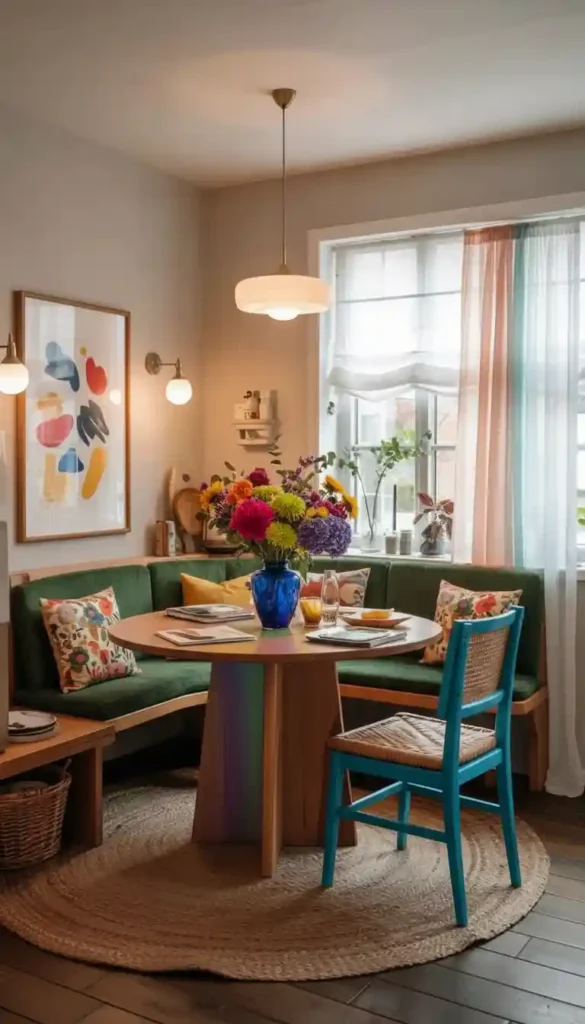
Space Saving Round Kitchen Table Ideas For Small Kitchens
Round tables are secret weapons in small kitchens because they eliminate sharp corners that catch hips and reduce usable space. The key is choosing proportions, features, and placement that maximize every inch.
Why Round Works in Tight Spaces
The geometry actually matters functionally, not just aesthetically.
- No corner collisions: You navigate around curves smoothly instead of bumping sharp edges
- Flexible chair placement: Squeeze in an extra seat without corner legs blocking
- Better traffic flow: Easier to move around when cooking while others are seated
- Visually softer: Rooms feel less cluttered without sharp rectangular angles
A 36-inch round table often functions better in a small kitchen than a 36×48 inch rectangle, even though the rectangle offers slightly more surface area.
Drop-Leaf and Extension Options
Flexibility is golden in small spaces.
Drop-leaf round tables expand only when needed, then fold down to a smaller footprint for daily use. Look for smooth, sturdy hinges that operate easily with one hand.
Butterfly leaf extensions hide inside the table, so you’re not storing loose pieces elsewhere. When closed, they maintain the round shape perfectly.
Flip-top designs with hinged halves create narrow console tables against walls, then open to full rounds when company arrives.
Measure both the expanded and collapsed dimensions against your space before buying. Ensure you have room for the expanded version when you actually need it.
Pedestal Base Is Essential
In small kitchens, base style makes or breaks functionality.
Single central pedestal: Eliminates the four-corner-leg problem entirely. Everyone has equal legroom, and chairs tuck completely under when not in use.
Slim profile: Choose pedestals under 16 inches in diameter at the widest point. Bulky, decorative bases eat up precious visual and physical space.
Lightweight materials: Powder-coated metal or smooth wood pedestals look substantial without being heavy, making the room feel less crowded.
Avoid X-base or four-leg designs in truly small kitchens—they create obstacles exactly where you need to move freely.
📌 Pin this small kitchen table solution! 📌
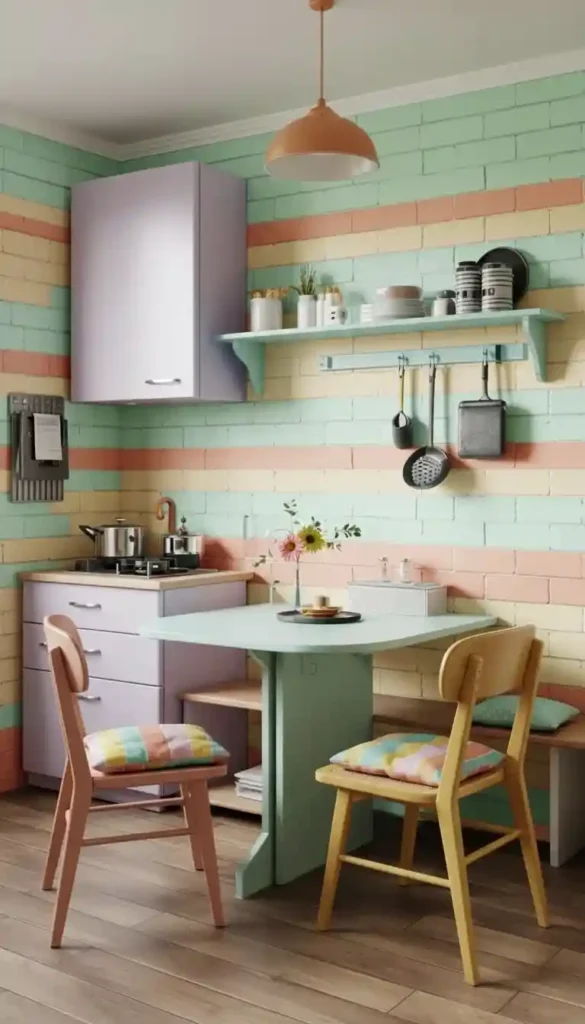
Chair and Seating Strategies
Every inch counts when choosing seating for tight spaces.
Chairs that nest fully: Look for designs where the seat slides completely under the table edge when pushed in. Protruding seats constantly catch on people walking by.
Open or see-through backs: Wire, slatted, or minimal backs reduce visual bulk dramatically. Solid-back chairs make small rooms feel smaller.
Lightweight and movable: You should be able to lift and reposition chairs easily for cleaning or reconfiguration.
Wall bench option: A slim bench against the wall (just 14-16 inches deep) provides seating for 2-3 people while completely disappearing when not in use.
Consider keeping 2 chairs for daily use and storing 2 extras elsewhere, bringing them out only when needed.
Ideal Sizing for Small Kitchens
Specific measurements prevent costly mistakes.
- 36-inch diameter: Seats 2-4 comfortably, works in kitchens as small as 8×10 feet
- 42-inch diameter: Seats 4-5, requires approximately 10×10 feet minimum
- 30 inches clearance minimum: Around all sides for comfortable chair pull-out and walking
- 24 inches per person: Width needed for each place setting
Walk through the motion of pulling out chairs while someone else is at the sink or stove. If it feels tight in your visualization, go smaller on the table diameter.
Wall-Adjacent Placement
Strategic positioning maximizes your small kitchen’s potential.
Bistro table against wall: A 30-36 inch round table placed against a wall with two chairs creates an intentional café feel rather than looking like furniture that doesn’t fit.
Corner nook positioning: Tucks the table into an underused corner, often near a window, creating a destination spot that doesn’t disrupt work zones.
Avoid center placement: In small kitchens, centered tables create traffic nightmares. Push toward one side or end to maintain a clear path.
Storage Integration
Your table zone can contribute to storage, not just consume space.
Floating shelves above: Mount narrow shelves (6-8 inches deep) above a wall-adjacent table for placemats, napkins, and small serving pieces.
Hook rail: Install a simple rail nearby for aprons, dish towels, or lightweight tote bags that otherwise clutter counters.
Under-bench storage: If using a bench, choose or build one with lift-up seating that conceals table linens and seasonal items.
Narrow cabinet: A 12-inch-deep wall cabinet near your table provides closed storage without protruding into your walking space.
Color and Material Choices
Light and bright makes small spaces feel larger.
White or light wood tables: Reflect light and recede visually, making your kitchen feel more open and airy.
Glass tops: Create see-through space, though they require constant cleaning and show fingerprints readily.
Pale-toned chairs: Continue the light palette so furniture doesn’t create visual weight and clutter.
Consistent flooring: Avoid area rugs in tiny kitchens—they break up the floor visually and make the space feel even smaller.
Measurement Checklist Before Purchase
Don’t buy until you’ve confirmed these dimensions:
- Distance from table edge to nearest wall: 30 inches minimum
- Door swing clearance: Ensure opening doors don’t hit table or chairs
- Drawer and cabinet access: Pull out adjacent drawers with chairs in place to check clearance
- Walkway width: Maintain at least 36 inches for the main traffic path through your kitchen
Use painter’s tape on the floor to mark your table’s footprint and live with it for a day before committing.
📌 Save this compact kitchen layout guide! 📌
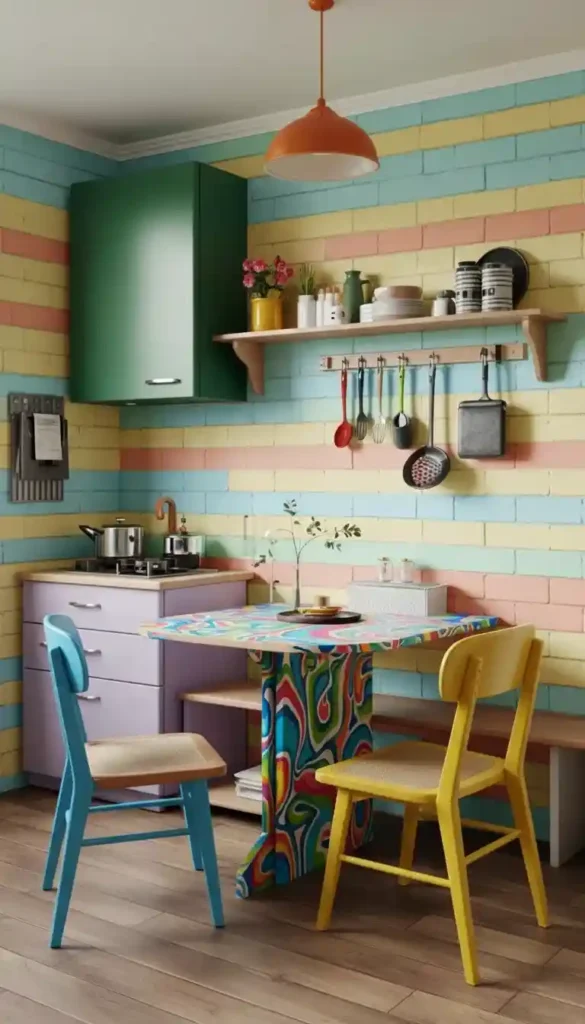
Large Round Kitchen Table Ideas For Open Kitchens
In open-concept kitchens, a large round table becomes more than dining furniture—it’s a social anchor that defines space, softens hard architectural lines, and creates a gathering spot visible from multiple rooms.
Why Scale Matters in Open Spaces
Proportions make or break open-concept design.
Substantial presence: A 54-60 inch round table holds its own visually against long counters, large islands, and high ceilings without disappearing.
Defines dining zone: Creates a clear destination within the larger open space, giving purpose and structure to what could feel like a big empty room.
Softens hard lines: Curves contrast beautifully with the straight lines of cabinetry, countertops, and architectural elements.
Encourages gathering: Large rounds seat 6-8 comfortably, supporting family meals and entertaining without feeling cramped.
Too-small tables in open kitchens look like afterthoughts. Go bigger than feels comfortable—the scale will work once the space is complete.
Material Combinations That Add Interest
Mix materials strategically for depth and character.
Thick edge or wide plank tops: Substantial tops (2-3 inches thick or appearing thick) create visual weight that grounds the table in large spaces.
Rustic base with refined top: Weathered wood legs with a smooth, modern top balances casual warmth with contemporary sophistication.
Mixed wood tones: Pair a lighter top with darker base (or vice versa) for contrast that adds visual interest without clashing.
Stone or concrete tops: Create a focal point with unexpected materials, especially effective in industrial or contemporary open kitchens.
The table should feel like a considered choice, not just the largest piece you could find.
Farmhouse Style Without the Clichés
Achieve warmth and character without the distressed-everything approach.
Clean-lined farmhouse: Skip the super-distressed finishes. Choose warm wood in natural or light stain with simple, unfussy legs.
One character element: Maybe it’s chunky turned legs OR a planked top OR wrought iron accents—not all three together.
Modern pairings: Combine a farmhouse-style base with contemporary chairs or lighting to keep the look fresh, not themed.
Painted bases: Soft white, warm gray, or navy bases with natural wood tops give farmhouse warmth with updated sophistication.
The goal is approachable warmth, not re-creating a barn interior.
📌 Pin this large kitchen table styling approach! 📌
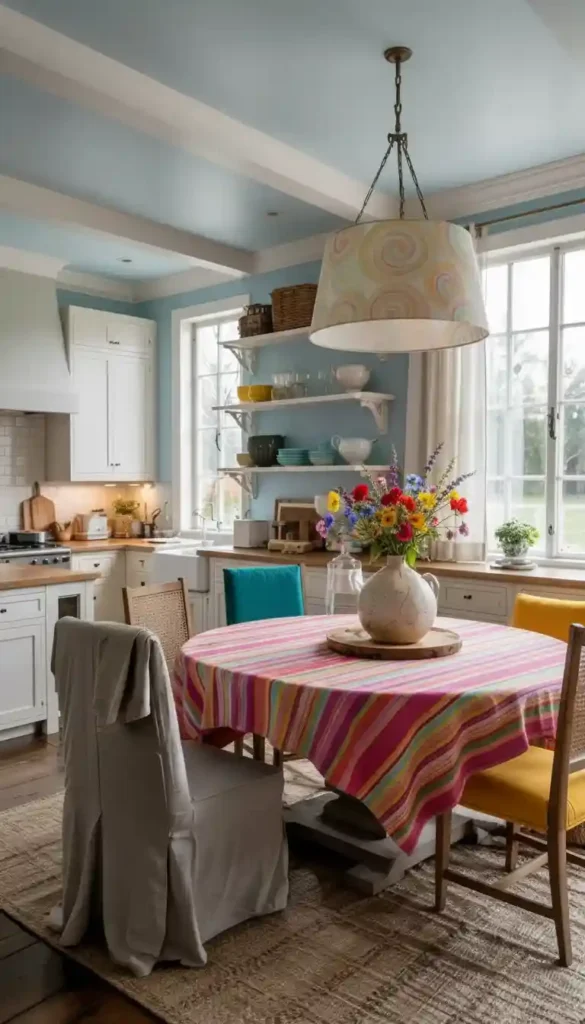
French Country Influences
This direction works beautifully in open kitchens seeking elegance.
- Gentle curves: Cabriole legs or curved aprons add softness without excessive ornament
- Light wood tones: Bleached oak or whitewashed finishes feel airy and sophisticated
- Relaxed textures: Linen upholstery, woven chair seats, soft textiles
- Understated details: Simple carving or turned elements, not heavy embellishment
French country succeeds when it feels collected and lived-in rather than decorated.
Coordinating With Kitchen Finishes
Your table should connect to its surroundings, not float in isolation.
Repeat one finish element: Match your table wood to open shelving, bar stools, or a pantry door so the design feels intentional.
Coordinate metal tones: If your cabinet hardware is brass, consider brass-accented lighting over the table. Mixing more than two metal finishes gets chaotic.
Echo colors carefully: If you have painted lower cabinets, a painted table base in the same or complementary color creates cohesion.
Balance warm and cool: If your kitchen skews cool (white cabinets, marble counters), a warm wood table adds necessary balance.
Seating With Presence
Large tables need appropriately scaled chairs.
Upholstered dining chairs: Add comfort for extended seating and visual softness in hard-surfaced kitchens. Choose performance fabrics for practical maintenance.
Wider frames: Standard 18-inch-wide seats can look spindly around large tables. Consider 20-22 inch widths for better proportion.
Painted accent chairs: Introduce color through chair paint rather than upholstery for easier updates and lower cost.
Mix seating styles: Use a bench on one side with chairs around the rest, or alternate between two chair styles for collected character.
Chairs should look substantial enough to handle daily family use plus entertaining without feeling fragile.
Creating a Room Within a Room
Define your dining zone within the open space.
Large pendant lighting: One oversized fixture (30+ inches diameter) or two matching pendants spaced 30-36 inches apart creates a visual ceiling boundary for the table.
Area rug underneath: A 7-8 foot round rug or 8×10 rectangular rug grounds the table and absorbs sound. Ensure rug extends at least 24 inches beyond table edges so chairs stay on the rug when pulled out.
Consistent styling: Keep the table zone’s decor style slightly distinct from the kitchen work zone—maybe softer, more collected, less task-focused.
Architectural definition: If possible, align your table with a ceiling beam, light soffit, or other architectural element that reinforces the zone.
Serving and Storage Solutions
Large tables support entertaining—make it easy.
Round lazy Susan: An 18-24 inch rotating server in the table center keeps condiments, serving platters, and shared dishes accessible to everyone without constant passing.
Nearby buffet or sideboard: Essential for storing extra dinnerware, table linens, and serving pieces. Choose one that echoes your table’s style and finish.
Bar cart or drink station: Keeps beverages separate from food prep areas and makes self-service easy during gatherings.
Built-in storage: If renovating, consider incorporating a floor-to-ceiling cabinet near the dining zone for dishes, glassware, and entertaining supplies.
Traffic Flow Management
Open kitchens require smart circulation planning.
Map your primary traffic paths—typically from kitchen to living area, kitchen to outdoors, or kitchen to hallway. Position your table slightly off these main routes, not directly in them.
Maintain 36-48 inches of clear walkway for major paths. People shouldn’t constantly brush past seated diners.
Flexible chair placement: Keep chairs on the traffic side lightweight and easy to reposition when large groups need to move through.
Visual pathways: Your sight lines from the kitchen work zone to other rooms should be clear and inviting, not blocked by high-backed chairs or large centerpieces.
📌 Save this open-concept dining strategy! 📌
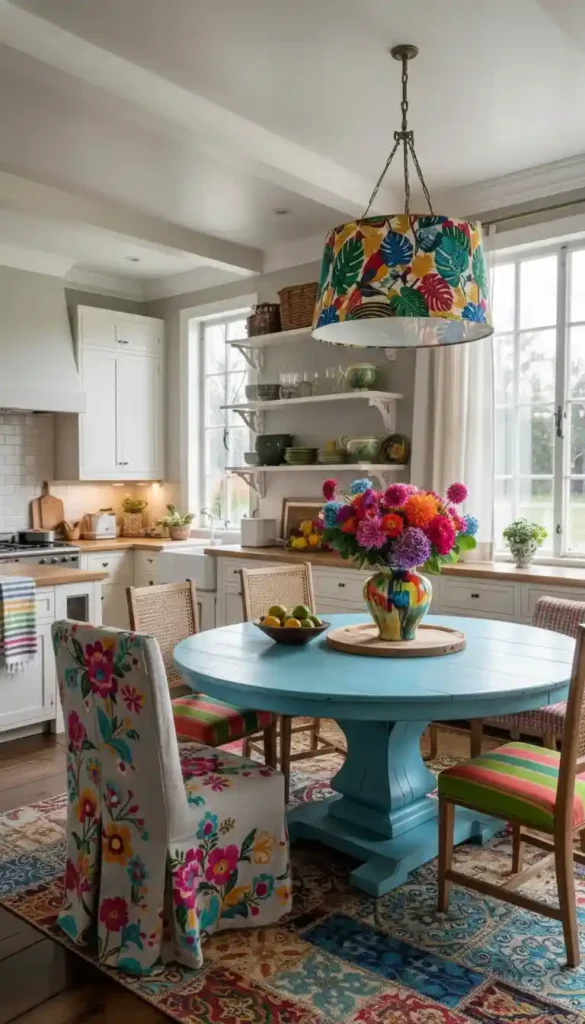
Round Kitchen Table Decor Ideas That Elevate Everyday Dining
The best kitchen table decor makes your space more beautiful while supporting how you actually use the table—not despite it. Every decorative element should be practical, easy to move, and genuinely additive to your daily experience.
The Low Centerpiece Rule
Sight lines across the table matter more than impressive height.
- Maximum height: 12 inches keeps everyone visible during meals and conversations
- Single focal point: One low bowl, compact vase, or shallow tray—not multiple items competing for attention
- Easy one-hand removal: If you can’t lift it easily when setting the table, it’s too elaborate
- Touchable materials: Wood, ceramic, woven baskets feel warm and inviting rather than precious
Test your centerpiece by sitting at the table. If you’re looking around it to see people across from you, it’s too tall.
Seasonal Rotation Strategy
Keep your table feeling fresh without constant shopping or expense.
Spring: Fresh herbs in small pots, pastel-toned linens, light florals in simple vessels
Summer: Citrus in a wooden bowl, white and blue textiles, minimal greenery, coastal-inspired elements
Fall: Dried grasses or branches, warm-toned ceramics, small pumpkins or gourds, deeper textile colors
Winter: Candle clusters, evergreen clippings, metallic accents, plaid or rich solid textiles
Swap just one element seasonally rather than completely redecorating. This approach is sustainable, affordable, and keeps your core style consistent.
Tray Organization Systems
Corralling loose items creates instant visual calm.
Functional tray: Holds salt, pepper, napkin holder, and perhaps one small candle or plant. Everything stays tidy and moves as one unit when you need the full table.
Material matters: Wood trays add warmth, metal trays feel modern, woven trays bring texture. Choose what complements your table finish.
Appropriate sizing: Trays should be 12-16 inches maximum for standard round tables. Larger trays dominate too much surface area.
Daily accessibility: Your tray should hold things you use every single day, making them convenient rather than decorative obstacles.
📌 Pin this table styling system! 📌
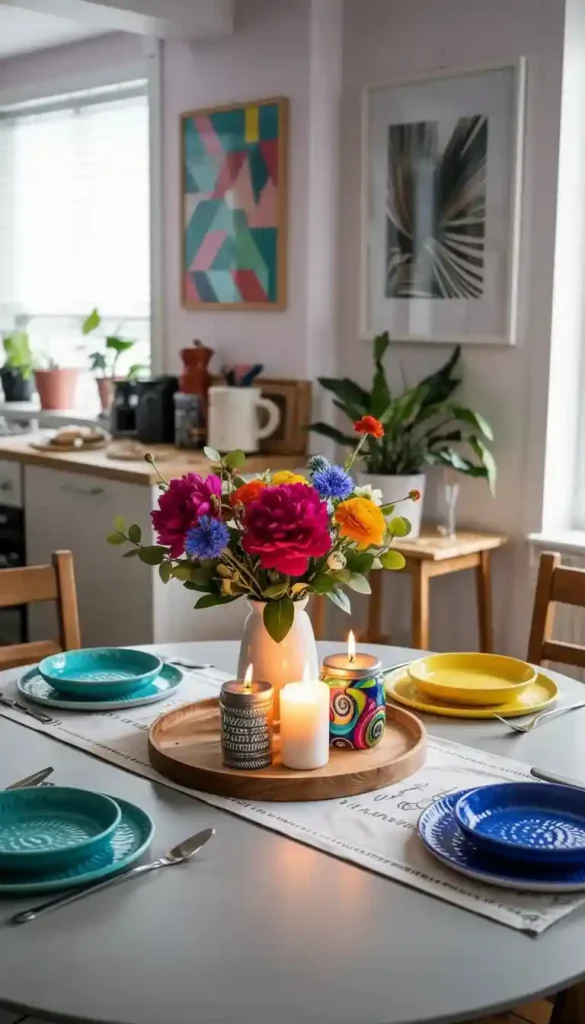
Family-Friendly Decor Approach
Style shouldn’t mean constant worry about breakage or mess.
Washable everything: Choose textiles that can handle spills and frequent laundering. Cotton, linen, and performance fabrics work; silk and dry-clean-only don’t.
Unbreakable materials: Wood bowls, ceramic with thick walls, metal containers—skip thin glass and delicate porcelain if you have young children.
Nothing too tall or tippy: Avoid top-heavy vases, precarious stacks, or anything that tips easily when bumped.
Wipeable surfaces: Trays, placemats, and runners should tolerate frequent cleaning without looking worn.
Beautiful and practical aren’t mutually exclusive—they’re essential partners in working homes.
Color Coordination Strategy
Keeping your palette consistent prevents visual chaos.
Choose 2-3 colors maximum: Your table decor should pull from your kitchen’s existing palette—don’t introduce completely new colors.
Repeat throughout the space: If you use blue on the table, echo it in nearby kitchen towels, artwork, or a plant pot for cohesion.
Vary the intensity: Mix deeper and lighter versions of your chosen colors for depth without complexity.
Neutral base, color accents: Keep permanent items (tray, runner) neutral, introduce color through easily swappable elements (napkins, small vases, seasonal items).
Texture Instead of More Objects
Add visual interest through materials rather than quantity.
Woven elements: A jute placemat under your centerpiece, a woven basket bowl, rattan chargers add dimension without color.
Mixed ceramics: Matte and glossy finishes together, smooth and textured surfaces create subtle complexity.
Natural materials: Wood, stone, linen, cotton bring warmth and authenticity that plastic and synthetic materials can’t match.
Layered textiles: A textured runner under a smooth ceramic bowl creates depth through material contrast.
This approach photographs beautifully and feels intentional without looking cluttered or busy.
Statement Element Placement
Sometimes the best table decor lives near the table, not on it.
Wall art above or beside: A large framed print, floating shelf with small objects, or gallery wall creates style without consuming precious table surface.
Floor plant on stand: A large plant in the corner near your table adds life and vertical interest without interfering with dining.
Nearby wall sconce: Adds ambient lighting and style without taking up table or counter space.
Window treatment: A beautiful curtain or roman shade near your table zone contributes to the overall aesthetic while serving a functional purpose.
Scale Matching to Table Size
Proportions matter enormously in centerpiece success.
Small tables (36-42 inches): One small bowl or single bud vase—that’s it. Anything more overwhelms the surface.
Medium tables (42-48 inches): A small tray with 2-3 items, or one slightly larger bowl or low arrangement works well.
Large tables (54+ inches): A larger tray or lazy Susan with multiple small elements, or one substantial but low centerpiece creates appropriate scale.
When in doubt, go smaller. An undersized centerpiece looks intentional and minimal; an oversized one just looks wrong.
📌 Save this everyday table styling guide! 📌
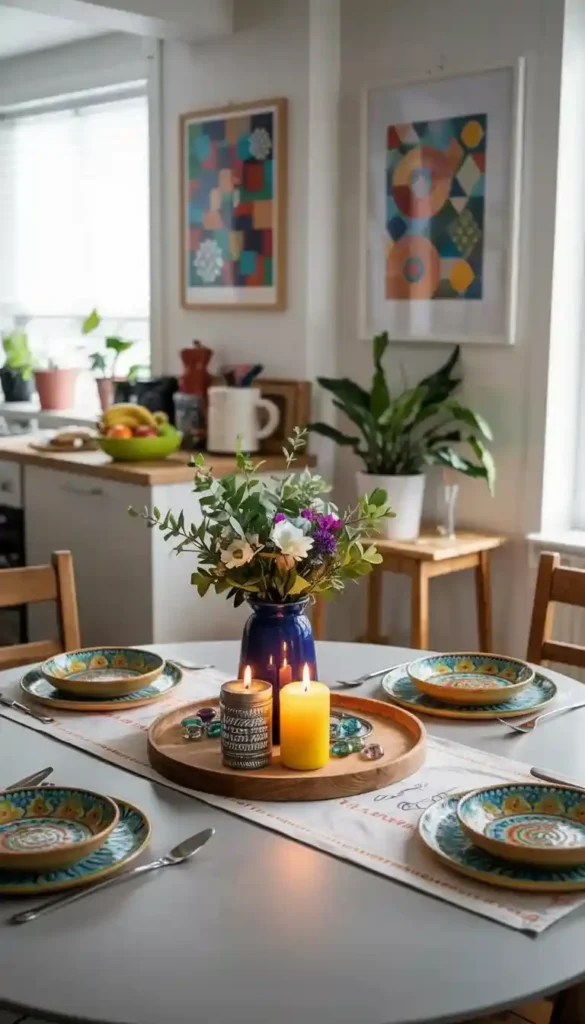
Storage for Off-Duty Decor
Rotating decor requires smart storage solutions.
Designated drawer or cabinet: Keep seasonal items together so swapping is effortless, not an archeological dig through closets.
Labeled bins: “Spring table,” “Fall table,” “Holiday table” makes finding what you need instantaneous.
Nearby location: Store table decor near your kitchen, not in a basement or garage—convenience determines whether you’ll actually use it.
Minimal collection: Keep only items you genuinely love and use. If you haven’t used that vase in two years, donate it.
The easier your storage system, the more likely you’ll keep your table styled beautifully year-round.
The Ultimate Practical Test
Before committing to any decor element, ask these questions:
- Can I set the table for dinner without moving this? (If no, reconsider)
- Will this annoy me daily? (If yes, don’t buy it)
- Does this support real life or just look good? (Ideally both)
- Can this be cleaned easily? (If no, is the beauty worth the hassle?)
Your table decor should enhance your kitchen experience, not complicate it. When you find that balance, you’ve succeeded.
Conclusion
Your kitchen table does more heavy lifting than almost any other piece of furniture in your home. It’s where you start your mornings, where homework gets finished, where friends gather, and where life’s best conversations unfold. Choosing the right round table—whether sleek and modern, cozy and inviting, space-saving smart, impressively large, or beautifully styled—isn’t about following trends. It’s about creating a spot in your kitchen where people genuinely want to sit down and stay awhile.
These five approaches give you clear direction for making your round kitchen table work harder and look better in 2026. Consider your actual space constraints, how you really use your kitchen daily, and what matters most to your household. Then adapt these ideas to fit your life, not someone else’s ideal. The perfect kitchen table is the one that makes every meal, every conversation, and every quiet coffee moment feel exactly right in your space.

“I share simple, beautiful and affordable home decor ideas to help you style every corner of your home with ease.