

You scroll through beautiful backyard photos late at night and feel that familiar pull — that quiet longing for a place outside your door where you can truly exhale. You want to float in cool water on a hot summer afternoon. You want your kids to have somewhere magical. You want guests to walk into your backyard and stop, look around, and smile. But then the voice creeps in: “My yard is too small. It will cost too much. It’s just not realistic.” That voice is wrong — and this guide is here to prove it.
Small inground pools are not a compromise. In 2026, they are one of the smartest outdoor investments you can make. The right design can turn a compact backyard into a resort-style retreat that feels custom, cohesive, and completely intentional. Whether you’re working with a tight budget, a sloped yard, or a space barely big enough for a hammock — there is a pool idea here that will change how you see your outdoor space. Let’s get into it.
Small Inground Pool Ideas Backyards — The Cohesive Design Approach for Stylish Outdoor Living
A small pool only works when it belongs. The moment it looks like an afterthought dropped into your yard, the whole space suffers. The most stunning compact backyard pools share one trait: they feel like they were always supposed to be there.
Why Geometric Shapes Win in Compact Spaces
When you’re working with limited square footage, shape matters more than size. Geometric pool shapes — rectangles, squares, and L-forms — create visual order in tight layouts.
- Clean lines make small spaces feel intentional and designed
- Right angles complement most home architecture and fencing
- Rectangular pools (as compact as 10×20 ft) still allow lap swimming
- Geometric forms are easier and cheaper to excavate and build
Asymmetric or freeform pools can overwhelm a small backyard. Stick with geometry and let the surrounding landscape add softness.
Placement Is Everything
Where your pool sits in the yard determines how the entire space flows. Poor placement creates disconnected zones that feel awkward and wasted.
- Near the house: Creates easy indoor-outdoor flow; great for entertaining
- Corner placement: Frees up a central lawn area while anchoring the design
- Along a fence line: Works well in narrow yards; leaves open space on one side
- Always leave at least 4 feet of pool deck clearance on all usable sides
Think of your pool as a room. It needs walls (landscaping, fencing, hedges), a floor (the deck), and a ceiling (open sky or pergola). Design with that framework in mind.
Stone Pavers and Natural Materials
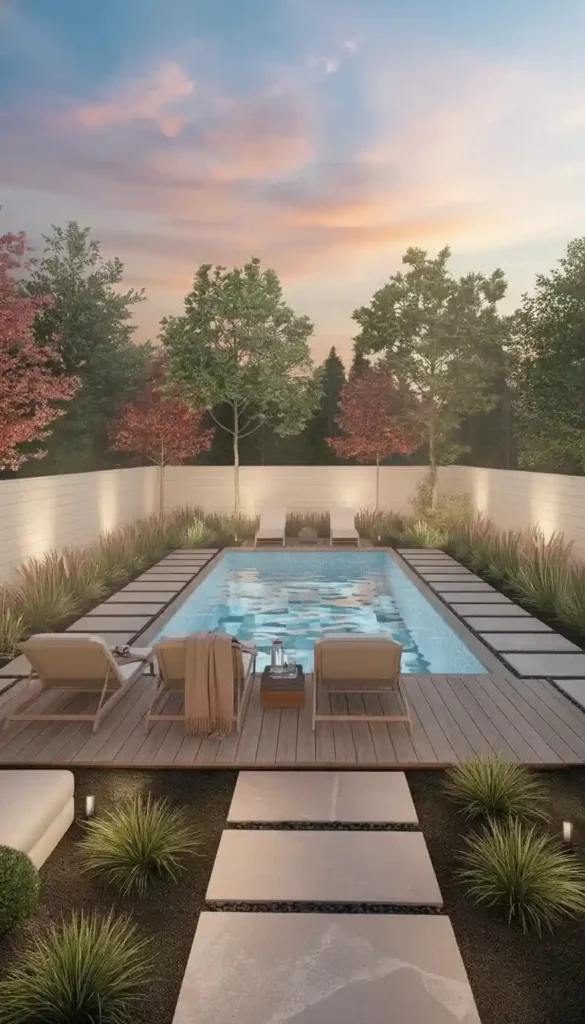
The decking and surround you choose will make or break the aesthetic. Stone pavers are the gold standard for small backyard pools.
- Bluestone, travertine, and concrete pavers all hold up to wet conditions
- Large-format pavers (24×24 in) make small spaces look larger
- Neutral tones — warm grey, sand, cream — age beautifully and stay versatile
- Avoid small mosaic tiles outdoors; they crack over time and look dated fast
Pin this Cohesive Backyard Pool Design Guide! 📌
Seating That Connects, Not Competes
In small backyards, every piece of furniture has to earn its place. Built-in benches along the pool edge serve double duty — they seat guests and define the pool boundary without adding visual clutter.
- Built-in concrete or stone benches save space vs. freestanding chairs
- Minimalist loungers in neutral tones keep the look clean
- Two loungers max in a compact space — quality over quantity
- Side tables with drinks space reduce the need for large furniture footprints
Landscaping: Frame, Don’t Fill
The most common mistake in small pool backyards is over-planting. Dense landscaping competes with the pool and makes the space feel cluttered and overgrown.
- Ornamental grasses (like Karl Foerster or Blue Oat Grass) add movement without bulk
- Olive trees in containers offer Mediterranean elegance at any scale
- Raised planters at pool corners frame the water without crowding the deck
- Aim for 3–5 plant types max to maintain visual calm
Think of plants as punctuation marks, not sentences. A few well-placed specimens beat a dozen random pots every time.
Lighting That Works After Sunset
Good lighting extends your pool’s usable hours and completely transforms the atmosphere after dark.
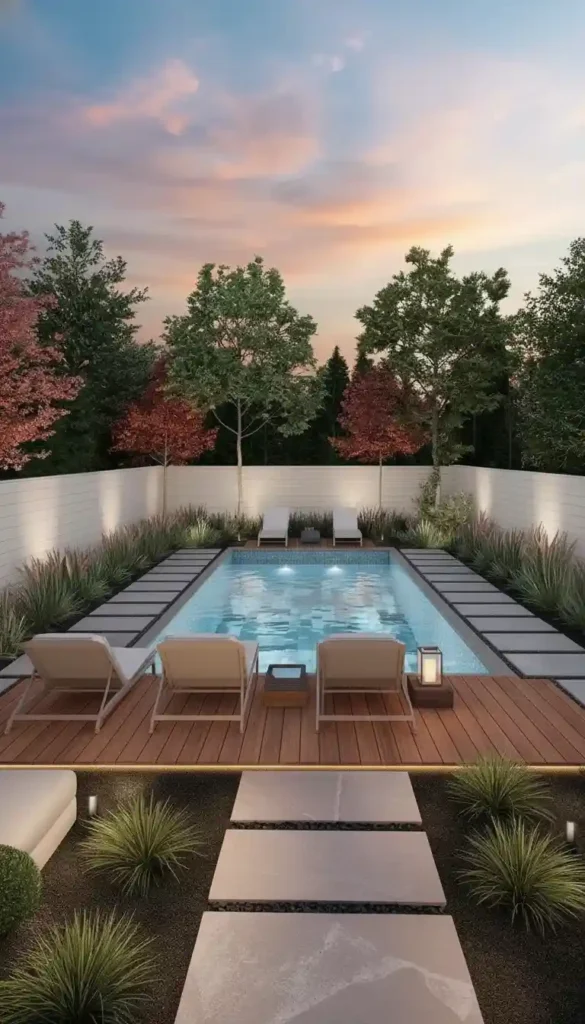
- Underwater LED lights create a glowing, resort-like pool effect
- Low-voltage path lighting along deck edges adds safety and warmth
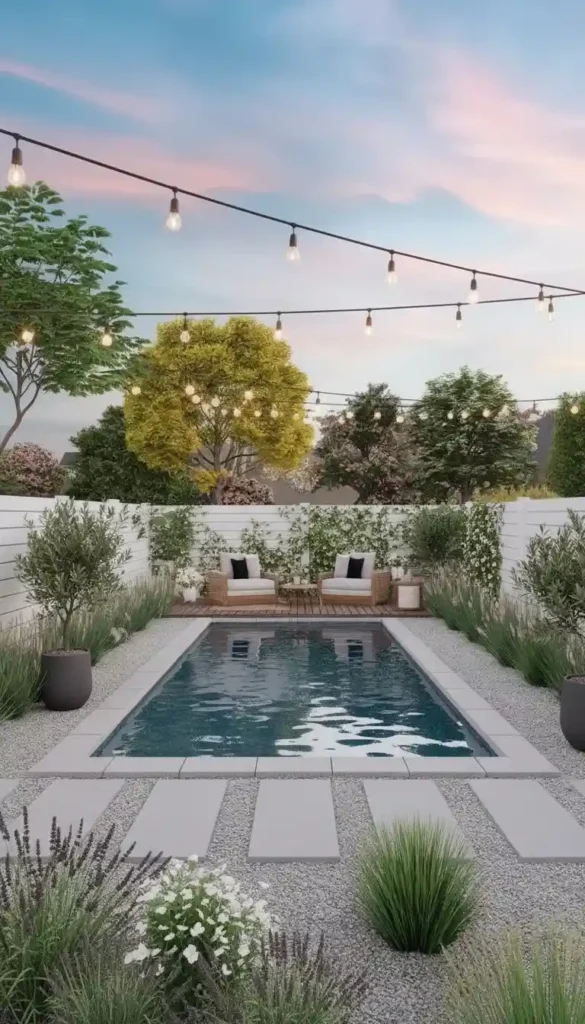
- String lights on a simple overhead cable add romance without structure
- Uplighting a feature tree or garden wall creates dramatic depth
Outdoor Textiles: The Finishing Touch
Soft textiles — outdoor cushions, pool towels, a weather-resistant rug — are the fastest way to make a pool area feel finished and lived-in.
- Choose fade-resistant, quick-dry fabrics in 1–2 complementary colors
- A striped outdoor rug defines the seating zone without extra furniture
- Woven baskets for towel storage add texture and function
Save this Backyard Pool Styling Strategy! 📌
Pro Tip: Before finalizing your pool design, tape out the pool dimensions on your lawn with string or spray paint. Live with it for a day or two. This gives you a real sense of scale and flow before anything gets built.
“The key to a great small pool backyard is restraint. A few exceptional choices always outperform many mediocre ones. Negative space is not wasted space — it’s luxury.”
Creative Small Inground Pool Ideas — Budget-Friendly Designs That Still Look High-End
A tight budget is not a reason to delay your dream pool. In 2026, smart design choices can deliver a genuinely stunning result at a fraction of what you might expect. The secret is knowing where to invest and where to pull back.
Why Compact Rectangular Pools Save Money
The shape you choose directly affects your excavation cost, material use, and construction time. Simple rectangular plunge pools are the most cost-efficient small inground option on the market.
- Fewer curves = less labor time and lower excavation cost
- Standard rectangular forms fit prefabricated fiberglass shells perfectly
- Compact dimensions (10×12 ft or 8×14 ft) dramatically reduce total material cost
- Square and rectangular pools are easier to fence and cover for safety compliance
A well-designed rectangle in a compact yard will always look more intentional than a large, poorly finished freeform pool.
Fiberglass vs. Concrete: The Budget Decision
Your pool shell material is one of the biggest cost factors. For small inground pools on a budget, fiberglass is typically the smartest choice.
- Fiberglass: Lower installation cost, faster build time, smooth nonporous surface (fewer chemicals needed)
- Concrete: Higher upfront cost but more customizable in shape and finish
- Fiberglass pools typically install in 3–5 days vs. 3–6 weeks for concrete
- Long-term maintenance costs for fiberglass are significantly lower
Gravel Landscaping: The Budget Designer’s Secret
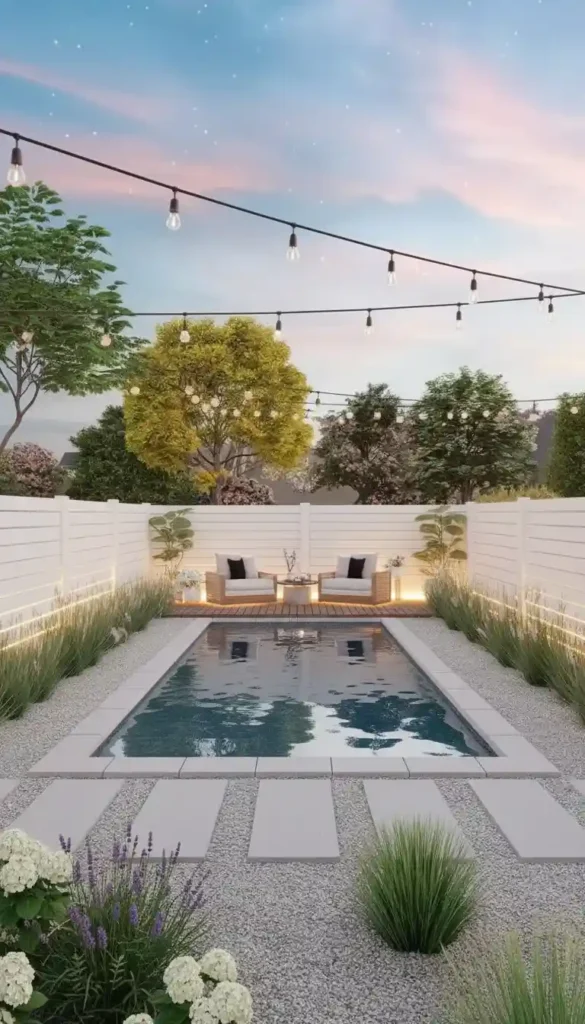
Professional landscape designers use gravel strategically because it’s affordable, low maintenance, and looks intentionally minimalist.
- Decomposed granite or pea gravel costs a fraction of stone pavers
- Use gravel in non-traffic areas (planting beds, perimeter zones) to save paving costs
- White or pale grey gravel reflects light and makes small yards feel larger
- Combine with stepping stones for a high-end look at low cost
Pin this Budget Pool Design Method! 📌
DIY Elements That Actually Make Sense
Not every part of your pool project needs a professional. There are specific areas where motivated homeowners can save real money with DIY work.
- Decking: Composite deck boards are manageable for confident DIYers with a flat surface
- Landscaping: Planting, gravel spreading, and raised bed building are all DIY-friendly
- Lighting: Low-voltage outdoor lighting systems require no electrician license in most states
- Fencing: Modular aluminum fence panels are designed for homeowner installation
Leave pool shell installation, plumbing, and electrical work to licensed professionals. The savings from DIY-ing structural elements rarely outweigh the risks.
Modular Seating: Smart and Flexible
Modular outdoor furniture is the budget-conscious designer’s best friend. It looks intentional, adapts to your space, and can be rearranged seasonally.
- Modular sectional sets often cost less than comparable fixed furniture
- Buy base pieces now, add sections as budget allows
- Powder-coated aluminum frames last for years without maintenance
- Neutral upholstery (charcoal, sand, white) stays relevant across trends
String Lights and Low-Cost Atmosphere
Lighting has the highest aesthetic return on investment of any backyard element. You can completely transform the mood of your pool area for under $100.
- Outdoor Edison string lights on a simple cable above the pool cost $40–$80
- Solar stake lights along the pool edge need no wiring and cost very little
- Waterproof floating LED orbs in the pool create a dramatic nighttime effect
Neutral Tones: The Investment That Pays Over Time
Trendy color schemes feel exciting on day one and dated by year three. Neutral tones — warm whites, concrete greys, natural tans — are timeless.
- You won’t need to repaint, restain, or replace materials to stay current
- Neutrals photograph better and improve resale value
- Add trend-driven color through cushions and accessories that are easy to swap
The Phased Upgrade Approach
You don’t have to finish everything at once. In fact, phased upgrades are one of the smartest ways to manage a pool project budget.
- Phase 1: Install the pool shell, basic deck, and safety fencing
- Phase 2: Add landscaping, lighting, and seating
- Phase 3: Enhance with pergola, outdoor kitchen, or spa additions
This approach spreads cost over time, lets you refine your taste as you use the space, and avoids budget overruns on Day 1.
Save this Budget Pool Planning Guide! 📌
“A well-built pool with honest, simple surroundings will always outperform an overcomplicated, underfunded design. Invest in the structure first. Decor can always come later.”
Small Inground Pool Ideas With Hot Tub — Designing Luxury Backyard Retreats in Compact Spaces
The moment you combine a pool with a hot tub, your backyard stops being just a yard. It becomes a destination. A place you go to at 8 pm on a Wednesday just because you can. Here’s how to pull it off in a small space.
Why Pool-Spa Combos Work in Small Yards
Counter-intuitively, adding a spa to a small pool can actually make the whole layout feel more luxurious, not more crowded. The key is unified design.
- A compact 8×12 ft pool paired with a 6-person spa fits in as little as 400 sq ft
- Shared water systems reduce equipment costs compared to two separate units
- Year-round usability — pool in summer, spa in winter — maximizes the investment
- Combined features add more property value than either element alone
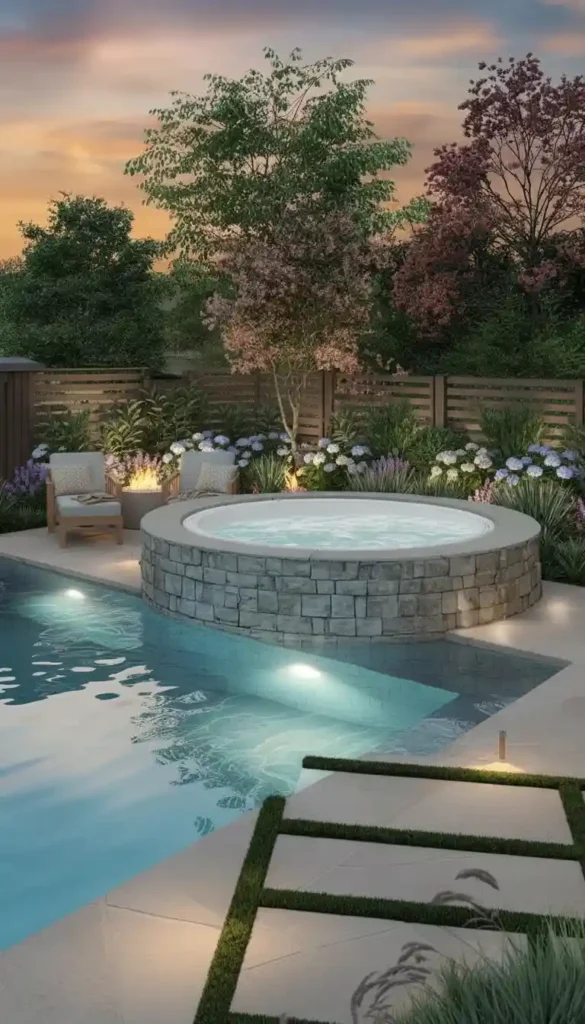
The Elevated Spa: Why Height Creates Design Magic
Placing the hot tub slightly elevated — even just 18–24 inches above pool deck level — is one of the most effective design moves you can make.
- Visual separation between pool and spa creates defined zones without walls or barriers
- A raised spa allows water to cascade into the pool, creating a natural waterfall feature
- The elevation adds architectural interest to what would otherwise be a flat layout
- Steps up to the spa define a transition that feels intentional and resort-like
Water Circulation: The Functional Advantage
An elevated spa isn’t just beautiful — it’s practical. Gravity assists with water circulation between the two features.
- Spillover water from spa to pool maintains natural water movement
- Better circulation means fewer algae problems in both features
- Combined filtration systems can be housed in a single equipment pad
- Ask your contractor about a shared water chemistry system to simplify maintenance
Pin this Pool + Spa Design Strategy! 📌
Stone Finishes That Elevate the Look
In a combined pool-spa layout, material consistency is everything. Using the same stone finish across both features creates visual unity.
- Travertine coping around both pool and spa ties the design together immediately
- Dark pebble interior finishes (like Black Diamond) make water look deep and dramatic
- Light blue or white interior plaster brightens small pools and reads as larger
- Tumbled stone edges give a natural, Mediterranean feel without the premium price
LED Lighting for Spa and Pool
Nothing transforms a combined pool-spa layout quite like coordinated lighting. A well-lit pool at night looks three times more expensive than it actually is.
- Color-changing LED underwater lights allow different moods (white for day, warm amber for evening)
- Fiber optic lighting along spa coping creates a starlight effect at low energy cost
- Pathway lighting from the house to the pool improves both safety and ambiance
Privacy Solutions for Intimate Spa Use
A hot tub only feels truly relaxing when it feels private. In compact backyards, smart privacy solutions are essential.
- Slatted wood screens (cedar or teak) create privacy and add warm texture
- Bamboo hedging grows fast, looks lush, and stays contained in root barriers
- A simple pergola with outdoor curtains creates an outdoor room feel around the spa
- Positioned planters (large olive trees, ornamental grasses) provide soft natural screening
The Wellness Backyard Trend: Why This Investment Makes Sense
Outdoor wellness spaces are one of the fastest-growing home improvement categories in 2026. A pool-spa combo puts you ahead of the curve.
- Hydrotherapy in hot tubs reduces stress, improves sleep, and eases muscle tension
- Homes with pool-spa combos consistently sell faster and at higher prices
- Year-round usability means you use the space in every season, not just 3 months
- Wellness-focused outdoor spaces reduce the need for expensive off-property gym or spa visits
The Waterfall Connector: Unifying Pool and Spa
If there is one upgrade that transforms a pool-spa combo from nice to extraordinary, it’s a waterfall feature between the two elements.
- A simple spillover weir wall costs $500–$2,000 and adds dramatic visual movement
- The sound of moving water masks neighborhood noise and creates a true retreat feel
- Sheet waterfalls (thin, wall-like falls) look modern and can be LED-backlit
- Natural rock waterfalls suit traditional or tropical-themed backyards
Save this Luxury Pool-Spa Combination Guide! 📌
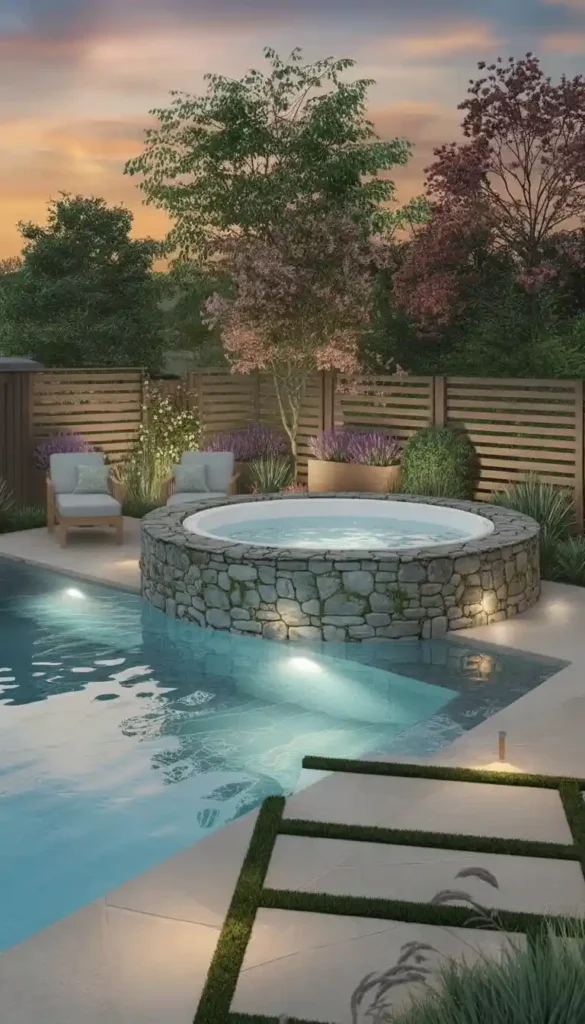
“Adding a spa doesn’t just change what your pool does — it changes how you live. Daily use of your outdoor space is one of the best returns on investment you will ever make in your home.”
Modern Small Inground Pool Ideas — Zero Entry Designs for Easy Access and Resort-Style Aesthetics
Zero entry pools are what happens when a backyard pool takes design cues directly from a luxury resort beach. No steps. No ladder. Just a gentle, gradual slope into shimmering water. And in a small yard, they work beautifully.
What Is a Zero Entry Pool?
A zero entry pool — also called a beach entry pool — features a gradual slope from the pool deck into the water, just like a natural shoreline.
- The slope typically descends 1 inch per foot, reaching swimming depth over 4–6 feet
- No steps, handrails, or ladders are needed, creating a seamless visual transition
- The shallow entry area makes pools accessible for children, elderly guests, and non-swimmers
- They create an immediate resort-feel that traditional entry pools can’t match
Why Zero Entry Works in Small Yards
You might assume zero entry pools require a lot of space for that sloping section. In reality, smart design makes them highly workable even in compact layouts.
- The shallow entry zone doubles as a tanning ledge — usable space, not wasted transition
- A zero entry on one end of a rectangular pool adds only 4–6 feet to the length
- The visual depth created by the gradual entry makes pools appear longer than they are
- Compact zero entry pools (12×20 ft) still deliver the full beach aesthetic experience
The Tanning Ledge: Function Meets Luxury
The shallow section at the base of a zero entry pool is called a tanning ledge (or Baja shelf), and it’s one of the most beloved features in modern pool design.
- Water depth of 6–12 inches allows lounger use while staying cool and wet
- Children can play safely in the shallow end while adults swim in the deep section
- In-pool planters can be placed on the ledge for a tropical aesthetic touch
- An umbrella sleeve embedded in the ledge provides shade exactly where you need it
Pin this Zero Entry Pool Design Guide! 📌
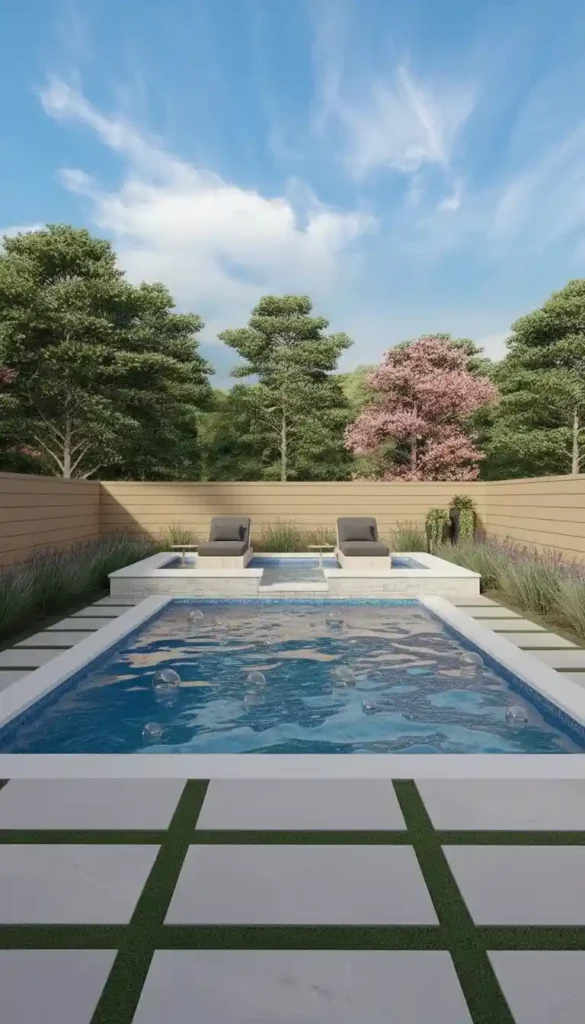
Light-Colored Finishes: Enhancing the Beach Effect
The finish you choose for your zero entry pool’s interior dramatically affects how the water looks. Light finishes enhance the beach analogy perfectly.
- White plaster and light blue pebble finishes create a Caribbean water effect
- Sandy beige tones reinforce the natural beach entry aesthetic
- Light finishes make pools appear brighter and more inviting from indoors
- They’re also easier to monitor for debris and water clarity
Textured Surfaces for Safety
The sloping entry section of a zero entry pool is the most slip-prone area. Textured finishes are non-negotiable for safety.
- Aggregate finishes (pebble, quartz) provide natural grip underfoot
- Broom-finished concrete is cost-effective and appropriately textured for slope surfaces
- Avoid smooth plaster on any sloped surface — it becomes dangerously slippery when wet
- Anti-slip pool coatings can be applied over existing finishes as an upgrade option
Deck Materials That Unify the Look
Because zero entry pools blur the line between land and water, your decking choice is especially important. It needs to transition seamlessly.
- Large-format travertine or limestone pavers carry the natural, beachy feel from deck into water edge
- Wood decking (real or composite) adds warmth and complements the organic entry style
- Avoid highly contrasting deck materials — the transition should feel gradual, not jarring
- Extend the same material 12–18 inches into the shallow zero entry section for continuity
Shade Structures: Making the Space Usable All Day
Zero entry pools are designed for daytime lounging — which means sun protection is a serious consideration, not an afterthought.
- Pergolas over the tanning ledge area provide consistent shade without blocking views
- Large market umbrellas (10-foot span) shade loungers on the tanning ledge effectively
- Shade sail structures are modern, affordable, and easy to install and remove seasonally
- Living shade — a well-positioned tree or tall hedge — is the most beautiful long-term option
Inclusive Design: The Accessibility Advantage
Zero entry pools aren’t just beautiful — they’re genuinely more inclusive than traditional step-entry pools.
- Family members with mobility challenges can enter the pool safely and independently
- Young children transition from wading to swimming naturally, without fear of steps
- Elderly guests who are uncomfortable with ladders or steep steps can enjoy the water comfortably
- Zero entry pools consistently rank as the preferred design for multi-generational households
Save this Zero Entry Pool Planning Approach! 📌
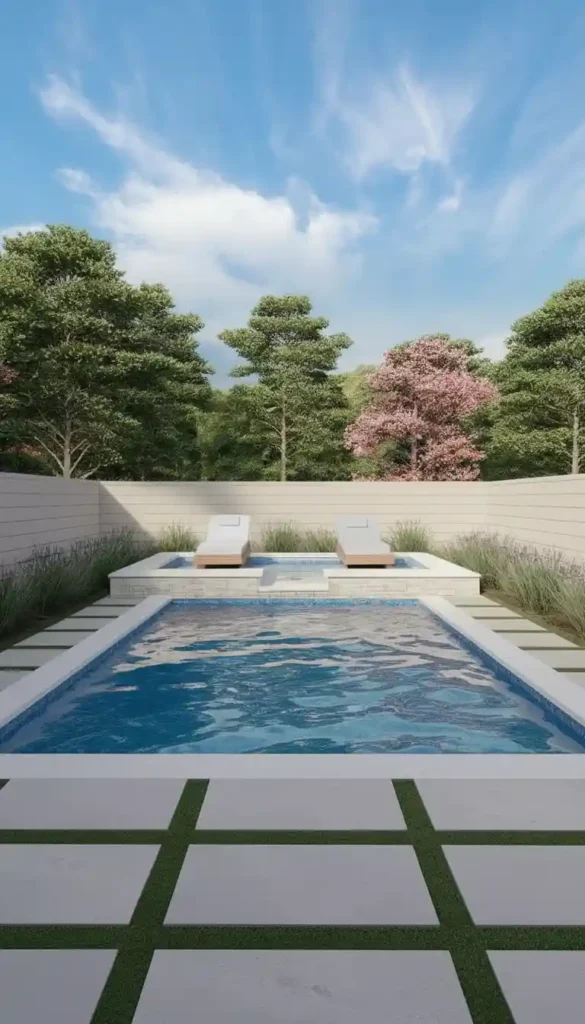
“A zero entry pool removes every barrier — physical and psychological — between your guests and the water. That seamless invitation to swim is what makes these pools feel genuinely luxurious.”
Smart Small Inground Pool Ideas — Sloped Yard Layout Solutions That Turn Challenges Into Features
A sloped backyard is not a problem to be solved. In the hands of a smart designer, it’s an opportunity to create something genuinely spectacular — a multi-level outdoor living space that flat yards can never achieve. Here’s how to make it work.
Reframing the Slope: Challenge to Advantage
The instinct with a sloped yard is to flatten it completely before doing anything else. That instinct costs a fortune and destroys the natural character of the space.
- Full yard grading can cost $5,000–$15,000 depending on slope severity and yard size
- Working with the slope creates multi-level zones that add dimension and interest
- Natural slopes promote better drainage — a genuine advantage for pool maintenance
- Tiered designs are consistently more visually interesting than flat, conventional layouts
The Multi-Level Zone Strategy
The most successful sloped yard pool designs use the natural grade to create defined outdoor zones at different elevations.
- Upper level: Dining and entertaining area — close to the house and kitchen access
- Mid level: Pool deck and lounging zone — the transition between social and relaxation space
- Lower level: Pool itself — anchored at the lowest point for structural logic and visual drama
This layout creates a natural visual hierarchy that draws the eye down through the space. Every level frames the next. It feels designed — because it is.
Retaining Walls: Structure and Style
Retaining walls are the backbone of any sloped yard pool project. They hold the tiers in place and become major visual elements in their own right.
- Concrete block walls are structural, durable, and can be veneered with stone or tile
- Natural stone retaining walls look organic and age beautifully — ideal for traditional or Mediterranean styles
- Corten steel retaining walls are striking for modern, industrial-inspired designs
- Engineer all retaining walls over 4 feet — structural failure near a pool is a serious safety risk
Pin this Sloped Yard Pool Design Method! 📌
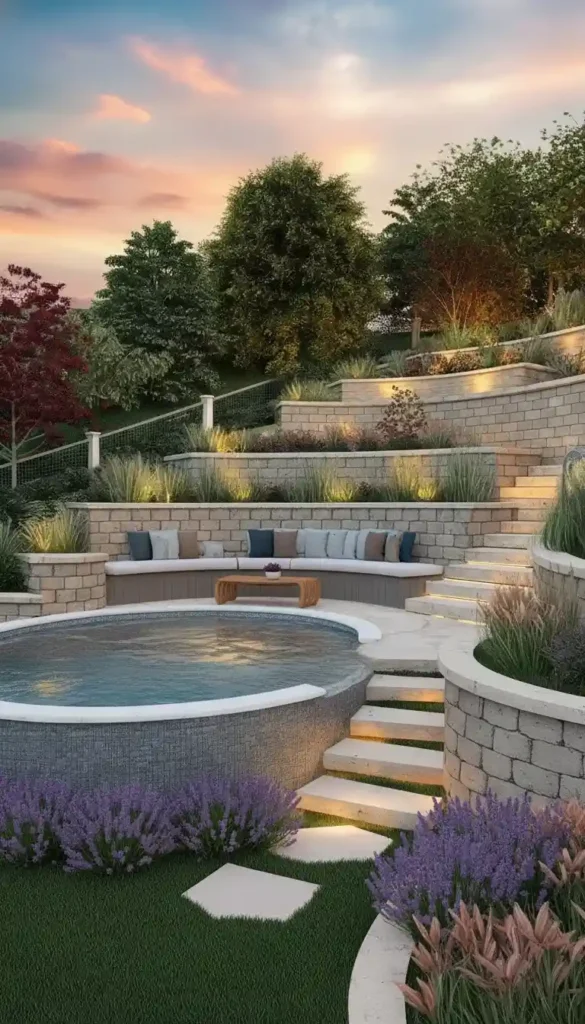
Steps and Built-In Seating: Connecting the Levels
Wide, generous steps between levels serve multiple functions — they’re a circulation path, a seating opportunity, and a design statement.
- Steps wider than 48 inches feel grand and inviting, not just functional
- Built-in step ledges can double as overflow seating during parties
- Planting pockets between steps add greenery and soften the transition between levels
- Consistent materials across steps and retaining walls create visual continuity
Tiered Landscaping: Using Plants to Define Zones
On a sloped yard, tiered landscaping does double duty — it stabilizes the soil and creates beautiful layered planting that flat yards simply can’t achieve.
- Ground-covering plants on steep sections prevent erosion between retaining walls
- Low shrubs (rosemary, lavender, boxwood) define the edges of each terrace
- Tall plants (bamboo, ornamental grasses, small trees) at the back of lower levels create a natural screen
- Cascading plants (creeping thyme, ice plant) on wall faces add texture and soften hard edges
Material Palette: Natural and Structural
In a multi-level yard, material consistency across all levels creates visual cohesion. Use a limited palette of 2–3 materials across all hardscaping elements.
- Stone for retaining walls and coping brings natural texture and timelessness
- Concrete for pool deck and steps is durable, cost-effective, and adapts to any finish
- Wood accents (pergola, furniture, screening) add warmth to a predominantly stone and concrete palette
- Avoid mixing too many materials — more than three hardscape textures creates visual noise in a complex layout
Lighting on a Sloped Yard: Safety and Ambiance
Lighting is even more critical in tiered backyards than in flat ones. Transitions between levels require illumination for safety after dark.
- Recessed step lighting on each riser makes every transition visible and safe at night
- Low-voltage wall-mounted fixtures on retaining walls create warm, layered light
- Spotlights aimed upward at specimen plants create dramatic silhouettes on upper walls
- Underwater pool lighting at the lowest level draws the eye down through the whole design
Drainage Planning: The Non-Negotiable Detail
The most beautiful sloped yard pool design will fail without proper drainage. Water management is not optional — it’s structural.
- French drains along the uphill side of the pool prevent water intrusion into the pool shell
- Channel drains along terrace edges direct rainfall away from retaining walls
- Every paved surface must be graded to direct water away from the pool and home foundation
- Consult a civil engineer or experienced landscaper for drainage design on slopes over 15%
Save this Sloped Yard Pool Lighting and Layout Solution! 📌
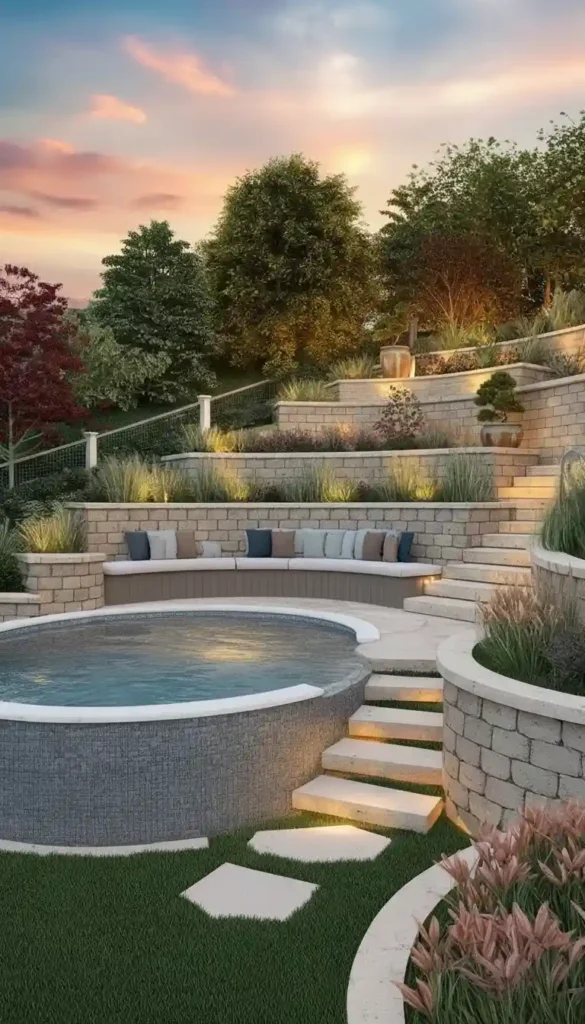
“The most memorable outdoor spaces aren’t the ones with the biggest budgets — they’re the ones that worked with what the land gave them. A slope is not a setback. It’s the beginning of something extraordinary.”
Conclusion
Every single one of the ideas in this guide began with a backyard that looked like a problem — too small, too sloped, too expensive, too complicated. And every single one of them became something people wanted to be in. That transformation doesn’t start with a contractor or a budget. It starts with the decision to take your outdoor space seriously, to stop seeing what’s missing, and to start seeing what’s possible.
Whether you start with a compact geometric plunge pool, a resort-inspired zero entry design, a phased budget project, or a dramatic tiered layout on a hillside lot — the most important step is the first one. Pick the idea that resonated. Start with a plan. And build the backyard you’ve always known your home deserved. It’s closer than you think.

“I share simple, beautiful and affordable home decor ideas to help you style every corner of your home with ease.