

There is something deeply personal about a front porch. It is the first thing your guests see, the last thing you look at before you leave, and the quiet corner where summer evenings feel the most alive. If you have ever stood at your front door and felt like something was missing — like the space did not quite reflect who you are — you already know how much this matters.
This guide is for you. Whether your porch is wide and grand or small and simple, these five summer front porch decor ideas for 2026 will help you transform it into something you are genuinely proud of. Every idea here is practical, beautiful, and built for real life — not just for photos.
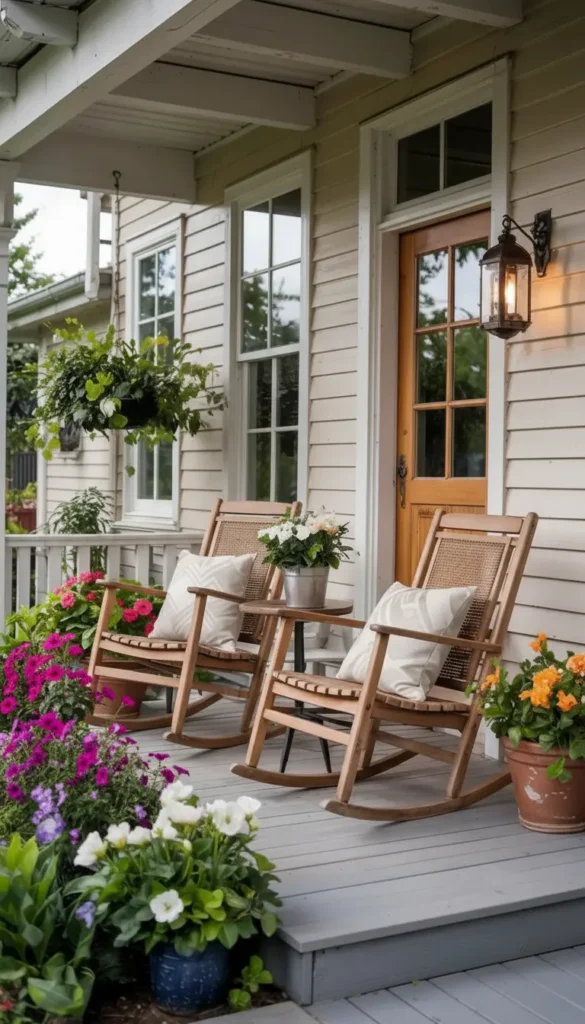
Bright and Welcoming Entry: Airy Color Palettes and Natural Textures
The first impression your home makes happens right at the porch. A bright, welcoming entry does not need to be expensive or complicated. It needs to feel intentional. When you use the right colors and textures together, your porch instantly communicates warmth before anyone even knocks on the door.
Why Airy Color Palettes Work So Well in Summer
Summer light is different from any other season. It is stronger, warmer, and more direct. That means your porch colors need to work with the light, not against it.
- White, beige, and soft gray reflect sunlight beautifully and keep the space feeling cool
- These tones create a calm, open visual effect that feels effortlessly polished
- Pale colors also make small porches appear larger and more spacious
- They pair seamlessly with every natural material — wood, rattan, stone, linen
Avoid dark, saturated colors on small porches in summer. They absorb heat and make the space feel heavy and closed.
How to Choose Your Base Palette
Start with one anchor color. For most homes, soft white or warm beige is the safest starting point. Then layer in one or two complementary tones.
- Pair white with natural wood tones for a coastal, relaxed feel
- Combine beige with sage green accents for an earthy, grounded look
- Use soft gray with white trim for a clean, modern farmhouse aesthetic
Keep the overall palette to three colors maximum. More than that and the space starts to feel chaotic rather than curated.
Natural Textures: The Secret to Depth Without Clutter
Color is the foundation, but texture is what makes a porch feel alive. Natural materials add visual interest without adding visual noise.
- Wicker baskets and rattan furniture bring warmth and organic softness
- Jute rugs define the entry zone and add tactile richness underfoot
- Raw wood accents — a bench, a planter box, a side table — ground the space beautifully
- Linen cushions and cotton throws feel appropriate for the season and comfortable to touch
The goal is layering. Think of it like dressing a room: you want different textures working together at different heights — the rug at your feet, the cushions at seating level, the planter at eye level.
Pin this bright entry styling guide! 📌
Symmetry Around the Door: Why It Matters
One of the most effective and underused techniques in porch design is symmetry around the front door. Designers use it constantly because it works every time.
- Place matching planters on either side of the door for instant balance
- Use identical lanterns or wall sconces on both sides for a polished, finished look
- Frame the door with equal-height plants or topiaries for a classic, formal feel
- Even a symmetrical doormat and two identical welcome chairs create strong visual balance
Symmetry signals intention. It tells visitors that someone thought carefully about this space, and that care extends to the home beyond it.
Practical Layout Tips for Small and Large Porches
Not every porch is a sprawling wraparound. Most are modest. Here is how to adapt this style to your specific space:
- Small porch (under 50 sq ft): Keep furniture minimal — one bench or two chairs only. Use vertical planters to add greenery without crowding the floor.
- Medium porch (50–100 sq ft): Add a small side table and two chairs. Use a rug to define the seating area from the entry path.
- Large porch (over 100 sq ft): Create multiple zones — an entry zone near the door and a seating zone toward the edge of the porch.
Adding a Statement Lantern
A statement lantern near the entrance does double duty. During the day, it is a bold decorative accent. In the evening, it provides warm, functional lighting that transforms the porch atmosphere entirely.
- Choose a lantern that is at least 18–24 inches tall for visual impact
- Black iron or aged bronze finishes work well with most exterior color schemes
- Solar-powered lanterns are practical for summer — no wiring, no effort
- Position it at eye level, either hanging from the ceiling or placed on a sturdy surface beside the door
Flower Pots and Seasonal Blooms
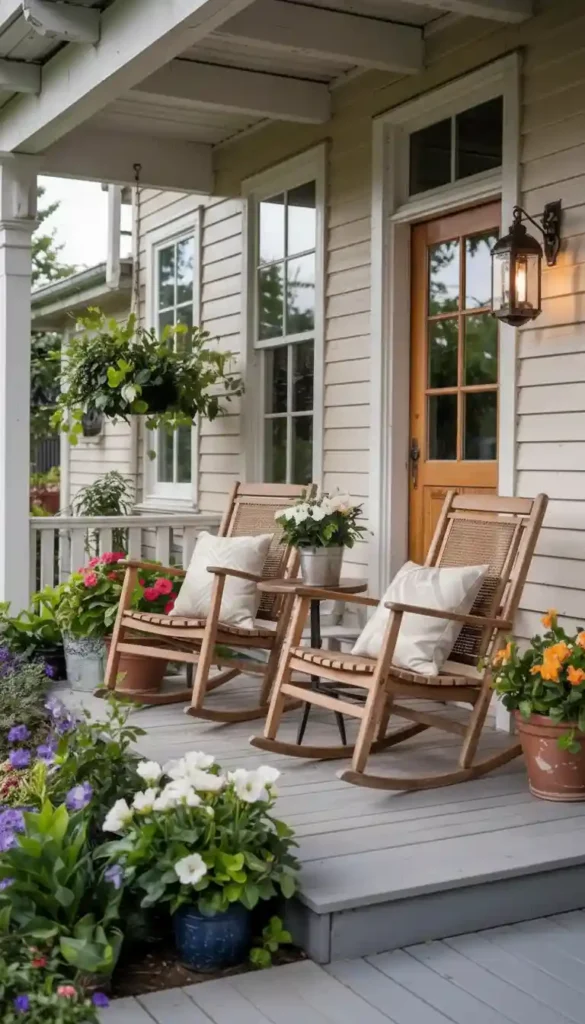
No summer porch is complete without flowers. Flower pots with seasonal blooms soften the hard lines of architecture and bring life into the design.
- Choose blooms that thrive in your region’s summer heat — petunias, zinnias, and marigolds are reliable choices
- Use pots with consistent finishes (all terracotta, all white, or all black) for a cohesive look
- Vary the height of your planters to create visual movement
- Group odd numbers of pots together — three or five always looks more natural than two or four
Save this welcoming entry styling approach! 📌
The Finishing Touch: Layered Doormats and Container Gardens
Two small additions that make a significant difference:
- Layered doormats: Place a larger natural fiber mat underneath a smaller decorative mat. This creates a visual frame for the entry and adds texture.
- Container garden: A small grouping of herbs, trailing plants, and flowering pots near the door adds greenery, fragrance, and personality without requiring any landscaping.
The key principle for this section: every element should earn its place. If it is not adding beauty, comfort, or function — remove it.
Fresh and Airy Porch Styling: Light Fabrics and Breathable Design
Summer porch design should feel like a deep breath of fresh air. When you walk out your front door on a warm July morning, the porch should welcome you — not overwhelm you. Fresh and airy styling is about creating that exact feeling through intentional choices in furniture, fabric, and decor.
What Makes a Porch Feel Truly Airy?
Airiness is not just about color. It is about the visual weight of every object in the space. Light, open designs reduce visual clutter and allow the eye to move freely.
- Choose furniture with open frames — rattan, wrought iron, or slim metal legs
- Avoid bulky upholstered sofas that take up too much visual and physical space
- Keep the floor partially visible — a rug that covers only part of the porch feels lighter than wall-to-wall coverage
- Leave deliberate empty space between furniture pieces
Empty space is not wasted space. It is breathing room.
Woven Furniture: The Perfect Summer Material
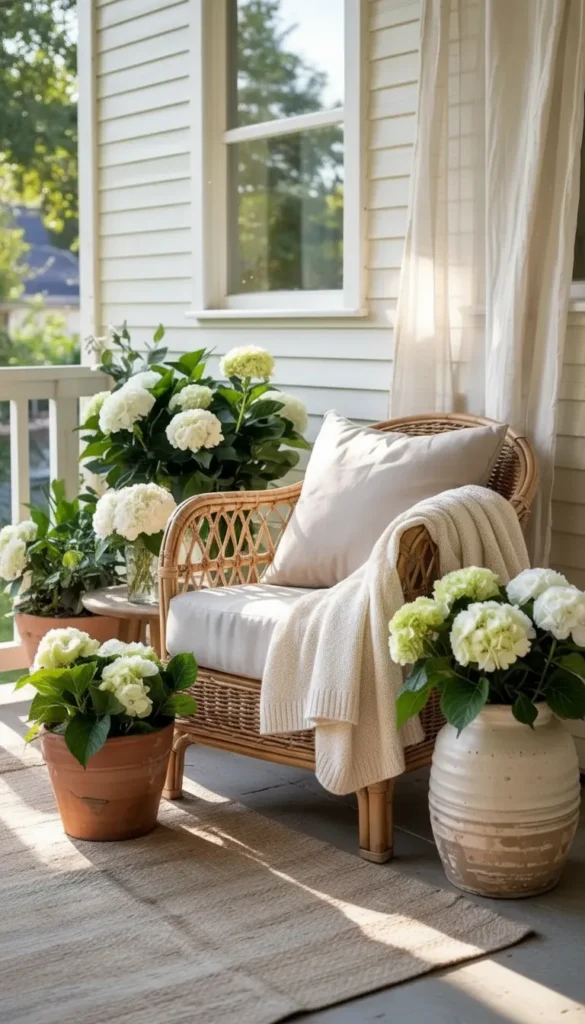
Rattan and wicker furniture have had a massive design renaissance, and for good reason. They are lightweight, durable, weather-resistant, and effortlessly beautiful.
- A rattan loveseat or two matching chairs immediately establishes a warm, natural aesthetic
- Look for pieces with powder-coated aluminum frames for durability in outdoor conditions
- Natural rattan works for covered porches; resin wicker is better for exposed areas
- Add linen or cotton cushions in cream, white, or sage green to complete the look
Pin this airy porch furniture guide! 📌
Choosing the Right Cushion Fabrics
Cushion fabric matters more than most people realize. For a fresh, summer aesthetic:
- Linen-look outdoor fabric mimics natural texture while resisting moisture and fading
- Avoid bold patterns — they age quickly and can overwhelm a neutral palette
- Solid colors in sand, ivory, dusty blue, or sage are endlessly versatile
- Ensure cushions are rated for outdoor UV exposure so they do not fade within weeks
Replace cushion covers rather than whole cushions when they wear out. It is cost-effective and eco-friendly.
Sheer Curtains and Light Drapes: A Sophisticated Touch
If your porch has a ceiling or overhead structure, sheer outdoor curtains are one of the most elegant and underused additions you can make.
- They add privacy without blocking light or air movement
- White or cream sheers billow gently in summer breezes, creating a dreamlike, resort-like atmosphere
- Look for outdoor-rated sheer panels that resist mildew and UV damage
- Hang them from a simple tension rod or curtain wire at ceiling height
This is a small investment with enormous visual payoff.
Ceramic Vases and Minimal Wall Decor
Restraint is the hallmark of great airy design. When it comes to decorative accents:
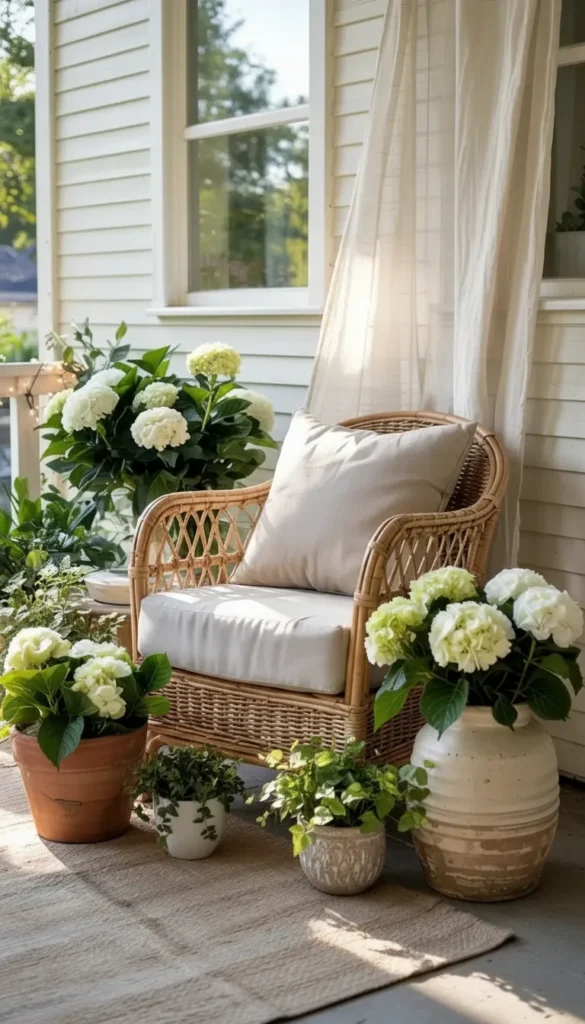
- Choose one or two ceramic vases in complementary neutral tones
- A simple piece of metal wall art — an abstract sun, a botanical print, a wreath — adds personality without visual weight
- Avoid clustering too many small items together; they create visual noise
- One bold accent beats five mediocre ones every time
The Power of a Neutral-Toned Rug
A rug on the porch does more than protect the floor. It defines the space, adds texture, and ties the design together.
- Choose a flatweave or low-pile outdoor rug that cleans easily
- Neutral tones — cream, sand, natural stripe — keep the palette consistent
- Ensure the rug is large enough that all furniture legs sit either on or near it
- Outdoor rugs with UV-resistant fibers last significantly longer in direct sunlight
Adding Vertical Dimension With Hanging Plants
To truly maximize an airy aesthetic, look up. Vertical space on a porch is often completely ignored.
- Hang two or three potted plants from the ceiling using macramé hangers or simple hooks
- Choose trailing plants like pothos, string of pearls, or trailing petunias for maximum visual impact
- Wall-mounted planters along the porch railing add greenery at eye level without crowding the floor
- A vertical planter ladder creates a striking focal point in a corner
Save this fresh summer porch design strategy! 📌
The One Rule That Ties It All Together
Never overdecorate. This is the single most common mistake in porch design, and the easiest to avoid. When you feel the urge to add one more thing — stop. Step back. Look at the space. If it already feels complete, it is complete.
The best airy porches feel curated, not collected.
Rocking Chairs and Cozy Seating: Creating a Space That Invites You to Stay
Some front porches are beautiful to look at but uncomfortable to use. The best ones are both. Cozy seating transforms a decorative entryway into a genuine living space — a place where you naturally end up spending summer evenings without even planning to.
Why Rocking Chairs Are the Perfect Summer Porch Furniture
The rocking chair is not nostalgic for nostalgia’s sake. It is genuinely one of the best pieces of outdoor furniture ever designed.
- The gentle rocking motion reduces stress and promotes relaxation — research actually supports this
- Rocking chairs are universally comfortable for people of all ages and body types
- They take up less visual weight than stationary chairs because of their open design
- Classic materials — white wood, natural rattan, painted metal — suit almost every home exterior
A pair of matching rocking chairs on either side of a small table is one of the most timeless porch setups in American home design.
How to Choose the Right Rocking Chair for Your Porch
Not all rocking chairs are created equal. Here is what to look for:
- Seat width: At least 20 inches wide for comfortable seating
- Material: Solid wood (cedar, teak, or oak) for durability; resin for low maintenance
- Rocker length: Longer rockers provide a smoother, gentler motion
- Armrests: Wide, flat armrests double as surfaces for drinks and books
- Weight capacity: Choose chairs rated for at least 250–300 lbs for safety
Pin this rocking chair selection guide! 📌
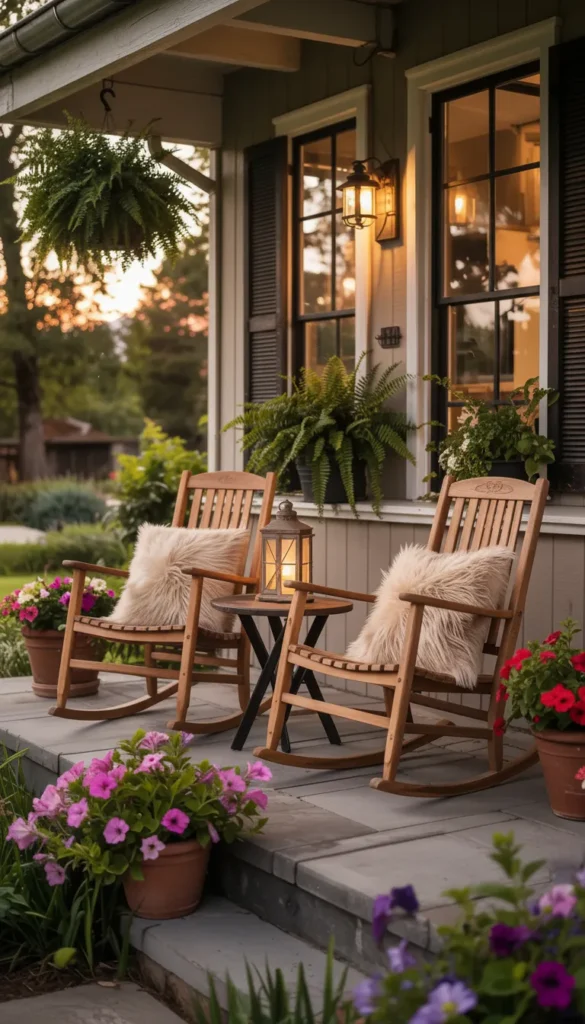
Layering Textiles for Maximum Comfort
The chair itself is the structure. Textiles are what make it feel like a hug.
- Add a seat cushion at least 3–4 inches thick for real comfort — thin cushions flatten immediately
- Layer a lightweight cotton or linen throw over the back for cooler evenings
- Choose cushion fabrics in outdoor-rated materials that resist moisture and mildew
- Keep a small basket of extra throws nearby so guests are always comfortable
Coordinate your cushion colors with the rest of your porch palette. Avoid mixing too many patterns — one patterned cushion with two solid ones is a safe rule.
The Essential Side Table Setup
A cozy seating area needs a small side table between or beside the chairs. It is practical and it completes the visual composition.
- Look for a round or square surface that clears the armrests by about 2–3 inches
- Teak, cedar, or powder-coated metal tables hold up well outdoors
- Keep a candle, a small vase, or a lantern on the table for atmosphere
- A surface for a drink and a book is the difference between a chair and an experience
Creating Ambient Evening Lighting
The porch you enjoy at 10 AM is completely different from the porch you want at 8 PM. Lighting transforms the mood entirely.
- Place a lantern on the side table for warm, intimate light at eye level
- Add string lights along the porch railing or overhead for a festive, soft glow
- Solar-powered pathway lights leading up to the porch extend the welcoming atmosphere
- Candles inside glass hurricanes are beautiful and flicker-resistant in mild breezes
Avoid harsh overhead lighting. It kills the cozy atmosphere you have worked to create.
Surrounding the Seating With Greenery
Plants make people feel at ease. Strategic greenery around your seating area creates a sense of natural enclosure without feeling claustrophobic.
- Place tall planters — 18–24 inches high — on either side of the seating arrangement
- Use lush, full plants like elephant ears, hostas, or ornamental grasses for volume
- Add a hanging basket above or behind the seating for vertical layering
- Keep blooming flowers within eyeline so there is always color in your peripheral vision
Save this cozy seating arrangement technique! 📌
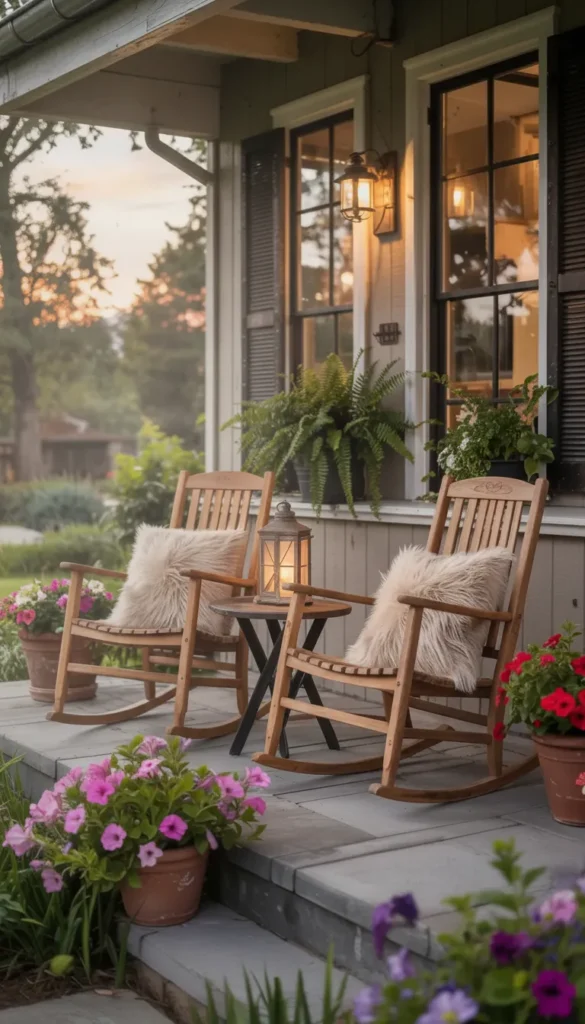
The Lived-In Quality That Makes It Special
The best cozy porches have a personal, lived-in quality that no design magazine can fully capture. This comes from small, individual touches.
- A worn novel left on the side table
- A mug left on the railing from the morning
- A handmade pillow or a blanket knitted by a family member
- A small potted herb that you actually use in your cooking
Design can create the framework. But what fills it with soul is you.
Adding a Ceiling Fan for Hot Summer Days
If your porch has a ceiling, a ceiling fan is one of the single best investments you can make for summer comfort.
- A 52–60 inch outdoor-rated ceiling fan provides adequate air circulation for most porches
- Choose a fan with a damp or wet rating — regular indoor fans will corrode outdoors
- Remote-controlled models are far more convenient than pull-chain versions
- Brushed nickel and matte black finishes both complement neutral porch palettes well
A comfortable porch gets used. An uncomfortable one gets admired and ignored.
Outdoor Relaxation Zones: Designing a Porch That Feels Like a Retreat
There is a difference between a porch that looks good and a porch that actually gets used every day. The difference is intentional design for relaxation. When you think of your porch as an outdoor retreat rather than just a transitional entry space, everything about how you design it changes.
Defining the Concept of a Relaxation Zone
A relaxation zone is a designated area within your porch where the primary purpose is rest and enjoyment — not decoration.
- It has dedicated, comfortable seating oriented for comfort, not just visual balance
- It has shade or shelter from direct midday sun
- It has soft lighting for evening use
- It has personal touches that make it feel like your space, not a showroom
Even a 40-square-foot porch can have a functional relaxation zone if you are strategic about it.
Choosing the Right Seating for Relaxation
Not all outdoor seating is equal when it comes to actual comfort. For a genuine relaxation zone:
- Lounge chairs with adjustable backs allow you to shift between sitting upright and reclining
- Small sectionals work beautifully on medium to large porches and create a social, wrap-around feel
- Hammock chairs or hanging egg chairs are increasingly popular and surprisingly space-efficient
- Daybed-style furniture creates a luxurious, resort-like feel on larger porches
Whatever you choose, test it before buying. Comfort is non-negotiable in a relaxation zone.
Pin this outdoor relaxation zone setup! 📌
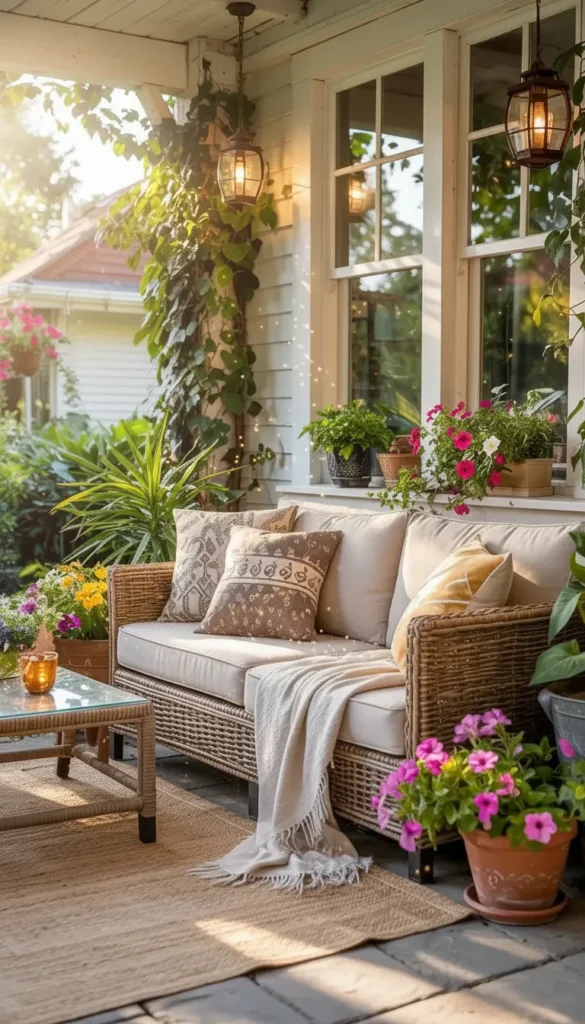
Using an Outdoor Rug to Define the Space
On a porch that serves multiple purposes — entry zone, seating zone, display zone — an outdoor rug is essential for spatial definition.
- The rug signals where the relaxation zone begins and ends
- It adds warmth underfoot, which matters on cool summer mornings and evenings
- Choose a rug that extends at least 18 inches beyond the edges of your furniture
- Flatweave polypropylene rugs are the most practical: easy to clean, resistant to fading
Creating a Natural, Calming Environment With Greenery
Plants in a relaxation zone serve a specific psychological function. Greenery reduces stress and creates a sense of being surrounded by nature.
- Use larger plants — 3–4 feet tall — to create a natural backdrop behind or beside seating
- Group smaller plants at varying heights to fill empty corners organically
- Choose plants with fragrance — lavender, rosemary, jasmine — for a multisensory experience
- Low-maintenance plants like succulents, snake plants (in pots), or ornamental grasses are ideal for busy homeowners
Adding an Ambiance Layer With Lighting
For a relaxation zone to work in the evening, lighting must be layered and warm.
- Overhead string lights across the porch ceiling create a canopy of soft, festive glow
- A lantern on the table provides intimate light exactly where you need it
- Floor-level solar path lights or low stake lights define the edges of the space
- Candles in hurricane holders add warmth and movement without requiring electricity
Avoid fluorescent or cool-white bulbs. Warm white (2700K–3000K) creates the relaxed atmosphere you want.
Shade Solutions for Peak Summer Hours
A relaxation zone is only as good as its usability. If the porch is unusable between 11 AM and 4 PM due to direct sun, you have a problem.
- A retractable awning is the most elegant solution — it provides coverage when needed and disappears when you want open sky
- A pergola with wisteria or climbing vines creates natural, beautiful shade and improves over time
- A freestanding patio umbrella is the most affordable option and easy to reposition
- Outdoor shade sails in neutral tones are increasingly popular for their modern, geometric aesthetic
Save this porch relaxation design approach! 📌
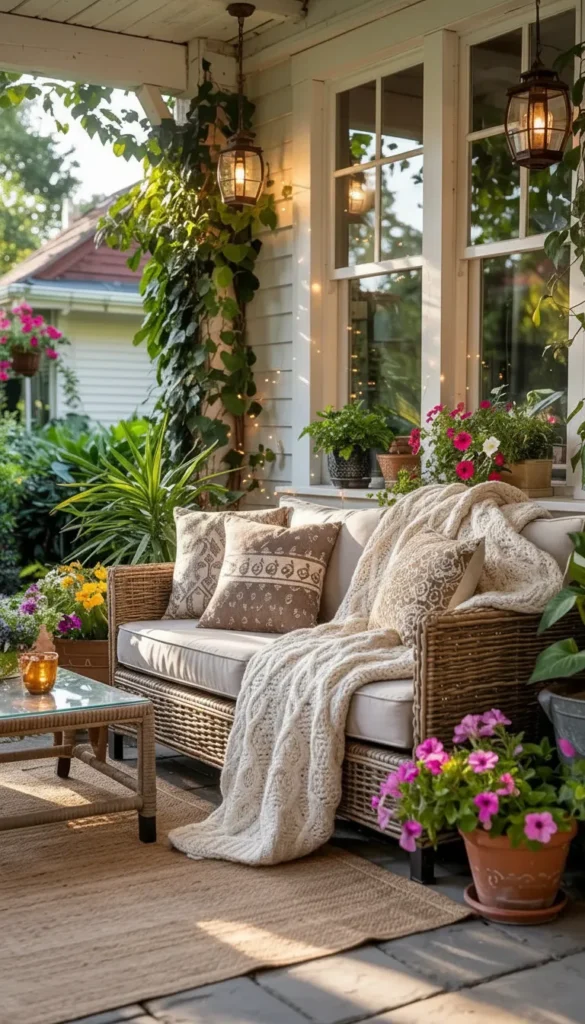
Balancing Furniture and Open Space
The most common mistake in relaxation zone design is overcrowding. When in doubt, use less.
- Allow at least 30–36 inches of walking clearance around all furniture
- Leave a visual path from the door to the seating area — guests should not have to navigate through a maze
- Resist the urge to fill every corner with furniture or decor
- White space — empty, open space — is a design element, not a failure
Personal Touches That Make It a True Retreat
A relaxation zone should feel personal. Add elements that reflect how you actually spend your time.
- A small side table with space for a journal, book, or sketchpad
- A basket of your favorite throws and blankets
- A small Bluetooth speaker tucked discreetly behind a plant
- A tray with everything you need for your morning coffee ritual
The best outdoor retreats are extensions of your indoor life, not separate showrooms.
Double Door Entry Decor: Symmetry, Elegance, and Curb Appeal
A double door is one of the most architecturally impressive features a home can have. But without intentional decor, it can look unfinished or underwhelming. Styling a double door entry well requires understanding symmetry, scale, and the visual hierarchy of the entrance. When you get it right, the result is effortlessly grand.
Why Symmetry Is Non-Negotiable for Double Doors
A double door is already a symmetrical architectural feature. Your decor should honor and enhance that symmetry — not fight it.
- Asymmetric decor around a double door creates visual tension that feels accidental rather than intentional
- Matching elements on both sides reinforce the architectural logic of the entrance
- The eye naturally looks for balance; symmetry rewards the eye and creates a sense of satisfaction
- Symmetry also photographs beautifully, which matters in an age when curb appeal is digital
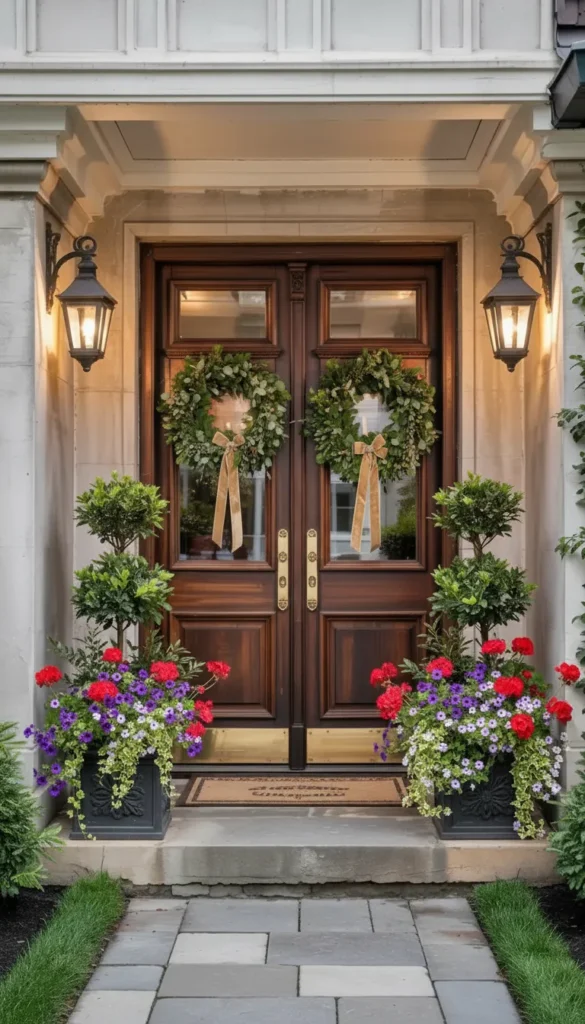
Think of the two sides of your double door entry as a mirror image. Whatever you put on one side, put on the other.
Matching Planters: The Easiest Symmetry Win
The single most effective and affordable way to achieve double door symmetry is matching planters on either side.
- Choose planters in the same size, material, and color
- Fill them with the same plants — standard topiaries, lush boxwoods, or seasonal blooms
- Place them equidistant from the door on both sides — measure, do not guess
- Tall, architectural planters (24–36 inches) work best with double doors, which have greater height than single doors
Pin this double door entry symmetry guide! 📌
Wreaths and Seasonal Door Decor
A wreath is one of the most versatile and classic porch decor elements available. For a double door, the approach depends on the door style.
- Two matching wreaths — one on each door panel — is the most symmetrical choice
- One large wreath centered on the full door width works if the doors open as a unit
- Choose wreaths in natural materials — dried florals, eucalyptus, rattan, seagrass — for a sophisticated summer feel
- Avoid overly festive or seasonal-specific wreaths in summer; opt for botanical, textural designs instead
Change your wreath with the seasons. It is the easiest way to keep the entry feeling fresh year-round.
Wall-Mounted Lanterns for Function and Style
Matching wall-mounted lanterns on either side of the doors serve both aesthetic and functional purposes.
- Choose lanterns that are proportional to the door — oversized doors need statement lanterns, not small ones
- Hardwired fixtures always look more polished than battery-operated options for permanent installations
- Black iron and oil-rubbed bronze are the most versatile finishes for most home exteriors
- Ensure the light color temperature is warm white (2700K) for a welcoming evening glow
The Bench: A Functional and Beautiful Addition
A bench near the double door entry adds both practicality and polish. It softens the architectural formality of a grand entrance while providing genuine utility.
- Place the bench to one side if symmetry is already strong enough from other elements
- Or use two matching benches flanking the door for maximum symmetry and visual weight
- Choose a bench in teak, cedar, or powder-coated steel that complements your exterior finishes
- Add a cushion and a folded throw for warmth and texture
A bench also gives guests a place to sit while removing shoes — a small, practical gift.
Layered Textures to Add Depth
Symmetry creates structure. Texture creates richness. The most elegant double door entries combine both.
- A patterned runner or outdoor rug centered at the door adds visual depth at ground level
- Decorative pillows on benches — in coordinating patterns and solids — add softness at mid-level
- Textured planters (ribbed, hammered, or lattice-patterned) add interest at eye level
- A woven or carved door handle set is a finishing detail that elevates the entire entry
Save this elegant double door entry technique! 📌
Scale and Proportion: Getting the Details Right
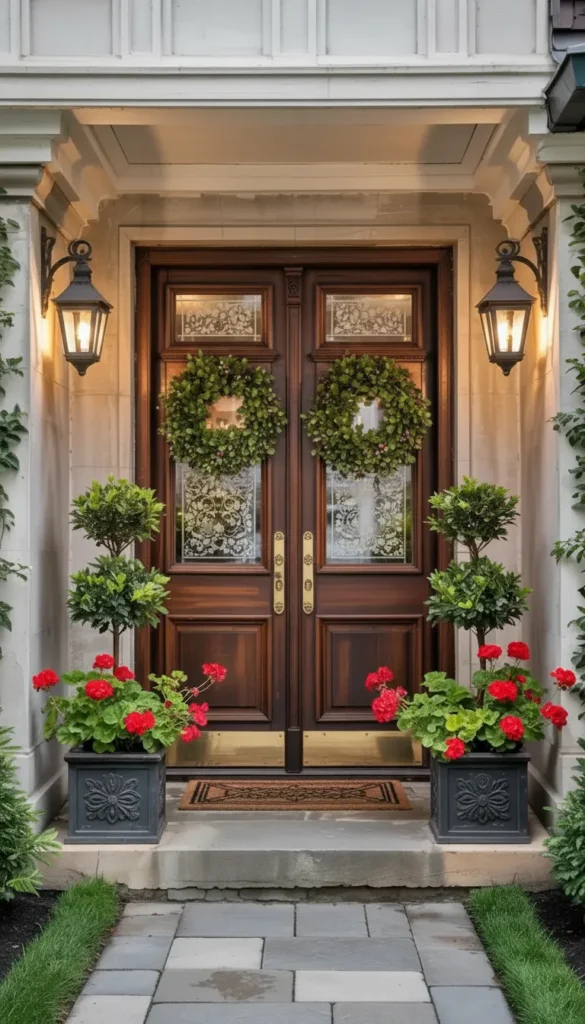
The biggest mistake people make with double door entries is using decor that is too small for the scale of the entrance.
- Planters should be at least 24 inches tall for most double door setups
- Wreaths should be at least 24–30 inches in diameter
- Lanterns should extend at least 12–18 inches from the wall
- A bench should be at least 48 inches wide to look proportional, not cramped
When in doubt, go larger. Grand entrances require generous decor.
Lighting the Pathway to the Door
The entry experience begins before anyone reaches the door. A well-lit pathway leads guests toward the double doors and enhances the first impression.
- Use solar stake lights along the pathway edge for effortless illumination
- Choose lights in coordinating finishes to your lanterns
- Space them evenly — every 3–4 feet along the path
- Low, ground-level lights feel more elegant and less institutional than tall stake lights
Conclusion
Your front porch is more than architecture. It is the first chapter of your home’s story. These five summer front porch decor ideas for 2026 give you everything you need to write that chapter beautifully — whether you are starting from scratch, refreshing a tired space, or simply adding a few thoughtful touches before summer peaks.
The most important thing to remember is this: the best porches are not the most expensive ones. They are the most intentional ones. Every element has a purpose. Every choice reflects something real. Start with one idea from this guide, execute it well, and let the rest follow naturally. Your home — and everyone who visits it — will feel the difference.

“I share simple, beautiful and affordable home decor ideas to help you style every corner of your home with ease.