

There’s something transformative about having a real sofa outside—not just chairs, but an actual sofa that makes you want to sink in with your coffee and stay for hours. Most of us dream of that resort-style backyard where the outdoor space feels as inviting as our living room, yet we end up with furniture that’s either uncomfortable, doesn’t last, or just looks like afterthought patio seating. The gap between what we want and what we settle for comes down to not knowing how to choose, style, and arrange outdoor sofas that actually work.
In 2026, outdoor living isn’t about dragging old furniture outside anymore—it’s about creating intentional lounge zones with sofas that look modern, feel comfortable, and hold up to real weather. Whether you’re working with a tight budget and considering DIY pallet builds, or you want that resort aesthetic with deep cushions and zoned seating areas, the approach stays the same: treat your patio like an extension of your home. This guide walks through five distinct outdoor sofa ideas that solve real problems, from small spaces to entertaining zones, with practical steps you can actually follow.
Outdoor Sofa Ideas Patio For 2026
Creating a patio that feels current in 2026 means approaching outdoor sofas with the same design intention you’d give your indoor living room. The difference between a dated outdoor space and one that feels fresh comes down to clean lines, cohesive styling, and materials that handle weather without constant fussing.
Treat Your Patio Like An Indoor Room
The biggest shift in outdoor design is thinking in zones and circulation paths rather than just placing furniture.
- Define the seating footprint with a large outdoor rug that grounds the sofa and creates room-like boundaries
- Plan clear walking paths around the sofa so traffic flows naturally without squeezing between furniture
- Choose a modern sofa with clean lines and low arms that looks current rather than overly traditional
- Select deep seats that encourage people to actually settle in and stay comfortable
When you design circulation first, the patio automatically feels calm instead of cramped.
Choose Modular Frames For Flexibility
Sofas that adapt to different gatherings make your patio more versatile without buying multiple furniture sets.
- Look for modular outdoor sofas that shift between straight configurations and L-shapes based on your needs
- Select pieces with consistent proportions so modules look intentional in any arrangement
- Choose low-profile designs that don’t visually dominate small patios
- Consider armless middle sections that create more seating in the same footprint
This flexibility means one sofa purchase serves multiple entertaining scenarios.
Pair With Smart Supporting Furniture
The right coffee and side tables complete the sofa setup without cluttering the space.
- Add a slim coffee table in powder-coated metal or sealed teak for a crisp 2026 look
- Include side tables at different heights so drinks and books always have a landing spot
- Choose weather-resistant finishes that maintain their appearance with minimal maintenance
- Keep table proportions scaled to the sofa—too small looks unfinished, too large overwhelms
Supporting furniture turns a sofa into a complete, functional zone.
Pin this modern patio sofa approach! 📌
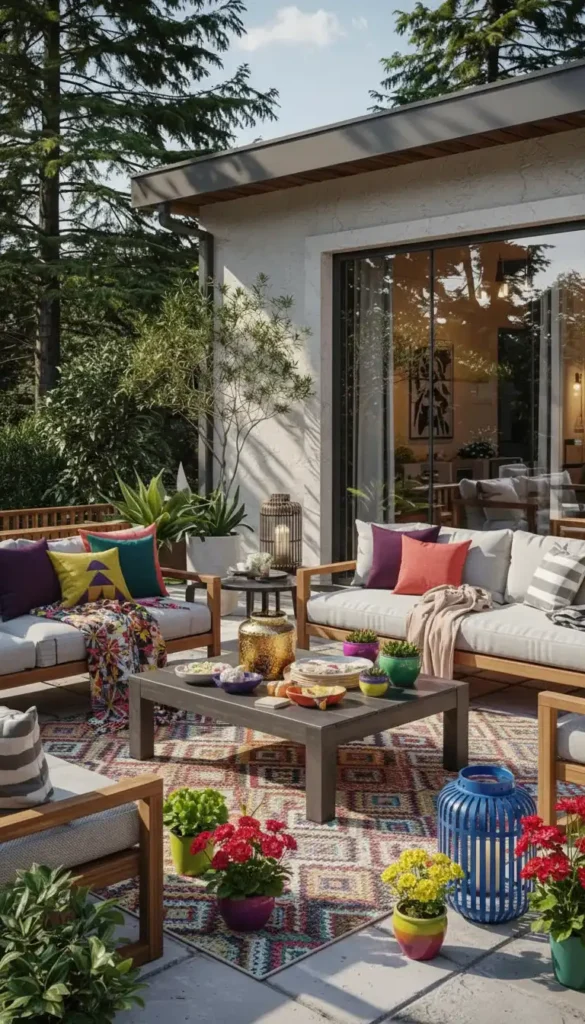
Build In Lighting From The Start
Outdoor spaces only get used after sunset if the lighting feels intentional and inviting.
- Install wall sconces that provide consistent ambient light without taking floor space
- Add soft lanterns on side tables for adjustable mood lighting
- Consider string lights that define the ceiling line even without a roof
- Use warm-toned bulbs that make the space feel cozy rather than sterile
Good lighting transforms your sofa area from daytime-only to a space that works around the clock.
Master The Textile Strategy
Pillows and cushions are where most outdoor sofas either succeed or look cheap.
- Choose performance fabric covers with subtle texture so the look stays sophisticated
- Use outdoor-rated cushions that feel as soft as indoor upholstery
- Layer two pillow sizes—larger back support and smaller lumbar accents
- Stick to one or two accent colors across all textiles for a controlled, editorial feel
Quality textiles are the difference between a sofa that looks styled and one that looks like it belongs outside a pool supply store.
Create A Cohesive Color Palette
Visual coherence makes even affordable furniture look intentional and designed.
- Start with a neutral base for the sofa and large cushions
- Add one accent color in pillows and nearby planters
- Repeat the same tones across textiles and decor rather than introducing random colors
- Keep the overall palette to three colors maximum for a clean, modern look
This restraint prevents the busy, mismatched appearance that ruins outdoor spaces.
Consider Seat Depth And Back Angle
Comfort determines whether people actually use your outdoor sofa or avoid it.
- Check that seat depth matches the intended use—lounging needs 24-30 inches
- Verify the back angle supports relaxed sitting without feeling too reclined
- Test the cushion firmness so it’s supportive without being hard
- Ensure arm height allows you to rest comfortably without awkward positioning
Even expensive sofas feel terrible if the proportions are wrong for actual bodies.
Plan For Cushion Storage
Outdoor cushions need protection to last more than one season.
- Add a deck box or storage bench specifically sized for cushions
- Choose quick-remove covers that make washing and storage convenient
- Consider breathable storage bags that prevent mildew during off-season
- Create a cushion care routine—rinse monthly, wash covers seasonally
When storage is easy and nearby, you’ll actually do it instead of letting cushions deteriorate.
Save this 2026 patio styling strategy! 📌
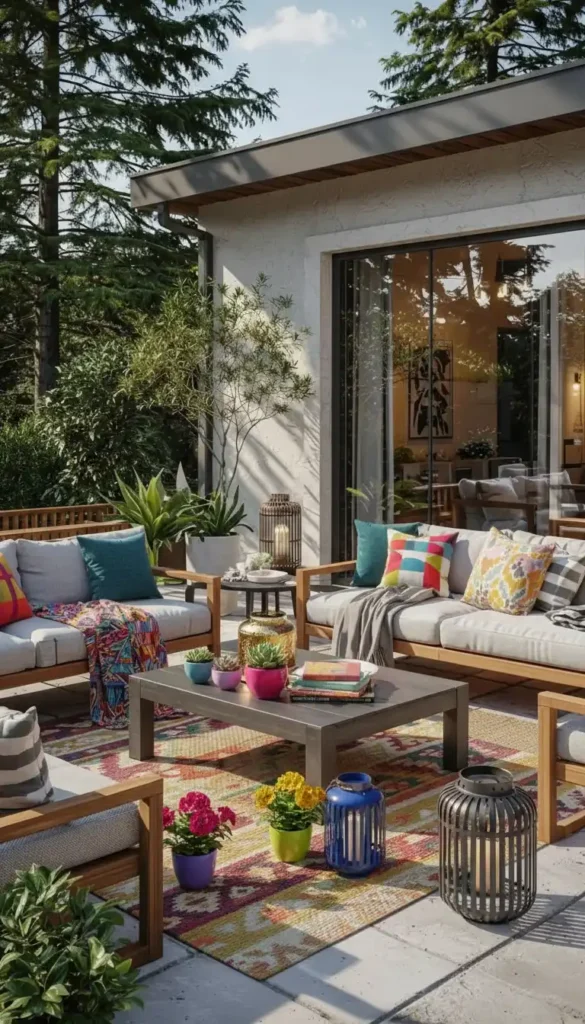
Add Overhead Protection When Needed
Exposed patios need shade solutions to stay comfortable and protect furniture.
- Install a pergola that provides structure and filtered shade
- Consider retractable canopies for flexible sun control
- Use shade sails for modern coverage that doesn’t require permanent construction
- Add market umbrellas as portable options for smaller sofa areas
Protection extends both furniture life and the hours your patio stays usable.
Outdoor Sofa Ideas DIY With Pallets And Simple Tools
Building your own outdoor sofa from pallets can look genuinely modern in 2026 if you focus on clean proportions and refined finishing. The key difference between DIY that looks temporary and DIY that looks designed comes down to careful construction and thoughtful styling.
Start With Safety And Stability
A pallet sofa only works if it’s built to last and safe to use.
- Choose heat-treated pallets (marked HT) that are free from chemical treatment
- Inspect for loose boards, protruding nails, and structural damage before building
- Create a solid base platform underneath pallets so the frame doesn’t rack or wobble
- Use exterior-grade screws and corner brackets for connections that stay tight outdoors
Starting with quality materials and proper fasteners prevents the shaky, unreliable feel of rushed DIY.
Design For Modern Proportions
The shape and height determine whether your pallet sofa looks intentional or improvised.
- Keep the frame low and deep to read as lounge furniture rather than a bench
- Build a simple backrest at 100-110 degrees for comfortable reclining
- Make the seat depth 24-28 inches so adults can sit back comfortably
- Design straight lines or clean L-shapes rather than complicated angles
These proportions create the contemporary look that works in 2026 outdoor spaces.
Sand And Finish Properly
Surface preparation separates amateur DIY from professional-looking results.
- Sand every surface thoroughly including edges and corners to remove splinters
- Apply a matte exterior stain or oil that highlights wood grain without looking plastic
- Avoid glossy sealants that can appear cheap and don’t age well
- Use breathable finishes that allow moisture to escape rather than trapping it
Proper finishing makes pallet wood look like intentional material choice rather than budget constraint.
Pin this pallet sofa building method! 📌
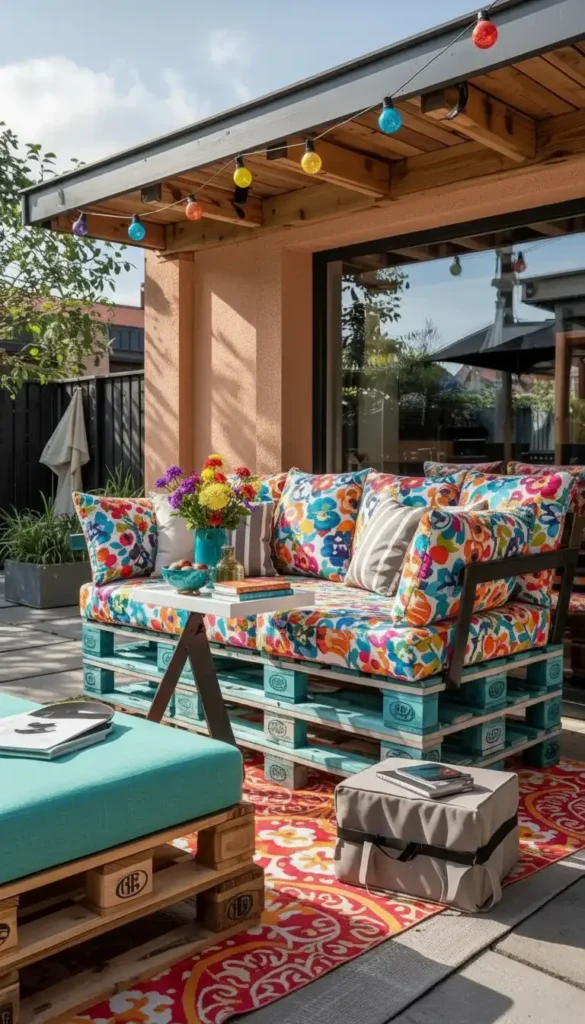
Add Contemporary Metal Accents
Small details elevate DIY from rustic to modern.
- Include thin black metal details like leg caps or side brackets
- Use powder-coated hardware that won’t rust and maintains clean lines
- Consider metal hairpin legs under the base for an elevated, airy look
- Add metal corner protectors that serve both function and style
These touches bring pallet furniture into current design trends.
Plan For Drainage And Airflow
Outdoor furniture needs to dry quickly after rain to prevent mold and deterioration.
- Leave gaps between slats for water drainage and air circulation
- Elevate the base off the ground with feet or blocks to prevent moisture contact
- Create removable cushion platforms so you can lift and store cushions easily
- Avoid solid bases that trap water and create rot problems
Smart drainage design extends the life of DIY furniture dramatically.
Choose The Right Cushions
Cushioning transforms a pallet frame into comfortable seating.
- Use outdoor foam that’s specifically rated for exterior use and resists mildew
- Select 4-6 inch thick cushions for seats and 3-4 inches for backs
- Cover with performance fabric that handles sun and rain without fading
- Add ties or velcro so cushions stay in place during use
Quality cushions make the difference between a sofa people use and one they avoid.
Style With Minimal Decor
Keeping the styling simple lets the clean lines of your build stand out.
- Add one throw blanket in a solid color for texture without clutter
- Include 2-4 pillows in complementary sizes rather than a pile of mismatched cushions
- Place a simple side table—concrete pavers or a metal frame—for functionality
- Avoid rustic overload—skip the mason jars and distressed signs
Restraint in styling makes DIY look designed rather than craft-project cute.
Consider Mobility Options
Making your pallet sofa movable adds flexibility without compromising stability.
- Install locking caster wheels hidden under the base for occasional repositioning
- Keep the overall weight manageable so two people can lift and move it when needed
- Build in handles or grip points if the sofa will move seasonally
- Use furniture glides on grass or uneven surfaces to prevent sinking
Mobility means you can adapt your outdoor layout without building multiple pieces.
Save this DIY finishing approach! 📌
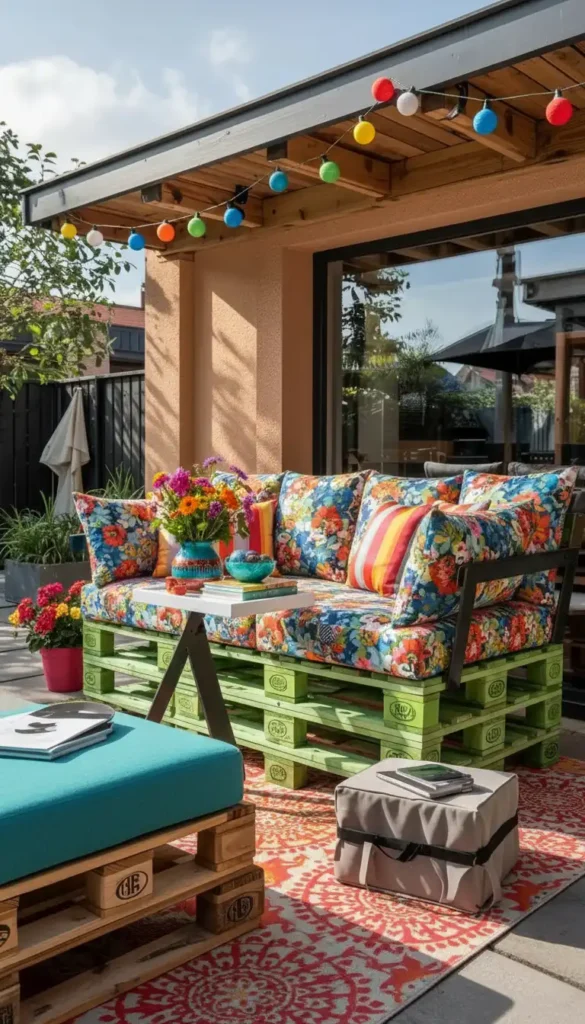
Protect And Maintain Your Build
Regular care keeps DIY furniture looking good season after season.
- Re-oil or re-stain annually to refresh the finish and maintain weather protection
- Tighten all hardware at the start of each season to prevent loosening
- Store cushions in a deck box or garage during heavy rain and winter
- Use breathable covers over the frame if storing long-term
Simple maintenance routines prevent DIY projects from looking worn and neglected.
Outdoor Sofa Ideas Lounge For A Resort-Style Backyard
Creating resort-style outdoor lounging means copying what high-end hotels do well: generous seating, calm colors, and layered comfort that makes people want to stay all day. This approach turns ordinary backyards into spaces that feel like vacation destinations.
Start With Low-Profile Deep Seating
Resort furniture prioritizes comfort and visual calm over compact dimensions.
- Choose low-profile sofas that sit close to the ground for a relaxed, contemporary look
- Select deep cushions of 26-30 inches that let people fully settle back
- Add wide chaise modules that encourage stretched-out lounging
- Look for thick cushion profiles—4-6 inches minimum—for luxury comfort
This generous scale immediately signals that relaxation is the priority.
Face A Strong Focal Point
Resort spaces always orient seating toward something worth looking at.
- Position the sofa facing a fire table for natural gathering and warmth
- Angle toward a water feature that adds movement and sound
- Direct sightlines to a garden wall or dramatic plantings that create backdrop
- Arrange around a pool edge if your backyard includes water
A clear focal point keeps the seating arrangement from feeling random or directionless.
Layer Multiple Seating Types
Variety in seating creates visual interest and accommodates different relaxation styles.
- Pair the main sofa with two lounge chairs for flexible conversation groupings
- Add a large coffee table that anchors the furniture arrangement
- Include different seat heights through ottomans or poufs for casual perching
- Keep all pieces within the same material family for cohesion
This mix feels intentional rather than like you bought whatever was on sale.
Pin this resort-style seating layout! 📌
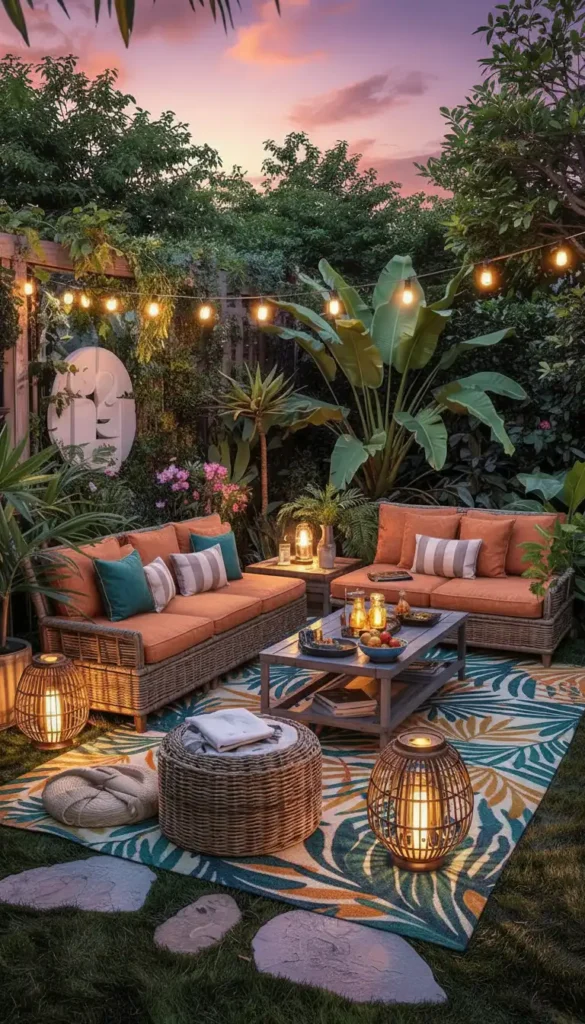
Mix Textures For Depth
Resorts never look flat or monotone—they layer materials thoughtfully.
- Combine smooth upholstery with woven accents like rattan or rope details
- Add natural greenery in large planters that soften hard furniture lines
- Include wood elements alongside metal frames for warmth
- Use stone or concrete side tables that add weight and natural texture
These layers create visual richness without busy patterns or clutter.
Use Performance Fabrics That Feel Luxurious
Resort comfort depends on textiles that look and feel high-end.
- Choose performance fabrics that resist fading and clean easily without looking synthetic
- Select solid colors or subtle textures rather than bold patterns
- Mix pillow sizes—large back pillows plus smaller lumbar cushions
- Keep covers removable so washing stays convenient
Quality fabric is what makes outdoor furniture feel as good as indoor pieces.
Create Ambient Lighting Layers
Resort spaces glow beautifully after sunset through thoughtful lighting design.
- String warm white lights overhead to define the space and provide soft illumination
- Add floor lanterns that create pools of light at ground level
- Include table lamps rated for outdoor use on consoles or side tables
- Use uplighting on nearby plants or walls for dramatic shadows
Layered lighting makes your lounge area feel professionally designed and usable all evening.
Add A Beverage Station
Resorts make refreshments easily accessible without requiring trips inside.
- Include a slim bar cart stocked with glasses and drink supplies
- Add a console table behind the sofa with a tray for drinks and snacks
- Use a side table with storage that hides bar tools and napkins
- Keep an ice bucket as part of the permanent setup during warm months
This convenience factor is what makes resort spaces feel truly luxurious.
Embrace Curves And Organic Shapes
2026 resort trends lean toward softer, more organic furniture forms.
- Look for curved sofa backs that feel contemporary and welcoming
- Choose round coffee tables that improve circulation and soften the look
- Add sculptural side tables with organic shapes as accent pieces
- Consider bean-shaped ottomans or poufs for flexible seating
These curves prevent the space from feeling too rigid or linear.
Save this resort comfort strategy! 📌
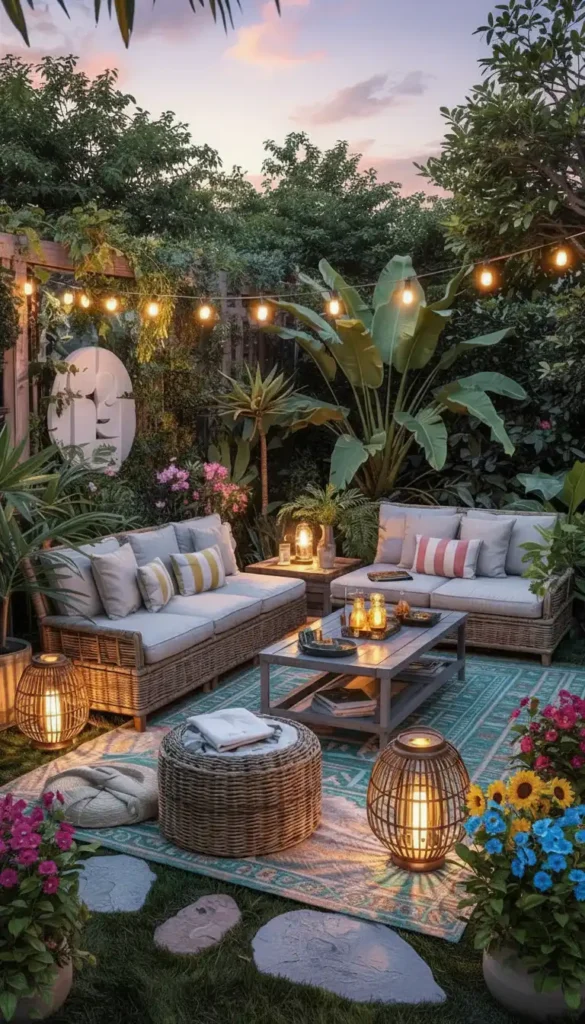
Keep The Palette Extremely Tight
Visual restraint is what makes resort spaces look professionally designed.
- Commit to two or three colors maximum across all furniture and textiles
- Repeat the exact tones in pillows, planters, and throws
- Use varying textures in the same color family for interest without chaos
- Add one sculptural element—like a statement planter—in an accent color
This discipline transforms a collection of furniture into a cohesive resort-style space.
Outdoor Sofa Ideas Lounge Areas With Zoned Seating
Creating distinct zones in your outdoor space makes it feel organized and intentional, even when the yard is relatively small. Zoning prevents the scattered, random look that happens when furniture lacks clear purpose.
Define Zones With Clear Purposes
Each area should serve a specific function rather than trying to do everything.
- Establish a conversation zone anchored by the sofa for casual gathering
- Create a dining zone with appropriate-height furniture for meals
- Design a quiet reading corner with a single chair and side table
- Set up a fire pit area as a separate gathering spot for cool evenings
When zones have clear jobs, people naturally use the space more effectively.
Use Physical Elements As Boundaries
Defining zones doesn’t require walls or permanent structures.
- Place outdoor rugs under each seating group to create visual boundaries
- Position large planters between zones as natural dividers
- Add low privacy screens made from wood slats or metal panels
- Use changes in flooring material like pavers versus deck boards to signal transitions
These soft boundaries organize space without making it feel chopped up or closed in.
Start With The Sofa As Your Anchor
The largest piece determines how everything else flows.
- Position an L-shaped sectional as the primary seating in the main lounge zone
- Add one armless module that can move between zones as needed
- Face the sofa toward the best view or focal point in your yard
- Leave 36-48 inches behind the sofa for comfortable walkway clearance
This anchor prevents the layout from feeling random or unplanned.
Pin this outdoor zoning technique! 📌
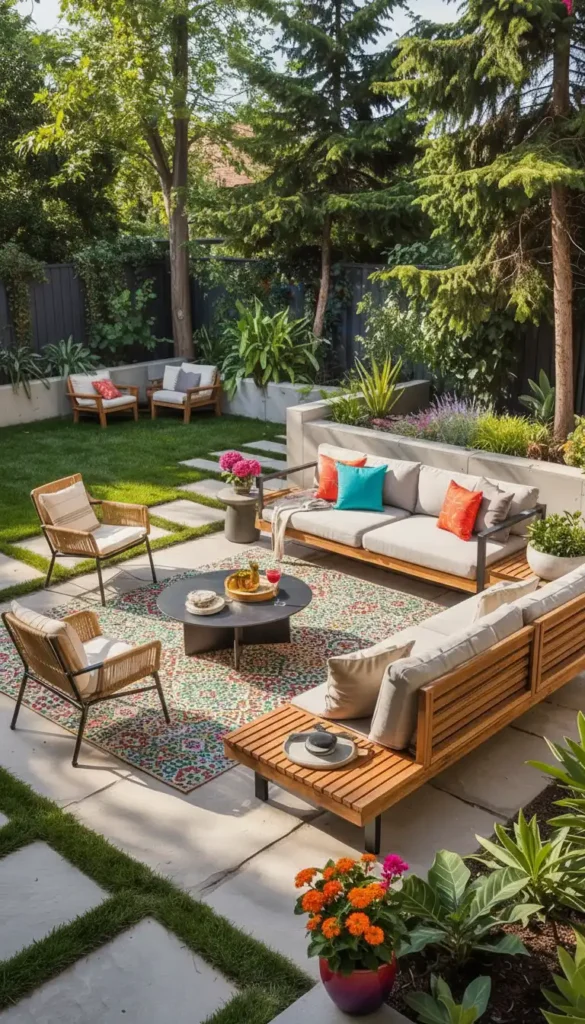
Create A Secondary Quiet Zone
Not every gathering moment requires group seating.
- Add two lounge chairs with a small table in a corner for intimate conversation
- Position this zone slightly separated from the main sofa area
- Include different lighting like a floor lamp versus overhead strings
- Use slightly different cushion colors to distinguish the zones while staying cohesive
This secondary area handles overflow guests and provides retreat space during larger gatherings.
Mix Materials For Contemporary Look
Combining wood and metal keeps zoned spaces from feeling too matchy.
- Use metal frames for the main sofa to keep it visually light
- Add wood side tables for warmth and natural texture
- Include concrete or stone elements as accent pieces
- Choose coffee tables with mixed materials like wood tops on metal bases
This material variety creates interest while maintaining a unified modern aesthetic.
Repeat Colors And Textures Across Zones
Visual threads connect separate areas into a cohesive design.
- Use the same cushion fabric on sofa and secondary chairs
- Repeat pillow colors in both conversation and dining zones
- Match planter finishes across all zones
- Keep metal finishes consistent—all matte black or all bronze, not mixed
These repetitions tell your eye the zones belong to the same designed space.
Balance Visual Weight
Distribution of large elements prevents one zone from dominating.
- Place tall planters near both zones rather than clustering them
- Distribute lighting sources evenly so no area feels dark or overlooked
- Add side tables to every seating spot for balanced functionality
- Use similar cushion volumes across zones even if colors vary slightly
Balanced weight makes the whole backyard feel intentionally composed.
Leave Negative Space Between Zones
Empty space is what makes zoned layouts feel upscale rather than cramped.
- Maintain at least 4-6 feet between major furniture groupings
- Avoid filling every corner with furniture or planters
- Let pathways breathe with generous width rather than minimal clearance
- Keep focal points clear without surrounding them with accessories
This restraint prevents the over-furnished look that makes yards feel smaller.
Save this zoned backyard layout! 📌
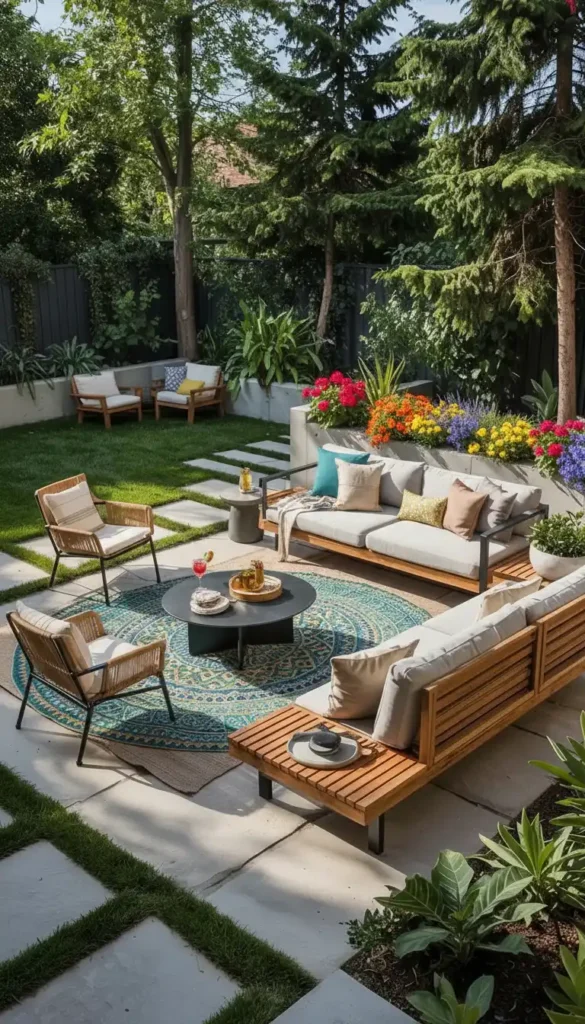
Add Zone-Specific Lighting
Different areas need different lighting approaches to function well.
- Use pendant lights over dining zones for task lighting
- Add string lights over the main sofa for ambient gathering light
- Include lanterns or candles in quiet zones for intimate low light
- Install path lights between zones so circulation stays safe after dark
Lighting reinforces the distinct character of each zone while keeping the whole space usable.
Outdoor Sofa Ideas Wood With A Modern Slatted Frame
Wood sofas with slatted frames offer the perfect balance between natural warmth and contemporary clean lines. When done right, this style looks architectural and sophisticated rather than rustic or dated.
Choose Architectural Lines
Modern slatted frames depend on proportion and geometry to look current.
- Select low-profile designs where the frame sits close to the ground
- Look for slim arms that don’t add unnecessary bulk
- Choose horizontal slats spaced evenly for rhythmic visual interest
- Keep overall silhouettes simple without decorative curves or details
These clean lines make wood feel modern rather than traditional.
Select Durable Wood Species
The right wood determines how your sofa ages and performs outdoors.
- Choose teak, eucalyptus, or acacia for natural weather resistance
- Look for FSC-certified hardwoods if sustainability matters to you
- Consider high-quality treated wood with long warranty coverage
- Avoid softwoods like pine that deteriorate quickly in outdoor conditions
Quality wood is an investment that pays off in longevity and appearance.
Apply Matte Finishes
Surface treatment determines whether wood looks contemporary or old-fashioned.
- Use matte oils or stains that highlight grain without adding shine
- Apply breathable finishes that allow moisture to escape rather than trap it
- Avoid glossy polyurethanes that can look plastic and age poorly
- Refresh finishes annually to maintain protection and appearance
Matte finishes keep the wood looking natural and current.
Pin this modern wood sofa design! 📌
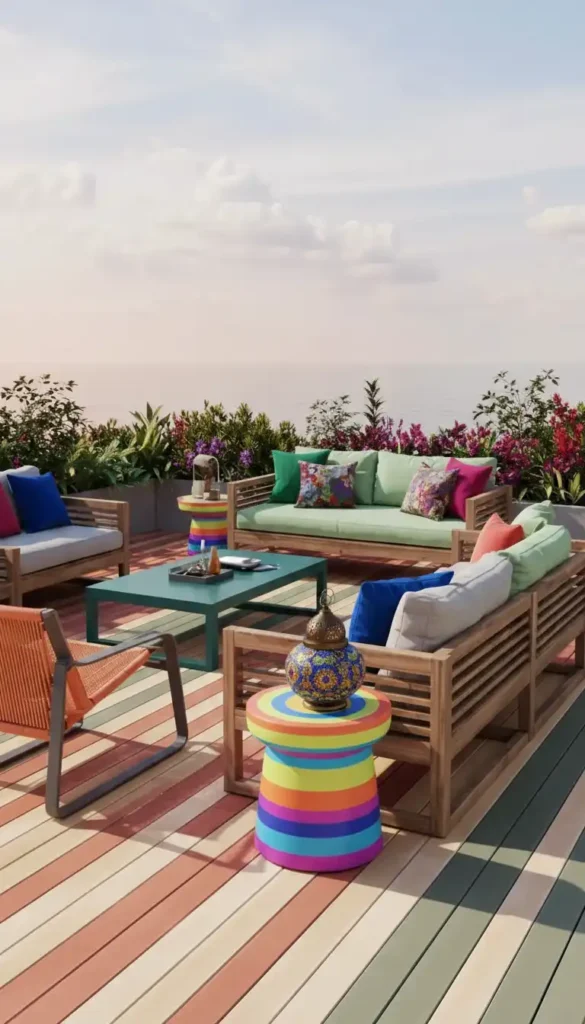
Space Slats For Function And Style
Slat spacing affects both the look and how the sofa performs.
- Keep slats 1-2 inches apart for optimal drainage and air circulation
- Use consistent spacing across the entire frame for a refined look
- Ensure back slats provide enough support behind cushions
- Consider tighter spacing on seating platforms for better cushion support
Proper spacing balances aesthetics with practical performance.
Mix Materials To Avoid Rustic Overload
Wood sofas need contemporary counterpoints to stay modern.
- Pair with a metal coffee table for industrial-modern contrast
- Add concrete side tables that introduce weight and texture
- Use glass accent tables when you want to keep sight lines open
- Choose metal planters rather than all-wood accessories
Material mixing prevents the cabin-in-the-woods look that dates wood furniture.
Ensure Proper Construction Details
How the frame is built determines its longevity and stability.
- Look for mortise-and-tenon joinery rather than simple screws
- Check that slats are securely fastened with marine-grade hardware
- Verify drainage design so water doesn’t pool on horizontal surfaces
- Ensure protective feet elevate the frame off ground contact
Construction quality separates furniture that lasts decades from pieces that fail in years.
Choose Deep, Supportive Cushions
Slatted frames need substantial cushions to provide comfort.
- Select 4-6 inch seat cushions that prevent feeling the slats underneath
- Use tall back cushions since slatted backs offer less support than solid frames
- Choose outdoor foam specifically rated for exterior use
- Cover with tightly woven fabrics in solid colors for a modern look
Cushion quality transforms a simple frame into genuinely comfortable seating.
Style With Minimal Accessories
The slats themselves provide visual interest, so decor should stay simple.
- Add one or two textured pillows for softness without clutter
- Include a single throw in a complementary neutral color
- Keep side table styling bare or with just one small plant
- Let the wood grain and shadow patterns be the primary decoration
Restraint lets the architectural quality of the frame stand out.
Save this slatted frame styling! 📌
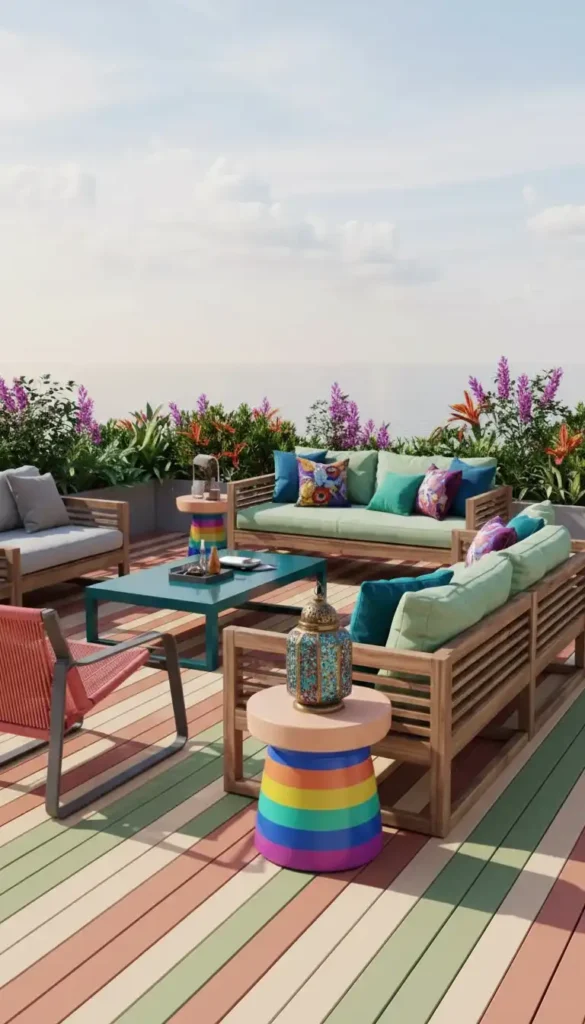
Maintain Wood For Longevity
Regular care keeps wood sofas looking fresh and prevents deterioration.
- Clean with mild soap and water monthly during heavy-use seasons
- Re-oil or re-stain annually to refresh protection and color
- Check and tighten all hardware at the start of each outdoor season
- Cover or store during extreme weather or off-season months
Simple maintenance habits extend the life of wood furniture dramatically.
Match Wood Tones Thoughtfully
Coordinating wood finishes creates cohesion without boring uniformity.
- Keep all wood pieces within the same color family—all warm or all cool tones
- Vary shades slightly rather than matching exactly—light oak with medium walnut works
- Avoid mixing wood with different grain patterns—fine-grain and heavy-grain clash
- Consider one accent piece in a contrasting finish as an intentional design choice
This approach creates harmony while preventing the matched-set look that feels rigid.
Conclusion
Your outdoor space has the potential to become your favorite room—the place where you actually want to spend time rather than just occasionally occupy. The difference between a patio you ignore and one you use daily often comes down to choosing the right sofa and styling it with intention. Whether you’re building from pallets, investing in resort-style deep seating, or creating zoned lounge areas, the principles stay the same: prioritize real comfort, plan thoughtful layouts, and treat the space like it matters.
Start with one approach that resonates with your style and space limitations, then build from there. Maybe it’s finally committing to that DIY pallet build you’ve been considering, or maybe it’s zoning your backyard so it serves multiple purposes instead of trying to be everything at once. Small shifts in how you think about outdoor seating create spaces that pull you outside instead of ones you walk past. Your patio is ready—it just needs the right sofa and your willingness to design it like the room it deserves to be.

“I share simple, beautiful and affordable home decor ideas to help you style every corner of your home with ease.