

Picture this: you step outside with your morning coffee, and instead of a cluttered, forgettable space, your deck welcomes you like a favorite room. It’s not about having the biggest budget or the most square footage—it’s about creating a space that actually works for your life. Whether you’re squeezing seating onto a narrow apartment balcony or reimagining a sprawling backyard platform, 2026’s deck trends are all about intention over excess, comfort over clutter, and designs that flex with your daily rhythms.
The best outdoor spaces don’t just look good in photos—they earn their place in your routine. They’re where you decompress after work, host impromptu dinners, or steal quiet moments before the day begins. This guide breaks down exactly how to design a deck that balances modern aesthetics with real-world function, from smart layouts and budget-friendly upgrades to decor moves that transform the entire vibe. Let’s build something you’ll actually use.
Outdoor Deck Ideas 2026 – For Small Spaces And Apartments
Small decks demand surgical precision in every choice you make. Think of your compact outdoor space as a studio apartment—every piece needs to justify its presence, and multi-functionality isn’t optional.
The goal isn’t to cram everything in; it’s to create breathing room while maintaining purpose.
Treat Your Deck Like a Compact Room
Design your small deck with the same intentionality you’d bring to an indoor space:
- Establish clear circulation paths so movement feels natural, not obstructed
- Choose one strong focal point instead of competing visual elements
- Keep sightlines clean to prevent the space from feeling boxed in
- Use slim profiles for furniture to maximize usable floor area
White or light bases visually expand boundaries, while warm wood tones and soft textiles prevent the space from feeling clinical.
The Power of Furniture That Adapts
Static, bulky pieces kill small spaces faster than anything else:
- Small modular loveseats that reconfigure based on whether you’re solo or hosting
- Armless lounge chairs that tuck together or separate for conversation
- Narrow coffee tables with hidden storage for remotes, books, and outdoor essentials
- Wall-mounted drop-leaf surfaces that fold flat when not in use
I’ve seen 60-square-foot balconies feel spacious simply because every piece could nest, fold, or tuck away.
Vertical Thinking Changes Everything
When floor space is limited, build upward:
- Wall-mounted herb racks that add greenery without consuming precious square footage
- Tall planters that create privacy screens while maintaining light flow
- Vertical storage solutions for cushions, tools, and seasonal items
- One statement tree or tall plant that anchors the space with height
This approach transforms a narrow balcony from afterthought to destination.
The Capsule Wardrobe Philosophy
Treat your deck like a curated collection—fewer items, better fit, repeatable combinations:
- Select armless silhouettes and slim legs for a modern, uncluttered look
- Choose one statement planter instead of scattered small accessories
- Keep lighting minimal but effective (single lantern groups work beautifully)
- Repeat one consistent material story, like light wood plus matte black accents
This restraint makes the space feel intentional and photo-ready without constant fussing.
📌 Pin this small-space furniture strategy! 📌
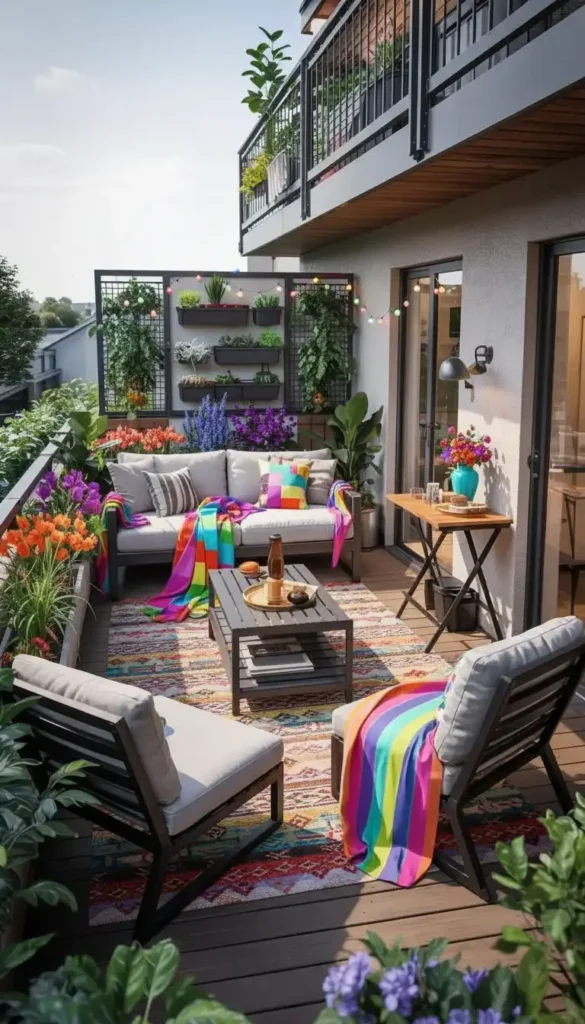
Define Zones Without Consuming Space
Subtle boundaries work better than hard dividers in compact areas:
- Outdoor rugs to define seating zones and reduce visual noise from deck boards
- Slatted screens that provide privacy while preserving light and airflow
- Tall planters positioned strategically to create implied walls
- Color blocking with cushions to distinguish lounge from dining areas
For long, narrow decks, place seating on one side and maintain a clear walkway on the other.
The Missing Element: Daily Landing Zones
Most small decks lack a dedicated spot for everyday habits:
- Slim storage benches that hide cushions, candles, and small tools
- Weatherproof cabinets for items that need protection but frequent access
- Compact prep shelves that fold down near grills and protect railings from heat
- Consistent hardware and finishes that make the space read larger and more cohesive
These practical touches separate functional decks from decorative ones.
Smart Solutions for Enclosed Balconies
Enclosed balcony decks can still feel open with the right approach:
- Avoid heavy, tall furniture that blocks sightlines
- Use transparent or semi-transparent materials for screens and dividers
- Layer lighting at different heights to create depth
- Choose furniture with exposed legs to maintain visual flow
The difference between cramped and cozy often comes down to these subtle decisions.
📌 Save this apartment deck layout guide! 📌
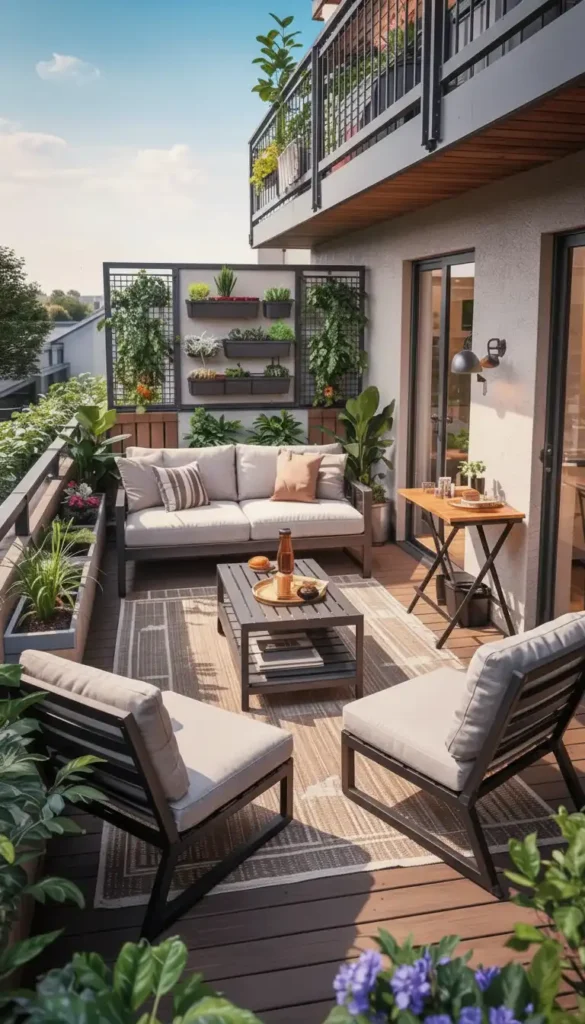
Outdoor Deck Ideas 2026 – Layout Planning That Fits Your Lifestyle
Layout planning starts with brutal honesty about how you actually spend time outside. Not how you imagine spending time—how you actually do.
A great layout accommodates quick coffee stops, weekend lounging, and dinner parties without requiring furniture Tetris between uses.
The Flexible Zone Framework
Design your deck as a series of adaptable zones rather than one rigid setup:
- Quick coffee spot with a small bistro table near the door
- Lounge area with comfortable seating and side tables
- Dining or activity surface that can host meals or serve as a workspace
- Clear circulation path that never gets blocked, even when fully furnished
Even smaller decks can incorporate these zones when furniture serves multiple purposes.
Measure Circulation First, Furniture Second
The biggest layout mistake is planning furniture placement before establishing movement:
- Mark your primary walking path with painter’s tape before buying anything
- Ensure at least 30-36 inches of clearance for comfortable passage
- Identify where people naturally enter, pause, and exit
- Build furniture arrangements around these patterns, not against them
This sequence prevents that “constantly shuffling chairs” frustration.
Create Seamless Indoor-to-Outdoor Transitions
Your deck should feel like an extension of your home, not a separate entity:
- Repeat interior colors or textures in outdoor fabrics and finishes
- Align furniture heights with indoor seating for visual continuity
- Use similar lighting temperatures to maintain mood consistency
- Consider sightlines from inside to make the deck inviting even when you’re indoors
This integration makes the deck feel larger and more essential to your home.
Respect Environmental Factors
The most beautiful layout fails if it ignores sun, wind, and noise:
- Position primary seating in protected areas, away from harsh afternoon sun
- Use tall planters or screens to block wind without creating dead air
- Angle seating away from noisy streets or neighbor windows
- Consider seasonal sun paths when placing lounging zones
Comfort trumps aesthetics when it comes to spaces you’ll actually use.
📌 Pin this layout planning method! 📌
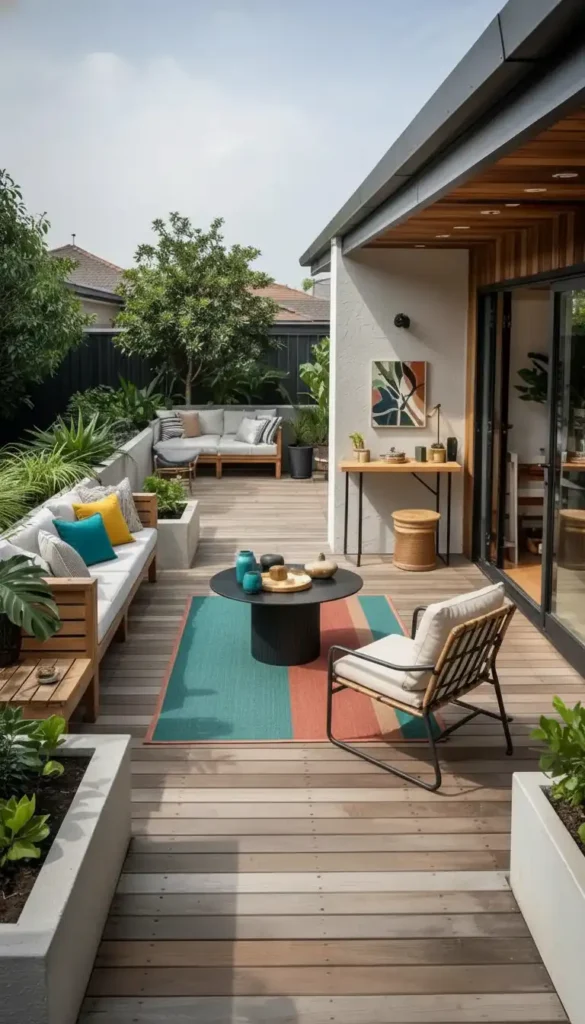
Define Zones With Subtle Boundaries
Hard dividers make small spaces feel even smaller:
- Rugs to mark lounge zones without physical barriers
- Planter groupings that frame dining corners naturally
- Slim consoles that create bar areas without consuming floor space
- Level changes on multi-tier decks, with each level serving a distinct purpose
These soft boundaries guide use without restricting flexibility.
Plan for Both Quiet Hours and Lively Evenings
The best decks handle solitude and socializing equally well:
- Designate one primary zone with the best view and comfort
- Keep secondary zones lighter and more adaptable
- Integrate storage into the layout so cushions and decor have homes
- Choose furniture that works for one person or six without major rearranging
This versatility means you’ll actually use the space daily, not just for special occasions.
The Utility Strip That Changes Everything
Reserve one narrow edge for the practical elements most layouts ignore:
- Planter line that adds greenery without blocking prime seating
- Storage bench for cushions, gardening tools, and outdoor games
- Slim shelving for frequently used items like citronella candles or speakers
- Serving surface near the door to prevent traffic jams during gatherings
This dedicated utility zone keeps the rest of the deck clean and purposeful.
Map Power and Lighting Early
Relying on extension cords ruins even well-planned decks:
- Identify power needs before finalizing furniture placement
- Consider where you’ll want string lights, speakers, or phone charging
- Plan for both ambient and task lighting in key zones
- Install weatherproof outlets during initial planning, not as an afterthought
These infrastructure decisions are much harder to retrofit than to build in from the start.
📌 Save this lifestyle-based layout approach! 📌
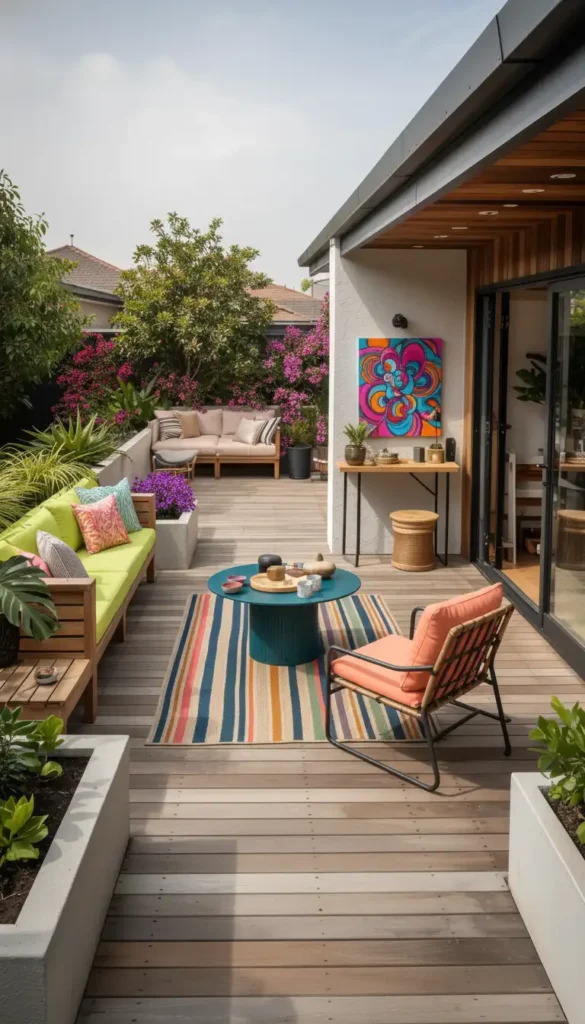
Outdoor Deck Ideas 2026 – On A Budget With Big Visual Impact
Budget-conscious decks can look deeply intentional when you focus spending on high-impact areas and skip low-value additions.
The secret isn’t spending more—it’s spending strategically on the elements that transform the entire mood.
Start With the Envelope, Not the Contents
Before buying furniture, refresh the structure itself:
- Clean and stain or paint railings to create a fresh backdrop
- Power-wash deck boards to remove years of grime and discoloration
- Repair or replace damaged sections before decorating over problems
- Update hardware like rail brackets and post caps for instant modernization
A refreshed envelope makes even budget furniture look more expensive.
The Simple Base, Strategic Upgrade Model
Commit to a limited palette and invest in one or two standout pieces:
- Choose a neutral base (warm grays, tans, or whites)
- Spend on one quality seating piece that gets heavy use
- Add one statement element like a bold rug or unique planter
- Fill gaps with budget-friendly items in coordinating tones
This approach reads as cohesive rather than “gradually accumulated over time.”
DIY Wins That Deliver Professional Results
Built-ins and custom elements don’t require contractor budgets:
- Standard lumber benches with outdoor cushions cost a fraction of store-bought seating
- Low platform steps that double as perimeter seating and define zones
- Simple slatted privacy screens from 1x2s or 1x4s create visual interest
- Painted or stained vertical planters from reclaimed wood add character
These projects take weekends, not months, and instantly elevate the space.
📌 Pin this budget transformation strategy! 📌
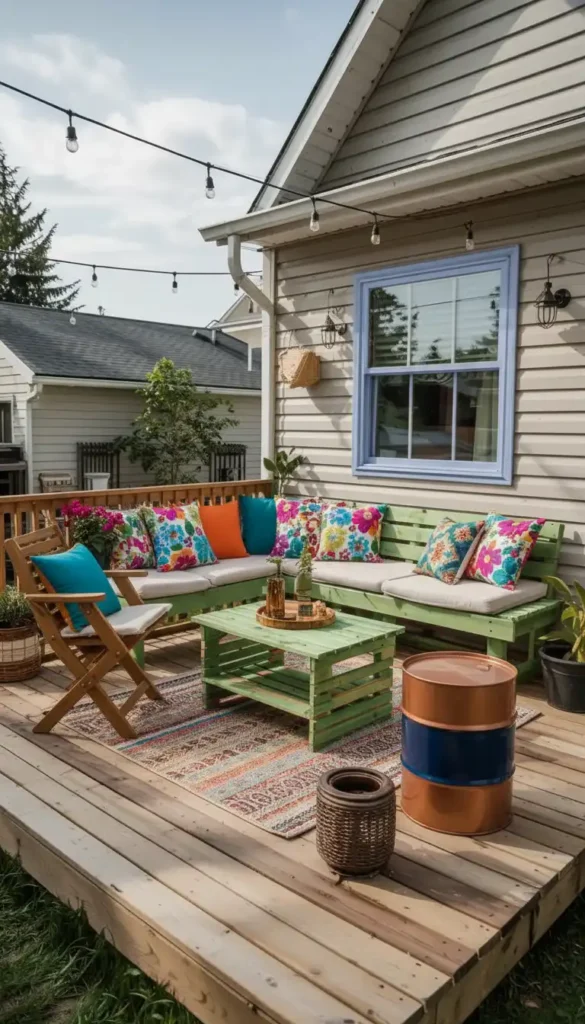
Textile Strategy for Maximum Impact
Outdoor cushions and pillows transform spaces faster and cheaper than furniture:
- Invest in durable solid-color cushions in your base tone
- Add one or two patterned throw pillows for visual interest
- Choose washable, fade-resistant fabrics to protect your investment
- Layer a textured throw blanket for both warmth and style
Swapping textiles seasonally keeps the deck feeling fresh without major spending.
Lighting That Looks Expensive But Isn’t
Strategic lighting changes ambiance dramatically for minimal cost:
- String lights grouped intentionally rather than scattered randomly
- Solar lanterns in varied heights create layered illumination
- Battery-operated candles in glass hurricanes for wind protection
- One quality outdoor lamp that anchors a corner
Avoid the temptation to over-light—concentrated pools of light feel more upscale.
Furniture Selection for RV and Portable Setups
If your deck life is mobile or seasonal:
- Choose foldable chairs that stack flat and store easily
- Select compact outdoor rugs that roll for transport
- Use stackable storage cubes that nest when not in use
- Invest in weatherproof covers to protect items between seasons
Portability and durability become primary selection criteria in these situations.
Make Every Item Earn Its Footprint
Budget decks succeed through ruthless editing:
- Prioritize fewer, higher-comfort pieces over quantity
- Upgrade cushion quality rather than adding more furniture
- Keep forms clean and simple for a modern read
- Repurpose protected indoor pieces (metal trays, small tables) thoughtfully
This discipline prevents the “garage sale” aesthetic that plagues many budget spaces.
📌 Save this high-impact, low-cost upgrade plan! 📌
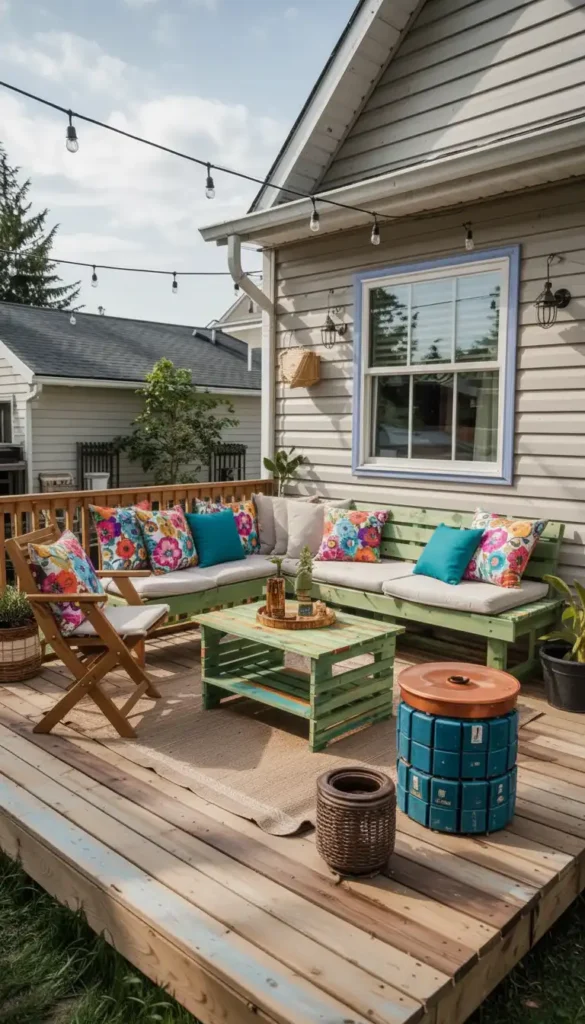
The Anchor Plus Softening Layer Formula
Unfinished budget decks typically lack either grounding or warmth:
For grounding, add one of these:
- Statement planter with a dramatic plant
- Compact fire bowl or table (if allowed)
- Bold outdoor rug that defines the primary zone
For softening, incorporate:
- Woven textures in cushions or baskets
- Natural wood elements
- Layered textiles in coordinating tones
This combination prevents budget spaces from feeling either bare or cluttered.
The Cohesion Factor
Repeating one finish or material throughout creates perceived luxury:
- Matte black hardware and plant stands
- Light wood accents across furniture and planters
- Brushed metal in lighting and accessories
- Coordinated textile colors across all soft goods
This visual consistency matters more than individual item price tags.
Outdoor Deck Ideas 2026 – Decor Refresh With Color And Texture
Texture carries weight in outdoor spaces, especially in bright daylight where subtle details often disappear.
Layering contrasting materials creates visual richness that reads as intentional and high-end, even with modest budgets.
The Material Contrast Approach
Combine textures that naturally complement while providing visual interest:
- Smooth metal (planters, lighting fixtures, hardware)
- Natural wood (furniture, accents, decking itself)
- Soft woven fabrics (cushions, throws, rugs)
- Ceramic or concrete (planters, side tables, decorative objects)
This mix prevents the flat, one-note feeling that kills outdoor aesthetics.
The Three-Color Rule for Deck Decor
Controlled color palettes feel more sophisticated than rainbow assortments:
- One main neutral (white, tan, gray, charcoal)
- One warm accent (terracotta, rust, warm wood tones, brass)
- One green layer through varied plants
This framework keeps the deck modern while feeling cozy and lived-in.
White Base Decks Need Extra Texture
All-white outdoor spaces risk feeling sterile without dimensional elements:
- Layer multiple fabric weights (outdoor canvas, woven throws, patterned pillows)
- Incorporate wood grain through furniture, planters, or accent pieces
- Add ceramics with interesting glazes or concrete with visible aggregate
- Include plants with varied leaf shapes and sizes
Texture prevents white from reading as flat or institutional.
📌 Pin this texture layering technique! 📌
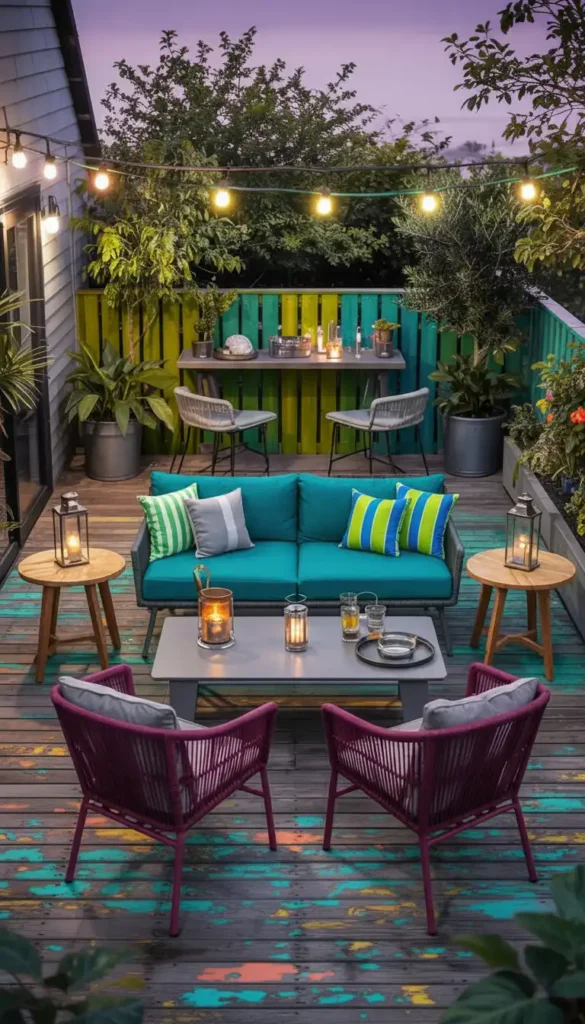
Start With the Rug, Build From There
Ground the space before adding loose elements:
- Select an outdoor rug that defines your primary zone
- Choose cushions that complement the rug without exact matching
- Add pillows in coordinating patterns or textures
- Layer throws that can be stored when weather shifts
This sequence creates intentional cohesion rather than accidental coordination.
Boho Direction Without Visual Chaos
Bohemian style works outdoors when balanced with restraint:
- Keep furniture silhouettes simple (clean lines, minimal ornamentation)
- Add pattern through textiles (pillows, throws, small rugs)
- Incorporate natural materials (woven lanterns, rattan tables, jute rugs)
- Limit pattern to 2-3 pieces to prevent overwhelming the space
The key is letting texture do the heavy lifting while forms stay clean.
Functional Decor That Serves Real Purposes
The most successful outdoor decor supports actual use:
- Trays for drinks that corral items and protect surfaces
- Small bins for matches, candles, or lighter fluid
- Lidded baskets for quick tidy-ups before guests arrive
- Weatherproof storage boxes that double as side tables
These pieces earn their presence by being both beautiful and useful.
Plant Groupings That Create Rhythm
Strategic plant placement matters more than plant quantity:
- Group plants in odd numbers (3, 5, 7) for natural visual flow
- Vary heights dramatically (tall focal plants, medium fillers, trailing accents)
- Use repeated plant types in different sizes for cohesion
- Choose pots in complementary materials rather than identical matches
This creates the designed-but-natural look that characterizes great outdoor spaces.
📌 Save this decor refresh framework! 📌
Textile Swaps for Instant Mood Shifts
Changing textiles refreshes spaces faster than any other intervention:
- Swap cushion covers seasonally (light colors for summer, richer tones for fall)
- Rotate throw pillows between indoor and outdoor spaces
- Update outdoor rugs when the old one fades or wears
- Layer blankets in cooler months for both function and warmth
This approach keeps the deck feeling current without replacing furniture.
The Vertical Element Principle
Height creates the perception of intentional design:
- Slim trellis for climbing plants or vertical interest
- Tall planters that draw the eye upward
- Wall-mounted shelves for small plants or decorative objects
- Hanging planters that utilize overhead space
Flat, horizontal-only decks feel unfinished compared to spaces with varied elevation.
Warm Light Sources Transform Ambiance
Strategic lighting shifts the entire deck personality after dark:
- Use lanterns or string lights that frame seating zones
- Avoid flooding the entire deck with even, bright light
- Choose warm-temperature bulbs (2700K-3000K) for inviting atmosphere
- Layer light sources at different heights for depth
This creates the “I could stay here all evening” feeling that cold, bright lighting destroys.
The Rail and Trim Color Check
Mismatched finishes quietly undermine otherwise strong decor:
- Ensure rail color complements or matches trim
- Update dated rail caps and post finials
- Paint or stain spindles to coordinate with the overall palette
- Consider whether hardware (screws, brackets) should be concealed or highlighted
These background elements need harmony for foreground decor to shine.
Outdoor Deck Ideas 2026 – Decor Seating Areas For Entertaining
Entertaining zones succeed when they feel intentionally designed for gathering, not just “a place with chairs.”
The goal is creating spaces where guests naturally settle in and feel like the deck was made for them.
The Restaurant-Inspired Hospitality Framework
Borrow from commercial design that’s proven to keep people comfortable:
- Layered lighting (overhead ambiance plus tabletop task lighting)
- Generous seating depth (at least 24 inches for true comfort)
- Multiple surface heights (dining, coffee, side tables all present)
- Clear service zones (defined areas for food prep, serving, and clearing)
This professional approach elevates home entertaining to memorable experiences.
Build Around Conversation Groupings
Arrange seating to encourage interaction, not passive coexistence:
- Face seating pieces toward each other rather than all outward
- Keep conversation distances intimate (6-8 feet maximum between facing seats)
- Include both perimeter and interior seating for group flexibility
- Ensure everyone has table access within arm’s reach
These spatial relationships determine whether gatherings feel connected or fragmented.
📌 Pin this entertaining layout formula! 📌
The Two-Gathering Approach
Design for both casual drinks and full meals without rearranging:
- Primary zone: Dining table with 4-6 chairs for seated meals
- Secondary zone: Lounge seating with coffee table for appetizers and conversation
- Flexible elements: Stools or ottomans that move between zones as needed
This dual setup means you’re always prepared, regardless of gathering style.
Side Table Strategy That Actually Works
Insufficient surface area kills otherwise great seating arrangements:
- Provide at least one side table per two seats for cups and plates
- Include one larger coffee or dining table as a central gathering point
- Add narrow console or bar cart near the door for serving and staging
- Ensure tables are stable and won’t tip when bumped
People need places to set things down—it’s not negotiable for successful entertaining.
Corner Sectionals for Tight Spaces
When space is limited but you still want to host:
- Corner sectionals maximize seating in minimal footprint
- Add one slim coffee table and extra tuck-away stool
- Include throw pillows that can be removed for full seating capacity
- Position sectional to face the best view or focal point
This configuration seats 4-6 people comfortably in spaces that might otherwise fit two chairs.
Ambiance Elements That Transform Evenings
The details that make guests say “this is amazing”:
- String lights overhead that create ceiling definition without enclosing
- Tabletop lanterns or candles for intimate, flattering light
- Small bar cart or console for self-service drinks
- Background music from thoughtfully placed outdoor speakers
These touches shift the deck from “nice outdoor space” to “I want to stay here forever.”
The Calm Palette Strategy
Let people, food, and candlelight become the highlights:
- Choose neutral base colors (grays, tans, whites, blacks)
- Add warmth through wood tones and metal finishes
- Use pops of color sparingly in pillows or planters
- Avoid busy patterns that compete with the gathering itself
This restraint creates sophisticated backdrops that make everything else shine.
📌 Save this hosting deck design guide! 📌
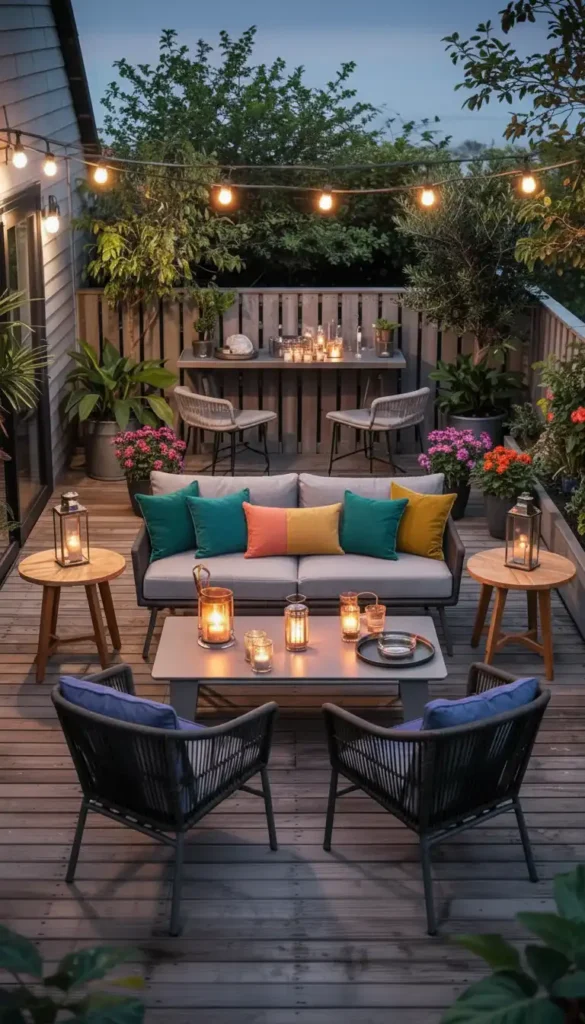
Comfort Trumps Everything
Entertaining layouts fail when seating is uncomfortable:
- Seat depth matters: 22-26 inches for proper support
- Cushion quality: High-density foam holds up better and feels more substantial
- Table height: 16-18 inches for coffee tables, 28-30 inches for dining
- Back support: Even lounge chairs benefit from supportive angles
Guests won’t stay if they’re physically uncomfortable, regardless of ambiance.
The Dedicated Serving Moment
Reduce indoor trips and keep flow smooth:
- Narrow console near the door for staging food and collecting empties
- Small prep shelf for plating or mixing drinks
- Compact cooler station that keeps beverages cold without indoor access
- Trash and recycling discreetly placed but easily accessible
These functional elements separate hosts who disappear constantly from those who enjoy their own parties.
Wind Protection for Extended Comfort
Comfort keeps people outside longer:
- Strategic screens or tall plants that block wind without creating walls
- Partial pergolas that provide overhead definition and slight protection
- Thoughtful furniture placement that uses the house or planters as windbreaks
- Weighted cushions or ties to prevent constant readjustment
Small comfort improvements have outsized impact on gathering duration.
Sound Considerations That Matter
Audio can make or break the atmosphere:
- Place outdoor speakers to create even coverage without blasting
- Choose adjustable volume options that accommodate conversation
- Consider neighbor proximity when planning evening gatherings
- Use directional speakers when possible to contain sound
Good sound design is invisible—guests just notice the vibe feels right.
Conclusion
Your deck doesn’t need to be large, expensive, or complicated to become the space you actually want to spend time in. It needs to be yours—designed around your real habits, your actual budget, and your specific constraints. Whether you’re working with a compact apartment balcony or a sprawling backyard platform, the same principles apply: intentional layout, strategic spending, thoughtful material choices, and details that support genuine use.
The best outdoor spaces aren’t the ones that look perfect in staged photos—they’re the ones that become part of your daily rhythm. Start with one zone, one smart upgrade, or one decor refresh, and build from there. The deck that welcomes you every morning and evening is always worth the effort.

“I share simple, beautiful and affordable home decor ideas to help you style every corner of your home with ease.