
You’ve been staring at your back patio for months, maybe years, knowing it could be so much more. The concrete looks tired, the furniture feels mismatched, and every time you step outside, you feel that gap between what it is and what it could be. The worst part? You assume creating a beautiful outdoor space requires thousands of dollars you don’t have, so the patio sits there, underused and uninspiring, while summer after summer slips by.
Here’s the truth: a stunning patio isn’t about how much you spend—it’s about smart choices, strategic upgrades, and understanding which changes deliver the biggest visual impact. This guide walks you through five proven approaches for 2026 that work whether you’re dealing with cracked concrete, a tiny apartment balcony, or a sprawling backyard that needs structure. You’ll discover exactly where to invest your limited budget, which DIY projects you can finish in a weekend, and how to create that expensive, custom look without the custom price tag.
Budget-Friendly Back Patio Ideas That Look High-End
Creating a high-end look on a budget is entirely about structure, repetition, and smart material choices—not expensive furniture. When you treat your patio like an outdoor room with intentional zones and cohesive design, even affordable pieces read as sophisticated and carefully curated.
The Outdoor Room Framework
The secret to expensive-looking patios is treating them like interior spaces with clear purpose.
- Define distinct zones: seating area, walking path, and one focal point
- Use furniture placement to create “walls” even in open spaces
- Add an outdoor rug to anchor the seating zone like you would indoors
- This structure works for any size, from tiny balconies to sprawling yards
A clear room layout immediately signals intentional design rather than random furniture placement.
Strategic Furniture Selection
Choose fewer, better-proportioned pieces rather than filling every corner.
Core furniture set:
- One compact sectional or two deep lounge chairs
- Low-profile coffee table for drinks and books
- Pair of matching side tables for finished look
- Everything scaled appropriately for your actual square footage
Proper scale matters more than brand names—oversized furniture in small spaces or tiny pieces in large areas both look wrong.
The Material Mixing Formula
Combine one warm and one cool material for balanced, modern appeal.
- Warm elements: Wood-look resin, teak accents, natural fiber
- Cool elements: Black aluminum, concrete, metal frames
- Limit yourself to these two material families throughout
- This restraint prevents the “collected over time” look that reads as budget
Pin this material mixing strategy! 📌
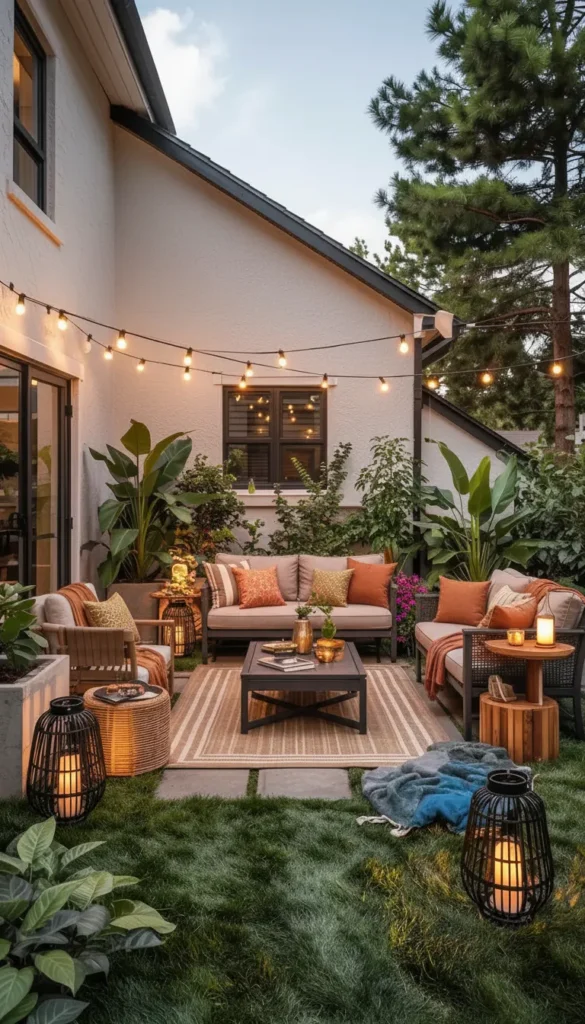
Vertical Elements for Privacy and Height
Tall planters create instant structure without permanent construction.
- Position large planters (24+ inches tall) to define space boundaries
- Use them to block unwanted views or create privacy
- Choose matching planters for cohesion rather than variety
- Perfect for apartment patios where you can’t build permanent structures
Height variation makes flat spaces feel more dimensional and designed.
Layered Lighting System
Multiple light sources at different heights create luxury ambiance affordably.
Three-layer approach:
- Wall sconces under eaves or on house exterior
- String lights in straight, architectural lines (not sagging curves)
- Portable lanterns or table lamps near seating
Good lighting extends patio usability into evening hours and photographs beautifully.
Restrained Color Palette
High-end spaces use repetition, not variety, in their color schemes.
- Choose one accent color and repeat it everywhere
- Echo this color in pillows, planters, and throws
- Keep base furniture neutral (black, white, gray, natural wood)
- Add your accent color in easily changeable pieces
A tight palette looks curated and intentional, disguising the fact that pieces came from different budget sources.
Comfort as Luxury
The most expensive-looking patios prioritize genuine comfort over visual flair.
- Invest in quality cushions with proper depth (5-6 inches minimum)
- Ensure adequate shade through umbrella, pergola, or strategic positioning
- Provide convenient surfaces for setting down drinks and phones
- Comfortable spaces get used regularly, which is the real measure of success
Save this comfort-first approach! 📌
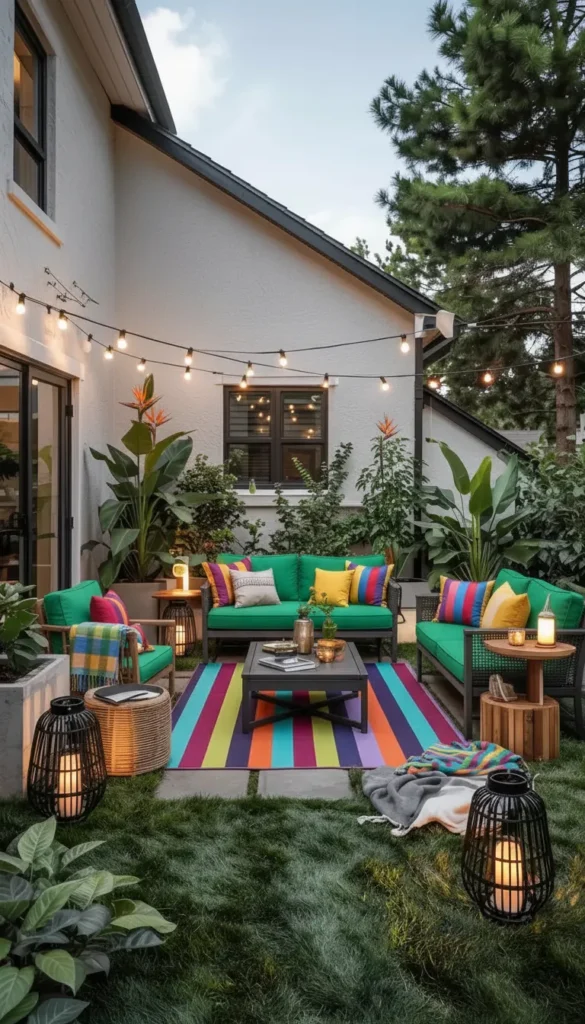
Finishing Details That Elevate Everything
Small, consistent details separate budget from high-end appearance.
- Use matte black hardware throughout for modern cohesion
- Choose textured outdoor fabrics that look substantial
- Install warm white (2700K-3000K) lighting, never harsh cool white
- Select wind-stable decor like heavy planters and weighted lanterns
These details cost little extra but significantly impact the overall impression.
Minimal, Purposeful Decor
Resist the urge to fill every surface—luxury spaces breathe.
- Choose 3-5 carefully selected decorative pieces maximum
- Repeat shapes (all round planters, all rectangular frames)
- Leave empty space on tables and surfaces
- Edit ruthlessly: if it doesn’t serve function or beauty, remove it
Calm, uncluttered spaces always read as more expensive than busy, crowded ones.
Cheap Back Patio Ideas With Big Style
When working with a tight budget, focus on creating one dramatic backdrop or focal wall rather than spreading resources thin across multiple small purchases. This concentrated approach delivers more visual impact per dollar spent and makes everything else look more intentional by association.
The Backdrop Strategy
One strong visual element transforms the entire patio perception.
Backdrop options:
- Paint one fence section a bold, modern color (charcoal, sage, terracotta)
- Install simple vertical slat wall for architectural interest
- Create DIY privacy screen using lattice and stain
- Use large-scale outdoor art or metal wall sculpture
A dramatic backdrop costs $100-300 but provides the visual anchor that makes $50 chairs look like part of a plan.
Flexible, Modular Seating
Choose furniture that adapts to different uses and group sizes.
- Stackable chairs that store easily when not needed
- Bench with cushions that seats 2-3 people
- Modular loveseat pieces that rearrange for different occasions
- Folding bistro sets for small spaces
Flexibility means you’re not locked into one configuration, and pieces that stack or fold keep the space from feeling cluttered.
The Living Room Translation
Replicate indoor comfort with affordable outdoor equivalents.
Essential elements:
- Outdoor rug defining the seating zone (8×10 for medium spaces)
- Coffee table at proper height for setting drinks (16-18 inches)
- Arrangement that allows face-to-face conversation
- Lighting that creates evening ambiance
When a patio feels like a living room, people naturally spend more time there.
Pin this living room formula! 📌
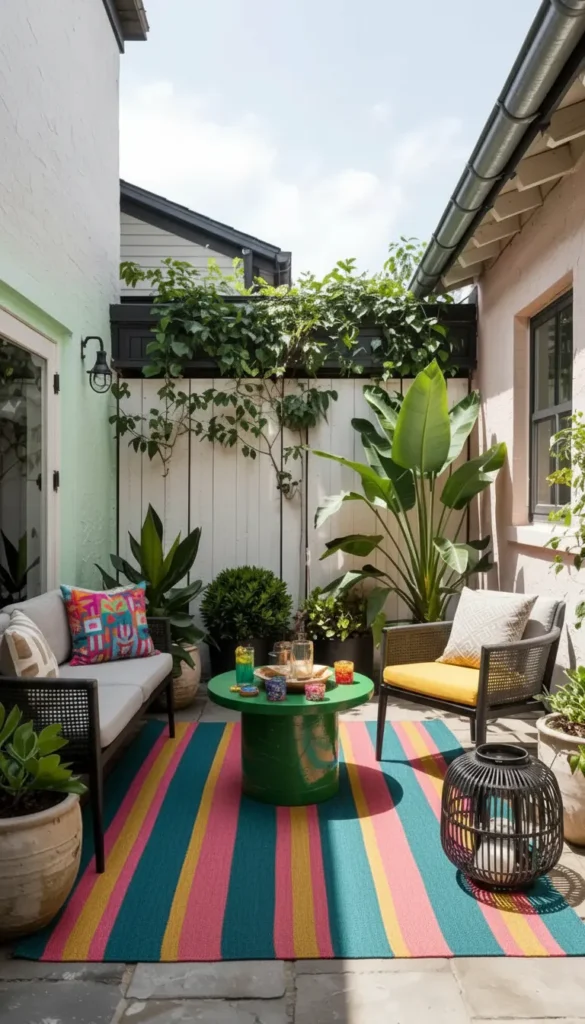
Designer-Look Items at Discount Prices
Certain categories look expensive regardless of where you buy them.
- Oversized planters (24+ inches) in solid colors
- Sculptural lanterns with clean lines
- Single outdoor art panel or metal wall piece
- Modern fire bowl or tabletop fire feature
These statement pieces elevate everything around them, making budget furniture look more expensive through proximity.
Shade Solutions That Mimic Covered Patios
Create overhead protection without building permanent structures.
- Cantilever umbrella for flexible shade positioning
- Simple tension canopy between posts or house anchors
- Outdoor curtain panels on cable wire system
- Bamboo or fabric pergola cover
Shade makes spaces usable during hot hours and adds the cozy, protected feeling of covered porches.
Repetition Creates Cohesion
The cheapest way to look expensive is repeating the same elements.
- Use identical planters in 3, 5, or 7 matching units
- Repeat your accent color in every seating area
- Choose one planter style and buy multiples in different sizes
- Match metal finishes across all furniture and accessories
Repetition signals intentional design rather than collected-over-time randomness.
The Two-Material Rule
Limit yourself to two primary materials for sophisticated restraint.
Successful combinations:
- Natural wood + matte black metal
- Concrete + warm wood tones
- White/cream + natural rattan
- Gray stone + bronze/copper accents
More than three materials starts looking busy and collected rather than curated.
Save this material limitation rule! 📌
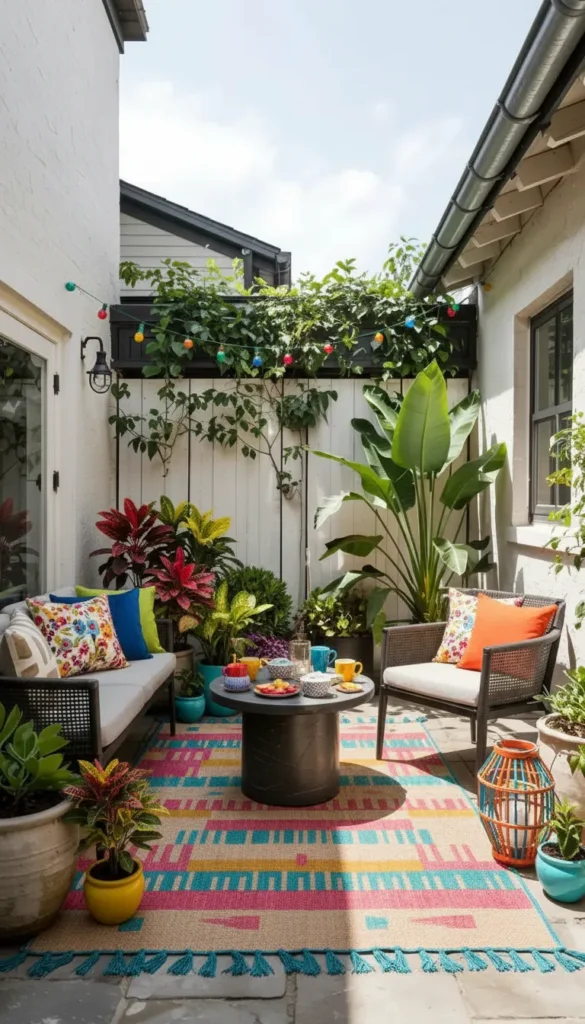
The Statement Piece Strategy
One distinctive item can elevate an entire budget setup.
- Modern bistro set in unexpected color
- Slim propane fire column as focal point
- Hanging chair or swing for visual interest
- Oversized outdoor floor cushions for flexible seating
This piece becomes your “talking point” and distracts from budget choices elsewhere.
Vertical Space Utilization
When floor space is limited, build up instead of out.
- Wall-mounted planters in tiered arrangement
- Floating shelves for small plants and lanterns
- Hanging baskets at staggered heights
- Vertical garden panels for living walls
Vertical elements add dimension without consuming precious square footage.
Storage Keeps Things Tidy
Hidden storage prevents clutter that ruins even good design.
- Bench with lift-top storage compartment
- Deck box disguised as extra seating
- Wall-mounted hooks for small tools and accessories
- Waterproof bins for cushions when not in use
Tidy spaces always photograph better and feel more expensive than cluttered ones.
Back Patio Ideas On A Budget That Feel Custom
Custom-feeling patios use continuous lines, built-in elements, and intentional zoning to create that “designed as a whole” impression. The secret is using modular, affordable pieces arranged with architectural precision to mimic high-end landscape design.
The Continuous Line Principle
One strong, uninterrupted line creates instant sophistication.
Options for your line:
- Straight paver edge running the patio length
- Continuous bench along one full side
- Long planter row defining a boundary
- Level change or step spanning the entire width
This continuous element ties everything together visually and provides the “backbone” for custom appearance.
Strategic Zoning for Large Patios
Divide extended spaces into distinct purpose areas.
- Dining zone: Table and chairs under cover or shade
- Lounge zone: Comfortable seating for conversation
- Transition zone: Path or material change connecting the two
- Focal zone: Fire feature, water element, or garden bed
Clear zoning prevents large patios from feeling empty or random.
The Built-In Look from Modular Pieces
Create permanent-feeling elements using movable components.
- Low bench with storage underneath mimics built-in seating
- Matching planter series creates “planted wall” effect
- Sectional arranged in L-shape against walls looks custom
- Outdoor kitchen cart positioned permanently feels built-in
Pin this modular built-in strategy! 📌
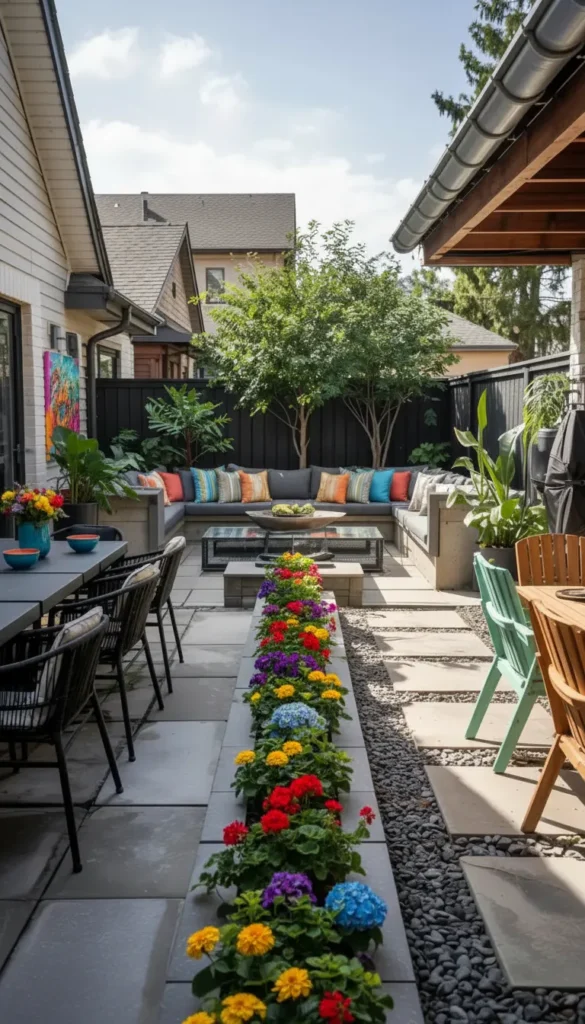
Half-Covered Space Planning
Maximize covered and open areas with complementary functions.
- Place dining under roof for weather protection
- Position lounge seating in open sunny area
- Connect zones with matching planters or lighting
- Use same flooring material throughout for unity
This approach works perfectly for patios with partial pergola or roof coverage.
The Transition Strip
Connect different zones with intentional material changes.
Effective transitions:
- Narrow gravel band between paver sections
- Stepping stone path from one area to another
- Wooden plank strip separating grass from patio
- Low deck separating levels or materials
Transitions feel architectural and planned rather than accidental.
Signature Focal Elements
One unique feature makes the space memorable and custom.
- Vertical garden panel on prominent wall
- Compact fountain with modern basin
- Fire feature positioned for viewing from multiple angles
- Sculptural tree or specimen plant in oversized planter
This signature piece gives your patio personality and differentiation.
Poolside Patio Considerations
Design for actual pool use patterns and maintenance.
- Choose quick-dry outdoor fabrics and mesh seating
- Install slim towel storage cabinet or hooks
- Use slip-resistant flooring materials
- Position seating back from splash zone
Custom means designed for your specific lifestyle, not generic arrangements.
Save this poolside planning guide! 📌
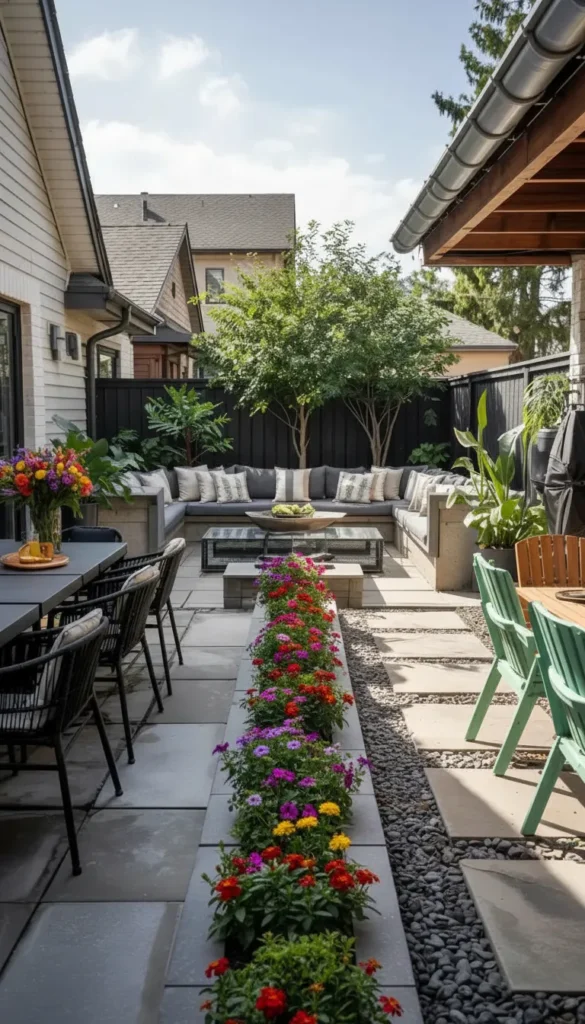
Consistent Finish Strategy
Unity comes from repeating one finish across all elements.
Choose one unifying finish:
- Matte black for modern, dramatic look
- Warm wood tone for organic, natural feel
- White/cream for coastal, airy appearance
- Concrete gray for industrial, minimalist style
Apply this finish to furniture frames, planters, lighting fixtures, and accessories.
Dedicated Zone Lighting
Each functional area needs its own light source.
- Pendant or chandelier over dining table
- Low path lights defining walkways
- Uplights highlighting focal plants or walls
- Table lamps or lanterns in lounge areas
Layered, zone-specific lighting is how professional designers create atmosphere.
Alignment and Edge Precision
Custom appearance depends on crisp edges and intentional alignment.
- Line up furniture edges with patio borders
- Align planters with architectural features
- Create parallel lines rather than random angles
- Maintain consistent spacing between elements
These subtle alignments signal professional design even when using budget materials.
Back Patio Ideas On A Budget DIY You Can Finish In A Weekend
Weekend DIY projects deliver immediate transformation without ongoing time commitment. The best projects combine visual impact with functional improvement, changing how the space looks while making it more comfortable and usable for daily life.
The Weekend Priority List
Focus on changes that deliver maximum impact in 48 hours.
Top weekend transformations:
- Paint fence, wall, or concrete surface
- Install string or café lighting
- Lay outdoor rug or snap-together deck tiles
- Refresh existing furniture with new cushions
These projects require minimal skill but create dramatic before-and-after results.
Fence and Wall Painting
A fresh paint job transforms the entire patio backdrop.
- Choose modern neutrals: charcoal, warm gray, sage green, soft black
- Use exterior-grade paint rated for your material (wood vs metal vs masonry)
- Work in sections: prime if needed, two coats, proper dry time
- Complete one full wall or fence section for clean edges
A painted backdrop makes everything in front of it look more intentional and current.
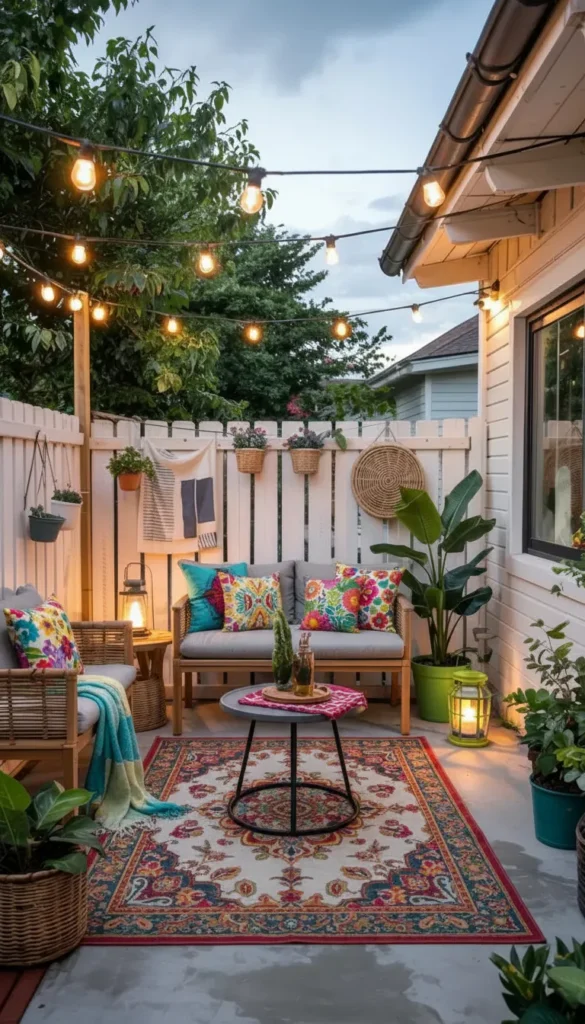
Lighting Installation That Requires No Electrician
String lights create ambiance without rewiring.
- Hang in straight, architectural lines rather than loose swoops
- Use outdoor-rated extension cords and weatherproof connections
- Install hooks or eye bolts for permanent mounting points
- Choose warm white (2700K) Edison-style bulbs for best ambiance
Pin this weekend lighting guide! 📌
Quick Floor Upgrades
Transform tired surfaces with minimal demo or construction.
Fast flooring options:
- Snap-together deck tiles over existing concrete
- Outdoor paint system designed for concrete floors
- Large outdoor rug (9×12) defining the main seating zone
- Interlocking rubber pavers for cushioned surface
New flooring redefines the entire space and provides clean base for furniture arrangement.
Deck and Porch Refresh
Update existing wood surfaces without full replacement.
- Power wash thoroughly before any treatment
- Apply deck stain in updated color (gray tones feel modern)
- Install rail lighting for evening definition
- Replace worn boards only where necessary
A refreshed deck looks new for a fraction of replacement cost.
Concrete Transformation Options
Make old concrete look intentional rather than neglected.
- Concrete stain in earth tones creates mottled, natural finish
- Outdoor floor paint in solid color for clean, modern look
- Add matte sealer to protect and reduce maintenance
- Frame edges with large planters to soften hard lines
Treated concrete can look industrial-chic rather than cheap or unfinished.
Simple Bench Construction
Build basic seating that adds character and function.
Basic bench specs:
- 2×4 or 2×6 lumber construction (pressure-treated or cedar)
- 16-18 inch seat height for comfortable sitting
- 48-60 inch length seats 2-3 people
- Add outdoor cushion for comfort and color
A simple bench costs $40-60 in materials and requires only basic tools.
Save this weekend bench plan! 📌
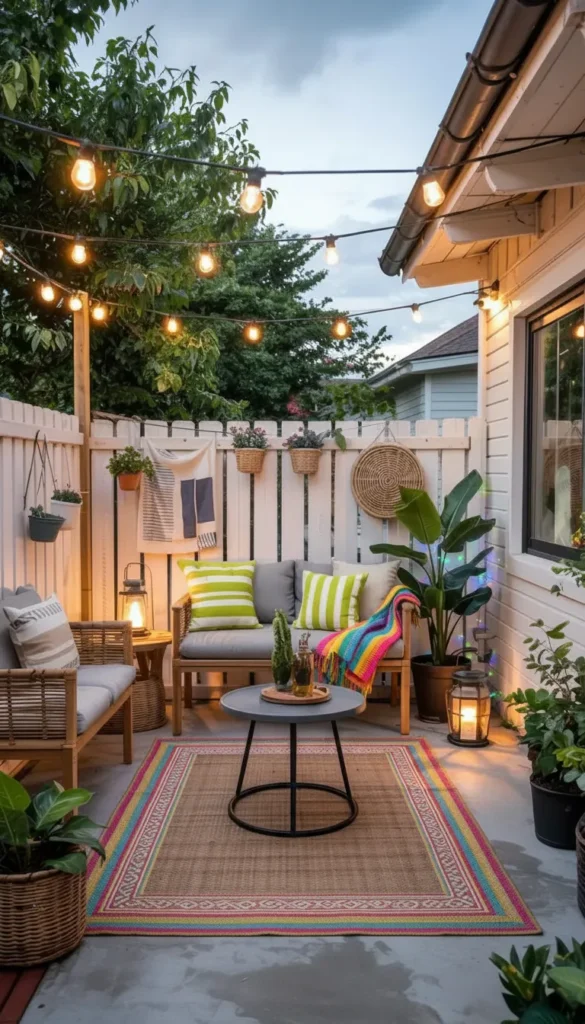
Shade and Privacy Additions
Create covered feeling without permanent construction.
- Lightweight outdoor curtain panels on tension cable
- Bamboo roll-up shades attached to pergola or overhang
- Fabric privacy screen on simple frame
- Shade sail tensioned between mounting points
These additions make spaces usable during hot sun and create intimate atmosphere.
Safety and Durability Essentials
Weekend projects still need proper outdoor specifications.
- Use exterior-rated screws and fasteners (stainless or coated)
- Choose weather-resistant finishes and paints
- Install outdoor-rated electrical components only
- Secure all items against wind with appropriate anchors
Proper materials ensure your weekend work lasts seasons, not months.
The Friday-Saturday-Sunday Schedule
Break work into manageable phases for realistic completion.
Friday evening: Prep work, surface cleaning, material gathering Saturday: Main project execution (painting, installation, building) Sunday: Finishing touches, styling, cleanup, and first use
This pacing prevents burnout and ensures you finish strong rather than abandoning half-done projects.
Back Patio Ideas On A Budget With Pavers For Instant Upgrade
Pavers create immediate structure and definition that makes everything else on your patio look more intentional. They provide clean edges, clear zones, and that finished floor treatment that separates designed spaces from basic yards—all at reasonable cost when installed strategically.
Why Pavers Deliver Instant Impact
Defined flooring changes the entire patio perception immediately.
- Creates clear “room” boundaries even in open yards
- Provides level, stable surface for furniture placement
- Adds texture and visual interest to plain concrete or dirt
- Works at any scale from small balconies to large entertaining areas
A paver floor transforms a yard into an outdoor room in one weekend.
Budget-Friendly Paver Strategies
Maximize impact while controlling costs through smart material choices.
- Use pavers only in high-visibility zones, not entire yard
- Combine pavers with gravel or decomposed granite for cost savings
- Choose standard sizes rather than custom shapes
- Buy from big-box stores during seasonal sales
Strategic paver placement delivers 80% of the visual impact at 40% of full-coverage cost.
Pattern Selection for Modern Look
Simple patterns feel current and timeless simultaneously.
Best budget patterns:
- Running bond (brick pattern) for classic appeal
- Simple grid for contemporary, clean lines
- Herringbone for traditional elegance
- Stack bond for modern, linear look
Complex patterns require more cutting and waste—simple patterns install faster and cheaper.
Pin this paver pattern guide! 📌
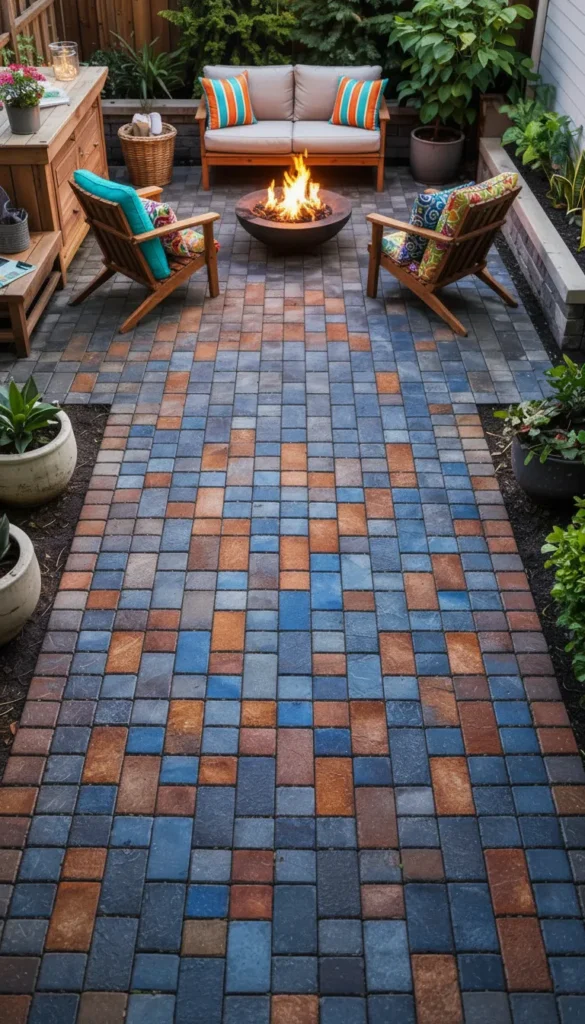
Size Matters in Small Spaces
Larger pavers make small patios feel more expansive.
- Choose 12×12 or 16×16 inch pavers for tight areas
- Fewer seam lines create cleaner, larger appearance
- Small pavers (6×6 or 4×8) make spaces feel busy and smaller
- Large format requires less base preparation per square foot
The Border Definition Trick
Contrasting border creates custom, designed appearance.
- Use different color paver around perimeter
- Creates visual frame for seating or dining zone
- Adds architectural detail without additional cost
- Border width of 6-12 inches provides subtle definition
This simple technique mimics expensive landscape design approaches.
Combining Pavers with Other Materials
Strategic material mixing extends coverage and adds interest.
Effective combinations:
- Pavers for seating area + gravel for pathways
- Concrete patio base + paver border accent
- Grass panels between paver strips for permeable surface
- Decomposed granite with paver stepping stones
Mixed materials look intentional when clearly delineated, not randomly placed.
Base Preparation That Lasts
Proper foundation prevents shifting and maintains appearance.
Essential base layers:
- 4-6 inches compacted gravel base
- 1 inch sand leveling layer
- Pavers set level and tight
- Polymeric sand swept into joints
Shortcuts in base prep lead to uneven surfaces within one season—do it right once.
Save this paver installation foundation guide! 📌
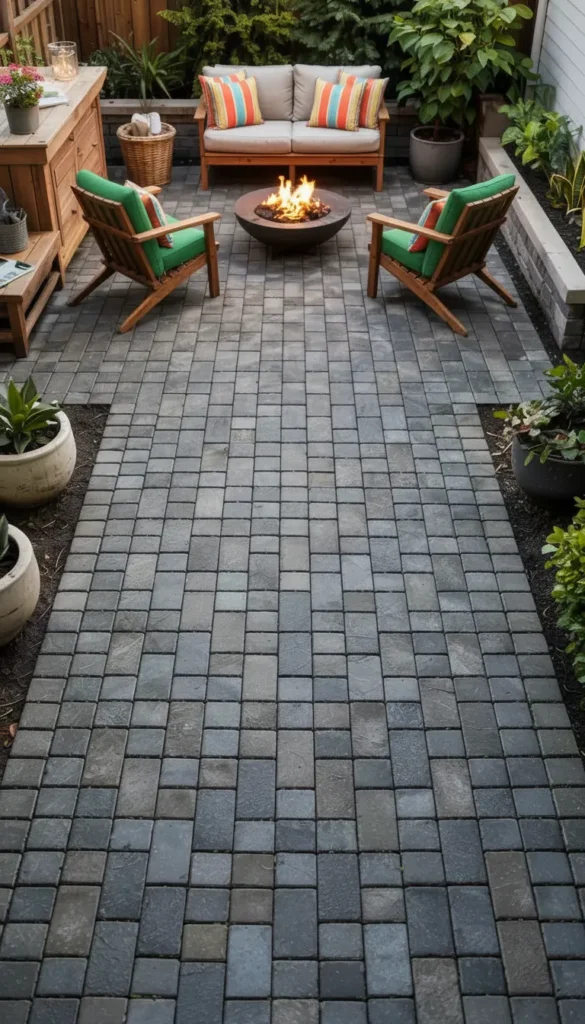
Furniture Placement on Pavers
Arrange pieces to complement your new paver zones.
- Center seating group on main paver area
- Leave 12-18 inches between furniture and paver edge
- Position fire bowl or focal element at paver center point
- Align furniture edges parallel to paver pattern lines
Thoughtful furniture placement maximizes the impact of your paver investment.
Edge Lighting for Night Appeal
Illuminate paver perimeter to extend usability and beauty.
- Install low-voltage LED lights along paver borders
- Space lights 6-8 feet apart for even coverage
- Choose warm white for inviting ambiance
- Solar options eliminate wiring but provide less consistent light
Lit edges make paver patterns visible after dark and prevent tripping hazards.
Coordinating Planters with Pavers
Use planters to soften hard paver surfaces and add warmth.
- Choose warm-toned planters (terracotta, wood, bronze) for gray pavers
- Position large planters at paver corners or transitions
- Match planter scale to paver area (larger pavers = larger planters)
- Use planters to define zones within larger paver fields
The combination of hard pavers and soft plantings creates balanced, livable spaces.
Conclusion
Your back patio doesn’t need a massive budget to feel like a designed, intentional retreat—it needs smart planning, strategic investments, and understanding which changes deliver the most impact. From creating high-end atmosphere through lighting and cohesion, to transforming tired concrete with pavers or paint, you now have five proven approaches that address real challenges with practical, affordable solutions.
Start with the section that matches your biggest pain point. Maybe it’s the DIY weekend projects that will give you quick wins, or perhaps the paver installation that provides the foundation everything else builds on. Choose your entry point, gather your materials, and commit to one complete transformation. Your outdoor space is waiting, and the difference between dreaming about it and enjoying it is just one focused weekend away.

“I share simple, beautiful and affordable home decor ideas to help you style every corner of your home with ease.