

Have you ever planted flowers with such hope, only to step back and feel like something’s still missing? I know that frustration. You’ve invested time, money, and genuine effort into your garden, but it doesn’t quite have that polished, intentional look you see in magazines or your neighbor’s yard. The truth is, a beautiful flower garden isn’t just about choosing pretty blooms—it’s about understanding layout, layering, and those finishing touches that transform scattered plants into a cohesive design.
This guide will walk you through five proven flower garden strategies for 2026 that work in real yards, with real budgets, and real maintenance schedules. Whether you’re working with a tiny front strip, a sprawling backyard, or awkward shaded corners, you’ll discover exactly how to create gardens that look professional from spring through fall. No guesswork, no starting over—just practical ideas you can implement this weekend.
Flower Garden Ideas 2026 For Front Of House Curb Appeal
Your front yard is the first impression visitors get of your entire home. A well-designed flower bed doesn’t just add beauty—it frames your house, increases property value, and creates a welcoming atmosphere that makes people smile before they even knock on your door.
Start With Strong Structural Bones
The difference between amateur and professional-looking front gardens is always the same: structure first, flowers second.
- Begin with evergreen shrubs or compact hydrangeas as your backdrop
- These stay attractive year-round, not just during bloom season
- Position them near the foundation, stepping down in height toward walkways
- This layered approach prevents blocking windows while creating depth
The Three-Layer Planting Formula
Think of your front bed like a photograph—you need foreground, middle ground, and background.
Back layer: Evergreens or tall perennials (3-4 feet) Middle layer: Color workhorses like salvia, coneflower, or nepeta (18-24 inches) Front edge: Low growers like creeping thyme or sedum (4-8 inches)
This formula works because each layer is visible from the street, and nothing hides behind taller plants.
Color Palette Discipline
Here’s what most beginners get wrong: they plant every color they love, creating a chaotic rainbow effect.
- Limit your palette to 2-3 main colors for cohesion
- Repeat the same plants in drifts of 3, 5, or 7 for visual impact
- Consider your house color when choosing bloom tones
- White or cream flowers work universally and brighten any scheme
Pin this three-layer front garden formula! 📌
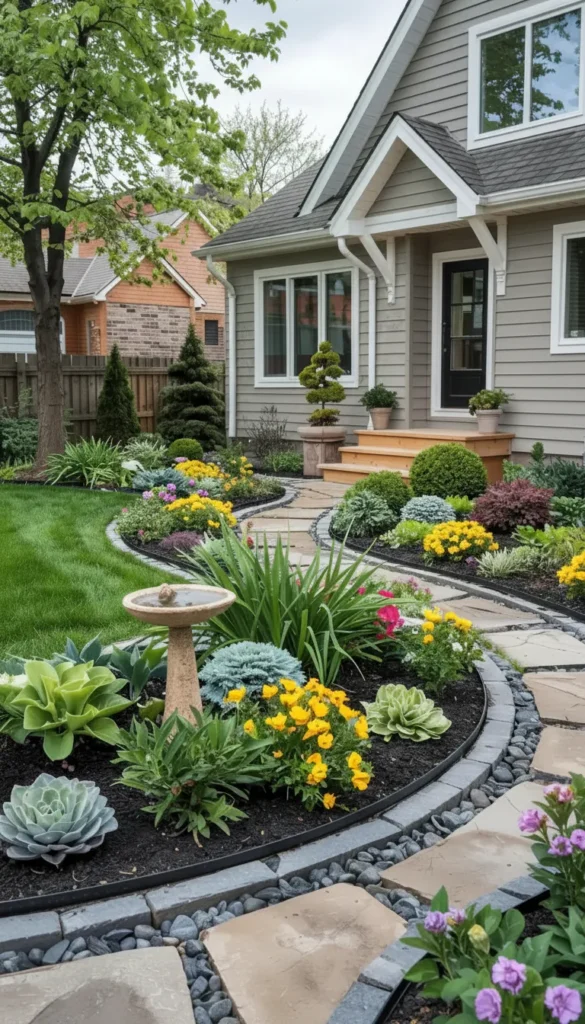
Add a Clear Focal Point
Every successful front garden needs one element that catches the eye immediately.
- A classic bird bath positioned slightly off-center
- Matching potted plants flanking your front steps
- A modern address planter with architectural foliage
- A simple garden bench painted to coordinate with your door
The focal point gives viewers a place to rest their eyes before taking in the whole composition.
Edge Definition Makes Everything Crisp
The single fastest way to elevate your front garden is with clean, defined edges.
- Install metal or stone edging to separate lawn from bed
- Create a 3-4 inch mulch-free border using rock or gravel
- This “clean band” prevents grass creep and looks polished
- Sharp edges read as intentional design, even with simple plants
Foliage Carries the Design
Flowers come and go, but foliage is what you see 300 days a year.
- Mix leaf textures: fine (grasses), medium (salvia), bold (hosta)
- Choose plants with attractive foliage even when not blooming
- Variegated leaves add interest during bloom gaps
- Gray or silver foliage creates sophisticated contrast
Seasonal Accent Strategy
Instead of filling beds entirely with annuals, use them as strategic pops.
- Tuck gladiolus or dahlias behind perennials for height
- Swap out one or two containers seasonally for fresh color
- This approach costs less and requires minimal replanting
- Your perennial backbone does the heavy lifting
Practical Spacing for Long-Term Success
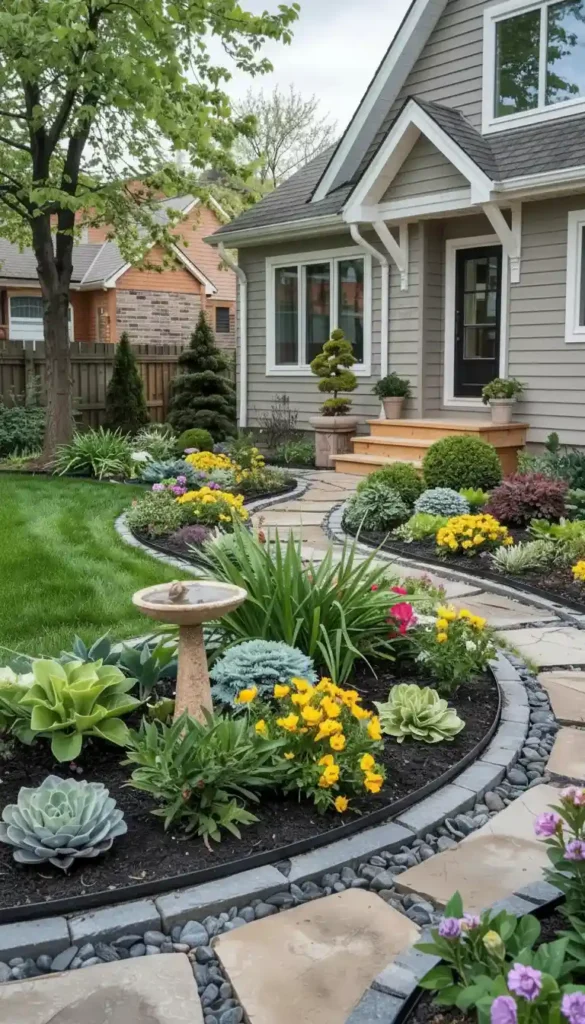
Proper spacing prevents the crowded, chaotic look that develops in year two.
- Follow tag spacing recommendations religiously
- Beds look sparse initially but will fill in by season two
- Resist the urge to overplant for instant gratification
- Use annuals to fill gaps during the first growing season
Save this front yard spacing guide! 📌
Maintenance Access Built In
If you can’t easily reach all your plants, you won’t maintain them properly.
- Add stepping stones through deep beds for weeding access
- Create a 12-inch mowing strip between lawn and garden
- Position tall plants where you can reach them from pathways
- This planning saves your back and keeps the garden tidy
Lighting Frames the Investment
Two simple uplights transform your front garden from day-only beauty to 24-hour curb appeal.
- Position lights at house corners to frame the entire facade
- Uplighting shows off plant texture and architecture
- Solar options require no wiring or electrical work
- Lit gardens feel safer and more welcoming
Flower Garden Ideas Backyard Layouts For Everyday Living
Your backyard should reflect how you actually use the space—not just how you wish you used it. The best backyard gardens create distinct zones for relaxation, entertaining, and visual interest while leaving room for real life to happen.
Design Around Your Sightlines
Walk to every spot you actually use: the patio, grill, back door, favorite window.
- These sightlines determine where your flower beds should go
- Place your most attractive planting where you see it most often
- Screen ugly utilities or fences with taller blooms
- Leave clear pathways between functional zones
The Garden Room Concept
Instead of scattering flowers everywhere, create defined “rooms” with purpose.
Seating area room: Low, fragrant flowers surrounding a bench or chairs Utility screen room: Tall grasses or sunflowers hiding trash cans or AC units Wildlife room: Native flowers in a wilder arrangement for pollinators View room: Your showpiece bed visible from main windows
This zoning makes small backyards feel larger and purposeful.
Curved Beds for Natural Flow
Gentle curves create a relaxed, established garden feel that straight lines can’t match.
- Use a garden hose to map out curves before digging
- Aim for broad, sweeping curves rather than wiggly lines
- Curves work best in larger yards with informal architecture
- Repeat the curve pattern for consistency throughout the space
The Container Advantage in Backyards
Containers solve problems that in-ground beds can’t.
- Add color to patios, decks, and hard surfaces instantly
- Move them seasonally to follow sun or create different looks
- Fill gaps in your design without permanent commitment
- Group in odd numbers (3, 5, 7) for professional appearance
Pin this backyard zoning strategy! 📌
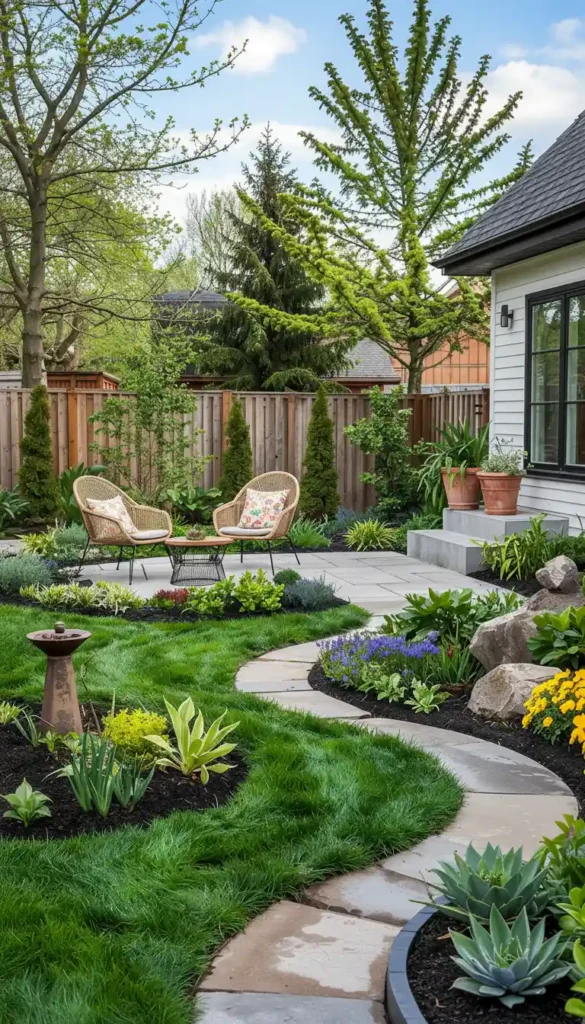
Height Layering for Privacy
Strategic plant height creates natural screening without feeling closed in.
- Use ornamental grasses or tall perennials (5-6 feet) along back fences
- Mid-height flowers (2-3 feet) in central beds
- Ground covers and edging plants (6-12 inches) along paths
- This creates privacy while maintaining open sight lines at eye level
The Non-Flower Focal Point
The most successful backyard gardens include at least one structural element that isn’t a plant.
- A bird bath or water feature for movement and sound
- A sculptural boulder or piece of garden art
- A small tree with interesting bark or branching
- A garden arbor or simple pergola structure
These elements provide year-round interest when flowers aren’t blooming.
Wild Corner Strategy
Dedicate one area to a more naturalistic, pollinator-friendly approach.
- Choose native flowers that support local wildlife
- Allow this area to be less manicured than formal beds
- Grasses can grow taller, deadheading can be minimal
- This gives your garden movement and ecological purpose
Repeat Materials for Cohesion
Visual calm comes from repetition, not variety.
- Use the same planter material throughout (terracotta, modern fiber, etc.)
- Match edging materials in all beds
- Coordinate mulch color across the entire yard
- Repeat your 2-3 signature plants in multiple locations
Save this backyard material repetition tip! 📌
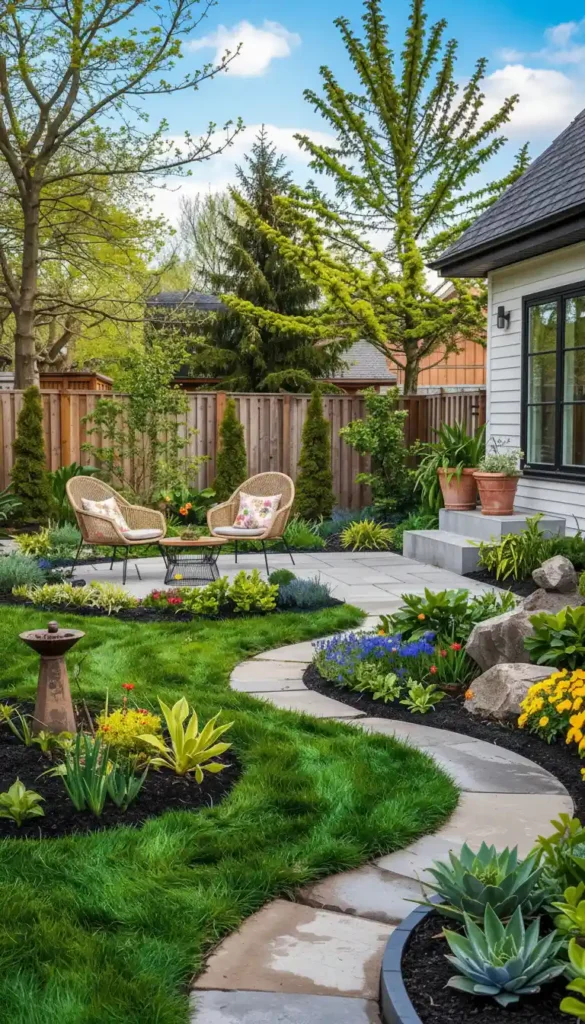
Circulation First, Planting Second
Map your natural walking patterns before placing a single plant.
- Where do kids or pets actually run?
- What’s the path from back door to grill?
- How do you access different yard zones?
- Design beds around these routes, not blocking them
Flexible Framework for Changing Tastes
Build a structure that allows you to swap colors without redesigning entirely.
- Permanent shrubs and hardscaping create the bones
- Perennials provide reliable structure and bloom
- Annuals in key spots let you try new colors yearly
- This approach grows with your evolving taste
Flower Garden Ideas Landscaping That Looks Professional
Professional landscaping isn’t about expensive plants—it’s about repetition, clean lines, and thoughtful layering. Once you understand these principles, you can create high-end looks with budget-friendly choices.
Start With Bed Geometry
The shape of your beds determines whether your garden looks intentional or accidental.
- Curved beds: Suit traditional, cottage, and informal gardens
- Straight beds: Complement modern, contemporary architecture
- Geometric shapes: Work for formal, structured designs
- Whatever you choose, commit fully rather than mixing styles
The Power of Plant Repetition
Single plants scattered throughout a bed look unplanned and chaotic.
- Group identical plants in clusters of 3, 5, or 7
- Repeat the same plant in multiple locations across the bed
- This creates rhythm and unity that reads as professional design
- Fewer plant varieties in greater quantities beats variety every time
Three-Layer System for Depth
Professional gardens always use this proven layering approach.
Background layer: Structure plants (shrubs, tall perennials, trellises) Middle layer: Mass bloomers grouped for impact Foreground layer: Low edging to define and finish
Each layer should be visible from the primary viewing angle.
Limited Plant Palette Equals Upscale Look
Here’s a counter-intuitive truth: fewer plant types create more sophisticated gardens.
- Choose 5-7 total plant varieties maximum per bed
- Use different quantities, not different plants
- A limited palette looks curated and intentional
- Variety overwhelms; repetition soothes
Pin this professional three-layer formula! 📌
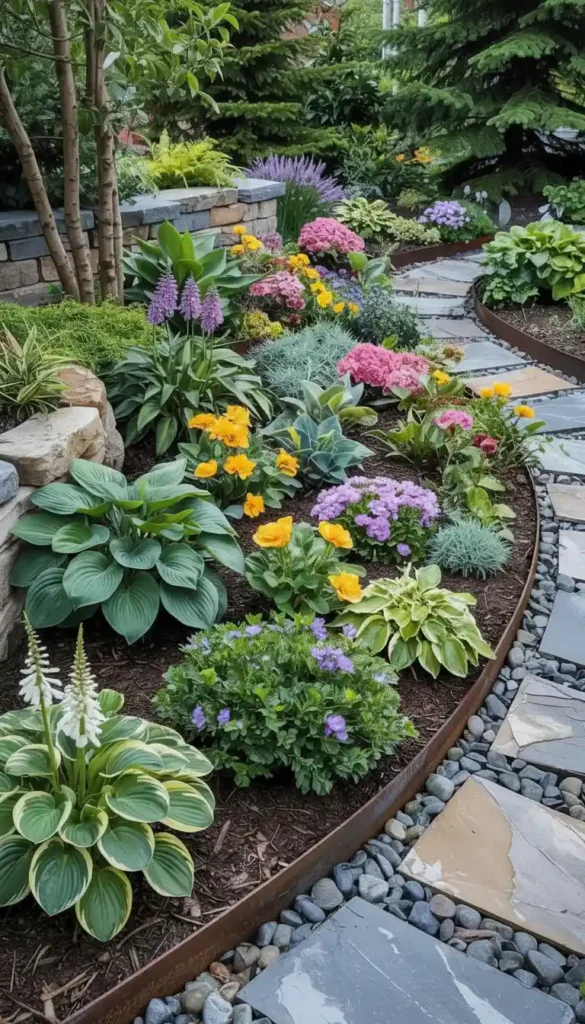
Clean Edge Installation
The edge treatment separates amateur from professional appearance instantly.
- Metal edging for modern, crisp lines
- Stone or brick for traditional, established gardens
- Install without gaps or wobbly sections
- Create a 3-inch “reveal” above soil level for definition
Winter Interest Planning
Professional gardens look good year-round, not just during peak bloom.
- Include evergreen elements for structure
- Choose perennials with attractive seed heads
- Add ornamental grasses for winter texture
- Design for “bones” that show when flowers fade
Block Planting for Modern Impact
Contemporary landscapes favor bold blocks of single plants over mixed drifts.
- Plant entire sections with one variety
- Create geometric or organic blocks depending on style
- Leave negative space between blocks
- This approach feels gallery-like and sophisticated
Foliage-Forward Design
Let leaves do more visual work than flowers for a refined look.
- Choose plants with exceptional foliage (hosta, heuchera, Japanese forest grass)
- Consider leaf color, texture, and shape as primary design elements
- Flowers become seasonal bonuses, not the main event
- This extends visual interest across all seasons
Save this foliage-first strategy! 📌
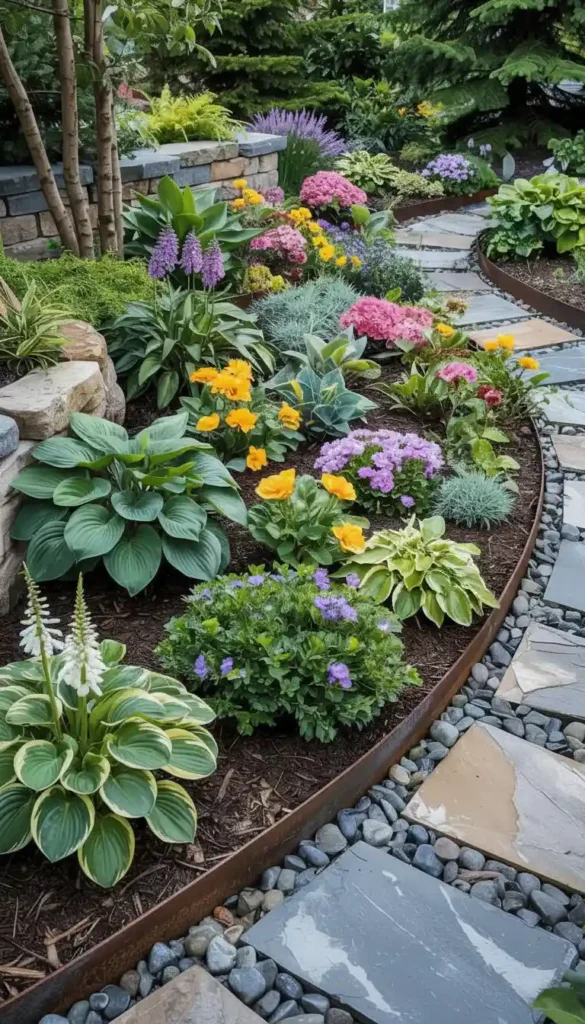
Consistent Mulch Application
Mulch quality and application directly impact professional appearance.
- Use one mulch type throughout the entire property
- Maintain 2-3 inch depth, refreshed annually
- Pull mulch back 2-inches from plant stems
- Create clean mulch edges that follow bed lines precisely
The Signature Element Strategy
Choose one distinctive element and repeat it throughout your landscape.
- A specific planter style in multiple sizes
- One type of stone or gravel
- A particular color in containers and accents
- Repetition of your signature element ties the whole property together
Flower Garden Ideas DIY Projects Anyone Can Build
DIY garden projects solve real problems—muddy borders, flopping plants, or cluttered corners—while adding structure that makes flowers look more intentional. The best projects combine function with visual impact and require only basic tools.
Simple Trellis Wall for Vertical Interest
A basic trellis adds height without consuming ground space, perfect for small yards.
What you need:
- Cedar or pressure-treated 2×2 lumber
- Wood screws rated for exterior use
- Level and drill
Why it works:
- Climbing flowers (clematis, morning glory) create living walls
- Vertical growth maximizes limited square footage
- Trellises hide ugly fences or walls behind blooms
Gravel Path Installation
A simple gravel path transforms a garden from casual to designed in one weekend.
- Mark path edges with spray paint or flour
- Excavate 3-4 inches deep
- Add landscape fabric to prevent weeds
- Fill with 3 inches of pea gravel or crushed stone
- Edge with stone or metal for crisp definition
This project keeps shoes clean and creates clear circulation through garden beds.
DIY Plant Support System
Tall flowers flop without support, ruining their appearance and your effort.
Simple solutions:
- Metal stakes with twine figure-eight loops
- Horizontal grid using bamboo and garden twine
- Peony rings installed early before growth
- Position supports when plants are 8-12 inches tall for best results
Pin this DIY support guide! 📌
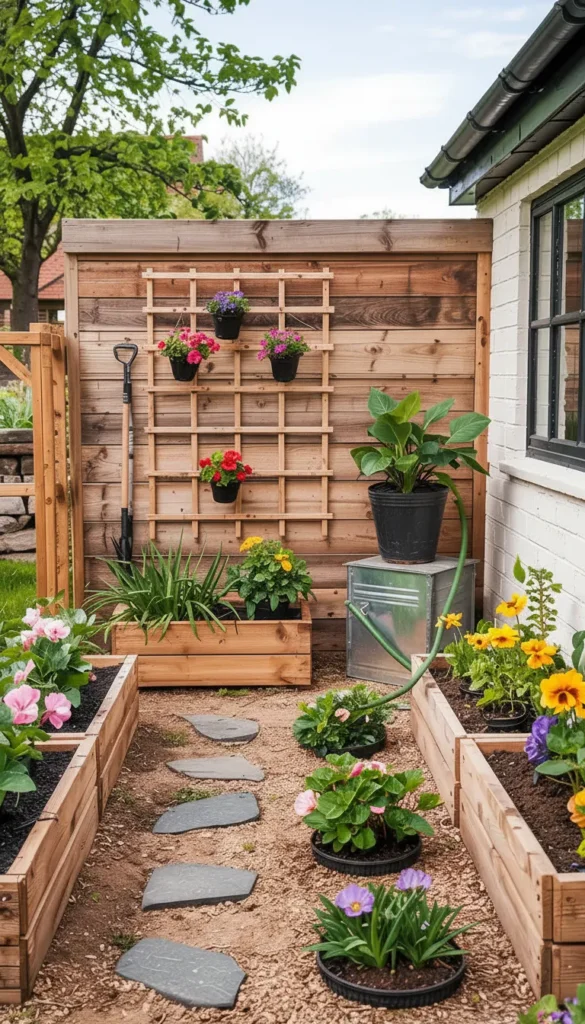
Tiered Container Display
Different height levels add depth and showcase more plants in limited space.
- Use plant stands, upturned pots, or small benches
- Arrange in odd numbers for visual appeal
- Place tallest containers in back or center
- This creates a “living display” rather than flat container rows
Stepping Stone Installation
Functional access plus decorative interest in one simple project.
Installation steps:
- Mark stone placement while beds are in active use
- Dig each hole 1 inch deeper than stone thickness
- Add 1 inch of sand for leveling base
- Set stone level with surrounding soil for easy mowing
Stepping stones let you maintain deep beds without compacting soil.
Tool Storage Solutions
Hidden storage keeps gardens looking clean and finished.
- Build a simple deck box for hoses and hand tools
- Convert a large planter into disguised storage
- Create a trellis that doubles as a tool rack on the back side
- Position storage near where you actually use tools
Visible clutter ruins even beautiful plantings.
Custom Edging from Reclaimed Materials
Create unique edging that reflects your home’s character.
- Reclaimed brick for cottage gardens
- Cut stone for formal landscapes
- Railroad ties (new, not creosote-treated) for rustic looks
- Upturned bottles for quirky, artistic borders
Save this edging materials list! 📌
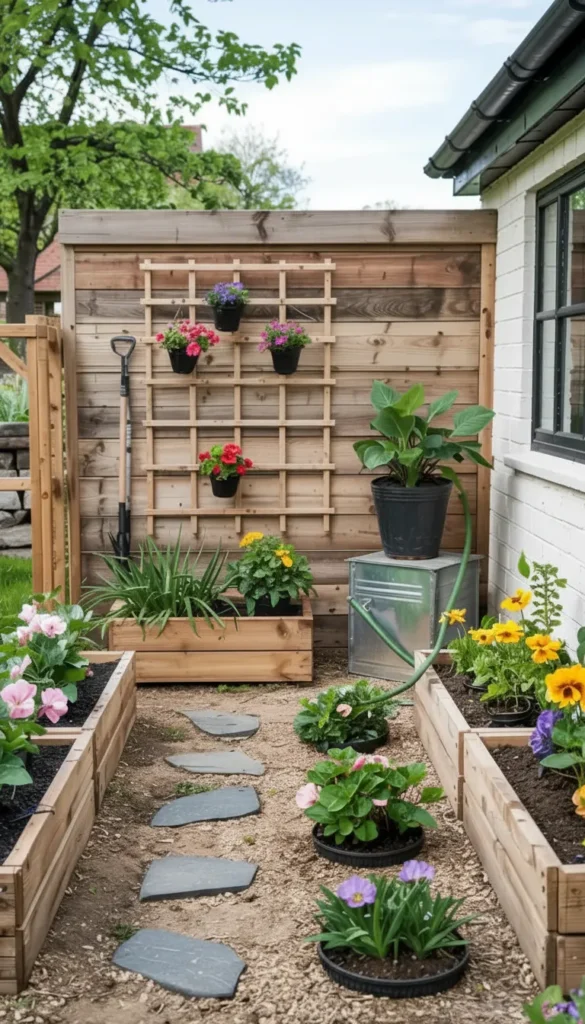
Raised Bed Conversion
Transform flat beds into raised ones for better drainage and definition.
Benefits:
- Improved soil drainage and warming
- Easier access for planting and weeding
- Clear visual separation from lawn areas
- Better control over soil quality
Use untreated cedar, composite boards, or stone for durable, safe borders.
Irrigation Improvement Project
A simple soaker hose system makes maintenance sustainable.
- Lay soaker hose along bed perimeters before mulching
- Connect to outdoor faucet with timer
- Cover with 2-3 inches of mulch to hide and protect
- Water deeply twice weekly rather than daily shallow watering
Matching Your Home’s Style
Every DIY project works best when materials coordinate with your house.
Modern homes: Black metal, stained wood, clean geometric shapes Traditional homes: Natural stone, painted wood, curved elements Cottage style: Reclaimed materials, white painted wood, informal shapes
Matching materials creates cohesion between house and garden.
Flower Garden Ideas For Small Spaces With Big Impact
Small gardens demand smart choices—every plant, pot, and element must earn its place. The secret isn’t cramming in more; it’s using vertical space, strategic focal points, and restrained palettes to create an impression of abundance without chaos.
The Container Trio Strategy
One large grouping beats many scattered small pots every time.
The formula:
- One tall, architectural plant (grass, small shrub, tall flower)
- One mid-height bloomer for color
- One trailing plant to soften edges
Use containers 16-20 inches minimum for visual impact and better moisture retention.
Vertical Growing Systems
When you can’t grow out, grow up.
- Wall-mounted planters in tiered arrangements
- Narrow trellises with climbing bloomers
- Hanging baskets at varying heights
- Ladder-style plant stands against walls or fences
Vertical systems can triple your growing space without consuming square footage.
One Strong Focal Point
Small spaces feel cramped when elements compete for attention.
- Choose one standout feature (bird bath, statement plant, sculpture)
- Position it slightly off-center for visual interest
- Keep everything else supporting, not competing
- This creates a clear visual hierarchy
Pin this container trio formula! 📌
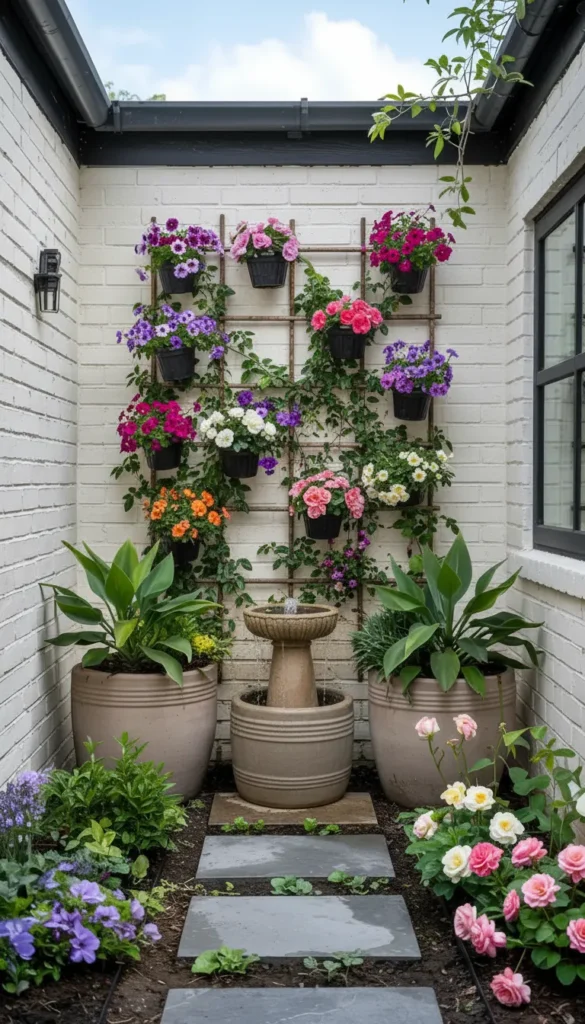
Large Pots for Small Spaces
This seems backward, but bigger containers actually make small areas feel larger.
- Fewer large pots look calmer than many small ones
- Big containers hold moisture longer, reducing maintenance
- They create visual weight and presence
- Aim for 3-5 substantial containers over 10+ tiny pots
Restrained Color Palette
Limited space demands color discipline.
- Stick to 2 colors maximum plus white or green
- Repeat these colors in every container and bed
- Cohesive color creates visual expansion
- Color chaos makes small spaces feel smaller
Mirror and Reflection Tricks
Strategic use of reflective elements expands perceived space.
- Position mirrors on fences to create depth illusion
- Use a bird bath or water bowl for reflective surface
- Choose glazed pots that catch light
- Light-colored fence paint bounces more light than dark
Smart Plant Choices for Compact Growth
Not all plants respect size limitations.
Best for small spaces:
- Compact varieties bred specifically for containers
- Slow-growing perennials
- Dwarf shrubs and grasses
- Plants that stay tidy without constant pruning
Avoid vigorous spreaders that will outgrow their space by mid-summer.
Save this small-space plant list! 📌
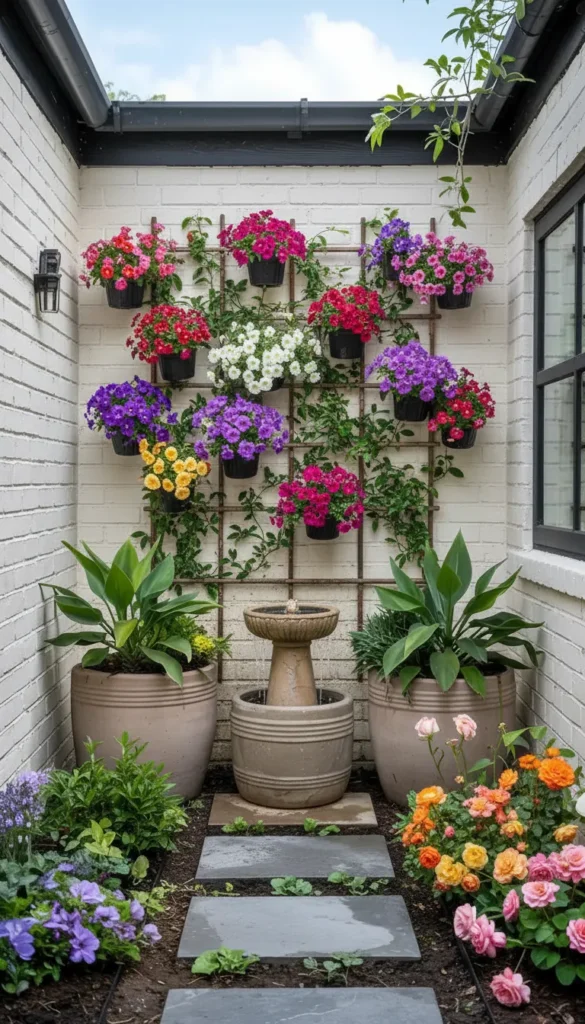
Seasonal Rotation System
Keep the same pots but swap plants seasonally for fresh looks.
Spring: Tulips, daffodils, pansies Summer: Geraniums, petunias, calibrachoa Fall: Mums, ornamental kale, asters
This approach maintains structure while varying color without buying new containers.
Clean Edge Strategy
Small spaces require ruthless editing of visual clutter.
- Remove damaged leaves immediately
- Deadhead spent blooms regularly
- Keep edges crisp and defined
- Store tools and supplies out of sight
Every visible element should be attractive and intentional.
Lighting for Evening Impact
Expand usability beyond daylight hours with simple lighting.
- String lights overhead create room-like atmosphere
- Small uplights highlight statement plants
- Solar path lights define edges
- Good lighting makes small spaces feel larger and more valuable
Conclusion
The flower gardens that stop people in their tracks aren’t necessarily the biggest or most expensive—they’re the ones designed with clear purpose, layered thoughtfully, and maintained with realistic routines. You now have five proven approaches that address real challenges: front yard curb appeal that frames your home, backyard layouts that support actual living, professional-looking landscaping through repetition and structure, DIY projects that solve practical problems, and small-space strategies that maximize every inch.
Start with one section that matches your most pressing need. Maybe it’s transforming your front entrance with the three-layer formula, or finally organizing your backyard into functional rooms. Pick your starting point, gather your materials, and take action this weekend. Your garden doesn’t need to be perfect immediately—it needs to be better than it was yesterday, and with these strategies, that transformation is completely within your reach.

“I share simple, beautiful and affordable home decor ideas to help you style every corner of your home with ease.