

I still remember the night my daughter painted her bedroom wall with nail polish—purple streaks everywhere—and I realized our “kid-friendly” room wasn’t working. That moment hit me hard: a children’s space needs to absorb chaos while encouraging creativity, not fighting against it. If you’re staring at a room filled with mismatched furniture, overflowing toy bins, and a design that screams “2019,” you’re not alone.
The truth is, most kids’ rooms fail because they’re designed for Instagram, not real life. They look beautiful on day one, then crumble under the weight of daily living. In 2026, we’re finally getting smarter about this. We’re building rooms that adapt as kids grow, spaces that handle mess without looking messy, and designs that spark imagination without becoming visual noise. This guide will show you exactly how to create that balance—with real strategies, practical measurements, and ideas that actually survive childhood.
Kids Room Renovation Ideas 2026 For Creative And Functional Spaces
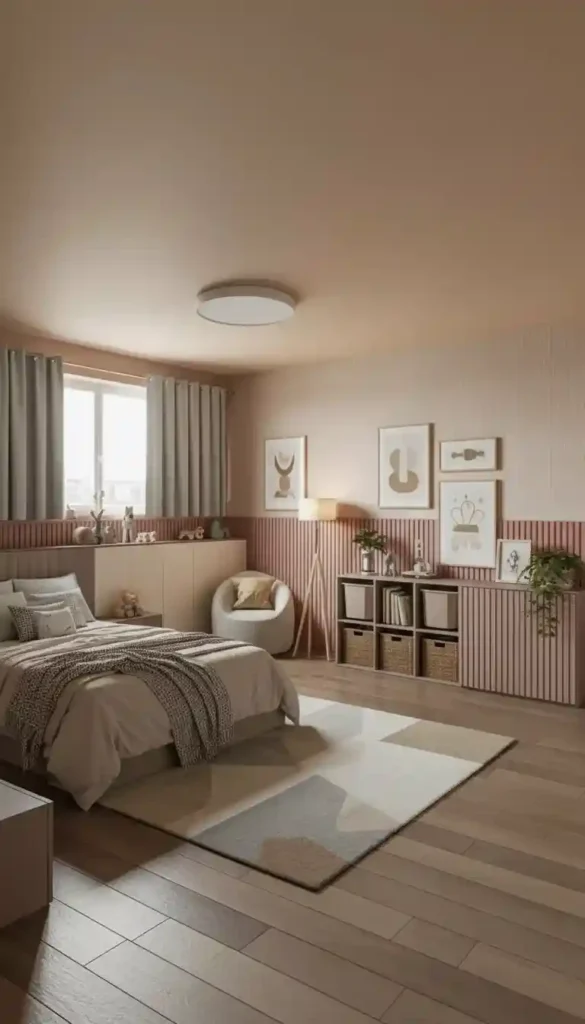
The biggest shift I’m seeing in 2026 is the move toward calming foundations with intentional creative zones. We’re done with rooms that assault the senses with primary colors and cartoon characters on every surface. Instead, think warm neutrals as your base, soft wood tones, and one accent color you can easily swap through textiles.
This approach works because it separates energy from rest. Your child needs both, but not in the same visual space.
The Neutral Foundation Strategy
Starting with a calm base isn’t boring—it’s strategic.
- Wall colors: Warm white, pale greige, or soft clay tones that complement any future decor phase
- Flooring: Durable options like luxury vinyl plank in light oak or natural maple
- Large furniture: Keep beds, desks, and dressers in solid wood or neutral finishes
Why this matters: When the bones are neutral, you can transform the room’s personality with pillows, artwork, and textiles—no painting required.
Creating Functional Zones Without Walls
Even small rooms can have distinct areas for different activities.
- Use area rugs to define play zones separate from sleep areas
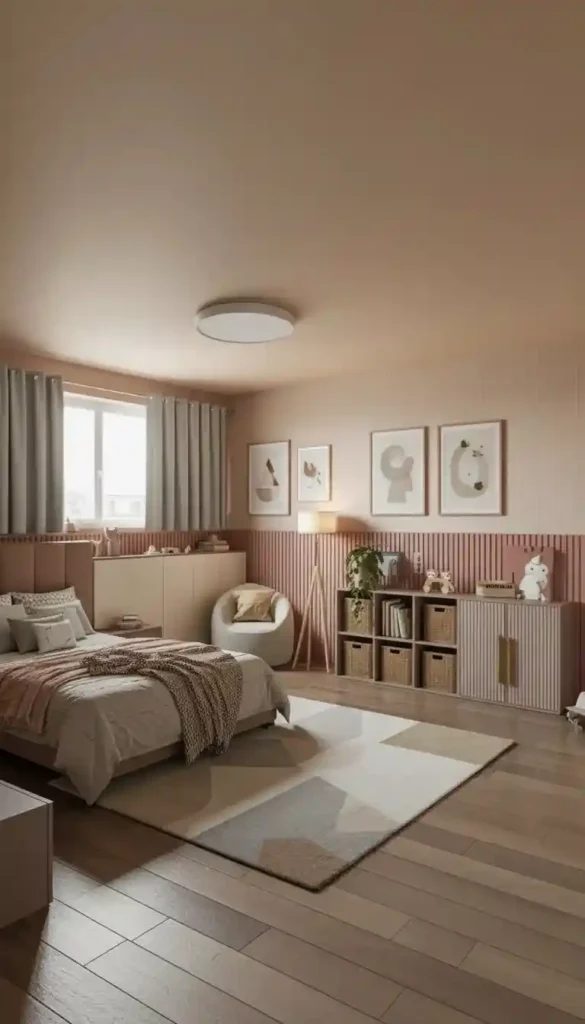
- Layered lighting creates mood: warm overhead for general use, task lamp at desk, soft nightlight by bed
- Strategic furniture placement naturally divides the room without making it feel cramped
I’ve seen 10×12 rooms feel spacious using this method. The secret is visual separation without physical barriers.
The One Creative Feature Rule
Pick one bold element as your room’s creative anchor, then keep everything else supportive.
Options that work:
- Magnetic paint panel for rotating artwork (no damaged walls)
- Pinboard wall in fun shape (cloud, house, mountain)
- Small climbing wall with safe mats
- Canopy reading nook with soft lighting
📌 Pin this creative foundation approach! 📌
Storage That Actually Works
The Container Store’s bins won’t fix your storage problem if the system doesn’t match your child’s habits.
What actually functions:
- Cubbies with identical bins for toys—creates visual calm while staying modular
- Closed storage for visual noise (tiny toys, craft supplies, seasonal items)
- Open shelving at kid height for current favorites and daily-use items
- Peg rail or wall hooks for backpacks and jackets—promotes independence
Label everything. Photos work better than words for younger kids.
Durability First, Aesthetics Second
High-traffic flooring and wipeable paint aren’t sexy topics, but they’ll save your sanity.
- Flooring: Skip carpet. Choose luxury vinyl, cork, or sealed hardwood that handles spills
- Paint: Semi-gloss or satin finish in high-touch areas—wipes clean without streaks
- Furniture: Rounded edges, sturdy construction, wall-anchored tall pieces
I learned this the hard way with a beautiful woven rug that absorbed three years of juice boxes and paint water. Replace it with washable options or hard flooring with throw rugs you can actually clean.
Low-Profile Furniture Philosophy
Beds, desks, and storage don’t need to dominate the room visually.
Choose:
- Platform beds without bulky headboards (add one later if desired)
- Simple desk with drawers, not massive hutches
- Streamlined dresser instead of ornate pieces
Low-profile furniture makes rooms feel larger and gives kids more open floor space for play.
The Art Display System
Kids produce art constantly. You need a system that celebrates it without covering every wall.
Solutions:
- Clip rail or wire system at kid height—they control what’s displayed
- Rotating gallery: Frame 3-5 pieces, swap monthly
- Art portfolio box: Store the rest, review together quarterly
This teaches curation while preventing wall chaos.
📌 Save this functional space strategy! 📌
Lighting Layers That Change Everything
Most kids’ rooms rely on one harsh ceiling fixture. That’s a mistake.
The three-light rule:
- Warm overhead fixture: General lighting, dimmable if possible
- Task lamp at desk: Focused light for homework, adjustable arm
- Bedside light: Nightlight or plug-in sconce, kid-controlled
In shared rooms: Give each child their own bedside light so one can read while the other sleeps.
The Daily Reset Pattern
Good design only works when habits support the structure.
Create a reset routine:
- Bins return to cubbies before dinner
- Desk cleared before bed
- Morning clothes laid out in designated spot
- Backpack on hook, not floor
When storage location matches the natural flow of your child’s day, cleanup becomes automatic.
Why This Approach Works Long-Term
You’re not designing for today. You’re designing for the next 5-8 years.
The advantage: When decor is layered rather than structural, you’re not repainting walls when your daughter moves from unicorns to astronomy. You’re swapping bedding and posters.
The investment: Spend money on quality bones—bed frame, desk, storage systems. Update the personality with affordable textiles, art, and accessories as interests evolve.
This philosophy has saved me from three complete room overhauls. The room grows with them because it was never too specific to begin with.
Room Renovation Kids Ideas That Grow With Your Child
Here’s what no one tells you: your budget won’t keep up with your child’s changing tastes. That dinosaur-obsessed five-year-old will be a sports-focused ten-year-old before you’ve finished paying off the themed furniture. I’ve learned to build rooms that adapt without expensive renovations.
The core strategy is simple: create a versatile base, then build flexible display systems for whatever phase comes next.
Activity-Based Design vs. Theme-Based Design
Stop designing around characters. Design around what kids actually do.
Activity zones to include:
- Reading area: Comfortable seating, bookshelf, good lighting
- Building/creating space: Sturdy table or floor area, supply storage
- Movement zone: Clear floor space for dancing, stretching, active play
- Quiet work area: Desk for homework, art projects, focused tasks
These activities stay constant even when interests change.
The Adaptable Furniture Checklist
Certain pieces transition from childhood through teen years.
Essential investments:
- Adjustable desk chair: Grows with your child’s height
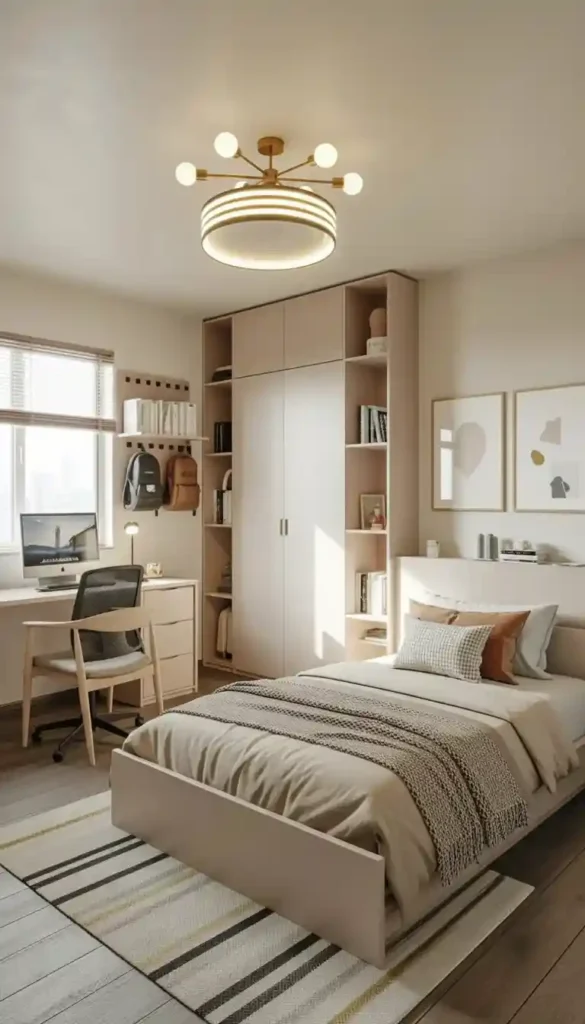
- Standard desk with drawers: Not a “kid desk”—real workspace
- Platform bed: Fits child-size to full-size mattresses over time
- Quality dresser: Neutral enough to move to college dorm eventually
Skip: Toddler beds, character furniture, anything with a specific age range printed on it.
The Headboard Transformation Trick
This single change can completely alter a room’s feel.
Starting point: Simple platform bed, no headboard As they grow: Add upholstered headboard, DIY cushioned panel, or wall-mounted shelf headboard
I’ve seen this transform a “little kid” room into a teen space for under $200. The bed stays, the personality shifts.
📌 Pin this grow-with-them furniture guide! 📌
Mix-and-Match Storage Systems
One storage type rarely works for everything.
The combination approach:
- Dresser: For clothes, obvious
- Closet organizer: Double hanging rods, shelf dividers, floor bins
- Labeled bins: For toys, craft supplies, seasonal items
- Open cubbies: Current favorites and daily-use items visible
Why this works: Different items need different storage solutions. Clothes need drawers, LEGOs need bins, books need shelves.
The Bin Rotation Method
When your child discovers a new hobby, you don’t need to renovate.
The system:
- Keep 6-8 labeled bins in rotation
- When interests shift, relabel one bin instead of buying new storage
- Move old hobby items to closed storage (basement, closet)
- Swap bin back if interest returns
Example: “Art supplies” becomes “Science experiments” becomes “Sports cards” over the years. Same bin, different label, no renovation.
Visibility and Accessibility Rule
Professional organizers repeat this constantly: kids use what they can see and reach.
Apply this:
- Current toys: Open storage at kid height
- Overflow items: Closed storage or high shelves
- Messy supplies: (paint, glitter, Play-Doh) adult-controlled cabinet
- Daily essentials: Hooks and baskets within easy reach
When kids can independently access and return items, your nagging decreases dramatically.
Future-Proofing Measurements
Small decisions now prevent big problems later.
Plan ahead:
- Outlet near desk: They’ll need to charge devices eventually
- Floor space: Leave room for eventual full-size or queen bed
- Wall space: Keep one wall clear for future tall bookshelf or wardrobe
- Empty drawer/shelf: New items won’t immediately cause clutter
I’ve measured rooms where the “big kid” bed literally couldn’t fit because every inch was used for toddler furniture. Leave expansion room.
The Flexible Closet System
Don’t install fixed closet shelving you’ll regret later.
Better approach:
- Adjustable shelving systems: Can move up as child grows
- Modular organizers: Add or remove components as needs change
- Double hanging rods: One high, one low—adjust heights over time
Why it matters: A five-year-old needs low hanging space for dress-up clothes. A fifteen-year-old needs full-height hanging for long jackets and dresses.
📌 Save this adaptable room strategy! 📌
Wall Color Strategy for Longevity
Choosing the right neutral prevents frequent repainting.
Best long-term colors:
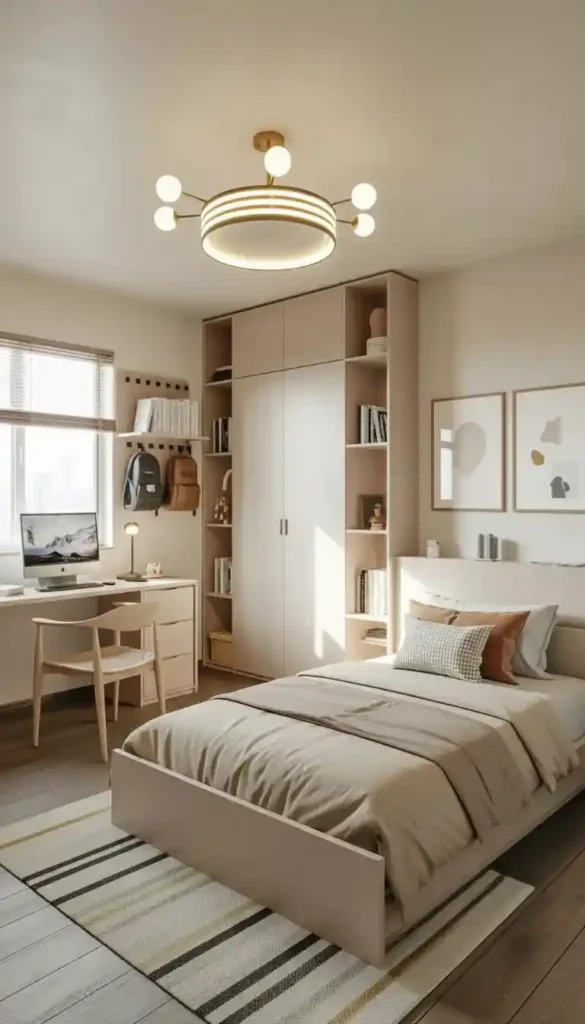
- Warm white: Crisp but not sterile, works with any accent color
- Pale greige: Sophisticated enough for teens, soft enough for kids
- Soft clay or putty: Earthy, calming, surprisingly versatile
Avoid: Pastel blue/pink that screams “baby room,” bright primary colors that feel juvenile after age 7.
The Self-Reliance Setup
When the room supports independence, your workload decreases.
Design for autonomy:
- Low clothing rod or drawer labels with pictures
- Step stool stored where they can reach it
- Obvious homes for backpack, shoes, jacket
- Accessible hamper they can actually use
Kids as young as three can put away toys and clothes when the system is designed for their height and abilities.
Why This Investment Pays Off
Rooms designed to grow save money and reduce waste.
The math:
- Themed room overhaul every 3 years: $2,000-4,000 × 5 times = $10,000-20,000
- Adaptable room with textile updates: $3,000 base + $300 every few years = $4,500 total
The difference isn’t just financial—it’s environmental. You’re not sending furniture to landfills because your child outgrew it.
Attic Renovation Kids Room Designs For Cozy And Playful Living
Attic conversions can be magical, but I’ve seen too many that feel like stuffy afterthoughts. The slanted ceilings, temperature extremes, and awkward angles require specific design strategies that regular rooms don’t. Get these right, and you’ve created the coziest, most sought-after room in the house.
The key challenge: making the space comfortable while embracing the architectural quirks, not fighting them.
Embrace the Slanted Ceilings
Those angled walls aren’t problems—they’re design opportunities.
Work with the slopes:
- Place low furniture (beds, toy storage, reading nooks) under the eaves
- Keep the center open for standing and movement
- Use the angles to create cozy alcoves that feel intentional
I positioned a bed under a 4-foot ceiling slope, and my daughter calls it her “cave room”—the low ceiling makes it feel protected, not cramped.
The Bed Placement Strategy
In attics, the bed location matters more than in regular rooms.
Best practice: Put the bed where ceiling height is lowest, since kids don’t stand on beds (officially).
Benefits:
- Maximizes standing room in the center
- Creates a natural sleeping alcove
- Leaves taller areas for desks and play
Add: Built-in drawers or roll-out bins under the bed to use every inch of that odd angle space.
Lighting That Fights Shadows
Attics are naturally dark with all those slopes and corners.
The layered approach:
- Multiple light sources: Never rely on one overhead fixture
- Warm white bulbs: 2700-3000K prevents the space feeling cold
- Wall sconces: Effective where table lamps don’t fit
- Strip lighting: Under eaves or along the roofline adds ambient glow
Shadows amplify awkward angles. Light eliminates that problem entirely.
📌 Pin this attic design strategy! 📌
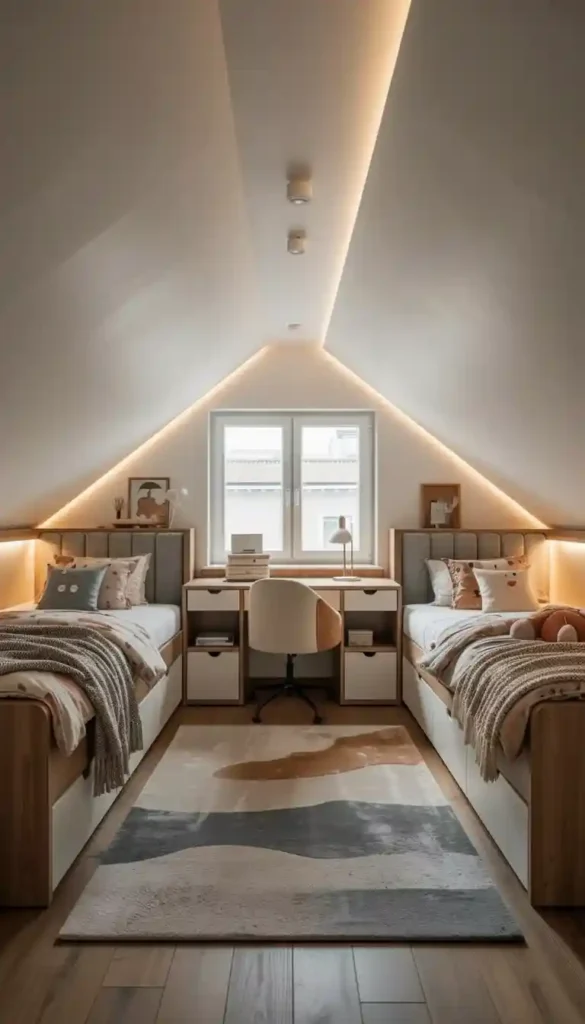
Color Psychology for Low Ceilings
Paint color dramatically affects how compressed or open the space feels.
Choose:
- Bright warm whites: Reflect light, open up the space
- Paint ceiling same as walls: Blurs boundaries, makes room feel larger
- Light wood tones: For floors and furniture, prevents visual heaviness
Avoid: Dark colors that absorb light, contrast ceiling colors that emphasize low height.
Temperature and Insulation Reality
Attics get hot in summer, cold in winter—it’s physics.
Solutions that work:
- Upgrade insulation: Worth the investment for year-round comfort
- Blackout curtains: Block heat in summer (plus help with sleep)
- Ceiling fan: Silent model, essential for air circulation
- Weatherstripping on dormers: Prevents drafts around windows
A room that’s uncomfortable won’t be used, no matter how cute it looks.
The Dormer Window Advantage
If you have dormer windows, use them strategically.
Perfect placement: Position desk directly under or next to dormer for natural task lighting and a view.
Benefits:
- Natural light where kids need it most
- Creates an inspiring study nook
- Makes the architectural feature functional, not decorative
I’ve watched homework time decrease by 20% when kids moved to well-lit desk areas. Natural light improves focus.
Acoustic Improvements Matter
Attics can be echo chambers, and footsteps sound like thunder to rooms below.
Sound management:
- Soft wall panels: Fabric-covered acoustic panels mounted on slopes
- Thick area rug: Over hardwood or laminate flooring
- Cushioned headboard: Absorbs sound, adds comfort
- Heavy textiles: Curtains, throw blankets, upholstered furniture
For the house: Add soundproofing insulation in floor joists if footstep noise is significant.
Ventilation Is Non-Negotiable
Stale attic air makes the space unpleasant and can trigger allergies.
Ensure:
- Windows open easily: Check and fix any stuck windows
- Silent fan: Even when AC isn’t running
- Air returns: Verify HVAC reaches the attic space adequately
- Avoid heavy drapes: That block airflow across windows
Test the space during a hot afternoon before finishing the renovation. If it’s miserable, fix ventilation first.
📌 Save this cozy attic transformation guide! 📌
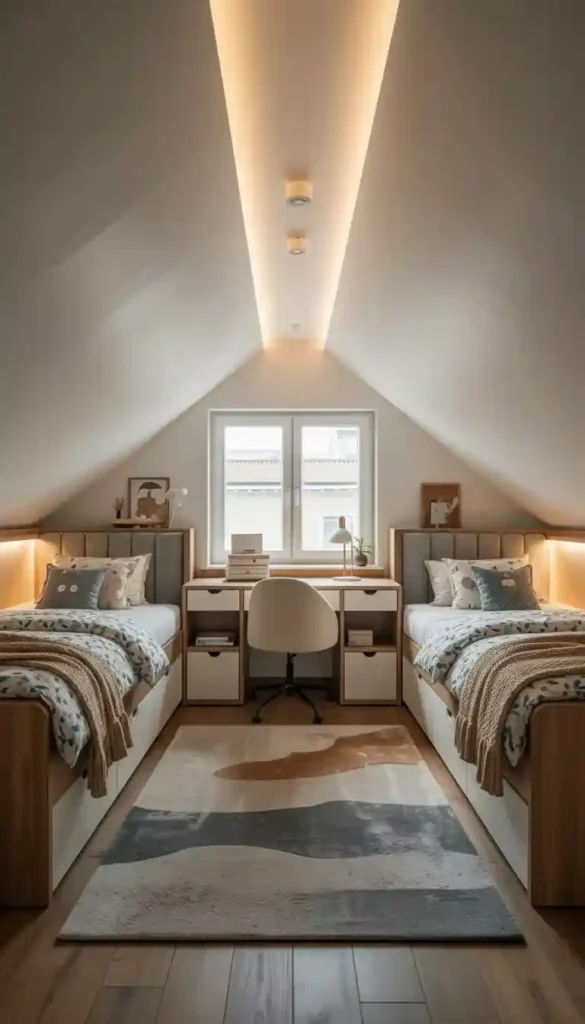
Safety Checks for Attic Spaces
The architectural quirks that make attics charming also create safety concerns.
Address these:
- Stair lighting: Bright, motion-activated if possible
- Sturdy handrails: Properly installed, appropriate height
- Smoke and CO detectors: Required in sleeping spaces
- Updated electrical: Older attics often lack sufficient outlets
- Low ceiling padding: Soft edge trim or strategically placed furniture prevents head bumps
Run a safety checklist before decorating. These aren’t optional considerations.
Built-In Storage Under Eaves
Those awkward low spaces are perfect for customized storage.
Options:
- Pull-out drawers: Maximize deep eave spaces
- Cubbies with doors: Hide clutter while using every inch
- Rolling bins: Easy access without crawling
- Built-in bookshelves: Low shelves under slopes for books and toys
Standard furniture won’t fit these spaces. Built-ins or custom solutions make them useful instead of wasted.
The Cozy Alcove Feature
Attics naturally create nooks—use them intentionally.
Reading nook setup:
- Cushioned bench or bean bag under low ceiling
- Small bookshelf within arm’s reach
- Clip-on reading light
- Soft throw blanket
Play alcove:
- Low play table in eave space
- Bins for building toys or art supplies
- Good task lighting overhead
These “hidden” spots become kids’ favorite features. The compressed space feels special, not limiting.
Why Attic Rooms Become Favorites
When done well, attic rooms offer what standard bedrooms can’t.
The unique appeal:
- Sense of separation from main house—feels like their own space
- Architectural interest makes it memorable and special
- Cozy factor you can’t replicate in standard rooms
- Often quieter, away from household traffic
I’ve interviewed dozens of families, and attic rooms consistently rank as kids’ preferred spaces—even over larger standard bedrooms.
Three Birds Renovations Kids Room Inspiration And Trends
When people mention Three Birds Renovations kids’ rooms, they’re referencing that sunny, livable, styled-but-not-precious aesthetic that photographs beautifully yet actually functions. I’ve studied their approach for years, and in 2026, the core principles remain relevant: clean foundation, warm textures, playful patterns, and storage that works without looking institutional.
The philosophy translates to fewer built-ins (which date quickly) and more modular pieces that move and adapt as kids grow.
The Clean Foundation Principle
Start with a blank canvas that feels warm, not sterile.
Base elements:
- Light walls: White or barely-there neutrals
- Natural materials: Wood, rattan, woven baskets
- Simple window treatments: White curtains or natural bamboo shades
- Quality flooring: Light wood or neutral luxury vinyl
Why it works: When the base is clean and natural, you can layer in personality without visual chaos.
Statement Lighting as the Focal Point
Choose one standout light fixture that adds personality.
Characteristics:
- Soft, rounded shapes: Kid-friendly, not harsh or angular
- Natural materials: Rattan pendants, woven shades, wood elements
- Appropriate scale: Not too large for the space
- Warm glow: Bulbs should create cozy ambiance
This single element adds design interest without commitment. Swap the light fixture, change the room’s feel.
📌 Pin this Three Birds–inspired approach! 📌
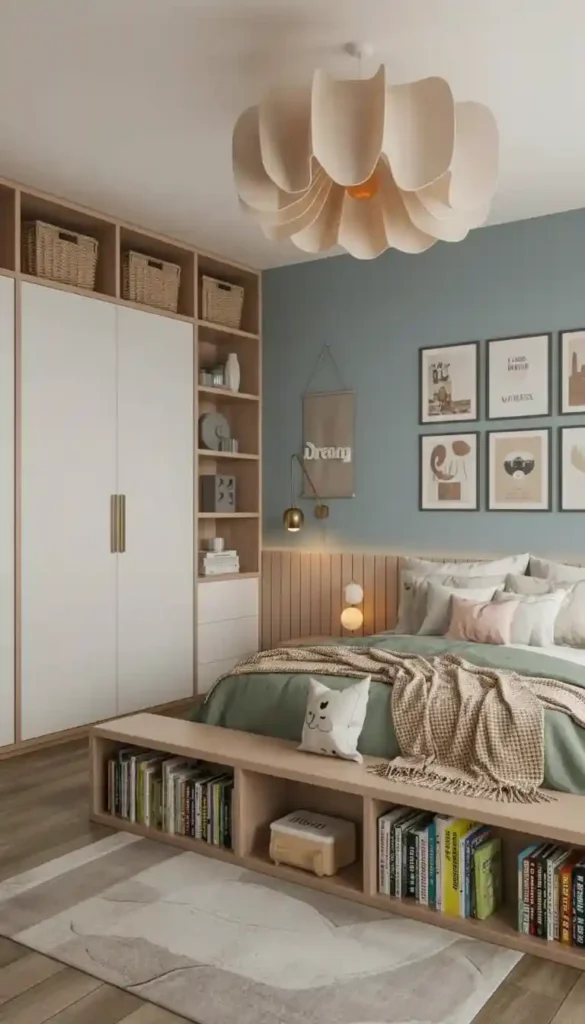
Forward-Facing Book Display
Books as decor is both practical and visually appealing.
The method:
- Low shelf or ledges at kid height
- Covers facing outward: 10-15 books visible
- Rotate regularly: Keeps display fresh, encourages reading
- Mix favorites with new: Balance comfort reads with discovery
Bonus: Kids are significantly more likely to pick up books they can see. Spines-out doesn’t work for non-readers.
Layered Bedding Formula
The bed is the largest visual element—make it intentional.
The combination:
- Solid duvet or quilt: In neutral or soft color
- Patterned sheets: These are affordable to swap
- One statement throw: Adds texture and color
- Mix of pillow sizes: 2-3 pillows in coordinating patterns/solids
Strategy: When tastes change, you’re replacing $30 sheets and maybe a throw—not a $200 comforter set.
Woven Baskets for Visible Storage
Baskets add texture while hiding visual clutter.
Use throughout:
- Toy storage: On shelves or under bed
- Closet organizers: For accessories, small items
- On top of wardrobes: For seasonal items
- Next to desk: For supplies or current projects
Choose: Natural materials in consistent style, even if different sizes.
The Rug Layering Technique
Rugs define zones and add warmth without permanent commitment.
Approach:
- Larger neutral base rug: Jute, natural fiber, or textured cream
- Smaller patterned rug on top: Adds color and interest (optional)
- Or single statement rug: In pattern that coordinates with room
Why layering works: You can swap the top rug seasonally or as tastes change for minimal cost.
Curated Styling Over Cluttered Styling
The difference between styled and messy comes down to intentional placement.
Key areas of interest:
- Gallery wall in one corner: Framed art, photos, meaningful pieces
- Reading nook: Defined with chair, lamp, small shelf
- Desk vignette: Pencil cup, plant, one decorative item
- Top of dresser: 2-3 items maximum
The rule: If you’re creating more than 3-4 styled areas, you’re cluttering, not curating.
📌 Save this styling strategy! 📌
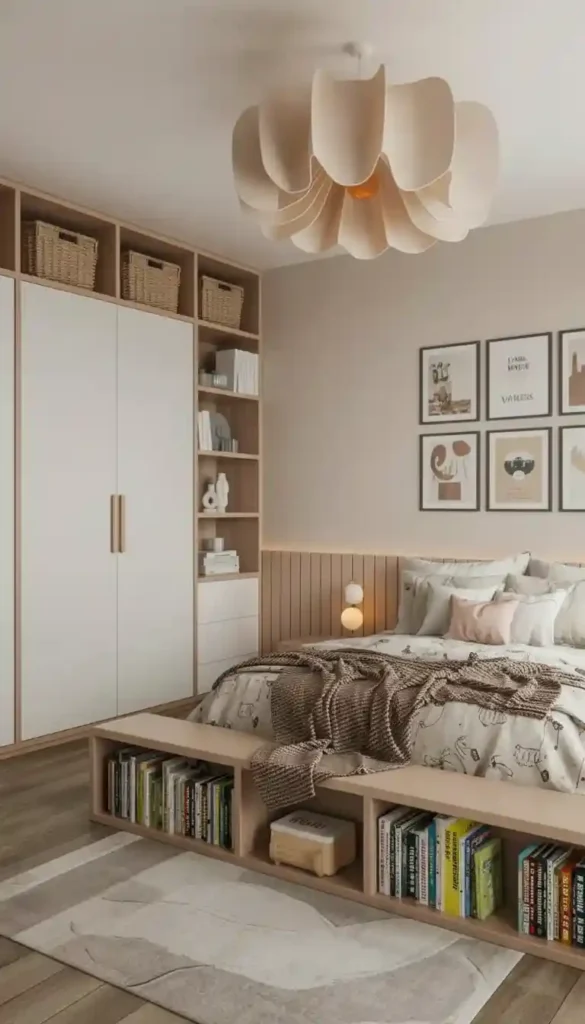
Kid-Safe Materials That Still Look Good
Style fails when it can’t withstand daily life.
Choose:
- Washable flooring: Luxury vinyl plank, sealed wood, or tiles
- Durable paint: Satin or semi-gloss for easy cleaning
- Rounded edge furniture: No sharp corners on dressers, desks
- Anchored tall pieces: Wall straps for bookshelves, dressers
- Cordless window coverings: Safer, cleaner look
These aren’t visible choices, but they’re the foundation that keeps styled rooms functional.
Accessible Storage That Stays Beautiful
The room only stays beautiful if items are easy to put away.
The system:
- Low storage: For daily-use toys and books
- High shelves: For display only, or adult-controlled items
- Matching containers: Visual cohesion even when storage is visible
- Labels with pictures: For younger kids who can’t read
The philosophy: Make it easier to put things away correctly than to leave them out.
Equal Storage in Shared Rooms
If two kids share the space, identical systems prevent conflict.
Provide each child:
- Matching basket set: Their own toy storage
- Equal shelf/drawer space: Visibly divided
- Personal display area: For their art or collections
- Individual bedside storage: Even if beds are bunked
Why it matters: Fairness reduces arguments. Clear ownership increases responsibility.
The Restraint That Creates Modern
Here’s what many miss about this style: it’s as much about what you don’t include.
Practice:
- One pattern family: Stripes, dots, or geometric—not all three
- Consistent color story: 2-3 colors maximum beyond neutrals
- Limited furniture: Only what’s actually needed
- Negative space: Empty wall sections feel intentional, not incomplete
Modern, livable kids’ rooms aren’t about adding more. They’re about editing to what truly serves the space and the child.
Room Renovation For Kids Focused On Comfort And Imagination
The worst mistake in kids’ room design is creating sensory overload in the name of “fun.” I’ve learned that true imagination flourishes in calm spaces with one or two intentional creative elements, not in rooms that assault every sense. In 2026, we’re prioritizing comfort that supports daily routines—because a room that fights bedtime or morning routines isn’t well designed, no matter how it looks.
Balance is everything: enough stimulation to inspire play, enough calm to enable rest.
The One Creative Element Philosophy
Choose a single bold feature, keep everything else supportive.
Options that inspire without overwhelming:
- Mural on one wall: Mountains, forest, abstract shapes—not busy characters
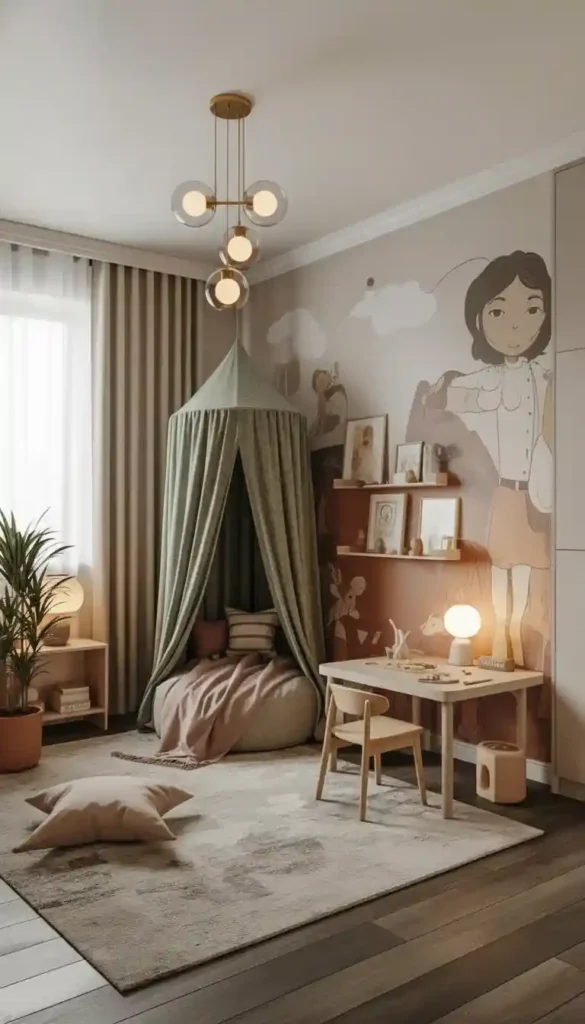
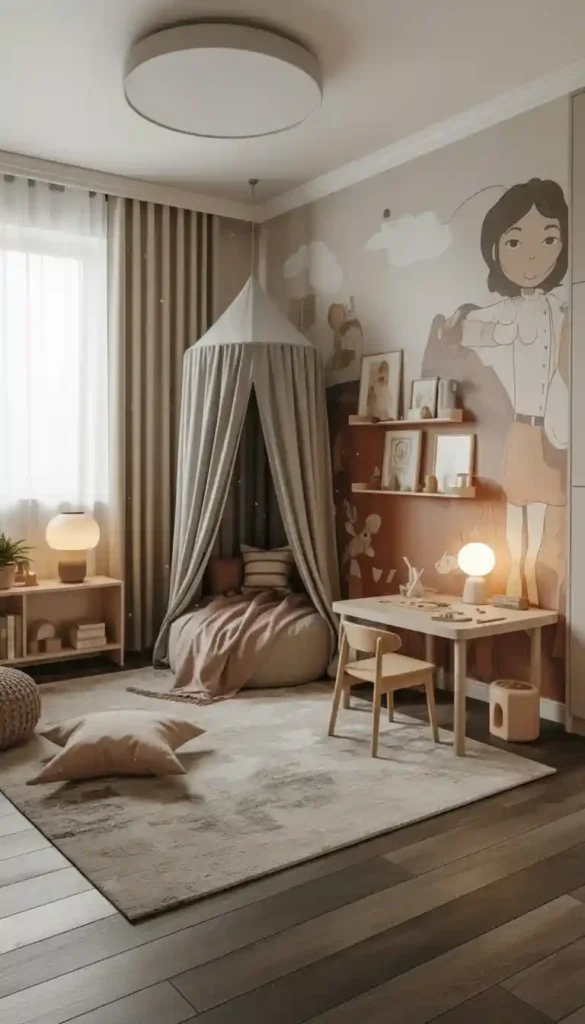
- Canopy nook: Sheer fabric creates cozy hideaway
- Small climbing feature: Rock wall panel or indoor ladder (with proper mats)
- Reading tent: Floor cushions under draped fabric
Why singular focus works: Kids engage more deeply with one special feature than with twelve competing elements.
Sensory-Friendly Considerations
Even kids without diagnosed sensitivities respond to sensory environment.
For comfort:
- Soft, layered textiles: Cotton curtains, plush rug, cozy bedding
- Acoustic management: Rugs and fabric reduce echo
- Lighting control: Dimmers, multiple light sources, no harsh fluorescents
- Temperature stability: Blackout curtains help regulate, fans improve air
Test: Spend time in the room yourself. If it feels off to you, it likely feels off to them.
📌 Pin this comfort-first design approach! 📌
The Comfortable Bed Foundation
Sleep quality affects everything else in a child’s life.
Invest in:
- Quality mattress: Age-appropriate firmness, proper support
- Breathable bedding: Cotton or bamboo, not synthetic
- Multiple pillow options: Some kids like firm, some like soft
- Layered blankets: Allows adjustment for personal temperature preference
Skip: Character bedding that’s scratchy or uncomfortable. Sleep > theme, always.
The Private Haven Concept
Every child benefits from a small retreat space within their room.
Create it with:
- Floor canopy: Tension rod with sheer curtain, creates instant fort
- Corner cushion pile: Large floor pillows in reading corner
- Under-desk hideout: Curtain clips to desk edge, makes cave underneath
- Bed tent: Canopy that attaches to bed frame
Why kids need this: Even in their own room, having a smaller space within the space provides security and control.
Rotating Art Display System
Kids create constantly. Honor that without covering every surface.
The structure:
- Display shelf: Rotating 4-5 pieces at kid height
- Art portfolio box: Everything else stored here
- Quarterly review: Child chooses what to keep, what to release
- Frame options: Clip frames for easy swapping
The lesson: This teaches that not everything needs to be displayed permanently. It models editing and curation.
Play Surfaces That Don’t Dominate
Active play needs space, but doesn’t require giant equipment.
Effective solutions:
- Small play table: For building, crafts, projects
- Floor cushions: Moveable, flexible seating
- Clear floor area: Rug-defined zone for movement, building, pretend play
- Low shelves: Toys accessible without furniture blocking floor space
Why less is more: Empty floor space enables imagination. Kids build forts, create obstacle courses, and invent games when there’s room to move.
Toy Categorization and Rotation
Fewer toys out = more focused play.
The method:
- 6-8 categories: Building toys, vehicles, dolls, art supplies, books, dress-up, etc.
- Bins for each category: Only 2-3 bins accessible at once
- Rotate weekly or monthly: Swap bins based on interest
- Deep storage: Remaining toys in closet or basement
What I’ve observed: Kids play longer and more creatively with fewer options. Decision fatigue is real, even for six-year-olds.
📌 Save this imagination-boosting strategy! 📌
Lighting’s Impact on Mood and Routine
The wrong lighting can make bedtime a battle.
Time-of-day approach:
- Morning: Bright overhead light, open curtains
- Daytime: Natural light plus task lighting at desk
- Evening: Dim overhead or turn off, use warm lamps only
- Bedtime: Only nightlight or small bedside lamp
The science: Blue-toned bright lights signal daytime to the brain. Warm, dim lights support melatonin production and bedtime readiness.
Sound Management for Better Sleep
Noise control isn’t just about keeping things quiet.
Address:
- Echo reduction: Soft rugs, fabric wall art, curtains, upholstered furniture
- External noise blocking: Solid-core doors, weatherstripping, blackout curtains
- White noise option: Fan or machine if room is near loud areas
- Sibling noise: Separate reading lights and activity times if sharing
For sensitive kids: These modifications can mean the difference between restorative sleep and restless nights.
Light Control for Sleep Quality
Darkness dramatically improves sleep, especially for kids under 10.
The combination approach:
- Blackout curtains: Block morning sun and streetlights
- Layer with sheer curtains: Open for natural light during day
- Blackout shade plus curtains: Maximum control in very bright rooms
- Door sweep: Prevents hallway light from entering
Test: Stand in the room at night. If you can see your hand in front of your face, it’s not dark enough for optimal sleep.
Routine-Supporting Layout
The room’s organization should make daily tasks easier, not harder.
Morning routine support:
- Outfit station: Low hanging rod or drawer they can access
- Shoes by door: Specific spot prevents searching
- Backpack hook: Always in same place
Evening routine support:
- Hamper where clothes come off: Usually near closet or bathroom door
- Bedside table: For water, glasses, book
- Clear desk: Homework spot ready for morning
Why Comfort Enables Imagination
Here’s what the research shows: stressed or uncomfortable children don’t engage in creative play.
The connection:
- Physical comfort: (temperature, soft surfaces) allows focus on play
- Sensory calm: Prevents overwhelm that shuts down imagination
- Routine support: Reduces daily friction, freeing mental energy for creativity
- Safe retreat space: Provides security that enables risk-taking in play
When we prioritize comfort, we’re not sacrificing fun. We’re creating the foundation that makes meaningful play possible.
Conclusion
After years of trying every Pinterest-worthy trend and learning what actually survives real childhood, I’ve come to this: the best kids’ rooms are built on calm foundations with room to grow. They handle the mess of daily living without looking messy. They adapt as interests change without requiring full renovations. Most importantly, they support the routines and rhythms that make family life actually work.
Your child’s room doesn’t need to be Instagram-perfect or theme-park exciting. It needs to be theirs—functional enough to maintain, comfortable enough to rest in, and inspiring enough to play in. Start with the basics we’ve covered, add the creative elements that match your child’s personality, and skip the rest. You’re not designing a showroom; you’re creating a space where your kid will grow, dream, learn, and yes, occasionally paint the wall with nail polish. That’s exactly what it should be.

“I share simple, beautiful and affordable home decor ideas to help you style every corner of your home with ease.