

There’s something deeply personal about the bedroom you wake up in every morning. It sets the tone for your entire day — the light streaming through soft curtains, the gentle textures under your fingertips, the quiet calm that tells your body it’s safe to rest. When that space feels heavy, cluttered, or dark, it affects you more than you realize. You deserve better than that.
Summer 2026 is the perfect moment to change everything. The design world is leaning into light, openness, and warmth — not the cold minimalism of past years, but a soft, breathable aesthetic that wraps around you like a linen sheet on a warm morning. These five ideas will show you exactly how to create that space, even if you’re starting from scratch.
Maximize Natural Light With Smart Window Treatments
Natural light is the single most powerful tool in bedroom design. It costs nothing, transforms the entire feel of a room, and connects you to the rhythm of the day. Yet most bedrooms fight against it — heavy curtains, misplaced furniture, and dark walls that swallow every ray of sunshine.
The good news? Fixing this is simpler than you think.
Why Natural Light Changes Everything
Natural light does something artificial lighting simply cannot. It shifts throughout the day, moving warm in the morning, bright and clear at noon, and golden at dusk. That movement makes a room feel alive.
- It makes small rooms feel larger and more open
- It lifts your mood by supporting your body’s natural circadian rhythm
- It reveals the true beauty of your furniture, textiles, and paint colors
- It reduces your dependence on overhead lighting during the day
When your bedroom is flooded with daylight, you feel better. That’s not just aesthetic preference — it’s biology.
Choose Sheer Curtains Over Heavy Drapes
The fastest way to transform a dark bedroom is swapping heavy curtains for sheer panels. This single change can make a room feel twice as big and twice as fresh.
- Choose white or ivory sheers for maximum light diffusion
- Look for linen-cotton blends — they drape beautifully and soften light naturally
- Layer sheers under a lightweight blackout panel if you need darkness for sleep
- Hang curtain rods 6 to 8 inches above the window frame to make ceilings appear taller
Avoid thick velvet or polyester drapes in summer bedrooms. They trap heat and block the very light you’re trying to maximize.
Keep Windows Unobstructed
It sounds obvious, but it’s one of the most common mistakes in bedroom design. Large furniture placed directly in front of or beside a window creates a shadow effect that darkens the entire room.
- Keep nightstands low-profile — aim for pieces under 24 inches tall
- Avoid placing tall bookshelves or wardrobes within 3 feet of a window
- If you have a bed against a window wall, ensure the headboard sits below the windowsill
- Clear window sills of clutter — even small objects block valuable light from reaching the floor
Pin this natural light strategy! 📌
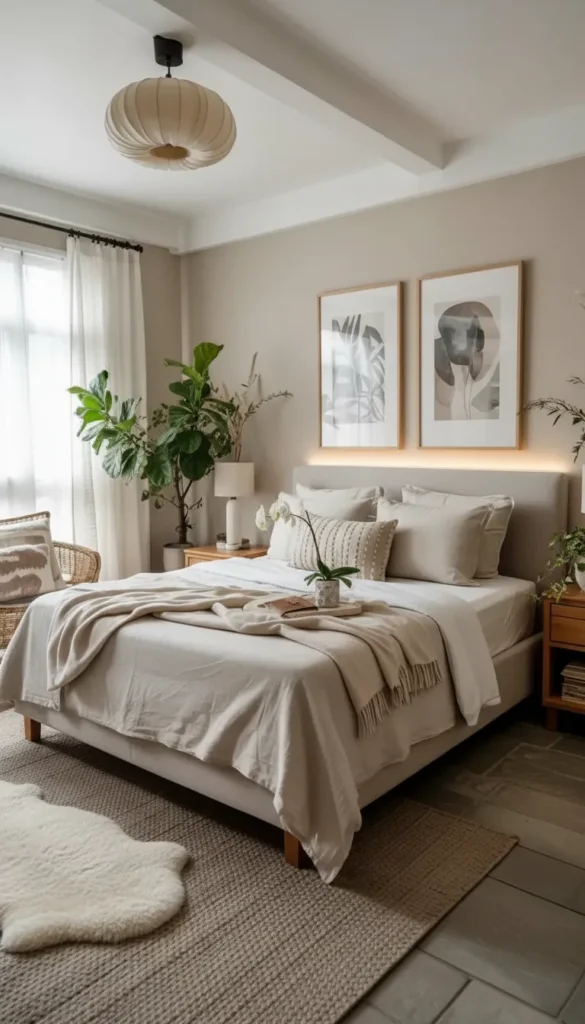
Use Mirrors to Multiply Light
A well-placed mirror doesn’t just add style — it doubles your natural light. Interior designers have used this trick for decades because it genuinely works.
- Place a large mirror directly across from your main window
- A mirror on a side wall at a 45-degree angle to the window is equally effective
- Use a full-length leaning mirror in a corner to bounce light into dark areas
- Mirrored furniture like bedside tables or a dresser subtly amplifies this effect
Choose mirrors with simple, light-colored frames — brass, white, or natural wood — to keep the aesthetic clean and summery.
Layer Your Lighting for Evenings
Natural light is perfect during the day, but your room needs to maintain its cozy warmth at night. The solution is layered lighting that mimics the softness of daylight.
- Use warm-toned bulbs (2700K–3000K) in bedside lamps — never cool white
- Avoid single overhead lighting, which creates harsh, unflattering shadows
- Add a floor lamp in a corner for soft ambient fill
- Try a dimmer switch on your main light source for total atmosphere control
The goal is to transition from the golden glow of evening sunlight into warm lamplight without noticing the shift.
The Furniture Placement Principle
Beyond windows, your overall furniture layout affects how light moves through the space. Thoughtful placement creates an unobstructed flow that makes your bedroom feel open and breathable.
- Keep at least 18 inches of walking space around the bed on each side
- Push large pieces to walls so the center of the room stays clear
- Avoid overcrowding — if a piece of furniture doesn’t serve a clear function, remove it
- Low-profile beds (platform or slatted frames) open up visual space dramatically
Save this lighting approach! 📌
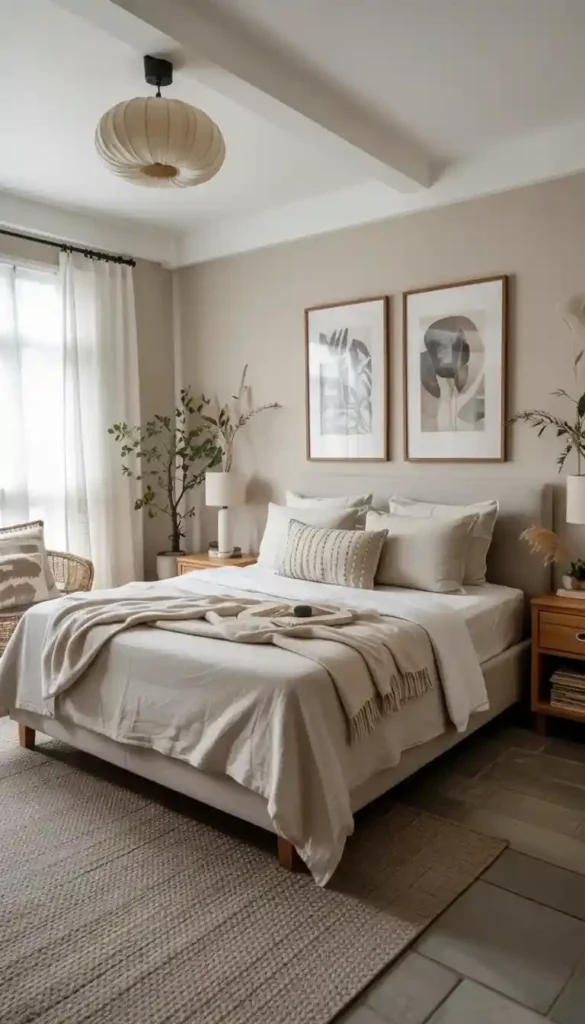
The principle here is simple: light travels in straight lines. Remove everything that blocks its path, and your bedroom transforms.
Build a Neutral Color Palette That Feels Warm, Not Sterile
Color is emotional. The shades you choose for your bedroom walls, bedding, and furniture don’t just look a certain way — they make you feel a certain way. Too dark, and the room feels heavy. Too cold, and it feels clinical. The light and airy aesthetic of Summer 2026 lives in a very specific sweet spot: warm neutrals that breathe.
Getting this right requires more intention than simply picking “white.” Here’s how to do it properly.
Start With Soft Whites and Warm Creams
Pure bright white can work in bedrooms with abundant natural light and warm wood tones to balance it. But in most bedrooms, a slightly warmer white is a better choice. It reads as clean and fresh without feeling like a hospital.
- Warm white (slightly yellow or peachy undertone) makes rooms feel welcoming
- Cream adds richness without going dark — perfect for walls in sun-limited rooms
- Soft off-white works beautifully on trim, ceiling, and furniture to unify the space
- Test your chosen shade in both morning and evening light before committing
The ceiling is often forgotten, but painting it a shade lighter than your walls creates a floating, expansive effect. It’s a subtle trick with a big payoff.
Layer in Subtle Earth Tones
Pure neutrals benefit from a second layer of warmth. This is where soft earth tones — sandy beige, muted taupe, gentle terracotta — come in. They give the eye something to land on without disrupting the airy feel.
- Use earth tones in textiles first: a throw blanket, decorative cushions, or a bedside rug
- A single accent wall in a muted warm tone adds depth without darkening the room
- Terracotta pots for plants, a woven rattan basket, or a wood-framed artwork all introduce earthy warmth naturally
- Stick to matte finishes on walls — they absorb light softly rather than reflecting it harshly
Pin this color palette approach! 📌
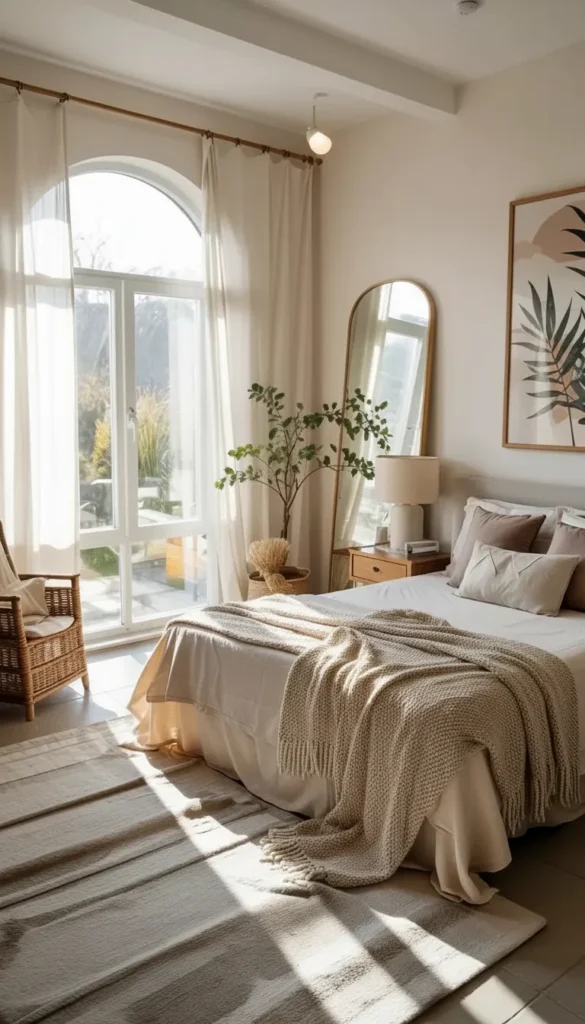
Introduce Blue and Sage as Accent Colors
For Summer 2026, the standout accent colors are soft blue and sage green. Both reference the outdoors — sky, water, plants — which is exactly the mood you want in a summer bedroom.
- Soft blue works beautifully in throw pillows, a light blanket, or window panels
- Sage green brings a botanical freshness that feels calm and modern
- Neither color should dominate — think 10–20% of the room’s visual palette
- Keep the tones muted and dusty, not bright or saturated
A single sage-colored ceramic vase or a pair of soft blue linen pillowcases is often enough. These accents don’t need to be loud to be noticed.
When and How to Use Dark Furniture
Conventional wisdom says light rooms need light furniture. That’s partly true — but strategic use of darker pieces can actually enhance the airy aesthetic by creating contrast and grounding the space.
- A dark wood nightstand beside a white bed creates a beautiful, balanced look
- Black metal frames (lamp bases, mirror frames, curtain rods) add definition without heaviness
- Keep dark pieces small and functional — avoid large dark wardrobes or dressers in light rooms
- One or two dark accents prevent the room from feeling too “soft” or washed out
This contrast principle is used by top designers because it adds sophistication without sacrificing the light feel.
Testing Colors Before You Commit
One of the most expensive mistakes in bedroom design is painting an entire room before seeing how the color actually looks in your space. Color perception changes dramatically depending on lighting, room size, and surrounding colors.
- Buy sample pots and paint large swatches (at least 12×12 inches) on different walls
- Live with the swatches for at least 48 hours, checking at different times of day
- Look at the color in natural morning light, afternoon sun, and evening lamplight
- Consider how the color looks against your bedding and flooring — not in isolation
Save this color selection strategy! 📌
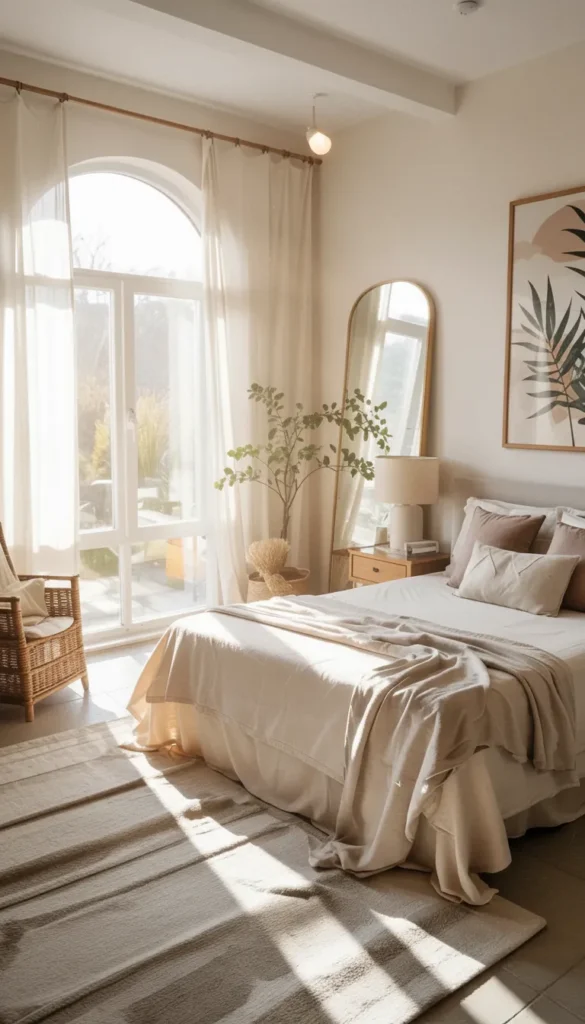
The right neutral isn’t about the swatch in the store. It’s about how that color makes you feel when you wake up in your room on a Tuesday morning.
Choose Furniture With Clean Lines and a Light Visual Footprint
Furniture carries a lot of visual weight — even when it’s physically light. Heavy, ornate, or bulky pieces crowd a room even when there’s technically enough floor space. The light and airy aesthetic demands a different approach: furniture that looks like it belongs in the space rather than dominating it.
Summer 2026 design is moving toward pieces that feel almost effortless — simple, purposeful, and quietly beautiful.
The Case for Low-Profile Beds
The bed is the most important piece of furniture in your bedroom. It takes up the most floor space, draws the most visual attention, and sets the overall tone of the design. Choosing the right bed frame changes everything.
- Platform beds (no box spring needed) sit lower to the ground, which opens up vertical space
- Low-profile frames make ceilings feel higher and rooms feel more expansive
- Slatted wooden headboards let light pass through rather than blocking it
- Avoid tall, upholstered headboards in small rooms — they absorb space and light
For Summer 2026, the ideal bed is a simple platform frame in natural oak, light ash, or painted white wood. Paired with white or cream linen bedding, it becomes the perfect neutral anchor.
Light Wood Nightstands: Simple and Functional
Nightstands are often overlooked, but they contribute significantly to the overall feel of the room. Bulky, ornate nightstands make a light room feel cluttered. The right choice is clean, simple, and unobtrusive.
- Choose light oak, birch, or pine for a natural, warm feel
- Look for nightstands with a single drawer and an open shelf — functional without bulk
- Aim for a height that sits even with or just below your mattress top
- Keep the surface minimal: lamp, one book, a small plant
Pin this furniture selection guide! 📌
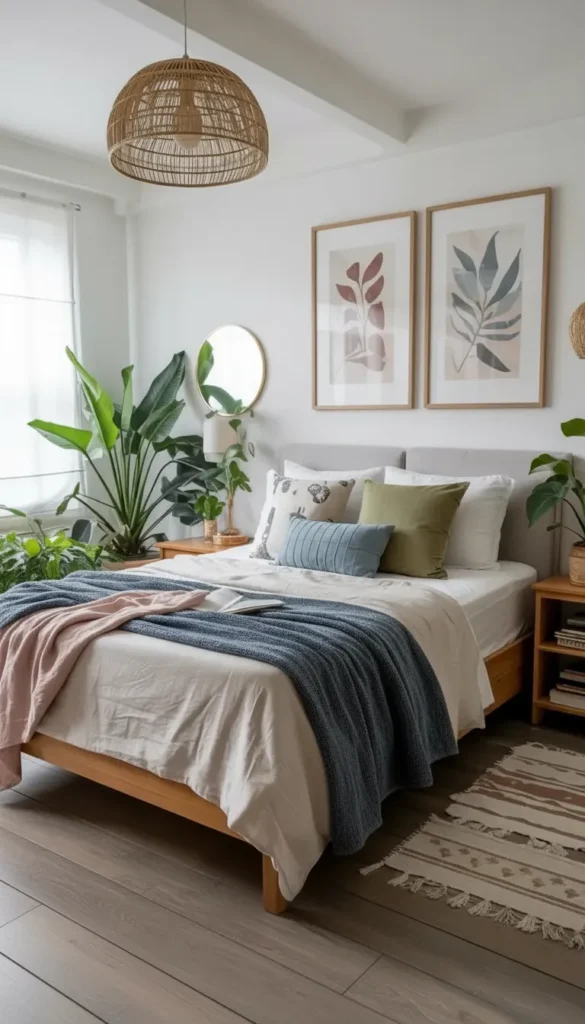
Dressers That Disappear Into the Room
A dresser needs to store your clothes without becoming the visual focal point of your bedroom. In a light and airy space, the dresser should blend, not dominate.
- Choose horizontal low dressers over tall chests — they spread width rather than height
- White-painted or light wood finishes keep dressers visually recessive
- Replace standard drawer pulls with simple brass or matte black hardware for understated elegance
- Place the dresser on a wall that doesn’t face your bed directly — reduce visual clutter in your sightline
A dresser with clean, flat drawer fronts and minimal ornamentation looks modern and fresh. Avoid carved details, ornate handles, or dark stains.
Keep the Center of the Room Open
One of the most effective design principles for light and airy bedrooms is negative space — intentional emptiness that gives each element room to breathe.
- Leave the center of your bedroom floor clear whenever possible
- Resist the urge to fill every corner with a chair, plant, or accent table
- A small bedroom with fewer, better pieces feels more luxurious than a large room overfilled with furniture
- The “does it earn its space?” test: if a piece doesn’t serve function or beauty, it doesn’t belong
Interior architects frequently cite negative space as the hallmark of sophisticated design. Emptiness, used intentionally, is a design element in itself.
How to Scale Furniture to Your Room Size
Mismatched scale is one of the most common bedroom design mistakes. Oversized furniture in a small room makes the space feel suffocating. Undersized furniture in a large room looks lost.
- Measure your room before buying any large piece — floor-plan it on paper or an app first
- The bed should occupy no more than 50–60% of the floor space in a standard bedroom
- Leave at least 24 inches between the end of the bed and any wall or furniture
- Nightstands should be approximately the same width as the bed’s depth for visual balance
Save this furniture layout technique! 📌
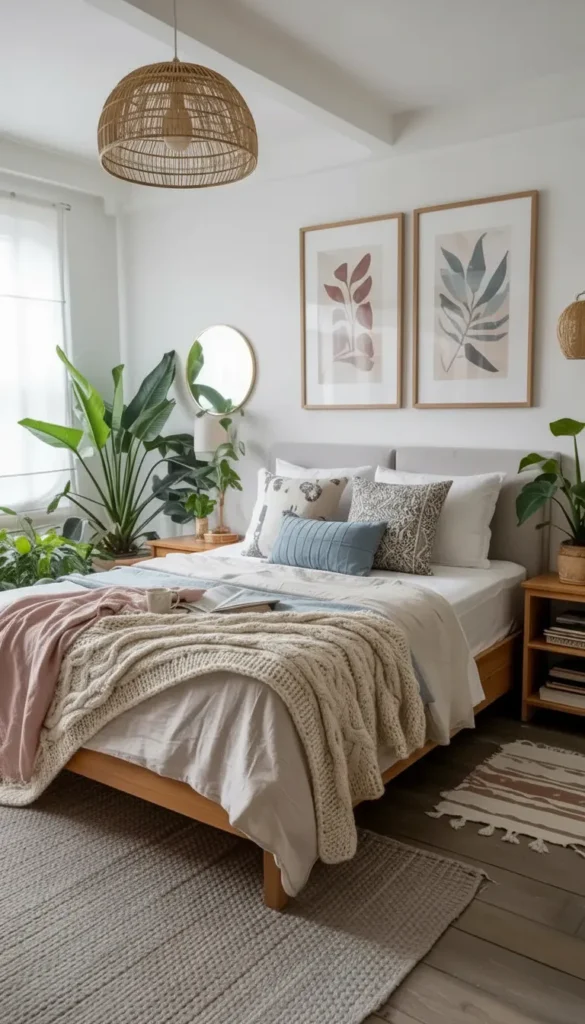
When furniture fits the room perfectly, the space flows naturally. You stop noticing the furniture and start experiencing the room as a whole.
Layer Textiles for Cozy Warmth Without Visual Heaviness
The light and airy aesthetic doesn’t mean cold or sparse. It means carefully chosen softness — textiles that add warmth, texture, and comfort without visually weighing down the space. This is where the “cozy” part of “fresh and cozy” comes from.
Summer 2026 is about linen, cotton, and natural fibers. It’s about layers you can see and feel.
Why Linen Bedding Is the Summer Standard
Linen has become the definitive bedding choice for the light and airy aesthetic, and for good reason. It checks every single box: breathable, beautiful, textured, and available in every warm neutral you need.
- Linen naturally wrinkles in a beautiful way — that relaxed look is part of the aesthetic
- It’s temperature-regulating, which is perfect for summer
- White, cream, and oat linen bedding reflect light, keeping the bed from becoming a dark focal point
- Layer a linen duvet with a lighter cotton blanket for flexible warmth
Avoid polyester bedding in light bedrooms. It looks flat, reflects light harshly, and doesn’t have the natural texture that makes linen so visually appealing.
Add Texture With Lightweight Throws
A throw blanket draped across the foot of the bed adds both visual and tactile interest. Choose it thoughtfully — the wrong throw can disrupt your entire palette.
- Waffle-knit cotton throws work beautifully in white or soft beige
- A woven cotton throw in sage or soft blue introduces your accent color naturally
- Drape it casually rather than folding neatly — natural, relaxed draping looks more authentic
- Keep the throw lightweight — no heavy chunky knits in a summer bedroom
Pin this textile layering method! 📌
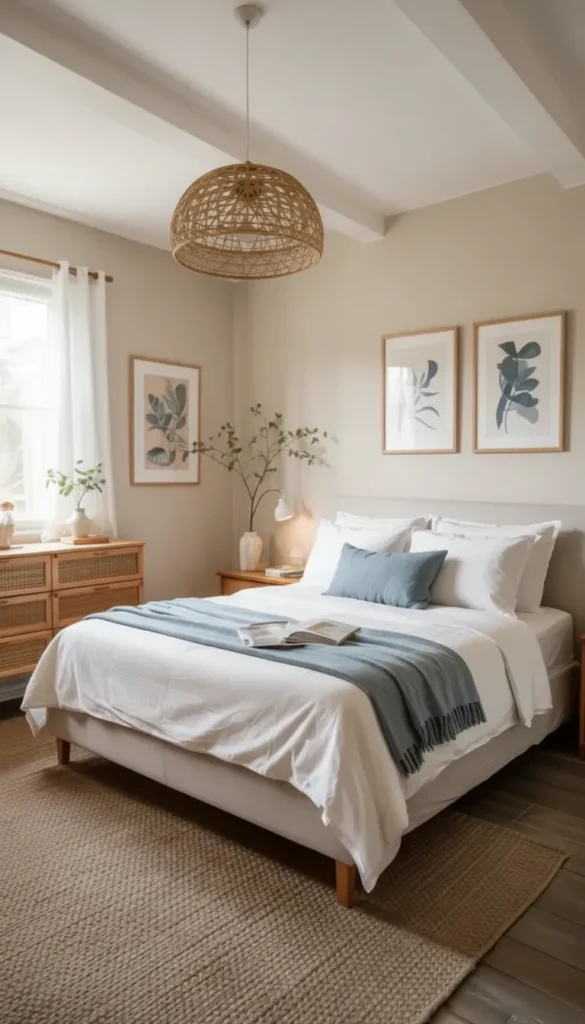
Choosing the Right Rug for an Airy Feel
A rug grounds the room and adds warmth underfoot, but in a light bedroom, it needs to be chosen very carefully. The wrong rug makes the room feel heavy and small.
- Choose low-pile rugs in natural materials: jute, sisal, cotton flatweave, or soft wool
- Light neutral rugs (cream, oat, soft gray) extend the visual floor space
- Size matters enormously: the rug should extend at least 18 inches beyond each side of the bed
- Avoid dark, bold-patterned rugs — they pull the eye downward and compete with the light feel
A well-chosen rug ties the whole room together without drawing attention to itself. That’s the goal.
Cushions That Complement, Not Crowd
Decorative cushions add personality to a bedroom, but too many of them create visual clutter. Summer 2026 design favors a restrained approach: fewer cushions, more presence.
- Stick to 3–5 cushions maximum on a standard queen or king bed
- Mix two sizes: standard square cushions plus a bolster or lumbar pillow for variety
- Keep colors within your palette — white, cream, sage, soft blue, or terracotta
- Vary textures: smooth linen next to woven cotton next to subtle embroidery
Remove all cushions from the bed at night. They’re decorative, not functional. Piling them on the floor defeats the purpose.
Window Textiles Beyond Curtains
Window treatment design has evolved beyond just curtains. There are several layering options that create a richer, more considered look while maintaining lightness.
- Roman shades in linen pair beautifully with sheer curtain panels
- A bamboo blind layered with white sheers creates a natural, spa-like feel
- Valances alone — without full curtains — work well in rooms with good privacy
- Tab-top curtains in natural linen drape softly and are easy to open fully
Save this textile approach! 📌
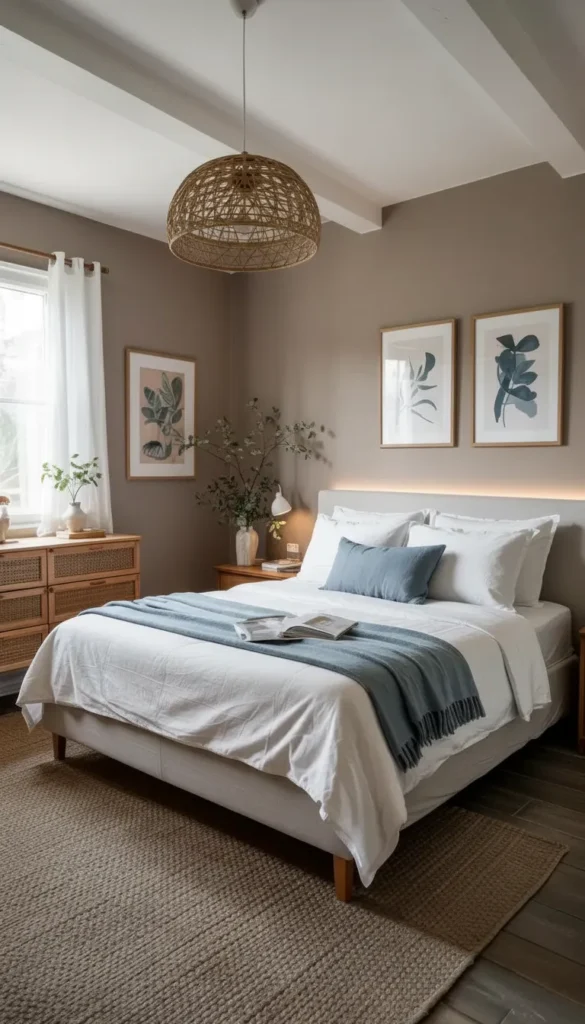
The goal with all textiles is cohesion. Every fabric in the room should feel like it belongs to the same family — similar in tone, finish, and spirit.
Incorporate Green Accents and Natural Elements for a Biophilic Touch
Of all the design trends of Summer 2026, biophilic design — the deliberate integration of natural elements into interior spaces — is the one with the deepest impact. It’s not just aesthetic. Research consistently shows that natural elements in a bedroom reduce stress, improve sleep quality, and increase feelings of well-being.
The light and airy aesthetic is the perfect vehicle for biophilic design. Nature is already light, already airy, already soft. Bringing it inside feels completely natural.
Why Plants Transform a Bedroom
Plants do something no piece of furniture or artwork can do: they bring life into the room. They move, grow, breathe, and change with the seasons. Even a single plant on a nightstand shifts the entire energy of a space.
- Plants introduce organic shape — no hard angles, no rigid symmetry
- Green is restful to the human eye, which makes it perfect for a bedroom
- They purify air to a modest but real degree, which feels appropriate in a summer bedroom
- The act of caring for plants creates a mindful, grounding daily ritual
Start with one or two plants if you’re new to them. A bedroom doesn’t need a jungle to feel alive.
Best Plants for a Light and Airy Bedroom
Not every plant thrives in bedroom conditions. Low light, temperature fluctuations, and irregular watering schedules mean you need resilient, low-maintenance varieties.
- Pothos — trails beautifully from a shelf, thrives in indirect light
- Snake plant — architectural and upright, nearly impossible to kill
- Peace lily — soft, elegant, and one of the few plants that flowers in low light
- Rubber plant — bold leaf shape, deep green, beautiful beside a light wood dresser
Pin this plant selection guide! 📌
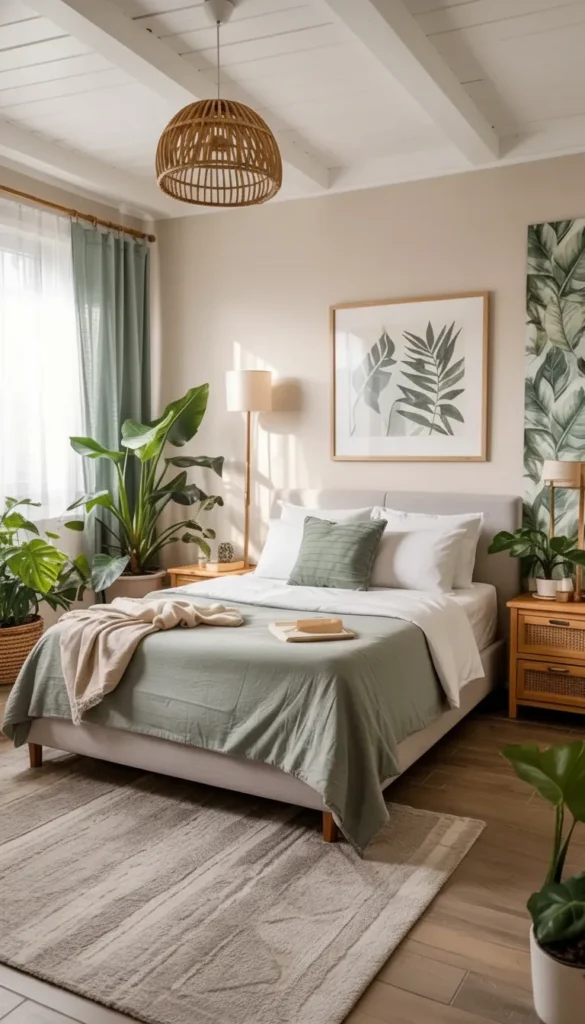
Avoid plants that require high humidity or direct sun in a bedroom context. They’ll struggle, and struggling plants look sad — the opposite of the aesthetic you’re creating.
Use Soft Green in Textiles and Accents
Not everyone wants plants, and that’s completely valid. You can still introduce the biophilic effect through color. Soft green in textiles and accessories references the outdoors without requiring any maintenance.
- A sage green throw pillow on a white bed is an instant refresh
- Eucalyptus green curtain panels bring in nature through color and texture
- A small green ceramic vase — even without flowers — adds botanical presence
- Soft green artwork (a botanical print, abstract watercolor) introduces the color at eye level
Keep green tones soft, dusty, and muted. Bright, saturated greens look synthetic in a natural bedroom context.
Layering Multiple Shades of Green
One of the most sophisticated techniques in biophilic bedroom design is working with multiple shades of the same color. Rather than one flat green, you layer soft sage with slightly deeper olive or muted forest tones.
- Place a sage green cushion beside an olive throw — the tonal variation creates depth
- Mix a light eucalyptus plant beside darker-leaved pothos for natural contrast
- Use varied green artwork: one botanical line drawing plus one watercolor wash
- Avoid matching greens exactly — natural spaces never have perfectly uniform color
This layering technique mirrors what you’d see in an actual garden: dozens of green shades coexisting beautifully.
Natural Materials as a Grounding Element
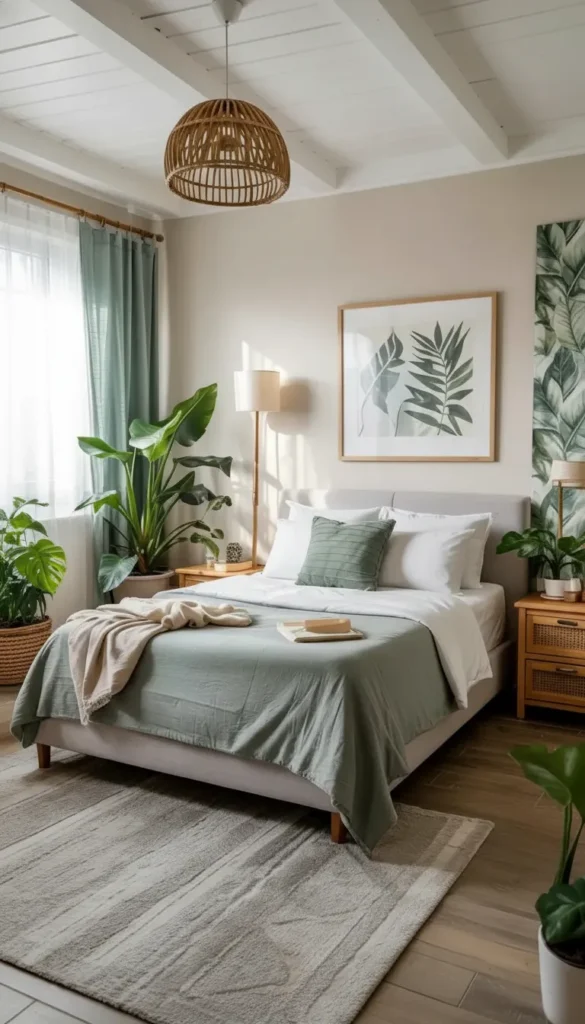
Biophilic design extends beyond plants and color. Natural materials — wood, rattan, stone, linen, ceramic — all contribute to that connection with the natural world.
- A rattan pendant light above the bed creates a warm, natural focal point
- Woven baskets for storage add texture without adding visual weight
- Wooden frames on mirrors and artwork unify the natural palette
- Ceramic accessories in matte earthy tones (vases, small bowls, candle holders) feel organic
Save this natural elements approach! 📌
Creating a Scent Experience
Biophilic design includes more than what you see. Scent is one of the most underused tools in bedroom design — and one of the most powerful. The right fragrance can make a bedroom feel like an outdoor retreat.
- Use fresh flowers in season: peonies, lavender, jasmine, or eucalyptus stems
- A linen spray with subtle botanical fragrance refreshes bedding instantly
- Beeswax candles in natural scents (sandalwood, sage, cedar) create warmth without overpowering
- A diffuser with eucalyptus or lavender essential oil provides continuous subtle fragrance
These sensory details are the finishing layer of a truly immersive bedroom experience. They’re what transforms a room that looks good into a space that feels extraordinary.
Conclusion
Creating a light and airy bedroom for Summer 2026 isn’t about a complete renovation or a massive budget. It’s about intention — understanding that every choice you make in this room affects how you feel when you wake up, how well you sleep, and how much you enjoy being there.
Start with one idea from this guide. Maybe it’s swapping your curtains for sheer panels. Maybe it’s adding a single plant to your nightstand. Maybe it’s painting one wall a warm cream and layering a linen throw across your bed. Small, thoughtful changes compound into a room that genuinely transforms your everyday life.
Your bedroom should be the most restorative room in your home. With these five ideas, Summer 2026 is your moment to finally make it that way.

“I share simple, beautiful and affordable home decor ideas to help you style every corner of your home with ease.