

There is something quietly heartbreaking about stepping onto your balcony and feeling like it has no purpose. You look out at a cramped, empty slab of concrete and think: this could be something. Maybe you have been putting it off because you do not know where to start, or you assume small spaces cannot feel beautiful. I want you to know — they absolutely can.
This guide is for every apartment dweller who has ever wanted a real outdoor escape just steps from their living room. These five ideas are practical, affordable, and designed specifically for small balconies in 2026. Whether your space is six feet wide or ten, you will find something here that works for you. Let’s turn that overlooked corner into the retreat it was always meant to be.
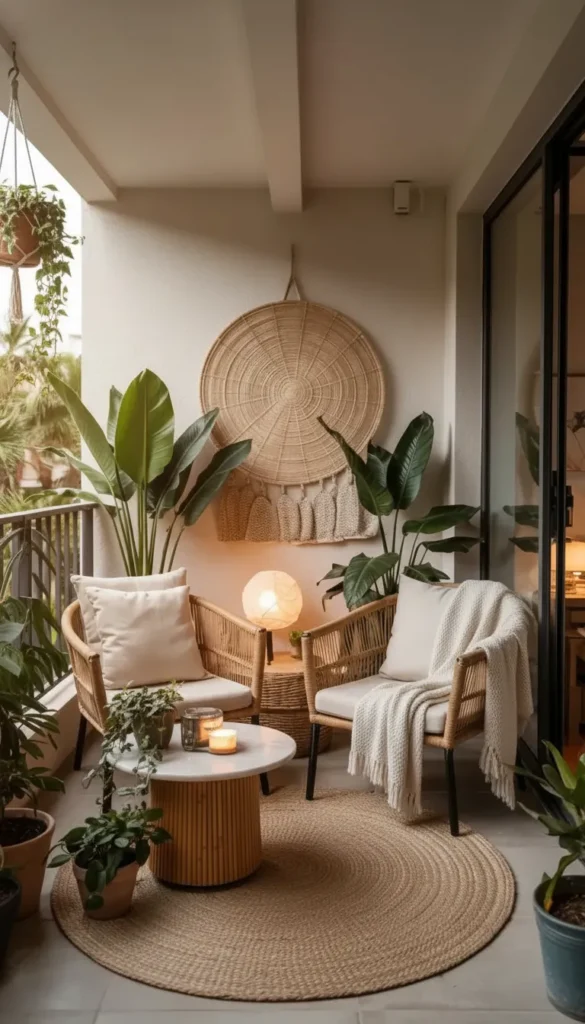
Compact Lounge Seating For Small Balcony Comfort
The first thing that transforms a balcony is seating. Without it, the space feels like a corridor. With the right seating, it becomes a destination — somewhere you actually want to be every morning with your coffee, every evening with a book.
Why Seating Defines the Whole Space
Seating is the anchor of any outdoor room. It tells you how the space is meant to be used. On a small balcony, the wrong seating makes everything feel cramped. The right seating makes the space feel intentional and inviting.
- Low-profile chairs keep sightlines open and the area feeling airy
- Slim sectionals hug the railing without blocking movement
- A compact loveseat for two is often more practical than two separate chairs
The goal is comfort without visual clutter. If your furniture looks heavy, the balcony will feel smaller than it is.
The Best Furniture Types for Small Balconies
Not all outdoor furniture is created equal. For compact spaces, you need pieces that work hard without taking up too much room.
- Foldable chairs — store flat against the wall when not in use
- Stackable stools — versatile for seating or as side tables
- Built-in bench seating — especially powerful if it doubles as storage underneath
- Bistro sets — a small round table with two chairs fits almost any layout
A built-in bench along one wall is one of the smartest moves you can make. It provides seating, storage, and structure — all without eating into your floor plan.
Pin this seating guide for your next balcony refresh! 📌
How to Choose the Right Cushions
Cushions do two things at once: they add comfort and they set the tone for your entire color scheme. Choosing well here pays off in the overall look.
- Stick to neutral tones like linen, cream, sage, or warm white for a timeless feel
- Soft summer colors like terracotta, dusty blue, or pale yellow feel fresh and seasonal
- Always choose weather-resistant fabric — look for Sunbrella or olefin blends
- Add one or two patterned pillows to break up the solids without overwhelming the space
Avoid dark, heavy fabrics in small spaces. They absorb heat and make the area feel smaller.
Materials That Last Outdoors
Durability matters. Your furniture will face sun, rain, humidity, and temperature swings.
- Powder-coated aluminum — lightweight, rust-proof, and easy to move
- Treated teak or acacia wood — beautiful and long-lasting with minimal maintenance
- Rattan or wicker with aluminum frames — a classic outdoor look that holds up well
- Durable resin — budget-friendly and surprisingly stylish in modern designs
Avoid untreated iron or particle board. They deteriorate quickly in outdoor conditions.
The Coffee Table Question
You need a surface, but you cannot afford to fill the floor with furniture. Here are your best options:
- A small folding tray table that tucks away after use
- A nesting table set — one table slides under the other when not needed
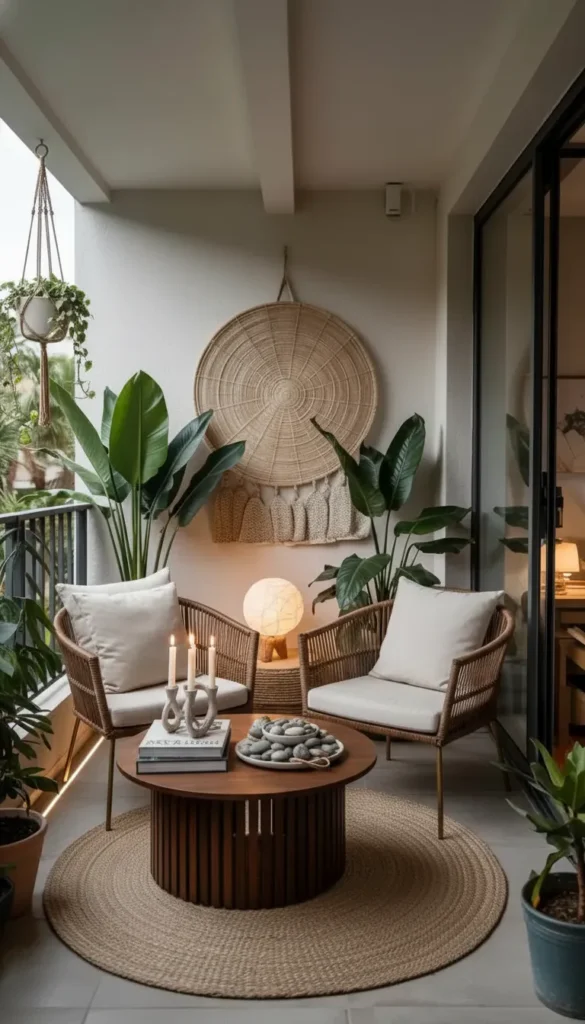
- A round drum-style table about 18 to 24 inches in diameter
- A woven storage ottoman that serves as both a footrest and a table
Keep it light. A glass top or slatted wood top lets the eye pass through and makes the space feel open.
The Finishing Touch: Evening Extension
The best balcony seating areas are usable day and night. Here is how to extend your time outside:
- Add a compact floor lantern beside your seating for warm, ambient light
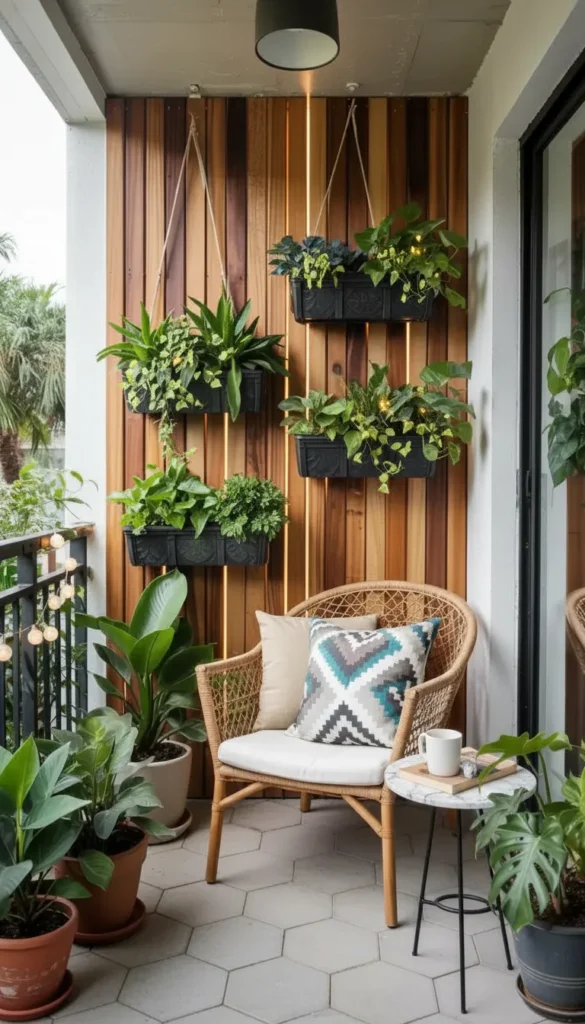
- Drape string lights along the railing or overhead for a magical evening glow
- A small outdoor rug underneath the seating area defines the zone and anchors the furniture
Even a 4×6 foot outdoor rug makes a huge difference. It signals that this is a room, not just a surface.
Save this seating strategy for your summer balcony refresh! 📌
Why This Works
Low-profile, flexible seating with soft textiles and warm lighting does something powerful: it makes a small space feel chosen. You are not making do with what fits. You are designing intentionally. That shift in mindset — and in design — is what turns a balcony from an afterthought into a favorite spot in your home.
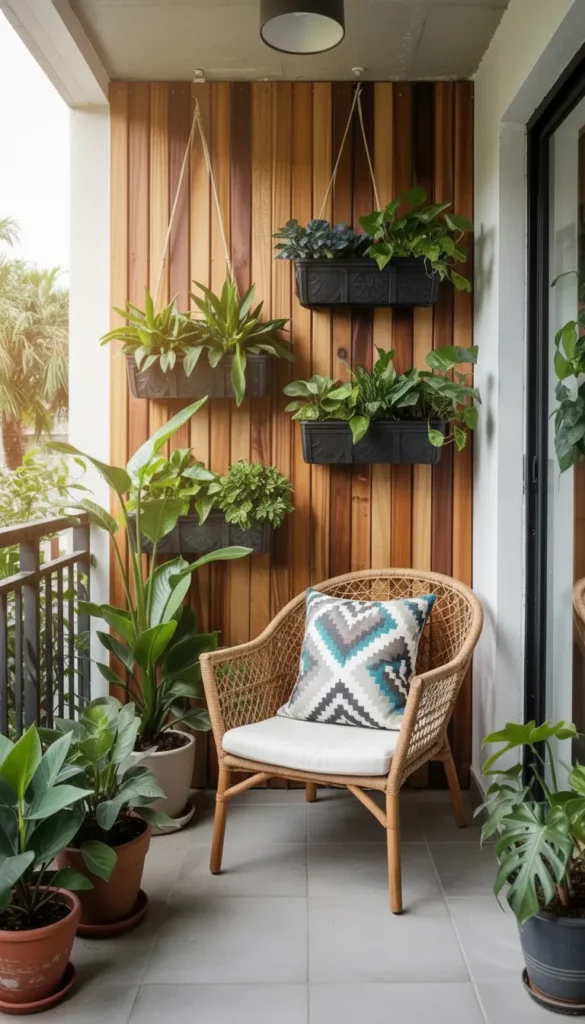
Vertical Garden Walls To Maximize Greenery
Plants make everything better. They add life, color, texture, and even a sense of privacy to a balcony. The challenge in small spaces is fitting them in without crowding the floor. The solution is to go vertical.
Why Vertical Gardening Works in Small Balconies
Floor space on a small balcony is precious. Every square foot matters. Vertical gardening lets you grow upward instead of outward, turning a bare wall or railing into a lush, living backdrop.
- Uses wall space that would otherwise be empty
- Creates natural privacy from neighboring balconies
- Reduces the visual heat of exposed concrete or brick walls
- Adds genuine depth and texture to the overall design
In design terms, a vertical garden functions as a living feature wall. It becomes the focal point that everything else is arranged around.
Types of Vertical Planting Systems
There is no single right system. Choose based on your wall type, sunlight, and how much maintenance you want to do.
- Wall-mounted pocket planters — fabric or felt pockets that attach to any wall, great for herbs
- Grid panels with clip-on pots — industrial and modern, very adaptable
- Wooden pallet planters — budget-friendly and easy to build or find secondhand
- Hanging rail systems — metal rails with hanging planters in a row, very clean and modern
- Trellis frames — ideal for climbing plants like jasmine, ivy, or small roses
For renters, choose systems that attach with hooks or velcro rather than screws. Many modern systems are designed specifically for this.
Pin this vertical garden guide for balcony inspiration! 📌
Best Plants for Small Balcony Vertical Gardens
Not every plant thrives in a vertical system. Choose varieties that stay compact, grow well in containers, and suit your light conditions.
For sunny balconies:
- Cherry tomatoes or compact peppers
- Basil, rosemary, and thyme
- Succulents and sedums
- Marigolds or petunias
For shaded or partial-shade balconies:
- Ferns and philodendrons
- Mint and parsley
- Impatiens
- Trailing pothos
Mix textures. Pair trailing plants with upright ones. Add one or two small flowering plants for color. Variety makes the arrangement feel more like a garden and less like a row of pots.
Container Weight and Drainage
This is the practical side that most guides overlook. Weight and drainage matter enormously on balconies.
- Use lightweight plastic or fabric pots rather than ceramic or terracotta
- Always check that each planter has drainage holes
- Place a catch tray underneath or use self-watering inserts to protect the floor
- Confirm your balcony’s weight capacity if you plan a large installation — most apartment balconies handle 40 to 60 pounds per square foot, but check with your building
A flooded balcony or water damage to the floor below is an expensive mistake. Good drainage from day one avoids it.
How to Arrange Plants for Visual Impact
Random placement looks cluttered. Thoughtful arrangement looks like a garden.
- Place taller or more upright plants at the back or top of the grid
- Let trailing varieties spill downward at the edges
- Cluster plants of similar water needs together to simplify care
- Leave some breathing room between planters — negative space is part of the design
For color, try grouping one warm-toned plant (orange, red, yellow) with two or three greens. The warm accent pops against the foliage.
Watering Made Easy
Heat on a sunny balcony dries out containers quickly. Make maintenance as simple as possible.
- Self-watering planters with reservoirs last 5 to 10 days without refilling
- Drip irrigation kits designed for balconies are surprisingly affordable and easy to install
- Group containers close together — plants transpire moisture that benefits their neighbors
- Water in the early morning or evening to reduce evaporation
The easier maintenance is, the more likely you are to keep your garden thriving all summer long.
Save this vertical garden approach for your small space! 📌
Why This Works
Greenery has a documented positive effect on mood and stress. Even a small amount of plant life makes a space feel calmer, cooler, and more human. On a balcony surrounded by concrete and urban noise, a vertical garden is not just decoration — it is a genuine improvement to your daily experience. And because it grows upward rather than outward, it works no matter how small your space is.
Foldable Furniture For Flexible Outdoor Living
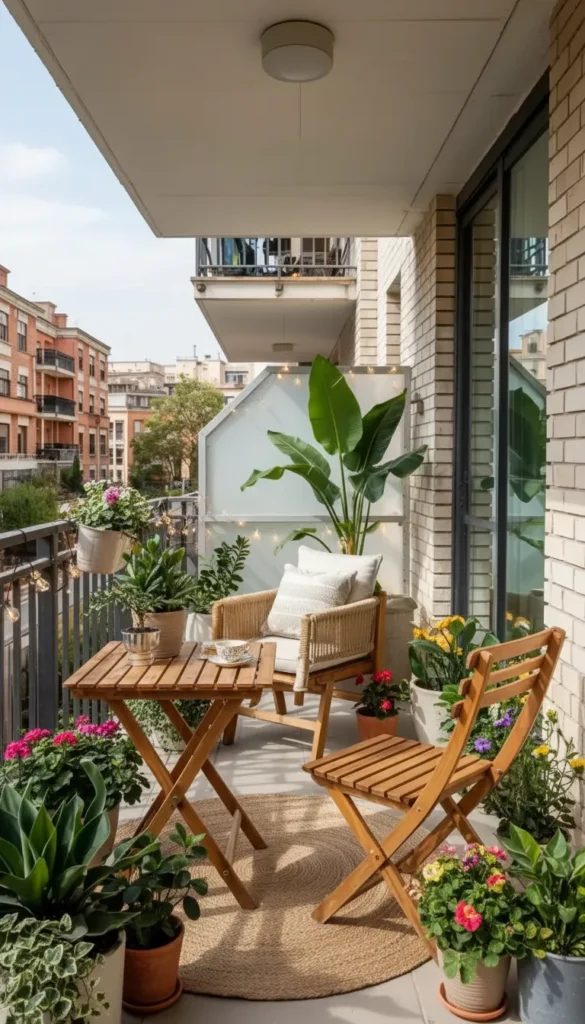
The single biggest mistake people make on small balconies is buying furniture they cannot move. Fixed, heavy furniture locks a space into one configuration forever. In a small area, that is a real limitation. Foldable and flexible furniture changes everything.
The Case for Flexibility
A small balcony needs to serve different purposes depending on the day. Some mornings you want a quiet solo space with just a chair and your coffee. Some evenings you want to host two friends for a drink. The furniture you own should be able to support both scenarios.
- Foldable pieces store flat when not in use
- Rearranging is easy — the space can evolve over time
- You can clear the floor for other activities when needed
- Multi-functional pieces reduce the total number of items you need
Flexibility is the premium feature in small-space design. It beats any fixed setup, no matter how stylish.
Best Foldable Furniture Options
These are the pieces worth investing in for a small balcony:
Foldable chairs:
- Director-style chairs in canvas and wood feel elevated
- Metal bistro chairs fold flat and lean against the wall
- Sling chairs in powder-coated aluminum are incredibly lightweight
Foldable or wall-mounted tables:
- A wall-mounted drop-leaf table folds down when you need it and disappears when you do not
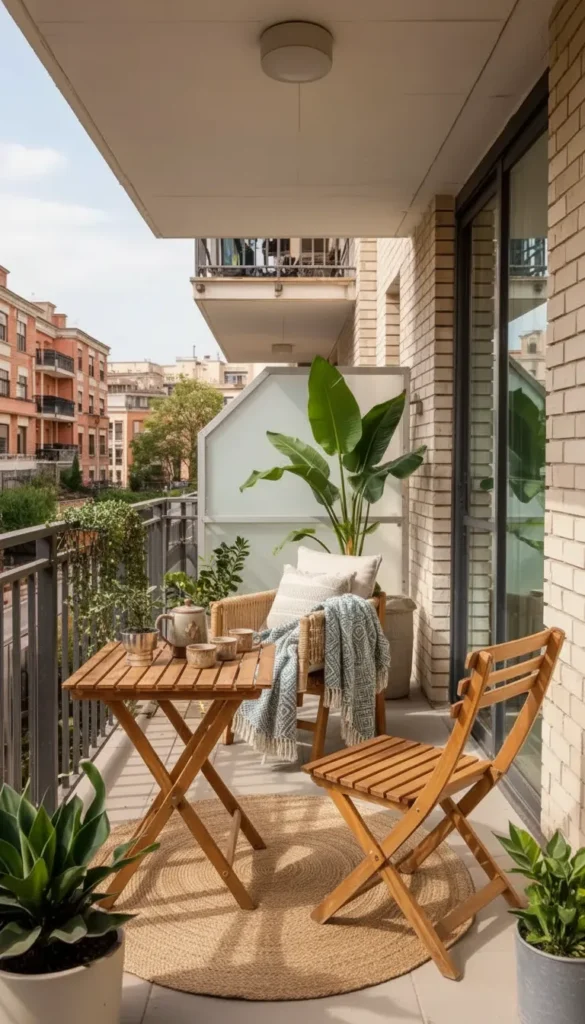
- A folding round table about 24 inches in diameter seats two and stores easily
- A tray table with folding legs is the most portable option of all
Stackable options:
- Stackable stools in rattan or metal double as plant stands or side tables
- Stacking side tables nest together when not in use
Pin this flexible furniture guide! 📌
Materials to Look For
Not all foldable furniture is created equal. Quality matters, especially in outdoor conditions.
- Powder-coated steel or aluminum — folds cleanly, holds up outdoors, often very affordable
- Treated wood like teak or bamboo — warmer aesthetic, heavier but very durable
- High-density polyethylene (HDPE) resin — modern material used in premium outdoor furniture, UV-stable and weather-resistant
- Canvas or Textilene sling fabric — comfortable and dries quickly after rain
Avoid cheap plastic folding chairs with thin frames. They warp in heat and break under real use.
Wall-Mounted Drop-Leaf Tables: A Deep Dive
If you can install just one piece of foldable furniture, make it a wall-mounted drop-leaf table. Here is why:
- Folds completely flat against the wall — essentially invisible
- Unfolds to create a 24 to 30 inch work or dining surface in seconds
- Works for solo dining, laptop work, container gardening, or hosting
- Available in wood, metal, and metal-and-wood combinations
- Installation typically requires just two wall brackets and a handful of screws
Pair it with two folding chairs hung on wall hooks beside it, and you have a complete dining setup that takes zero floor space when not in use.
Storage Solutions for Foldable Furniture
Flexibility only works if storage is easy. Plan for where things go when they are folded.
- Wall hooks for folding chairs — install two or three hooks at shoulder height
- A slim storage cabinet against the wall for smaller items like cushions and throws
- A compact storage box or deck box that doubles as a bench or low table
- Outdoor storage ottomans with lift-off lids are particularly useful
Everything should have a dedicated spot. If folding the furniture away is difficult, you will stop doing it.
Multi-Functional Pieces Worth Knowing About
Some furniture does double duty by design. These are worth seeking out:
- Storage benches — seating with a hollow interior for cushions, tools, or supplies
- Cooler tables — a small table with a built-in ice compartment, perfect for hosting
- Side tables with shelves — the lower shelf holds a plant or a book
- Poufs with internal storage — flexible seating that stores blankets inside
One multi-functional piece can replace two single-purpose pieces. In a small space, that trade-off is always worth it.
Save this approach to flexible balcony living! 📌
Why This Works
Flexibility is not a compromise — it is a design philosophy. A balcony that adapts to you is far more valuable than one locked into a single, rigid arrangement. In 2026, multi-functional furniture is not just a trend for small spaces. It reflects how people actually live: differently from day to day, with changing needs and changing moods. Building that flexibility in from the start means your balcony will serve you better, longer.
Cozy Textiles And Rugs For Warm Atmosphere
Here is the secret that professional designers know: hard surfaces alone never feel like a room. Concrete floors, metal railings, glass walls — they are functional, but they are cold. Textiles are what make a space feel like somewhere you want to be.
Why Textiles Matter More Than You Think
Soft furnishings do something structural elements cannot: they create emotional warmth. This is true indoors and it is equally true on a balcony.
- Rugs define a zone and tell the eye where the “room” begins and ends
- Cushions and pillows add comfort and visual depth
- Throws make a space feel usable on cooler evenings, extending the season
- Layering different textures creates richness that a single material cannot achieve
Even a basic seating area becomes cozy with the right textiles. This is one of the highest-impact, lowest-cost upgrades you can make.
Outdoor Rugs: The Foundation
Start with the rug. It is the base of your design and it does more than any other single textile.
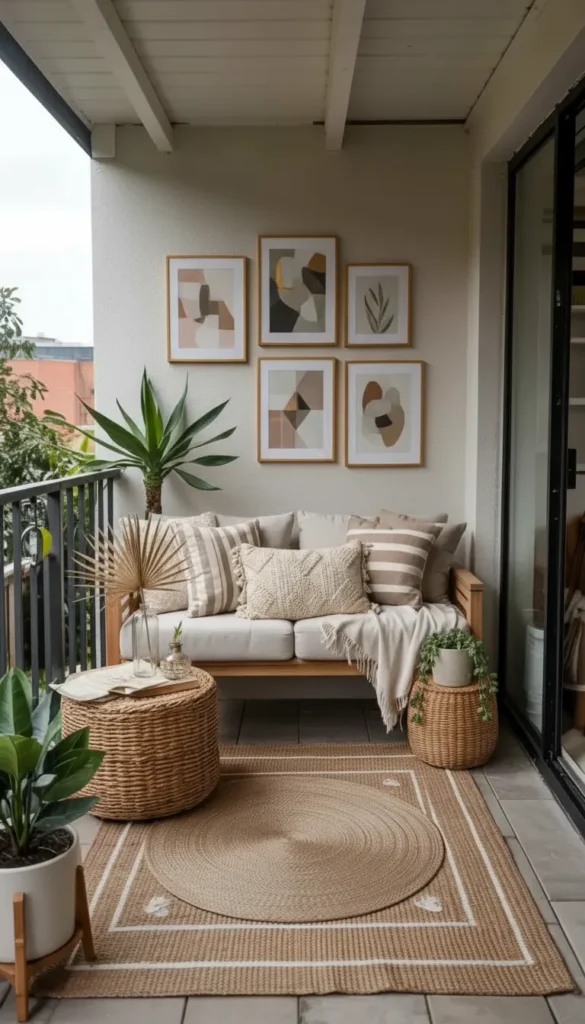
- Choose a rug that is two feet larger than your seating footprint in each direction
- For a small balcony, a 4×6 or 5×7 foot rug is usually ideal
- Look for polypropylene or recycled plastic weave — these are fully weather-resistant
- Flat-weave rugs dry faster than looped pile after rain
- Patterns like stripes, diamonds, or subtle geometrics add visual interest without overwhelming
Maintenance tip: Shake or hose down outdoor rugs monthly. Most can be air-dried in a few hours. Some are even machine-washable.
Pin this textile guide for your balcony upgrade! 📌
Cushions: Comfort and Color Strategy
Cushions are where your personality enters the design. Here is how to choose thoughtfully:
For a cohesive look:
- Choose two to three colors maximum — one neutral, one accent, one optional second accent
- Stick to one or two pattern types — geometric plus solid works well
- Vary sizes: one large back cushion, one medium lumbar, one small accent
Material matters:
- Look for cushions with UV-resistant covers to prevent fading
- Foam inserts dry slowly — choose quick-dry polyester fill for outdoor use
- Zip-off covers make washing easy and let you swap looks seasonally
Sizing guide:
- Chair cushions: typically 20×20 inches
- Deep seat cushions: 24×24 to 26×26 inches
- Lumbar pillows: 14×22 inches
Throws and Blankets
A lightweight throw does two things. It makes the space feel finished during the day, and it makes it functional during cool evenings.
- Choose acrylic or cotton-blend throws that resist mildew and dry quickly
- A basket or small crate beside your seating is a beautiful and practical place to store throws
- In the daytime, drape a throw over the back of a chair — it adds color and texture even when unused
- For evening use, a thicker fleece throw in a neutral tone works for early summer nights
Do not underestimate the throw. It is one of the simplest ways to make a balcony feel like a proper outdoor living room.
Layering Textiles Like a Designer
Layering is the technique that separates a put-together look from a random collection of items.
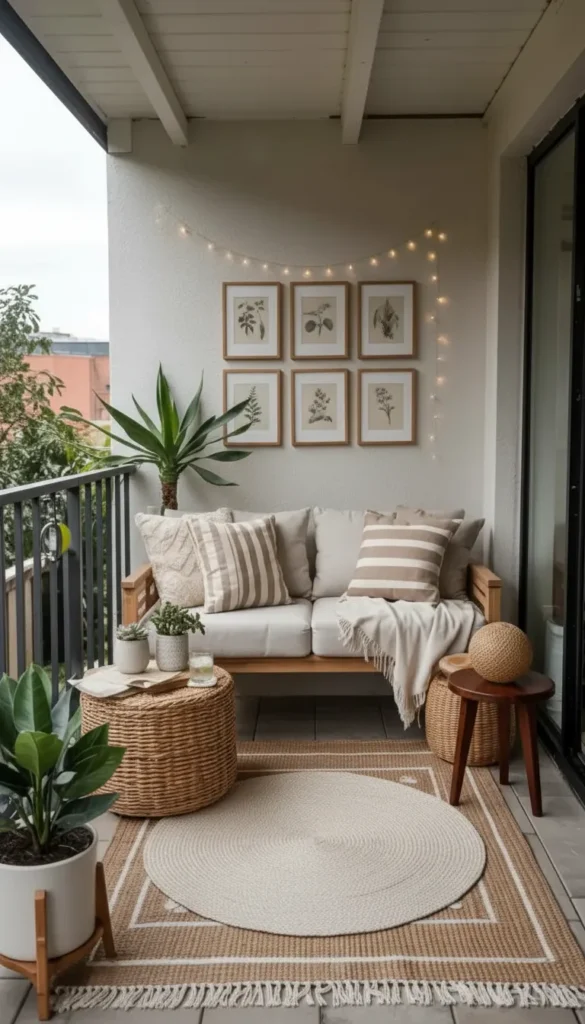
- Start with the rug as the base layer
- Add cushions on the main seating
- Introduce a throw over the arm or back of a chair
- Add one or two accent pillows in a contrasting texture or pattern
The rule of odds applies here: odd numbers of items tend to look more natural. Three cushions look more intentional than two or four.
Seasonal Swapping Made Easy
One of the advantages of textiles is how easily they can be updated. Your furniture can stay the same all summer while your textiles change with your mood.
- Keep a storage box with one set of bright summer textiles and one set of warm, earthy autumn tones
- Swapping cushion covers takes ten minutes and completely refreshes the look
- Pack away textiles at the end of each season — storing them indoors extends their life significantly
- Use vacuum storage bags for bulky cushions to save space
Save this textile layering strategy for your summer balcony! 📌
Why This Works
Textiles are fast, affordable, and transformative. In a small space, they have an outsized effect. A bare concrete balcony with a nice rug, two cushions, and a throw looks like a curated outdoor room. Without those three things, even expensive furniture looks cold and uninviting. Textiles are where heart enters a design, and a balcony without heart is just a floor with a view.
Minimalist Lighting For Evening Ambiance
Most balconies are built for daytime. The lighting — or lack of it — disappears after sunset, and with it goes half your potential enjoyment of the space. Good outdoor lighting extends your balcony’s usable hours deep into summer evenings.
Why Lighting Transforms Small Outdoor Spaces
Lighting does not just help you see. It changes how a space feels emotionally. Warm, layered light makes even a tiny balcony feel magical after dark.
- Soft light creates intimacy — a small space feels cozy, not cramped
- Lighting at multiple heights adds visual depth and dimension
- Strategic placement highlights your best design elements
- The right light extends the balcony season into September and October
Think of outdoor lighting the same way you would approach lighting inside your home. It deserves the same care and attention.
String Lights: The Essential Starting Point
String lights are the single most popular outdoor lighting choice — and for good reason. They are affordable, versatile, and consistently beautiful.
- Choose warm white (2700K to 3000K) bulbs for the most flattering, relaxing glow
- Globe-style bulbs look more premium than teardrop or mini styles
- Weatherproof rated strings last longer and handle rain without risk
- Solar-powered options eliminate the need for an outlet — just ensure six or more hours of direct sun per day for full nighttime performance
Installation ideas for small balconies:
- String from one corner to the opposite corner diagonally
- Run along the ceiling or overhead beam in parallel lines
- Drape along the railing for a low, intimate glow
- Zigzag back and forth for a full-ceiling canopy effect
Pin this lighting guide for your balcony evening setup! 📌
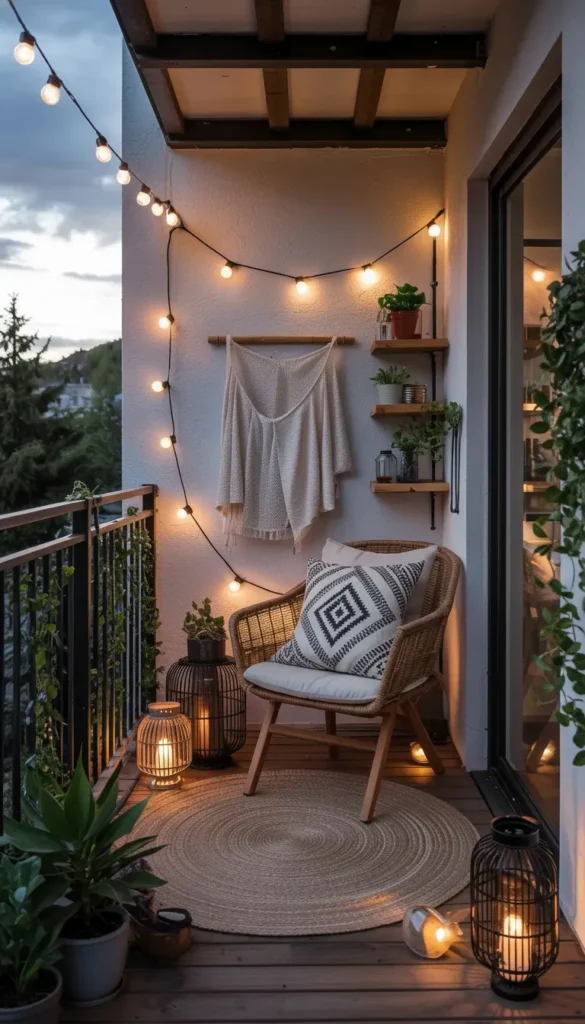
Lanterns and Standalone Lights
String lights do not have to work alone. Adding one or two lanterns creates warmth at ground level.
- Floor lanterns with candles or LED candle inserts look beautiful beside a chair or seating area
- Tabletop lanterns on your coffee table or tray table add atmosphere at eye level when seated
- Hanging lanterns attached to the ceiling or a hook add height and drama
- Battery-powered or solar lanterns require no wiring and can be moved freely
For a cohesive look, keep all lanterns in the same material — all brass, all black metal, or all natural rattan.
Wall-Mounted Fixtures
For balconies with existing wall outlets, a small wall-mounted sconce is worth considering. It provides consistent, reliable light and makes the balcony feel more like a finished room.
- Choose a fixture rated for outdoor or damp locations
- Low-profile designs project light outward rather than glaring directly outward
- Matte black, brushed nickel, and aged bronze finish well with most balcony aesthetics
- Install at roughly six to seven feet high for the best light spread
If you are renting, check with your landlord before any hardwired installation. Most landlords approve simple plug-in sconces that attach with adhesive brackets.
Solar-Powered and Battery Options
Not every balcony has easy access to an outdoor outlet. Fortunately, solar and battery options have improved dramatically.
- Modern solar string lights with separate panels charge reliably in most climates
- Rechargeable LED lanterns run 8 to 20 hours on a single charge
- Motion-activated solar lights are practical for safety near doors
- Look for IP65-rated fixtures for full weather resistance
Battery-operated lights are also ideal if you want flexibility — move them from the balcony to a patio, a dinner table, or a camping trip without any hassle.
Layering Light for Maximum Effect
Just as with textiles, layering light creates depth and sophistication. One light source at one height makes a space feel flat. Multiple light sources at different heights make it feel designed.
A simple three-layer balcony lighting plan:
- Overhead layer: String lights across the ceiling or canopy
- Mid layer: A hanging lantern or wall sconce at seated eye level
- Low layer: A floor lantern beside the seating or small stake lights in planters
This approach works in even the smallest spaces. You do not need many lights — you need the right lights in the right places.
Save this balcony lighting strategy for long summer evenings! 📌
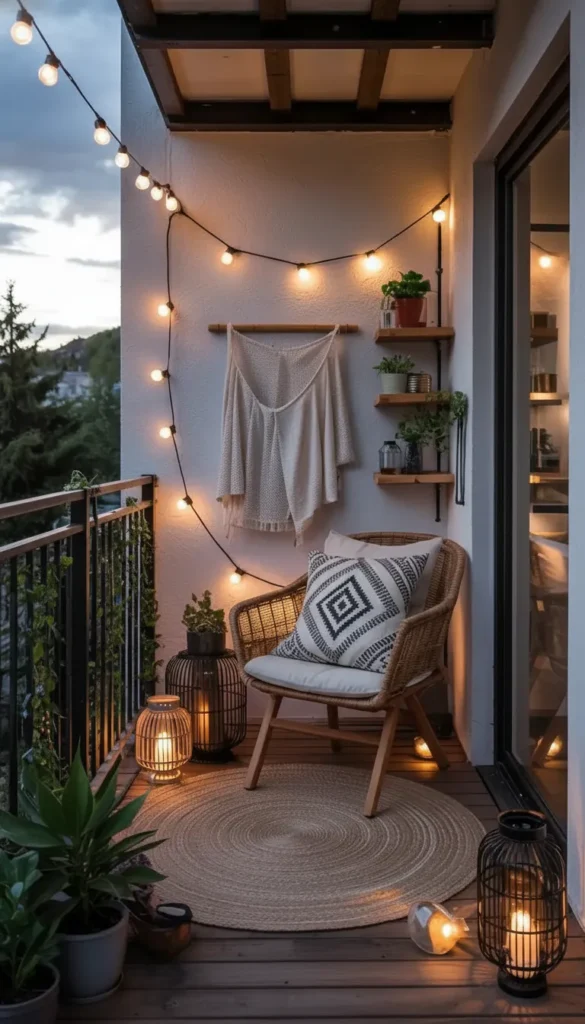
Dimmers and Smart Controls
One final upgrade that makes a meaningful difference: control over your light intensity.
- Smart plugs with app control let you dim and schedule string lights from your phone
- Dimmer switches for plug-in sconces are inexpensive and easy to install
- Setting your lights on a timer means they come on automatically at dusk
- Warm-dimmable bulbs (those that shift from cool white to very warm at low power) are especially beautiful for evening ambiance
The best outdoor lighting is effortless. You should never have to think about it — it should just be there, doing its job quietly while you enjoy the evening.
Why This Works
Evening light is where a balcony earns its full value. A beautifully styled balcony that goes dark at sunset is only giving you half its potential. Thoughtful, layered lighting in warm tones makes a small balcony feel like the best seat in the apartment. It is intimate, it is beautiful, and it costs far less than most people expect. Invest in the light, and your balcony will reward you with hundreds of extra hours outdoors over the course of a summer.
Conclusion
Transforming a small balcony does not require a big budget or a total renovation. It requires intention. Each of these five ideas — comfortable seating, a vertical garden, flexible furniture, cozy textiles, and warm lighting — works independently. But when you combine them, they create something greater than the sum of their parts. A small outdoor room that genuinely feels like yours.
Start with one idea. Maybe it is a foldable chair and a string of lights. Maybe it is a wall-mounted planter with herbs and a small rug. Each small step makes the space more livable, more beautiful, and more worth spending time in. By the end of this summer, you will wonder how you ever looked at that balcony and saw nothing but concrete.

“I share simple, beautiful and affordable home decor ideas to help you style every corner of your home with ease.