

There is something deeply personal about a patio. It is the place where you set down your coffee in the morning before the day pulls you in a hundred directions. It is where summer evenings stretch longer than they should, where laughter lingers in the warm air and conversations happen that could never quite take place inside. If your outdoor space has been feeling like an afterthought — just a patch of concrete with a plastic chair — you are not alone, and this article is written exactly for you.
In 2026, outdoor living is no longer a luxury reserved for magazine covers. It is something every homeowner deserves, and it is far more achievable than most people think. Whether you have a sprawling backyard or a narrow apartment balcony, the right decor ideas can completely transform how you feel in that space. These five approaches — rooted in real design principles and practical budgets — will help you create an outdoor retreat that genuinely feels like yours.
Layered Neutral Lounge Patio For Relaxing Summer Evenings
A neutral lounge patio is the single most versatile outdoor transformation you can make in 2026. It creates a space that feels calm, spacious, and effortlessly stylish — no matter the size of your outdoor area. The secret lies not in a single piece of furniture but in how you build layers of texture, comfort, and warmth together.
Why the Neutral Palette Works So Well Outdoors
Neutral tones — think beige, sand, soft gray, and ivory — visually cool a hot outdoor space. They reflect light gently instead of absorbing heat, which makes the area feel more comfortable during peak summer hours.
- Beige and sand tones create an immediate sense of visual calm
- Soft gray pairs with almost any accent color or plant variety
- Warm ivory makes evening lighting feel incredibly inviting
- Neutral bases let seasonal accents (pillows, throws, flowers) do the heavy lifting
How to Choose the Right Seating Setup
The centerpiece of a lounge patio is always the seating. A deep-cushioned sectional sofa positioned under partial shade becomes the natural gathering point for family and guests. Aim for seating that people want to sink into — not perch on.
- Choose cushions with a minimum 4-inch thickness for real comfort
- Look for Sunbrella or similar outdoor-grade fabrics in linen, oatmeal, or warm white
- Position the sofa so it faces a view — garden, yard, or garden wall — not the house
- Add a low wooden coffee table that keeps drinks and books within reach
Layering Textures to Add Visual Depth
A neutral palette only looks flat if you forget texture. Layering different tactile materials is what separates a beautiful patio from a forgettable one.
- Use a large woven outdoor rug to anchor the seating zone — at least 8×10 feet for a sectional
- Mix linen cushions with rattan or jute throw pillows for contrast
- Add a chunky cotton throw blanket draped over one armrest for cool evenings
- Incorporate one ceramic or stone side table to introduce a hard texture among soft ones
The Role of Natural Wood Furniture
Natural wood furniture is the backbone of a layered neutral patio. Teak, acacia, and eucalyptus are all excellent choices for outdoor durability. They add warmth without adding visual weight.
- Teak ages beautifully to a silver-gray, which looks stunning against neutral cushions
- Low-profile wooden tables work better outdoors than tall side tables
- Look for simple, clean-lined designs — avoid carved or ornate outdoor wood pieces
Plants That Elevate the Neutral Lounge Look
Greenery is the one element that stops a neutral patio from feeling sterile. The goal is softness and height — not a full garden border.
- Potted olive trees add Mediterranean elegance and reach 5–6 feet easily in containers
- Tall ornamental grasses sway gently in the breeze and add movement to a still scene
- White or cream-toned flowers (gardenias, white geraniums) stay within the neutral palette
- One large ceramic planter in warm terracotta or matte black acts as a design anchor
Pin this Neutral Lounge Setup Guide — your outdoor living room starts here! 📌
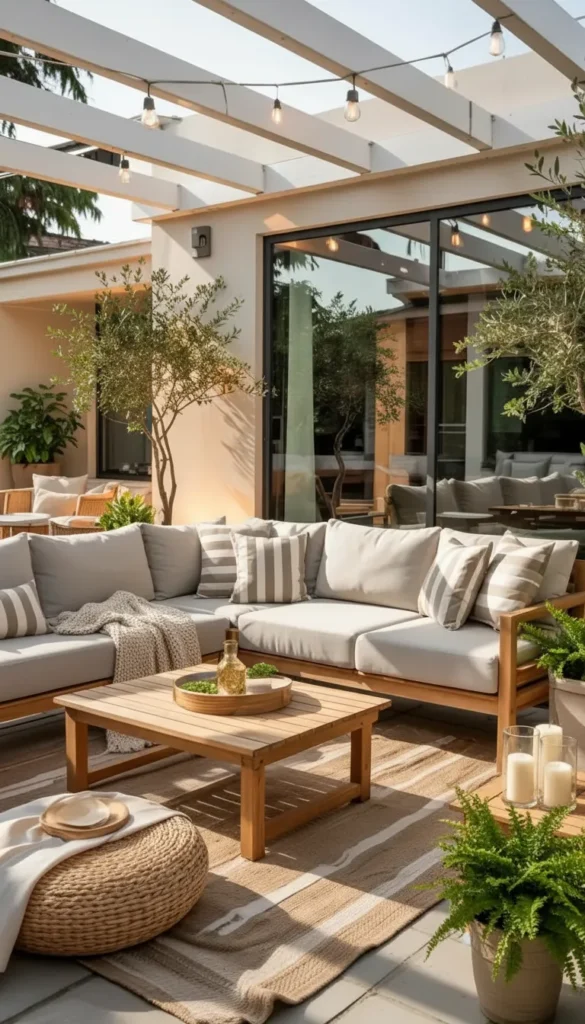
Lighting That Transforms the Space After Dark
Most patios look completely abandoned after 8 PM. Layered lighting solves this instantly. Soft string lights hung overhead are the single highest-impact change you can make for evening use.
- Hang Edison bulb string lights 8–10 feet overhead in a gentle drape or grid pattern
- Add two or three oversized lanterns at floor level for warmth and ambiance
- Use a battery-powered LED candle cluster on the coffee table — no fire risk, same effect
- Avoid bright white outdoor spotlights — they destroy the evening atmosphere instantly
Connecting Indoor and Outdoor Design
The most polished patios always feel like a natural extension of the interior. This is a principle championed by leading interior designers and it works because it creates visual continuity through the home.
- Repeat one accent color from your living room in your outdoor cushion or planter
- Use the same wood tone outdoors that appears in your interior flooring or furniture
- Match your outdoor rug pattern style to your indoor rugs — geometric or organic, pick one
Save this Layered Neutral Patio strategy — perfect for calm, beautiful outdoor evenings! 📌
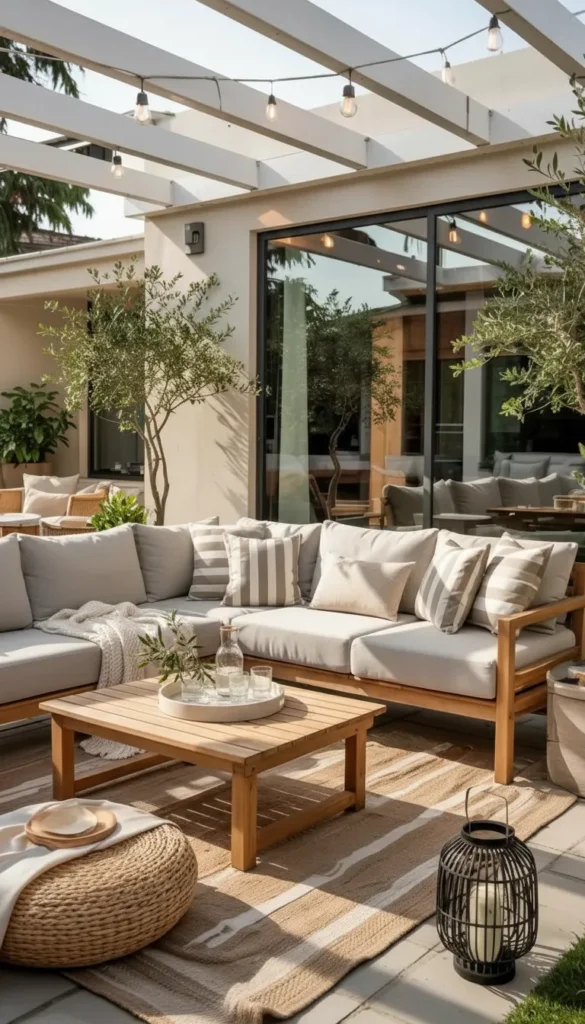
The Finishing Principle
A neutral lounge patio works because it prioritizes comfort over decoration. The goal is not to make the patio look impressive in a photo — it is to make anyone who sits down there want to stay for hours. Every decision, from rug size to lighting height, should serve that single purpose.
French Country Summer Patio Decor Ideas With Lavender And Wicker
The French country aesthetic is one of the most beloved outdoor design styles for very good reason. It captures a kind of relaxed elegance that feels genuinely lived-in rather than staged. Think sun-faded linens, the smell of lavender, and the sound of a light wind moving through wicker chairs. In 2026, this look is having a significant revival — and it is easier to achieve than it appears.
Understanding the French Country Mood
French country design is not about perfection. It is about beautiful imperfection — pieces that look as though they have a story. The palette is characteristically soft: pale stone, faded blue-gray, warm white, dusty rose, and aged gold.
- Think sun-washed colors rather than bright or bold ones
- Materials should look natural, aged, or hand-crafted
- Every piece should feel like it could have come from a countryside market
- Avoid anything that looks too new, too polished, or too symmetrical
Wicker Seating: The Foundation of the Look
Wicker chairs are nearly non-negotiable in this style. They bring an organic texture that no other material quite replicates. Paired with light linen cushions in cream or dusty blue, they create exactly the kind of relaxed seating that defines French country outdoor spaces.
- Choose natural wicker over synthetic resin wicker for an authentic look
- Cushion covers in washed linen or cotton ticking stripe work perfectly
- Mix two or three chair styles slightly — they don’t have to match exactly
- A bistro table with two wicker chairs creates a charming breakfast nook corner
Pin this French Country Wicker and Lavender Guide — the most romantic patio style of 2026! 📌
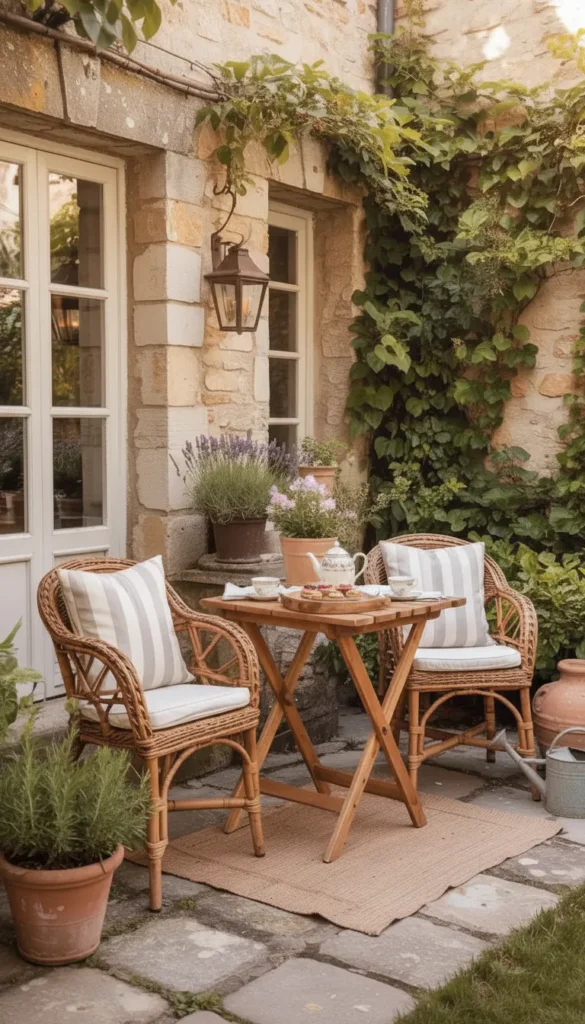
The Wooden Bistro Table: Small But Mighty
A small wooden bistro table is one of the most functional and beautiful additions to a French country patio. It creates an intimate dining spot that feels genuine rather than formal. Look for designs with slightly distressed paint — white, pale blue, or dove gray — for maximum charm.
- Round bistro tables work best in small patios or corners
- A marble or stone top adds elegance without losing the rustic feel
- Style it simply: a ceramic pitcher, one small vase with lavender, a linen napkin
Lavender Pots and Fragrant Greenery
Nothing is more French country than lavender. It adds both visual softness and a fragrance that genuinely changes how the outdoor space feels. Fragrant planting is one of the most underrated decorating tools available.
- Group three to five lavender pots of varying heights near the seating area
- Combine with climbing roses or jasmine on a wooden trellis for a layered effect
- Rosemary in stone planters echoes the Provençal countryside feel perfectly
- Use aged terracotta containers — they look beautiful within weeks of outdoor use
Aged Terracotta and Stone Planters
Terracotta and stone planters are workhorses of the French country outdoor style. They age naturally in the sun and rain, developing a patina that makes them look more beautiful over time — not worse.
- Large stone urns anchor corners of the patio beautifully
- Cluster different sized terracotta pots together rather than spacing them evenly apart
- Fill some pots with trailing plants like ivy or sweet potato vine for softness
Vintage-Inspired Details That Add Character
The most authentic French country patios include small, vintage-inspired details that tell a story. These are low-cost but high-impact additions that separate a good patio from a truly memorable one.
- An antique-style lantern hung from a hook or shepherd’s crook adds instant character
- A weathered wooden serving tray on the bistro table creates a styled vignette
- Old ceramic pitchers or jugs used as plant containers look genuinely beautiful
- A rusted iron watering can near a cluster of pots ties the whole scene together
Creating a Focal Point with a Pergola or Arch
One of the most impactful upgrades for a French country patio is a wooden pergola or garden arch. It frames the seating area, creates natural shade, and provides a structure for climbing plants that softens the overhead view dramatically.
- A simple cedar or pine pergola can be installed DIY over a weekend
- Train climbing roses, wisteria, or clematis over the structure for a romantic canopy
- Hang a few small lanterns from the pergola beams for magical evening lighting
Save this French Country Pergola and Planting technique — the finishing touch every patio needs! 📌
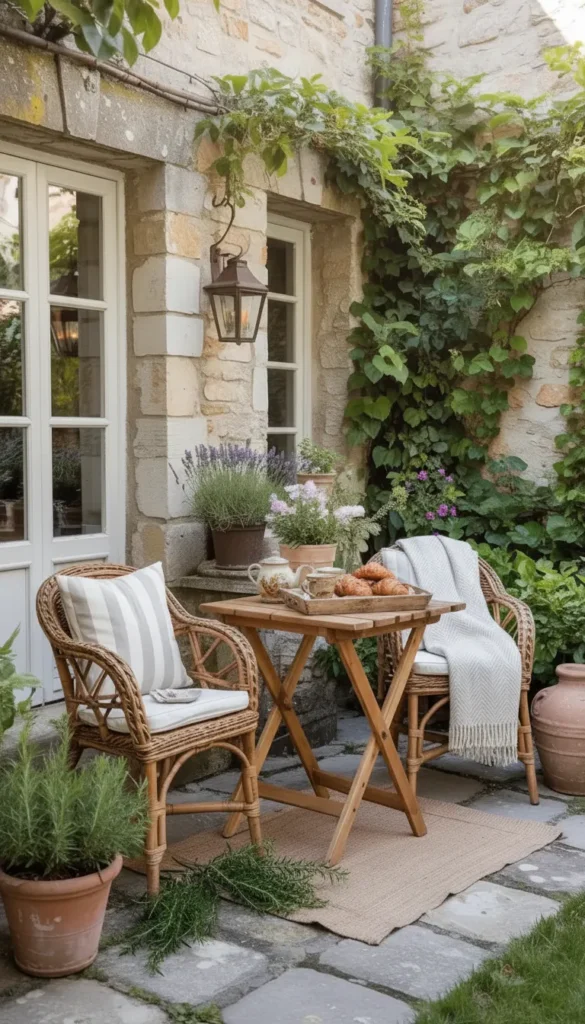
The Guiding Principle of This Style
The French country patio succeeds when it embraces simplicity and authenticity over decoration for its own sake. Every piece should feel chosen for a reason — whether that is comfort, memory, or beauty. The moment a French country patio becomes too curated, it loses its soul.
Rustic Summer Patio Decor Ideas With Wood And Stone Textures
Rustic outdoor design is grounded in honesty. It uses materials exactly as nature made them — rough-sawn wood, unpolished stone, raw clay, and weathered metal. In 2026, this approach is becoming increasingly popular as homeowners move away from overly styled outdoor spaces toward something that feels genuinely real. A rustic patio is not just attractive — it is deeply comfortable in the truest sense of the word.
Why Rustic Works Everywhere
Unlike some design styles that depend heavily on a specific architectural context, rustic patio design adapts beautifully to almost any outdoor setting. It works in garden backyards, rooftop terraces, cabin decks, and suburban patios alike.
- Natural materials blend visually with surrounding landscapes and greenery
- Rustic pieces are typically built for durability, not just aesthetics
- The imperfect nature of these materials means they age with character, not wear
- Budget-conscious choices like reclaimed wood and stone are genuinely better here
The Large Wooden Dining Table as Centerpiece
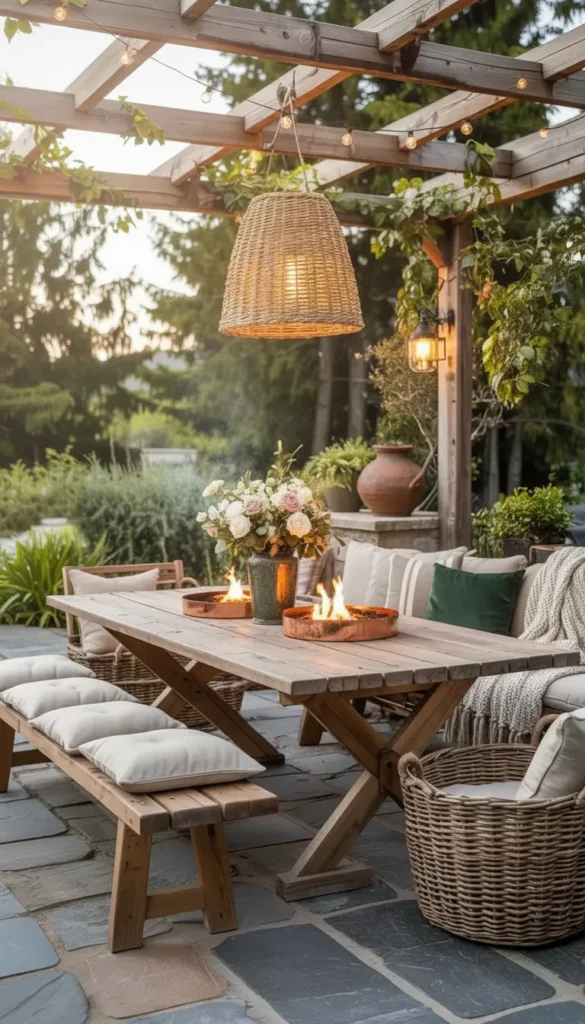
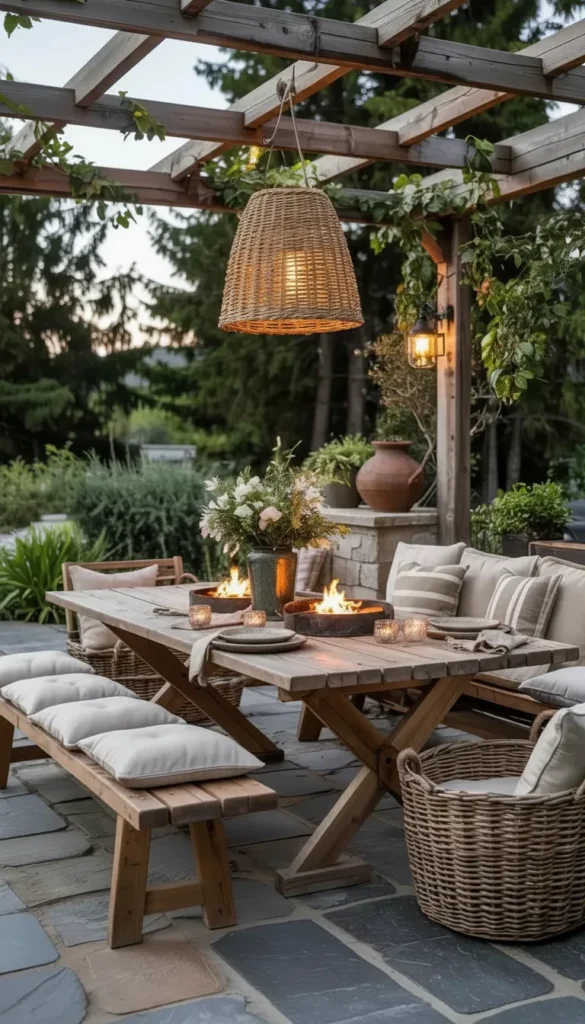
A large wooden dining table is the undisputed heart of a rustic patio. It sets the scale of the space and communicates immediately that this outdoor area is meant for gathering, sharing meals, and staying awhile.
- Look for tables with visible wood grain — the more natural character, the better
- A slightly rough or live-edge finish adds immediate rustic authenticity
- Size the table generously — 72 to 84 inches comfortably seats six to eight guests
- Leave the surface unpolished or use a natural oil finish to protect without hiding grain
Pin this Rustic Dining Table Setup Guide — the heart of every great outdoor gathering! 📌
Sturdy Chairs and Bench Seating
Around the dining table, seating should match the honest, solid character of the table itself. Reclaimed wood benches on one or both sides of the table add a farmhouse authenticity that individual chairs cannot quite replicate.
- Mix bench seating on one side with individual chairs on the other for flexibility
- Metal frame chairs with wooden seats offer durability and a true rustic industrial feel
- Look for chairs with a slightly uneven or aged finish — not factory-smooth
- Add flat linen cushions on benches to make extended seating more comfortable
Stone Planters, Clay Pots, and Woven Baskets
Decorative accessories in a rustic patio should echo the natural material palette of the main furniture. Stone planters, clay pots, and woven baskets do this perfectly — and they are some of the easiest and most affordable upgrades available.
- Stone planters work beautifully as standalone corner anchors or grouped together
- Large clay pots filled with herbs add practicality and fragrance to a dining area
- Woven seagrass or rattan baskets can hold throws, firewood, or garden tools stylishly
Natural Textiles That Add Warmth
Even on a rustic patio, soft textiles are essential for comfort. The key is choosing natural, unpretentious fabrics that enhance the overall look rather than contrasting with it.
- Linen table runners in natural or off-white tones look beautiful on raw wood tables
- Cotton canvas cushions hold up well outdoors and look appropriately rugged
- Jute or burlap placemats bring a natural texture to outdoor dining settings
- Thick woven throws in earthy tones are perfect for keeping over chair backs
Embracing Imperfection as a Design Principle
The most important mindset shift for a rustic patio is understanding that imperfection is the point. A scratch on the table surface, a weathered knot in the wood, a chipped edge on a stone planter — these are not flaws to fix. They are character to celebrate.
- Stop worrying about matching pieces — slight variations look intentional in rustic spaces
- Let outdoor furniture weather naturally through seasons rather than over-protecting it
- A small crack in a clay pot with moss growing in it is genuinely more beautiful than new
Adding a Fire Feature for Evening Gatherings
No rustic patio reaches its full potential without a fire feature. A stone fire pit or simple cast iron fireplace becomes the unmistakable gathering center for evening conversations and late summer nights.
- A circular stone fire pit surrounded by low Adirondack chairs creates a complete evening zone
- Position the fire pit at least 10 feet from the main dining table and any structures
- Stack extra firewood in a reclaimed wood holder nearby — it looks great and is practical
- A simple steel grate turns a fire pit into an outdoor cooking station for weekend gatherings
Save this Rustic Fire Pit Evening Gathering technique — your guests will never want to leave! 📌
The Guiding Principle
A rustic patio succeeds because it is completely honest about what it is. It does not try to imitate a magazine spread. It uses real materials, embraces real aging, and creates a space that feels genuinely welcoming rather than performed. That authenticity is what makes guests feel immediately at ease.
Creative Summer Patio Decor DIY Cool Ideas Using Handmade Accents
There is a specific kind of satisfaction that comes from sitting on a patio and knowing that you made or transformed the things around you. DIY patio decor in 2026 is not about looking homemade in an amateur way — it is about creating outdoor spaces that carry your fingerprints and feel genuinely unlike anything you could buy in a store. The best DIY patios always surprise visitors because the creativity is so visible and personal.
Why DIY Works So Well for Outdoor Spaces
Outdoor patios are actually the ideal environment for DIY decor because imperfections blend naturally with the outdoor setting. Handmade items look more at home surrounded by plants and wood than they might in a formally styled interior room.
- Outdoor materials like terracotta, wood, and jute are inexpensive and forgiving to work with
- Natural settings make handmade items look intentionally artisanal, not rough
- DIY projects allow total color control — match your exact existing palette
- The process itself is enjoyable and the result is genuinely meaningful
Painted Planters: The Highest ROI DIY Project
Painted terracotta planters are the single best starting point for any DIY patio project. They cost almost nothing to create, they look stunning, and they allow you to introduce color with complete control over the result.
- Use outdoor chalk paint or acrylic craft paint — both adhere well to terracotta
- Geometric patterns in two or three colors look sophisticated and modern
- Try abstract brush strokes in earthy tones for a boho-artisan effect
- Seal finished pots with outdoor Mod Podge or matte varnish for weather resistance
- Group three painted pots together in graduating heights for maximum visual impact
Pin this DIY Painted Planter Method — the easiest upgrade that transforms your entire patio aesthetic! 📌
Decorative Lantern Jars for Evening Ambiance
Mason jars and glass bottles transformed into decorative lanterns create magical evening lighting at essentially zero cost. This is one of the most popular DIY patio ideas for a reason — the result looks like something from an expensive boutique garden store.
- Fill jars with sand or small pebbles, then nestle a tea light or battery LED candle inside
- Spray paint the outside of jars in gold, copper, or matte black for a finished look
- Hang jars from a wooden beam, pergola, or shepherd’s hook with wire
- Cluster five or seven at slightly different heights for a professional installation feel
Wooden Crates as Rustic Side Tables
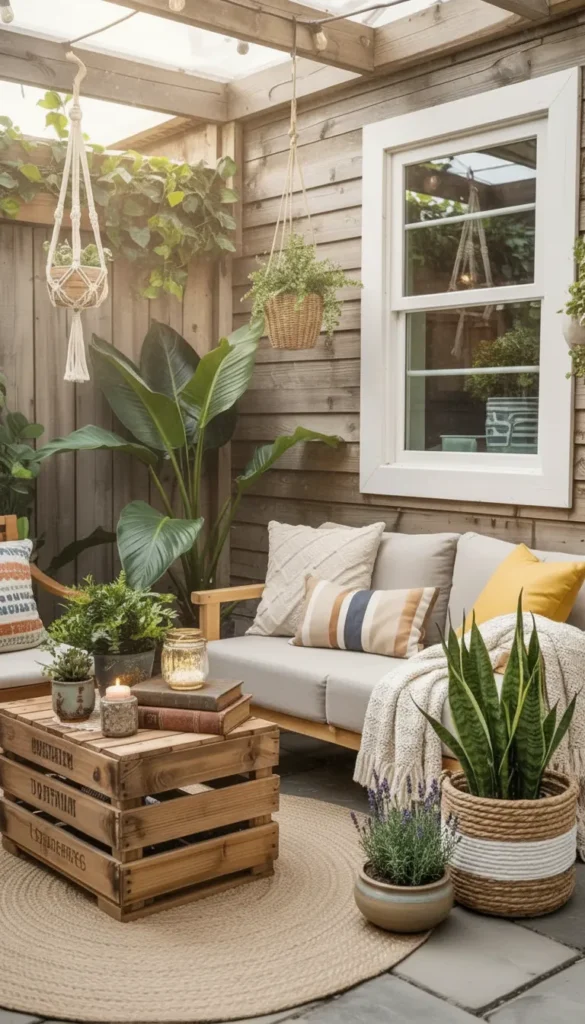
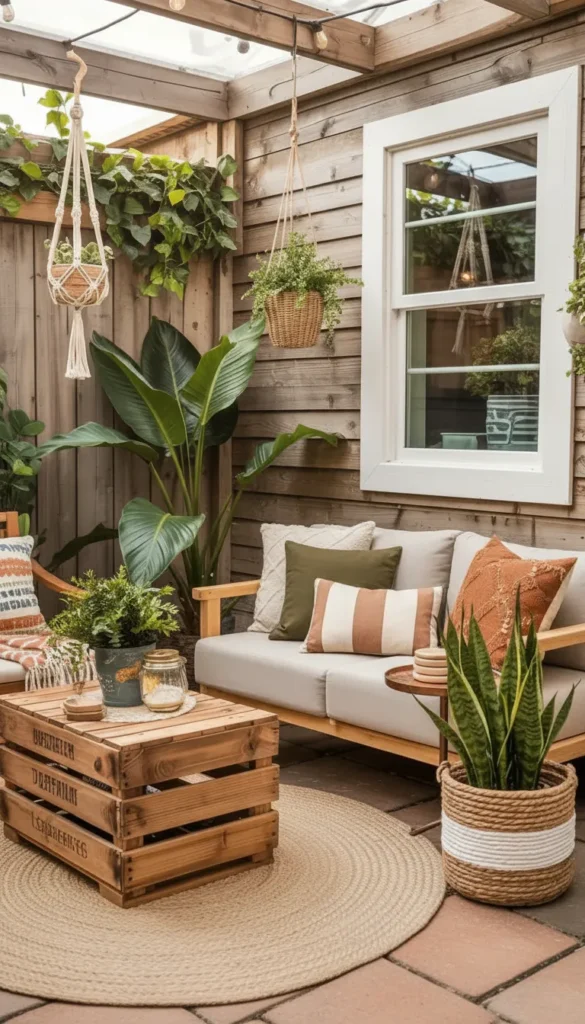
A simple wooden crate turned upside down — or stacked — becomes a perfectly functional and genuinely attractive side table for a patio. This is one of the quickest transformations in DIY outdoor decor.
- Sand the crate lightly and apply a light stain in walnut or honey oak for a warm finish
- Add a small glass or tile top if you want a more polished surface for drinks
- Stack two crates for a taller plant stand or storage unit that holds garden tools
- Line the inside of an upright crate with landscape fabric and fill with trailing plants
Macrame Plant Hangers for Vertical Greenery
A handmade macrame plant hanger introduces vertical greenery to a patio without needing shelves, stands, or structures. They hang from a pergola beam, fence hook, or ceiling bracket and instantly soften a bare wall or corner.
- Macrame cord is widely available and a basic plant hanger takes about two hours to make
- Use 5mm natural cotton rope for a classic look or silver or black rope for a modern twist
- Trailing plants like pothos, string of pearls, or trailing ivy look stunning in hanging pots
- Create three hangers at different lengths for a cascading wall display effect
Repurposed Materials as Shelving and Signage
One of the most creative elements of a DIY patio is incorporating repurposed materials that would otherwise be discarded. Reclaimed wood boards, old window frames, and salvaged metal pieces can become functional and beautiful outdoor decor.
- Reclaimed wood boards as wall-mounted shelves hold small plants and lanterns beautifully
- An old wooden window frame painted white becomes a romantic decorative accent for a garden wall
- Salvaged metal piping turned into a simple plant stand adds industrial character
- Hand-painted wood signs with family names or simple phrases add personality instantly
Maintaining Cohesion in a DIY Patio
The one challenge with DIY patios is avoiding visual chaos. The solution is a strict two or three color palette applied across all DIY pieces — planters, lanterns, signs, and textiles.
- Choose one dominant neutral (cream, white, or natural wood) and two accent colors
- Repeat accent colors in at least three separate DIY items to create cohesion
- Keep the main furniture neutral so handmade accents stand out without competing
- When in doubt, add more green — plants always tie mismatched elements together
Save this DIY Patio Color Cohesion Strategy — the trick that makes handmade decor look professional! 📌
The Underlying Principle
The best DIY patios are not collections of random projects. They are curated expressions of creativity that happen to be handmade. Every piece should serve a purpose — visual, practical, or emotional — and the overall space should feel as intentional as any professionally decorated patio. The difference is that this one is entirely yours.
Front Porch Summer Decor Ideas With Flower Pots And Layered Greenery
The front porch is the first thing the world sees when it looks at your home — and the first thing you see when you return to it. A well-dressed summer porch communicates something important: that the people inside care about beauty, welcome, and the little details that make a home feel genuinely alive. In 2026, front porch design has moved beyond a wreath on the door and two matching topiaries. It has become a real design opportunity, and flower pots are the most accessible place to begin.
Why Layered Planting Is the Most Effective Approach
A single pot by the front door looks like an afterthought. Layered planting — using multiple pots at different heights and with different plant varieties — creates depth, movement, and visual richness that transforms a porch completely.
- Height variation creates the illusion of a full garden even in a narrow porch space
- Different leaf shapes and textures together look natural rather than staged
- Mixed flowering and foliage plants give the porch color at all times, not just when one plant blooms
- Layering can start with as few as five or six pots placed thoughtfully
Choosing the Right Planter Materials
The container matters as much as the plant inside it. Large ceramic and terracotta planters are the strongest visual anchors for a front porch and they scale appropriately with the architectural proportions of a home entrance.
- Terracotta is classic, inexpensive, and ages beautifully in summer sun and rain
- Large glazed ceramic planters in navy, forest green, or deep charcoal add elegance
- Fiberglass planters that look like stone or concrete are lightweight and frost-safe
- Match planter material or color to one architectural element on the house for cohesion
Pin this Front Porch Planter Layering Guide — the approach that makes any entrance look intentional and welcoming! 📌
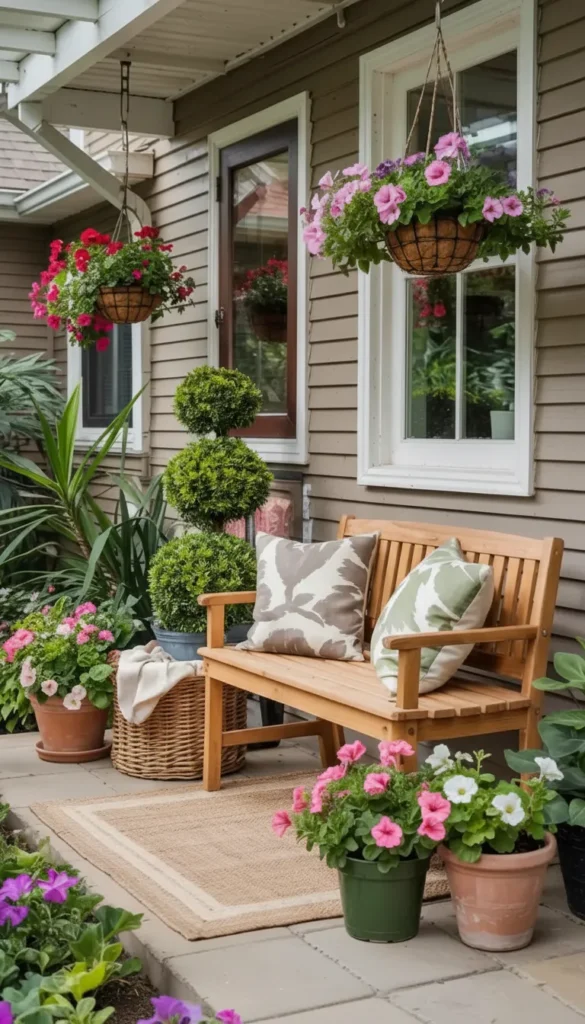
Anchor Plants vs. Filler Plants vs. Spillers
Professional garden designers use a simple formula for container planting called Thrillers, Fillers, and Spillers — and it works equally well for front porch arrangements.
- Thriller (anchor plant): Tall, dramatic plant that creates height — ornamental grass, salvia, agapanthus, or a small standard bay tree
- Filler: Medium plants that fill the middle of the pot — petunias, impatiens, geraniums, coleus
- Spiller: Trailing plants that cascade over the rim — ivy, bacopa, sweet potato vine, verbena
- Use all three in large containers for a professionally planted look every time
Step and Stair Plant Arrangements
Porch steps are one of the most underused decorating opportunities. Placing small to medium pots on each step in a graduated arrangement creates a welcoming path from the street to the door that feels like entering a garden.
- Use the same plant variety in different sized pots to create a scaled, rhythmic effect
- Alternate flowering and foliage plants on alternating steps for visual variety
- Keep pots on steps lower and more compact so they don’t obstruct foot traffic
- Bright colored blooms — yellow, coral, or hot pink — show up well from the street
Seating That Completes the Porch Vibe
A front porch without seating is a display. A front porch with seating is an invitation. Even one rocking chair or a small wooden bench transforms the energy of the space from decorative to genuinely welcoming.
- Two rocking chairs with a small side table creates a complete conversation setup
- A wooden bench with a plump cushion and two coordinating pillows looks inviting from the street
- A small outdoor rug beneath the seating defines the sitting area and makes it feel intentional
- Choose seating colors that complement — not exactly match — the main planter flowers
Vertical Decoration for Maximum Impact in Small Porches
For narrow or small front porches, vertical space is the most valuable decorating real estate. Wall-mounted planters, hanging baskets, and trellises with climbing plants multiply the visual presence of a space without consuming floor area.
- Hanging baskets filled with trailing fuchsia, impatiens, or lobelia add overhead color
- Wall-mounted planter pockets in a two or three row arrangement make a dramatic statement
- A simple wooden trellis panel beside the front door with a climbing rose is deeply charming
- Window boxes on the porch railing add horizontal greenery that extends the porch visually
Creating a Symmetrical vs. Asymmetrical Arrangement
The choice between symmetrical and asymmetrical porch planting significantly affects the overall feel of the entrance. Symmetry communicates elegance and formality; asymmetry communicates creativity and relaxed confidence.
- Symmetry: Place identical large planters on either side of the front door — classic and striking
- Asymmetry: Group three or four different-sized pots on one side for an artistic, garden-like effect
- For traditional architecture, symmetry usually reads as more appropriate and polished
- For cottage or farmhouse style homes, asymmetrical groupings look more natural and authentic
Save this Front Porch Symmetry vs. Asymmetry Planting Guide — choose the right approach for your home’s unique character! 📌
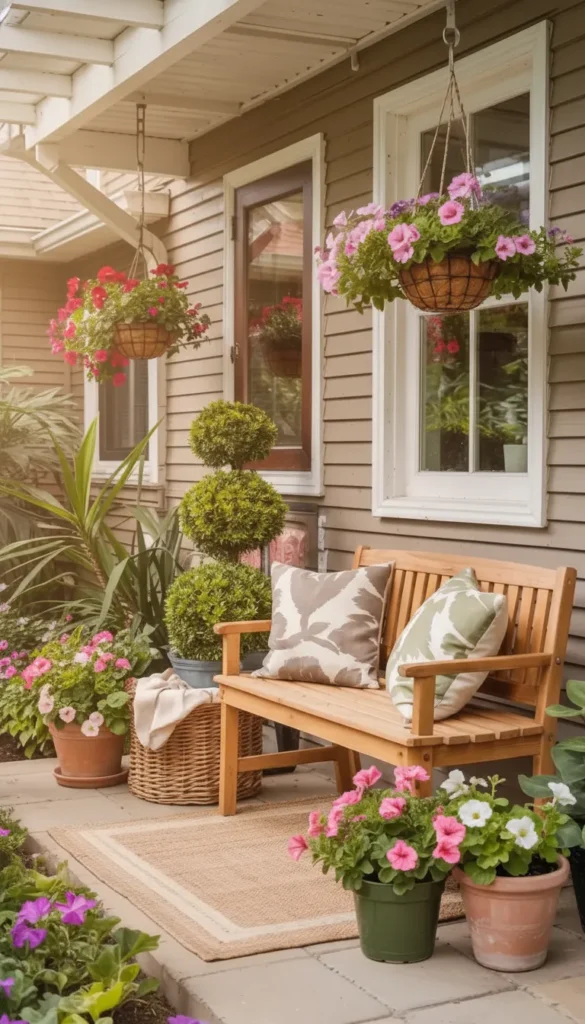
The Guiding Principle for Front Porch Design
A well-decorated front porch communicates something that no interior room can: it tells the world and yourself, every single time you arrive home, that this house is cared for and loved. The investment in flower pots, a bench, and a layered planting arrangement is small. The return — in beauty, pride, and daily pleasure — is enormous. Start with three good planters and build from there.
Conclusion
These five approaches — a layered neutral lounge, a French country retreat, a rustic wood-and-stone dining area, a creative DIY patio, and a lush front porch — represent five completely different visions of what summer outdoor living can feel like. You do not need to commit to just one. Many of the best patios borrow elements from two or three styles and combine them in a way that feels personally meaningful.
The most important thing is simply to begin. Move one planter. Hang one string of lights. Bring one chair outside that was never there before. The patio you have been imagining — the one where you linger long after dinner, where guests never want to leave, where summer mornings feel like a small luxury — is a lot closer than you think. Start this weekend. You will not regret a single moment spent making your outdoor space beautiful.

“I share simple, beautiful and affordable home decor ideas to help you style every corner of your home with ease.