

There’s a moment every summer when you step outside, feel the sun pressing down on your skin, and think: this backyard could be so much more. Maybe you’ve been avoiding your patio during the hottest hours. Maybe your kids have stopped playing in the yard because there’s nowhere cool to go. That feeling of wasted space — of a beautiful outdoor area you just can’t enjoy — is more common than you think. And honestly, it doesn’t have to stay that way.
Sail shades have quietly become one of the most transformative additions to modern outdoor living. They’re not just functional — they’re stunning. A well-placed sail turns a flat, boring backyard into a layered, architectural outdoor room. Whether you have a sprawling deck, a tiny balcony, or a poolside patio that bakes in the afternoon sun, the right sail shade can completely change how you feel about your outdoor space. This guide covers five of the best sail shade ideas for 2026 — practical, beautiful, and built to make your backyard the place you actually want to be.
Triangle Sun Sail Shade Ideas for Modern Outdoor Spaces
Triangle sail shades are the most visually dynamic option available today. Their angled geometry adds movement and energy to any outdoor layout, making the space feel intentionally designed rather than just furnished. If you want your backyard to look like it belongs in an architecture magazine, the triangle sail is your starting point.
Why Triangle Sails Work So Well
The sloped corners of a triangular sail do two important things at once: they direct airflow through the shaded zone and create natural shadow variation throughout the day. This means the space beneath stays cooler and more interesting as the light shifts.
- Airflow stays consistent because corners don’t trap heat
- Changing shadow angles add visual depth from morning to evening
- The asymmetrical shape feels relaxed and organic, not rigid or boxy
- Works beautifully in compact spaces where square structures feel too heavy
Choosing the Right Size Triangle Sail
Most residential triangle sails range from 10 feet to 20 feet per side. Smaller triangles (10–12 ft) are ideal for a reading nook or corner lounge area. Larger triangles (16–20 ft) can cover an entire outdoor dining zone.
- For a small patio: one 12-foot triangle is usually enough
- For a medium deck: combine two 14-foot triangles for overlapping coverage
- For a large backyard: use three triangles in a layered cluster formation
- Always size up slightly — a slightly oversized sail looks intentional, a slightly undersized one looks like an afterthought
Best Furniture Pairings for Triangle Shades
Triangle sails look best when the furniture beneath them is simple and grounded. The sail itself is the visual statement — the furniture should support it, not compete with it.
- Woven lounge chairs in natural rattan or powder-coated steel
- Low teak or eucalyptus coffee table as a grounding centerpiece
- Neutral linen or canvas cushion covers in sand, ivory, or slate gray
- A layered outdoor rug (jute base with a smaller patterned top rug) adds warmth
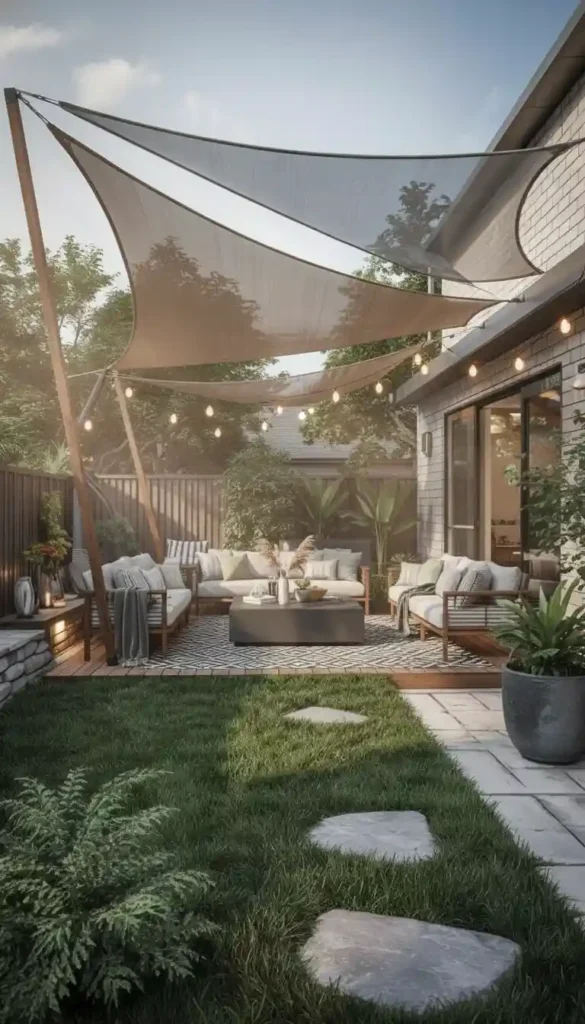
Pin this triangle sail layout for your backyard transformation! 📌
Adding Lighting to a Triangle Sail Setup
One of the most underrated tricks in outdoor design is integrating lighting directly into the sail’s mounting points. String lights anchored at the same posts as the sail create a seamless evening atmosphere.
- Run warm white Edison bulbs (2700K) along the sail’s edges for a soft glow
- Install solar-powered post lights at each anchor point for energy efficiency
- Use uplighting on nearby planters to add depth and drama after dark
- Avoid cool white LEDs — they create a harsh, commercial feel
Anchor Post Placement Tips
Where you place the posts determines everything. Three posts are the minimum for a triangle sail — one per corner.
- Anchor posts should be set at least 2 feet deep in concrete for stability
- Space posts slightly outside the sail’s perimeter so tension pulls the fabric taut
- Use stainless steel hardware in coastal climates to prevent rust
- Wooden posts (cedar or redwood) blend naturally into garden settings
Using Vertical Greenery to Soften the Structure
Triangle sails have a clean, architectural look — but they can feel stark without softening elements. Tall planters and climbing vines near the anchor posts bridge the gap between the structure and the garden.
- Place a 5–6 foot ornamental grass planter at each post base
- Train a climbing rose or jasmine vine up one post for a romantic touch
- Use boxwood topiaries for a more formal, structured garden aesthetic
- Group three smaller planters instead of one large one for a layered look
Why Triangle Sails Work for Irregular Layouts
Not every backyard is a perfect rectangle. Triangle sails are uniquely suited to odd-shaped outdoor spaces because their three anchor points can be placed independently.
- One corner can attach to a wall or fence, saving post costs
- The sail can span diagonally across a corner patio with ease
- Irregular-shaped yards actually benefit from asymmetrical shade coverage
- They’re one of the few shade structures that look better in an imperfect space
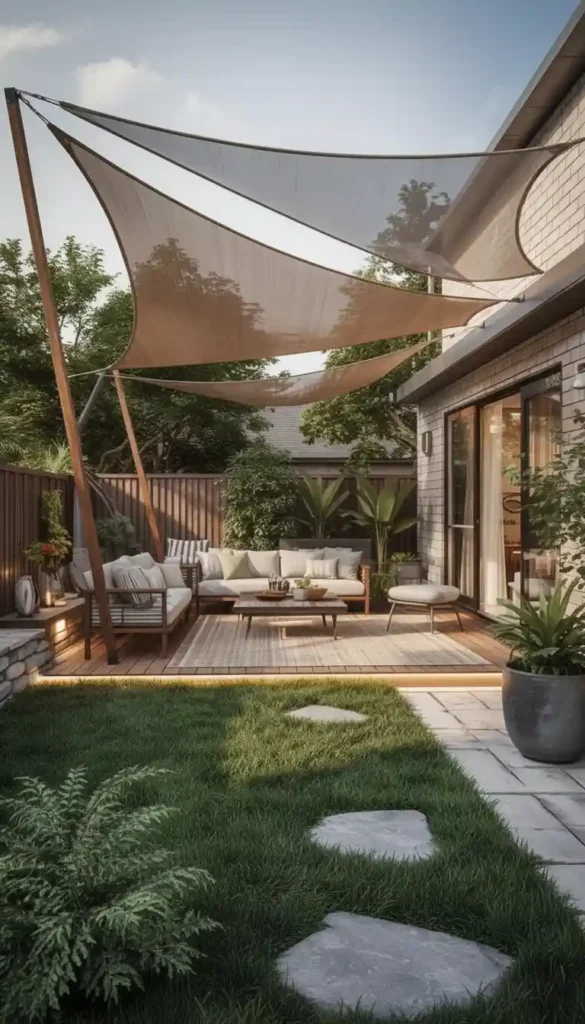
Save this triangle shade design strategy for your next backyard project! 📌
The Core Principle of Triangle Sail Design
The best triangle sail installations feel effortless — like the shade was always meant to be there. That only happens when the sail, the posts, the furniture, and the greenery are all planned together as a single cohesive design. Start with the sail position, build the furniture around it, and let the plants soften the edges.
Rectangle Sun Sail Shade Ideas for Large Patios and Dining Areas
If you have a long outdoor dining table, a sprawling deck, or a backyard entertaining area, the rectangle sail shade was practically designed for you. Its clean, parallel lines mirror the natural shape of most outdoor furniture layouts, creating a sense of order and intention in the space below.
Why Rectangles Are the Most Practical Shape
A rectangular sail shade is the workhorse of outdoor design. It provides even, predictable shade coverage across a defined zone — which is exactly what you need above a dining table or outdoor kitchen.
- Coverage is symmetrical, so no one at the table sits in direct sun
- The straight edges align naturally with fence lines, walls, and decking boards
- Easier to size correctly because you’re matching it to furniture dimensions
- Available in a wider range of sizes than triangle or square sails
Sizing a Rectangle Sail for a Dining Area
The general rule: your sail should extend at least 18–24 inches beyond the furniture on each side. This ensures shade coverage even as the sun angle shifts throughout the day.
- For a 6-person dining table (72″ x 36″): use a minimum 10′ x 14′ sail
- For an 8-person table (96″ x 42″): use a 12′ x 16′ sail
- For an outdoor kitchen plus dining combo: consider a 14′ x 20′ sail
- When in doubt, go larger — you can always adjust the angle, but you can’t add fabric
Best Color Choices for Rectangle Sails
Color dramatically affects how the sail interacts with your existing outdoor palette. Neutral tones are the most versatile and the most timeless.
- Sand/beige: warm and natural, pairs beautifully with wood and stone
- Slate gray: modern and crisp, works with concrete and metal furniture
- Forest green: earthy and lush, blends with garden settings
- Off-white: bright and airy, maximizes light reflection beneath the sail
- Avoid saturated colors (bright blue, red, orange) — they cast a tinted light that makes food and skin tones look unnatural
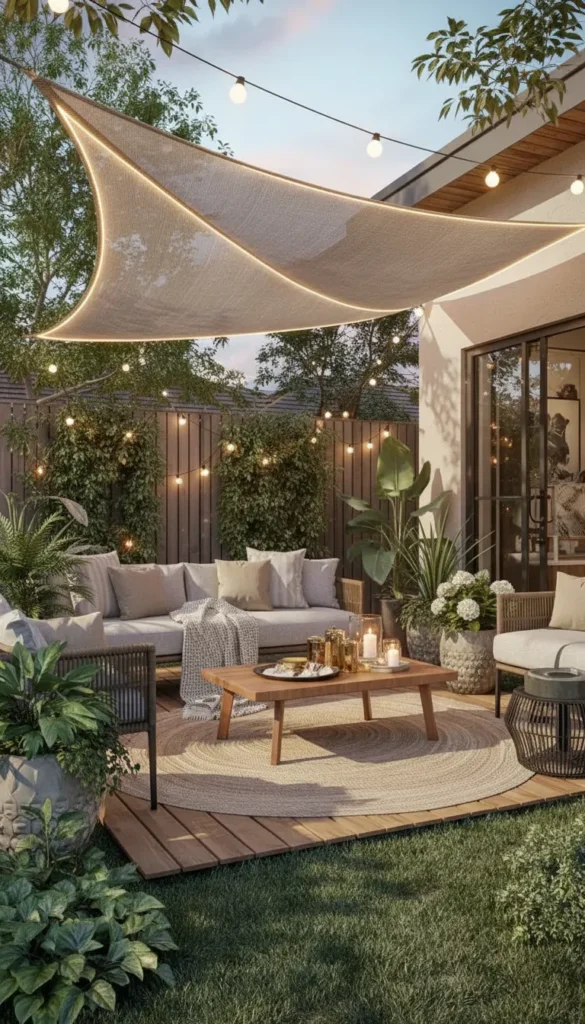
Pin this rectangle sail shade guide for large patio dining! 📌
Pairing Rectangle Sails with Pergolas
One of the most elegant combinations in modern outdoor design is a rectangle sail paired with a nearby pergola. The pergola provides vertical structure and additional attachment points, while the sail provides the actual shade coverage.
- Attach one long side of the sail to the pergola beam for a clean anchor
- This eliminates one post, reducing visual clutter in the space
- The pergola adds height and drama that a freestanding sail can’t achieve alone
- String outdoor pendant lights from the pergola above the sail for a layered effect
Furniture Layout Beneath a Rectangle Sail
Rectangle sails define a clear outdoor “room.” Use that to your advantage by creating a purposeful furniture arrangement within the shaded footprint.
- Center a long dining table directly under the sail’s midpoint
- Place the grill or outdoor kitchen just outside the sail’s edge (never under it — heat and grease damage fabric)
- Add a bar cart or drinks station at one end of the shaded zone
- Use matching outdoor dining chairs with weatherproof cushions for cohesion
Lighting for Rectangle Sail Dining Areas
Evening dining is where rectangle sail setups truly shine. The clean geometry makes it easy to integrate beautiful lighting without it feeling random.
- Hang outdoor pendant lights at the center of the sail using a post-mounted arm
- Run string lights along the two long edges of the sail for definition
- Add candles or lanterns directly on the dining table for intimate warmth
- Use dimmable solar lanterns on nearby planter stands for ambient fill light
Maintenance Tips for Rectangle Sails
Rectangle sails cover more surface area than triangle sails, which means proper maintenance is more important to preserve their appearance and function.
- Rinse the sail with a garden hose every 2–4 weeks to remove dust and pollen
- Use a mild soap solution for bird droppings or organic stains
- Loosen the sail tension slightly during periods of high wind
- Store the sail in a breathable bag during winter months if temperatures drop below freezing
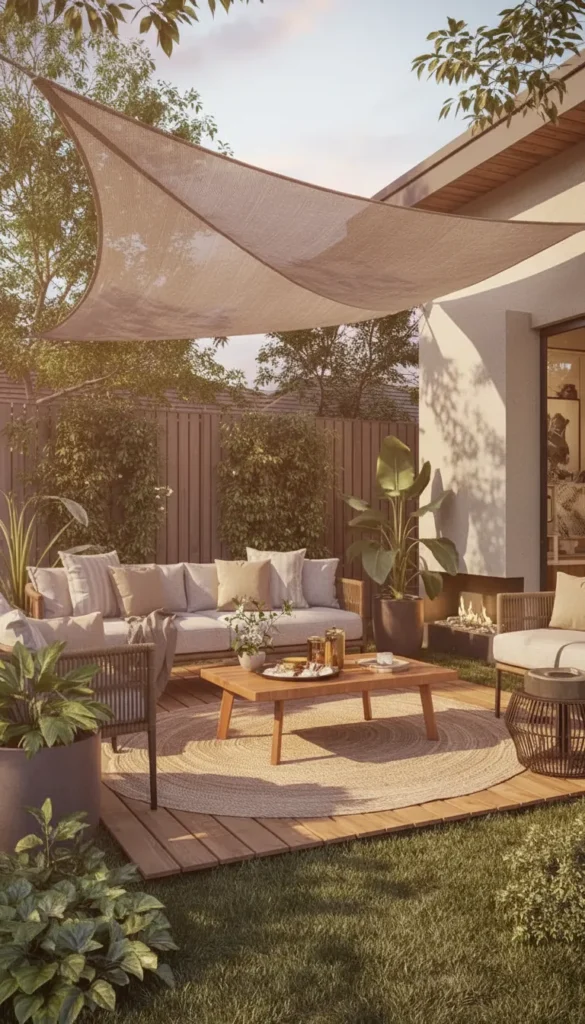
Save this rectangle sail maintenance and design approach! 📌
The Core Principle of Rectangle Sail Design
A rectangle sail is only as good as the furniture arrangement beneath it. The sail defines the space — but the furniture gives it purpose. Always design both together, and you’ll end up with an outdoor dining area that feels like a natural extension of your home.
Square Sun Sail Shade Ideas for Balanced Backyard Layouts
There’s something deeply satisfying about a well-balanced outdoor space. Square sail shades are the simplest way to achieve that balance — their equal sides create symmetry that anchors furniture, organizes the layout, and makes the entire yard feel calmer and more intentional.
Why Symmetry Matters in Outdoor Design
Outdoor spaces often feel chaotic because there’s no clear visual center. A square sail solves this immediately by defining a central zone around which everything else can be arranged.
- Equal sides create a visual frame that anchors the space
- Furniture naturally organizes itself beneath a square canopy
- The shape mimics indoor room proportions, making the space feel more livable
- Psychologically, symmetrical spaces feel calmer and more restful
Ideal Uses for Square Sail Shades
Square sails are most effective when the activity beneath them is stationary and centered — lounging, conversation, meditation, or fire pit gatherings.
- Above a sectional sofa arranged around a central coffee table
- Over a round fire pit with chairs positioned on all four sides
- Above a hot tub or spa area for privacy and sun protection
- Over a children’s sandbox or play table in a family-friendly backyard
Pin this square sail shade concept for your balanced backyard design! 📌
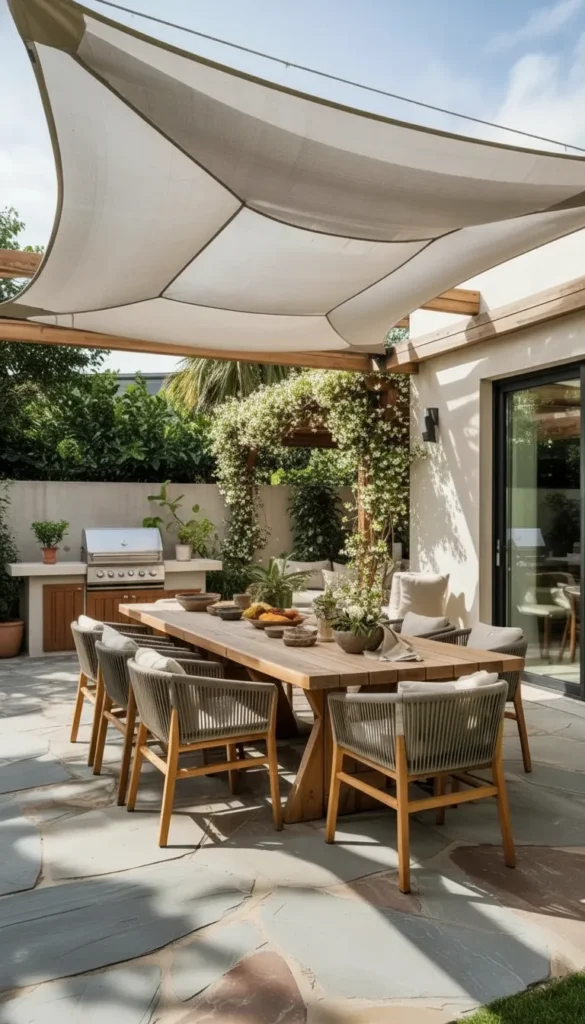
Sizing a Square Sail for Lounge Areas
Unlike dining tables (which have fixed dimensions), lounge furniture arrangements vary widely. Here’s a practical sizing guide:
- Two-person loveseat + chairs: 10′ x 10′ square sail
- Small sectional (L-shaped, 4-person): 12′ x 12′ square sail
- Large modular sectional (6–8 person): 14′ x 14′ or 16′ x 16′ sail
- Hot tub (standard 7′ x 7′): 12′ x 12′ sail with 2–3 feet of clearance on each side
Furniture Pairing for Square Sails
The furniture beneath a square sail should reinforce the sense of balance the sail creates. Modular and symmetrical furniture arrangements work best.
- A modular outdoor sectional in L or U shape surrounding a round coffee table
- Four matching outdoor armchairs arranged symmetrically around a square ottoman
- A round fire pit or water feature at the exact center of the shaded zone
- Matching side tables at each end of the seating arrangement for visual equilibrium
Adding Privacy to a Square Sail Setup
One of the underrated advantages of a square sail is how easily it combines with privacy elements. Because all four corners are anchored, it’s straightforward to add vertical screens or curtains.
- Hang sheer outdoor curtains from the corner posts on any two sides
- Use tall bamboo screens or cedar privacy panels between posts
- Plant fast-growing ornamental grasses (like maiden grass or feather reed) along the perimeter
- Install retractable shade screens on one or two sides for flexible privacy control
Lighting Ideas for Square Sail Spaces
The symmetry of a square sail makes lighting design intuitive. Centered lighting directly beneath the sail creates a room-like atmosphere outdoors.
- Hang a single large outdoor pendant light from the sail’s center mounting point
- Place solar lanterns at each of the four corner posts
- Use recessed post lights at ground level for a subtle upward glow
- Add a string of market lights connecting all four corner posts in a square loop
Save this square sail privacy and lighting design strategy! 📌
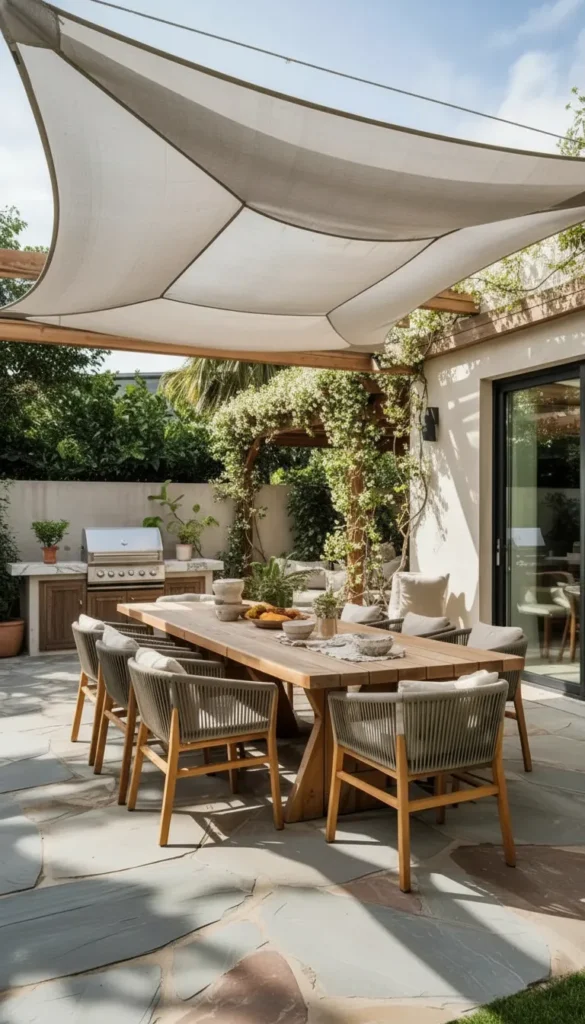
Maintenance and Seasonal Adjustment
Square sails are among the easiest shapes to manage because the equal tension across all four sides means they stay taut and wrinkle-free longer than asymmetrical shapes.
- Check tension at all four corners monthly during peak use season
- Apply a UV-protective fabric spray at the start of each summer
- Remove and store the sail if sustained winds above 40 mph are forecast
- Re-tension the sail after any significant temperature drop, which can cause fabric to contract
The Core Principle of Square Sail Design
A square sail is a declaration of intention. It says: this is where we gather, this is where we rest, this is the heart of this backyard. Design everything around that center point and the entire space will feel more purposeful.
Multiple Sun Sail Shade Ideas for Layered and Architectural Outdoor Design
Single sails are beautiful. But layered sail installations — multiple sails at different heights, angles, and positions — are where outdoor design becomes genuinely architectural. If you want a backyard that feels curated rather than furnished, the layered sail approach is the most powerful tool available.
Why Layering Multiple Sails Works
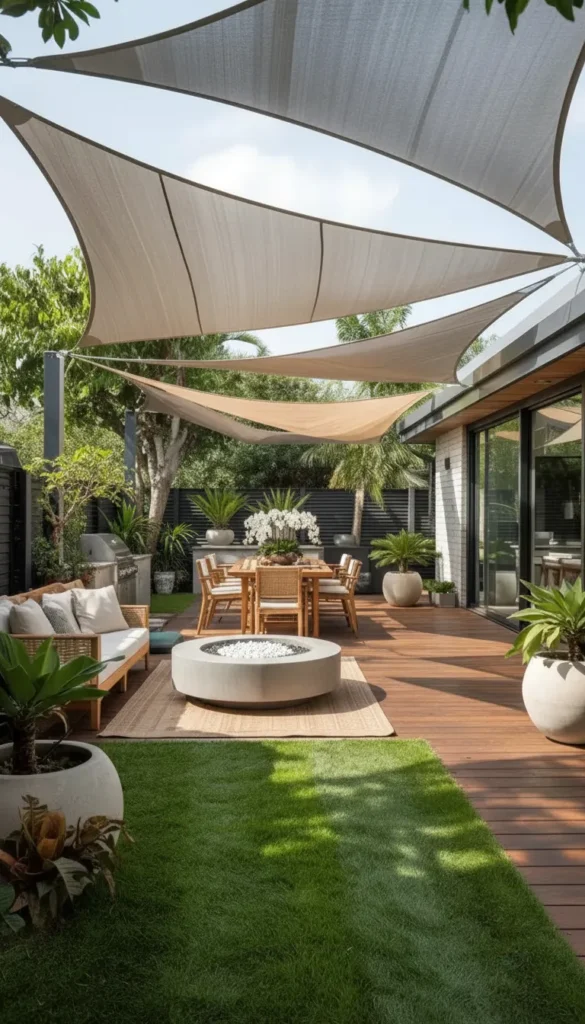
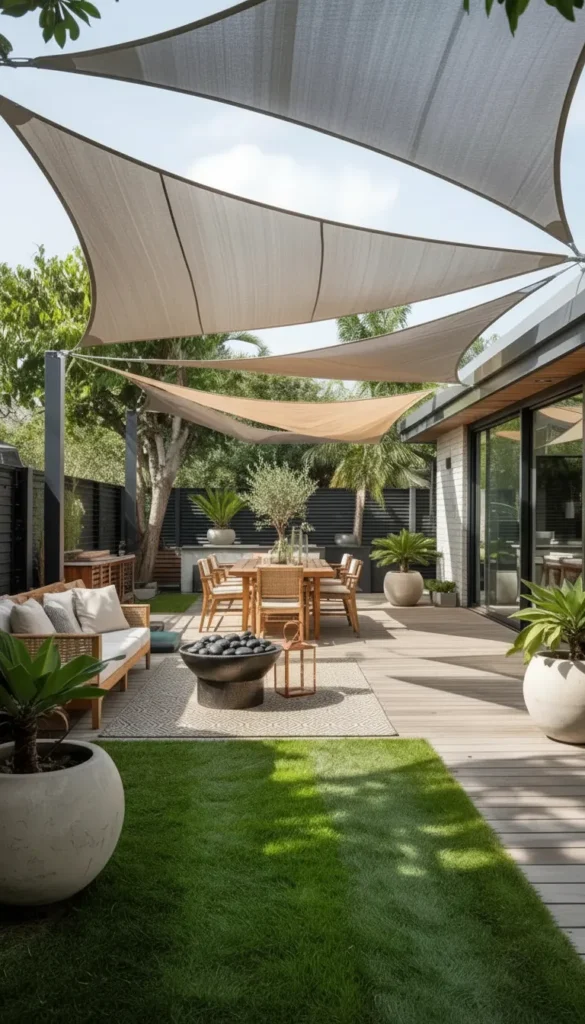
Layering sails creates something a single sail never can: dynamic shadow play. As the sun moves through the day, the overlapping sails cast shifting, geometric patterns across the ground and furniture below.
- Multiple shade zones create distinct “rooms” within one open backyard
- Shadow overlap adds visual depth and complexity to the space
- The installation looks intentional and design-forward rather than purely functional
- Different heights create vertical interest that single sails lack
How to Plan a Layered Sail Installation
Before ordering any fabric, spend time mapping your outdoor space and identifying which zones need shade and which can stay open.
- Identify 2–3 distinct activity zones (dining, lounging, play, grilling)
- Assign one sail shape to each zone based on furniture layout
- Stagger the heights by at least 18–24 inches between overlapping sails
- Use a consistent color palette (same fabric color family) to unify the layers visually
Pin this layered sail shade planning guide for your dream backyard! 📌
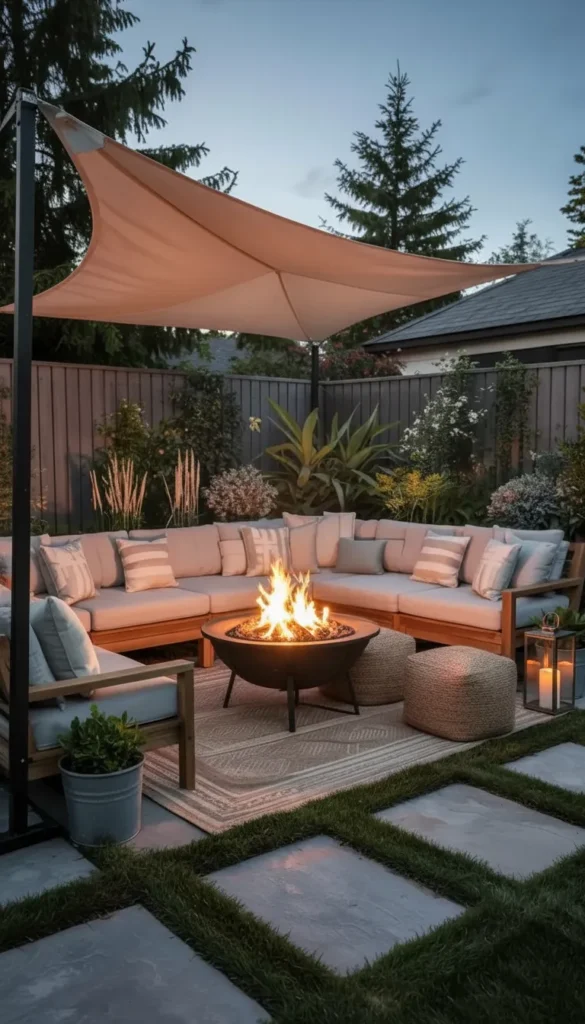
Best Shape Combinations for Layered Installs
Not all shape combinations work equally well. Some pairings feel cohesive; others feel cluttered. Here are the combinations that consistently deliver the best results:
- Two triangles + one rectangle: the most popular combination for mixed-use backyards
- One large square + two small triangles: anchors a central zone with dynamic accents
- Three triangles at varying heights: the most architectural and design-forward option
- Two rectangles side by side: best for very large entertainment areas with distinct zones
Creating Distinct Outdoor Zones Beneath Layered Sails
The real purpose of multiple sails is zone creation. Each sail defines a functional area, and the transitions between them feel natural and intentional.
- Position the dining rectangle over your table and chairs
- Place a triangle sail over a nearby hammock or daybed lounging area
- Leave deliberate open gaps between sails to allow light to enter and prevent the space from feeling cave-like
- Use different outdoor rugs in each zone to visually reinforce the separation
Shared Posts and Structural Efficiency
One of the practical advantages of layered installations is that posts can be shared between sails, reducing both cost and visual clutter.
- A center post can anchor corners of two or even three different sails
- Shared posts need to be heavier gauge (at least 4″ diameter steel) to handle multiple load points
- Use rotating hardware at shared posts so each sail can be adjusted independently
- Color-match post finishes (matte black, brushed steel, weathered bronze) to create visual consistency
Choosing Hardware for Multi-Sail Setups
Hardware is where most DIY layered sail installations fail. Invest in commercial-grade hardware from the beginning — it will save you time, money, and frustration.
- Use stainless steel D-rings and turnbuckles rated for at least 800 lbs
- Invest in adjustable extension hardware so you can re-tension sails without removing them
- Use UV-resistant nylon straps rather than ropes for connecting to posts
- Choose snap hooks rather than permanent connections so sails can be removed quickly before storms
Save this multi-sail hardware and installation strategy! 📌
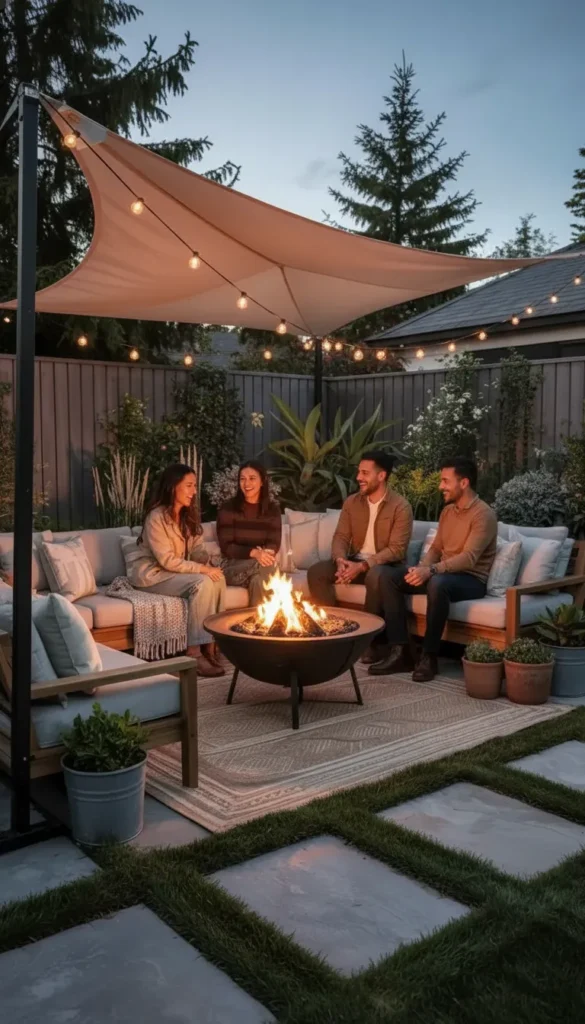
Lighting a Layered Sail Installation
Lighting a multi-sail setup requires more planning than a single sail — but the results are spectacular. Layer the lighting just like you layer the sails.
- String lights at the lowest sail level create intimacy for dining or lounging zones
- Upward-facing spotlights at post bases highlight the structural beauty of the installation
- Pendant lights hanging from the highest sail create a dramatic focal point
- Use smart bulbs so you can adjust brightness and color temperature by zone throughout the evening
The Core Principle of Layered Sail Design
More sails don’t automatically mean a better design. The goal isn’t coverage — it’s composition. Every sail should serve a purpose, define a zone, and contribute to the overall visual balance of the space. Plan it like a room, not just an awning.
Sun Sail Shade Ideas Over Pool, Balcony, and Small Patio Spaces
Not every outdoor space is a sprawling backyard. Pools, balconies, and compact patios present unique challenges for shade design — and sail shades are often the single best solution for all three. Their ability to span unusual dimensions, attach to existing structures, and avoid heavy footprints makes them ideal for constrained spaces.
Why Sail Shades Excel in Compact and Specialty Spaces
Traditional shade structures — pergolas, gazebos, large umbrellas — require either significant ground space or substantial construction. Sail shades need only three or four anchor points, which can often attach to existing walls, fences, or railings.
- No large footprint required: the sail floats above the space without consuming it
- Attaches to existing structures (walls, fence posts, railing uprights)
- Available in small sizes (starting at 8′ x 8′) ideal for balconies and small patios
- Provides far more shade per square foot of base than any umbrella
Sail Shade Ideas Specifically Over a Pool
Poolside shade is one of the most requested features in backyard design — and one of the most poorly executed. Sail shades over a pool solve the problem of protecting swimmers and loungers without blocking the visual openness of the pool area.
- Position the sail over the lounging deck rather than directly over the water (fabric and pool chemicals don’t mix well long-term)
- Use a rectangle or triangle sail angled at 15–20 degrees to direct afternoon sun shade where it’s most needed
- Choose a light-colored sail (white, cream, or light gray) to maximize reflection rather than absorption above the water
- Install anchors in the pool deck using sleeve-and-stake hardware rated for the sail’s load
Pin this pool and compact space sail shade guide! 📌
Balcony Sail Shade Solutions
Balconies present unique attachment challenges because the anchor points are limited to the railing, the building wall, and overhead structure. With creativity and the right hardware, sail shades can transform even a small apartment balcony.
- Attach two corners to the railing uprights using heavy-duty railing clamps
- Attach the third corner to a wall-mounted anchor bolt (check with building management first if renting)
- Use a compact 8′ x 10′ rectangle sail for a standard apartment balcony
- Angle the sail slightly (one corner higher than the others) to allow rainwater runoff
Key Hardware for Balcony Installations
Balcony installations require specialized hardware because you’re working with existing metal or glass railings rather than custom posts.
- Use railing clamp mounts rated for at least 400 lbs per clamp
- Choose stainless steel hardware to prevent rust from condensation and rain
- Install a wall anchor rated for the sail’s full wind load (not just its weight)
- Add a tensioning turnbuckle so you can adjust the sail without removing it
Small Patio Sail Shade Ideas
A small patio — typically 100 to 200 square feet — doesn’t need a large sail to feel transformed. The right-sized sail in the right position can make a compact patio feel twice as large.
- A 10′ x 10′ square sail covers most standard small patio furniture arrangements
- Position the sail off-center (one corner higher, one lower) to add visual interest and improve drainage
- Use freestanding weighted post bases instead of in-ground anchors if you rent your home
- Choose a lighter fabric color to maximize light in smaller spaces
Combining Small Sails with Vertical Elements
In compact outdoor spaces, vertical elements — tall planters, wall-mounted trellises, vertical gardens — work with sail shades to create a sense of enclosure and comfort without consuming floor space.
- Mount a vertical planter wall on the fence or building wall beside the sail
- Use tall ornamental grasses in large planters at sail anchor points to soften posts
- Add a wall-mounted water feature for ambient sound in compact spaces
- Install wall sconces rather than freestanding light poles to preserve floor space
DIY Installation Tips for Pool, Balcony, and Small Patio Sails
These three settings are the most accessible for DIY installation because the anchor points are typically existing structures rather than in-ground posts.
- Mark all anchor points before purchasing hardware — confirm measurements twice
- Use a laser level to ensure the sail’s mounting points create the angle you want
- Pre-assemble all hardware on the ground before climbing ladders
- Always pull the sail taut from the lowest point to the highest point to ensure proper tension
Save this pool, balcony, and small patio sail shade installation approach! 📌
The Core Principle of Specialty Sail Shade Design
In compact and specialty spaces, the sail shade isn’t a background element — it becomes the design. In a small patio, a pool deck, or a balcony, the sail is often the first thing you notice. Choose the shape, color, and angle carefully, because there’s nowhere for a poor decision to hide.
Conclusion
Sun sail shades have evolved from a simple backyard accessory into one of the most powerful tools in modern outdoor design. Whether you’re working with a grand backyard entertaining space or a tiny apartment balcony, the right sail — in the right shape, the right color, and the right position — can completely transform how you experience the outdoors. Triangle sails bring architectural energy. Rectangle sails organize and define. Square sails create balance and calm. Layered sails build entire outdoor living environments. And specialty applications over pools, balconies, and compact patios prove that even the most constrained space can become a genuine outdoor retreat.
The most important thing to remember is that a sail shade isn’t just a purchase — it’s a design decision. Plan it like you’d plan a room. Think about the furniture beneath it, the lighting around it, the plants that soften it, and the hardware that secures it. When all those elements come together, your backyard stops being a place you tolerate on hot days and becomes a place you genuinely can’t wait to be. That transformation is simpler than it looks — and it starts with a single sail.

“I share simple, beautiful and affordable home decor ideas to help you style every corner of your home with ease.