

There is something deeply satisfying about stepping outside on a hot afternoon and finding a cool, shaded corner that feels made just for you. That feeling — of relief, comfort, and belonging in your own backyard — is exactly what the right patio canopy can create. Whether you have been squinting through sunny lunches or avoiding your porch because it feels like an oven by noon, you deserve a space that actually works for you.
This guide is for every homeowner who has stared at a bare patio and imagined something better. From quick DIY setups to architectural gazebo solutions, these five canopy ideas will help you build the shaded outdoor retreat you have been dreaming about. Let’s transform your backyard, garden, or porch into a place you never want to leave.
Patio Canopy Ideas For Instant Shade — Backyard Outdoor Spaces 2026
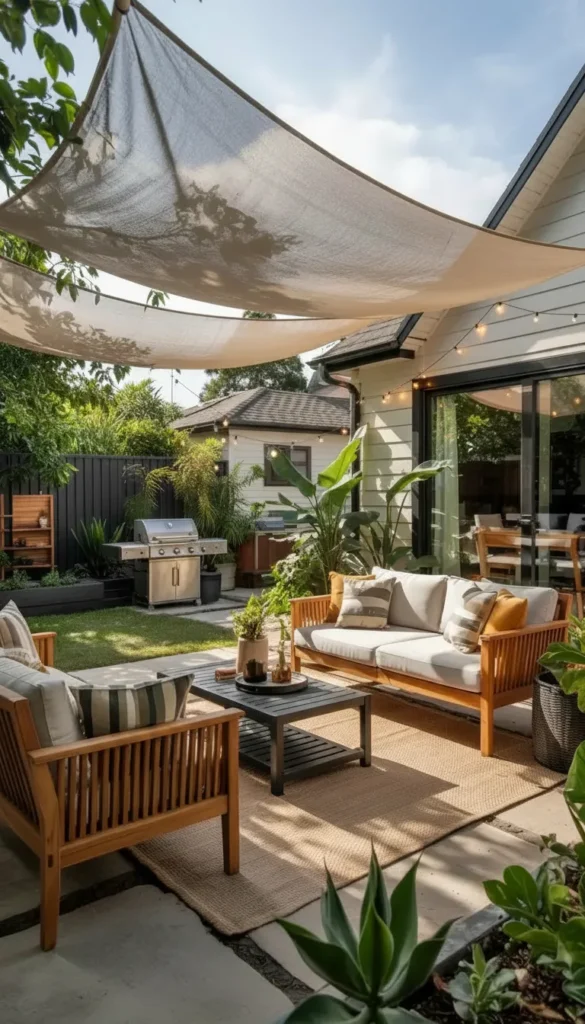
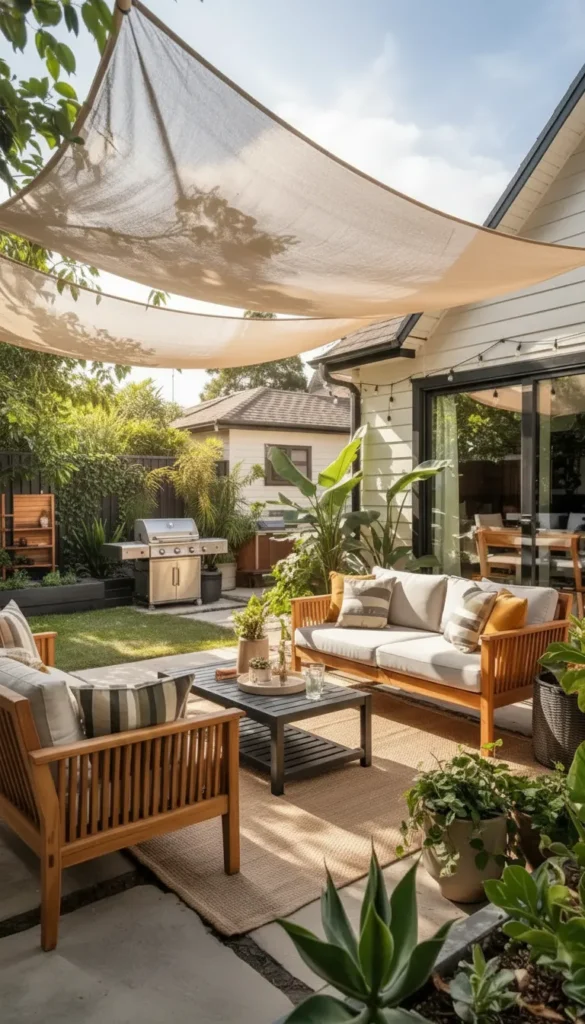
A large fabric canopy stretched over your backyard seating zone is one of the fastest and most effective ways to create instant shade. It does not require a contractor, a permit, or a massive budget. What it does require is thoughtful placement, quality materials, and a layout that makes the space feel intentional.
This approach works beautifully in modern backyards where you want the feeling of an outdoor living room — open air but fully comfortable. The key is treating the canopy as the ceiling of a room, then furnishing the space beneath it accordingly.
Why Instant Shade Matters in Outdoor Design
Most people underestimate how much direct sunlight limits outdoor use. A backyard without shade becomes unusable between 11 AM and 4 PM during summer — which is exactly when families want to be outside. Installing a canopy solves this immediately without permanent construction.
- Blocks 90% of UV rays depending on fabric density
- Extends usable outdoor hours from morning through evening
- Reduces surface temperature of furniture beneath the canopy
- Creates a defined zone that feels intentional and designed
Choosing the Right Fabric Color
Fabric color has a direct impact on how cool the space feels. Darker colors absorb heat, while lighter tones reflect sunlight more effectively.
- Sand, beige, and soft gray are the top-performing colors for heat reflection
- These neutral tones also photograph beautifully and feel calm
- Avoid dark navy or black canopies in hot climates unless ventilation is excellent
- Look for HDPE (high-density polyethylene) fabrics rated for UV resistance
How to Set Up Your Backyard Canopy Layout
Think of this like arranging an indoor living room — just outside.
- Start with a central seating cluster: weather-resistant sofa, two armchairs, a coffee table
- Position the canopy so all seated guests are under shade by early afternoon
- Leave 18–24 inches of clearance between canopy edge and furniture edge
- Add planters or low garden beds around the perimeter to anchor the structure visually
Pro Tip: Keep the canopy height at least 8 feet off the ground. This allows air to circulate beneath it, which is what makes the shaded area feel genuinely cooler rather than just darker.
📌 Pin this instant shade layout idea for your summer backyard refresh! 📌
Coordinating Furniture With Your Canopy Style
The furniture you choose beneath the canopy should feel cohesive with the fabric and frame.
- Teak wood furniture pairs beautifully with neutral canvas canopies
- Powder-coated steel frames in matte black or white work with modern fabric styles
- Use weather-resistant cushions in complementary tones — not matching, but harmonious
- A central outdoor rug ties the seating zone together and defines the room
Adding a Grill Station or Dining Area Nearby
A backyard canopy becomes even more functional when it sits near an outdoor kitchen or grill station.
- Position your grill 6–8 feet away from the canopy edge — never underneath it
- Add a dining table and chairs just at the edge of the shaded zone for natural transition
- Include an outdoor side table near the grill for prep space
- String lights from the canopy frame to the grill area create a cohesive evening look
Layering Shade With Planters and Greenery
One of the most underrated tips in outdoor design is using plants to soften the structure of a shade canopy.
- Low garden beds at the canopy perimeter make it feel permanent and designed
- Tall planters with ornamental grasses add visual weight at corner posts
- Climbing plants on nearby trellises extend the shaded feel beyond the canopy footprint
- Choose drought-tolerant varieties in hot climates so maintenance stays low
Lighting for Evening Use
A daytime shade canopy becomes a nighttime lounge with the right lighting added.
- String lights draped along the canopy frame create warm, ambient glow
- Integrated LED strips along the frame give a more modern, architectural look
- Solar-powered lanterns hung from the fabric grommets require zero wiring
- Aim for warm white (2700K–3000K) bulbs to keep the atmosphere relaxed
📌 Save this backyard canopy design strategy for your next outdoor project! 📌
The Core Principle: Balance Structure With Openness
The most successful backyard canopies feel like they belong — not like they were dropped into the yard as an afterthought. Keep the structure high enough for air flow, choose fabrics that work with your climate, and furnish the space with the same care you would give an indoor room. When you get this balance right, the shaded patio becomes the place where everyone naturally gravitates.
DIY Patio Canopy Ideas — Stylish and Affordable Outdoor Shade Solutions
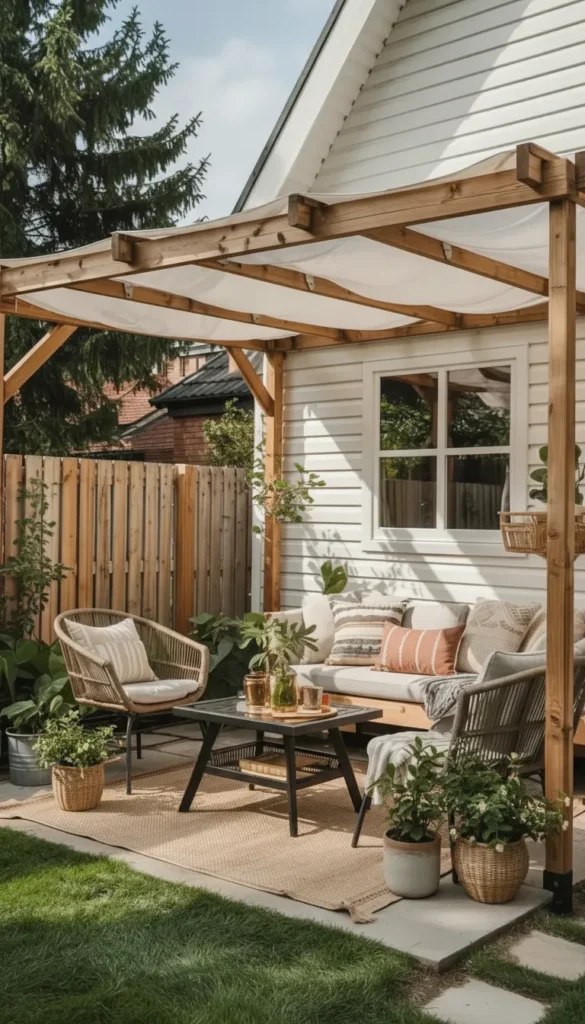
Not every shade solution requires a big investment or a professional installer. Some of the most beautiful and functional backyard canopies are built by homeowners on weekends with basic tools and smart material choices. DIY canopy projects are especially valuable because they give you complete control over size, height, fabric, and placement.
If you enjoy hands-on projects and want to customize your outdoor layout before committing to a permanent structure, this approach is perfect. It is flexible, affordable, and surprisingly effective when done correctly.
Why DIY Canopies Work So Well
Flexibility is the biggest advantage of building your own shade structure. Unlike fixed pergolas or gazebos, a DIY canopy can be adjusted, moved, or completely replaced as your needs change.
- Lower upfront cost — most DIY canopy setups cost $150–$600 depending on materials
- Fabric can be swapped seasonally for style updates or weather changes
- Posts can be repositioned if you rearrange your patio layout
- Great way to test a shade concept before investing in permanent architecture
Selecting Your Post Material
The posts are the foundation of any DIY canopy structure. Choosing the right material makes a huge difference in durability and visual appeal.
- Wooden posts (4×4 cedar or redwood): Warm, natural look — best for garden-style patios
- Metal conduit or galvanized pipe: More industrial, extremely durable, easy to paint
- Pre-made aluminum canopy frames: Quickest setup, good for renters or temporary installs
- Anchor posts into large weighted planters or deck corner brackets for stability
Choosing the Right Outdoor Fabric
The fabric is the heart of a DIY canopy. It determines how much shade you get, how long the structure lasts, and how it looks from a design perspective.
- Sunbrella-type acrylic fabrics are the gold standard — fade-resistant and mold-resistant
- Look for at least a UPF 50+ rating for effective UV protection
- Solid colors look cleaner; patterns add personality but can feel busy
- Choose a fabric with reinforced edges and grommets pre-installed for easier rigging
📌 Pin this DIY canopy fabric guide for your weekend outdoor project! 📌
Basic Assembly Steps for a DIY Post-and-Fabric Canopy
You do not need advanced carpentry skills to build a sturdy canopy. Here is the general process:
- Step 1: Measure your patio and determine canopy dimensions — typically 10×10 or 12×16 feet
- Step 2: Set posts at corners, anchored in planters or secured with deck hardware
- Step 3: Run horizontal support lines (rope, cable, or wooden beams) between posts
- Step 4: Drape or tie fabric across the frame, pulling taut for a clean appearance
- Step 5: Secure edges with outdoor zip ties or fabric clips rated for weather exposure
Furnishing Beneath a DIY Canopy
What you place underneath the canopy matters as much as the canopy itself.
- Woven rattan or resin chairs feel casual and lightweight — perfect for DIY aesthetics
- A wooden dining table anchors the space for meals and gatherings
- Add an outdoor rug in a natural texture like jute or flat-weave polypropylene
- Keep the color palette simple: two or three tones maximum for a cohesive look
Connecting the Canopy to Your Home’s Porch
If your patio connects to a covered porch, you can extend the DIY canopy from the house wall to an exterior post. This creates continuous shade across both zones.
- Use a wall bracket or beam to anchor the fabric to the home exterior
- Match the fabric tone to your home’s siding or trim for a built-in appearance
- Keep the attachment point weatherproofed with exterior-grade hardware
- This setup works especially well for narrow urban patios or small apartment terraces
Seasonal Flexibility — The Biggest DIY Advantage
One of the most valuable features of a DIY canopy is how easy it is to update seasonally.
- Remove the fabric in late fall to protect it from winter weather and extend its lifespan
- Replace with a heavier canvas for cooler seasons if you live in a mild climate
- Try different fabric colors or patterns each year to refresh the look without cost
- Store posts in a shed or garage and redeploy them each spring in under an hour
📌 Save this seasonal DIY canopy approach for flexible backyard shade all year! 📌
Accessories That Complete the DIY Canopy Zone
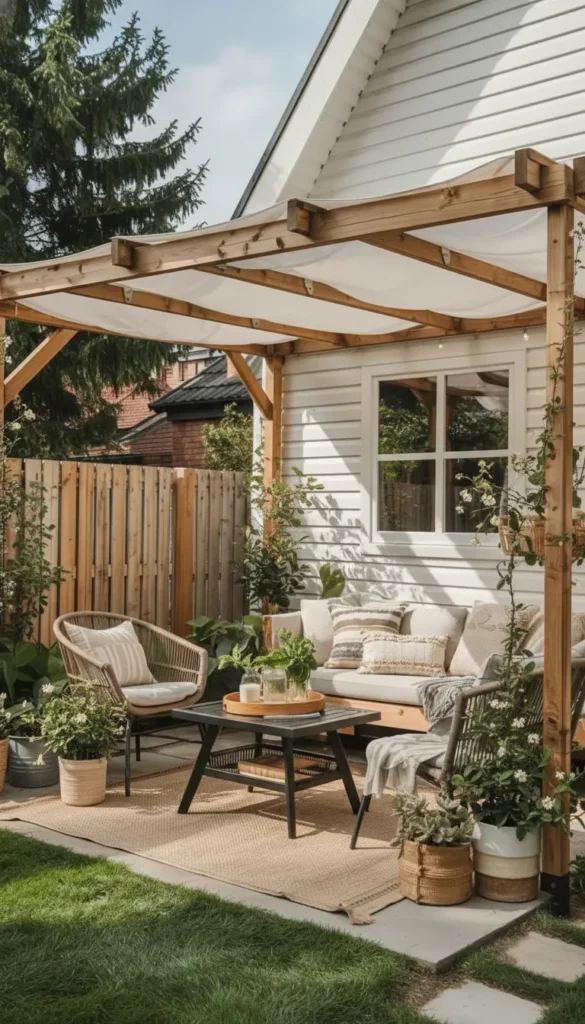
A few functional accessories elevate a simple DIY shade setup into a complete outdoor room.
- Outdoor storage bench: Doubles as seating and hides cushions, tools, and extras
- Portable lanterns: Solar or battery-powered, no wiring needed
- Side tables: Small and lightweight — easy to move as needed
- Hanging basket planters: Hook directly onto the canopy frame for vertical greenery
The Core Principle: Experiment Before You Commit
DIY canopy projects are the best way to discover what shade layout actually works for your specific yard and lifestyle. Use this approach to test height, position, and fabric before investing in a permanent structure. The knowledge you gain from a single DIY season will make every future outdoor design decision much easier and more confident.
Patio Canopy Ideas Gazebo Designs — Elegant Backyard Shade Structures
When you want shade that makes a statement, a gazebo is the answer. A well-designed outdoor gazebo does not just block the sun — it becomes the architectural centerpiece of your entire backyard. It gives your outdoor space a sense of permanence, elegance, and intentional design that no fabric canopy can fully replicate.
Gazebos work best as focal points. Placed at the heart of a garden or at the far end of a backyard, they draw the eye and invite people to gather inside them. If you want your outdoor space to feel like it was professionally designed, a gazebo canopy delivers that result consistently.
Why a Gazebo Elevates the Entire Backyard
A gazebo is more than a shade structure — it is an outdoor room with a roof. And that distinction changes how people use the space.
- Creates a destination within your yard — a place to walk toward, not just sit in
- Defines the gathering zone clearly, which makes hosting easier and more natural
- Adds significant property value compared to temporary shade solutions
- Works year-round in most climates with minor seasonal adjustments
Choosing the Right Gazebo Material
Material selection determines the long-term look and maintenance requirements of your gazebo.
- Cedar wood: Naturally rot-resistant, ages beautifully to a silver-gray, classic garden aesthetic
- Teak: Premium hardwood, highly durable, pairs well with both modern and traditional styles
- Powder-coated aluminum: Low maintenance, modern look, available in many colors
- Vinyl: Most affordable, zero rot risk, but lacks the warmth of natural wood
Designer Insight: Natural wood materials like cedar and teak blend seamlessly with garden greenery and create the warm, organic atmosphere that makes outdoor spaces feel genuinely inviting.
📌 Pin this gazebo material guide for your backyard shade upgrade! 📌
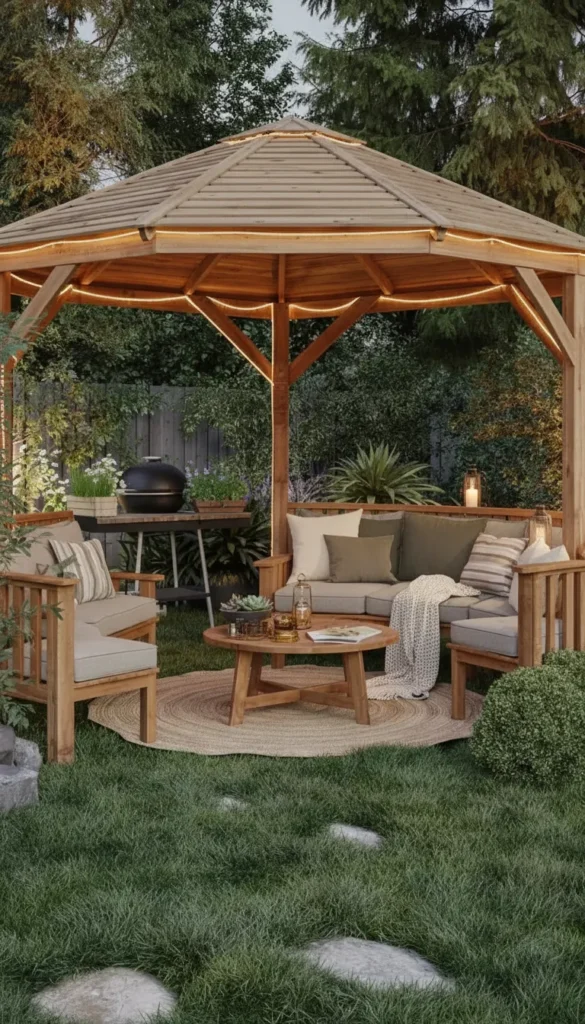
Placing the Gazebo for Maximum Impact
Where you put the gazebo matters as much as what it looks like.
- Center it in a large garden for a symmetrical, formal appearance
- Place it at the far end of the yard to create depth and draw the eye through the landscape
- Position near a water feature or flower bed for enhanced visual appeal
- Ensure the foundation (concrete pad or pavers) is level and properly prepared
Seating Arrangements Inside a Gazebo
The interior layout of a gazebo should feel comfortable, not crowded. Choose furniture that fits the shape and scale of the structure.
- Circular or octagonal gazebos work best with curved sectional seating or a round table
- Place a central coffee table at a comfortable height — 16–18 inches from the floor
- Add woven outdoor chairs for flexible additional seating
- Decorative cushions in two complementary colors add visual richness without clutter
Using the Gazebo as an Outdoor Dining Hub
A gazebo becomes even more functional when designed around outdoor dining.
- Install a rectangular dining table sized to leave 36 inches of clearance on all sides
- Place the gazebo near (but not directly adjacent to) a grill station or outdoor kitchen
- Use weatherproof pendant lighting or a chandelier hung from the central beam
- A small outdoor bar cart positioned just outside the gazebo adds entertaining convenience
Connecting the Gazebo to the Broader Landscape
A gazebo should feel connected to the rest of your garden, not isolated in it.
- Use a gravel or stone path to lead from the house to the gazebo entrance
- Frame the path with low plantings, lanterns, or border lighting
- Add climbing plants like wisteria or jasmine on the gazebo frame for natural beauty
- Surround the base with low ornamental plantings to anchor it visually
Lighting a Gazebo for Evening Atmosphere
Evening lighting turns a gazebo from a daytime shade structure into an all-night gathering space.
- Hanging lanterns from the central beam create a romantic, warm atmosphere
- String lights woven through the frame soften the structure visually
- Ground-level solar lights along the path leading to the gazebo add safety and ambiance
- Use warm white bulbs exclusively — cool white makes outdoor spaces feel sterile
📌 Save this gazebo lighting and landscaping strategy for a complete backyard transformation! 📌
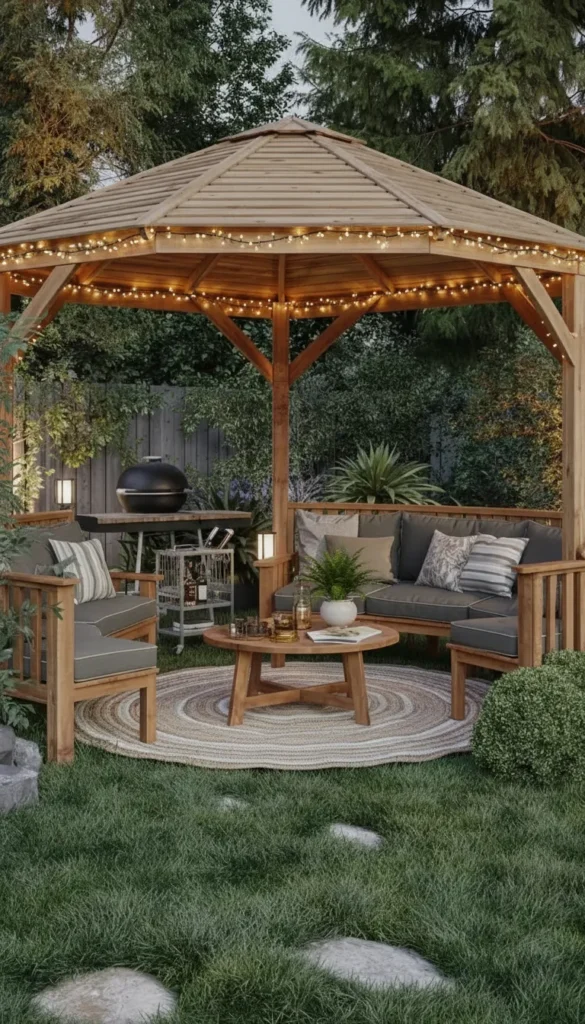
Maintaining Your Gazebo Through the Seasons
A wooden gazebo requires simple but consistent care to stay beautiful for decades.
- Apply a UV-resistant wood sealant every 1–2 years to prevent weathering and cracking
- Clean the roof canopy fabric (if applicable) with mild soap and water each spring
- Inspect all hardware annually — tighten bolts and replace any rusted components
- Cover the gazebo furniture with weatherproof covers during winter months
The Core Principle: Make It the Heart of Your Backyard
A gazebo succeeds when it becomes the place everyone naturally moves toward. It should feel slightly separate from the house — a destination rather than an extension. When designed with good materials, thoughtful seating, and warm lighting, it transforms the entire backyard from a yard into a living landscape.
Pergola Cover Patio Canopy Ideas — Modern Outdoor Living Areas
A pergola cover is one of the most versatile and design-forward shade solutions available to modern homeowners. Unlike solid roof structures, a pergola allows filtered sunlight to pass through while still providing meaningful shade and architectural definition. This makes it the ideal choice for patios that need structure without feeling enclosed.
Pergolas work especially well in larger backyard environments where you want the shade structure to anchor the landscape without dominating it. The open framework creates visual interest while still defining a clear outdoor room beneath it.
What Makes a Pergola Cover Different From Other Shade Structures
Understanding what a pergola does — and does not do — helps you decide if it is the right solution for your space.
- Partial shade: Slatted or louvered tops filter light without fully blocking it
- Architectural presence: Adds structure and permanence without requiring full construction permits in most areas
- Design flexibility: Works with wood, aluminum, vinyl, or steel depending on your aesthetic
- Customizable coverage: Retractable fabric panels can be added for full shade on demand
Choosing Your Pergola Style
Pergola aesthetics range from rustic and natural to sleek and contemporary. Choose a style that complements your home’s exterior.
- Traditional wood pergola: Warm, natural look — works with craftsman, farmhouse, or cottage-style homes
- Modern aluminum pergola: Clean lines, powder-coated finish — ideal for contemporary architecture
- Louvered pergola: Motorized adjustable slats — maximum flexibility for shade control
- Fabric-covered pergola: Retractable panels added to an open frame for full sun blocking when needed
📌 Pin this pergola style comparison for your outdoor planning process! 📌
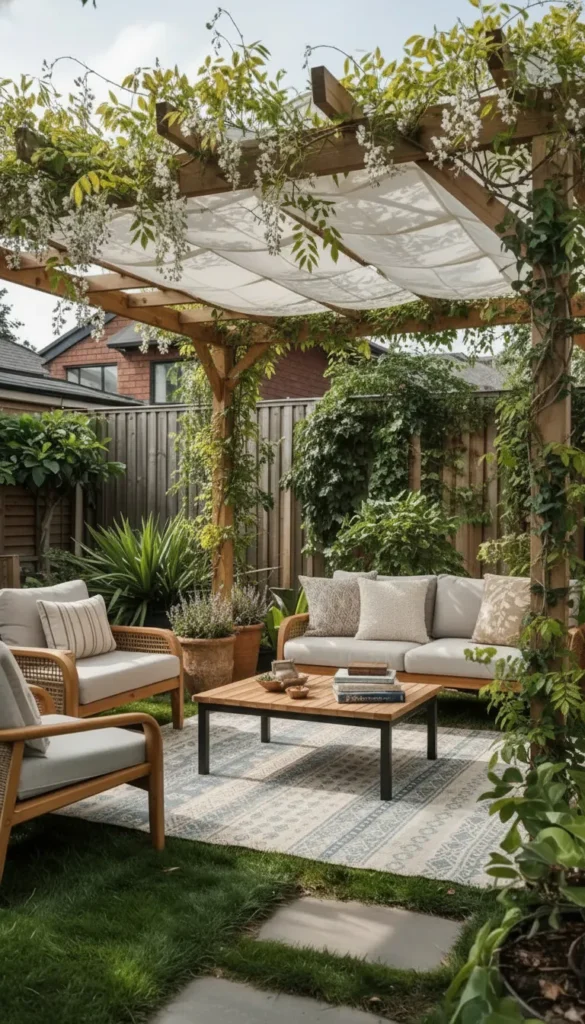
Sizing a Pergola for Your Patio
Getting the dimensions right is critical. A pergola that is too small looks awkward; one that is too large overwhelms the space.
- For a standard seating area (sofa + coffee table + two chairs), aim for a 12×14 foot minimum
- For combined dining and seating zones, a 16×20 foot pergola accommodates both comfortably
- Height should be at least 8.5–9 feet at the posts for comfortable airflow
- Leave 18–24 inches beyond the furniture footprint on all sides to avoid a cramped appearance
Creating an Outdoor Living Room Beneath a Pergola
The zone beneath a pergola should feel as intentional and comfortable as any indoor room.
- Anchor the space with a large outdoor rug — at least 8×10 feet for a standard seating group
- Choose an outdoor sofa and two accent chairs that face inward toward a central table
- Use soft outdoor cushions in neutral tones with two or three accent pillows for color
- Position everything so conversation flows naturally — chairs should face each other, not the house
Adding Retractable Fabric Panels for Full Shade
A fixed pergola provides partial shade, but retractable fabric panels turn it into a full shade structure.
- Mount fabric panels on stainless steel cables along the top of the frame
- Choose panels in the same color as your outdoor cushions for a cohesive palette
- Opt for hand-pull systems for simplicity or motorized systems for convenience
- Waterproof panel fabric extends usability into light rain as well as intense sun
Integrating Greenery Into the Pergola Frame
One of the most beautiful ways to enhance a pergola canopy is to let nature complete the design.
- Train climbing plants like wisteria, clematis, or bougainvillea up the posts and across the top
- Use planters at each post base with trailing or upright plants
- A vine-covered pergola provides natural, living shade that grows denser each season
- Choose plants appropriate for your climate zone to avoid excessive maintenance
Extending the Pergola to Cover Dining and Cooking Zones
A pergola that covers multiple outdoor zones becomes the backbone of your entire outdoor living setup.
- Extend the structure to cover a dining table adjacent to the seating area
- Include a nearby outdoor kitchen or grill station just outside the pergola footprint (for ventilation)
- Define each zone with rugs or pavers — seating rug for the lounge area, stone or tile for dining
- Keep pathways between zones at least 36 inches wide for comfortable movement
📌 Save this multi-zone pergola layout strategy for a complete outdoor living upgrade! 📌
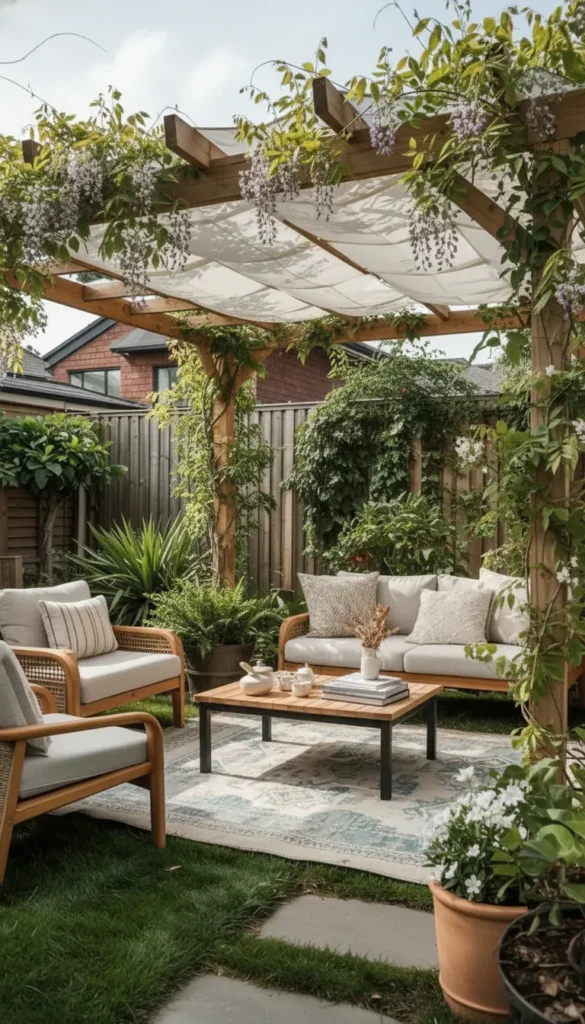
Pergola Lighting Ideas for Modern Patios
Lighting is what makes a pergola feel finished and functional after sunset.
- Bistro string lights draped across the top beams are the most popular and effective option
- Recessed LED spotlights installed in wood beams give a cleaner, architectural look
- Wall sconces mounted on the corner posts add downward light for task areas
- Pendant lights hung from a central beam work beautifully over a dining table
Maintenance and Longevity of Pergola Covers
A well-maintained pergola can last 20–30 years. Simple care routines protect your investment.
- Inspect wood or metal annually for rot, rust, or loose hardware
- Sand and re-seal wood pergolas every 2–3 years
- Clean fabric panels or retractable covers each spring before the season begins
- Replace worn grommets or cable ties before they fail to avoid damage to the frame
The Core Principle: Define Zones Without Walls
A pergola succeeds when it creates meaningful outdoor rooms without enclosing the space. The openness is the feature — not a flaw. Furnish beneath it with the same care as an indoor living area, add greenery where possible, and let the structure mature naturally into the landscape over time.
Porch Canopy Ideas — Shade Solutions For Relaxing Outdoor Spaces
Porch canopy design is a uniquely intimate challenge. Unlike open backyard patios, a porch already has walls on one or two sides — which means you are working with a contained, personal space. The goal is not to dominate that space with a bold structure, but to enhance what it already does: provide a comfortable, quiet transition between the inside of your home and the outside world.
A well-designed porch canopy creates the feeling of a room without walls. It is where morning coffee tastes better, where evening conversations stretch longer, and where everyday life feels just a little more deliberate. Done right, it becomes the most-used space in your entire home.
Why Porches Benefit Most From Canopy Additions
Unlike open patios, porches have natural walls that already provide partial shelter. A canopy adds the one element they often lack: overhead shade that makes the space usable in bright afternoon sun.
- Reduces direct glare without blocking the view of the garden or yard
- Keeps the porch floor and furniture cooler during peak afternoon hours
- Creates a sense of enclosure that makes smaller porches feel cozier
- Works with existing architectural features rather than competing with them
Types of Porch Canopy Solutions
Not all porch canopy setups look or function the same. Choose an approach based on your porch structure and design goals.
- Ceiling-mounted fabric canopy: Soft fabric panels attached to the porch ceiling — minimal visual weight
- Roller shade system: Retractable shades mounted at the porch beam — modern and clean
- Attached fabric canopy: Extends outward from the porch edge over an adjacent seating area
- Lattice canopy extension: Adds an open overhead frame beyond the porch roofline
📌 Pin this porch canopy type guide for your outdoor refresh planning! 📌
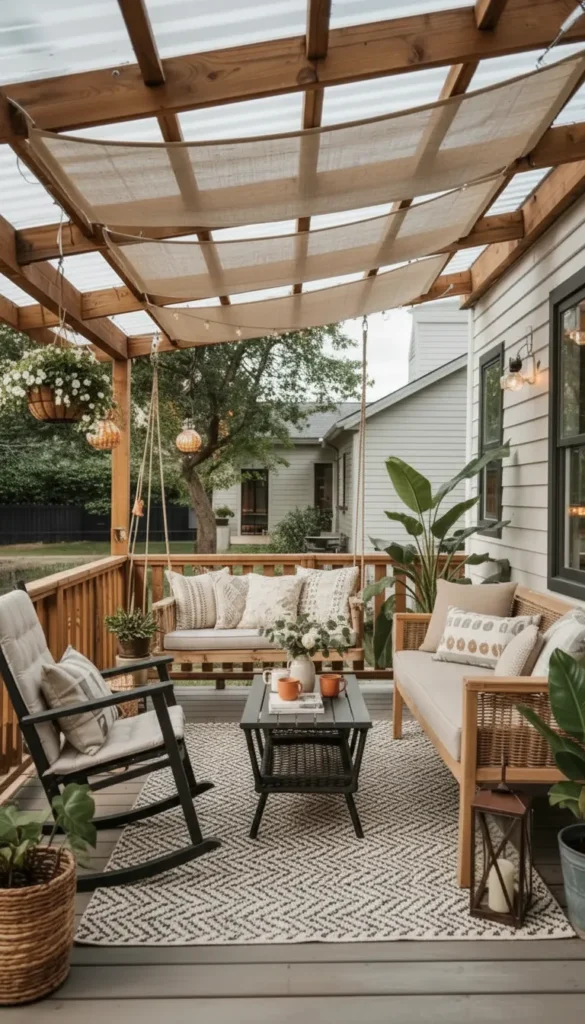
Seating Arrangements That Work on Shaded Porches
The right furniture makes a shaded porch feel curated and welcoming, not overcrowded.
- Rocking chairs: Classic, functional, and perfectly scaled for standard porch widths
- Porch swing: Adds movement and personality — mount from the ceiling beam with heavy-duty hardware
- Compact outdoor sofa: Works for wider porches and creates a full conversation zone
- A small coffee table or side tables at each seating piece complete the arrangement
Textiles and Layering for Porch Comfort
Textiles do more work on a porch than anywhere else outdoors. They create warmth, softness, and a sense that the space was thoughtfully arranged.
- Outdoor cushions on every seat — weather-resistant fabric is essential
- Woven outdoor rug defines the seating zone and adds texture underfoot
- Throw blankets in a basket near the swing or sofa for cooler evenings
- Use two complementary tones — one neutral, one accent — to keep the palette cohesive
Making a Small Porch Feel Larger With Canopy Design
Porches are often narrow or compact, and the wrong canopy setup can make them feel more cramped. Use these strategies to maximize the sense of space.
- Choose lighter fabric colors — white, cream, or pale gray — which visually open the space
- Hang the canopy or shade as high as possible to maximize perceived ceiling height
- Use vertical planters or hanging baskets instead of floor planters to save footprint space
- Keep furniture legs visible (avoid skirted or bulky pieces) to make the floor feel larger
Connecting Indoor and Outdoor Living Through Porch Design
One of the most powerful things a covered porch does is blur the line between inside and outside.
- Extend your interior color palette to the porch textiles and furniture for visual continuity
- Position the porch furniture so it faces outward — toward the garden, yard, or street
- Use a porch canopy in the same tone as your home’s exterior trim for a built-in appearance
- Add a small side table near the door to hold items moving between inside and outside
📌 Save this porch canopy and furniture layering approach for your next seasonal refresh! 📌
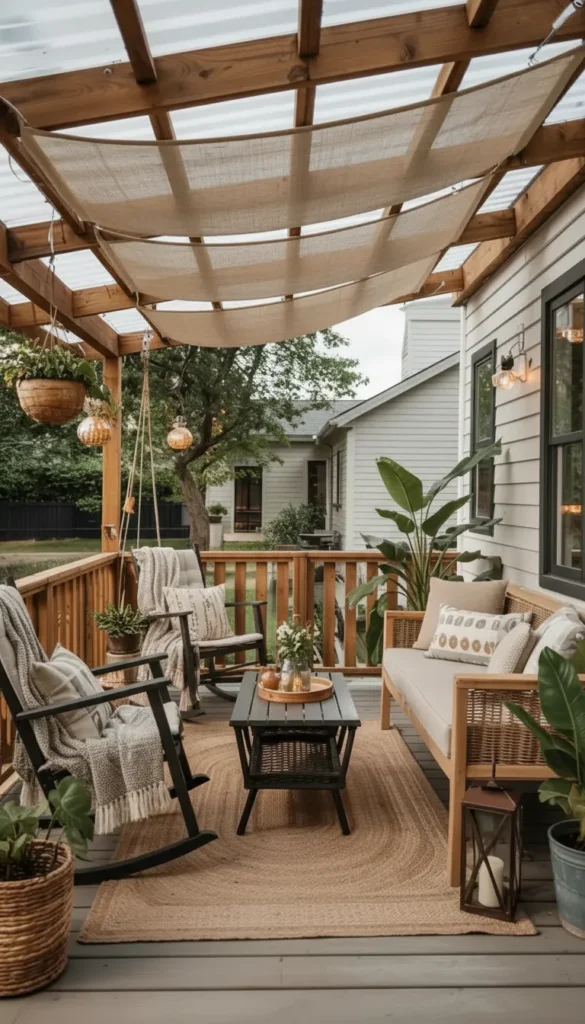
Lighting Ideas for a Shaded Porch
Evening lighting transforms a daytime porch into an all-night retreat.
- Hanging lanterns from the porch ceiling or canopy frame — warm and classic
- String lights along the porch railing or canopy edge — casual and festive
- Wall-mounted sconces flanking the front door — functional and architectural
- Candle lanterns on side tables — for intimate evenings without electricity
Adding Decorative Elements That Complete the Porch Atmosphere
Small decorative touches are what separate a functional porch from a genuinely beautiful one.
- Hanging plants in macramé or wicker baskets — adds life and movement
- Seasonal wreaths or door arrangements — ties the porch to the time of year
- A small bookshelf or magazine rack — signals that this is a space for relaxing and staying awhile
- Potted herbs near the entry — practical, fragrant, and visually appealing
Maintenance Tips for Porch Canopy Fabrics
Porch canopies are exposed to weather even with the overhead protection the porch provides. Simple maintenance keeps them looking great for years.
- Brush off debris weekly to prevent mold and mildew from developing
- Spot-clean fabric stains immediately with mild soap and water
- Remove and machine-wash fabric panels seasonally if the manufacturer allows
- Inspect attachment hardware each spring — tighten or replace any corroded fittings
The Core Principle: Honor What a Porch Already Is
A porch is already a special space — quiet, intimate, and personal. The best porch canopy design does not reinvent this. It simply enhances what is already there: a little more shade, a little more comfort, a few more hours of usable time each day. When you design with restraint and attention to detail, your porch becomes the room in your home that you reach for first.
Conclusion
A beautiful, shaded outdoor space is not a luxury — it is something every home deserves. Whether you installed a simple DIY fabric canopy over your patio this weekend or you are planning a full gazebo or pergola build for next season, every step you take toward better shade is a step toward a more livable, enjoyable home. These five ideas cover the full spectrum from affordable and flexible to architectural and permanent, so there is genuinely something here for every yard, budget, and lifestyle.
Start with what fits your current space and needs, then let your outdoor vision grow from there. The best patio canopy is the one that gets you outside more — that makes you want to put down your phone, sit in the shade, and simply be present in the place you have created. That experience is worth every bit of effort it takes to build it.

“I share simple, beautiful and affordable home decor ideas to help you style every corner of your home with ease.