
There is something deeply personal about an outdoor space. It is where you breathe, rest, laugh with people you love, and steal quiet moments from a loud world. When that space is exposed to harsh sun, sudden rain, or restless wind, it stops feeling like a retreat and starts feeling like an afterthought. That is the moment a well-designed canopy changes everything — not just the look of your home, but the way you actually live in it.
Whether you have a sprawling rooftop terrace or a narrow apartment balcony, the right canopy transforms raw square footage into a room without walls. In 2026, homeowners and designers are moving beyond basic shade solutions toward structures that are architectural, emotional, and deeply intentional. This guide covers five of the most powerful canopy design ideas for every outdoor space — patio, terrace, balcony, porch, and rooftop — so you can finally create the outdoor living area you have always imagined.
Modern Patio Canopy Design Ideas For Stylish Outdoor Living Spaces
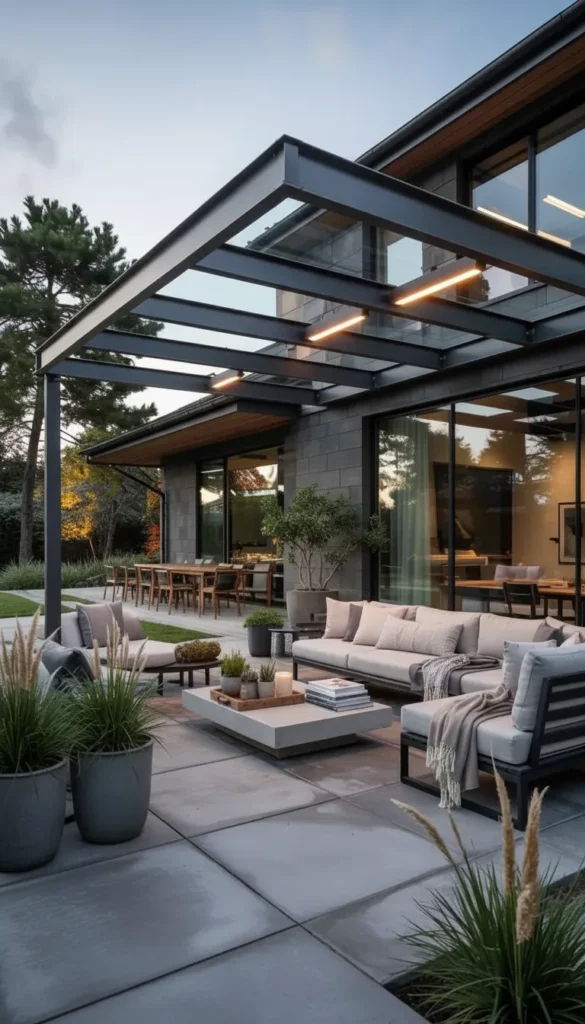
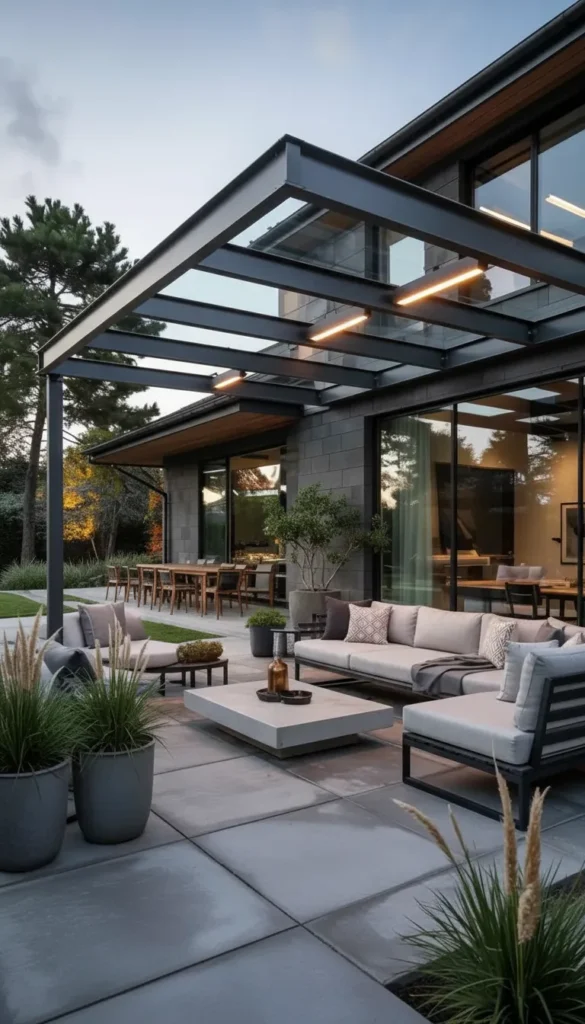
A patio canopy done right does not just block the sun — it makes your outdoor space feel like a true extension of your home. Modern patio canopy designs in 2026 focus on clean lines, smart materials, and seamless integration with your home’s architecture.
Why a Patio Canopy Changes Everything
Most patios fail because they feel disconnected from the house. A well-placed canopy visually anchors the outdoor area and creates a defined “room” that invites people to sit, stay, and enjoy.
- Reduces direct sunlight while preserving natural airflow
- Extends patio usability from spring through early fall
- Adds perceived square footage to your living space
- Increases home resale value when properly installed
The Right Frame Material Makes All the Difference
Slim powder-coated steel or aluminum frames are the go-to choice for modern patio canopies in 2026. They are strong, weather-resistant, and visually lightweight — meaning they add structure without making the space feel heavy or boxed in.
- Aluminum: lightweight, rust-proof, ideal for humid climates
- Steel: stronger, heavier, better for large span canopies
- Powder coating: protects against UV and weather damage for 10+ years
- Matte black and warm grey are the most popular finishes this year
Choose a Roof Style That Matches Your Architecture
The roof panel you choose defines the entire character of your patio canopy. Match it to your home’s exterior materials so the structure feels like it was always there.
- Flat panel roofs: best for contemporary and minimalist homes
- Louvered roofs: allow adjustable light and rain drainage
- Polycarbonate panels: diffuse light beautifully without blocking it entirely
- Wood-look composite: warm aesthetic, zero maintenance
📌 Pin this modern patio canopy guide! 📌
Furniture That Works Under a Patio Canopy
The canopy creates the room — your furniture defines how it feels. Keep the scale proportional and leave enough circulation space so the patio does not feel cramped.
- Sectional sofa with outdoor-rated cushions for flexible seating
- Low concrete or teak coffee table as a durable centerpiece
- Woven lounge chairs that breathe well in warm weather
- A dining table with modern chairs for outdoor meals
Lighting Completes the Space After Sunset
Integrate LED strip lights into the canopy frame so the patio stays inviting after dark. This small detail elevates a daytime shade structure into a full evening destination.
- Warm white LEDs (2700K–3000K) create the most inviting atmosphere
- Dimmable controls let you adjust the mood from bright dinner to soft lounge
- Solar-powered options reduce wiring costs for freestanding canopies
Add Greenery to Soften the Structure
A metal and fabric canopy can feel industrial without the right softening elements. Planters and climbing plants bridge the gap between architecture and nature.
- Ornamental grasses in large pots anchor the corners of the canopy
- Trailing vines along the frame create a natural, overgrown-in-a-good-way look
- Herb planters near the dining area are both decorative and functional
The Principle That Ties It All Together
The best patio canopies feel like they were designed by the same architect who designed the house. When materials, proportions, and colors align with your home’s exterior, the patio stops looking like an add-on and starts feeling like a natural part of your living environment.
📌 Save this patio design strategy! 📌
Retractable Canopy Design Ideas With Flexible Shade Solutions
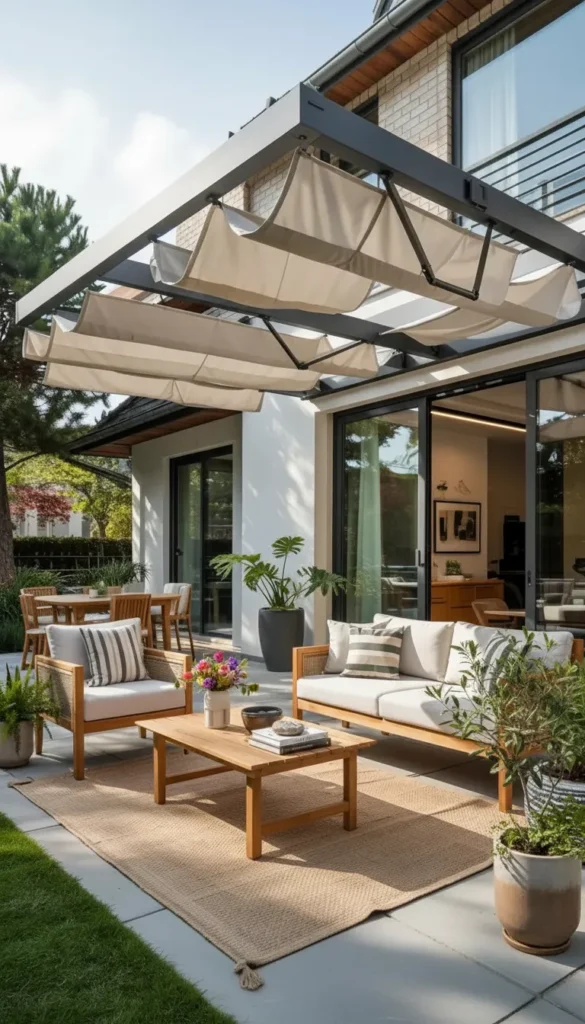
Not every day is the same — and your outdoor shade solution should not be either. Retractable canopy systems are one of the most practical canopy design ideas gaining serious momentum in 2026. They give you full control over sunlight, shade, and airflow without permanently blocking your view.
Why Retractable Beats Fixed for Many Homeowners
A fixed canopy commits you to one shade level all year. A retractable system adapts to the season, the time of day, and the weather — making your outdoor space genuinely usable in more conditions.
- Open fully on mild sunny days to maximize vitamin D and warmth
- Extend partially for filtered shade during peak afternoon heat
- Close completely during light rain to keep furniture dry
- Retract during storms to protect the canopy fabric from wind damage
Frame and Fabric: The Two Things That Determine Quality
A retractable canopy lives or dies on the quality of its frame and fabric. Invest here and you will have a system that performs flawlessly for a decade or more.
- Anodized aluminum frames resist corrosion in coastal and humid climates
- Acrylic solution-dyed fabric resists UV fading and dries quickly after rain
- Look for fabric with a UPF rating of 50+ for maximum sun protection
- Avoid cheap polyester — it stretches, sags, and discolors within two seasons
Manual vs. Motorized: Which System Fits Your Life
Manual crank systems are affordable and reliable. Motorized systems are convenient and worth the investment for larger canopies or homeowners who want effortless daily use.
- Manual: lower cost, simple mechanics, no electrical requirements
- Motorized: retract with a remote or smartphone app in seconds
- Wind sensor add-ons auto-retract the canopy when gusts exceed a set speed
- Solar-powered motors are available for off-grid or retrofit installations
📌 Pin this retractable canopy system guide! 📌
Best Furniture for a Retractable Canopy Space
Because the canopy can open fully, your furniture choices need to work in both shaded and fully sunny conditions. Opt for weather-resistant materials that look good in both scenarios.
- Teak dining table and chairs: elegant in sun or shade
- Outdoor sectional sofa with washable, UV-resistant cushion covers
- Large ceramic planters that define the seating zone
- A quality outdoor rug anchors the space and adds warmth underfoot
Retractable Side Screens for Added Privacy
For patios in tight neighborhoods or properties with close sightlines, retractable side screens are a game-changing addition. They extend from the canopy frame to create a semi-enclosed outdoor room on demand.
- Mesh screens allow airflow while blocking direct views
- Blackout screens work well on west-facing patios with intense afternoon sun
- Motorized side screens can be paired with the main canopy control system
Lighting Under a Retractable Canopy
Integrated lighting keeps the patio functional after the canopy is extended for evening use. The key is keeping fixtures low-profile so they do not interfere with the retraction mechanism.
- Recessed LED channels along the front beam are the cleanest option
- String lights attached to the frame add warmth without structural complexity
- Motion-sensor pathway lighting improves safety around the patio perimeter
The Core Principle of Retractable Design
Flexibility is the greatest luxury in an outdoor space. A retractable canopy gives you the ability to choose your environment — shade or sun, open or sheltered — every single day. That kind of control turns a passive outdoor area into an active, year-round living space.
📌 Save this flexible shade solution! 📌
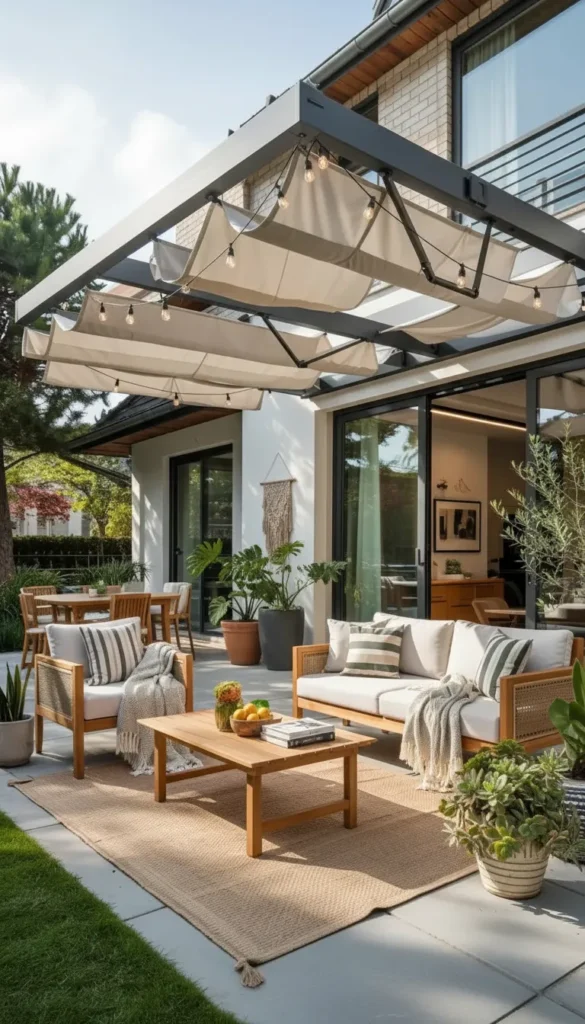
Contemporary Terrace And Rooftop Canopy Design Ideas
A rooftop terrace or elevated terrace is one of the most dramatic outdoor spaces a home can offer. It also comes with unique design challenges — exposure to wind, intense sun from multiple angles, and the structural demands of working at height. The right canopy design transforms these raw challenges into compelling features.
Why Rooftop Canopies Require Special Planning
Wind loads at rooftop level can be two to three times stronger than at ground level. Any canopy installed on a terrace or rooftop must be structurally engineered to handle those forces safely.
- Always commission a structural assessment before rooftop canopy installation
- Canopy posts must anchor into the building’s structural slab, not just the surface
- Louvered roofs are preferred because they can be angled to let wind pass through
- Consult local building codes — rooftop additions often require permits
Glass and Polycarbonate Rooftop Canopy Options
Tempered glass or high-clarity polycarbonate panels create a sleek, transparent roof that maintains panoramic sky views while blocking UV and light rain. This is the defining aesthetic for luxury rooftop terraces in 2026.
- Tempered glass: premium appearance, heavy, requires robust support structure
- Polycarbonate: 80% lighter than glass, easier to install, nearly as clear
- Both options allow full natural light while blocking UV radiation
- Combine with a metal frame in matte black or brushed steel for a luxury finish
Louvered Rooftop Canopies for Maximum Versatility
Motorized louvered canopies are the most versatile option for rooftop terraces. The adjustable aluminum slats open and close to control light, ventilation, and rain protection simultaneously.
- Open louvers: full airflow and sunlight for open-sky lounging
- Partially closed louvers: dappled shade without blocking the view
- Fully closed louvers: complete rain protection with integrated drainage channels
- Built-in LED strips between the louvers create dramatic evening lighting
📌 Pin this rooftop canopy design idea! 📌
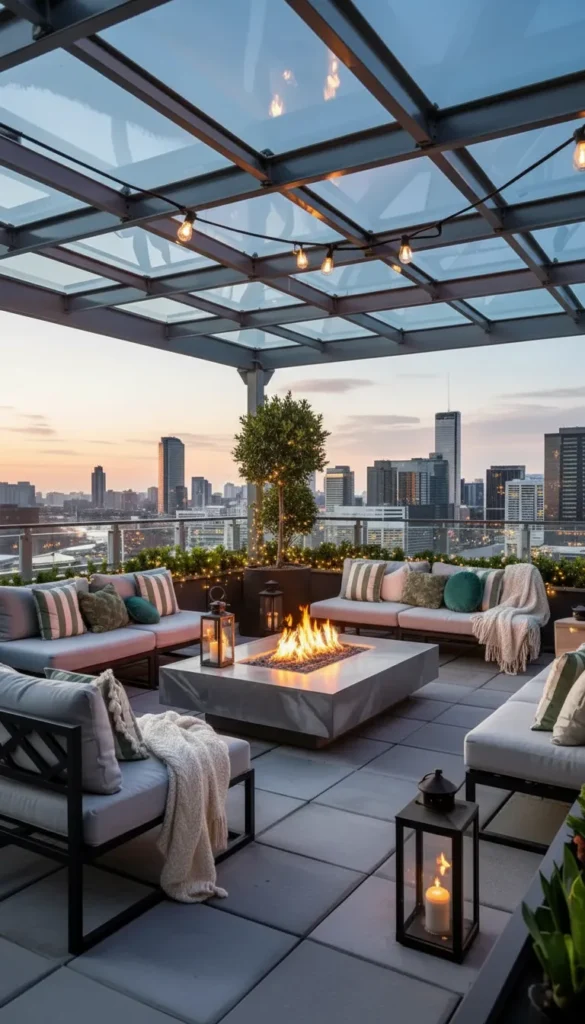
Furniture for Elevated Outdoor Living
Rooftop furniture needs to be weather-resistant, wind-stable, and proportioned for the wide open sky above. Heavy furniture anchors the space and prevents shifting in wind.
- Modular outdoor sofa systems that can be reconfigured for different gatherings
- Fire table as a central focal point for cooler evenings
- Lightweight lounge chairs that can be moved around the terrace easily
- Weatherproof side tables in concrete, stone, or powder-coated steel
Privacy and Wind Screens for Rooftop Terraces
Rooftop terraces are exposed on all sides. Adding vertical privacy screens or wind barriers along the perimeter significantly improves comfort and creates a more intimate atmosphere.
- Aluminum slatted screens allow airflow while blocking direct views and wind
- Tempered glass panels preserve views while cutting wind exposure
- Planted trellises with climbing greenery create a natural privacy wall
- Screens can be built into the canopy structure for a fully integrated look
Creating Zones on a Rooftop Terrace
Large rooftop terraces benefit from being divided into functional zones — dining, lounging, and bar or social areas. The canopy structure can be designed to cover specific zones while leaving others open to the sky.
- Canopy over dining area: weather protection where it matters most
- Open sky zone for sunbathing or stargazing
- Planted perimeter zones with raised beds or large planters
The Rooftop Canopy Principle
An elevated outdoor space rewards bold design decisions. The canopy on a rooftop terrace should be treated as architecture — not furniture. When it is designed with the same intention as the building itself, the rooftop becomes one of the most memorable spaces in the entire home.
📌 Save this rooftop terrace strategy! 📌
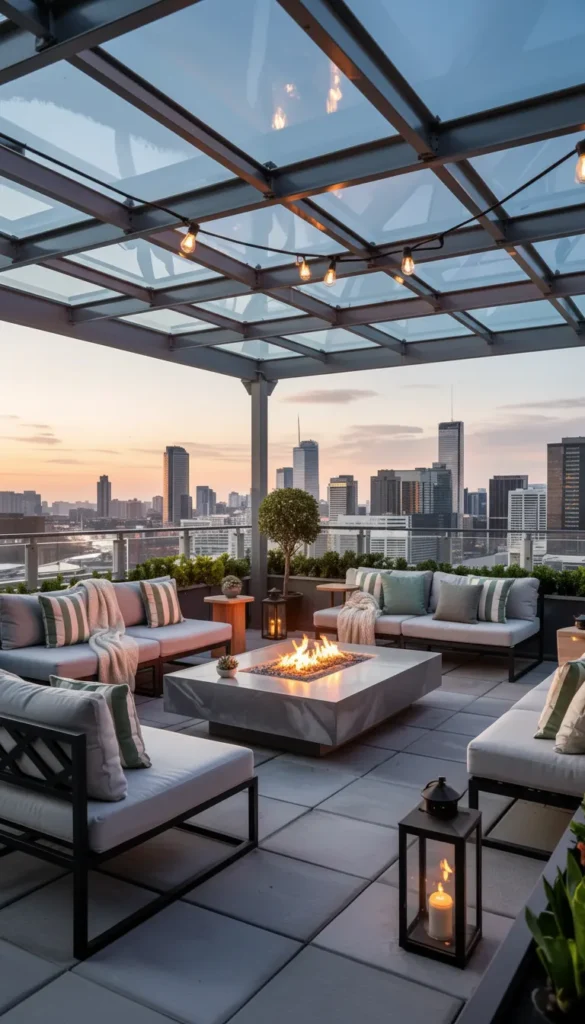
Elegant Balcony Canopy Design Ideas For Small Outdoor Spaces
A balcony is one of the most underutilized spaces in an apartment or townhouse. With the right canopy design, even a narrow 6-by-10-foot balcony can become a daily retreat you actually use and love. The key is working with the limitations of the space rather than against them.
The Challenge of Small-Space Canopy Design
Balconies demand economy of form. Every element must earn its place. A canopy that is too large overwhelms the space; one that is too small fails to provide real shade or shelter.
- Canopy depth should not exceed 80% of the balcony depth
- Keep frame profiles slim — thick beams visually eat up space
- Light-filtering fabrics maintain brightness while reducing heat
- Avoid fully opaque solid roofs on small balconies — they create a cave effect
Fabric Awning Systems for Balconies
A retractable fabric awning mounted to the building wall above the balcony is the most practical and cost-effective canopy solution for apartments. It provides genuine shade, retracts completely when not needed, and does not require structural modifications to the balcony slab.
- Cassette awnings enclose the fabric when retracted, protecting it from weather
- Projection arms extend outward without requiring floor-mounted posts
- Choose neutral colors: beige, warm grey, or soft white keep the space feeling open
- Striped patterns are a classic choice that works with both modern and traditional facades
Wall-Mounted Canopy Frames for Urban Balconies
For a more permanent, architectural look, a wall-mounted metal frame with polycarbonate or fabric infill creates a sleek balcony canopy that feels intentional rather than improvised.
- Mount to the building wall above the balcony door for the strongest anchor point
- Slim steel or aluminum arms extend outward to the front rail
- Polycarbonate panels: translucent, weather-proof, and very low maintenance
- Powder-coat the frame to match the building’s window or facade color
📌 Pin this balcony canopy idea! 📌
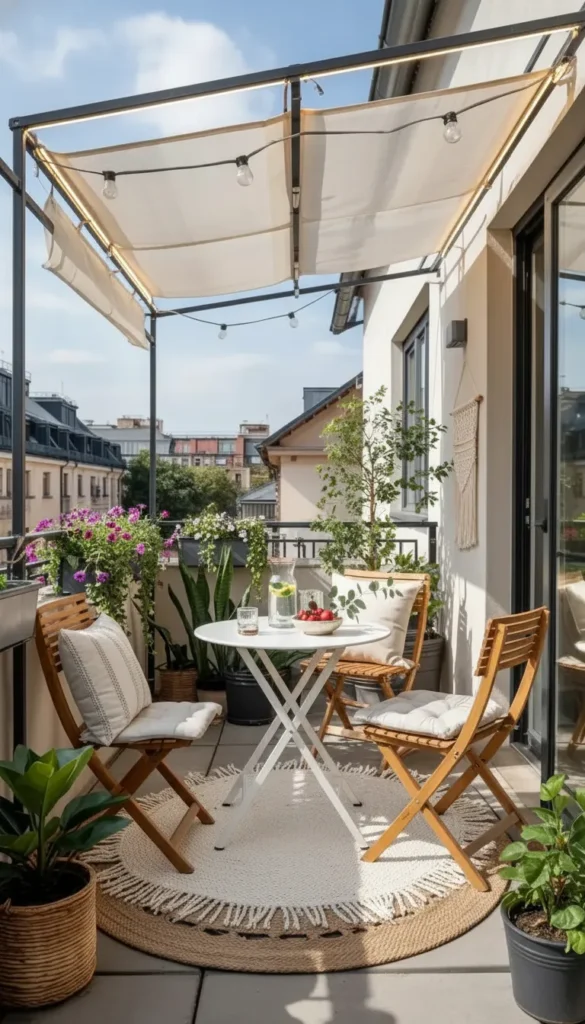
Furniture That Fits Without Crowding
The furniture you choose for a canopied balcony determines whether the space feels like a sanctuary or a storage area. Less is always more on a balcony.
- Bistro table and two chairs: the classic pairing that works for any balcony size
- A folding chair and a small side table maximize flexibility for solo use
- Built-in bench seating along the railing creates storage space underneath
- Stackable chairs can be stored inside when not in use to free up floor space
Lighting for Balcony Canopy Spaces
Evening lighting transforms a balcony from a daytime viewing platform into a genuine evening destination. Keep fixtures small and focused.
- String lights draped along the canopy frame add warmth with zero installation complexity
- Small wall sconces on either side of the door provide practical illumination
- Battery-powered LED lanterns can be moved around as needed — no wiring required
- Avoid overhead flood lights — too harsh for the intimate scale of a balcony
Adding Greenery to a Balcony Canopy Space
Plants do more work on a balcony than anywhere else in the home. They add privacy, soften hard materials, and make the space feel alive rather than exposed.
- Slim vertical planters mounted on the railing preserve floor space
- Trailing plants like string of pearls or ivy create a natural privacy screen
- A small raised herb box near the door is practical and beautifully fragrant
- Succulents in wall-mounted pots require minimal watering and thrive in sun
Side Panels for Privacy and Wind Protection
Neighboring balconies and street-level views are real concerns in urban environments. Adding retractable or fixed side panels to your balcony canopy solves both the privacy and wind exposure problems at once.
- Mesh side panels cut wind by 60–70% while maintaining airflow
- Frosted polycarbonate side panels block views without darkening the space
- Fabric drop panels offer a soft aesthetic and fold away easily when not needed
The Balcony Canopy Principle
Restraint is the most powerful design tool for a small balcony. Every element you add should serve at least two purposes — shade and privacy, seating and storage, greenery and wind protection. When every choice is intentional, even the smallest balcony feels abundant.
📌 Save this small-space balcony approach! 📌
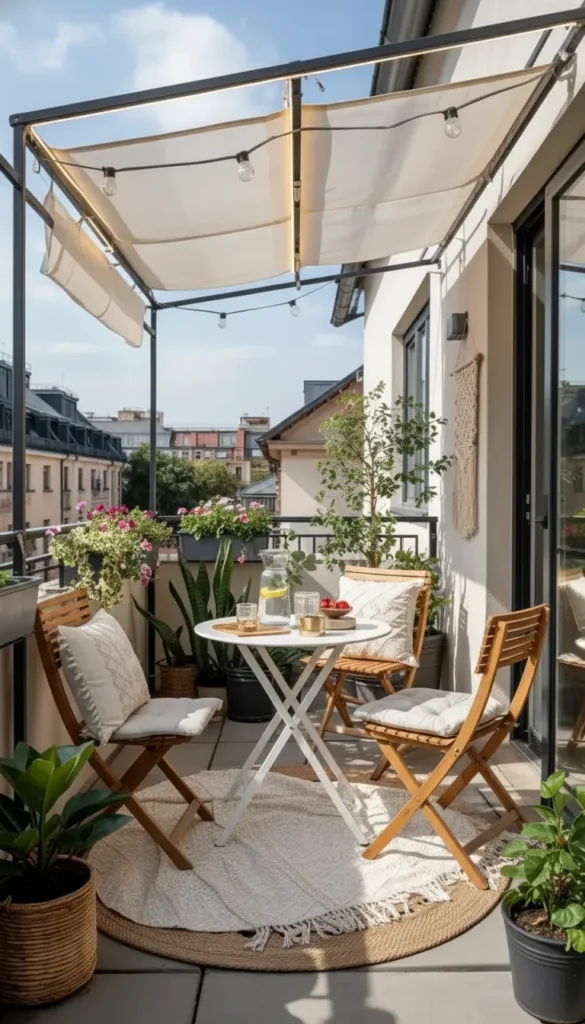
Practical Porch Canopy Design Ideas For Welcoming Entrances And Small Outdoor Areas
A porch is the first outdoor space your guests experience and the last one you pass through every day. A well-designed porch canopy does double duty — it protects the entrance from rain and sun while making a strong first impression about the quality and character of your home.
Front Porch vs. Back Porch: Different Needs, Different Designs
Front porch canopies prioritize curb appeal and weather protection. Back porch canopies prioritize comfort, privacy, and usability as an outdoor living room.
- Front porch: match canopy style to house architecture for a cohesive facade
- Back porch: focus on creating a comfortable, sheltered outdoor lounge
- Both benefit from durable materials that require minimal seasonal maintenance
- Lighting choices differ: front porches need welcoming ambient light; back porches suit softer, atmospheric lighting
Roof-Integrated Porch Canopies
The most architecturally satisfying porch canopy is one that extends directly from the home’s roofline. This approach creates a seamless, built-in appearance that looks like it was always part of the design.
- Hip or gable roof extensions match common residential roof shapes
- Matching roofing material — shingles, tiles, or metal — ties the canopy to the house
- Wide overhangs (4 to 6 feet) provide generous rain and sun protection
- Built-in gutters channel rainwater away from the entrance path
Freestanding Pergola-Style Porch Canopies
For homes where a roof extension is not structurally feasible, a freestanding pergola-style canopy provides excellent outdoor coverage with minimal structural commitment.
- Cedar or pressure-treated wood: classic, warm, and very durable when sealed
- Powder-coated aluminum: low maintenance, modern, available in any color
- Lattice top with climbing plants creates a living, organic canopy over time
- Adding a shade sail or fabric panel over the pergola top creates instant rain coverage
Metal and Glass Entrance Canopies
For contemporary homes, a slim metal frame canopy with a tempered glass or polycarbonate panel above the front entrance is a striking and highly functional solution. It is one of the top gate and entrance canopy design ideas for modern homes in 2026.
- Projects 2 to 4 feet from the wall to shelter the door during rain
- Tempered glass top lets light reach the entrance area rather than creating shadow
- Stainless steel or matte black brackets provide a clean, upscale look
- Drainage channel along the back edge prevents water pooling
📌 Pin this porch canopy entrance idea! 📌
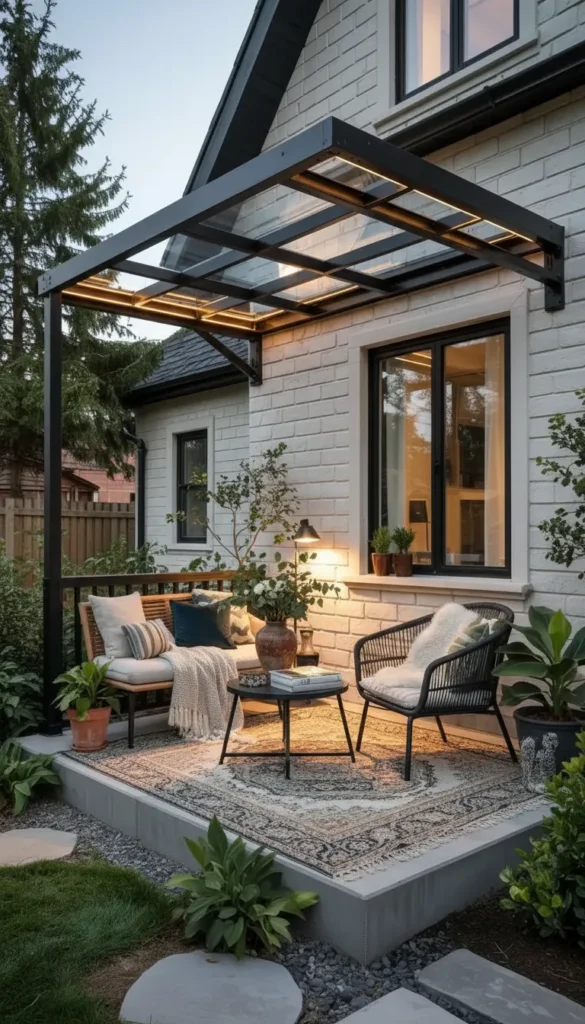
Furniture and Layout for Porch Living
A porch is often a narrow, linear space. Choose furniture that works with that shape rather than trying to impose a living room layout that does not fit.
- Porch swing or rocking chairs: classic, functional, and beloved by every generation
- A narrow bench with storage for shoes or outdoor accessories keeps the space organized
- Two lounge chairs with a side table between them creates a simple, comfortable seating pair
- Avoid bulky furniture sets — they block circulation and make the porch feel crowded
Porch Canopy Lighting That Creates a Welcome
Porch lighting is not just practical — it communicates warmth and welcome. The right lighting under a porch canopy makes a home look inviting from the street and from the inside.
- Pendant lights hung from the ceiling create a warm, residential feel
- Wall sconces on either side of the door provide balanced, shadow-free illumination
- Motion-activated lights improve security without permanently lighting the entrance
- Edison bulb strings along the porch ceiling add festive charm for outdoor gatherings
Extending Porch Usability With Side Enclosures
A screened porch extends the outdoor season significantly by blocking insects while keeping the space open to air and light. Adding a retractable screen system to your porch canopy structure turns a basic covered porch into a three-season room.
- Retractable screen systems roll up completely when not needed
- Solar shades on the south and west sides block intense afternoon sun
- Full enclosure with sliding panels creates a four-season sunroom at a fraction of the cost
- Always include an exhaust fan or ceiling fan for air circulation in enclosed porches
Matching the Canopy to the House
Proportion and material matching are everything in porch canopy design. The canopy should never look like it was purchased separately and bolted onto the building.
- Match canopy post dimensions to existing exterior columns if present
- Use the same wood stain or paint color as the porch railings and trim
- Keep canopy scale proportional — a narrow porch needs a narrow, not a deep, overhang
- Integrate gutters and downspouts to prevent rain splash onto the porch floor
Hidden Storage in the Porch Design
The best porch designs include discreet storage that keeps the space tidy without requiring a separate storage building. Built-in bench storage and weather-resistant cabinet boxes fit naturally under a porch canopy.
- Bench seating with lift-up storage is a classic and practical choice
- A lockable storage box near the entrance holds keys, mail, and packages safely
- Built-in planters with concealed irrigation make the porch feel effortlessly maintained
📌 Save this complete porch design approach! 📌
Conclusion
The best outdoor canopy is not the most expensive one or the most architecturally impressive one — it is the one that fits your space, your lifestyle, and the way you want to feel when you step outside. Whether you choose a sleek modern patio canopy, a flexible retractable system, a dramatic rooftop structure, a compact balcony awning, or a welcoming porch cover, the principle is the same: design for your life, not for a showroom.
Start with the space you have. Consider the direction of sun, the exposure to wind, and the way you realistically use your outdoor area throughout the year. Then choose materials, proportions, and furniture that honor those conditions. When every element works together — structure, shade, seating, greenery, and light — your outdoor space stops being just square footage and becomes somewhere you genuinely want to be every single day. That is the real goal of great canopy design in 2026 and beyond.

“I share simple, beautiful and affordable home decor ideas to help you style every corner of your home with ease.