

Ready to make your living room feel richer, cozier, and far more memorable? These Teal Living Room Ideas offer a beautiful way to introduce bold color while keeping your space warm, comfortable, and easy to live in. Whether you want a dramatic feature wall or just a few subtle accents, teal can transform a plain room without sacrificing its welcoming feel.
This versatile shade works beautifully with cream, beige, warm wood, brass, and natural textures, making it surprisingly easy to style in real homes. In my experience, teal looks most balanced when it has lighter colors and tactile materials around it. From statement furniture and architectural details to rugs, curtains, and affordable accessories, these ideas will help you build a stylish living room that feels layered, functional, and uniquely yours.
Teal Accent Wall
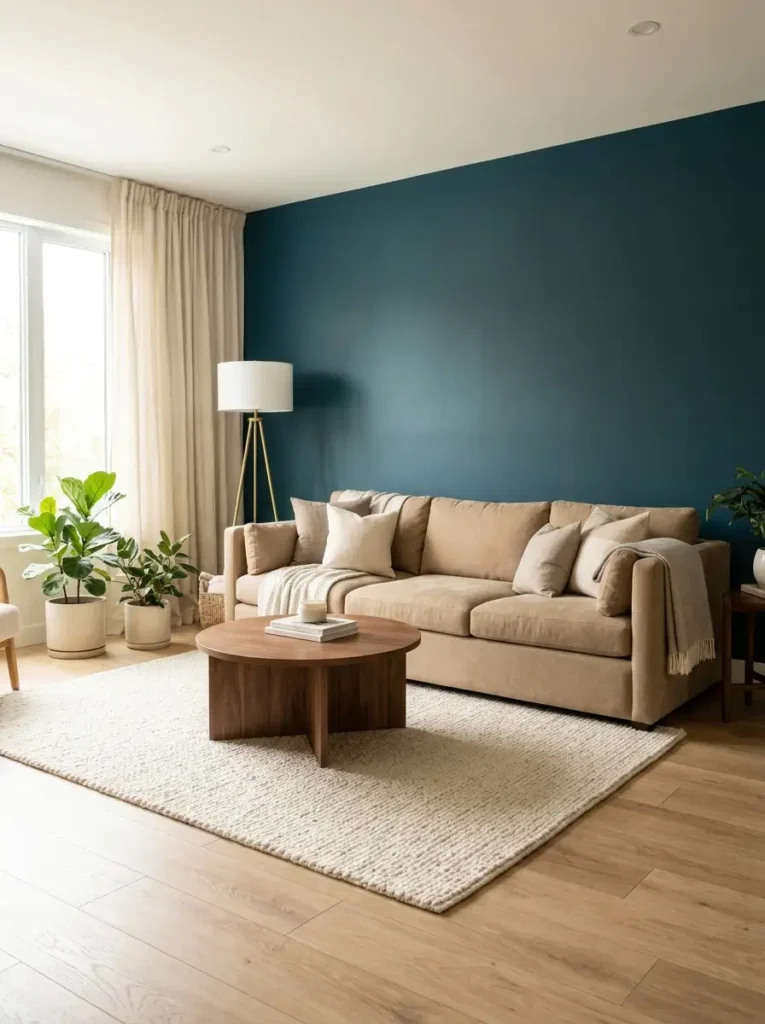
- Creates an instant focal point without overwhelming the room.
- Adds depth behind neutral furniture.
- Makes beige, cream, and wood tones feel warmer.
- Requires less commitment than painting every wall.
- Gives a simple living room stronger visual character.
One bold wall can completely reshape a living room, and teal brings exactly the right mix of depth and sophistication. Positioning the color behind a neutral sofa creates a natural focal point while allowing lighter walls to keep the room open and bright. In my experience, this approach works especially well when homeowners want noticeable color without committing to a fully saturated space. Warm beige upholstery, natural wood, and cream textiles soften the stronger backdrop, creating a balanced room that feels stylish enough for entertaining yet comfortable for everyday relaxation.
Lighting plays an important role in how teal appears, so test several paint samples before choosing the final shade. Rooms with abundant daylight can usually handle deeper tones, while smaller or dimmer spaces often benefit from slightly softer versions. For anyone exploring Teal Living Room Ideas, an accent wall offers an approachable starting point because furniture and accessories can remain mostly neutral. Adding brass lighting and a few textured cushions completes the palette without making it overly coordinated. The finished room feels richer, warmer, and intentionally designed.
Teal Velvet Sofa
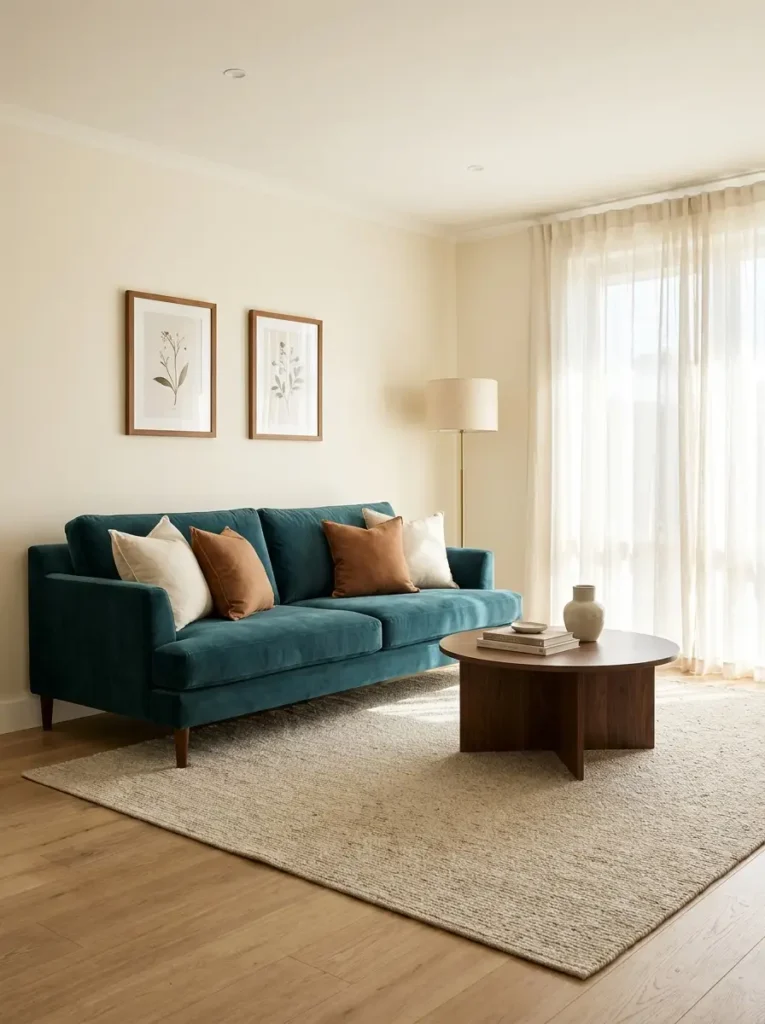
- Turns the sofa into a striking centerpiece.
- Adds softness through rich velvet texture.
- Works beautifully against warm neutral walls.
- Introduces color without changing permanent finishes.
- Creates an elegant yet comfortable seating area.
Few furniture pieces command attention like a teal velvet sofa, especially against a calm backdrop of ivory and warm wood. The saturated upholstery gives the seating area a clear identity, while velvet catches light differently throughout the day and adds visual softness. I’ve noticed that this combination feels particularly inviting when the surrounding décor stays understated rather than competing with the sofa. Cream cushions, a textured rug, and a simple walnut table provide enough contrast to keep the room layered, comfortable, and polished without making it feel overly formal.
A statement sofa becomes easier to live with when the rest of the palette includes versatile neutrals and natural materials. Instead of repeating teal everywhere, introduce one or two subtle references through artwork or a small decorative object. This keeps the room connected without creating a matching showroom effect. Durable performance velvet can also be a practical choice for busy households because many modern versions are designed for easier maintenance. The completed space feels luxurious and welcoming, giving everyday seating a strong decorative presence while remaining functional for relaxing, reading, and entertaining.
Teal Built-In Shelves
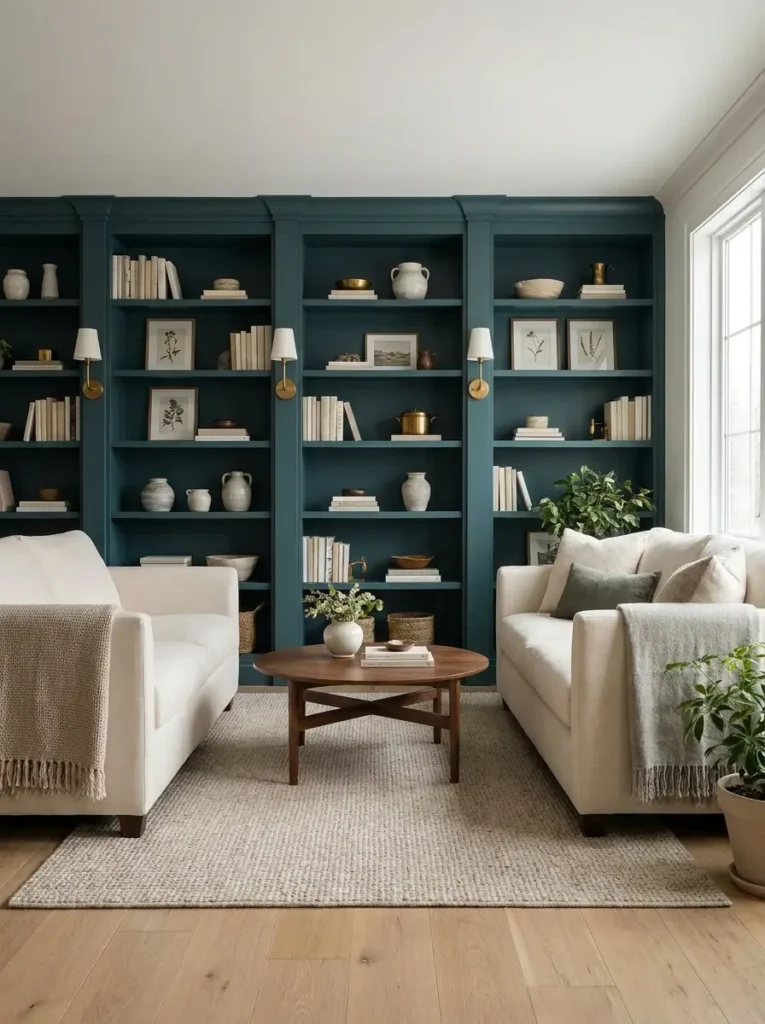
- Makes storage feel like part of the design.
- Adds architectural depth to a plain wall.
- Creates contrast for books and neutral décor.
- Helps organize everyday living room items.
- Gives basic shelving a custom built-in appearance.
Storage can become the strongest feature in a living room when shelving is treated as architecture rather than an afterthought. Painting built-ins teal gives the entire wall depth while creating a dramatic backdrop for books, ceramics, and meaningful objects. In my experience, darker shelving looks most polished when displays include plenty of breathing room instead of filling every available surface. Neutral accessories stand out beautifully against the saturated color, while closed lower cabinets can hide practical items that would otherwise create clutter around the room.
Balance the visual weight of teal cabinetry with lighter furniture and flooring so the room remains welcoming rather than heavy. Warm integrated lighting can illuminate individual shelves during the evening, making the wall feel softer and more dimensional. Grouping objects in varied heights creates interest, while repeating materials such as brass, cream ceramics, and natural wood keeps the display cohesive. The result is a living room that feels organized, customized, and sophisticated, with useful storage transformed into a memorable design element that contributes to the room’s overall character.
Teal Patterned Rug
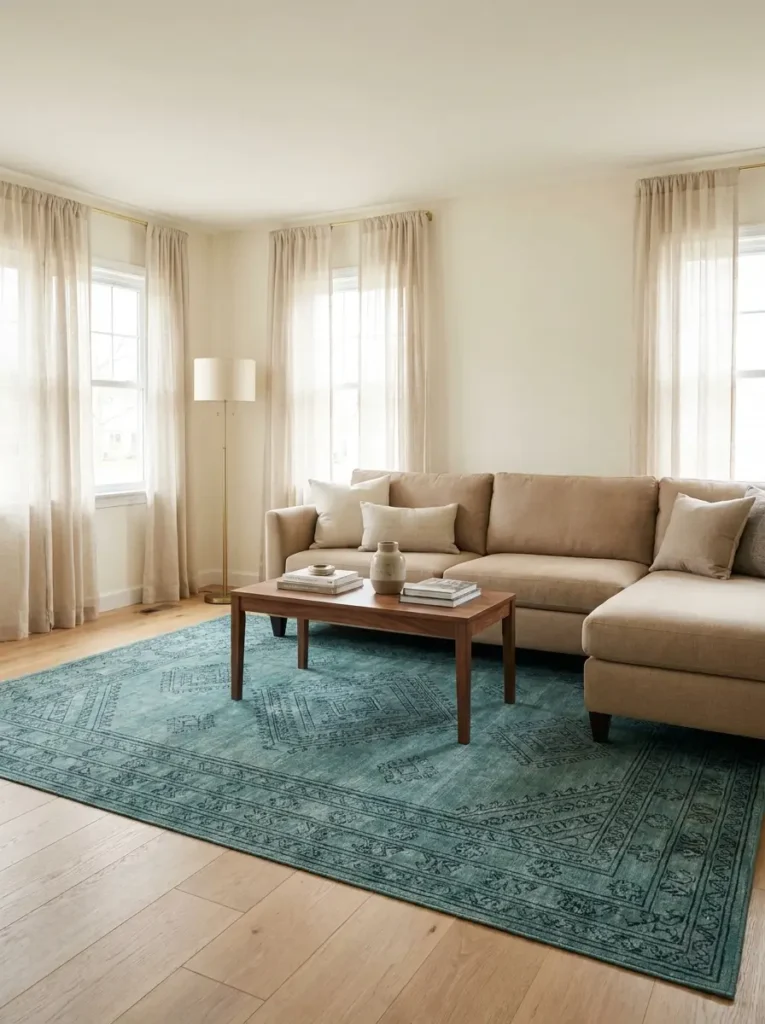
- Grounds the seating area with rich color.
- Adds pattern without changing walls or furniture.
- Helps define open-plan living spaces.
- Softens hard flooring underfoot.
- Connects neutral furnishings through subtle accent tones.
A patterned rug can transform the entire seating area while introducing teal in a flexible, low-commitment way. Placed beneath the sofa and coffee table, it visually anchors the furniture and makes the layout feel more intentional. This is especially useful in open-plan homes where the living zone needs clearer definition without adding physical dividers. I’ve noticed that rugs combining teal with cream, beige, or muted blue are easier to style because their softer secondary colors naturally connect existing furniture, curtains, and decorative accessories throughout the room.
Choose a rug large enough for at least the front legs of the main seating pieces to rest comfortably on its surface. This simple sizing decision helps the room appear more spacious and professionally arranged instead of visually fragmented. A low-pile or easy-clean material can also make everyday maintenance simpler in busy households. Keep surrounding patterns restrained so the floor remains the main decorative layer. The finished space feels warmer, more cohesive, and comfortably grounded, while the teal pattern provides enough personality to make neutral furniture look significantly more distinctive.
Teal Window Curtains
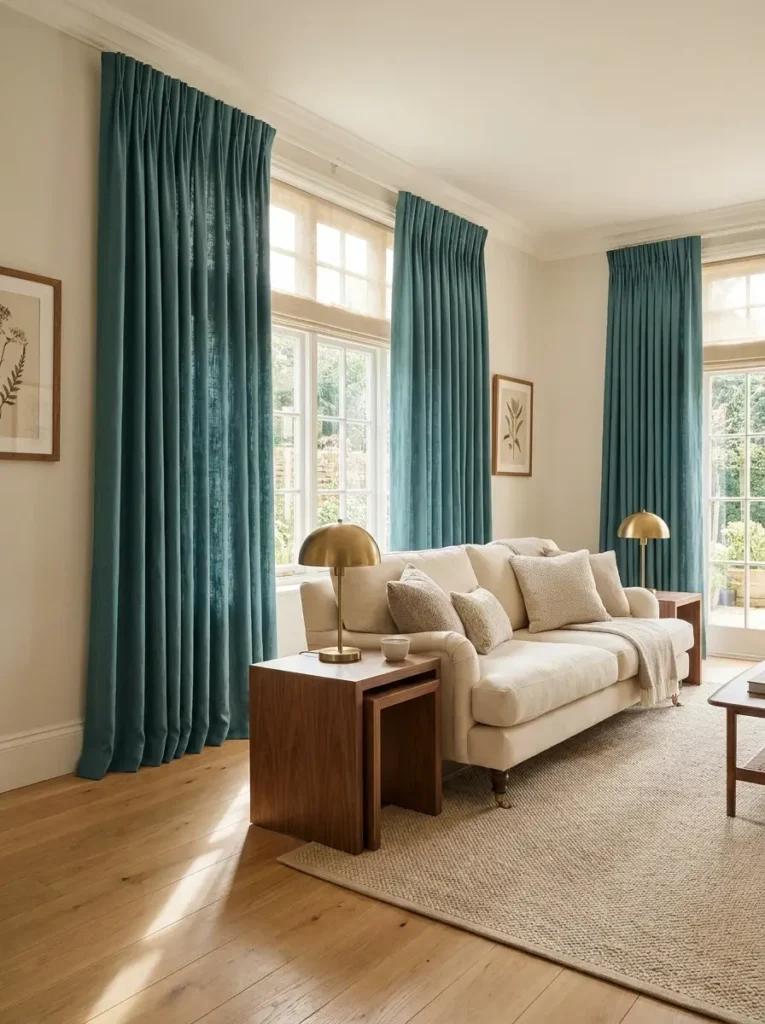
- Frames windows with noticeable color.
- Makes ceilings appear taller with full-length panels.
- Softens bright daylight when needed.
- Adds fabric texture to plain walls.
- Easy to replace when decorating tastes change.
Curtains can deliver far more visual impact than their practical purpose suggests, especially when rich teal fabric frames a bright window. Hanging panels close to the ceiling and allowing them to reach the floor creates stronger vertical lines, which can make the room feel taller and more polished. In my experience, linen-look fabrics work particularly well because their subtle texture prevents saturated color from appearing too formal. Against cream walls, teal curtains create a defined border around natural light while adding softness to the room’s harder architectural surfaces.
Function matters just as much as appearance, so select the fabric weight according to the amount of privacy and light control your living room needs. Sheer-lined teal panels can preserve brightness, while heavier curtains may suit rooms where glare or evening privacy is a concern. Keep nearby upholstery mostly neutral to prevent competing blocks of strong color. Repeating teal once through a cushion or artwork can quietly connect the palette. The finished room feels taller, softer, and more thoughtfully layered, with windows becoming an attractive part of the overall design.
Teal Reading Corner
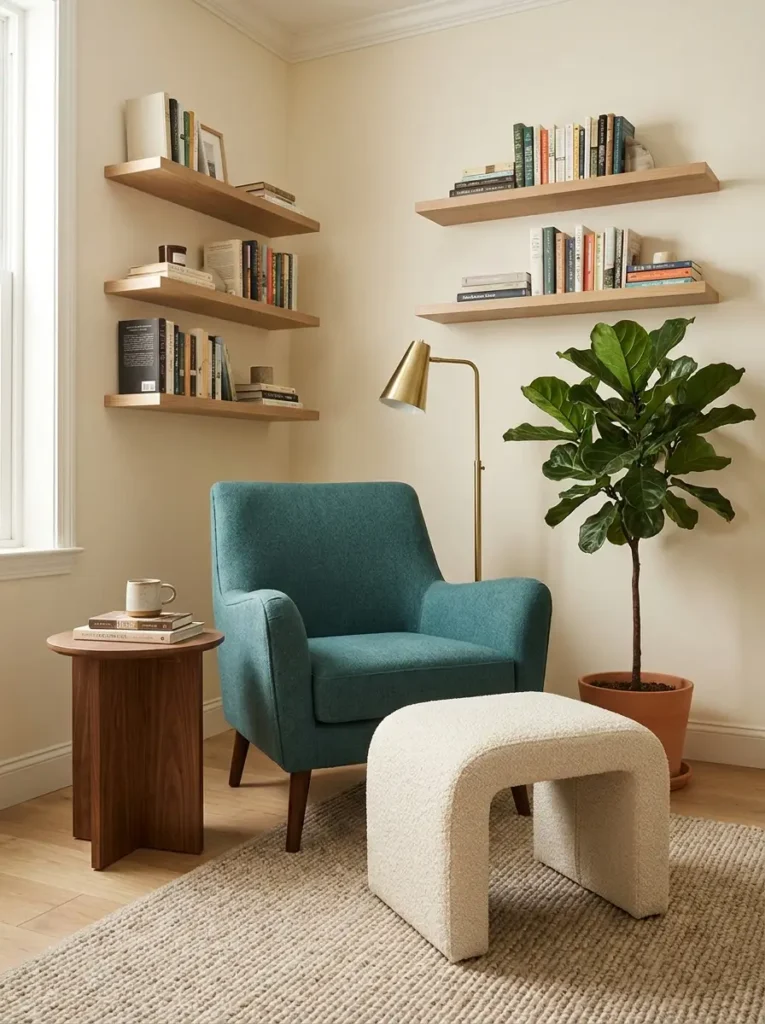
- Turns an unused corner into functional seating.
- Introduces teal without dominating the whole room.
- Creates a dedicated place for reading and relaxing.
- Adds visual balance beside larger furniture.
- Combines comfort, lighting, and storage efficiently.
An empty corner can become one of the most inviting parts of a living room with just a few carefully selected pieces. A teal armchair provides enough color to attract attention while creating a comfortable destination for reading, relaxing, or enjoying morning coffee. I’ve seen this work well in many homes because it gives awkward floor space a clear purpose without requiring major changes. Adding a compact side table and focused floor lamp completes the functional setup, while a soft footstool makes the corner feel especially comfortable and intentional.
Position the chair where natural daylight is available without blocking an important walkway or making the furniture arrangement feel crowded. A small rug or nearby plant can visually define the corner while connecting it to the larger living space. If storage is limited, floating shelves above the chair provide convenient room for books without consuming floor area. The finished nook feels personal, useful, and visually balanced, demonstrating how a single colorful furniture piece can improve both the style and functionality of an otherwise overlooked part of the room.
Teal Fireplace Wall
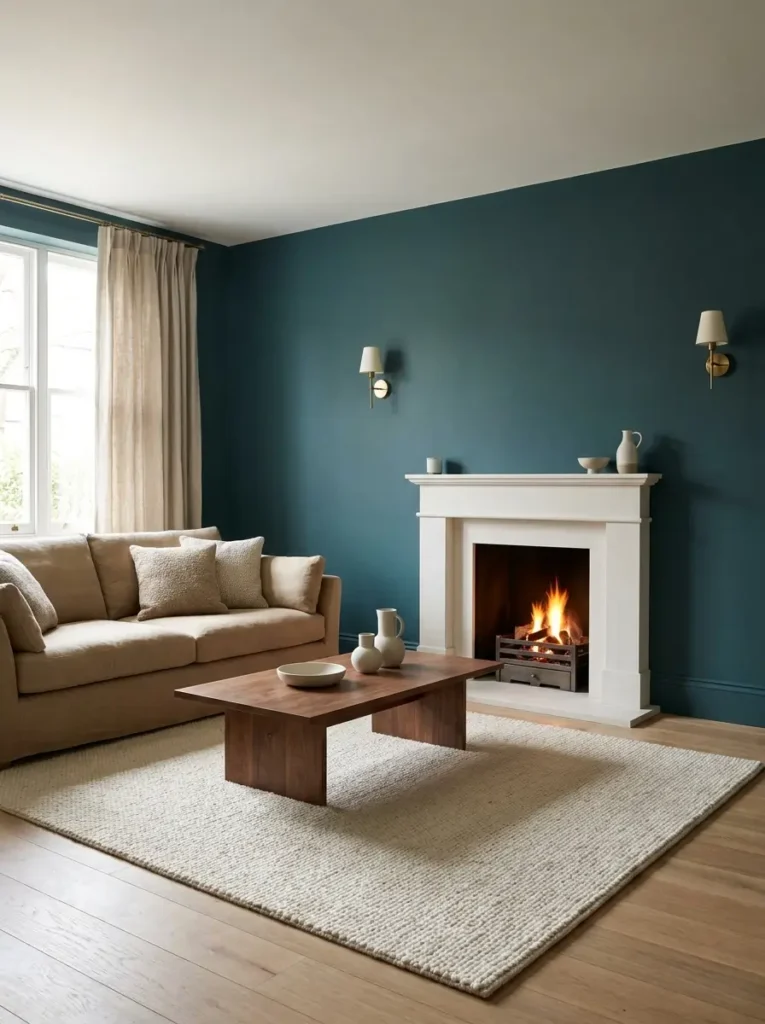
- Turns the fireplace into a stronger focal point.
- Adds depth without coloring every wall.
- Makes warm metallic accents stand out.
- Creates a cozy backdrop for neutral furniture.
- Adds architectural presence to a simple room.
A fireplace already draws attention, but surrounding it with teal can turn the entire wall into a beautifully defined focal point. The rich color adds depth behind pale stone or painted trim while making warm flames appear even more inviting during the evening. I’ve noticed that this treatment works particularly well in neutral living rooms because it introduces strong personality without requiring additional patterned décor. Keeping the mantel styling simple allows the architectural feature and saturated wall color to remain visually balanced rather than competing with too many accessories.
Before painting, consider how natural and artificial light affects the chosen teal because fireplace walls often look darker during evening hours. Warm sconces can soften the shade while adding useful ambient illumination beside the mantel. Cream seating, pale flooring, and natural wood furniture help balance the deeper wall and prevent the room from feeling enclosed. A few restrained accessories, such as ceramics or framed artwork, complete the arrangement. The finished living room feels warmer, more architectural, and intentionally layered, with the fireplace becoming an inviting centerpiece throughout every season.
Teal Throw Pillows
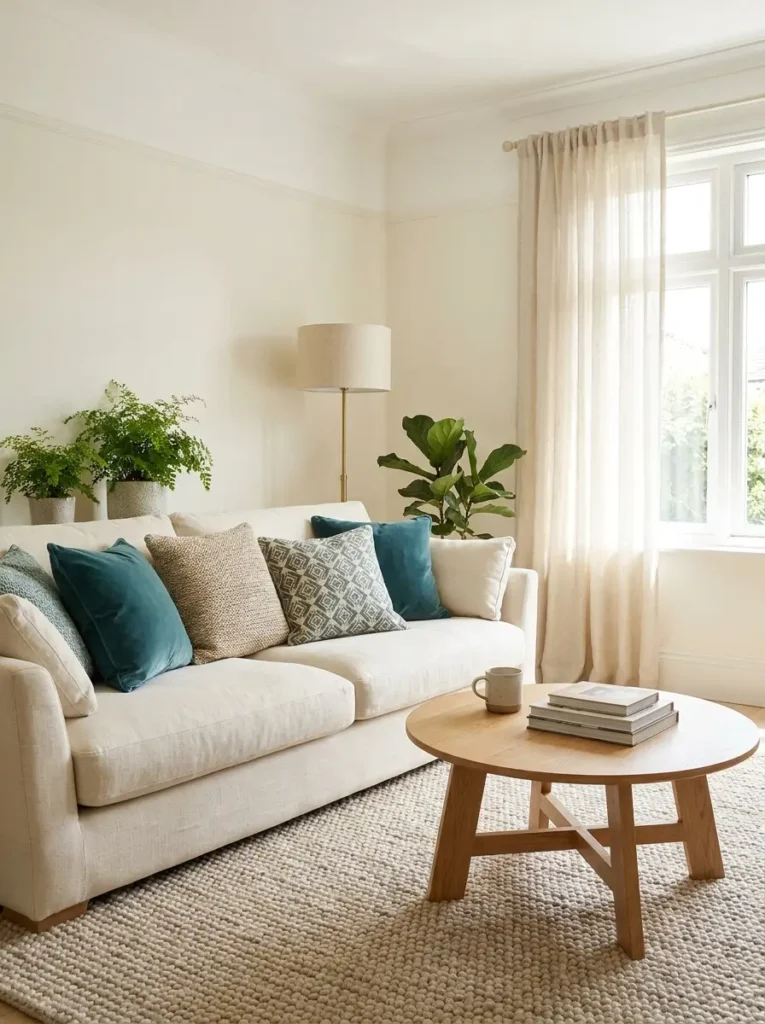
- Adds teal without permanent decorating changes.
- Refreshes neutral seating affordably.
- Introduces multiple textures in one small area.
- Easy to update throughout the seasons.
- Helps connect other teal accents around the room.
Sometimes a few cushions are enough to completely refresh a neutral sofa, especially when they combine rich teal with tactile fabrics. Velvet, woven cotton, and subtle patterns create visual depth while keeping the seating comfortable and approachable. This is one of the easiest Teal Living Room Ideas for renters or anyone who prefers seasonal decorating because nothing permanent needs to change. In my experience, mixing two or three textures looks more collected than buying identical cushions, while repeating similar undertones keeps the arrangement from becoming visually disconnected.
Start with larger neutral pillows at the back and layer smaller teal pieces toward the front for a comfortable, balanced arrangement. Avoid covering every inch of the sofa, since enough open seating should remain for everyday use. If the room already includes teal curtains, artwork, or a rug, choose cushions that echo rather than perfectly match those shades. This creates cohesion without making the décor feel overly coordinated. The finished seating area feels softer, richer, and more inviting, delivering noticeable color through an affordable update that can easily evolve over time.
Teal Media Cabinet
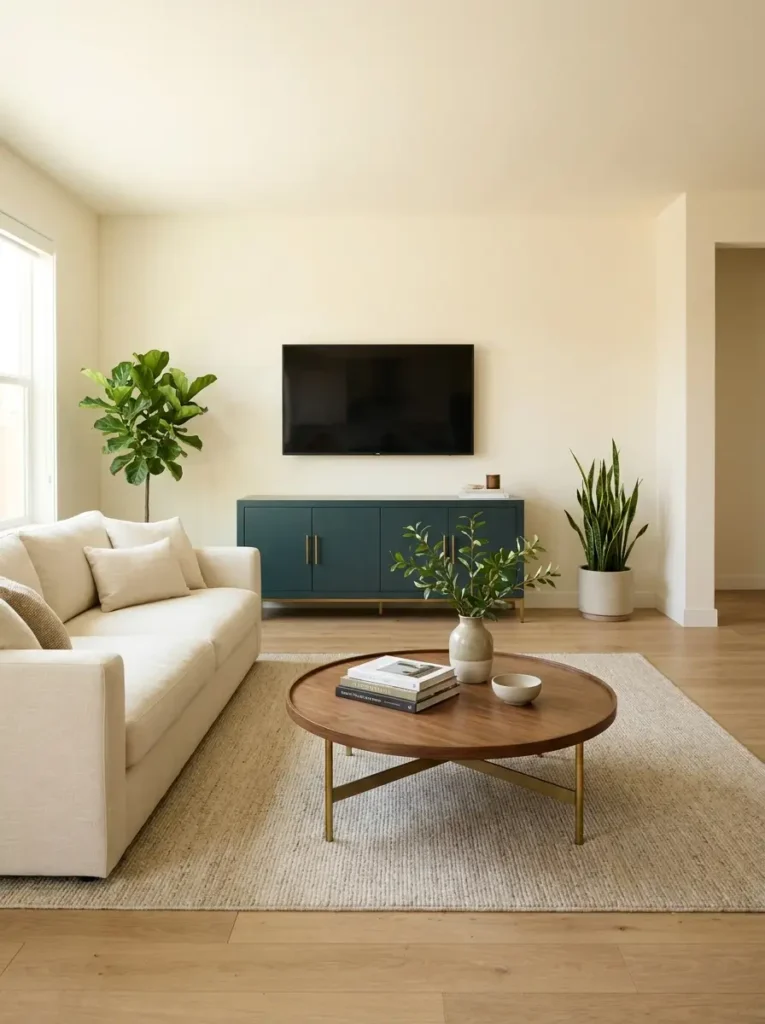
- Makes practical media storage more decorative.
- Adds color at a comfortable visual height.
- Conceals cables, remotes, and electronics.
- Creates contrast against light neutral walls.
- Gives basic cabinetry a customized appearance.
Media furniture often becomes visually dominant simply because of its size, so choosing teal can turn a practical necessity into an intentional design feature. A low cabinet creates a grounded horizontal line beneath the television while providing concealed storage for electronics, cables, games, and everyday clutter. I’ve seen this work especially well when the wall behind it remains light because the contrasting cabinet visually anchors the screen. Brass handles and simple styling can elevate the piece further without distracting from its useful storage function.
Choose a cabinet slightly wider than the television to create comfortable proportions and prevent the screen from appearing oversized. Closed doors help maintain a calm appearance, while internal cable openings keep wires organized and largely hidden from view. Style the top sparingly with a small plant, ceramic vessel, or books so the area remains functional. Warm wood elsewhere in the room can balance the painted finish and introduce natural texture. The completed media zone feels cleaner, more coordinated, and significantly more attractive without sacrificing the technology needed for everyday living.
Teal Gallery Wall
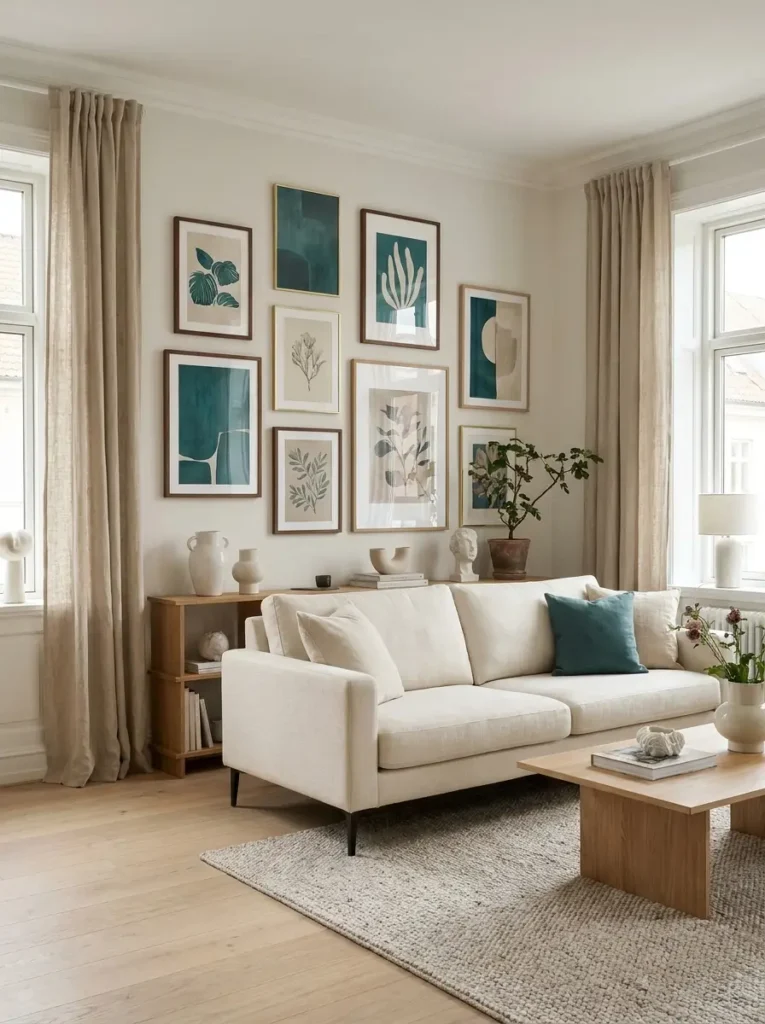
- Adds personality to a blank wall.
- Introduces teal through flexible artwork.
- Creates visual interest above neutral seating.
- Connects existing colors around the room.
- Easy to update without changing furniture.
A thoughtfully arranged gallery wall can give a living room personality while introducing teal in a flexible, artistic way. Instead of relying on one oversized piece, combining abstract prints, botanical artwork, and simple illustrations creates a collected appearance that feels personal. Teal details within the artwork can connect other accents around the room without requiring exact color matches. In my experience, gallery walls look most polished when frames share two or three consistent finishes, such as walnut, brass, and natural wood, rather than using many unrelated styles.
Plan the arrangement on the floor before hanging anything so you can adjust spacing and proportions without creating unnecessary holes in the wall. Keep a consistent gap between frames and center the overall composition above the sofa rather than across the entire wall. Neutral artwork mixed with a few stronger teal elements prevents the display from becoming visually overwhelming. The completed arrangement adds height, character, and color while making the living room feel more personal, layered, and thoughtfully finished without taking away valuable floor space or requiring expensive structural changes.
Teal Ottoman Centerpiece
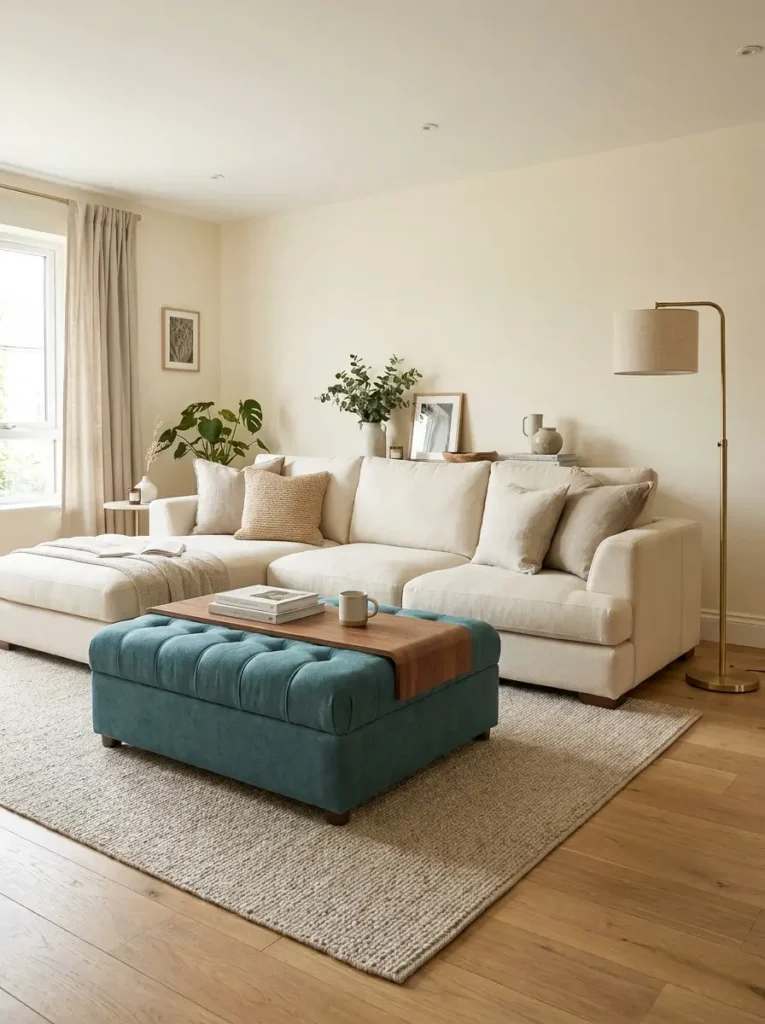
- Adds a soft alternative to a coffee table.
- Introduces color at the center of the room.
- Provides extra seating when guests arrive.
- Creates a comfortable place to rest your feet.
- Works with trays for practical everyday use.
Replacing a hard coffee table with a teal ottoman can make the center of a living room feel softer, more comfortable, and noticeably more colorful. Upholstered surfaces are especially useful in family spaces because they provide a forgiving place to rest feet while doubling as occasional seating. I’ve noticed that larger ottomans work best when their proportions relate closely to the sofa, creating a balanced arrangement rather than appearing like a small accessory floating in the room. A rich teal fabric also creates beautiful contrast against cream or beige upholstery.
Add a sturdy wooden tray when you need a stable surface for drinks, books, or decorative objects, then remove it whenever extra seating is required. Performance fabric can be worthwhile in frequently used rooms because spills and everyday wear are more likely around central furniture. Keep surrounding accents relatively restrained so the ottoman remains the main color statement. The finished seating area feels relaxed, functional, and inviting, with one versatile piece improving comfort while adding enough visual interest to make a neutral living room feel more distinctive and intentionally styled.
Teal Paneled Wall
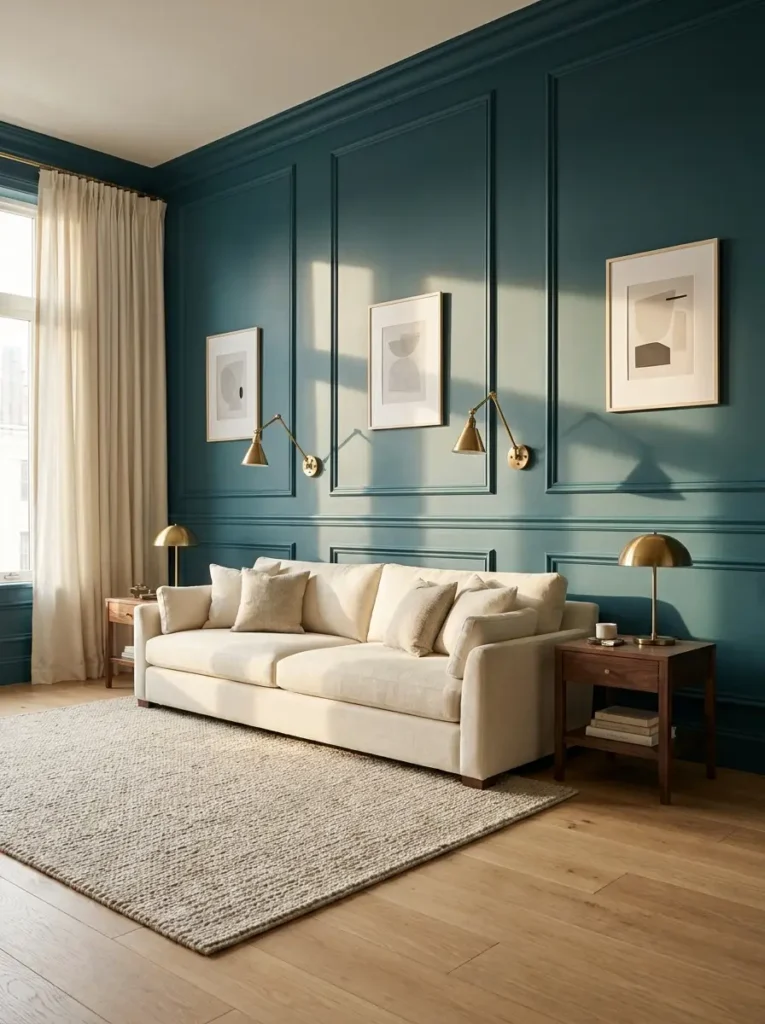
- Adds architectural texture to a plain wall.
- Gives teal paint more depth and dimension.
- Creates a custom high-end appearance.
- Makes simple furniture feel more sophisticated.
- Adds interest without relying on busy patterns.
Wall molding becomes dramatically more noticeable when painted in a rich teal shade, turning a flat surface into an architectural feature with depth and shadow. Simple rectangular panels can create a polished backdrop behind the sofa while keeping the room visually organized. I’ve seen this work well in many homes because molding introduces character without requiring patterned wallpaper or excessive wall décor. When the trim and wall share the same color, the treatment feels cohesive and sophisticated, while natural daylight highlights the raised details throughout different times of day.
Keep the panel proportions consistent with the wall and nearby furniture so the design feels intentional rather than crowded. Larger rectangles generally create a calmer appearance in spacious living rooms, while simpler molding works better where wall area is limited. Warm brass sconces can emphasize the dimensional surface during evening hours, and cream upholstery provides enough contrast to prevent the deeper color from feeling heavy. The finished room feels customized, elegant, and visually layered, giving a basic wall the character of a more expensive architectural upgrade without requiring major structural remodeling.
Teal Accent Chairs
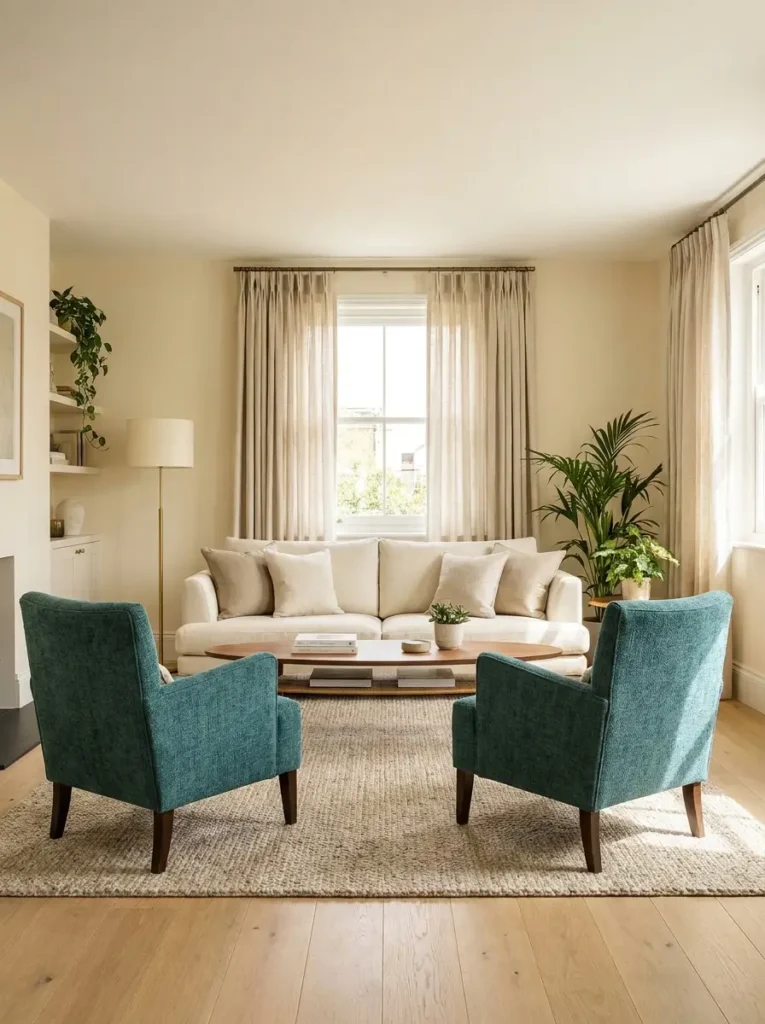
- Adds balanced color without replacing the main sofa.
- Creates extra seating for guests and family.
- Helps define a conversational furniture layout.
- Brings symmetry to larger living rooms.
- Works beautifully with cream and warm wood tones.
Two teal accent chairs can completely reshape a seating arrangement while adding color exactly where the room needs it. Positioned opposite or beside a neutral sofa, they create a conversational layout that feels welcoming rather than focused entirely on a television. The paired chairs also bring visual balance to larger spaces where one small accent piece might feel disconnected. In my experience, choosing chairs with exposed wood legs keeps saturated upholstery from looking too heavy, especially when the room already includes substantial furniture and darker decorative details.
Comfort should guide the final choice because accent chairs often become everyday seating rather than purely decorative pieces. Look for supportive backs, practical seat depths, and durable upholstery suited to your household. Leaving enough walking space between the chairs and coffee table keeps the arrangement functional while maintaining an intimate feeling. A small side table between the chairs can hold drinks or books without adding unnecessary furniture. The finished living room feels sociable, balanced, and polished, with teal providing a confident focal color that remains easy to coordinate with neutral surroundings.
Teal Painted Bookcase
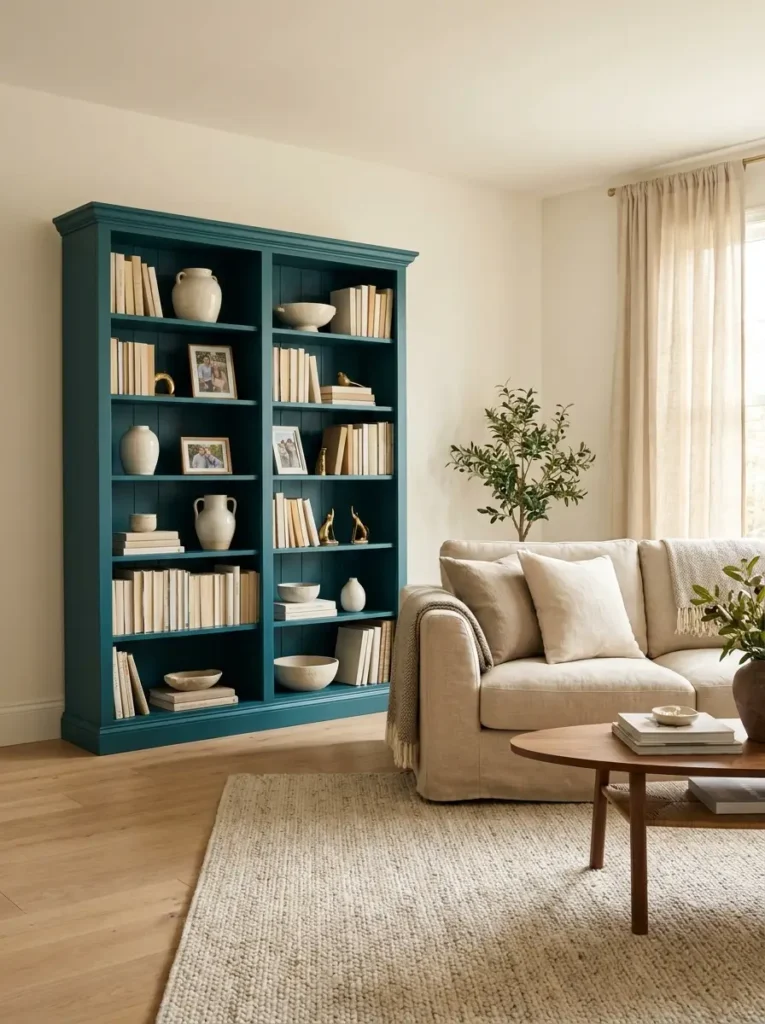
- Refreshes an existing bookcase with color.
- Adds useful vertical storage.
- Creates contrast for neutral accessories.
- Gives inexpensive furniture a custom appearance.
- Makes an empty wall feel more complete.
A simple bookcase can become a striking decorative feature with nothing more complicated than a carefully chosen teal finish. Painting both the frame and shelves creates a cohesive block of color that gives books, ceramics, and photographs a stronger backdrop. This update is particularly useful when existing furniture feels plain but remains structurally sound. I’ve noticed that darker painted bookcases look best when some shelf space stays intentionally empty, allowing displayed objects to breathe and preventing practical storage from turning into distracting visual clutter.
Before painting, prepare the surface correctly for its material so the finish remains durable during regular use. Once installed, arrange heavier books on lower shelves and lighter decorative pieces higher up to create visual and physical balance. Cream ceramics, brass details, and natural textures stand out especially well against teal without requiring excessive accessories. If closed storage is available at the bottom, use it for less attractive everyday items. The completed bookcase feels customized and useful, transforming ordinary storage into a strong design element that adds depth and personality to the room.
Teal Ceiling Detail
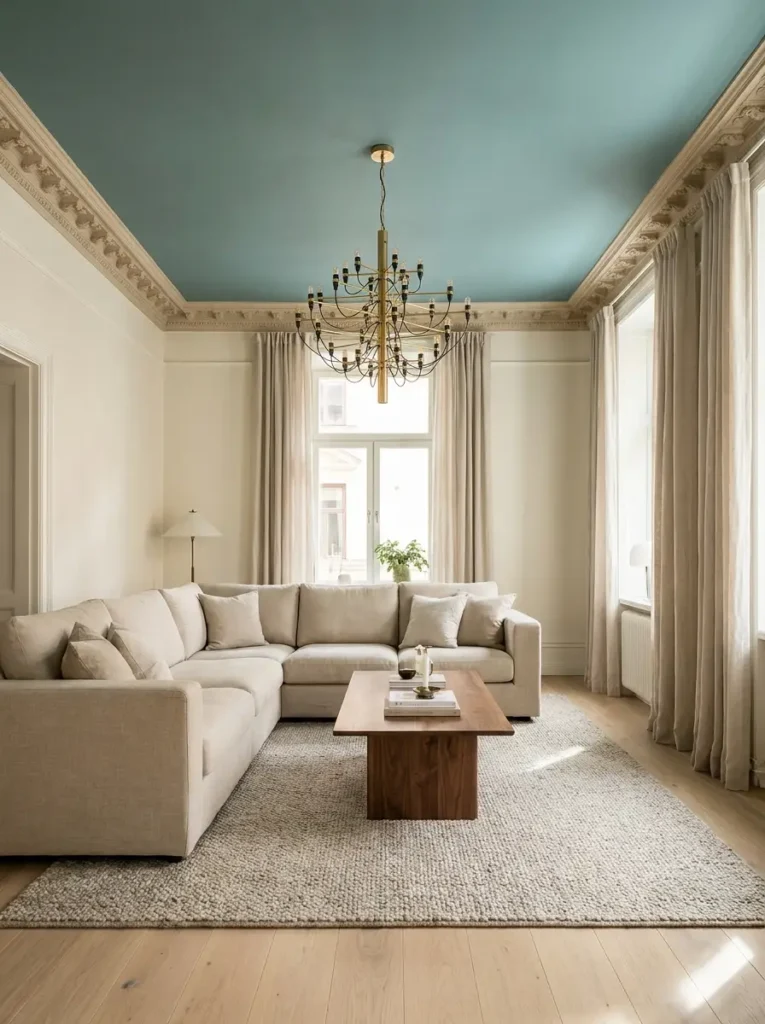
- Introduces color in an unexpected location.
- Draws attention to attractive ceiling details.
- Keeps walls light and visually open.
- Makes crown molding stand out clearly.
- Adds a distinctive designer-inspired finish.
The ceiling is often ignored during decorating, yet adding muted teal overhead can give a living room an unexpectedly sophisticated finish. Keeping the walls warm white allows the stronger color to remain visually separated, while crisp crown molding creates a clean transition between the two surfaces. This approach works especially well in rooms with good ceiling height and generous daylight. I’ve noticed that softer, slightly grayed teal shades feel easier overhead because they provide character without creating the enclosed effect that extremely dark or highly saturated colors sometimes produce.
Test the ceiling color under both daylight and evening lighting before painting the full surface because horizontal overhead planes can make shades appear different from wall samples. A warm brass chandelier helps soften cooler undertones while drawing attention upward and emphasizing the room’s height. Keep large furniture neutral so the ceiling remains an intentional feature rather than one of several competing statements. The completed space feels distinctive, layered, and carefully considered, showing how an overlooked surface can become an elegant design opportunity without consuming any usable floor or wall space.
Teal Console Table
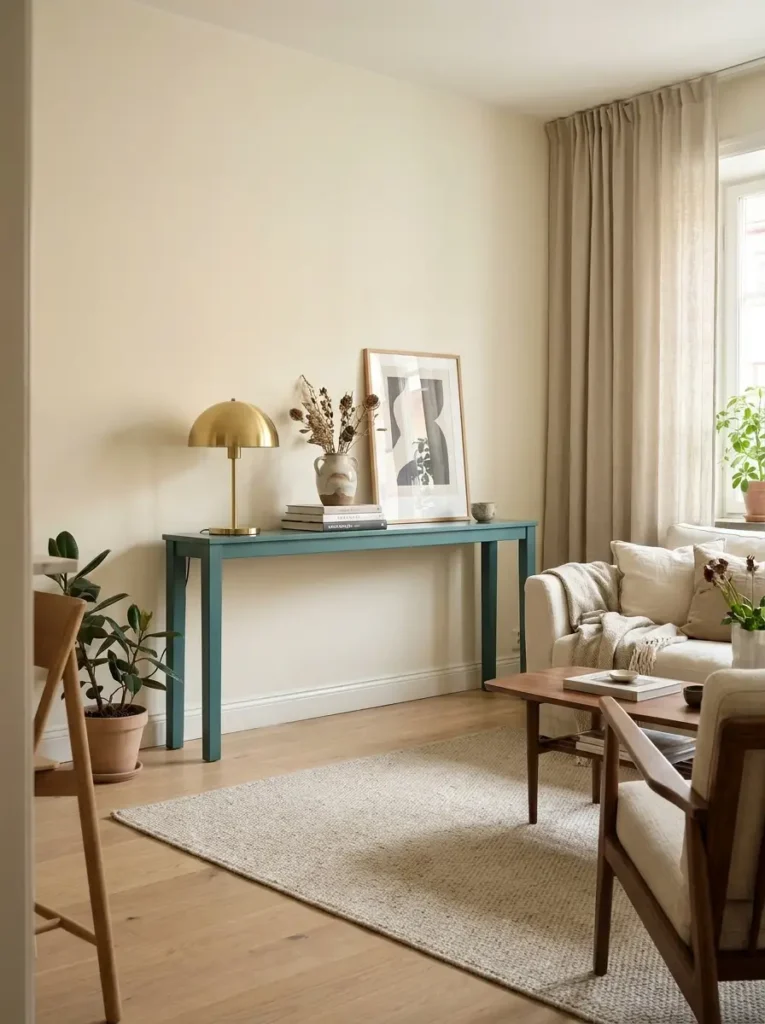
- Adds useful surface space without bulky furniture.
- Introduces teal in a controlled, stylish way.
- Gives an empty wall a clear purpose.
- Provides storage for small everyday items.
- Creates an easy spot for seasonal décor.
An empty living room wall can become surprisingly useful with a slim console table painted in a rich teal finish. The narrow profile provides a practical surface for lighting, books, decorative objects, or everyday essentials without taking up much floor space. This makes it especially effective in smaller rooms where bulky storage furniture would interrupt circulation. In my experience, a colorful console looks most intentional when the wall behind it remains neutral, allowing the furniture to provide personality while nearby cream upholstery and natural wood maintain a warm, balanced atmosphere.
Keep the tabletop styling simple so the console remains functional rather than becoming another cluttered surface. A lamp at one end, a ceramic vase at the other, and a small stack of books can create enough variation in height without overwhelming the arrangement. If the table includes drawers, use them for remotes, chargers, and other small necessities that often collect around living spaces. The finished area feels organized and thoughtfully decorated, turning previously unused wall space into a practical feature that contributes color, storage, and visual balance to the room.
Teal Window Bench
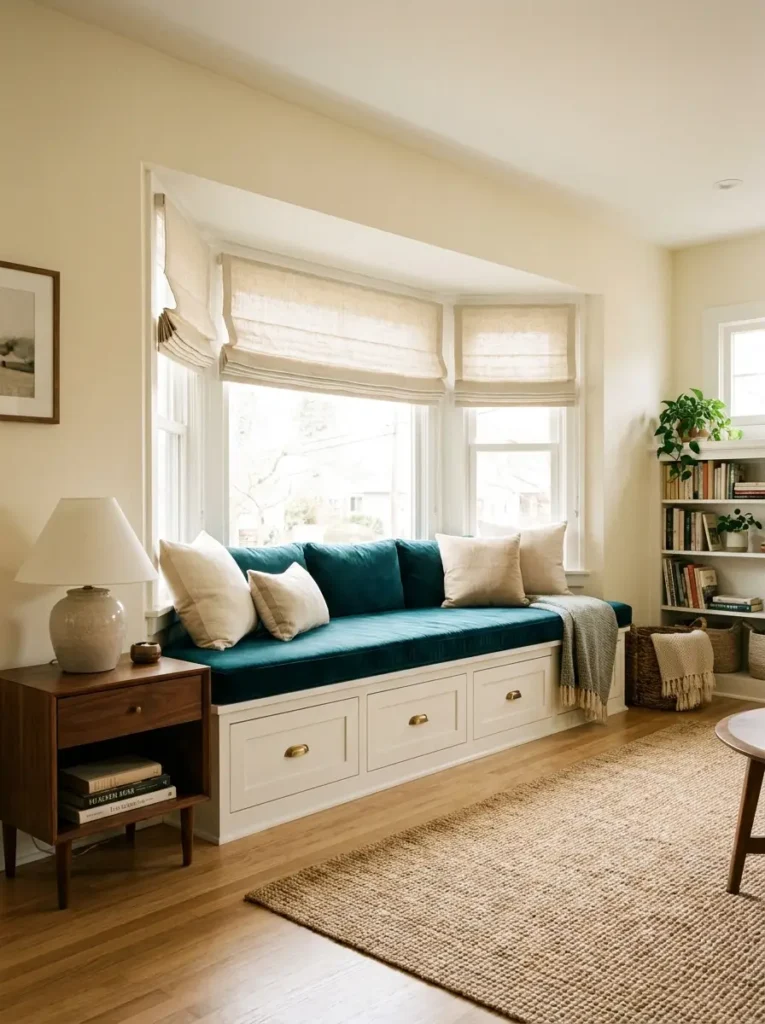
- Turns window space into functional seating.
- Adds teal through soft upholstery.
- Creates a cozy spot for reading or relaxing.
- Offers hidden storage beneath the seat.
- Makes an overlooked architectural area feel intentional.
A sunny window can become one of the most inviting places in the living room when transformed into a comfortable upholstered bench. Deep teal fabric gives the seat visual presence while cream cushions and surrounding neutral finishes keep the overall effect soft. I’ve seen this work especially well in homes where additional seating is needed but another armchair would make the floor plan feel crowded. Built-in drawers or cabinets beneath the bench also provide valuable storage, allowing blankets, books, toys, or seasonal items to remain conveniently nearby but neatly hidden.
Comfort depends on thoughtful proportions, so choose a supportive seat cushion and enough back pillows to make the bench genuinely pleasant for longer periods. Washable or performance upholstery can be particularly practical if the window receives frequent family use or strong sunlight. Keep the surrounding décor minimal so daylight and the upholstered seat remain the main attractions. The completed nook feels warm, functional, and personal, adding useful seating without interrupting circulation while turning an overlooked architectural feature into a cozy destination for reading, relaxing, or enjoying the view.
Teal Ceramic Accents
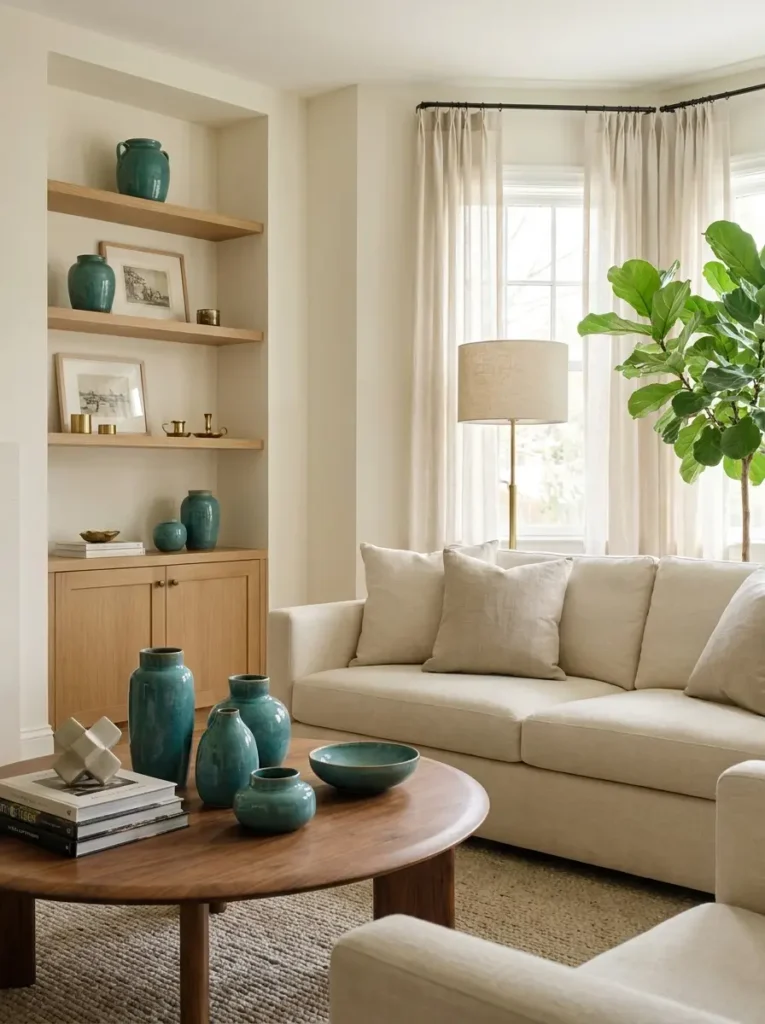
- Adds small pops of teal throughout the room.
- Works without permanent decorating changes.
- Brings handcrafted texture to neutral surfaces.
- Helps connect larger teal features visually.
- Easy to rearrange whenever the room needs refreshing.
Small decorative pieces can quietly pull an entire color scheme together, and teal ceramics are perfect for creating that final layer. Vases, bowls, and sculptural objects introduce color across shelves and tables without requiring another large statement surface. This makes them especially useful when a room already includes a teal sofa, rug, or accent wall and simply needs subtle repetition. In my experience, using three or four carefully positioned pieces feels more sophisticated than scattering many matching accessories everywhere, allowing each object to remain noticeable while keeping the space visually calm.
Mix ceramic pieces with wood, books, glass, and natural greenery so the styling feels collected rather than overly coordinated. Varying the height and shape of objects creates visual movement, while repeating similar teal undertones maintains continuity around the room. Leave some open space on shelves and tables to preserve everyday functionality and prevent decorative arrangements from feeling crowded. The finished living room feels cohesive, layered, and complete, with small accents connecting the broader palette in a flexible way that can easily be rearranged whenever the space needs
Conclusion
Creating a stylish room with teal is all about finding the right balance between bold color, comfortable textures, and practical details. These Teal Living Room Ideas show that even one thoughtful update—a sofa, rug, accent wall, or small accessory—can give your space a completely different personality. I’ve seen how combining teal with warm neutrals and natural materials can make a room feel both sophisticated and inviting. Save this post on Pinterest for future inspiration, try one or more ideas in your own space, and share it with anyone planning a chic, cozy living room makeover.

“I share simple, beautiful and affordable home decor ideas to help you style every corner of your home with ease.