

There’s something magical about stepping outside after dark and feeling like your home wraps around you with warmth instead of shadows. The right outdoor lighting doesn’t just illuminate—it transforms your space into somewhere you actually want to be, whether you’re hosting friends or simply sitting alone with a cup of tea. In 2026, we’re moving past the harsh floodlight era and embracing layered, intentional lighting that makes every corner of your outdoor space feel designed, not accidental.
This guide walks you through practical lighting ideas for every part of your home’s exterior, from the backyard where you unwind to the front door where first impressions happen. You’ll discover specific fixture placements, smart solar options, seasonal lighting strategies, and budget-friendly upgrades that work in real life. Whether you’re planning a complete lighting overhaul or just want to fix that one dark corner, you’ll find actionable advice that fits your space and your lifestyle.
Backyard Outdoor Lighting Ideas For A Cozy 2026 Glow-Up
Your backyard should feel like an outdoor room after sunset, not a parking lot. The secret to cozy backyard lighting is layering different light sources at different heights, just like you would with lamps and overhead lights indoors. This approach creates depth, eliminates harsh shadows, and gives you flexibility for different moods.
Start With Warm Color Temperature
The foundation of cozy lighting is choosing bulbs in the 2700K-3000K range.
- Warm light makes skin tones look natural and inviting
- Plants and wood textures appear richer and more dimensional
- Cool white light (4000K+) feels clinical and uninviting outdoors
- Consistent color temperature across all fixtures prevents a patchy look
Define Your Seating Zone First
Light where people actually gather, not just where it looks pretty from inside.
- Place your main seating area—sectional, lounge chairs, or dining table—as the anchor
- Add lighting from at least two directions to avoid flat illumination
- Include one overhead source (string lights or pergola fixtures)
- Add table-level lighting with lanterns or rechargeable LED lamps
Layer Three Types of Light
Professional designers rely on this three-layer approach for balanced outdoor spaces.
Ambient lighting provides overall illumination without glare:
- String lights on pergolas or between posts
- Soft downlights in porch ceilings
- Low-level path lights along edges
Task lighting serves specific functions:
- Brighter zones over grills or outdoor kitchens
- Reading lights near seating areas
- Step lights for safe navigation
Accent lighting adds depth and interest:
- Uplights on feature trees or architectural elements
- Soft washes on textured fences or walls
- Spike lights through ornamental grasses
Use Solar Strategically
Solar fixtures work best in specific applications, not everywhere.
- Path edges that get 6+ hours of direct sun
- Garden beds away from the house where wiring is expensive
- Decorative accents that don’t need to match exact brightness
- Choose solar fixtures from the same manufacturer for consistent color
Pin this layered lighting approach! 📌
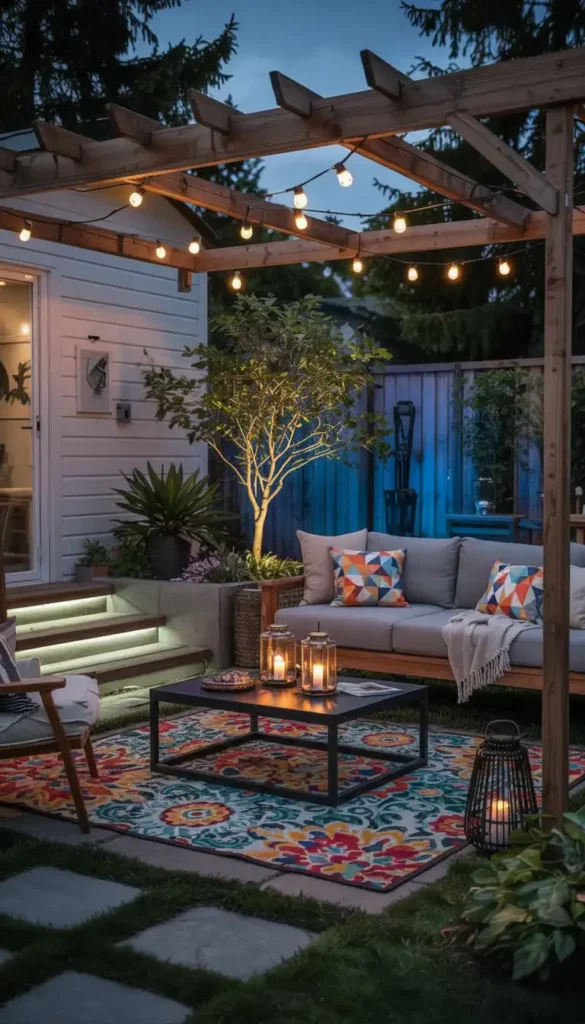
Install Discreet Step Lighting
Safety lighting shouldn’t announce itself—it should guide quietly.
- Recessed deck lights along step risers
- Low-profile rail lights that cast downward
- Small bollards at elevation changes
- Aim for just enough light to see edges, not flood the entire area
Add One Focused Accent
A single well-placed accent light creates a focal point that anchors the whole space.
- Shielded spotlight on a specimen tree
- Soft wash on climbing plants or textured walls
- Underwater lighting in water features
- Directional light on outdoor art or sculptures
Control Brightness With Dimmers
The coziest backyards let you adjust light levels for different occasions.
- Install dimmers on overhead string lights
- Group lights into zones: seating, pathways, accents
- Smart switches let you save scenes for entertaining vs. quiet nights
- Manual dimmers work fine and cost less than smart systems
Hide Light Sources
You should see the glow, not the glare.
- Position fixtures behind foliage, slats, or architectural details
- Use shielded fixtures that direct light where you need it
- Avoid bare bulbs unless they’re specifically designed to be decorative
- Tuck path lights behind plants or low walls when possible
Plan for Portable Options
Flexibility makes your space more usable.
- Rechargeable table lamps you can move as seating shifts
- Battery-powered lanterns for spontaneous gatherings
- Solar stake lights you can reposition seasonally
- Extension cords and weatherproof outlets for temporary setups
Choose Finish and Style Intentionally
Your fixture style should match your outdoor aesthetic.
Modern spaces:
- Slim black metal fixtures
- Geometric shapes and clean lines
- Minimalist string lights with Edison bulbs
Rustic or farmhouse styles:
- Lantern shapes in bronze or aged brass
- Warm metal finishes with seeded glass
- Traditional cage or barn-style pendants
Add Soft Reflectors
Bounce light naturally to make fewer fixtures feel like more.
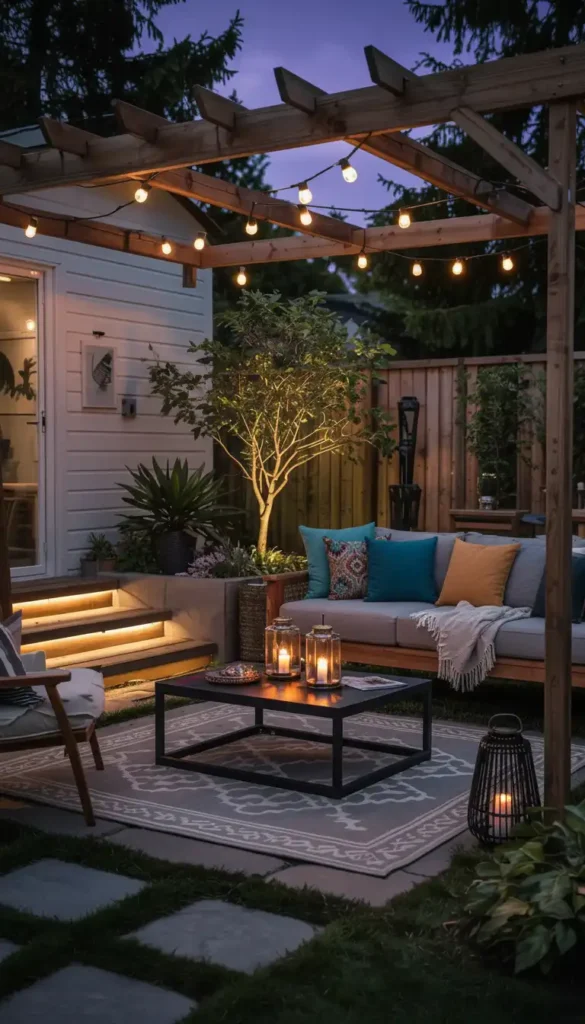
- Light-colored outdoor rugs
- Pale planters and pots
- Light stone or painted decking
- White or cream cushions and textiles
Save this cozy backyard strategy! 📌
Maintain Your Solar Components
Solar lights perform best when you care for them seasonally.
- Clean panels every few months to maximize charging
- Check placement after storms or high winds
- Replace batteries every 1-2 years
- Store delicate solar pieces during harsh winter weather
Front Of House Outdoor Lighting Ideas To Boost Curb Appeal
Your front yard lighting sets expectations before anyone reaches the door. Good curb appeal lighting highlights your home’s architecture, guides visitors safely, and creates visual balance—all without looking overdone. The goal is welcoming clarity, not theatrical drama.
Map the Approach Path
Start by walking from sidewalk to front door as a visitor would.
- Note where eyes naturally go
- Identify dark spots that need illumination
- Mark elevation changes and steps
- Plan lighting along this entire journey, not just at the door
Frame Your Entry With Sconces
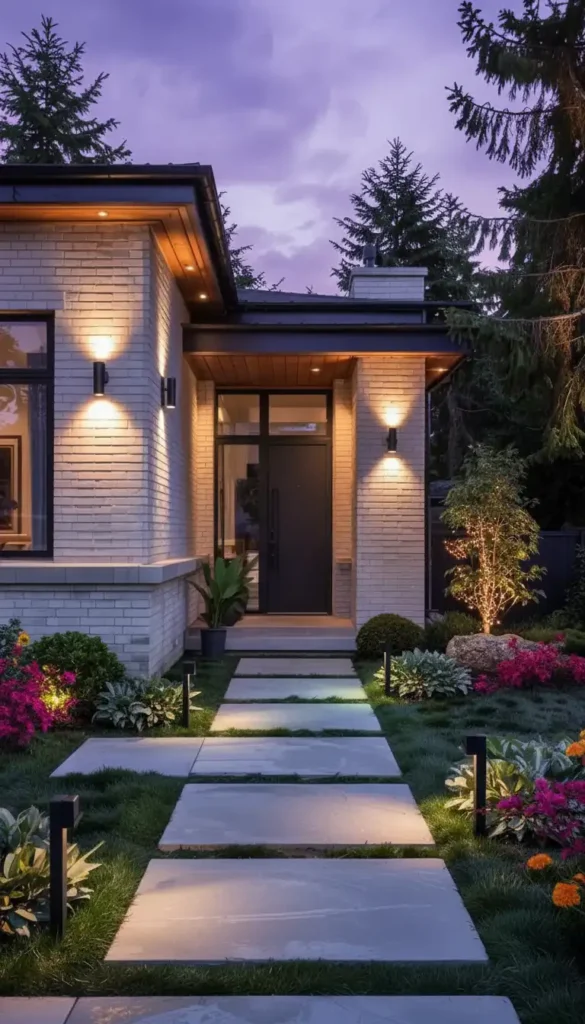
A matched pair of wall sconces creates instant symmetry and polish.
- Mount at 60-66 inches from the porch floor
- Choose fixtures sized proportionally to your door and porch
- Use shielded designs that cast light down and out, not into eyes
- Match the finish to door hardware and house numbers
Light Vertical Surfaces
Walls and columns create elegant glow through indirect lighting.
- Uplight textured materials like stone, brick, or wood siding
- Add subtle wash lighting to columns or porch pillars
- Avoid blasting flat, smooth surfaces—they reflect harshly
- Let your home’s best architectural lines guide fixture placement
Space Path Lights Evenly
Create a guiding rhythm without the runway effect.
- Place fixtures 6-10 feet apart depending on brightness
- Stagger placement slightly to avoid military precision
- Choose low-profile designs that disappear during the day
- Use consistent fixture height for a cohesive look
Pin this curb appeal lighting guide! 📌
Illuminate House Numbers
Make your address readable from the street.
- Add a dedicated downlight above numbers
- Use backlit number plaques for modern homes
- Ensure contrast between numbers and background
- Test visibility from the street after installation
Add Landscape Uplighting
Depth makes your property feel larger and more intentional.
- Uplight trees from the base with narrow beam fixtures
- Highlight tall shrubs or architectural plantings
- Keep light subtle—you want texture, not spotlights
- Use warm tones to enhance natural colors
Match Finish Across Fixtures
Consistency looks professional and expensive.
- Choose one primary metal finish for most fixtures
- Add a second finish only for door hardware if needed
- Black, bronze, and brass age well outdoors
- Chrome and brushed nickel show water spots more easily
Consider Garage Lighting
Don’t let one side of your facade go dark.
- Add matching sconces if the garage faces the street
- Install a soft downlight over garage doors
- Include a small path light leading to side entries
- Balance brightness with the main entry
Use Motion Sensors Thoughtfully
Strategic motion lighting adds security without constant brightness.
- Place motion fixtures on side approaches or driveways
- Keep front-facing lights on timers or dusk-to-dawn sensors
- Adjust sensitivity to avoid triggering from passing cars
- Use warm-up bulbs that reach full brightness gradually
Add Foundation Lighting
Ground-level lighting prevents the floating-house effect.
- Small uplights near foundation plantings
- Soft wash lights along the base of the house
- Low path lights between landscape beds and walkways
- Avoid overly bright fixtures that create bottom-heavy lighting
Save this front-of-house approach! 📌
Create Visual Balance
Symmetry helps, but perfect matching isn’t required.
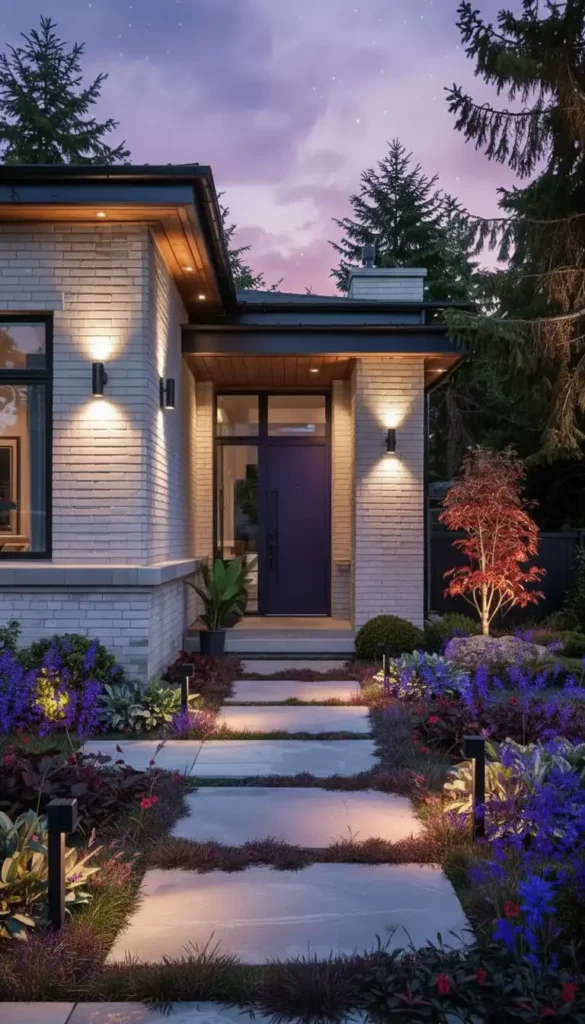
- Balance light levels on both sides of the entry
- Distribute brightness across the facade
- Use the home’s natural symmetry or asymmetry as your guide
- Step back and view from across the street to check balance
Include Seasonal Flexibility
Plan for holiday and seasonal additions.
- Install weatherproof outlets near the entry
- Leave room on timers for temporary lighting
- Choose neutral base lighting that works year-round
- Design so you can add wreaths, garlands, or decorations easily
House Entrance Lighting Ideas That Feel Welcoming At Night
Your entrance is the handoff point from public space to private home. Great entrance lighting makes this transition feel natural and comfortable, helping visitors feel welcomed while giving you practical visibility for keys, packages, and greetings.
Install Eye-Level Wall Lights
Sconces at the right height create face-friendly illumination.
- Mount fixtures 60-66 inches from the landing surface
- Choose shielded or frosted designs to prevent glare
- Place one on each side of the door if space allows
- Single fixtures work if balanced with plants or architectural features
Add Overhead Ceiling Light
General glow from above fills the space evenly.
- Use flush-mount or semi-flush fixtures for low ceilings
- Hang pendants if ceiling height is 8 feet or more
- Choose enclosed fixtures for damp or wet locations
- Coordinate style with wall sconces for cohesion
Light the Landing Area
Make the platform where people stand feel secure and defined.
- Ensure even light across the entire landing surface
- Add a small accent light near the landing edge
- Include soft illumination where packages typically get set
- Avoid creating shadows across the door hardware
Pin this welcoming entrance setup! 📌
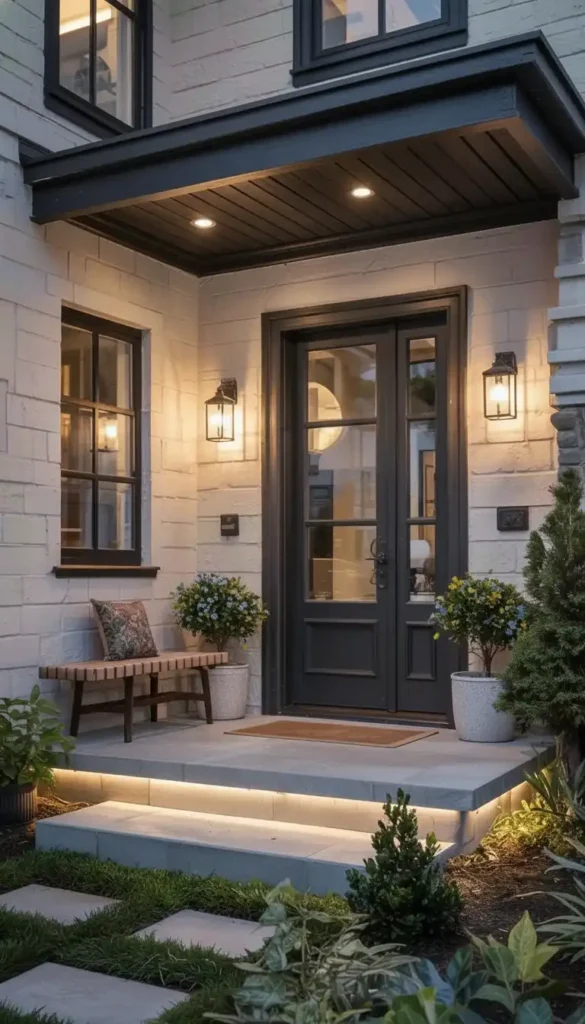
Highlight Entry Columns
Architectural elements add depth when properly lit.
- Use gentle wash lighting up columns
- Add small downlights at column capitals
- Keep brightness low—you want texture, not spotlight
- Match fixture finish to column materials when possible
Focus Light Near the Door Handle
Make the most functional spot the brightest.
- Direct a sconce or downlight toward the lockset
- Ensure you can see keys and door hardware clearly
- Avoid shadows from your own body when standing at the door
- Test lighting while actually using the door at night
Choose Warm Bulb Temperature
Skin tones matter at the entrance.
- Use 2700K-3000K bulbs for warm, flattering light
- Avoid cool white bulbs that make people look washed out
- Match color temperature across all entrance fixtures
- Test bulbs at night before committing to a full set
Consider Smart Doorbell Compatibility
Security cameras and doorbells work better with proper lighting.
- Ensure front-facing light without creating glare or hotspots
- Avoid backlighting that silhouettes visitors
- Add a small supplemental light if needed for camera view
- Test video quality before finalizing fixture placement
Add a Small Bench or Console
Furniture makes the entrance more functional and complete.
- Narrow benches work in tight spaces
- Add a small side light or table lamp if surface allows
- Create a landing spot for bags or packages
- Use outdoor-rated rechargeable lamps for flexibility
Save this entrance lighting method! 📌
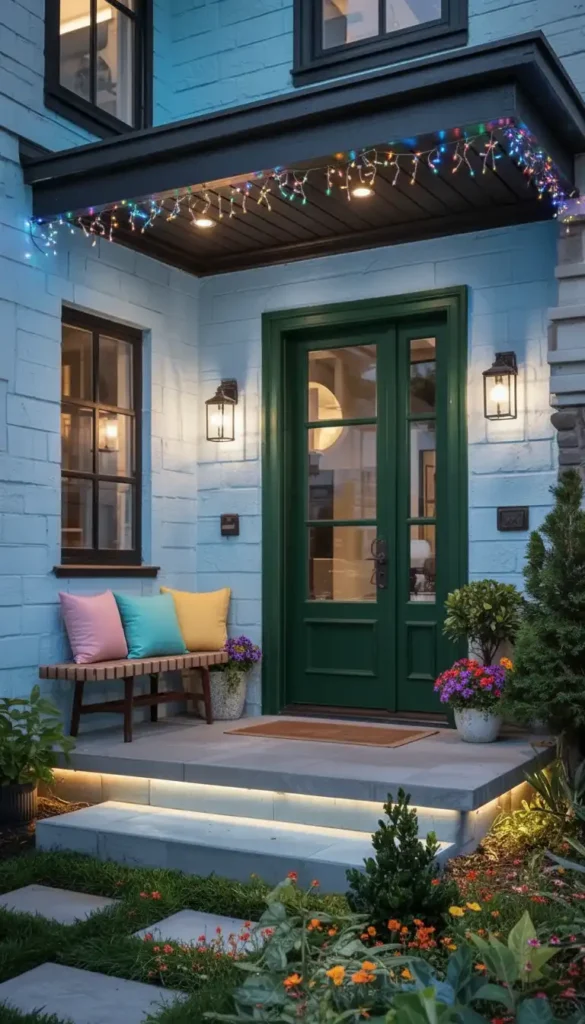
Plan for Sidelight Windows
Coordinate interior and exterior brightness.
- Add dimmers so inside and outside light can be balanced
- Use warm bulbs on both sides of the glass
- Avoid harsh exterior lights that fight with interior lighting
- Consider sheer curtains to soften the transition
Include Weather-Rated Components
Entrance fixtures face the elements directly.
- Choose wet or damp-rated fixtures based on exposure
- Use sealed bulb bases to prevent moisture entry
- Install GFCI outlets for any plugged-in accessories
- Check and clean fixtures twice yearly
Zone the Entrance for Packages
Design lighting around how you actually use the space.
- Illuminate where delivery drivers place packages
- Light the spot where you pause while unlocking
- Add low-level light at step edges for safe access
- Consider motion activation for late-night arrivals
Set Up Automatic Scheduling
Welcoming lighting only works if it’s consistently on.
- Use timers to match your typical schedule
- Add dusk-to-dawn sensors for hands-off operation
- Create holiday or special event schedules if using smart bulbs
- Override options matter for unexpected late nights
Front Door Outdoor Lighting Ideas With A Designer Look
Designer front door lighting isn’t about expensive fixtures—it’s about proportion, placement, and restraint. When you get these elements right, even budget fixtures look intentional and polished. The front door is your home’s focal point at night, so lighting here should draw the eye naturally and create a welcoming frame.
Scale Sconces to Door Size
The most common mistake is choosing fixtures that are too small.
- Measure door height and width before shopping
- Fixtures should be 1/4 to 1/3 the door height
- Wider doors need wider or taller fixtures
- View mockups or templates on the door before drilling
Create Vertical Focus
Draw the eye upward to make the entry feel grand.
- Use wall sconces that cast light up and down
- Add a ceiling pendant if porch height allows
- Highlight vertical elements like sidelights or columns
- Avoid solely horizontal light patterns
Choose One Metal Finish
Cohesion comes from restraint, not variety.
- Match sconce finish to house numbers
- Coordinate with mailbox and door hardware
- Stick to one finish family (all warm or all cool metals)
- Add contrast only through texture, not color
Pin this designer door lighting technique! 📌
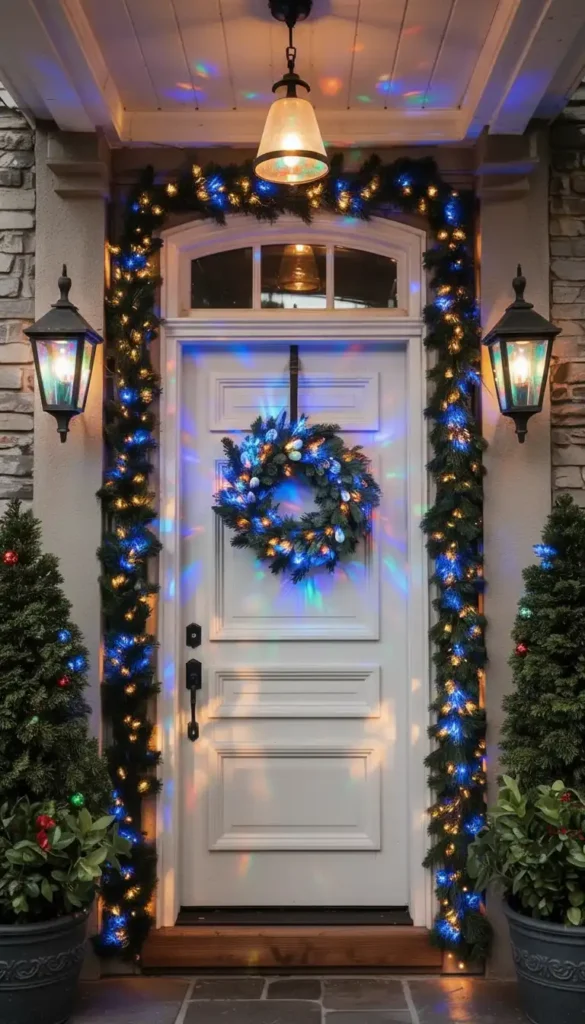
Light Door Texture and Color
Rich wood or bold paint deserves to be highlighted.
- Add a soft angled wash from above
- Use warm bulbs to enhance wood grain
- Avoid direct glare that flattens color
- Test lighting angle before permanent installation
Layer Ceiling and Wall Light
Overhead plus side lighting creates designer depth.
- Install a simple pendant or semi-flush fixture above
- Add sconces on either side at eye level
- Balance brightness so no single source dominates
- Use dimmers to adjust the relationship between layers
Plan for Seasonal Decor
Designer lighting adapts to celebrations.
Christmas:
- Warm white mini lights on garland
- Focused light on wreaths
- Avoid competing colors—stick to warm white
- Hide cords behind greenery and columns
Diwali:
- Lantern-style fixtures echo traditional diyas
- Warm amber or gold-toned lights
- Small string lights along entry edges
- Safe, weather-rated alternatives to candles
Halloween:
- Amber bulbs for moody warmth
- Subtle uplighting on pumpkins
- Keep it cozy, not garish
- Use orange filters on existing fixtures
Avoid Mixing Bulb Colors
Color consistency looks professional.
- All warm white or all daylight, never mixed
- Match Kelvin rating across all fixtures
- Test bulbs together before installing
- Replace all bulbs simultaneously when color shifts
Save this front door strategy! 📌
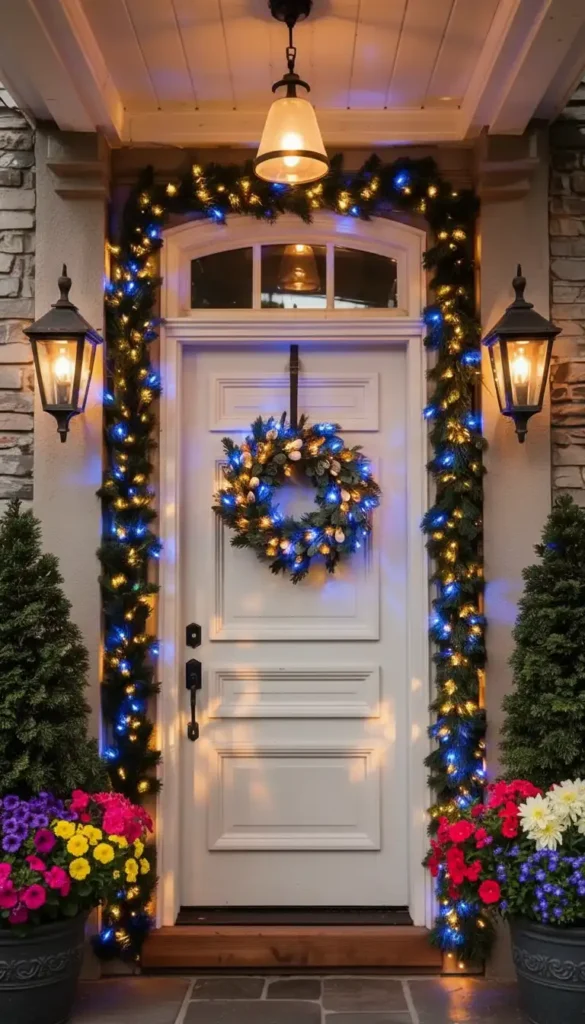
Position Light Off-Axis
See glow and texture, not the bulb itself.
- Angle sconces slightly outward
- Use shielded fixtures that hide the light source
- Place the brightest point slightly to the side
- Test from the street to check for glare
Add Smart or Dimming Controls
Flexibility elevates the designer effect.
- Install dimmers for everyday-to-holiday transitions
- Use smart bulbs for color temperature changes
- Create scenes for different occasions
- Keep manual override for reliability
Include a Sizing Check
Measure twice, install once.
- Sconces should be visible from the street
- Fixtures too small look apologetic and cheap
- Oversized fixtures work better than undersized
- Consider the door surround and porch scale together
Highlight Architectural Details
Let unique features guide your lighting choices.
- Light textured glass in the door
- Illuminate decorative millwork or trim
- Wash interesting siding materials
- Use shadow and light to create dimension
Plan Weatherproof Seasonal Wiring
Holiday lighting looks better when cords are hidden.
- Install outlets behind planters or columns
- Use outdoor-rated extension cords
- Run cords along trim lines and architectural breaks
- Keep connections off the ground and away from foot traffic
Entryway Outdoor Lighting Ideas For House Entrance Door Style
The entryway is where function and style meet, creating that brief pause before you step inside. Proper lighting here supports how you actually use the space—setting down bags, greeting visitors, handling keys—while expressing your home’s personality. Even small porches can feel designed with the right lighting approach.
Treat It Like a Mini Room
Apply interior design thinking to your outdoor entry.
- Light the ceiling plane with overhead fixtures
- Illuminate side walls with sconces or wash lights
- Define the floor with a lit mat or landing edge
- Create layers just like you would indoors
Include Overhead General Lighting
A ceiling fixture provides the foundation.
- Use flush or semi-flush mounts for standard ceilings
- Hang pendants if you have 8+ feet of clearance
- Choose damp or wet-rated fixtures based on exposure
- Keep the style consistent with wall sconces
Add Balanced Side Lighting
Pair sconces or balance a single light with other elements.
- Two matching sconces create instant symmetry
- One sconce balanced by a lit plant works for asymmetrical entries
- Include a lantern cluster if space allows
- Use battery or rechargeable lamps for rental-friendly options
Pin this entryway styling guide! 📌
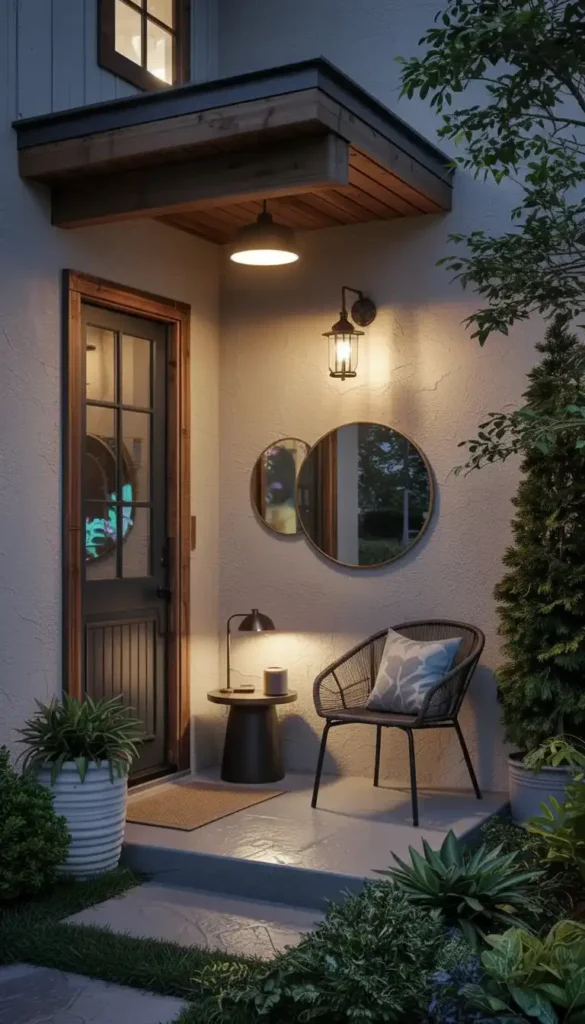
Light Where Your Hand Reaches
Support the actual mechanics of entering.
- Illuminate the door handle area
- Light the spot where you set down packages
- Include brightness where you stand while unlocking
- Avoid shadows from your own body when using the door
Add Small Functional Furniture
A bench or console makes the space more complete.
- Narrow benches fit tight entryways
- Small outdoor tables provide landing spots
- Add a slim side light or rechargeable lamp
- Choose weather-rated pieces for durability
Choose Style-Appropriate Fixtures
Match your home’s aesthetic intentionally.
Modern:
- Clean-lined sconces and pendants
- Black or brushed metal finishes
- Geometric shapes
- Simple doormats and minimal decor
Rustic or Modern Farmhouse:
- Lantern-style sconces
- Bronze or aged brass finishes
- Natural textures like wood planters
- Layered textiles and organic materials
Include Rechargeable Table Lamps
Flexible lighting works for renters and DIY upgrades.
- Move lamps as furniture arrangement changes
- No wiring required
- Choose outdoor-rated designs
- Recharge weekly or as needed
Plan for Side Approaches
Don’t forget driveways or RV access.
- Add a shielded light along side entries
- Include soft path lighting to alternate entrances
- Balance brightness so the main entry remains focal
- Use motion sensors for infrequently used approaches
Save this entry door approach! 📌
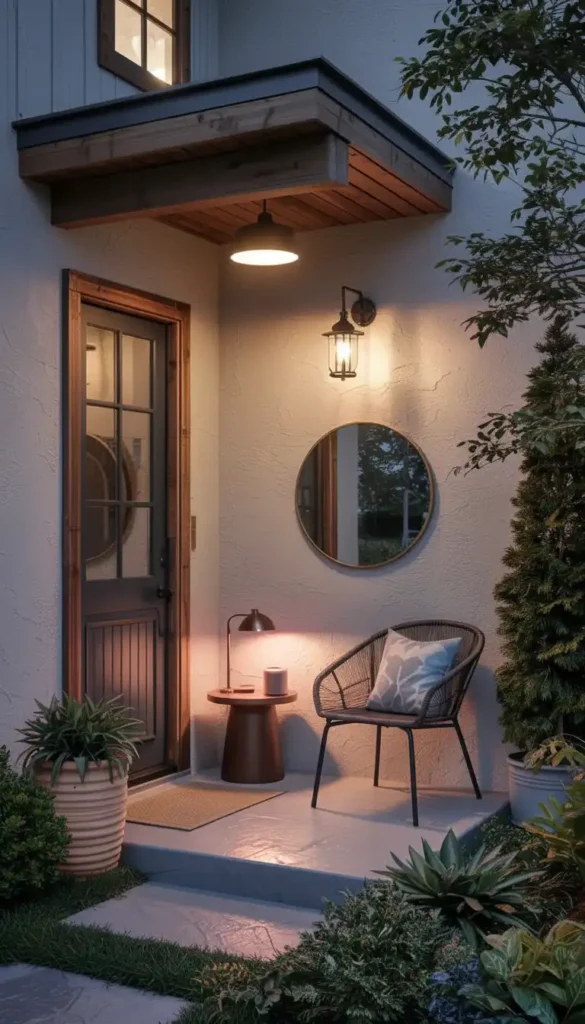
Add a Personal Detail
One small touch makes the space feel curated.
- Softly lit house number plaque
- Highlighted seasonal planter
- Illuminated welcome mat area
- Small accent light on decorative elements
Check Weather Ratings
Ensure fixtures match your climate exposure.
- Wet-rated for fully exposed locations
- Damp-rated for covered porches
- Sealed connections for all outdoor wiring
- UV-resistant finishes for sunny exposures
Align Fixture Height With Trim
Tailored placement looks more professional.
- Mount sconces aligned with door frame lines
- Position lights to follow architectural details
- Keep spacing proportional to wall segments
- Step back and view the composition before drilling
Create a Maintenance Schedule
Keep your entryway lighting working well.
- Wipe lenses twice yearly
- Check seals and weatherproofing annually
- Replace bulbs before they burn out completely
- Clean fixtures after storms or high winds
Add Wall Wash for Enclosed Entries
Side walls create opportunities for soft reflected light.
- Install small uplights or wash fixtures
- Light textured materials like stone or brick
- Keep brightness subtle to avoid glare
- Use warm tones to enhance material colors
Test Sightlines and Glare
Walk through your entrance as visitors would.
- Check for glare when stepping out the door
- Ensure fixtures don’t shine in eyes at any angle
- View from the street to confirm welcoming appearance
- Adjust aim or add shields if needed
Conclusion
Outdoor lighting in 2026 is about creating spaces that feel intentional, layered, and genuinely welcoming—not just bright. When you light your backyard with the same thoughtfulness you’d bring to an indoor room, when you guide visitors to your door with clarity instead of glare, and when you choose fixtures that match your home’s personality, you’re building an environment that feels good every single night.
Start with one zone—maybe your front door or your favorite backyard seating area—and apply these principles. Layer your light sources, choose warm tones, hide glare, and light the spaces you actually use. The transformation doesn’t require a massive budget or professional help, just careful planning and a willingness to think about how light shapes the way your home feels after dark. Your outdoor spaces deserve the same design attention as your interior, and with these strategies, you can create that polished, cozy atmosphere that makes you want to spend time outside long after the sun goes down.

“I share simple, beautiful and affordable home decor ideas to help you style every corner of your home with ease.