
Dreaming of a dining room that feels elegant, welcoming, and effortlessly stylish? These Grey Dining Room Ideas are designed to help you create a space that feels timeless while still reflecting your personal taste. Whether you’re updating a small dining nook or giving a larger room a complete refresh, the right combination of colors, textures, lighting, and furniture can make a remarkable difference.
Grey is one of the most versatile colors in interior design because it works beautifully with natural wood, marble, brass, black accents, and soft fabrics. In my experience, it provides the perfect balance between warmth and sophistication, making it easy to adapt your décor as trends change over time. I’ve also noticed that even simple upgrades, like layered lighting or textured accessories, can completely transform how a dining room feels without requiring a major renovation. Throughout this collection, you’ll discover practical, inspiring ideas that are easy to picture, simple to personalize, and beautiful enough to save for your next home makeover.
Soft Grey Walls
- Creates a calm and welcoming backdrop.
- Makes wood furniture stand out beautifully.
- Reflects natural light for a brighter feel.
- Works with both modern and classic décor.
- Makes seasonal decorating easier throughout the year.
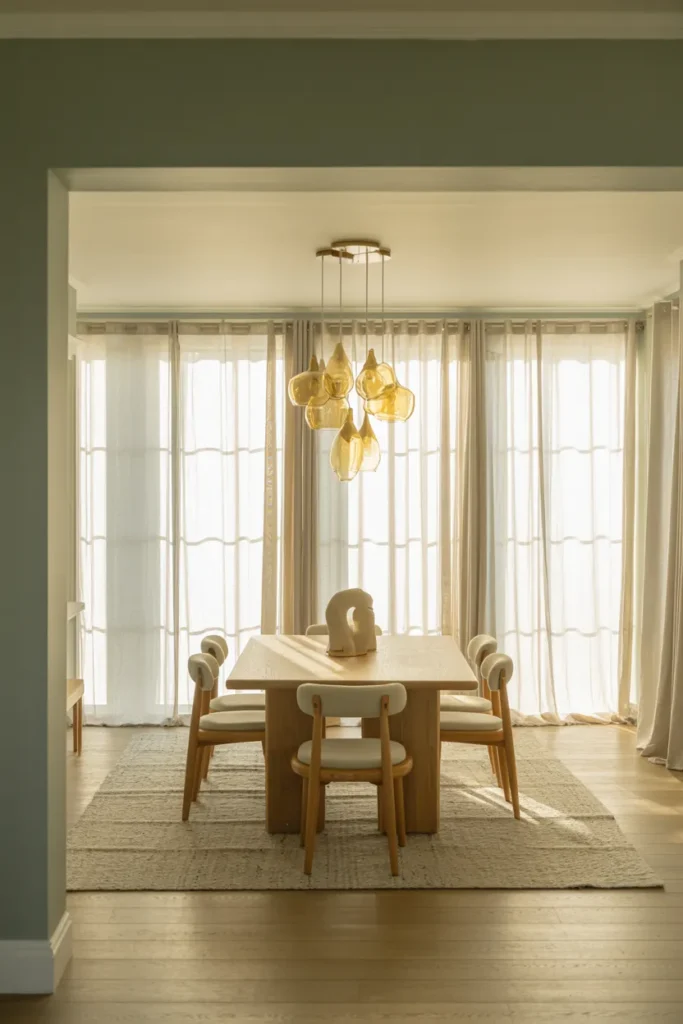
A soft grey wall color instantly changes the mood of a dining room without making it feel cold or plain. Instead of dominating the space, this gentle shade provides a balanced backdrop that allows natural wood, upholstered seating, and decorative lighting to shine. It also adapts beautifully as your decorating style changes over time, making it a practical long-term choice. In my experience, lighter grey tones create a room that feels larger and brighter, especially when paired with generous daylight and warm neutral accessories that soften the overall look.
One of the biggest advantages of this design choice is its incredible versatility. Whether your table is rustic oak, sleek black, or painted white, the surrounding walls help tie every element together naturally. I’ve noticed that adding linen curtains, textured rugs, and subtle metallic accents prevents the room from feeling flat while maintaining a peaceful atmosphere. This combination creates a polished dining space that feels elegant every day while remaining comfortable enough for family dinners, holiday gatherings, and casual entertaining throughout every season.
Velvet Dining Chairs
- Adds luxurious texture without overwhelming the room.
- Makes everyday seating noticeably more comfortable.
- Brings warmth to minimalist interiors.
- Pairs beautifully with wood and metal finishes.
- Elevates the dining area with minimal effort.
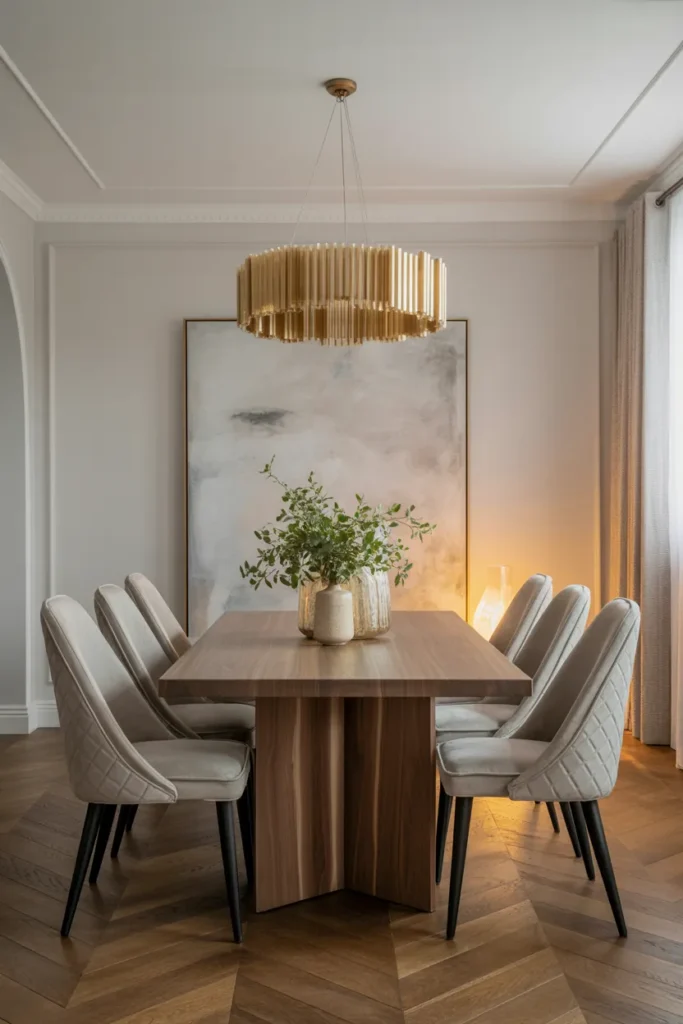
Beautiful seating can completely redefine the atmosphere around a dining table. Velvet chairs introduce rich texture that immediately makes the room feel warmer, softer, and more inviting while adding an upscale finish. Their comfortable padding also encourages guests to linger longer after meals, making everyday dining feel more relaxed. That’s why many designers recommend investing in quality seating before adding extra decorative pieces. A thoughtful combination of fabric, color, and shape often creates a stronger visual impact than constantly changing accessories.
Choosing neutral upholstery allows these chairs to remain timeless as surrounding décor evolves through different seasons and trends. Soft grey fabric blends naturally with wood tables, brass lighting, black accents, or marble surfaces while maintaining an elegant appearance. I’ve seen this work well in many homes because the texture catches both natural and evening light beautifully, creating subtle depth throughout the room. The finished dining area feels sophisticated yet welcoming, making it equally suitable for casual breakfasts, family celebrations, and formal dinner parties.
Marble Dining Table
- Creates an instantly premium appearance.
- Brightens the room with reflective surfaces.
- Complements modern and traditional interiors.
- Offers timeless visual appeal.
- Becomes the room’s natural focal point.
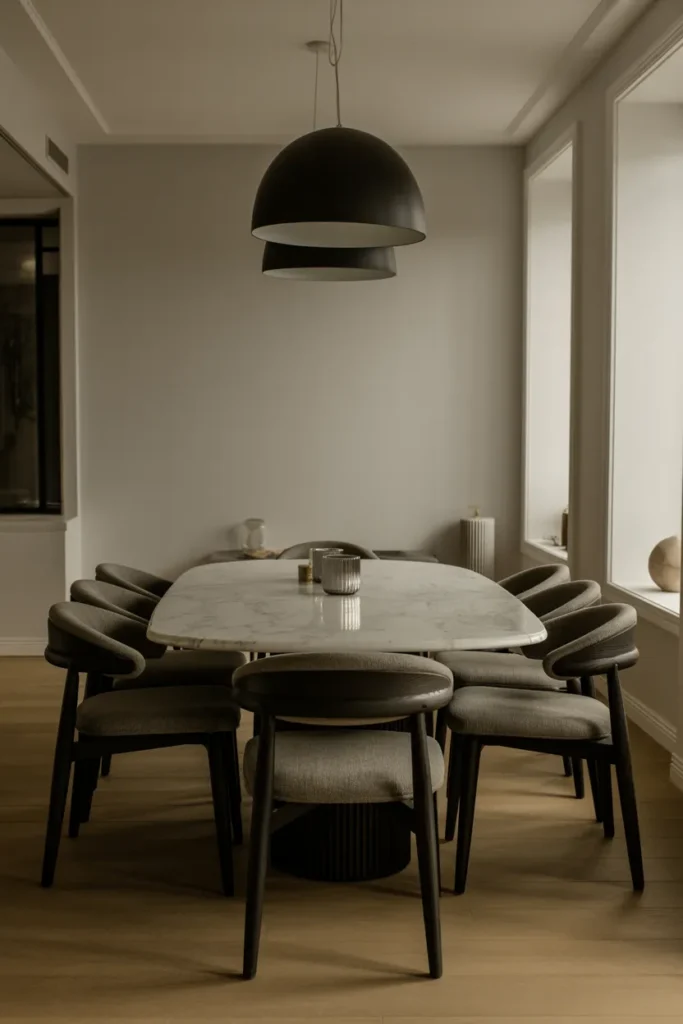
A marble dining table immediately captures attention through its elegant surface and unique natural veining. Every slab carries subtle variations, giving the room an individual character that manufactured materials often cannot match. The reflective finish also helps bounce light around the space, making the dining area appear brighter and more open. I’ve noticed this feature is especially valuable in rooms that receive moderate daylight because the tabletop naturally enhances overall brightness without requiring additional decorative elements.
Although marble is often associated with luxury homes, it can also work beautifully in practical family spaces when paired with durable seating and thoughtful styling. Warm wood flooring, upholstered chairs, and simple centerpieces balance the cool stone beautifully while preventing the room from feeling overly formal. That’s why many homeowners keep tabletop décor minimal and allow the stone itself to become the statement piece. The finished dining room feels timeless, refined, and effortlessly elegant while remaining welcoming for everyday meals and special occasions alike.
Layered Pendant Lighting
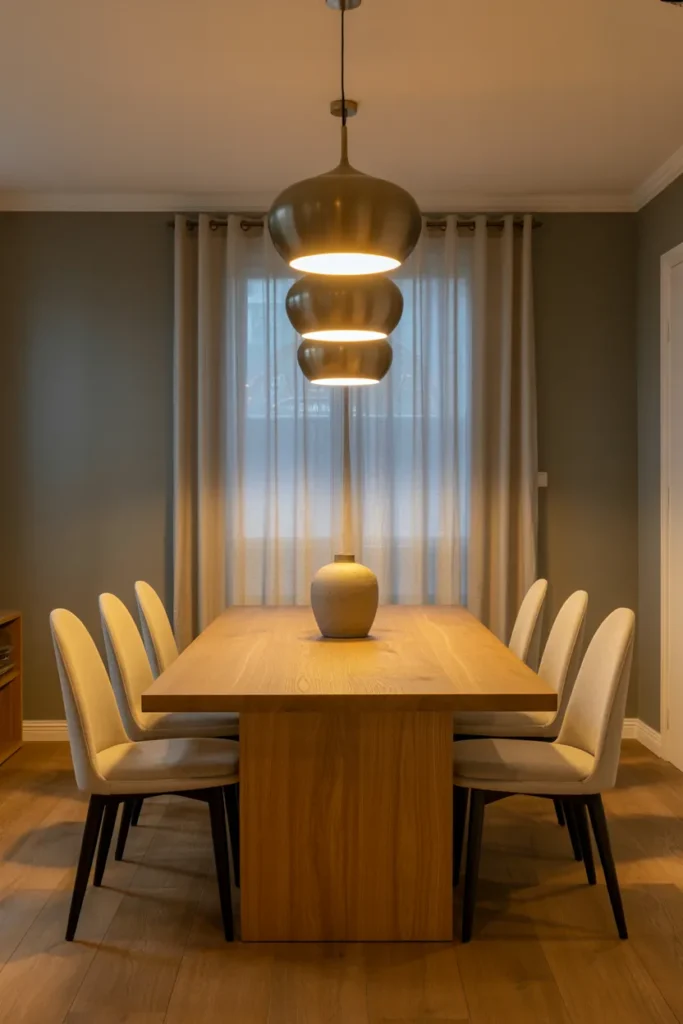
- Creates a striking focal point above the table.
- Makes evening meals feel warmer and cozier.
- Defines the dining zone beautifully.
- Adds depth without overwhelming the décor.
- Highlights the table as the room’s centerpiece.
Lighting has the power to completely reshape the atmosphere of a dining room. Layered pendant fixtures draw attention to the table while creating a welcoming glow that makes every meal feel more inviting. Instead of relying on a single ceiling light, multiple pendants distribute illumination evenly and add visual rhythm across the space. In my experience, warm-toned bulbs make neutral interiors feel softer and more comfortable, especially during evenings when natural daylight fades and families gather together for dinner or conversation.
The beauty of this design lies in both its style and practicality. Pendant lights naturally separate the dining area from nearby living spaces in open layouts without adding physical barriers. I’ve seen this work well in many homes because the layered lighting creates depth while complementing wood, stone, and upholstered textures. Choosing fixtures with simple lines also helps maintain a timeless appearance that remains attractive as decorating styles evolve. The finished room feels balanced, sophisticated, and welcoming throughout every season.
Natural Wood Accents
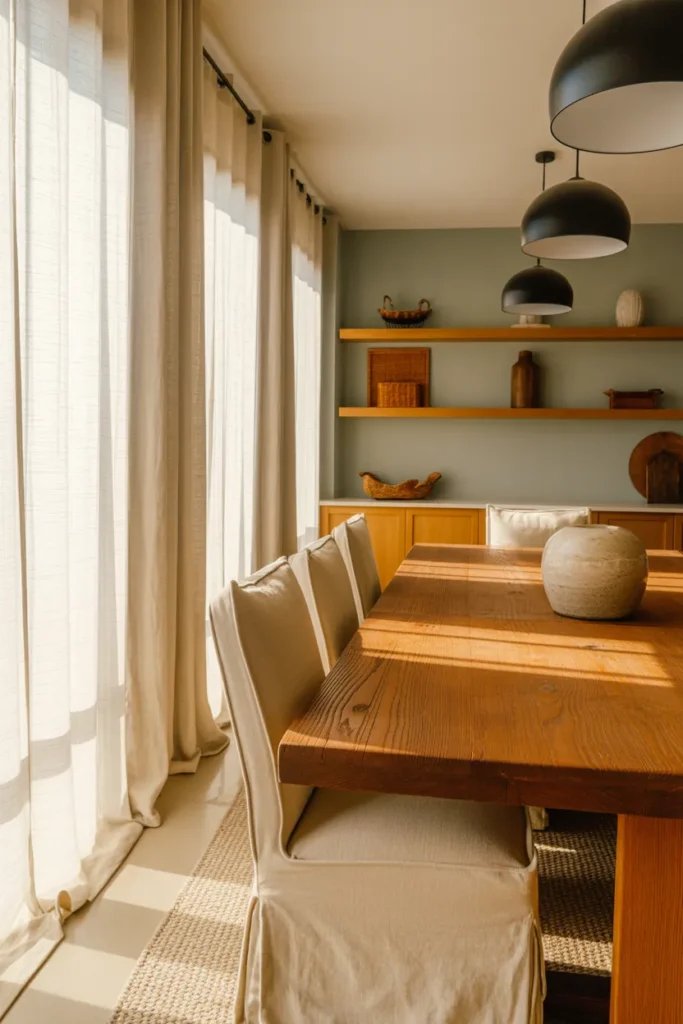
- Brings warmth to cool color palettes.
- Adds natural texture throughout the room.
- Balances modern finishes beautifully.
- Creates a welcoming everyday atmosphere.
- Works with nearly every decorating style.
Natural wood instantly softens cool neutral interiors while making the dining room feel comfortable and lived in. Whether used through furniture, floating shelves, decorative bowls, or exposed beams, the warm grain introduces organic texture that balances painted walls and smooth finishes. This contrast keeps the room from feeling sterile while adding timeless character. I’ve noticed that even a few wooden accents can dramatically change the overall mood, creating an environment that feels relaxed enough for daily meals while remaining elegant for entertaining.
One reason this approach remains popular is its incredible flexibility. Light oak, walnut, or reclaimed wood each bring their own personality without competing against surrounding décor. That’s why many designers recommend mixing wood with soft fabrics, ceramic accessories, and subtle metal finishes instead of introducing too many bold colors. The result is a layered dining space filled with warmth, texture, and visual harmony. Small natural details often create the biggest transformation while keeping the room effortlessly stylish for years.
Large Statement Mirror
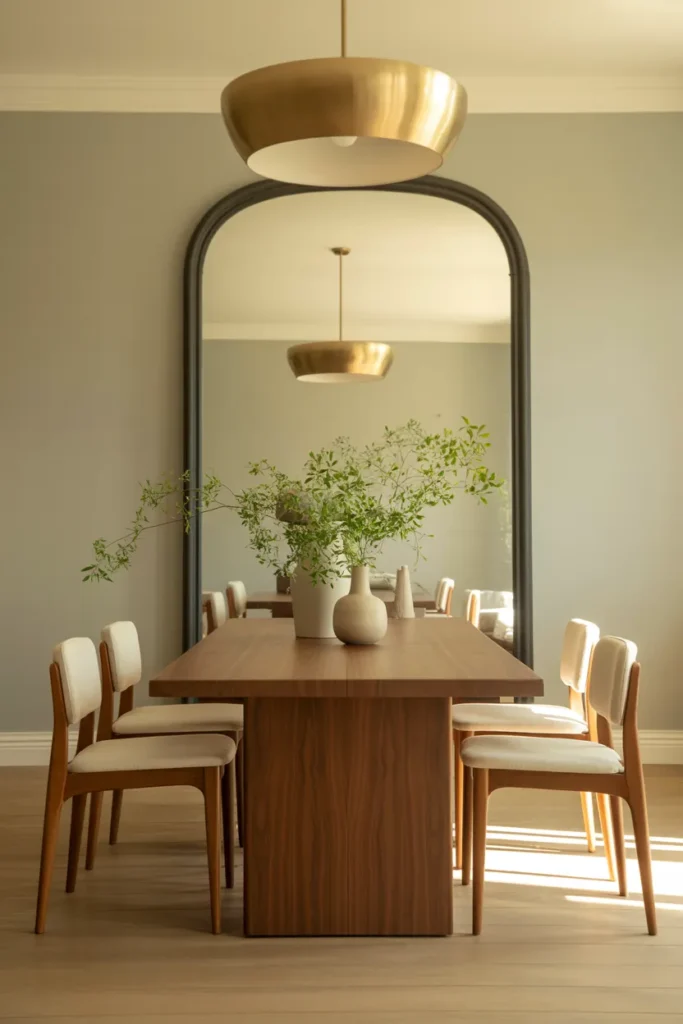
- Reflects light to brighten the room.
- Makes compact spaces feel noticeably larger.
- Adds elegance without visual clutter.
- Creates a sophisticated decorative feature.
- Enhances both daytime and evening ambiance.
A large mirror can transform the entire feeling of a dining room by increasing brightness and creating the illusion of extra space. Positioned across from windows or decorative lighting, it reflects natural light throughout the room while highlighting surrounding furniture and architectural details. This simple addition brings visual depth without introducing unnecessary clutter. In my experience, oversized mirrors often deliver more impact than several smaller decorative pieces because they expand the room visually while maintaining a clean, uncluttered appearance.
Placement makes all the difference when using a statement mirror. Hanging it where it reflects a beautiful chandelier, artwork, or outdoor view enhances the room from multiple angles. I’ve seen this work well in many homes because mirrors naturally amplify existing design features rather than competing with them. Choosing a slim black, brass, or wood frame keeps the look timeless while coordinating with different decorating styles. The completed dining area feels brighter, more spacious, and effortlessly refined for everyday living and entertaining.
Textured Area Rug
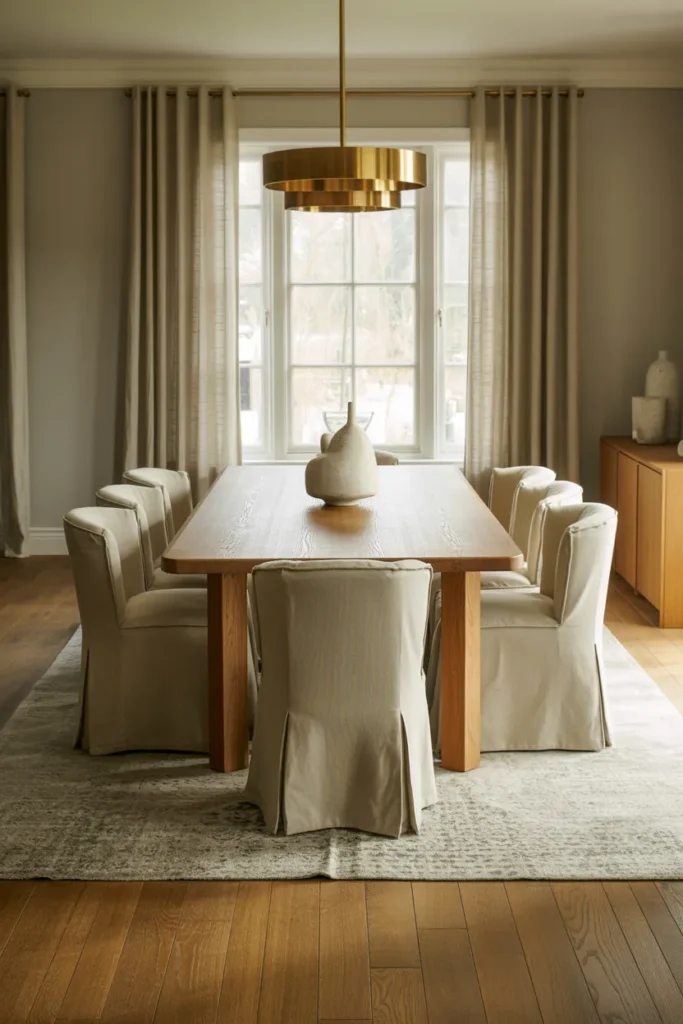
- Defines the dining area beautifully.
- Adds warmth and softness underfoot.
- Reduces noise during meals.
- Introduces subtle texture without clutter.
- Creates a cozy, polished finish.
A textured rug instantly grounds the dining table and creates a more comfortable atmosphere for everyday meals. Beyond adding softness, it visually defines the dining zone, especially in open-concept homes where different spaces flow together. Neutral woven patterns add interest without competing with furniture or wall colors. I’ve noticed that choosing a generously sized rug helps chairs remain fully supported, making the room feel more balanced while preventing awkward movement when guests pull their seats in and out.
Material matters just as much as appearance when selecting the perfect rug. Low-pile options are easier to clean and allow dining chairs to slide smoothly, making them ideal for busy households. That’s why many designers recommend durable fibers in subtle patterns that disguise everyday crumbs and wear. Layered with natural wood furniture and warm lighting, the rug creates an inviting setting that feels elegant yet practical. The finished dining room becomes noticeably more comfortable while maintaining a clean and sophisticated aesthetic.
Glass Display Cabinet
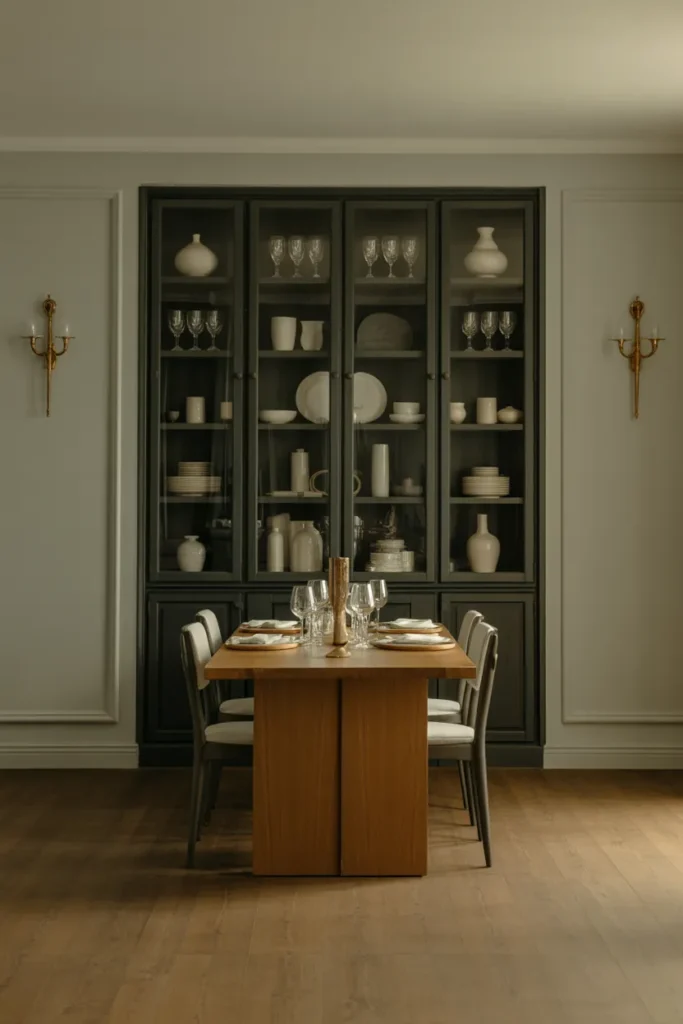
- Combines stylish storage with décor.
- Displays favorite dinnerware beautifully.
- Adds height and visual interest.
- Keeps entertaining essentials organized.
- Makes empty walls feel purposeful.
A glass-front cabinet transforms everyday storage into part of the room’s overall design. Favorite dishes, serving bowls, and glassware become decorative features while remaining protected and easy to access. Transparent doors also keep the room feeling open compared to bulky solid cabinets, making the space appear lighter and more spacious. In my experience, limiting the display to coordinated pieces creates a cleaner and more luxurious appearance than filling every shelf with decorative objects.
Lighting inside the cabinet adds another layer of sophistication, especially during evening gatherings. Soft illumination highlights beautiful ceramics and glassware while creating warmth throughout the room. I’ve seen this work well in many homes because it adds character without increasing visual clutter. Pairing the cabinet with simple accessories and uncluttered shelving keeps attention on carefully selected pieces instead of unnecessary decorations. The result is a dining room that feels organized, elegant, and perfectly prepared for both everyday meals and entertaining.
Floor-To-Ceiling Curtains
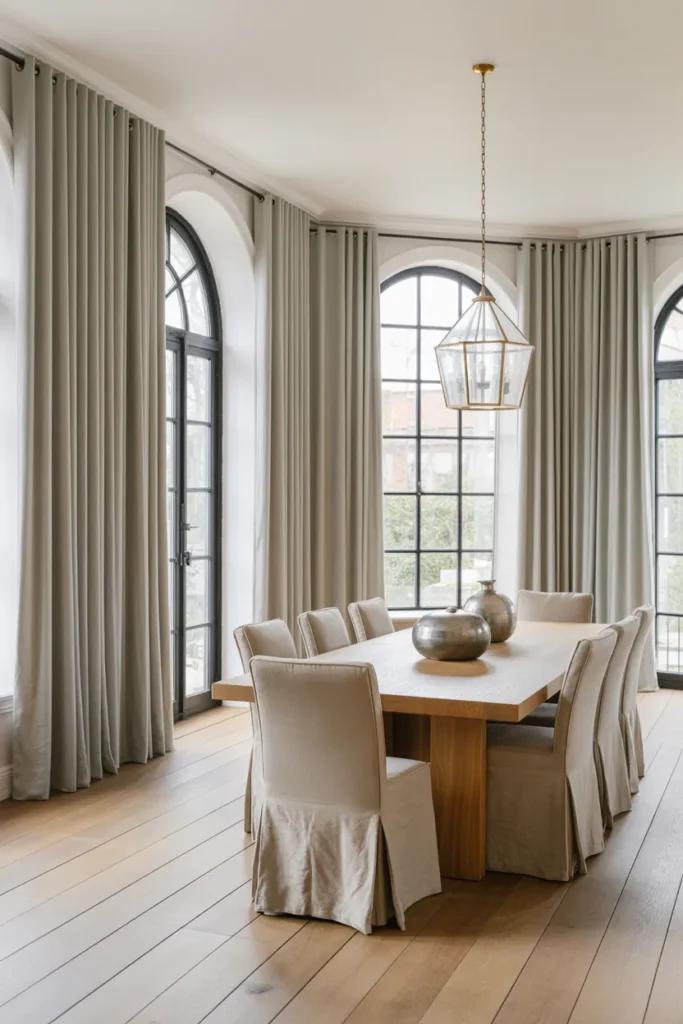
- Makes ceilings appear taller.
- Softens hard architectural lines.
- Filters natural light beautifully.
- Adds texture without overwhelming the room.
- Creates a luxurious custom look.
Long curtains instantly elevate the appearance of a dining room by drawing the eye upward and emphasizing ceiling height. Hanging them close to the ceiling rather than directly above the window creates the illusion of larger windows and a more spacious interior. Soft linen fabrics gently diffuse sunlight, producing a warm glow that enhances every meal. I’ve noticed this simple adjustment can dramatically improve the room’s proportions while adding an elegant finish that feels professionally designed.
Choosing full-length panels in light neutral tones keeps the space bright while complementing wood furniture, upholstered seating, and decorative lighting. That’s why many designers recommend allowing the fabric to lightly touch the floor for a tailored yet relaxed appearance. Layering sheer curtains beneath heavier panels also provides flexibility for privacy and changing daylight throughout the day. The completed dining area feels brighter, taller, and effortlessly sophisticated while maintaining a comfortable atmosphere for everyday living.
Black Accent Wall
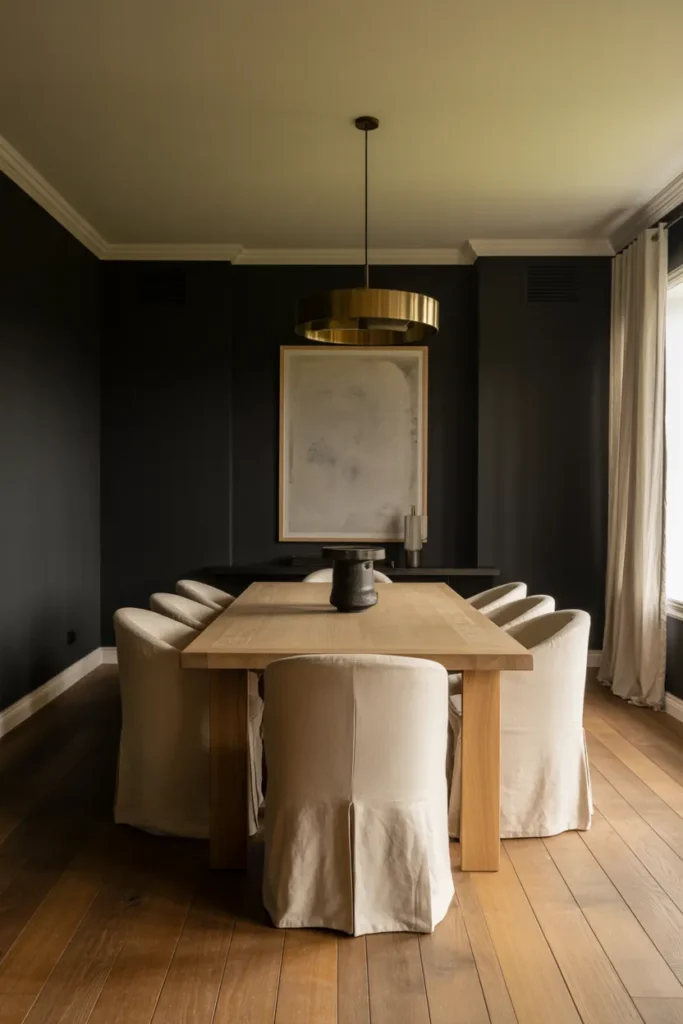
- Creates a bold focal point instantly.
- Adds depth without darkening the entire room.
- Makes artwork and furniture stand out.
- Balances light neutral finishes beautifully.
- Gives the space a designer-inspired look.
A single dark accent wall can completely transform the personality of a dining room while keeping the overall palette light and welcoming. Instead of painting every wall, concentrating the darker color behind the table creates visual depth and naturally draws attention to the center of the room. This contrast helps lighter furniture, artwork, and lighting appear more refined. In my experience, combining charcoal tones with warm wood and soft textiles prevents the space from feeling heavy while maintaining an elegant and timeless atmosphere.
Balance is what makes this design successful in real homes. Plenty of natural light, reflective finishes, and neutral décor ensure the room stays bright throughout the day. I’ve seen this work well in many interiors because the darker backdrop creates impressive visual impact without requiring expensive renovations. A few carefully chosen decorative accents are often all that’s needed to complete the look. The finished dining area feels sophisticated, welcoming, and full of modern character while remaining practical for everyday family use.
Minimalist Table Styling
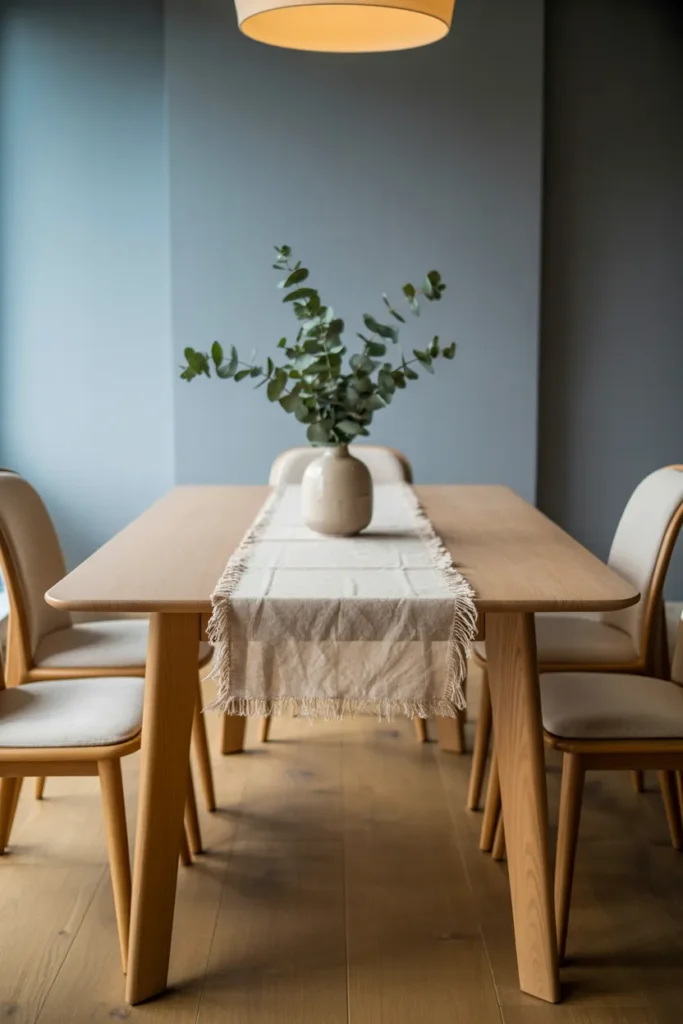
- Keeps the tabletop clean and inviting.
- Highlights quality furniture naturally.
- Reduces visual clutter.
- Makes everyday dining feel more refined.
- Easy to refresh with seasonal touches.
Sometimes the simplest centerpiece creates the greatest visual impact. A linen runner, fresh greenery, and one handcrafted ceramic vase allow the dining table to remain elegant without feeling overcrowded. This approach keeps attention on beautiful furniture while making everyday meals feel special. I’ve noticed that reducing decorative clutter also makes cleaning much quicker, encouraging homeowners to maintain a polished appearance throughout the week rather than only preparing the room before guests arrive.
Minimal styling also provides flexibility as seasons and occasions change. Fresh flowers, olive branches, or a few candles can easily replace everyday décor without redesigning the entire table. That’s why many designers recommend investing in timeless accessories instead of constantly purchasing trendy decorations. The room feels lighter, calmer, and more intentional while still expressing personality through carefully selected details. The result is an elegant dining space that remains practical, welcoming, and effortlessly beautiful throughout the year.
Brass Decorative Accents
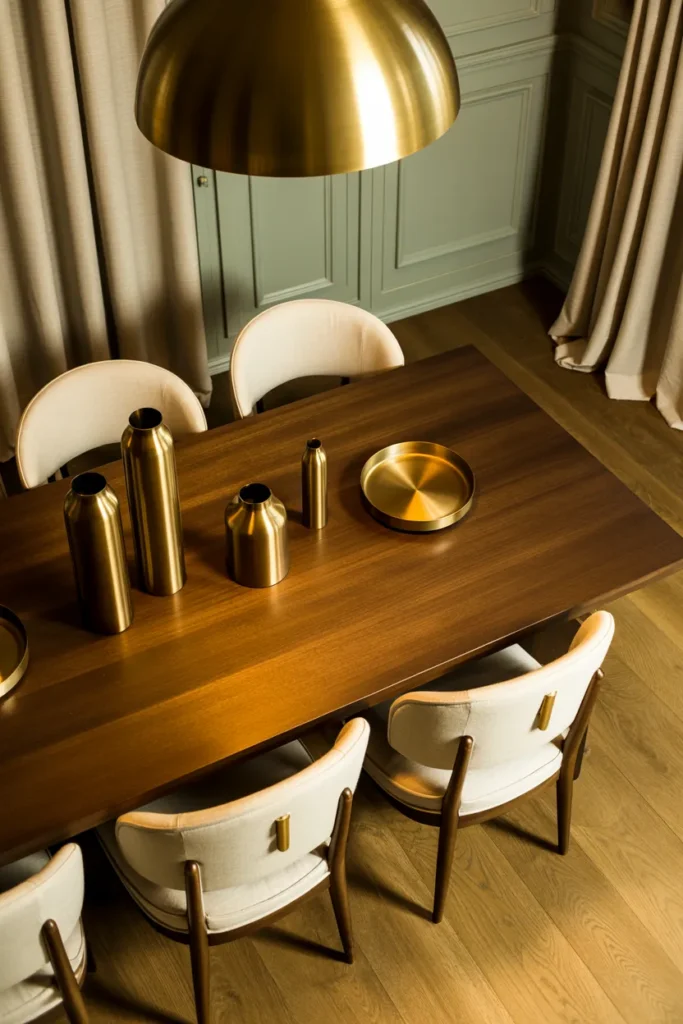
- Adds warmth to neutral color palettes.
- Creates subtle luxury without excess.
- Reflects light beautifully.
- Complements wood and stone finishes.
- Brings visual balance to modern interiors.
Warm metallic finishes instantly brighten a neutral dining room while introducing a refined layer of elegance. Brass accents catch natural and artificial light beautifully, adding soft highlights that prevent cool color palettes from feeling flat. Small touches such as candleholders, lighting fixtures, cabinet handles, or decorative trays often make a bigger difference than larger decorative pieces. In my experience, repeating brass details throughout the room creates a cohesive appearance without making the design feel overly formal or extravagant.
The key is using metallic finishes with restraint so they enhance rather than dominate the space. I’ve seen this work well in many homes because warm brass naturally complements oak furniture, marble surfaces, soft fabrics, and neutral wall colors. Pairing these accents with simple ceramics and greenery keeps the overall look balanced and timeless. The completed dining room feels brighter, richer, and thoughtfully curated while maintaining the comfortable atmosphere that encourages people to gather and enjoy long conversations together.
Built-In Shelving
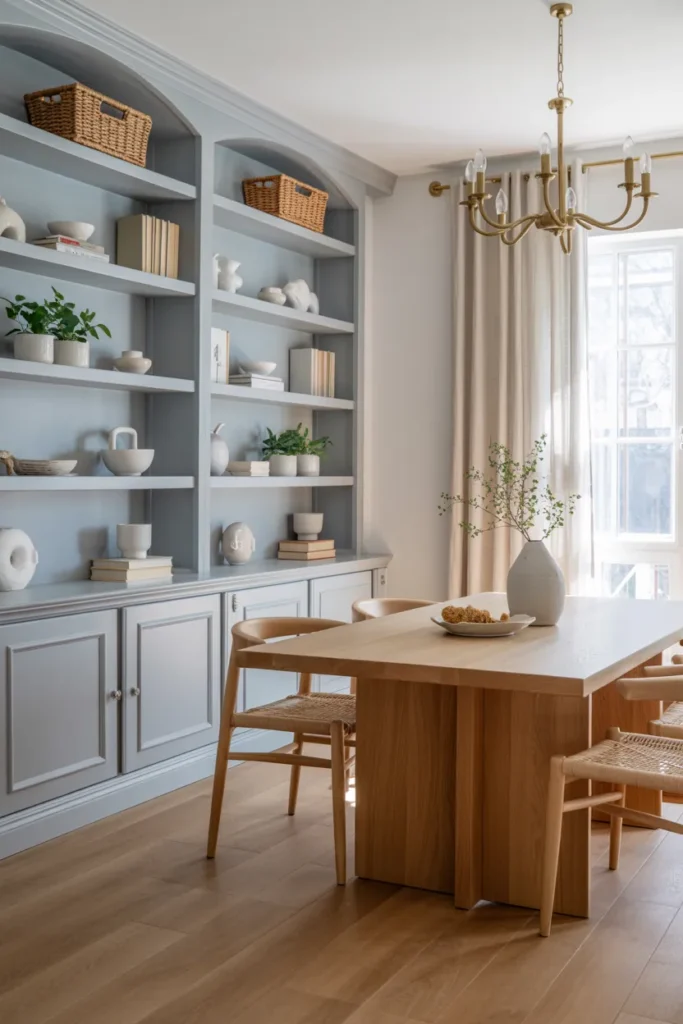
- Maximizes storage without adding bulk.
- Displays décor in a clean, organized way.
- Makes the room feel custom designed.
- Blends beauty with everyday function.
- Keeps surfaces clutter-free.
Built-in shelving instantly gives a dining room a polished, high-end appearance while adding practical storage that works for everyday living. Open shelves provide space for serving dishes, cookbooks, decorative bowls, and greenery without overwhelming the room. Keeping similar colors and materials together creates a balanced display that feels intentional rather than crowded. I’ve noticed that leaving a little empty space between objects makes every shelf look more expensive and allows each decorative piece to stand out instead of competing for attention.
Functionality is another reason this feature remains popular in both modern and traditional homes. Carefully arranged shelves make entertaining easier because everyday essentials stay within easy reach while contributing to the overall décor. That’s why many designers recommend mixing practical items with decorative accessories instead of filling every shelf with ornaments. The combination feels natural, welcoming, and highly personal. A thoughtfully styled shelving unit becomes a beautiful focal point that enhances both the room’s organization and visual appeal.
Round Dining Table
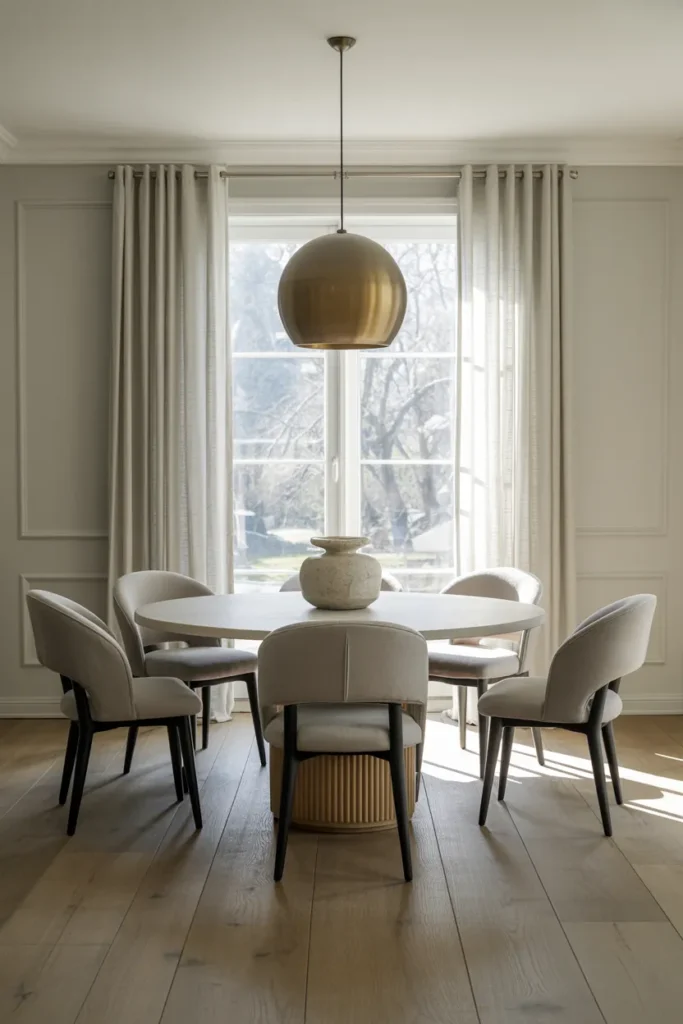
- Encourages easy conversation.
- Softens strong architectural lines.
- Fits smaller layouts comfortably.
- Improves movement around the table.
- Creates a warm, welcoming atmosphere.
A round dining table naturally encourages connection by allowing everyone to face one another comfortably during meals. Without sharp corners, the layout feels softer and easier to navigate, especially in compact dining rooms where every inch matters. The curved shape also balances straight walls, cabinetry, and flooring, creating a more harmonious overall design. In my experience, round tables make family dinners feel more relaxed because everyone shares the same space without anyone feeling separated at opposite ends.
This design also offers impressive flexibility when decorating throughout the year. Seasonal centerpieces, fresh flowers, or simple candles look balanced from every angle without requiring complicated arrangements. I’ve seen this work well in many homes because circular tables leave more open floor space, helping the room appear larger and brighter. Pairing the table with upholstered seating and layered lighting completes an inviting setting that feels equally suitable for everyday breakfasts, holiday celebrations, and long evenings spent entertaining guests.
Fresh Greenery Display
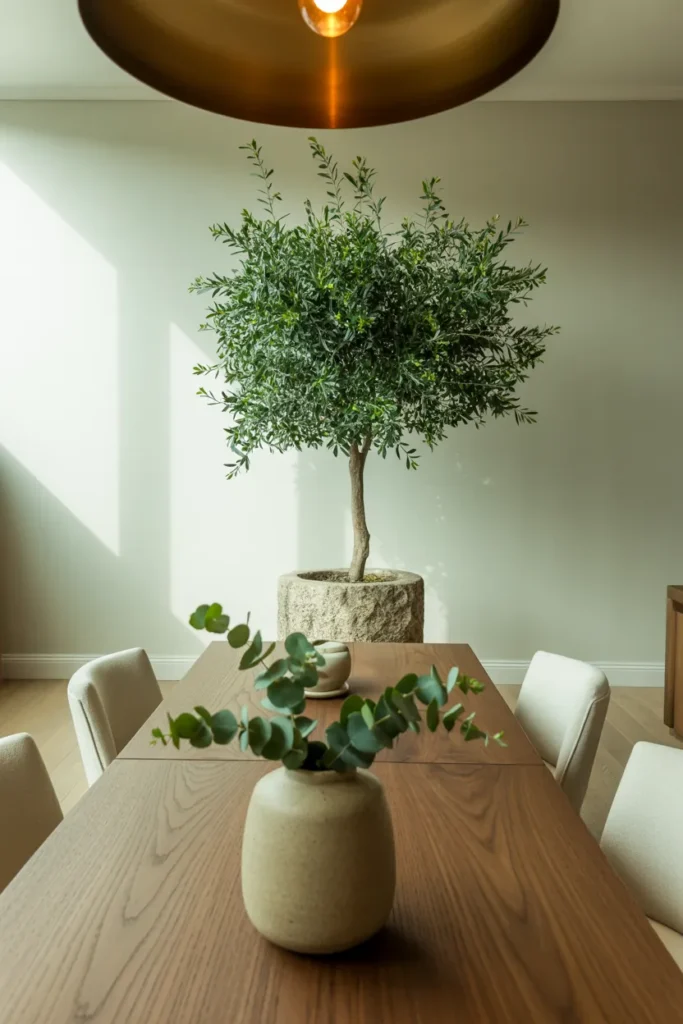
- Adds life and natural color.
- Softens neutral interiors beautifully.
- Improves visual balance.
- Refreshes the room effortlessly.
- Completes the décor with organic texture.
Fresh greenery is one of the easiest ways to make a dining room feel alive and welcoming. A tall indoor tree, leafy branches, or simple eucalyptus stems introduce natural color while softening furniture and architectural lines. Unlike bold decorative accessories, plants blend seamlessly with changing styles and seasonal updates. I’ve noticed that even one carefully placed planter can transform an empty corner into a feature that makes the entire room feel brighter, calmer, and more connected to nature.
Maintenance is often much easier than people expect, especially when choosing hardy indoor varieties that thrive in bright spaces. That’s why many designers recommend combining one larger plant with a few smaller natural accents instead of scattering greenery everywhere. The layered look feels intentional while maintaining a clean and uncluttered appearance. The finished dining room becomes warmer, fresher, and more relaxing, creating an environment where family meals and special gatherings feel even more enjoyable.
Wainscoting Panels
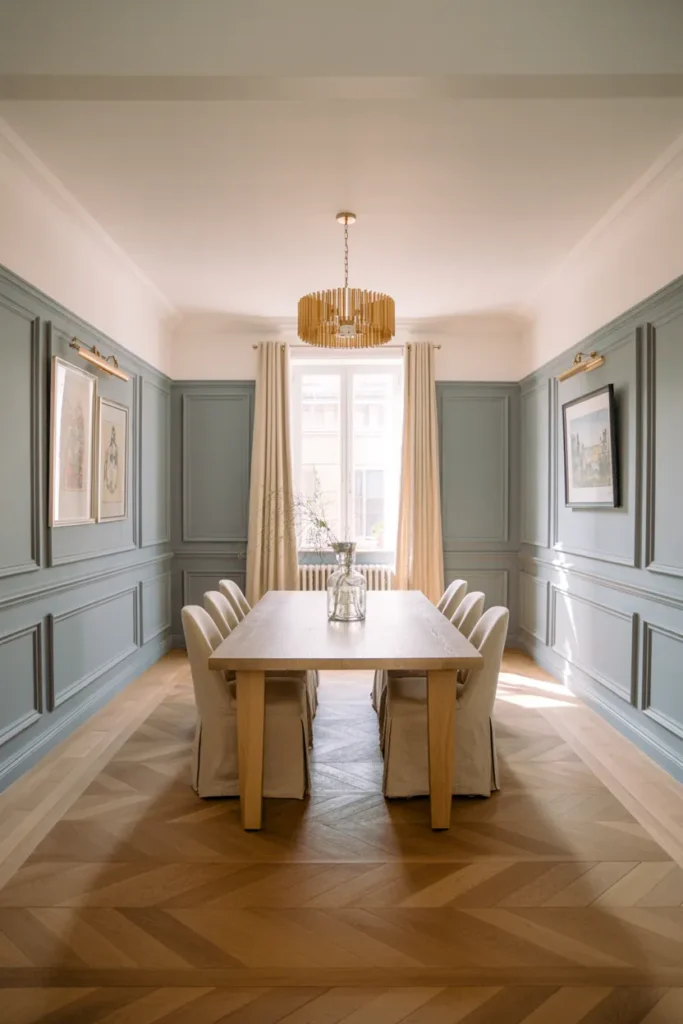
- Adds architectural character instantly.
- Makes plain walls feel custom designed.
- Brings subtle texture without clutter.
- Complements both modern and classic interiors.
- Increases visual depth beautifully.
Wall paneling is a simple upgrade that makes an ordinary dining room feel far more refined. Grey wainscoting introduces texture, structure, and timeless charm while allowing lighter upper walls to keep the space open and bright. The balanced contrast creates a polished appearance without requiring dramatic decorating changes. In my experience, this feature works especially well in homes where the dining room connects to other living spaces because it creates visual definition while maintaining a cohesive flow throughout the interior.
Keeping decorative accessories simple allows the architectural details to become the main attraction. I’ve seen this work well in many homes because paneling naturally elevates even modest furniture, making the room appear thoughtfully designed from the ground up. Warm wood finishes, soft fabrics, and understated artwork complete the look without competing for attention. The finished dining area feels elegant, inviting, and timeless, creating a welcoming backdrop for everyday family meals and memorable celebrations.
Stone Centerpiece Decor
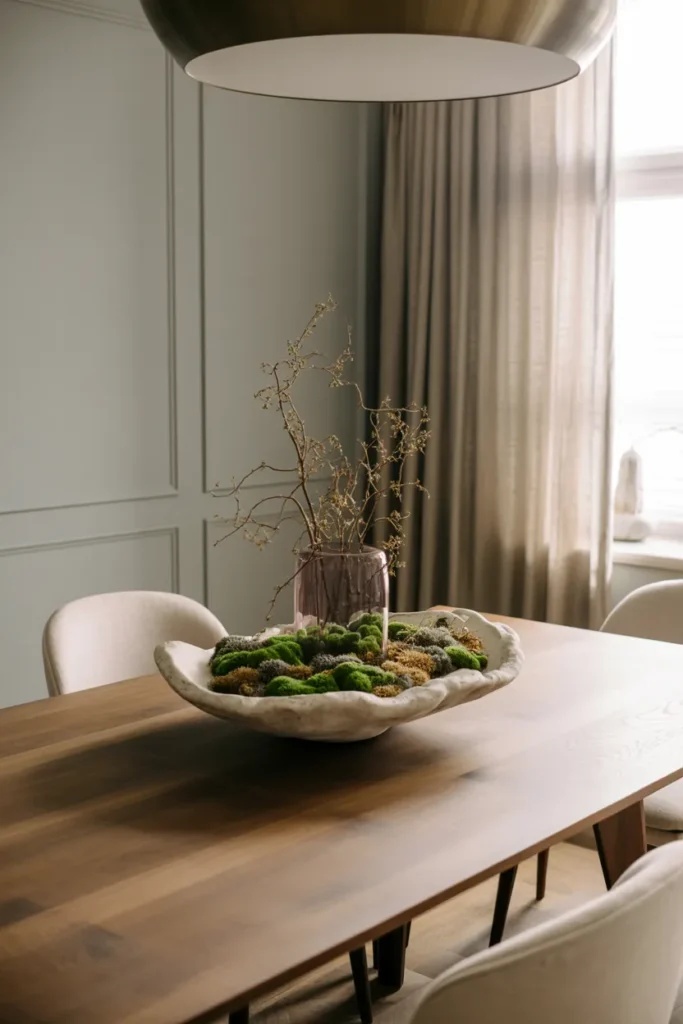
- Creates a sophisticated focal point.
- Adds natural texture to the table.
- Requires very little maintenance.
- Complements neutral color palettes.
- Keeps the tabletop stylish year-round.
A thoughtfully chosen centerpiece can completely change the appearance of a dining table without overwhelming it. A handcrafted stone bowl, ceramic sculpture, or textured decorative vessel introduces natural character while keeping the arrangement clean and uncluttered. Neutral materials blend effortlessly with changing seasonal décor, making this a practical investment that stays relevant throughout the year. I’ve noticed simple centerpieces often have greater visual impact because they allow the beauty of the table and surrounding furniture to remain clearly visible.
Durable decorative pieces are also ideal for busy households since they require very little upkeep compared to fresh floral arrangements. That’s why many designers recommend layering organic textures instead of using brightly colored decorations that quickly become distracting. A sculptural centerpiece paired with candles or subtle greenery creates warmth while maintaining balance. The completed dining room feels refined, welcoming, and intentionally styled, proving that small decorative details can make a lasting difference.
Gallery Wall Display
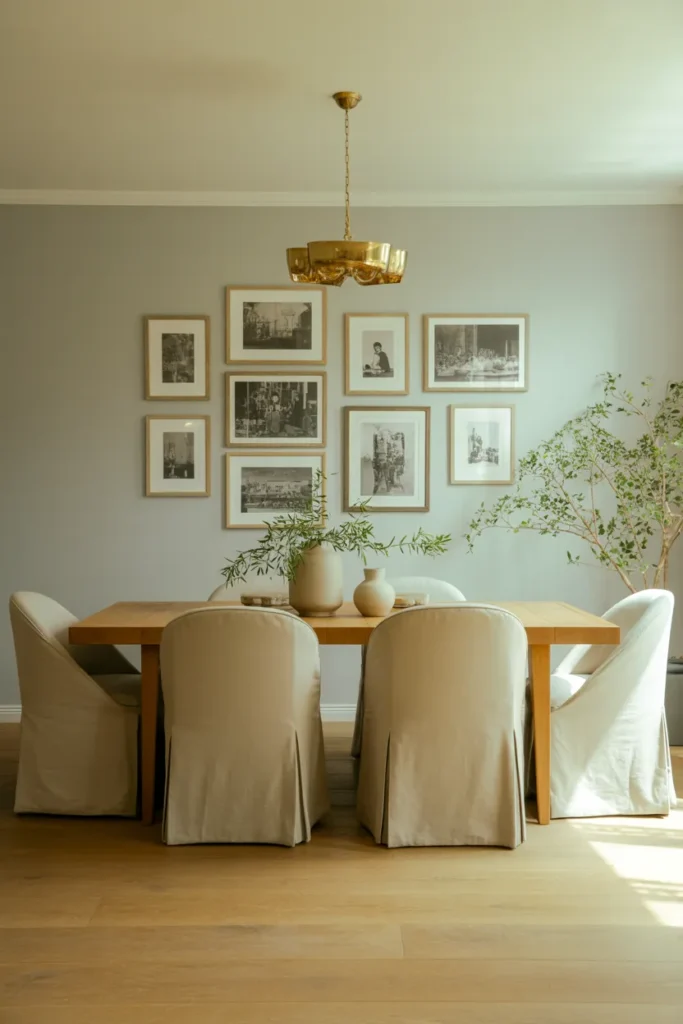
- Adds personality without major renovations.
- Fills empty walls beautifully.
- Creates a custom designer feel.
- Showcases meaningful artwork or photographs.
- Makes the dining room more memorable.
A carefully arranged gallery wall gives a dining room a sense of personality while turning unused wall space into an eye-catching feature. Mixing artwork, photography, and subtle typography within matching frames creates visual interest without feeling chaotic. Consistent spacing keeps the arrangement balanced, allowing every piece to contribute to the overall design. In my experience, choosing artwork with similar tones creates a cohesive collection that feels curated instead of randomly assembled over time.
Planning the layout before hanging frames helps achieve a cleaner, more professional result. I’ve seen this work well in many homes because meaningful artwork naturally becomes a conversation starter during family dinners and gatherings. Pairing the gallery with simple furniture and understated accessories ensures the wall remains the focal point rather than competing with surrounding décor. The finished space feels warm, personal, and elegant while reflecting the homeowner’s unique style in a timeless way.
Open Corner Bench
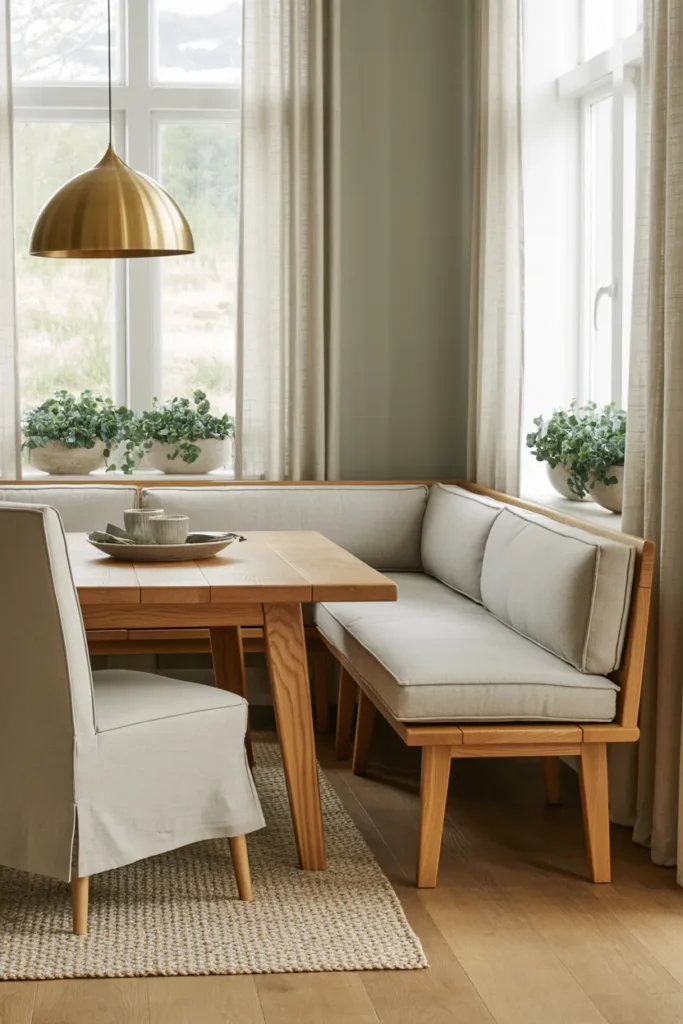
- Maximizes seating without crowding the room.
- Makes family meals feel more relaxed.
- Uses corner space efficiently.
- Adds a custom built-in appearance.
- Brings warmth and comfort to everyday dining.
A corner bench is a smart solution for creating a dining area that feels both welcoming and highly functional. It comfortably seats more people than individual chairs while making excellent use of unused corners. Soft upholstery and supportive cushions encourage everyone to linger longer after meals, creating a relaxed atmosphere for conversation. In my experience, this layout works especially well in homes where the dining space is compact because it improves traffic flow while making the room appear thoughtfully designed.
The flexibility of a built-in or freestanding bench also allows you to mix seating styles without sacrificing visual harmony. I’ve seen this work well in many homes because pairing a bench with upholstered chairs creates balance and adds subtle texture throughout the room. Layering cushions in soft neutral fabrics makes the seating feel even more inviting without overwhelming the design. The finished dining area feels comfortable, practical, and stylish enough for both everyday family life and special occasions.
Oversized Abstract Artwork
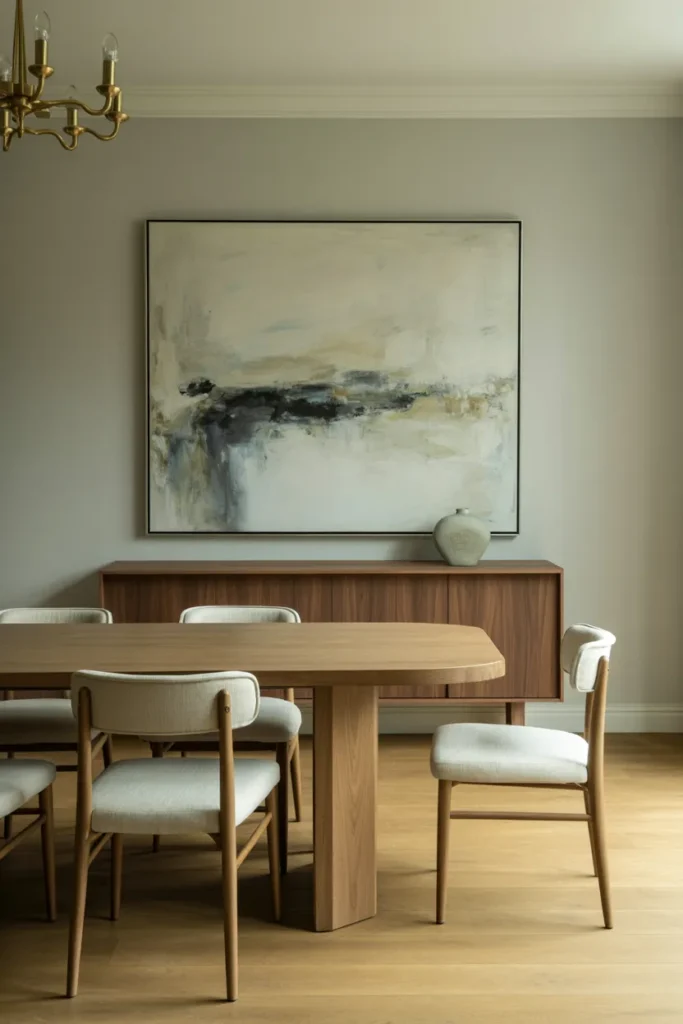
- Creates an impressive focal point.
- Adds personality without clutter.
- Enhances the room’s color palette.
- Makes large walls feel complete.
- Gives the space a gallery-inspired finish.
Oversized artwork instantly elevates a dining room by adding scale, color, and visual interest without requiring multiple decorative pieces. A large abstract painting complements neutral interiors while introducing movement that keeps the space from feeling flat. Soft layered tones blend beautifully with wood furniture, textured fabrics, and warm metallic finishes, creating a cohesive and elegant setting. I’ve noticed that one substantial artwork often delivers greater impact than several smaller pieces because it simplifies the overall design while making a confident statement.
Choosing artwork that echoes the room’s existing palette helps maintain a timeless appearance that won’t quickly go out of style. That’s why many designers recommend leaving generous wall space around a large canvas so it can become the natural focal point. Proper lighting further enhances its texture and depth throughout the day. The completed dining room feels curated, sophisticated, and effortlessly welcoming, creating a memorable space where family meals and gatherings become even more enjoyable.
Conclusion
Creating a beautiful dining room doesn’t always require a complete redesign. Thoughtful updates, balanced colors, and carefully chosen details can turn an ordinary space into one that feels warm, elegant, and inviting every day. These Grey Dining Room Ideas are meant to inspire you to mix timeless style with practical comfort, creating a room you’ll truly enjoy using. I’ve seen how even a few intentional changes can completely transform a dining space. Save this guide on Pinterest for future inspiration, try your favorite ideas in your own home, and share it with friends or family planning their next decorating project.

“I share simple, beautiful and affordable home decor ideas to help you style every corner of your home with ease.