

There is something quietly heartbreaking about a backyard that nobody uses. A yard with overgrown grass, mismatched chairs, and no real purpose. You look out the window and see wasted space — time that could have been connection, memory, and laughter. If that feeling is familiar, you are not alone.
The good news is that transformation does not require a massive budget or a professional landscaper. It requires a plan. The right layout turns a forgotten yard into the most-used room in your home. These five family backyard layout ideas for 2026 are designed to help you get there — with beauty, function, and real life in mind.
Family Backyard Layout Ideas 2026 for Modern Families
Modern families are busy. Parents are managing work, school pickups, activities, and meals — all at once. The backyard often becomes an afterthought. But when it is designed thoughtfully, it becomes the place where the whole family wants to be. A well-planned layout does not just look good in photos. It actually gets used every single day.
The key to a modern family layout is clarity with flexibility. Every zone has a purpose. But no zone feels locked in.
Start With Zones, Not Furniture
Before you buy a single chair or plant a single shrub, divide your yard mentally into three core zones.
- The Relax Zone — Near the house, shaded, comfortable. This is where adults sit with coffee while watching the kids.
- The Play Zone — Positioned toward the back, open, soft underfoot. This is where energy gets released safely.
- The Transition Zone — The space connecting them, usually a path, a patch of grass, or stepping stones that guide movement naturally.
This three-zone framework works for yards of any size. A 20-foot yard and a 100-foot yard can both use it — the scale adjusts, but the logic stays the same.
Use a Simple Grid of Stepping Stones
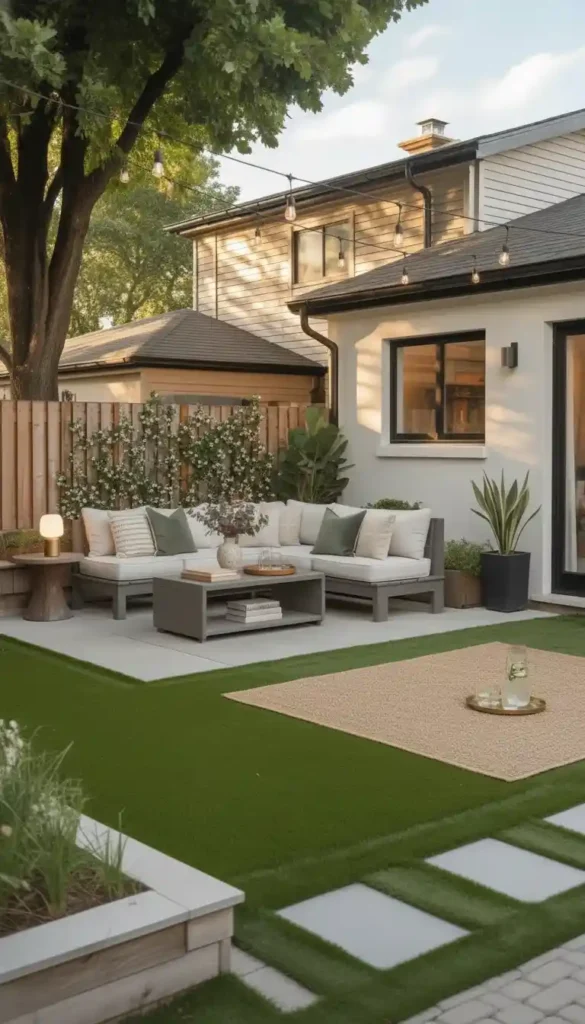
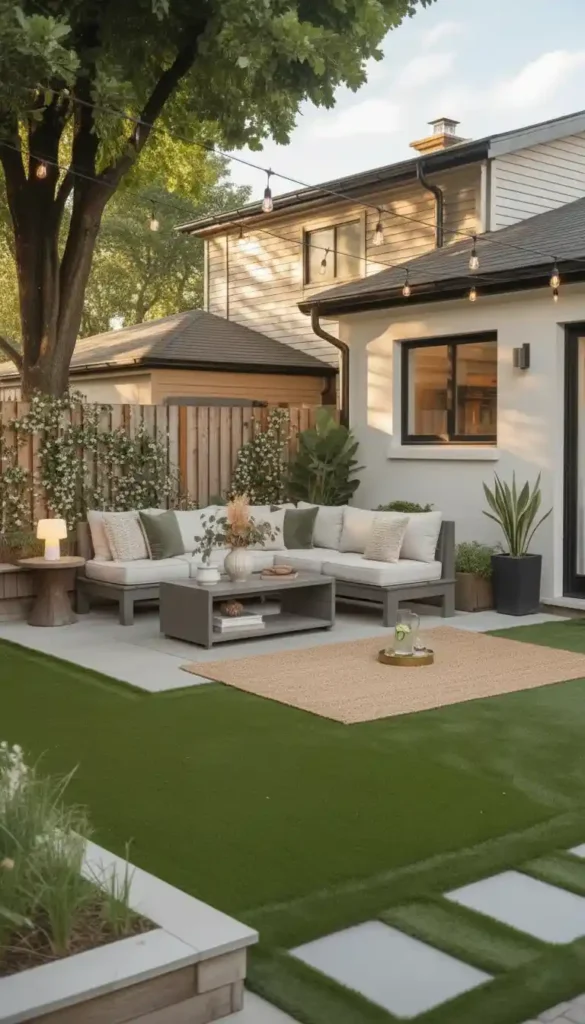
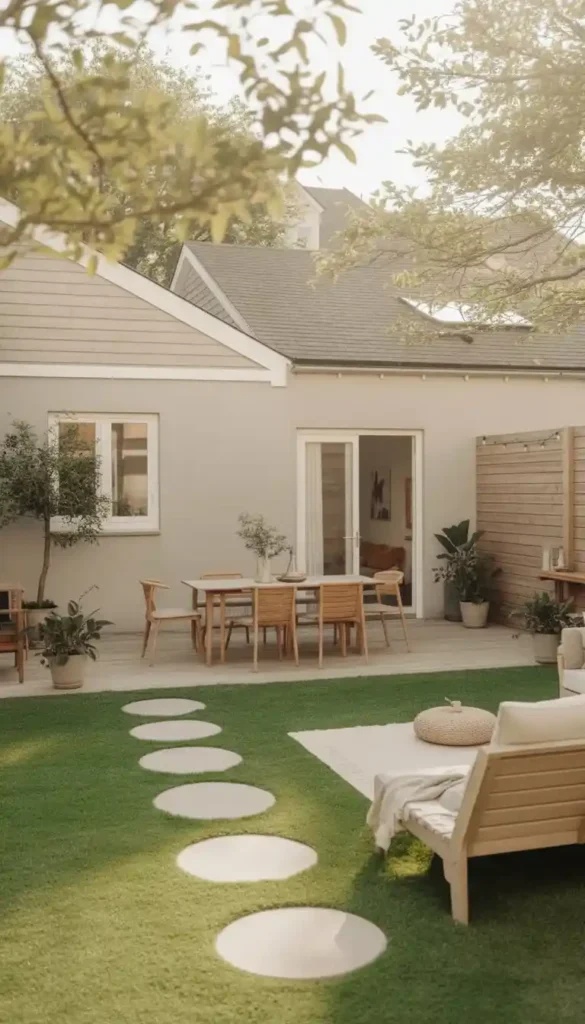
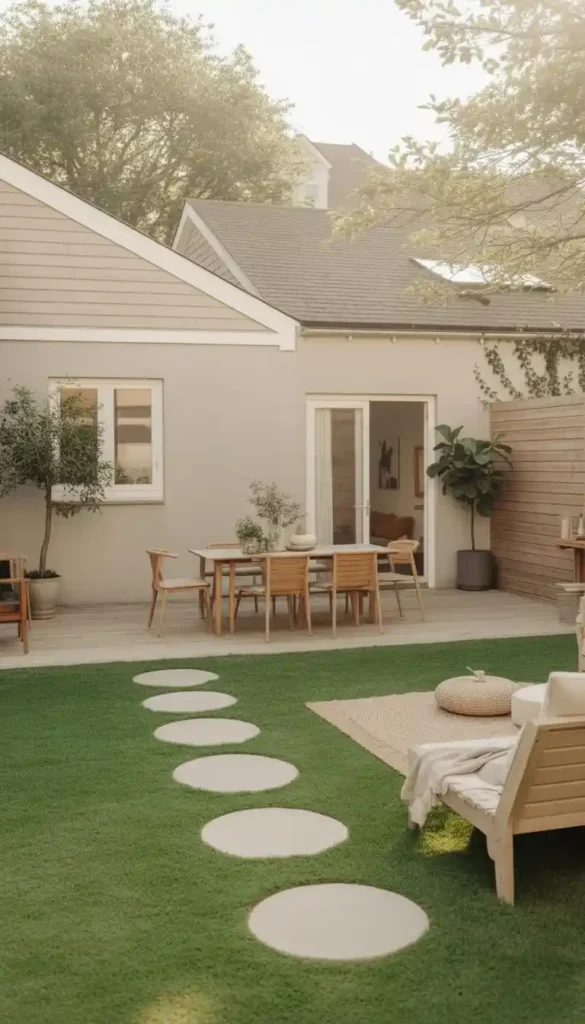
One of the most effective and low-cost ways to define movement in a modern family backyard is a stepping stone path. A simple grid — evenly spaced flat stones across a soft lawn — instantly creates structure without walls or fences.
- Choose neutral stone tones: grey, beige, or weathered concrete
- Space stones roughly 18 to 24 inches apart for natural stride
- Let grass fill the gaps for a soft, organic contrast
- Extend the path from the back door to the play zone to create flow
This works because it gives the eye a direction. Without it, a flat yard can feel undefined and unused. With it, even a modest yard feels intentional.
Choose Low-Profile Furniture With Neutral Cushions
Modern family outdoor furniture is not about bold statements. It is about calm, enduring comfort. Low-profile seating — think sectionals close to the ground, wide armchairs, or simple benches — makes a space feel relaxed rather than formal.
- Stick to neutral cushion colors: warm white, soft grey, sandy beige
- Choose weather-resistant fabric that does not require constant maintenance
- Avoid furniture that is too large for the space — it will overwhelm the layout
- Position seating to face the play zone so supervising kids feels effortless
Pin this family backyard layout strategy! 📌
Add Lighting Along Pathways and Fences
The best family backyards do not shut down when the sun goes down. Simple, low-voltage lighting along paths and fences extends usability into the evening by at least two to three hours.
- Solar stake lights along pathways are affordable and zero-maintenance
- String lights draped along a fence add warmth without hard wiring
- Low post lanterns near the seating area create a safe, cozy glow
- Avoid bright floodlights — they kill the atmosphere and disturb neighbors
Lighting is often the last thing families think about and the first thing they wish they had installed sooner.
Balance the Adult Space and the Kid Space
The most common mistake in family backyard design is letting one group dominate the yard. Either the kids take over with equipment and toys, or adults create a beautiful garden that children are constantly told not to touch.
A balanced layout gives each group their own territory — but positions them so they can always see each other.
- Place the seating corner near the house and the play area at the far end
- Use a line of low shrubs or a raised garden bed as a soft visual divider
- Keep sightlines open so parents can supervise from their seat without standing
- Leave open lawn between zones as breathing room — do not overfill
Why It Works
A modern family layout works because it removes daily friction. When the dining table is near the kitchen door, meals outside happen more often. When the play area is visible from the lounge chair, parents relax more fully. When the path is clear and the lighting is on, the whole family stays outside longer.
The goal is not a Pinterest-perfect yard. The goal is a yard your family actually lives in.
Save this modern family layout approach! 📌
Family Backyard Layout Ideas 2026
The most successful family backyards are not the most expensive ones. They are the most organized ones. When a yard has clear purpose and thoughtful flow, it invites use. When it is chaotic or unfinished, it stays empty. This section focuses on the practical combinations that make a backyard feel alive.
Place the Seating Area Opposite the Play Zone
One of the most reliable layout strategies for families is the opposite-end principle. The adult lounge area goes near the house. The play zone goes toward the back. The two anchor points create a natural flow across the entire yard.
- Adults have a direct sightline to the play zone from their seats
- Kids have space to run and be loud without disturbing the quiet corner
- The lawn between the two zones becomes a natural buffer — open enough for spontaneous games
- This layout works especially well for rectangular yards of any size
Without this separation, families tend to pile everything in one corner — and the yard feels smaller and messier than it actually is.
Use a Trampoline or Play Feature Strategically
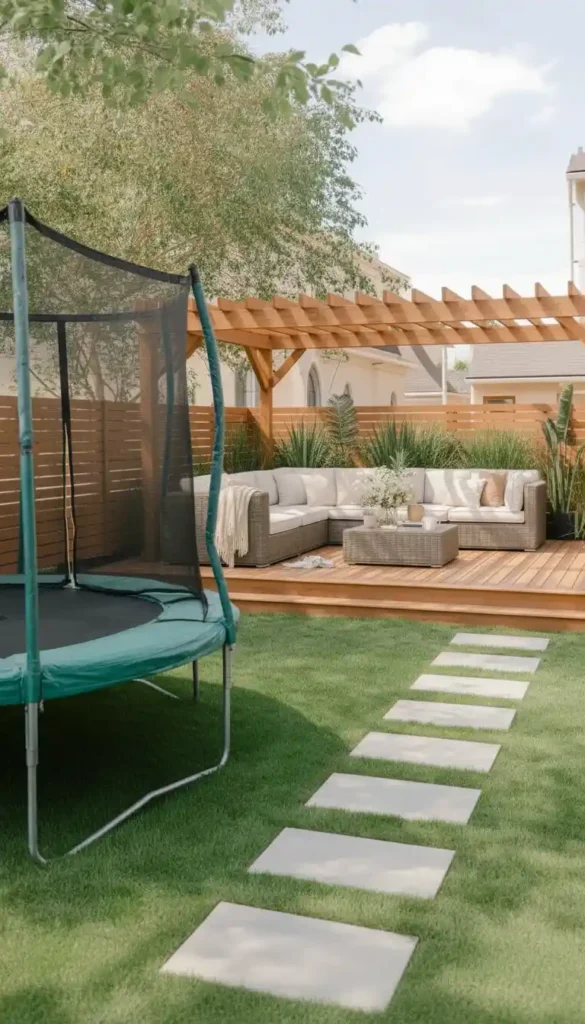
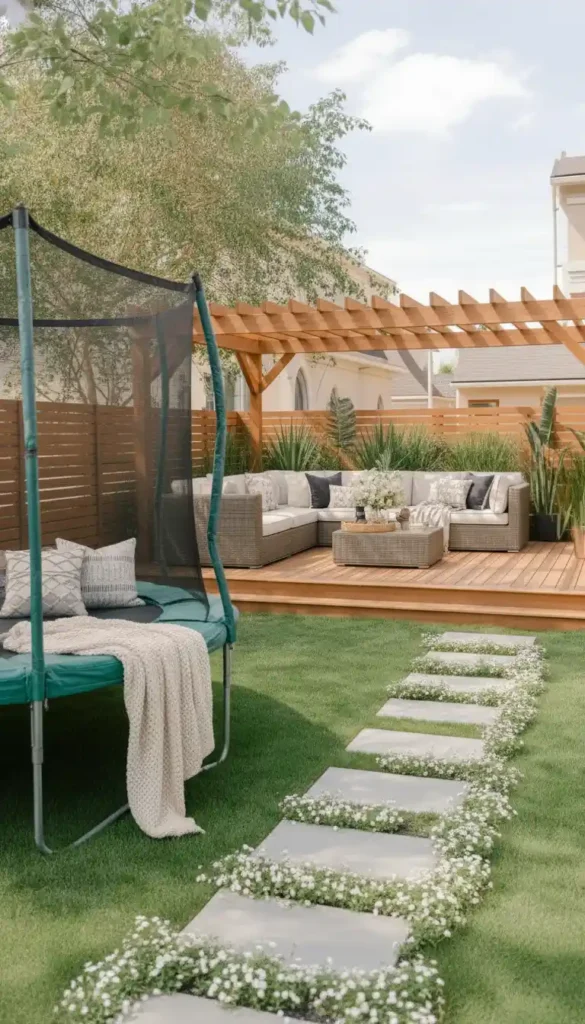
A trampoline is one of the most requested outdoor features for families with kids. But placement matters more than most people realize.
- Position it toward the back of the yard, not the center
- Keep at least three feet of clear space on all sides for safety
- Face it toward the house so adults can monitor use during play
- Use a model with a safety enclosure net to reduce supervision stress
A trampoline placed in the center of a yard dominates the entire visual space. Pushed to the back, it becomes a designated feature in the play zone — contained, purposeful, and far less visually overwhelming.
Layer Textures to Create Depth
A flat, single-surface yard feels incomplete no matter how much furniture you add. Layering different textures is what transforms a yard from a plain space into a genuinely engaging outdoor environment.
- Grass — soft, natural, and ideal for the play zone and open areas
- Stone or pavers — smooth, durable, perfect for the dining and seating area
- Wood decking — warm, inviting, and excellent near the house or around a seating nook
- Gravel — useful for borders, under seating, or around raised beds
Each surface serves a function. But together, they create a visual rhythm that guides movement and makes the yard feel thoughtfully designed.
Pin this texture layering guide! 📌
Keep Energy Contained Without Confinement
Families with young children often worry about chaos in the yard. The answer is not to restrict kids — it is to design zones that naturally contain energy without feeling like cages.
- A play structure or trampoline defines the activity zone without fencing it
- Low decorative borders or a change in ground material signals a zone boundary
- Open lawn in the middle invites movement but does not funnel it in one direction
- A simple garden border along the perimeter keeps kids from wandering too close to fences or property lines
The yard should feel free and fun, but with invisible structure that keeps things organized.
Why Cohesion Matters More Than Perfection
Many families wait until they can afford a “complete” backyard before doing anything. The result is years of unused space. A cohesive layout with modest materials always beats an incomplete layout with expensive ones.
- Start with your zones, paths, and sightlines
- Add materials and furniture gradually as budget allows
- Let the design grow with your family — it does not need to be finished to be functional
- Consistency in color and material choices creates cohesion even across purchases made years apart
Save this backyard layout flow strategy! 📌
Trends Shaping Family Backyard Layout Ideas in 2026
Every year brings shifts in how families think about outdoor space. But the best trends are not about what looks good in a magazine spread — they are about what actually makes life easier and more enjoyable. The 2026 trends shaping family backyard design all share one thing in common: they bring the comfort of indoors outside, without sacrificing durability or low maintenance.
The Outdoor Living Room Is Now the Standard
The biggest shift in family backyard design over the past few years is the complete integration of indoor comfort with outdoor space. What used to feel like a luxury — plush outdoor sofas, side tables, rugs, and lamps — is now widely accessible and increasingly expected.
- Outdoor sectionals with deep-seat cushions create true living room comfort
- Weatherproof rugs define the seating zone the same way they would inside
- Side tables and coffee tables make the space feel complete rather than transitional
- This trend works because it blurs the line between home and yard — making both feel larger
When a family feels as comfortable outside as they do in the living room, they spend dramatically more time in the yard.
Durable, Low-Maintenance Materials Are Non-Negotiable
Families do not have time for high-maintenance outdoor surfaces. The 2026 trend strongly favors materials that look great with minimal upkeep.
- Composite decking — resists rot, splinters, and fading without annual sealing
- Porcelain pavers — nearly indestructible, frost-resistant, and easy to clean
- Powder-coated aluminum furniture — rust-proof, lightweight, and long-lasting
- Synthetic turf — in high-traffic play areas, it eliminates muddy patches and stays green year-round
The goal is to stop spending weekends maintaining the yard and start spending them enjoying it.
Pin this 2026 backyard trends guide! 📌
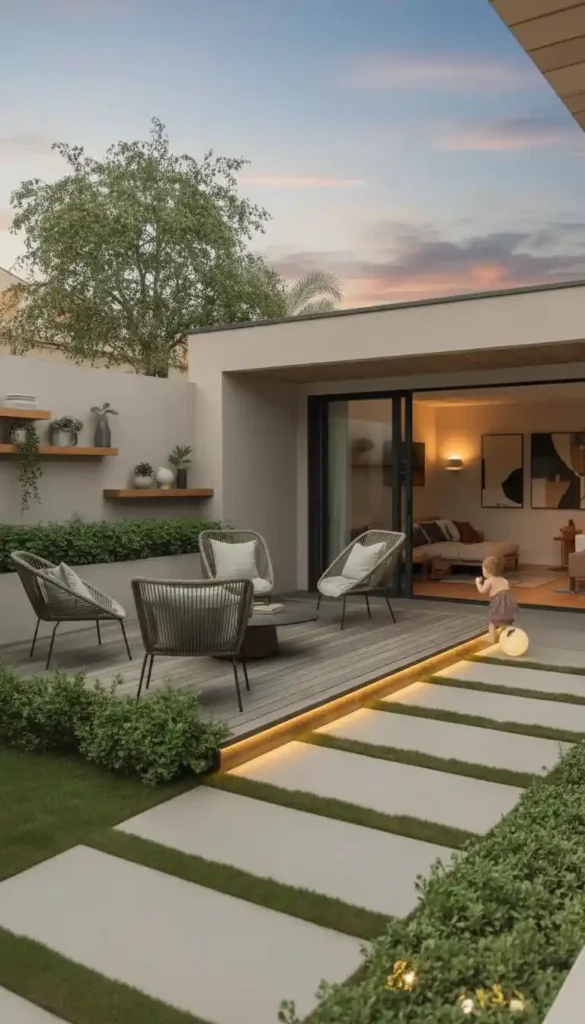
Layered Lighting Is a Must-Have
Lighting is no longer an afterthought in family backyard design. In 2026, layered lighting systems — combining ambient, task, and accent layers — are considered essential for usable evening spaces.
- Ambient lighting: String lights or overhead pendants that illuminate the whole seating zone
- Task lighting: Focused light near the dining table for evening meals
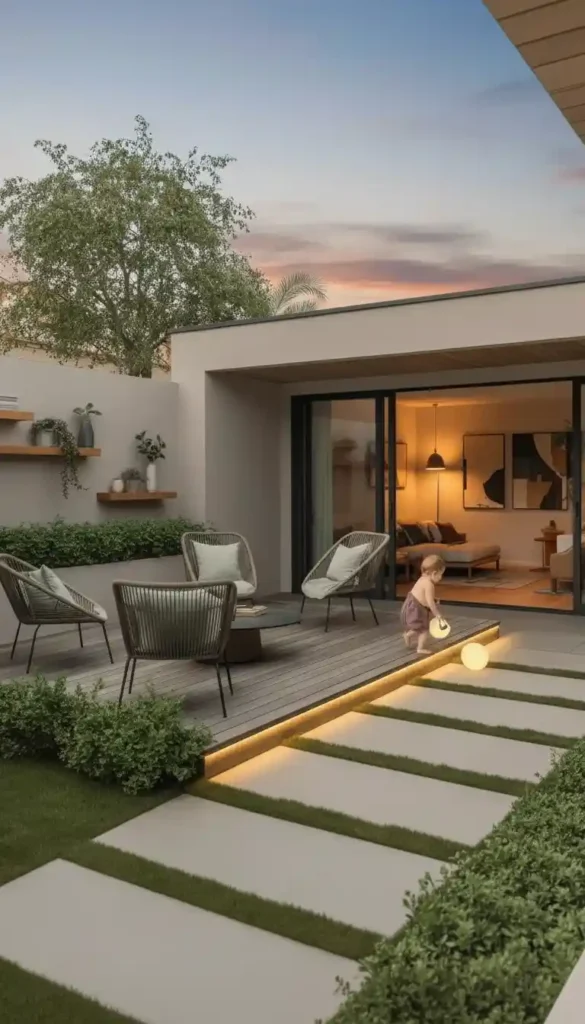
- Accent lighting: Ground-level LED strips along paths, steps, or raised beds
- Play zone lighting: Motion-activated path lights that keep kids safe after dusk
A yard with layered lighting stays in use two to three hours longer each day. That is a significant quality-of-life upgrade for busy families.
Multi-Use Zones That Adapt Over Time
Families change. A yard designed for toddlers will need to evolve as children grow. The smartest 2026 layouts are built with adaptability in mind.
- Leave open lawn that can become a garden bed, a fire pit area, or a teen hangout later
- Choose modular furniture that can be rearranged as needs shift
- Design the dining zone large enough to double as a party space or casual game table area
- Avoid permanent structures in zone transition areas — keep them flexible
This approach makes the backyard a long-term investment rather than a seasonal setup that feels outdated in three years.
Biophilic Design — Nature as a Design Element
One of the strongest emerging trends in 2026 is biophilic design: weaving natural elements deliberately into the yard rather than treating them as background.
- Tall ornamental grasses as natural dividers between zones
- A water feature — even a simple bowl fountain — that adds calming sound
- Raised garden beds integrated into the seating area so greenery is always present
- Climbing plants on trellises or fences to add vertical life without using floor space
Nature does not just make the yard more beautiful. Research consistently shows that exposure to natural elements reduces stress, improves mood, and increases time spent outdoors.
Save this 2026 outdoor design trend guide! 📌
Planning a Functional Family Backyard Layout
Planning is where most families go wrong. They start by buying furniture or plants before they have thought through how the space will actually work. A functional family backyard layout starts with habits, not aesthetics. When you design around how your family actually lives, every decision becomes easier.
Begin With Your Daily Habits, Not a Mood Board
Before sketching anything or shopping for anything, spend one week observing how your family interacts with the yard.
- When do you go outside — morning, evening, or both?
- Do your kids play near the house or prefer the far end of the yard?
- Do you eat outside regularly or only on special occasions?
- Is shade a priority, or do you prefer sun?
The answers to these questions determine where each zone should go — far more reliably than any design trend or inspiration image.
Place the Dining Zone Closest to the House
The number-one functional mistake in family backyard design is placing the dining area too far from the kitchen door. Every extra step between the kitchen and the table means fewer meals eaten outside.
- The dining table should be within ten to fifteen feet of the back door
- A direct paved path from door to table makes outdoor dining feel effortless
- A small prep station or outdoor cart near the table reduces kitchen trips
- Shade over the dining zone — from a pergola, umbrella, or tree — makes summer meals comfortable
When outdoor dining is easy, families do it more. It becomes a daily habit rather than a weekend special occasion.
Pin this functional layout planning guide! 📌
Connect Every Zone With a Clear Path
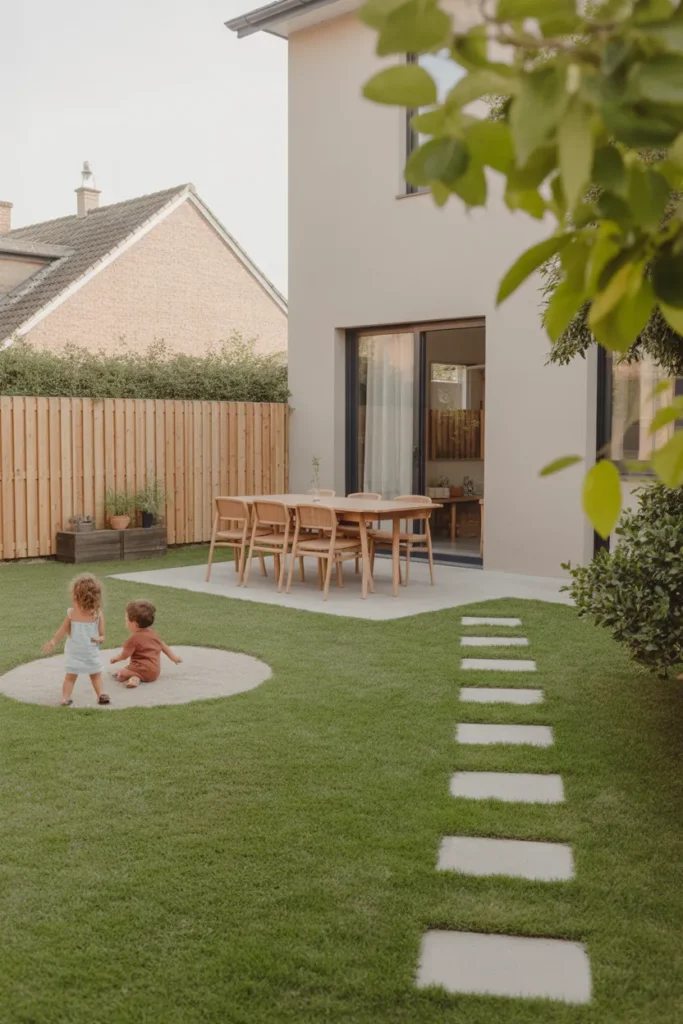
A backyard without clear paths feels like a yard without rooms. Paths are not just practical — they are visual connectors that make a layout feel intentional and complete.
- A single main path from the back door to the play zone creates clear structure
- Branch paths from the main route lead to secondary zones: the garden, the fire pit, the seating corner
- Use consistent materials for all paths to create visual cohesion
- Keep paths at least 36 inches wide for comfortable two-person movement
Even a simple gravel or stone path transforms an open yard into a navigable, organized space.
Size Each Zone Appropriately
One of the most common planning errors is making zones too small. Undersized zones feel cramped and are less likely to get used.
- Dining area: Allow at least 10 by 12 feet for a table that seats four to six
- Seating area: A comfortable lounge zone needs at least 12 by 14 feet for a sectional and coffee table
- Play zone: For children up to age ten, a minimum of 15 by 20 feet gives enough room for active play
- Pathways: Never less than 36 inches; 48 inches feels generous and comfortable
When in doubt, go slightly larger. You can always add plants or furniture to fill space. You cannot expand a zone that is already too small.
Use Borders to Define Without Walling Off
Hard fencing between zones in a family yard creates separation that feels institutional. Soft borders — plants, low hedges, raised beds, or material changes — define zones without creating barriers.
- A row of low boxwood hedges signals a zone boundary without blocking sightlines
- A raised garden bed along one edge of the dining zone provides both beauty and definition
- A change from lawn to gravel immediately signals a shift from one area to another
- Tall ornamental grasses work as a soft screen between the adult lounge and the play zone
These borders are especially important for maintaining sightlines so parents can always see kids from wherever they are sitting.
Why Small Yards Benefit Most From Intentional Planning
Families with small backyards often assume they cannot achieve a well-designed layout. The opposite is true. Small yards benefit more from intentional zone planning because every square foot needs to earn its place.
- Compact furniture proportioned to the space — avoid oversized pieces
- Vertical elements: trellises, tall planters, climbing plants add visual height without footprint
- Multi-use surfaces: a low retaining wall doubles as extra seating
- Keep clutter off the ground — store toys, tools, and equipment in a dedicated shed or storage bench
Save this small yard layout planning guide! 📌
Family Backyard Layout Plans for Everyday Living
The real measure of a great family backyard is not how it looks on the first day. It is how it holds up on the hundredth day. Everyday living is messy, unpredictable, and high-traffic. A layout designed for daily life prioritizes accessibility, durability, and comfort without constant rearranging or maintenance.
Design for the Day You Are Most Tired
Here is a test for every design decision: would you still use this space on the most exhausting day of your week?
- A dining table that requires pulling out and unfolding chairs every time? Probably not.
- A seating area that requires re-cushioning after every rain? Unlikely.
- A path that becomes muddy after rain? Avoided entirely.
Design the everyday layout for your lowest-energy days. If it works then, it works always.
Make the Dining Table a Natural Gathering Place
The outdoor dining table is the single most relationship-building piece of furniture in a family backyard. When it is positioned well and made comfortable, families gather around it naturally — for meals, homework, games, and conversation.
- Position it under a shade structure — pergola, umbrella, or mature tree
- Choose a table large enough for your family plus two additional guests
- Use weather-resistant cushions on chairs so sitting is comfortable for extended periods
- Add a small outdoor light above or beside the table for evening use
A well-placed dining table does more for family connection than almost any other backyard feature.
Pin this everyday family layout guide! 📌
Create a Dedicated Relaxation Corner
Beyond the dining area, every family backyard benefits from a quieter, more intimate relaxation corner — a spot that invites you to sit, breathe, and stay awhile.
- A small loveseat or two armchairs angled toward each other create conversation space
- A side table between seats holds drinks and books without requiring anyone to stand
- Surround the corner with tall plants or a trellis for a gentle sense of enclosure
- A small outdoor lantern or candle holder makes evening sitting feel intentional
This corner is where parents decompress while kids play. It is where conversations happen. It is the most underrated zone in a family backyard — and the one families wish they had prioritized sooner.
Use Durable Surfaces Everywhere Traffic Is High
The highest-traffic areas of any family backyard take serious wear over time. Designing for durability in these spots saves money and frustration in the long run.
- Entry path from the house: Use stone, concrete, or pavers — never bare earth or mulch in this location
- Under the dining table: Pavers, composite decking, or a weatherproof outdoor rug on a solid base
- Play zone ground cover: Rubber mulch, synthetic turf, or soft play bark — not regular grass, which will not survive heavy use
- Around seating: Gravel, stone, or decking — surfaces that drain quickly and do not require mowing
High-traffic surfaces are not the place to save money. Durable choices here reduce the total cost of ownership significantly.
Keep Walkways Clear and Accessible
Clear walkways sound obvious — but they are one of the first things that disappear as families accumulate outdoor toys, sports equipment, and gardening tools.
- Establish a storage rule from day one: nothing lives permanently on a walkway
- Install a storage bench near the back door for frequently used outdoor items
- Use a shed or deck box in the play zone for toys and sports equipment
- Keep the main path from door to dining table and door to play zone clear at all times
Clear pathways keep the yard feeling open and spacious, even on days when it is busy with activity.
The Long-Term Investment Mindset
The most important shift a family can make in backyard planning is to stop thinking of it as a one-time project and start thinking of it as an evolving investment.
- A well-designed zone layout will serve your family for ten or more years with minor adjustments
- Quality materials — composite, porcelain, aluminum — reduce replacement costs significantly
- Flexible, multi-use zones adapt as children grow and family needs change
- Plants mature and improve over time, making the yard more beautiful every year at no additional cost
Save this everyday family backyard living guide! 📌
The families who get the most from their backyards are not the ones who spent the most. They are the ones who planned the most carefully from the start.
Conclusion
Your backyard is not a luxury — it is an extension of your home and your family’s life together. Every summer evening spent inside because the yard felt unusable, every meal eaten indoors because the outdoor space was not set up right — those are small losses that add up over years.
You do not need a perfect yard. You need a purposeful one. Start with your zones. Create your path. Add comfort where your family actually sits. These five layout ideas give you a framework that works in real life — not just in photos. Your backyard is waiting. The only thing left is to begin.

“I share simple, beautiful and affordable home decor ideas to help you style every corner of your home with ease.