

The question I hear most often isn’t about trends or Instagram-worthy spaces. It’s simpler and more honest: “How do I make my living room feel luxurious without filling it with delicate, impractical objects?” People want to know where to invest their money wisely—which purchases will actually elevate their space versus which ones will just collect dust. The answer lies in creating functional luxury through intentional, well-thought-out choices that prioritize both beauty and livability.
Classy living room design isn’t about following rigid rules or creating overly formal spaces. Whether you’re drawn to modern minimalism, cozy elegance, or even French country charm adapted for city apartments, the principles remain the same: quality over quantity, function over decoration, and restraint over excess. Simple changes like upgrading your lighting or selecting premium materials can transform an ordinary room into a sophisticated retreat. These aren’t just cosmetic improvements—they’re strategic investments that change how you experience your space every single day.
In this guide, I’ll walk you through five distinct approaches to classy living room design for 2026. Each section focuses on specific elements that matter most—from foundational color palettes and furniture selection to lighting strategies and finishing touches. You’ll discover exactly where to allocate your budget, which details make the biggest impact, and how to create a space that feels complete, curated, and genuinely yours. This isn’t about perfection
Classy Living Room Ideas 2026: Defining Timeless Interior Design
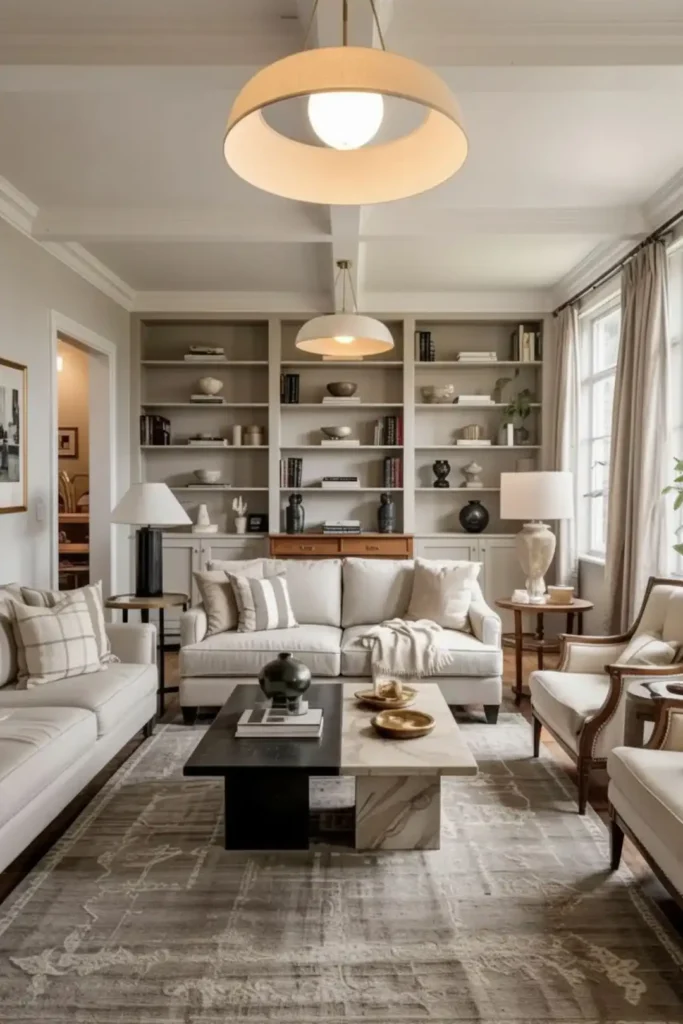
Timeless design isn’t about following trends—it’s about creating a foundation that works for decades. The secret lies in neutral palettes, classic furniture shapes, and carefully chosen accents that add personality without overwhelming the space.
This approach gives you flexibility to evolve your room over time without major overhauls.
The Foundation: Neutral Color Palettes
Start with colors that create calm rather than compete for attention.
Best base colors:
- Soft off-whites for walls and larger furniture
- Warm beige for upholstery and textiles
- Light gray for accent pieces
- Medium-toned woods for tables and storage
These shades work in any home—from city apartments to suburban houses. They let natural light and architectural features shine.
Add depth with black metal fixtures, stone surfaces, or marble accents. This prevents the room from looking flat while maintaining sophistication.
Classic Furniture With Clean Lines
Choose pieces based on shape and proportion, not trends.
Essential furniture elements:
- Tailored-back sofa with clean silhouette
- Two armchairs with slender arms for conversation areas
- Rectangular coffee table in wood or stone
- Low media console with minimal hardware
- Tall bookcase or glass-door cabinet for display
Each piece should serve a clear purpose. No filler furniture.
The key is restraint—quality over quantity always wins in timeless design.
The Grounding Element: Area Rugs
A large wool or wool-blend rug anchors your entire seating area.
It should extend well beyond the furniture footprint to visually ground the space. This adds warmth to hard flooring and creates acoustic cushioning.
Choose neutral tones or subtle patterns that won’t compete with other elements. The rug becomes your foundation—literally and visually.
Pin this timeless foundation approach! 📌
Finishing Touches That Matter
Details complete the look without cluttering the space.
Key finishing elements:
- Floor-length linen curtains that brush the floor
- Mix of ceramic and glass vases in varying heights
- Framed artwork or photographs (curated, not crowded)
- Natural greenery at different heights
These elements add personality while maintaining the clean aesthetic. Each item should earn its place in the room.
Layered Lighting Strategy
Different light sources create flexibility and mood throughout the day.
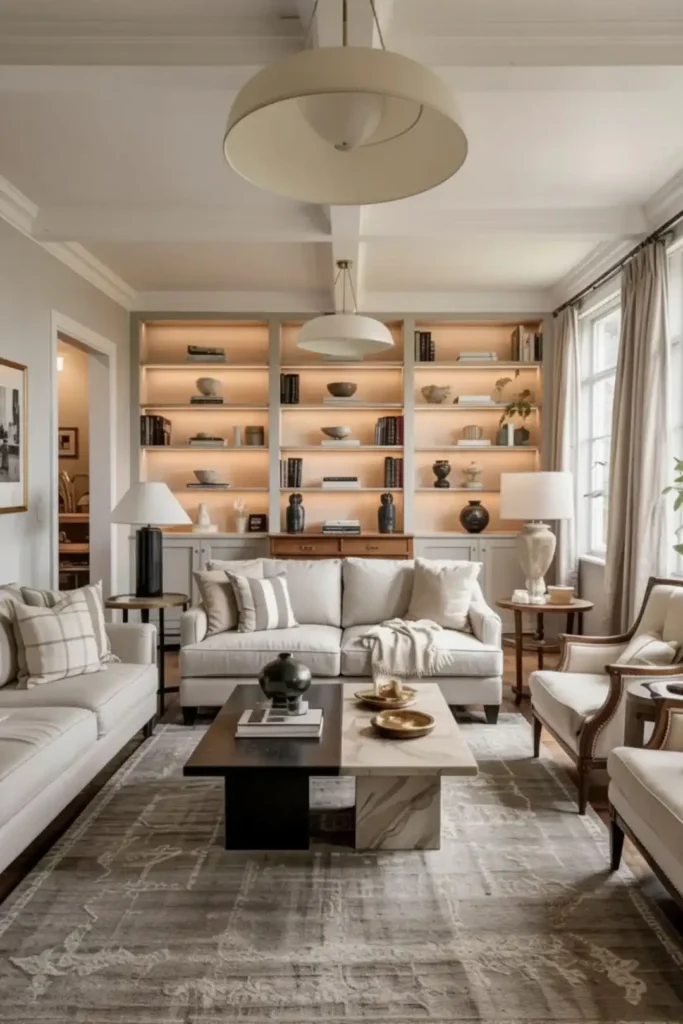
Install a floor lamp beside reading chairs, table lamps on side tables, and a chandelier or pendant for ambient lighting. This multi-layer approach ensures the room looks equally good day and night.
Why it works: You can adjust the atmosphere with a simple switch, moving from bright and energizing to soft and cozy.
Dimmer switches are essential—they give you complete control over ambiance.
The Investment Piece Philosophy
Spend money on large items that last, then personalize with accessories.
This is the approach recommended by interior design magazines like Architectural Digest and House Beautiful. It creates rooms that evolve gradually instead of requiring complete overhauls every few years.
Smart investment priorities:
- High-quality sofa with durable frame
- Solid wood or stone coffee table
- One heirloom-quality armchair
- Custom-framed artwork
These pieces provide the backbone. Swap pillows, throws, and small decor seasonally to keep things fresh.
Building Your Personal Archive
A timeless room becomes more meaningful over time.
With a neutral palette, you can easily add travel souvenirs, family photos, or new art without visual overload. The space develops layers of personal history.
Even minor changes—new pillow covers or a different lamp—feel significant in this context.
Save this timeless design strategy! 📌
The One Thing Everyone Overlooks
Most people forget about lighting variety when planning timeless spaces.
You need multiple sources at different heights—floor lamps, table lamps, overhead fixtures. This creates depth and dimension that makes the room feel professionally designed.
Budget permitting, include one truly special statement piece. An heirloom chair or custom artwork adds permanence and narrative weight.
Modern Classy Living Room Ideas For A Contemporary Touch
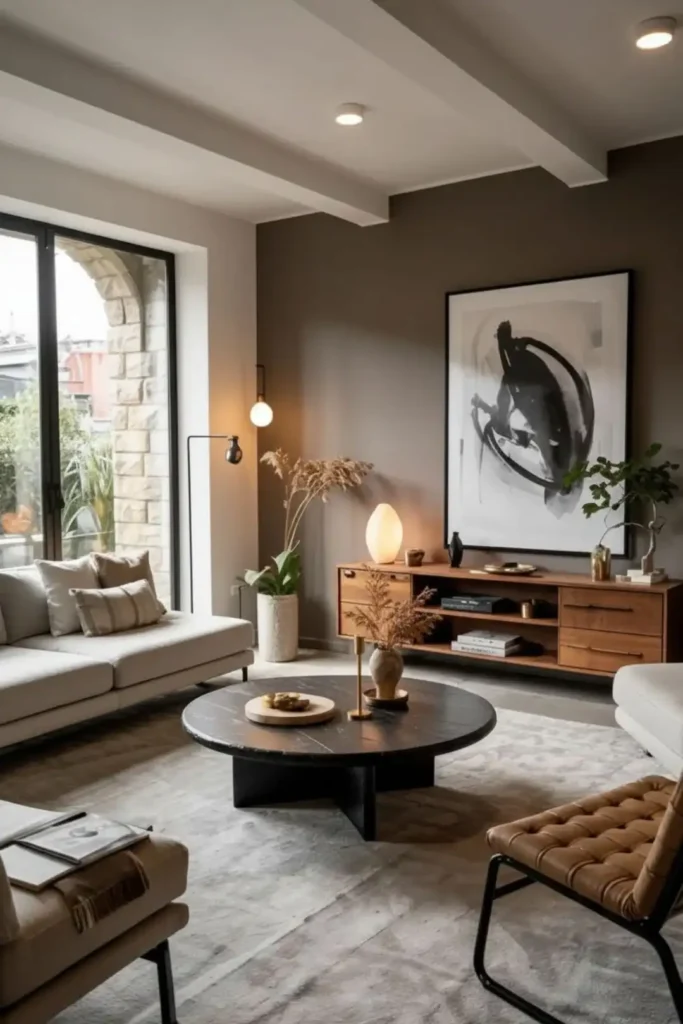
Modern classy design simplifies shapes while adding strategic contrast. The goal is sophistication without stuffiness—rooms that feel current but won’t look dated in five years.
By 2026, expect warm neutrals with darker accents instead of stark black-and-white schemes.
Low-Profile Furniture Foundations
Start with streamlined pieces that emphasize horizontal lines.
Modern furniture essentials:
- Low-profile sofa with uncomplicated geometry
- Round or oval coffee table to soften angular spaces
- Slim-leg media console with smooth fronts
- One sculptural accent chair in organic form
These pieces create clean sightlines throughout the room. They’re easy to read visually but maintain poise and elegance.
Avoid heavy ornamentation. Simple profiles work harder in modern spaces.
Strategic Use of Darker Accents
Light walls remain the foundation, but accent walls add depth.
A darker wall behind the TV or sofa anchors the room and conceals visual clutter. Consider charcoal, deep brown, or muted navy—colors that add richness without oppression.
This approach creates subtle drama while keeping the space feeling open and airy.
Why it works: The contrast gives your eye a focal point without overwhelming the room’s overall lightness.
Material Mixing for Visual Interest
Combine different textures to prevent the space from feeling flat.
Effective material combinations:
- Stone or fluted wood coffee tables
- Brushed brass, blackened steel, or bronze metal fixtures
- Solid textiles with one or two discreet patterns
- Matte finishes balanced with subtle sheen
The mix should feel cohesive, not chaotic. Stick to a limited material palette and repeat elements throughout the room.
Pin this modern material strategy! 📌
The Power of Negative Space
Empty space is just as important as filled space in modern design.
Designers featured in Elle Decor consistently emphasize this principle. Keep generous space between furniture pieces—don’t feel compelled to fill every corner.
Benefits of negative space:
- Makes rooms appear more refined and luxurious
- Prevents spaces from feeling cramped
- Creates visual breathing room
- Allows each piece to stand out
This is especially critical in smaller living rooms where crowded arrangements quickly feel dated.
Art as Architecture
Large-scale abstract art supports the modern aesthetic without overwhelming walls.
Choose pieces in a restricted color palette that echoes your room’s tones. One substantial artwork makes more impact than multiple small pieces.
Position art deliberately—centered above the sofa or console, hung at proper eye level. Let the piece breathe with adequate surrounding space.
Smart Technology Integration
Modern living means integrating technology without visual disruption.
Seamless tech solutions:
- Slim-frame TVs that display art when not in use
- Effective cord management systems
- Built-in speakers instead of standalone units
- Charging stations concealed in furniture
Technology should enhance modern life without detracting from the aesthetic. Keep wires hidden and devices minimal.
Sculptural Lighting Elements
Modern fixtures serve as functional art pieces.
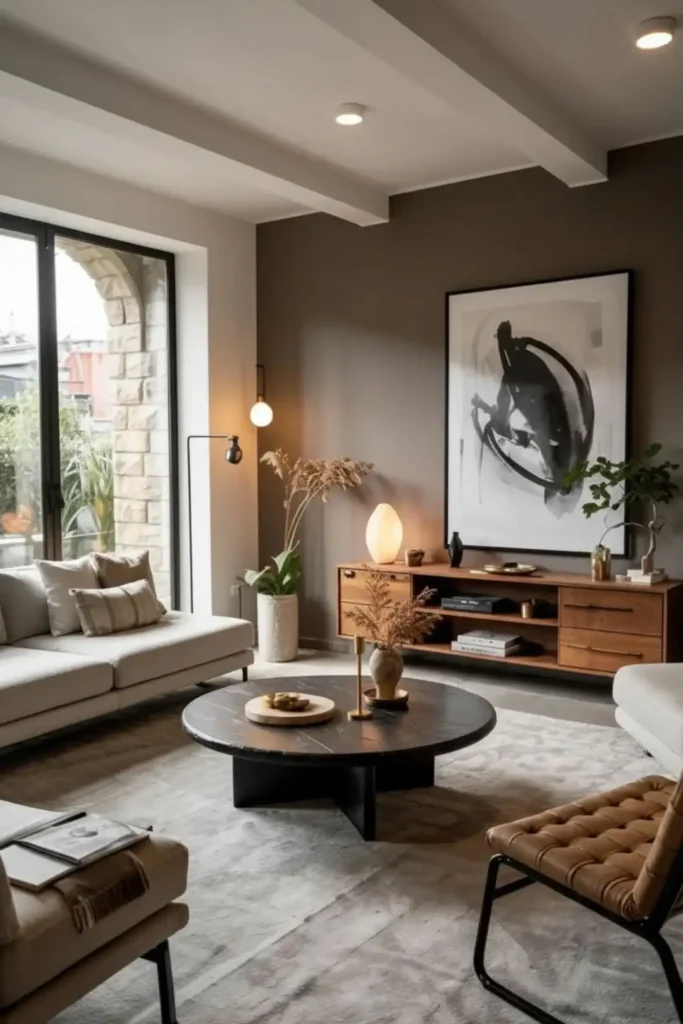
Choose lamps and pendants with interesting geometric shapes or organic forms. Brushed brass and blackened steel finishes feel current without being trendy.
Position lighting strategically to highlight architectural features and create pools of ambient light.
Save this contemporary lighting approach! 📌
Shelving and Surface Strategy
Apply the negative space principle to horizontal surfaces too.
A few larger, purposeful accessories look more modern than numerous small trinkets. Group items in odd numbers at varying heights for visual interest.
Surface styling rules:
- Three items maximum per surface
- Vary heights and shapes
- Leave at least 40% of surface empty
- Choose sculptural over decorative
This edited approach instantly elevates the sophistication level of any modern space.
Cozy And Classy Living Room Ideas That Feel Inviting
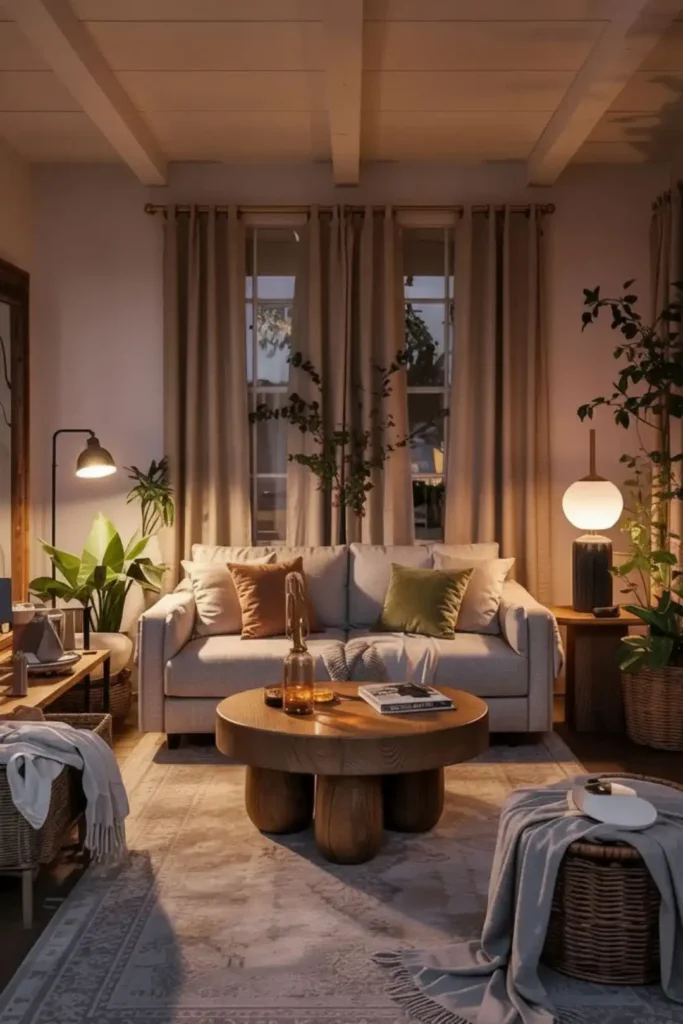
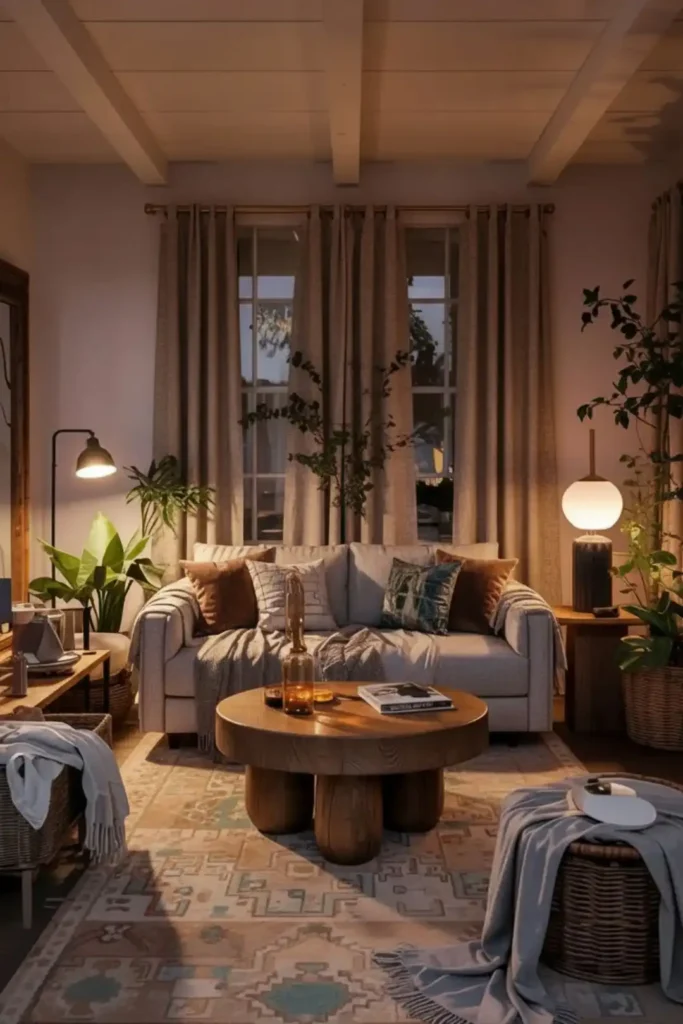
Creating a cozy yet classy living room means prioritizing softness and warmth over rigid structure. You want a space that invites relaxation but still looks pulled-together for unexpected guests.
The secret lies in layering textures while maintaining an edited aesthetic.
Deep-Seated Comfort Foundation
Start with furniture that encourages people to sink in and stay.
Comfortable seating essentials:
- Deep-seated sofa with plush cushions
- Chaise or swivel chairs for flexible conversation areas
- Upholstered ottomans as footstools or extra seating
- Rounded edges on furniture for safety and approachability
Choose pieces in warm neutrals—caramel, latte, mushroom—paired with creamy whites and soft grays. This creates an enveloping effect that feels immediately welcoming.
Function matters as much as form in cozy spaces.
Texture Layering Strategy
Texture is what makes a room feel warm in sensory terms, not just visually.
Essential texture layers:
- Plush area rug (wool or high-quality synthetic blend)
- Mix of linen, cotton, and velvet pillows
- One or two throw blankets within easy reach
- Soft window treatments in natural fabrics
Combine these in complementary shades rather than matching exactly. The variation adds depth while maintaining cohesion.
Physical comfort translates directly to visual coziness.
Floor-Up Design Approach
Build warmth from the ground upward for maximum impact.
Start with that plush area rug to provide acoustic cushioning and instant softness underfoot. This becomes your foundation for all other design decisions.
Layer furniture on top strategically—ensure rug extends beyond all seating pieces. Add floor pillows or poufs for additional flexible seating options.
Pin this cozy layering technique! 📌
Storage That Maintains Prestige
Cozy doesn’t mean cluttered—smart storage keeps things classy.
Hidden storage solutions:
- Closed sideboards for concealing everyday items
- Decorative baskets under consoles or side tables
- Ottoman storage for blankets and magazines
- Media consoles with doors, not open shelving
This allows high utilization rates while maintaining a curated appearance. Everything has a home, but that home isn’t always visible.
The Edited Surface Philosophy
Designer Nate Berkus teaches that cozy rooms don’t need to be dark or cluttered.
Keep surfaces edited and selective. Display only meaningful objects—framed family photos, favorite candles, a single ceramic bowl.
Surface display rules:
- Choose quality over quantity
- Group items in odd numbers
- Vary heights for visual interest
- Leave breathing room between objects
This approach makes the room feel lived-in without looking messy.
Strategic Greenery Placement
Plants add life and coziness at every scale.
Effective plant placement:
- One tall floor plant in an empty corner
- Medium plants on side tables or shelves
- Small potted succulents on coffee table
- Hanging plants near windows
Greenery suits nearly every color palette and purifies air unobtrusively. It’s one of the easiest ways to make a space feel more alive and welcoming.
Real plants work best, but high-quality faux options work in low-light areas.
Dimmable Lighting Essentials
Adjustable lighting is non-negotiable for cozy spaces.
Install dimmer switches on every light source—overhead fixtures, floor lamps, table lamps. This gives you complete control over ambiance throughout the day.
Lighting for coziness:
- Warm bulb temperatures (2700K-3000K)
- Multiple low-level sources instead of one bright overhead
- Floor lamps beside reading chairs
- Table lamps on side tables and consoles
Evening lighting should create pools of warm glow, not uniform brightness.
Save this cozy lighting strategy! 📌
Textured Wall Treatments
Add depth without pattern through thoughtful wall treatments.
Subtle texture options:
- Vertical wood paneling painted to match walls
- Limewash finish for soft variation
- Grasscloth wallpaper in neutral tones
- Shiplap or board-and-batten in matte finish
These reflect light differently than flat paint, creating a cocooning effect especially at night. They add architectural interest without busy patterns.
The Reading Nook Addition
Complete the cozy factor with a dedicated reading corner.
Place a comfortable chair near a window with a floor lamp and small side table. Add a soft throw and you’ve created an instant retreat within your living room.
This functional addition makes the space feel more intentional and welcoming—a signal that the room is designed for actual living, not just display.
Luxe Classy Living Room Ideas For A Sophisticated Home
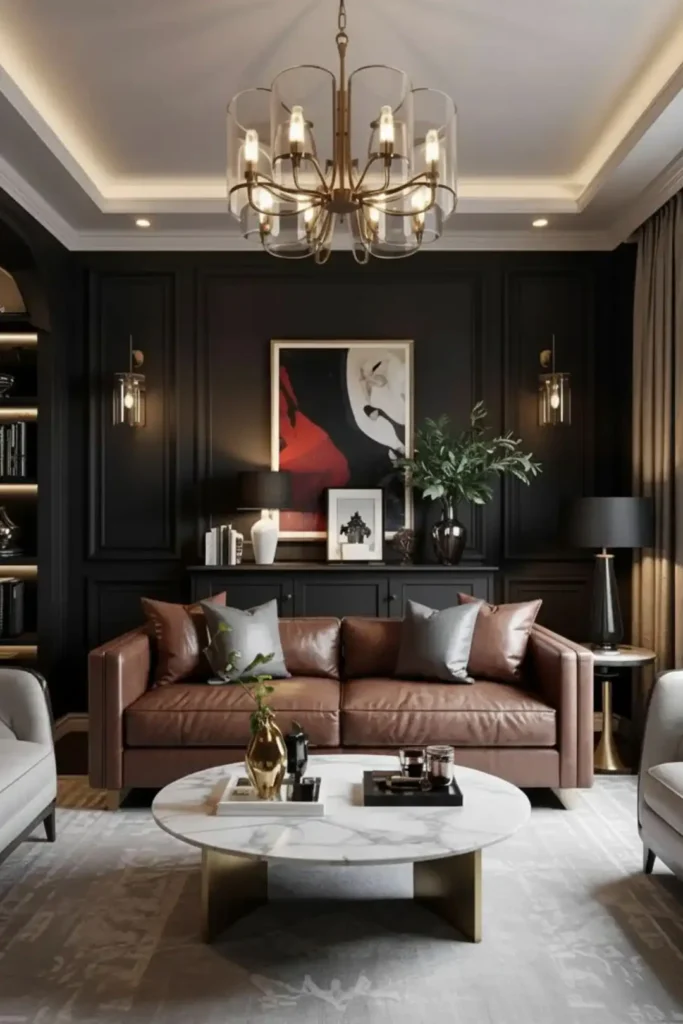
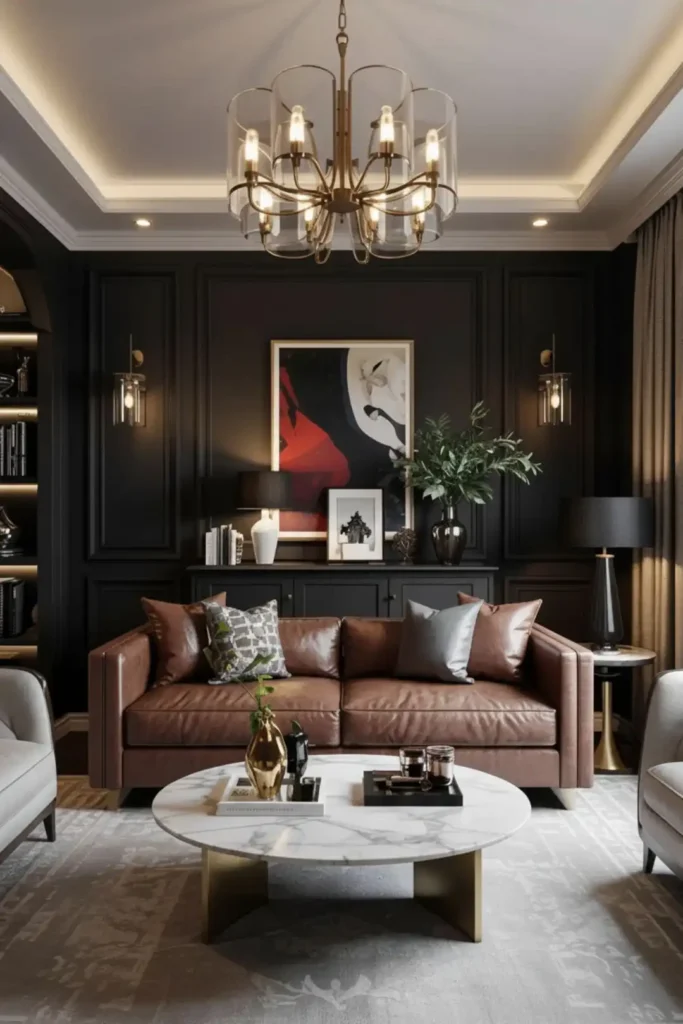
Luxe design focuses on opulent materials and dramatic light-shadow interplay. The goal is silent elegance that suggests confidence rather than shouting for attention.
Start with deeper, richer colors balanced by reflective materials to prevent heaviness.
Rich Color Foundation
Move beyond basic neutrals to colors with depth and presence.
Luxurious color choices:
- Espresso brown for grounding weight
- Charcoal for sophisticated drama
- Deep olive for organic richness
- Ink blue for moody elegance
Use these on feature walls, cabinetry, or upholstery. One prominent dark element immediately elevates the luxury quotient.
Balance dark tones with light, reflective materials—satin-finish stone, subtly veined marble, or glass surfaces. This prevents the room from feeling oppressive.
Premium Furniture Selection
Choose pieces with substance and balanced proportions.
Luxury furniture essentials:
- Boucle or velvet sofa with slim metal legs
- Marble or stone coffee table with thin metal base
- Sculptural side tables in varying shapes
- Upholstered armchairs with refined silhouettes
The contrast between plush textiles and refined metal creates elegant tension. Each piece should feel substantial but not bulky.
Look for furniture with interesting details—fluted legs, subtle tufting, unique shapes—without excessive ornamentation.
Layered Window Treatments
Windows deserve special attention in luxe spaces.
Sophisticated window dressing:
- Sheer curtain foundation for privacy and light diffusion
- Heavier outer curtains in rich fabrics
- Floor-to-ceiling installation for height emphasis
- Motorized options for convenience and clean lines
This layering enhances acoustic properties while providing flexibility for light control. It’s a detail that instantly signals luxury.
Choose fabrics that puddle slightly on the floor for maximum elegance.
Pin this luxe material approach! 📌
Strategic Metallic Accents
Metals add refinement when used thoughtfully throughout the space.
Effective metallic integration:
- Brass or bronze lighting fixtures
- Crystal or glass decorative elements
- Metal-framed mirrors or artwork
- Sculptural metal accessories
Stick to one or two metal finishes maximum. Mixing too many reads as chaotic rather than luxurious.
Position metallic elements to catch and reflect light—this creates the sparkle factor associated with high-end spaces.
Statement Lighting Design
Lighting creates luxury as much as furniture does.
Studio McGee emphasizes mixing ambient, task, and accent lighting for depth and dimension. This three-layer approach transforms rooms from flat to cinematic.
Luxury lighting layers:
- Statement chandelier or pendant as focal point
- Two or more table lamps at different heights
- At least one floor lamp for reading or ambiance
- Picture lights over artwork or LED strips in shelving
Install dimmers on every source. The ability to adjust lighting creates that luxurious evening atmosphere.
Custom-Looking Elements
Personalized touches signal true luxury.
High-end customization ideas:
- IKEA cabinets upgraded with custom fronts and molding
- Oversized artwork matted and framed to exact specifications
- Custom-sized rugs that fit your room perfectly
- Built-in shelving with integrated lighting
These elements make the room feel designed for the specific space, not assembled from generic pieces.
Budget-friendly hack: Many “custom” looks are actually clever upgrades to affordable bases.
Save this luxury customization strategy! 📌
Vintage and Antique Integration
One antique piece adds instant history and sophistication.
Effective antique additions:
- Vintage side table with patina
- Antique decorative box or tray
- Heritage mirror with aged frame
- Recovered antique chair reupholstered in modern fabric
This creates contrast with contemporary pieces and suggests collected-over-time rather than bought-all-at-once. It’s the difference between looking expensive and looking genuinely luxurious.
The Details That Elevate
Small elements often separate good luxury design from exceptional.
Finishing luxury touches:
- Upgraded switch plates and outlet covers
- High-quality door hardware matching metal finishes
- Concealed charging stations
- Fresh flowers or greenery in sculptural vessels
These might seem minor, but they’re what people notice subconsciously. They signal that every detail received attention—the hallmark of true luxury.
Elegant Living Room Decor Ideas With Classy Luxury Accents
Elegant decor focuses on restraint and harmony over quantity. The secret is choosing fewer, better pieces that instantly convey quality rather than filling every surface with small decorations.
This approach creates serenity with definite purpose—the essence of classy elegance.
The Power of Sculptural Accessories
Start with statement pieces rather than collections of small items.
Impactful decorative elements:
- One large ceramic vase with interesting form
- Oversized bowl filled with books or decorative spheres
- Single substantial sculpture on coffee table
- Architectural plant stand with dramatic greenery
These pieces draw the eye without cluttering the space. Each one serves as functional art.
Replace multiple small accessories with one well-chosen larger piece for instant elegance upgrade.
Intelligent Surface Mixing
Combine matte and glossy finishes strategically for visual interest.
Effective finish combinations:
- Low-sheen wall paint as foundation
- Matte wood flooring for warmth
- Textured carpet for softness
- Polished stone or ceramic lamps for shine
- Lacquered trays for accent surfaces
This creates subtle variation that prevents the room from reading as flat. The eye appreciates the texture changes even if the brain doesn’t consciously register them.
Keep the majority matte with strategic glossy accents—not the reverse.
Neutral Metal Finishes
Elegant spaces favor understated metal tones over bright ones.
Sophisticated metal choices:
- Brushed brass for warm elegance
- Aged bronze for historical reference
- Gentle nickel for cool sophistication
- Blackened steel for modern edge
Avoid shiny chrome or bright gold. The patina and subtlety of aged or brushed finishes reads as more refined.
Consistency matters—use the same finish family throughout the space.
Pin this elegant finishing strategy! 📌
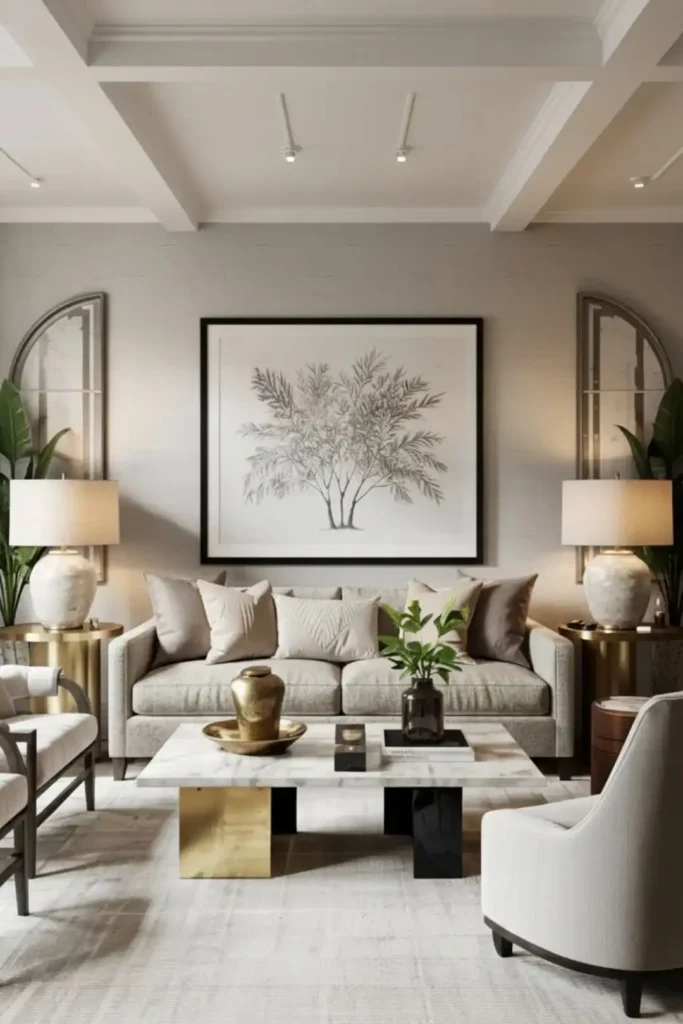
Fabric Quality and Selection
Textiles immediately signal quality in elegant spaces.
Premium fabric choices:
- Linen for natural texture and drape
- Silk blends for subtle sheen
- Velvet in solid colors for depth
- Cotton-linen blends for durability with elegance
Choose solid colors or extremely subtle patterns. Let the fabric quality speak louder than the design.
Proper fit matters—curtains should puddle slightly, pillows should be properly filled, upholstery should be taut.
The Editing Philosophy
Designers featured in Veranda and Traditional Home practice aggressive editing.
Editing rules for elegance:
- Remove one or two items from every surface
- Keep only the most effective pieces
- Cluster objects in odd numbers
- Vary heights within groupings
- Avoid equal spacing—it reads as stiff
This styling technique makes rooms feel professionally designed without appearing untouchable.
Leave at least 50% of surface space empty. Negative space is your friend in elegant design.
Color Repetition Strategy
Create cohesion by echoing colors throughout the room.
Effective color linking:
- Artwork colors repeated in throw pillows
- Vase tone matching rug undertones
- Curtain fabric pulling accent wall shade
- Decorative objects reflecting furniture tones
This makes the decor feel intentional rather than arbitrary. It’s the difference between “collected” and “just placed.”
Use three colors maximum in accessories, repeating them at least twice each throughout the space.
Save this color cohesion technique! 📌
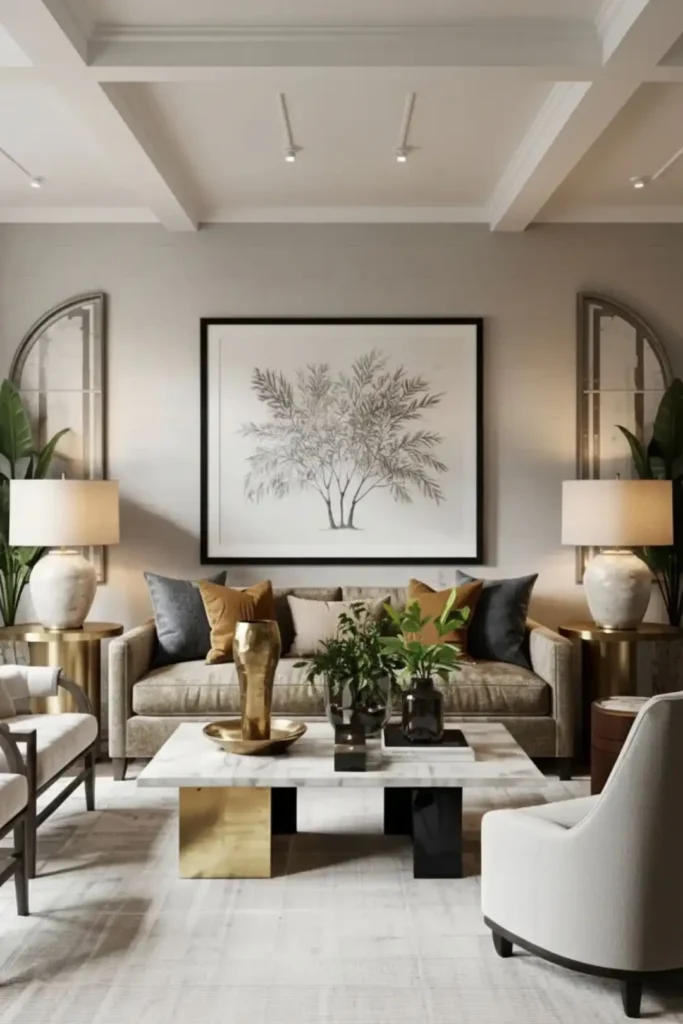
Overlooked Detail Upgrades
Small hardware updates create disproportionate elegance impact.
Detail upgrade priorities:
- Replace standard switch plates with metal versions
- Upgrade outlet covers to match metal finishes
- Install quality door hardware
- Add decorative curtain rods with substantial finials
These elements are typically ignored but subconsciously noticed. When they align with your metal finish scheme, the entire room feels more cohesive and considered.
The investment is minimal compared to the polish it adds.
Single Large Artwork Strategy
One substantial piece feels more expensive than multiple small ones.
Position a large canvas above the sofa or fireplace as a focal point. Choose artwork that’s 60-75% of the furniture width below it for proper proportion.
Why single large art works:
- Creates visual anchor without competition
- Feels more curated and intentional
- Eliminates gallery wall complexity
- Makes ceiling appear higher
This is especially effective in rooms with neutral palettes—the artwork becomes the statement without overwhelming.
Living Finishing Touch
Fresh greenery or flowers provide the culminating detail.
Display them in simple glass or ceramic vases that don’t compete with the arrangements. Change them seasonally or weekly to keep the room feeling alive and current.
Best elegant plant choices:
- Single stem flowers in bud vases
- Eucalyptus branches in tall vessels
- Fiddle leaf fig or similar architectural plants
- Simple green arrangements without busy filler
This living element makes all your luxury accents come to life. It’s the bridge between curated and lived-in—the essence of elegant design.

“I share simple, beautiful and affordable home decor ideas to help you style every corner of your home with ease.