

Your bedroom deserves more than just a place to sleep. It deserves a wooden bed that makes you pause at the doorway and smile, that feels like the best investment you’ve made all year. In 2026, wooden bed designs are moving away from trendy gimmicks and toward something deeper—warmth that lasts, craftsmanship you can see, and storage solutions that actually solve your real-life problems. Whether you’re drawn to the clean lines of modern minimalism or the rich textures of luxury interiors, the right wooden bed transforms your entire bedroom from a cluttered afterthought into a calm, intentional retreat.
I’ve spent years watching bedroom trends come and go, but wood never loses its power. The difference now? People want beds that work harder—with hidden storage, integrated lighting, and proportions that make small rooms feel spacious. They want designs that look incredible on day one and even better five years later. In this guide, I’m walking you through five proven directions that cover everything from statement pieces with character to simple frames that let you breathe. Each section gives you the exact framework to choose, style, and complete a bedroom that actually fits how you live.
Modern Wooden Bed Design Ideas For 2026 Bedrooms
Modern wooden beds in 2026 are all about intentional simplicity—clean lines that ground your room without overwhelming it. This isn’t cold minimalism; it’s warm, architectural design that makes your bedroom feel bigger, calmer, and more expensive than it actually is.
The secret lies in proportion and restraint. A low-profile platform bed with a wide perimeter frame creates visual weight at floor level, making the room feel anchored and thoughtful. Pair that with soft contrast—off-white walls, greige textiles, matte black hardware—and you have a space that feels modern without trying too hard.
Choose Your Wood Tone Strategically
Your wood choice sets the entire mood. In 2026, warm tones dominate because they make bedrooms feel inviting even when the design is minimal.
- Warm oak works beautifully in rooms with lots of natural light—it stays light without looking washed out
- Walnut adds instant sophistication and pairs perfectly with cooler gray walls
- Ash offers subtle grain patterns that create interest without demanding attention
- Match your lighting—cooler daylight suits lighter woods, warmer evening light flatters deeper tones
The key is keeping surrounding elements muted so the wood becomes the hero naturally.
The Low-Profile Platform Advantage
Platform beds changed the game because they eliminate the need for a box spring while creating that coveted “floating” aesthetic.
- Keeps sightlines low and open, making ceilings feel higher
- Creates clean horizontal lines that modern design loves
- Often includes hidden storage drawers without adding visual bulk
- Easier to make the bed—no gap between mattress and frame
A platform bed makes your room feel intentionally designed, not just furnished.
Streamlined Headboard Designs That Work
Your headboard should extend the bed’s presence without competing with it. In modern bedrooms, I see three winning approaches:
- Panel headboards—flat, wide, simple, perfect for rooms that need one strong focal point
- Slatted designs—horizontal or vertical slats that add texture while staying minimal
- Extended width—headboards that stretch beyond the mattress width create a custom, built-in look
All three keep the visual line clean while giving your pillows something substantial to rest against.
Pin this modern bed framework! 📌
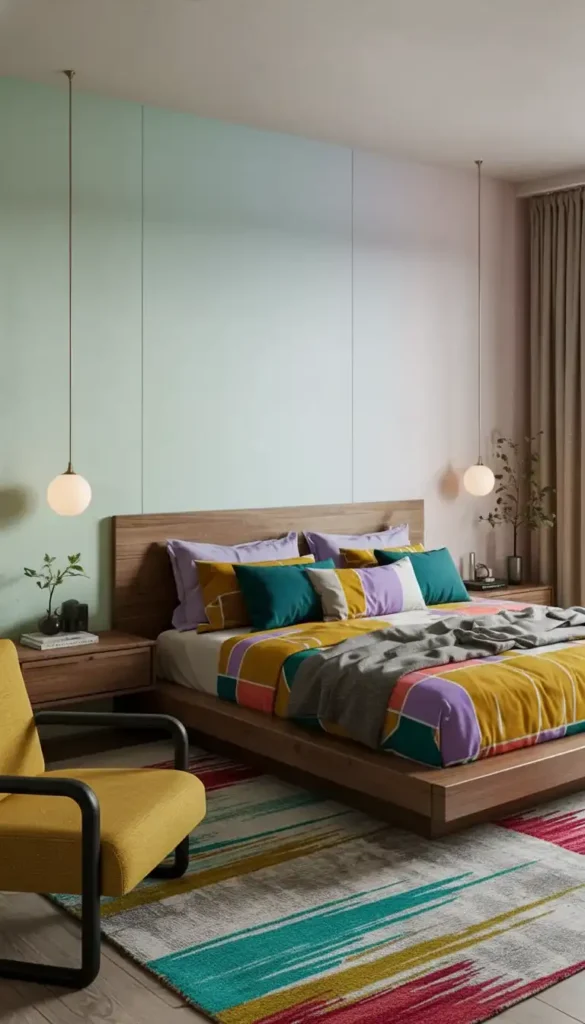
Floating Nightstands for Visual Space
Wall-mounted nightstands are one of the easiest ways to make a bedroom feel more spacious and modern.
- Keep floor visible, which tricks the eye into seeing more square footage
- Create perfect symmetry without bulky furniture breaking up the flow
- Allow for easy cleaning underneath—no dust bunnies hiding in corners
- Work especially well in smaller bedrooms where every inch of floor space counts
Choose nightstands with one drawer for essentials and keep the top clear except for a lamp and one small object.
Lighting That Flatters Wood Grain
Modern bedrooms need layered lighting, but it should feel seamless, not complicated.
At the ceiling:
- Keep fixtures minimal—a simple flush mount or recessed lighting
- Avoid ornate chandeliers that clash with clean bed lines
At bedside:
- Wall sconces at eye level save surface space and create symmetry
- Long linear pendants work beautifully above wider headboards
- Warm LED bulbs (2700K-3000K) make wood glow at night
The goal is functional light that also makes your wood choice look rich and intentional after dark.
Texture Mixing for Warmth
Even the most minimal modern bedroom needs texture to avoid feeling sterile. Wood is your base; now layer softness.
- Linen bedding adds casual elegance and pairs naturally with any wood tone
- Bouclé or wool throws introduce tactile interest without visual clutter
- Cotton quilts in neutral tones keep the palette calm while adding dimension
- Textured rugs that extend beyond the bed frame soften the entire space
US interior editors consistently recommend mixing at least two textures around wooden furniture—it’s the difference between “nice” and “finished.”
The Proportion Formula
Scale matters more than most people realize. Here’s the simple math:
- Measure your wall width behind the bed
- Choose a headboard that fills two-thirds to three-quarters of that width
- Keep nightstands narrower in smaller rooms (18-20 inches instead of 24-26 inches)
- Allow at least 24 inches of walking space on each side of the bed
When proportions are right, the room feels balanced without conscious effort.
Save this proportion guide! 📌
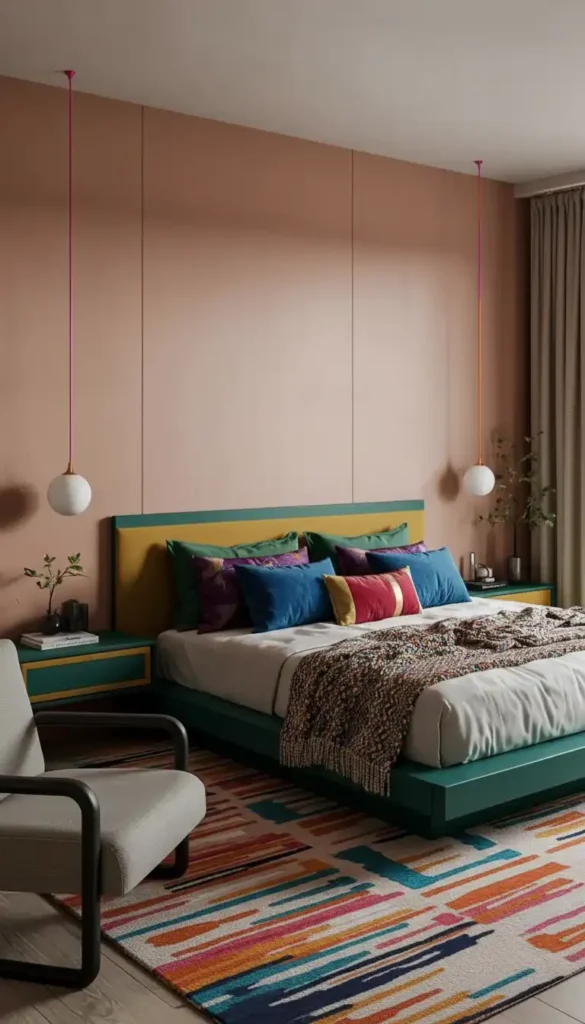
One Consistent Metal Finish
Modern design thrives on cohesion. Pick one metal finish and repeat it throughout the room.
- Matte black hardware on nightstand drawers, wardrobe handles, lamp bases
- Brushed brass for a warmer, slightly more luxe feel
- Aged bronze if you want modern with a subtle vintage edge
Mixing metals can work in other styles, but modern bedrooms look sharper with consistency.
Unique Wooden Bed Design Ideas That Define Character
Unique wooden beds make a statement without shouting. They’re the beds people remember—sculptural headboards, asymmetrical frames, visible grain patterns that turn wood into art. This is where craft meets personality.
The challenge is balancing boldness with livability. A statement bed needs breathing room. That means calmer walls, fewer competing focal points, and a furniture mix that supports rather than fights the bed’s presence.
Sculptural Headboards as Focal Points
When your headboard is the room’s artwork, everything else can relax.
- Curved designs soften angular rooms and add an organic, unexpected element
- Geometric patterns in wood create visual interest through shadow and dimension
- Asymmetrical shapes—one side taller than the other, or integrated shelving on one end
- Live edge wood brings raw, natural beauty that feels both rustic and contemporary
Choose one dramatic element and let it carry the room’s personality.
Visible Grain as Decoration
In unique beds, the wood itself becomes the design feature. Look for boards with strong grain patterns and natural variation.
- Quarter-sawn oak shows beautiful ray fleck patterns
- Burled walnut offers swirling, almost hypnotic grain
- Reclaimed wood brings history and character through weathered texture
- Book-matched panels create symmetrical patterns that feel intentional and custom
Let the natural variation do the decorative work so you don’t need to add much else.
Integrated Shelving for Function and Style
Taller headboards with built-in shelves replace extra furniture while looking purposeful.
- Keeps books, plants, and small objects within reach without needing nightstands
- Creates symmetry and balance through repeated shelf openings
- Works especially well in smaller bedrooms where floor space is precious
- Adds architectural interest through layered depth
This is where “unique” meets “actually useful.”
Pin this character-building approach! 📌
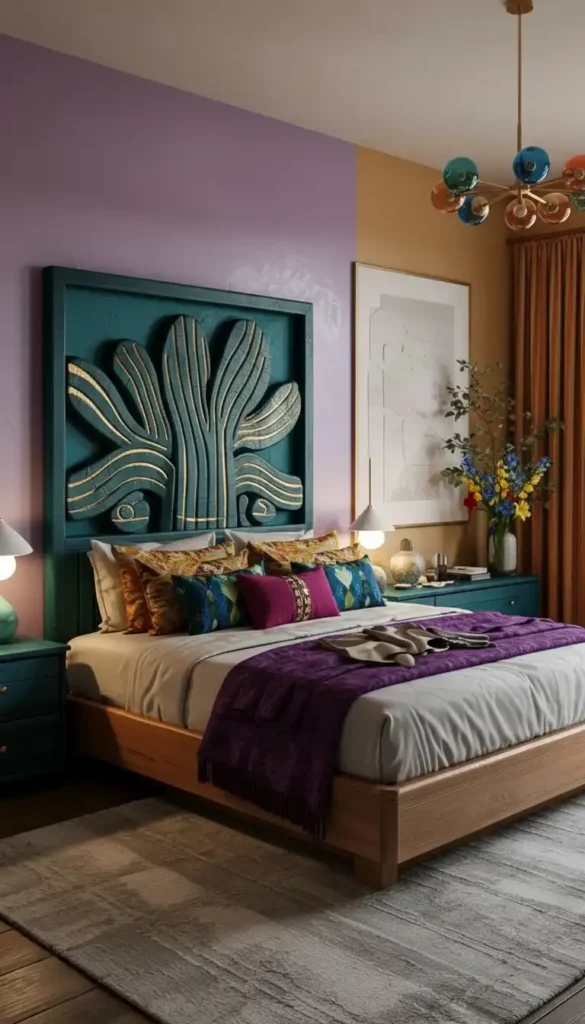
The One Brave Decision Rule
Character comes from one bold choice, not many scattered ones. Decide what makes your bed unique, then keep everything else quiet.
- If the headboard is sculptural, choose simple nightstands and minimal bedding
- If the frame has an unusual shape, select a flatter headboard
- If the wood grain is dramatic, avoid busy patterns in textiles
This focus makes the statement clear and prevents the room from feeling chaotic.
Supporting Furniture That Echoes
Bring in one piece that shares the bed’s personality without copying it.
- A curved dresser complements a bed with rounded edges
- A carved bench picks up on decorative headboard details
- A vintage-inspired nightstand bridges modern and unique beautifully
One echo is enough. More than that starts to feel themed.
Artwork Strategy for Statement Beds
When your bed is the focal point, wall art should support, not compete.
- Choose larger, simpler pieces over gallery walls
- Keep frames minimal or choose frameless canvas
- Select neutral or monochromatic art that doesn’t fight the wood tones
- Consider one large piece above the bed or flanking pieces on adjacent walls
The art should make the bed look better, not draw attention away from it.
Layered Textiles for Depth
Unique beds need texture to feel complete, not just visually interesting.
- Start with crisp, simple sheets—white, cream, or soft gray
- Add a textured blanket in linen, cotton waffle, or lightweight wool
- Finish with a wool or chunky knit throw draped casually at the foot
- Keep pillow count reasonable—four to six, not twelve
Each layer adds richness without competing with the bed’s design.
Mixing Old and New for Timelessness
US designers consistently recommend blending contemporary and classic elements for depth.
- Pair a modern sculptural bed with a vintage Persian rug
- Combine sleek wood frames with an antique-style upholstered chair
- Mix industrial metal lamps with organic, natural wood
This prevents “unique” from feeling trendy and helps the room age gracefully.
Save this unique bed strategy! 📌
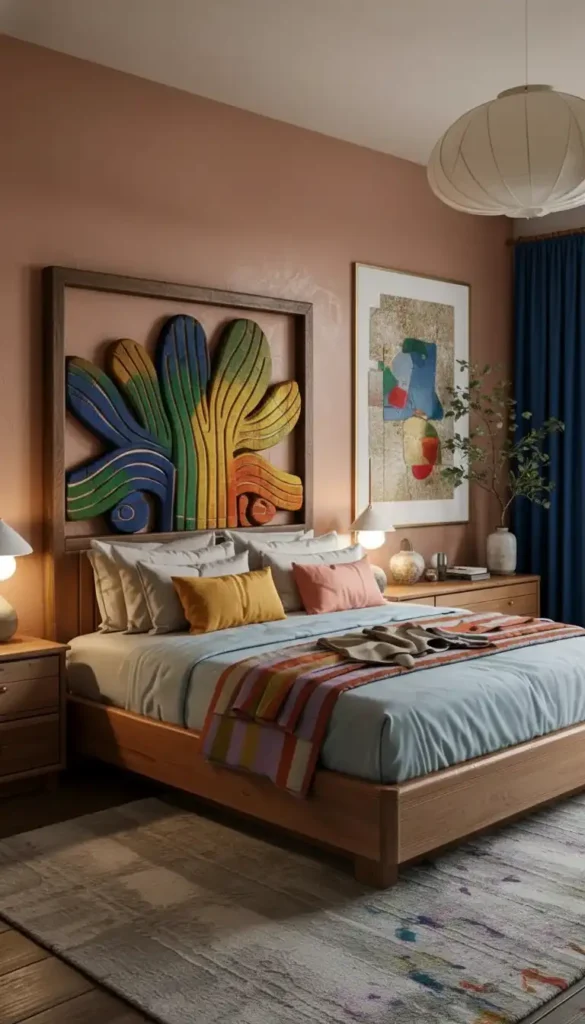
Simple Wooden Bed Design Ideas For Minimal Homes
Simple wooden beds prioritize calm, open space, and visual quiet. This is design that breathes—slim frames, modest headboards, and a restrained palette that makes tidying easier and rest more natural.
The beauty of simplicity is that it never competes with your life. The bed feels light in the room, the floor stays visible, and everything has a clear purpose. In 2026, minimal bedrooms are about comfort first, with style as a quiet, inevitable result.
Slim Frame Construction
Minimal beds avoid bulk by focusing on essential structure.
- Straight legs instead of thick platform bases keep the design light
- Narrow frame rails reduce visual weight while still supporting the mattress properly
- No footboard—this is critical because footboards shorten the space visually and interrupt sightlines
- Hidden hardware keeps the focus on clean lines, not joinery
The frame should almost disappear, letting the room feel larger than its dimensions.
The Floating Bed Effect
Creating the illusion of floating makes even small bedrooms feel more spacious.
- Choose beds with recessed legs set back from the frame edge
- Select platform designs with minimal side rails
- Consider under-bed LED strips for a true floating effect (subtle, not nightclub)
- Keep the area under the bed clear—no storage boxes breaking the illusion
When done right, the bed looks weightless and the room feels airy.
Modest Headboard Choices
Simple bedrooms need headboards that provide comfort without making statements.
- Low-profile panels—just tall enough to lean against while reading
- Thin wood slats in horizontal orientation for subtle texture
- Upholstered panels in neutral linen or cotton for softness
- Wall-mounted cushions instead of attached headboards for ultimate flexibility
The headboard should fade into the background while still being functional.
Pin this minimal bed framework! 📌
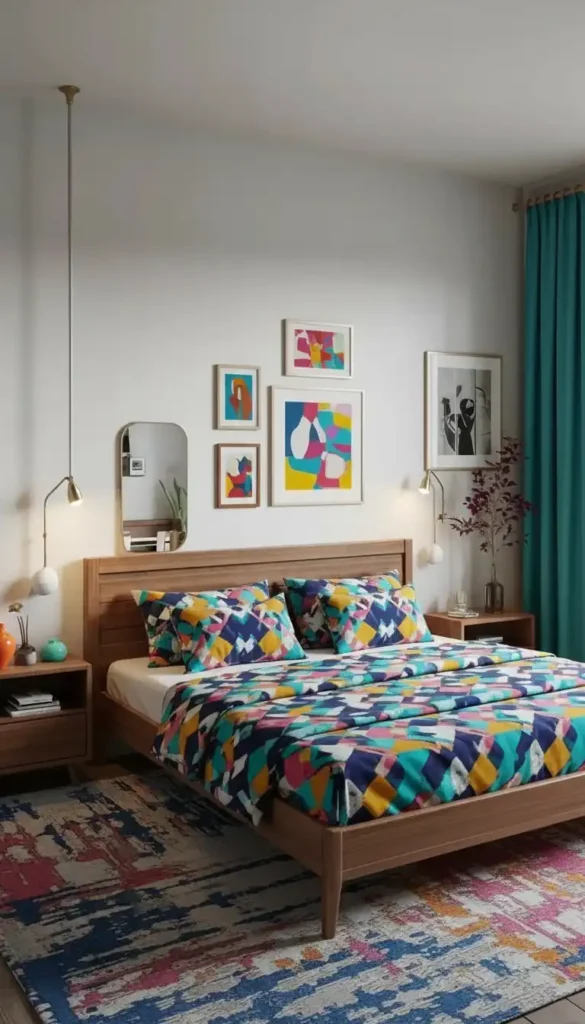
Clean Palette Strategy
Minimal bedrooms work because the color story is intentionally restricted.
- Soft white walls as the base
- Warm beige or greige textiles to prevent coldness
- Natural wood tone as the only “color”
- One or two black accents for grounding—a lamp base, picture frame, or handle
This restraint makes the room feel cohesive and effortless.
Small Nightstand Solutions
In minimal spaces, nightstands should be functional without dominating.
- Narrow shelves (12-15 inches deep) instead of full nightstands
- Small cubes that hold essentials without surface clutter
- Wall-mounted floating shelves that keep floors completely clear
- Built-in ledges attached to the headboard for ultimate space efficiency
Keep surfaces mostly empty—lamp, phone, water glass. That’s it.
Single-Piece Storage Approach
Instead of multiple furniture pieces crowding the room, choose one low dresser and one tall wardrobe.
- Low dressers keep sightlines open and can double as media consoles
- Tall wardrobes maximize vertical space without eating floor area
- This two-piece approach prevents the cluttered feeling that kills minimal design
The room stays open and easy to navigate.
Mirror Placement for Expansion
One large mirror strategically placed makes minimal bedrooms feel twice as large.
- Position opposite or adjacent to windows to bounce natural light
- Choose frameless or simple wood-framed mirrors that match the bed
- Lean floor mirrors against walls for a casual, minimal look
- Avoid ornate or heavily framed mirrors that fight the simple aesthetic
The mirror becomes functional art that serves the space visually and practically.
Textile Warmth Without Visual Noise
Minimal doesn’t mean uncomfortable. Textiles do the heavy lifting for warmth and coziness.
- Linen bedding in natural tones feels lived-in and relaxed
- Cotton quilts add dimension without pattern
- Simple area rugs in wool or cotton define the sleeping zone
- One plant with strong form (fiddle leaf fig, snake plant) adds life
These elements make the room feel human, not sterile.
Save this simplicity checklist! 📌
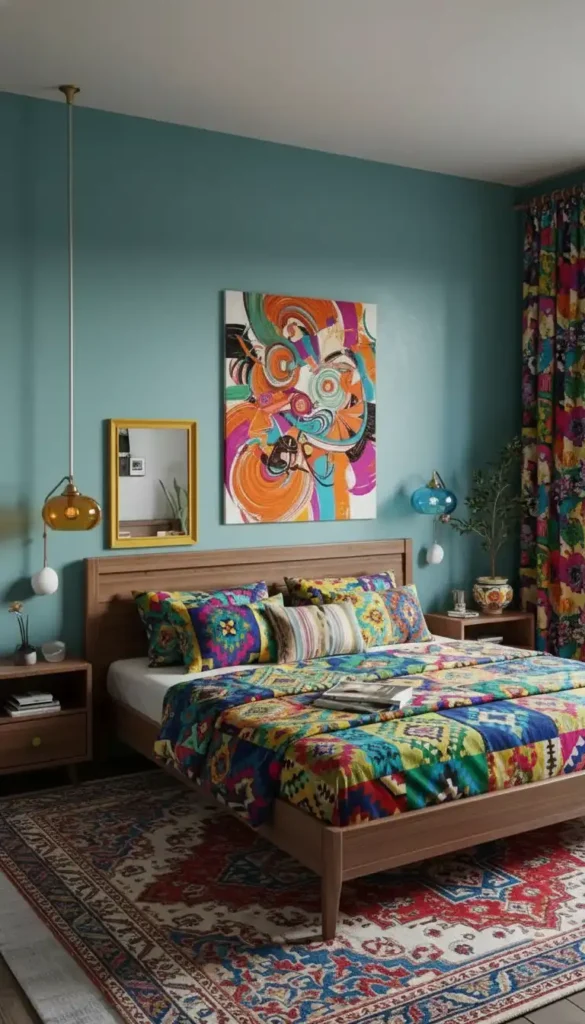
Wall-Mounted Lighting Freedom
Eliminating table lamps frees up nightstand space and reinforces the minimal look.
- Wall sconces at reading height eliminate the need for surface lamps
- Hard-wired options look cleaner, but plug-in sconces work too
- Choose adjustable arms for reading functionality
- Keep cord management clean with cable clips or in-wall routing
With lighting handled on the wall, nightstands can shrink or disappear entirely.
Repeat Wood Tone for Cohesion
Simple bedrooms feel more intentional when the wood tone repeats somewhere else.
- Picture frames in the same wood as the bed
- A small bench or stool at the foot of the bed
- Floating shelves that match the bed’s finish
- One decorative object in matching wood
This repetition creates subtle rhythm that makes the “simple” feel designed, not accidental.
Luxury Modern Wooden Bed Design Ideas For Premium Interiors
Luxury wooden beds are about presence, proportion, and perfection in the details. These are statement pieces with hotel-level layering, richer wood tones, and a curated approach where every element earns its place.
This isn’t about adding more—it’s about choosing better. Wider frames, substantial headboards, and integrated design elements that replace multiple furniture pieces. The room should feel like a private suite, not just a bedroom.
Rich Wood Selections
Luxury starts with premium materials. Wood choice signals quality immediately.
- Walnut—deep, rich grain with chocolate tones that photograph beautifully
- Smoked oak—contemporary and dramatic with gray-brown coloring
- Teak—warm, honey tones with natural oils that age gracefully
- Mahogany—classic luxury with reddish undertones and fine grain
These woods cost more, but they also look more expensive, which is exactly the point.
Substantial Headboard Proportions
Luxury beds need headboards that command attention through size and craftsmanship.
- Go taller than standard—60-70 inches from the floor creates drama
- Choose wider designs that extend beyond the mattress on both sides
- Consider panel designs with integrated side towers that replace nightstands
- Look for upholstered inserts within wood frames for textural richness
The headboard becomes architectural, not just functional.
Integrated Panel Systems
The most luxurious beds feel built-in, like custom millwork designed specifically for your room.
- Headboards that span the entire wall with built-in lighting
- Side panels with hidden storage and charging stations
- Continuous grain patterns across panels for seamless visual flow
- Consistent finish quality—no mismatched stains or grain direction
This level of integration makes the bed look exponentially more expensive.
Pin this luxury bed approach! 📌
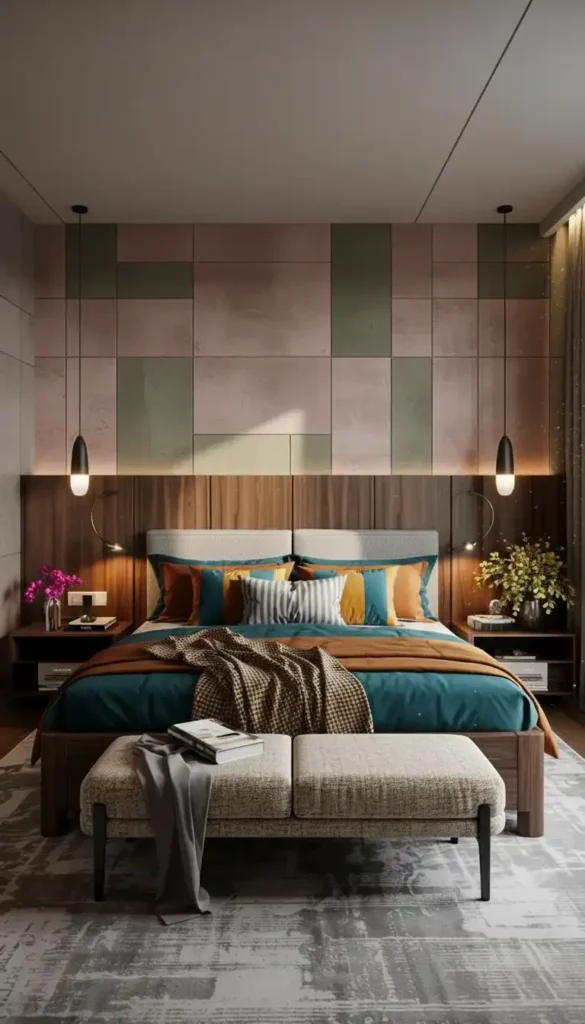
The Foot-of-Bed Bench
A bench at the foot of the bed is one of the most effective luxury signals.
- Leather brings masculine sophistication and ages beautifully
- Wool upholstery adds softness and works in any season
- Tufted designs reference classic luxury while staying contemporary
- Storage benches add function without sacrificing the refined look
Even if you rarely sit on it, it transforms the room’s visual balance.
Layered Lighting for Depth
Luxury bedrooms need three lighting layers minimum.
Ambient lighting:
- Recessed ceiling fixtures on dimmers
- Elegant flush mounts or low-profile chandeliers
Task lighting:
- Bedside sconces at reading height (60-65 inches from floor)
- Adjustable wall-mounted lamps for flexibility
Accent lighting:
- LED strips behind the headboard for soft backlighting
- Under-bed lighting for the floating effect
- Picture lights if artwork flanks the bed
This layering creates mood and makes the room feel professionally designed.
Premium Area Rug Strategy
A large, high-quality rug makes everything else look more expensive.
- Extend the rug well beyond the bed frame—at least 24-30 inches on sides and foot
- Choose natural materials: wool, silk blends, or high-quality cotton
- Keep patterns minimal or go solid to let the bed shine
- Layer a smaller, textured rug over a larger neutral base for depth
The rug creates a visual foundation that elevates the entire space.
Hidden Storage Integration
Luxury bedrooms should feel serene, which means hiding clutter brilliantly.
- Lift-up platforms that reveal storage under the mattress
- Drawer systems within the bed frame base
- Built-in wardrobes that match the bed’s wood tone and finish
- Integrated nightstand drawers with push-to-open hardware
Storage should be abundant but invisible.
Save this luxury detail list! 📌
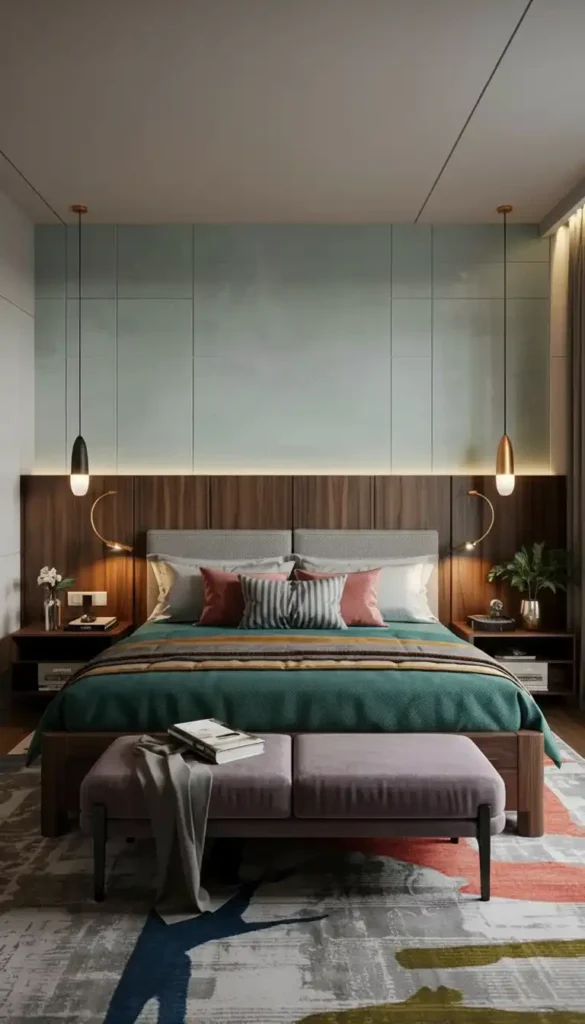
Grain Direction Consistency
This is a detail most people miss, but designers notice immediately.
- Keep wood grain running in the same direction across all panels
- Book-match panels for symmetrical, mirror-image grain patterns
- Avoid mixing vertical and horizontal grain on the same wall
- Ensure stain or finish consistency across every wood element
When grain flows correctly, the installation looks intentional and custom.
Textile Depth Through Mixing
Luxury is felt, not just seen. Mix textures for sensory richness.
- Velvet throws or pillow covers for visual weight
- Linen sheets for breathability and subtle texture
- Wool blankets for warmth and natural elegance
- Cashmere or silk accent pillows for the ultimate touch
Avoid matching sets. Individual, layered pieces look far more expensive.
Acoustic Softness
Premium bedrooms feel quieter and more peaceful through thoughtful material choices.
- Thick curtains absorb sound and improve sleep quality
- Plush rugs reduce echo and footstep noise
- Upholstered headboards add sound absorption
- Avoid hard surfaces on every wall—mix in soft textiles
This creates a suite-like atmosphere that feels high-end the moment you enter.
White Wooden Bed Design Ideas For Bright Spaces
White wooden beds create airy, light-filled bedrooms that feel optimistic and spacious. This is the choice when you want to maximize natural light, make small rooms feel larger, or achieve that fresh, coastal-modern aesthetic.
The challenge with white is avoiding flatness. You need texture, warm accents, and a few grounding elements to prevent the room from feeling washed out or sterile. Done right, white bedrooms feel clean, calm, and surprisingly cozy.
Choosing the Right White Finish
Not all whites are created equal. The wrong shade can look cold or clash with your floors and walls.
- Warm whites have cream or beige undertones—better for rooms with warm wood floors
- Cool whites lean slightly gray or blue—work with cooler gray walls and modern tiles
- Soft white splits the difference and flatters most skin tones under artificial light
- Matte finishes hide fingerprints and look more sophisticated than glossy
Test samples in your room’s morning and evening light before committing.
Contrast with Warm Wood Accents
White beds need warmth to avoid looking like a dentist’s office.
- Pair a white bed frame with natural wood nightstands in oak, walnut, or pine
- Add a wood bench at the foot of the bed for visual weight
- Include wood-framed mirrors or picture frames
- Consider one wood shelving unit to ground the brightness
This contrast makes the white feel intentional, not default.
Slatted White Headboards
Texture is everything in white bedrooms. Slatted headboards add dimension without color.
- Horizontal slats create width and contemporary feel
- Vertical slats add height and architectural interest
- Varied spacing creates shadow patterns that change with light throughout the day
- Painted wood maintains the bright aesthetic while showing grain texture
The slats ensure the headboard has presence even without color contrast.
Pin this white bedroom strategy! 📌
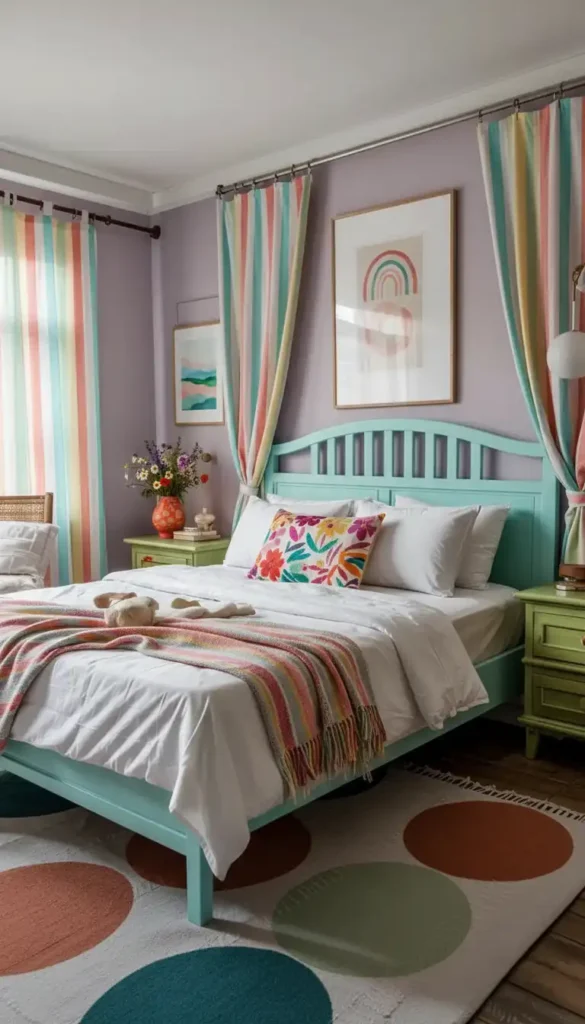
Layered Bedding for Depth
White-on-white bedding needs texture variation to avoid looking flat.
- Crisp cotton percale sheets for a clean foundation
- Chunky knit throw in cream or oatmeal for tactile interest
- Linen duvet in natural or white for subtle texture
- Varied pillow textures—smooth cotton, nubby linen, soft velvet
Each layer should be slightly different in texture or tone.
Soft Window Treatments
Harsh light can make white bedrooms feel stark and uncomfortable.
- Sheer linen curtains filter daylight beautifully while maintaining privacy
- Roman shades in natural fabrics add softness and control
- Light-blocking cellular shades behind sheers for sleep
- Avoid heavy, dark curtains that fight the bright aesthetic
The goal is diffused, glowing light—not glare.
Grounding Accents in Black or Charcoal
White bedrooms need visual anchors to feel designed.
- Black hardware on nightstand drawers or wardrobe doors
- Dark lamp bases in matte black or charcoal ceramic
- Charcoal accent pillows for just enough contrast
- Black-framed artwork to define wall space
These dark notes prevent the room from floating away visually.
Natural Material Integration
Bring in texture through natural, organic materials.
- Rattan or wicker baskets for storage that stays visible
- Jute or sisal rugs for earthy texture underfoot
- Linen in natural tones for curtains, bedding, or chair upholstery
- Live plants in simple ceramic or terracotta pots
These elements keep white bedrooms from feeling synthetic or cold.
Save this brightness balance guide! 📌
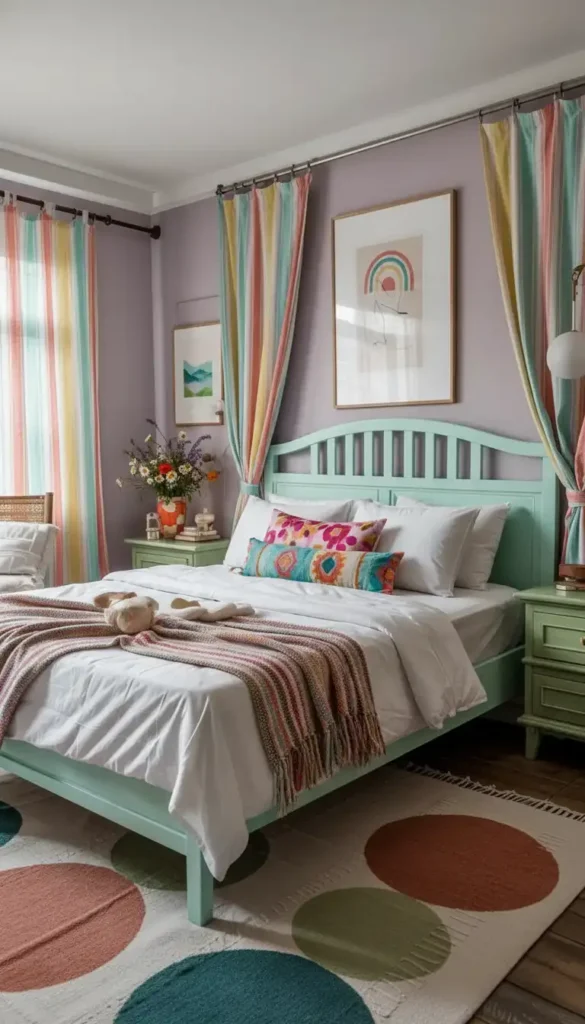
Wardrobe and Storage Coordination
If your bedroom includes a wardrobe, keep it in the same white family as the bed.
- Match undertones—warm whites with warm whites, cool with cool
- Consider white wardrobes with wood interiors for hidden contrast
- Keep hardware consistent between bed, nightstands, and storage
- Use the same finish sheen throughout (all matte or all semi-gloss)
This creates a cohesive, built-in look even with separate furniture pieces.
Light Rug Selection
Area rugs in white bedrooms should be light but not white.
- Cream or ivory wool rugs add warmth without darkening the space
- Light gray with subtle pattern introduces interest while staying neutral
- Natural jute or sisal brings texture and doesn’t show dirt like white would
- Layered rugs—a larger neutral base with a smaller white accent rug
Avoid pure white rugs unless you’re committed to constant maintenance.
Maintenance-Friendly Finishes
White shows everything, so choose finishes wisely.
- Matte paints and finishes hide smudges better than gloss
- Washable slipcovers on upholstered pieces make cleaning easy
- Sealed wood prevents moisture damage and discoloration
- Quality white paint (not builder-grade) resists yellowing over time
Plan for easy cleaning from the start, and white bedrooms stay beautiful longer.
Conclusion
Choosing a wooden bed in 2026 isn’t about following trends—it’s about finding a design that makes your bedroom feel like home every single day. Whether you’re drawn to the clean sophistication of modern platforms, the statement-making presence of unique sculptural frames, the breathing room of minimal designs, the refined richness of luxury builds, or the fresh brightness of white finishes, the right bed changes everything about how your bedroom functions and feels.
The best wooden bed designs work because they’re honest. They use real materials, respect good proportions, and solve actual problems like storage, lighting, and visual balance. Start with the wood tone that flatters your light, choose a headboard height that fits your ceiling, and build from there with intention. When you get the foundation right, everything else—the textiles, the furniture, the finishing touches—falls into place naturally. Your bedroom becomes a space you’re genuinely excited to return to, not just a room you sleep in.

“I share simple, beautiful and affordable home decor ideas to help you style every corner of your home with ease.