

Imagine hosting the perfect summer evening—the grill sizzling, friends laughing, cold drinks within reach—and then the sky opens up. Without overhead protection, your gathering scatters indoors, the momentum lost, the evening cut short. Or picture a scorching afternoon where the idea of standing over a hot grill under direct sun feels unbearable. A thoughtfully designed outdoor BBQ area with a roof changes everything. It transforms your outdoor cooking space from weather-dependent to reliably usable, from basic to genuinely inviting, from “we should grill sometime” to “let’s eat outside tonight.”
But here’s what most people get wrong: they think adding any roof over a grill solves the problem. The reality is that poorly planned covered BBQ areas trap smoke, create wind tunnels, waste space, or simply don’t fit how you actually cook and entertain. In 2026, the best designs balance protection with airflow, create distinct zones that support real workflow, and look intentional rather than improvised. Whether you’re working with a sprawling backyard patio, a compact urban deck, or a rooftop terrace, this guide breaks down the layouts, roof types, and design strategies that actually work.
Outdoor BBQ Area With Roof 2026: Layouts That Work In Any Backyard
Successful covered BBQ layouts prioritize function over aesthetics—heat management, smoke flow, and cooking efficiency must come before decorative choices.
The best arrangements feel like outdoor kitchens with proper zones, not just grills parked randomly under shelter.
Start With Circulation and Heat Distance
Plan movement patterns before selecting furniture or finishes:
- Position the grill on the downwind edge so prevailing breezes carry smoke away naturally
- Place prep surfaces immediately adjacent to the grill (within arm’s reach, 18-24 inches)
- Keep seating 6-8 feet away from active cooking zones to avoid smoke exposure
- Maintain clear walkways of at least 36 inches behind the cook
This spatial planning prevents the cook from becoming isolated while keeping guests comfortable.
The L-Shape and Straight-Line Advantage
Two layouts dominate successful backyard BBQ areas:
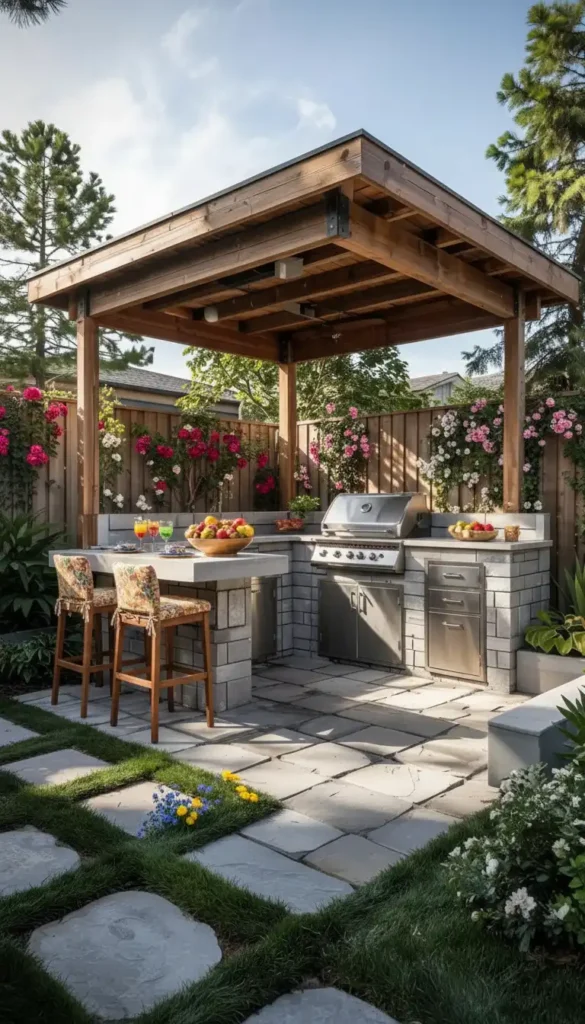
L-shaped configuration:
- Grill on one leg, prep and serving on the perpendicular leg
- Creates natural workflow without guests crossing behind the cook
- Works well in corner locations or along fence lines
- Maximizes counter space in compact footprints
Straight-line layout:
- Grill, prep, serve arranged linearly along one edge
- Simplest for narrow spaces or against house walls
- Easiest to build as modular or built-in runs
- Most efficient for solo cooking
Choose based on your space shape and typical guest count.
Visual Connection Matters More Than You Think
Covered BBQ areas feel best when they maintain sightlines:
- Face the grill toward the yard rather than into a corner
- Keep roof supports minimal to preserve views
- Position seating to observe cooking without crowding the workspace
- Align with main house windows so the space feels integrated
This openness prevents the covered area from feeling like a separate, disconnected shed.
📌 Pin this functional layout framework! 📌
Essential Built-Ins and Furniture Priorities
Focus spending on elements that support actual cooking workflow:
- Durable prep counter with heat-resistant surface (granite, concrete, stainless steel)
- Heat-safe landing zone within 12 inches of grill for hot pans
- Weatherproof storage cabinets with sealed edges for tools and accessories
- Pull-out trash system to keep waste contained and out of sight
- Bar-height ledge or narrow dining table positioned outside the smoke path
Skip decorative elements until these functional pieces are in place.
The Beverage and Cooler Strategy
Drinks need their own dedicated zone:
- Small beverage fridge built into cabinetry if budget allows
- Designated cooler spot that doesn’t consume prep counter space
- Ice storage separate from food prep areas
- Glass storage nearby for easy drink service
This prevents drink preparation from interfering with cooking workflow.
Flooring That Handles Grease and Weather
Under-roof flooring requires specific considerations:
- Outdoor-rated flatweave rugs that rinse clean with a hose
- Sealed concrete or pavers that won’t stain from grease drips
- Avoid deep-pile materials that trap food particles and moisture
- Consider drainage so water doesn’t pool under the covered area
Easy-clean surfaces make the space more likely to stay presentable between deep cleanings.
Lightweight Visual Profile Prevents Crowding
Keep furniture and storage from overwhelming the space:
- Slim-profile chairs with open backs rather than bulky club seating
- Simple table bases (pedestal or hairpin legs) that feel airy
- Open shelving sparingly and only for items that won’t collect grime
- Avoid heavy visual elements near the grill to maintain flow
Lighter furniture makes even compact covered areas feel more spacious.
📌 Save this BBQ area layout strategy! 📌
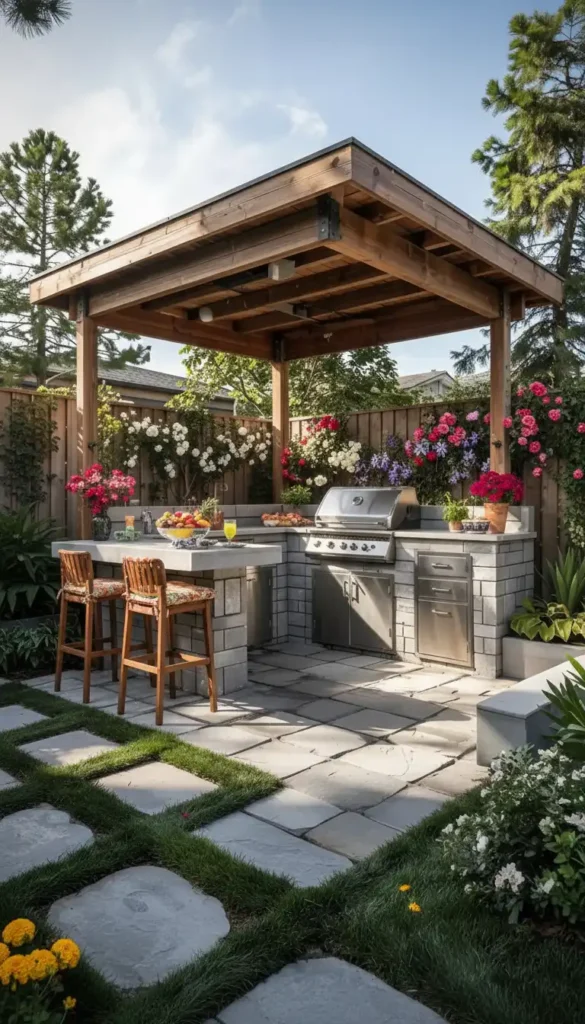
Safety Clearances You Can’t Skip
Maintain proper distances to prevent fire hazards:
- Minimum 3 feet from grill to any combustible wall surface
- 10 feet clearance from grill to overhead roof structures (check local codes)
- 18 inches minimum between grill and any cabinetry
- 4-6 feet of clearance in front of the grill for safe operation
These aren’t suggestions—they’re safety requirements that affect insurance and liability.
The Anchoring Element That Pulls It Together
One architectural feature creates intentional design:
- Low fireplace wall that separates cooking from lounging zones
- Planter spine with tall grasses or structured shrubs
- Built-in bench that defines the seating boundary
- Accent wall behind the grill in stone, tile, or weathered wood
This single element transforms “grill under roof” into “designed outdoor kitchen.”
Outdoor BBQ Area Roof Types: Pergola, Pavilion, Retractable, Or Solid Cover
Roof type determines shade quality, weather protection, ventilation, and the overall character of your outdoor cooking space.
Each option balances different priorities—choose based on climate, usage frequency, and desired level of protection.
Pergolas: Light Filtering With Architectural Style
Best for those who want partial shade and visual interest:
- Allows dappled sunlight rather than complete coverage
- Excellent ventilation since smoke can escape through gaps
- Photographs beautifully with clean, modern lines
- Lower cost than enclosed structures
- May require supplemental shade (retractable canopy, climbing plants)
Pergolas work well for occasional grillers in moderate climates who prioritize aesthetics.
Pavilions: Defined Rooms With Strong Protection
Ideal when you want a true outdoor room feel:
- Solid roof provides reliable weather coverage from rain and intense sun
- More architectural presence that reads as permanent structure
- Supports ceiling fans and integrated lighting more easily
- Requires careful smoke planning to prevent buildup
- Higher cost and likely permits required
Pavilions suit frequent entertainers in variable climates who want dependable protection.
Retractable Systems: Flexibility for Changing Conditions
Perfect for spaces needing sun sometimes, shade others:
- Adjustable coverage based on weather and time of day
- Excellent for rooftops where wind and glare vary dramatically
- Prevents feeling boxed in when full openness is desired
- Higher maintenance with moving parts and fabric
- Moderate to high cost depending on automation level
Retractable roofs shine in urban environments and rooftop installations.
📌 Pin this roof type comparison! 📌
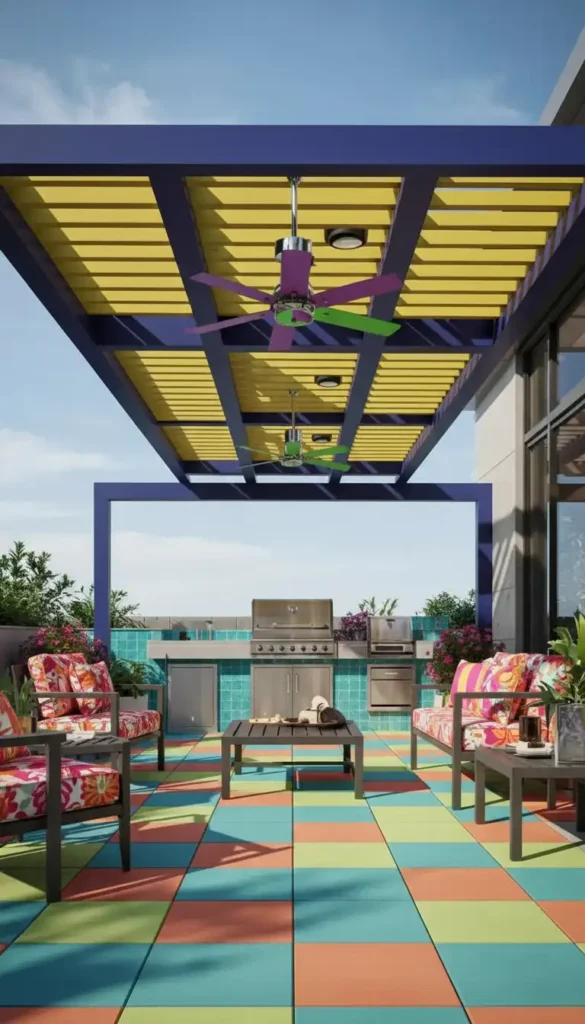
Solid Covers: Maximum Protection, Maximum Planning
The most protective option requires the most infrastructure:
- Complete rain and sun protection for year-round use
- Requires integrated drainage (gutters, downspouts, slope)
- Needs ventilation strategy to prevent smoke accumulation
- Supports full lighting and electrical integration
- Most expensive option with highest permitting requirements
Solid covers make sense for weekly grillers in harsh climates who want kitchen-level reliability.
Material Choices for Modern 2026 Aesthetics
Contemporary options balance durability with clean lines:
- Aluminum or powder-coated steel for crisp, low-maintenance structures
- Adjustable louvered pergolas for sun control without clutter
- Painted tongue-and-groove ceiling for finished pavilion interiors
- Integrated retractable tracks that hide mechanisms cleanly
Avoid dated wood stains or overly rustic finishes unless your home specifically calls for them.
Drainage Planning Can’t Be Afterthought
Water management determines whether your covered space stays usable:
- Minimum 1/4-inch slope per foot for solid roofs
- Gutters positioned to avoid dripping onto cooking or seating zones
- Downspouts routed away from high-traffic areas
- Drainage for deck surfaces beneath the roof to prevent standing water
Poor drainage ruins otherwise excellent covered BBQ areas within one rainy season.
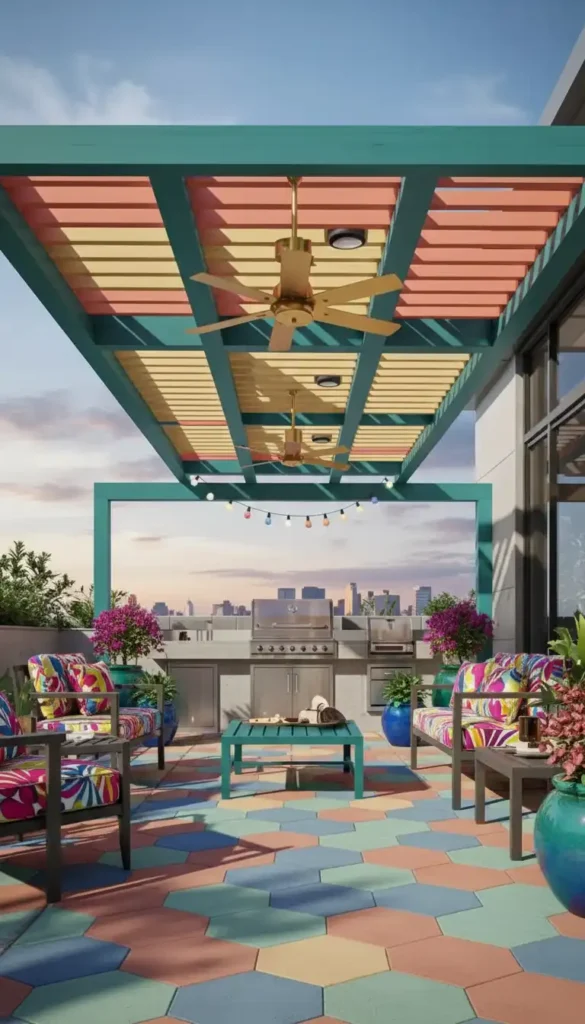
Climate and Usage Frequency Decision Guide
Match roof type to your specific situation:
Mild, dry climates + occasional grilling:
- Pergola with optional retractable shade
Variable weather + weekly cooking:
- Pavilion or solid cover with proper ventilation
Rooftop or windy location:
- Retractable system or louvered pergola
Extreme sun or heavy rain regions:
- Solid cover with ceiling fans and drainage
This framework prevents choosing based purely on aesthetics and regretting functional limitations.
📌 Save this roof selection guide! 📌
Permitting and Code Considerations
Roof structures often trigger local requirements:
- Attached structures typically require permits for roofs over 100-200 square feet
- Height restrictions may limit roof pitch or overall structure height
- Setback requirements from property lines affect placement
- HOA approvals needed in many communities
Check local codes before finalizing design to avoid expensive corrections later.
Small Outdoor BBQ Area With Roof: Smart Zoning For Tight Spaces
Compact covered BBQ areas succeed through ruthless editing and precise spatial planning—every element must justify its footprint.
The goal is creating an intentional outdoor kitchen feel rather than a cramped, cluttered corner.
Grill Placement for Optimal Smoke Management
In tight spaces, positioning becomes critical:
- Place grill at the edge of covered zone so smoke drifts outward naturally
- Face grill opening away from seating to prevent direct smoke exposure
- Leave back edge partially open for ventilation even under solid roofs
- Avoid center placement which traps heat and smoke under the roof
This edge positioning maximizes usable space while maintaining comfort.
The Straight-Line Efficiency Model
Linear arrangements work best in constrained footprints:
- Grill, prep counter, storage in single run along one edge
- Vertical storage (wall-mounted hooks, magnetic strips) keeps floors clear
- Narrow depth (24-30 inches total) preserves circulation space
- Fold-down or slide-out surfaces expand prep area only when needed
This configuration delivers full functionality in remarkably compact spaces.
Visual Zoning Without Physical Barriers
Create distinct areas through subtle techniques:
- Floor texture changes (pavers to wood deck, different tile patterns)
- Slim planters that suggest boundaries without blocking views
- Lighting zones that define cooking versus seating areas
- Ceiling height variation if structure allows for dropped or raised sections
These soft boundaries guide use without consuming precious square footage.
📌 Pin this compact BBQ layout strategy! 📌
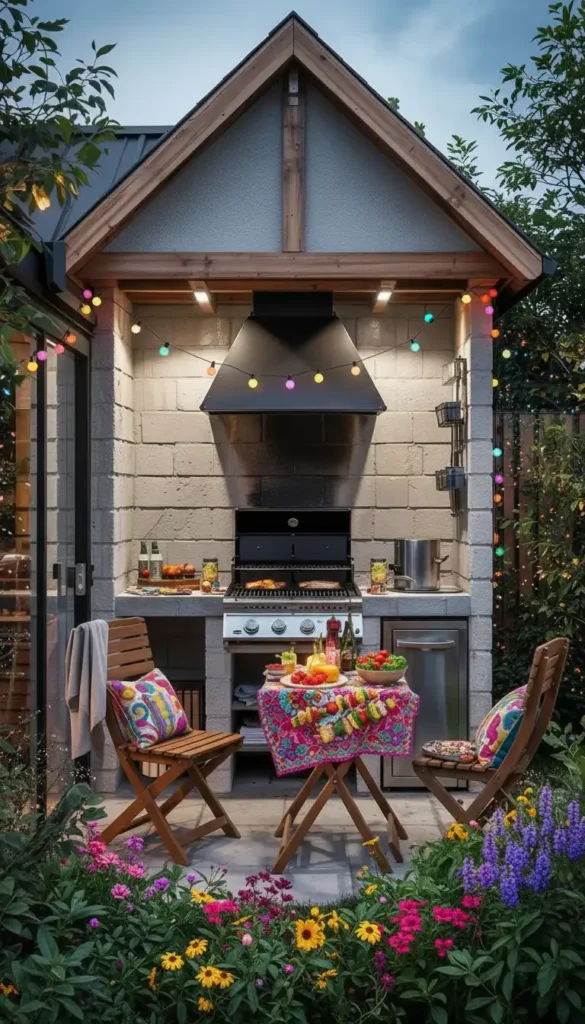
Furniture Scaled for Small Footprints
Choose pieces that maintain comfort without overwhelming:
- Armless chairs save 4-6 inches per seat compared to armed versions
- Backless stools tuck completely under counters when not in use
- Narrow tables (24-30 inches wide) that can push against walls
- Wall-mounted fold-down surfaces for temporary dining or serving
Right-sized furniture makes small spaces functional rather than frustrating.
Closed Storage Prevents Visual Clutter
Open shelving kills small space aesthetics quickly:
- Cabinet doors hide the visual noise of bottles, tools, and accessories
- Pull-out drawers for grilling utensils keep them accessible but concealed
- Lidded bins for charcoal, wood chips, and cleaning supplies
- Integrated trash that’s hidden but easy to access
Closed storage maintains the clean, uncluttered look that makes small spaces feel larger.
The Ceiling Fan Game-Changer
Moving air expands the usable season and comfort level:
- Compact outdoor-rated fans (36-44 inch diameter for small spaces)
- Reversible settings for summer cooling and winter heat circulation
- Integrated lighting eliminates need for separate fixtures
- Adds perceived space by improving comfort without physical footprint
A quality ceiling fan often delivers more value than expensive furniture upgrades.
Minimum Clearance Standards for Safety
Even compact spaces must maintain critical dimensions:
- 36 inches in front of grill for safe operation
- 18 inches between grill and any cabinetry to prevent heat damage
- 30-inch walkways minimum for comfortable passage
- 42-48 inches for primary circulation paths if space allows
Compromising these clearances creates safety hazards and operational frustration.
📌 Save this small-space BBQ design! 📌
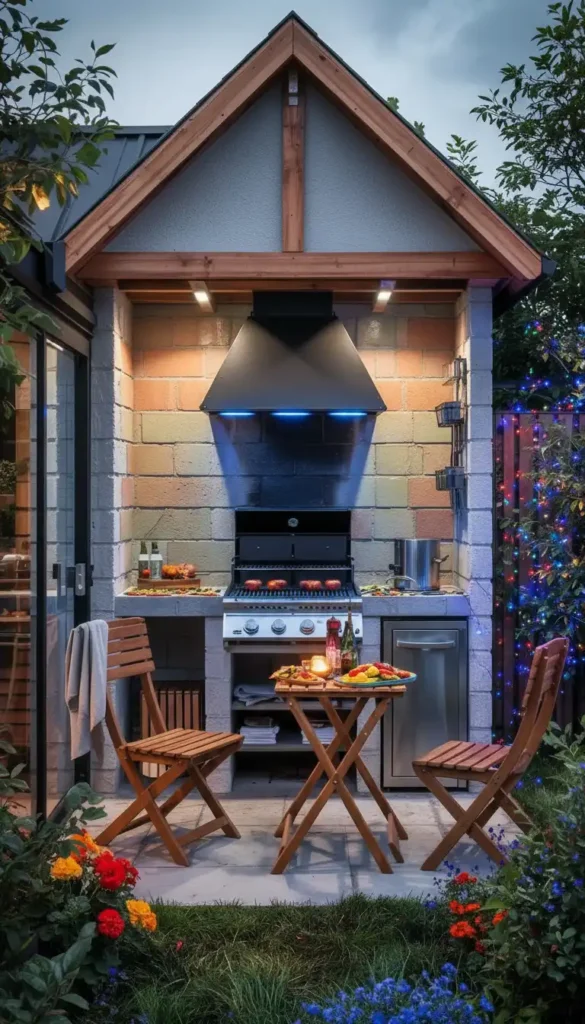
The Modular Advantage in Tight Quarters
Flexibility matters more in constrained spaces:
- Movable grill carts can be repositioned based on wind and guest count
- Freestanding prep stations adapt as needs change
- Storage benches on casters shift to create different configurations
- Removable components make deep cleaning easier
Modular setups prevent the “locked-in” feeling that plagues small built-in installations.
BBQ Area Ideas Outdoor With Roof: Built-In Grill Stations Vs Modular Setups
The built-in versus modular decision affects aesthetics, budget, flexibility, and long-term maintenance—neither is universally better.
Choose based on property permanence, budget, and how certain you are about your final layout.
Built-In Stations: The Permanent Kitchen Approach
Best for settled homeowners with clear, tested layouts:
- Creates polished outdoor kitchen aesthetic that feels like home extension
- Maximizes property value when properly executed
- Provides seamless counter runs without gaps or transitions
- Supports complex infrastructure (plumbing, electrical, gas lines)
- Requires accurate initial planning since changes are expensive
Built-ins work when you know exactly how you cook and entertain.
Essential Components for Built-In Success
Focus on these elements for functional built-in stations:
- Heat-safe countertop (granite, concrete, tile, stainless) with minimum 12-inch landing areas
- Weatherproof base cabinets with marine-grade or stainless hardware
- Dedicated prep run of at least 24-36 inches beside grill
- Drawer storage for tools that keeps frequently used items within reach
- Proper ventilation clearances especially under solid roofs
These features separate professional results from amateur installations.
Modular Setups: Flexibility and Testing
Ideal for renters, new homeowners, or those still refining their layout:
- Easy to reconfigure as cooking style or space use evolves
- Lower initial investment with no construction or permitting
- Portable for moves to new properties or seasonal storage
- Allows layout testing before committing to permanent structures
- Individual piece replacement without demolishing entire runs
Modular arrangements reduce risk while maintaining quality.
📌 Pin this built-in vs modular comparison! 📌
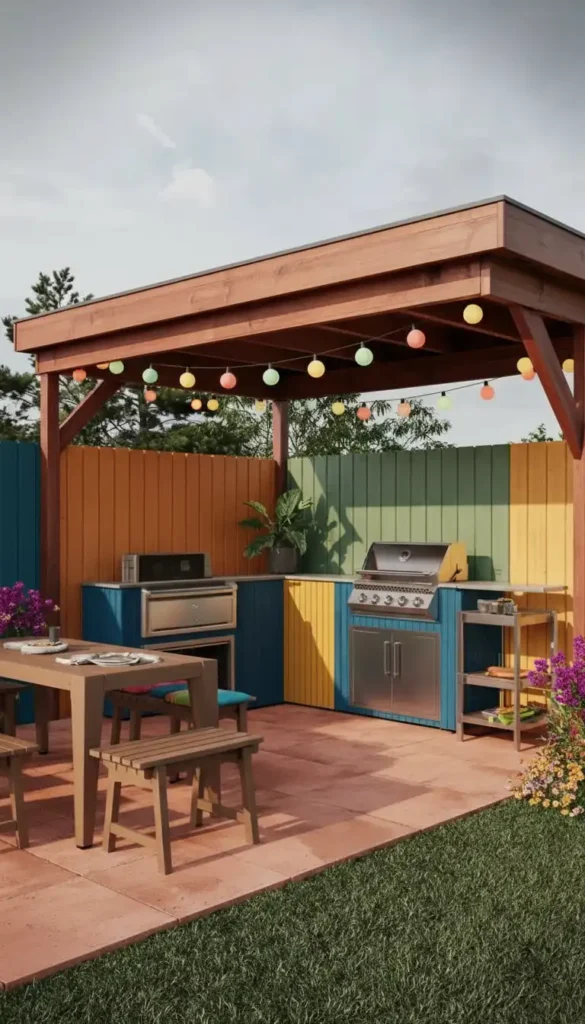
High-Quality Modular Components
Invest in these pieces for modular excellence:
- Premium grill cart with locking casters and side shelves
- Separate prep cart with storage underneath
- Stainless or powder-coated frames that withstand weather
- Storage bench that doubles as seating
- Coordinated finishes across all pieces for visual cohesion
Quality modular pieces often outlast poorly executed built-ins.
The Hybrid Solution Worth Considering
Combine permanence with flexibility:
- Build framed surround with removable inserts
- Install permanent counters with modular grill that lifts out
- Create base structure that accepts different equipment over time
- Use matching materials to make modular pieces look integrated
This approach delivers built-in aesthetics with modular flexibility.
Smoke Management Differs by Approach
Ventilation planning changes based on installation type:
Built-ins under solid roofs:
- Require careful positioning to prevent smoke staining
- May need ventilation hoods or strategic roof openings
- More susceptible to grease buildup on permanent surfaces
Modular setups:
- Can be repositioned based on seasonal wind patterns
- Easier to pull forward from under-roof for heavy smoke sessions
- Less permanent surface staining since pieces can be moved for cleaning
This flexibility is modular’s biggest advantage for smoke-heavy cooking.
Budget Allocation Strategy
Spend wisely regardless of approach:
Built-in priorities:
- Invest in quality cabinetry and countertops (60-70% of budget)
- Professional installation for gas and electrical (15-20%)
- Premium grill since it’s integrated (15-20%)
Modular priorities:
- Quality grill as the centerpiece (40-50%)
- Durable cart and prep surfaces (30-40%)
- Storage and finishing touches (10-20%)
This distribution ensures functional excellence within your budget.
📌 Save this BBQ station planning guide! 📌
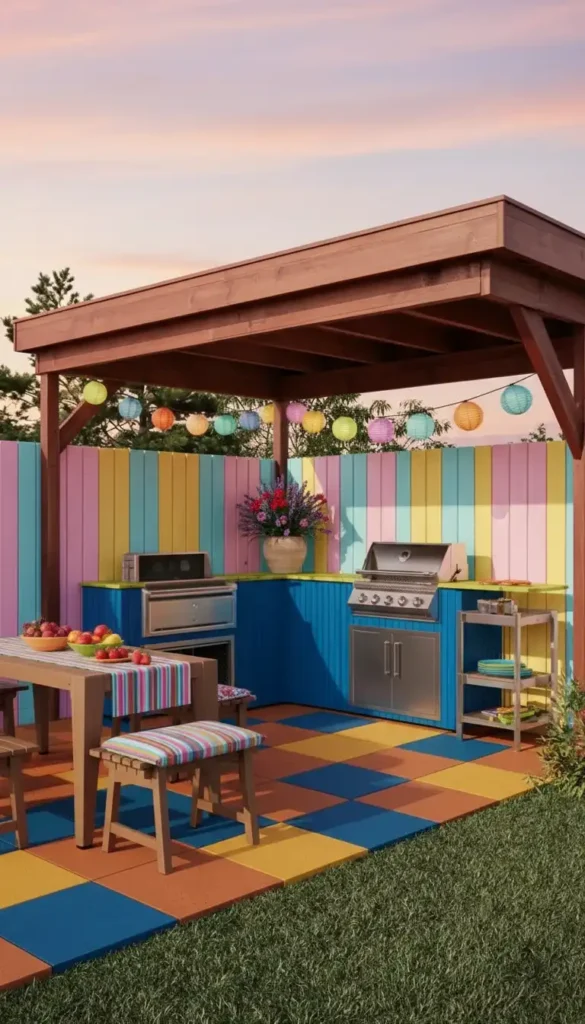
Maintenance Realities Over Time
Different approaches age differently:
Built-ins:
- Grout and sealed joints require periodic maintenance
- Cabinet refinishing needed every 5-10 years in harsh climates
- Difficult to deep clean around permanently installed equipment
- Weather damage may require professional repairs
Modular:
- Individual pieces can be refinished or replaced
- Easy to move for thorough cleaning
- Simple to winterize or store during off-season
- DIY maintenance and repairs
Consider long-term care requirements alongside upfront costs.
Weather-Ready Roofing: Rain, Wind, Sun, And Heat Protection Tips
A roof only delivers value if it actually protects your BBQ area from the weather conditions you experience most.
Strategic planning for rain, wind, sun, and heat separates reliable outdoor kitchens from fair-weather decorations.
Rain Protection Starts With Proper Drainage
Water management determines whether your covered space stays usable:
- Install gutters on all roof edges to control water flow
- Minimum 1/4-inch per foot roof pitch prevents standing water
- Route downspouts away from cooking and seating to avoid drips and splashing
- Seal deck surfaces beneath roof to prevent water infiltration
- Plan drainage for contained areas so water doesn’t pool
Poor drainage ruins furniture, creates slip hazards, and makes the space unusable during and after rain.
Wind Management Without Creating Walls
Strategic screening controls wind without eliminating ventilation:
- Side screens on prevailing wind side (tempered glass, slatted wood, metal panels)
- Leave opposite side open to prevent wind tunnel effect
- Partial height barriers (42-60 inches) that block gusts without closing off space
- Strategic planting of tall grasses or shrubs as natural windbreaks
This balanced approach prevents smoke backup while controlling uncomfortable drafts.
Sun and Heat Control Strategies
Manage intense sun and heat buildup:
- Light-colored ceiling finishes reflect rather than absorb heat
- Adjustable louvers or retractable panels for variable shade control
- Strategic roof orientation to block afternoon sun in western exposures
- Heat-resistant materials near grill (no vinyl, certain composites, or untreated wood)
- Dedicated heat-resistant mat under grill to protect flooring
These details keep temperatures comfortable even during peak summer heat.
📌 Pin this weather protection framework! 📌
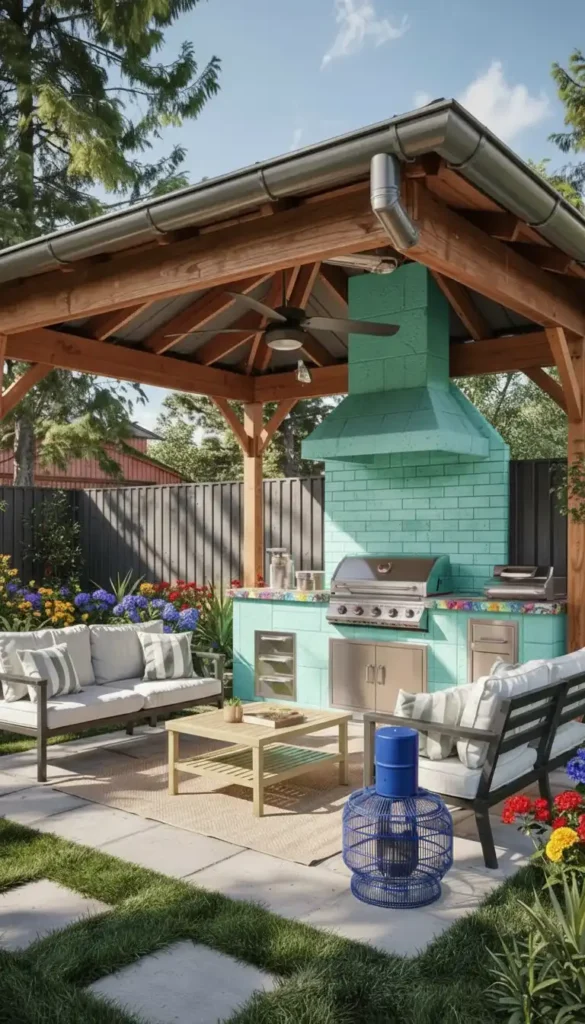
The Ceiling Fan and Circulation Advantage
Active airflow transforms comfort levels:
- Outdoor-rated ceiling fans sized appropriately for space (52-60 inch for most BBQ areas)
- Multiple speed settings to match conditions
- Reversible direction for year-round use
- Positioned to move air without blowing directly on grill
Fans make covered spaces usable in conditions that would otherwise be unbearable.
Seasonal Heating Extends Usable Months
Add warmth for shoulder season entertaining:
- Infrared heaters mounted to roof structure or posts
- Fire features (built-in fireplace, fire table) positioned safely away from grill
- Portable patio heaters for flexible warmth placement
- Radiant panels that heat people and surfaces rather than air
These additions can extend your grilling season by 2-4 months in temperate climates.
Material Selection for Specific Climates
Choose finishes based on your environmental challenges:
Humid or coastal regions:
- Marine-grade stainless steel or powder-coated aluminum
- Sealed concrete or porcelain tile surfaces
- Mildew-resistant fabrics and cushions
- Regularly inspected and sealed wood
High sun, dry climates:
- UV-resistant fabrics and furniture
- Heat-reflective roof materials
- Shade prioritization over enclosed spaces
- Drought-tolerant surrounding plantings
Variable four-season areas:
- Retractable or convertible roof elements
- Removable panels for winter storage
- Weatherproof storage for seasonal items
- Durable, temperature-stable materials
Climate-appropriate choices prevent premature aging and constant replacement.
Safety Zones Around Heat Sources
Maintain proper clearances for fire safety:
- Keep fabric, cushions, and plants minimum 3 feet from active grill
- No hanging plants or curtains within 6 feet of cooking flames
- Store propane outside the roofed area in ventilated location
- Fire extinguisher mounted within 10 feet of grill
These aren’t decorating suggestions—they’re fire prevention requirements.
📌 Save this comprehensive weather strategy! 📌
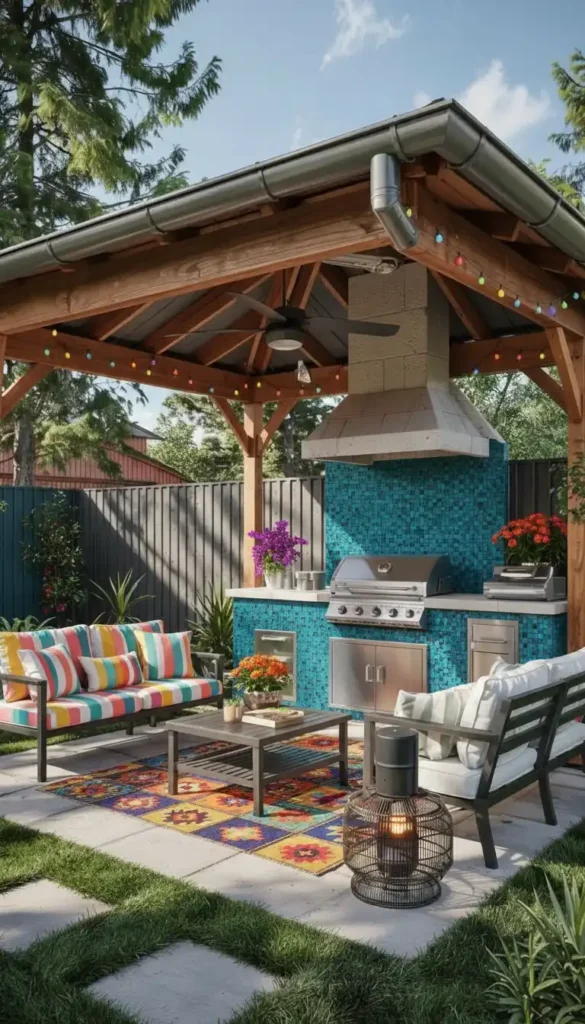
Lighting for Function and Evening Use
Proper illumination extends usability into evenings:
- Task lighting over grill and prep areas (LED strip under cabinets, directional spots)
- Ambient lighting around seating (string lights, lanterns, wall sconces)
- Pathway lighting to and from house entrance
- Dimmable controls to adjust mood and brightness
Well-planned lighting makes evening cooking safe and creates inviting atmosphere for extended entertaining.
Conclusion
A thoughtfully designed outdoor BBQ area with a roof transforms how you use your outdoor space—shifting from weather-dependent hope to reliable reality. The difference between a covered area you use constantly and one that sits unused isn’t budget or square footage—it’s strategic planning around smoke flow, heat management, weather protection, and actual cooking workflow. When you start with function and build aesthetics around it, you create spaces that genuinely enhance daily life.
Whether you choose a light-filtering pergola for your moderate climate, a full pavilion for year-round protection, or a compact rooftop setup with retractable coverage, the principles remain the same: plan for real weather, design clear zones, maintain proper clearances, and prioritize the details that support how you actually cook and entertain. Start with one well-planned element, and build from there. The outdoor kitchen that becomes your favorite place to cook is always worth the effort.

“I share simple, beautiful and affordable home decor ideas to help you style every corner of your home with ease.