

There’s something magical about watching your child discover the outdoors—the way their eyes light up at a new climbing challenge, how they invent entire worlds in a simple corner of the yard, the pure joy of running barefoot through grass. But here’s the truth: creating that space doesn’t require a massive budget, acres of land, or a complete backyard overhaul. It requires thoughtful planning that balances safety, play value, and the reality of your specific space and budget.
Whether you’re working with a narrow rental balcony, a modest suburban yard, or planning a long-term play investment, the outdoor play areas that actually get used are the ones designed around real family life. This guide walks through five practical approaches to creating kid-friendly outdoor spaces in 2026—from compact play pockets for small yards to flexible playground designs that evolve as your children grow. Let’s build something that becomes their favorite place to be.
Kids Outdoor Play Area Ideas For Small Spaces In 2026
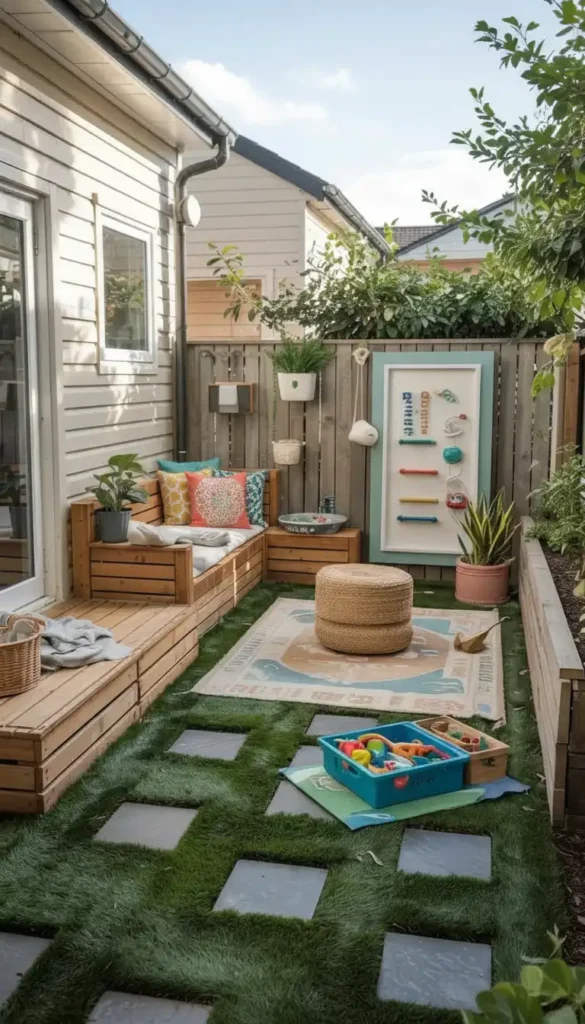
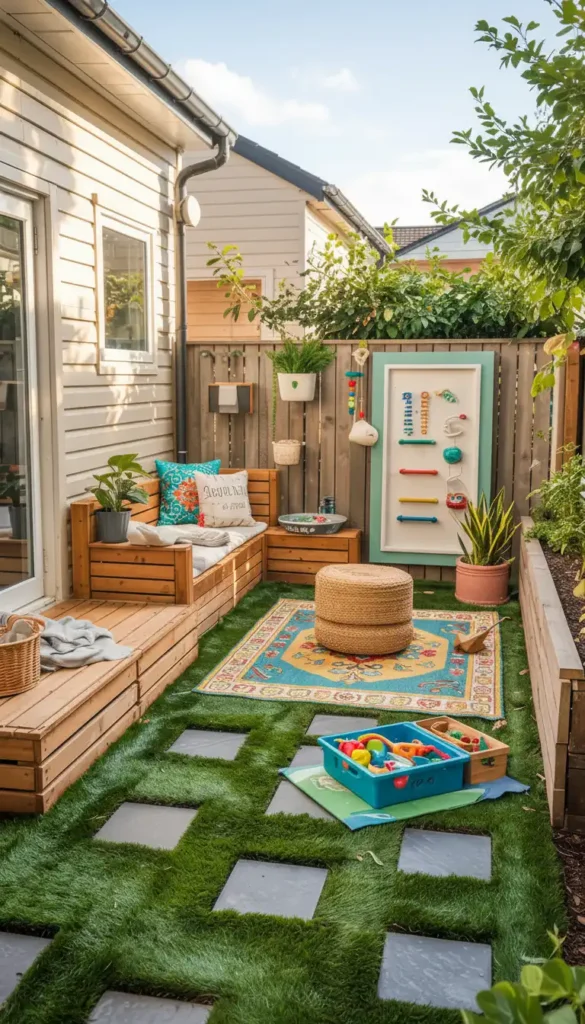
Small outdoor spaces demand strategic thinking where every square foot serves a purpose. The goal isn’t cramming in miniature versions of everything—it’s creating one strong play focus that delivers maximum engagement in minimal space.
Think of your small play area as an outdoor room with clear boundaries and intentional function.
Anchor the Layout Along Existing Structures
Position your play zone strategically to maximize open space:
- Place the main activity along a fence line to keep the center open for movement
- Use deck edges as natural boundaries that create supervised viewing platforms
- Align storage and seating against walls to preserve circulation space
- Create a clear “stage” area where active play happens without obstacles
This approach works brilliantly for deck setups where parents can supervise from an elevated position while kids play below.
The Modular Approach for Rental Properties
Flexibility matters when you can’t make permanent changes:
- Choose freestanding equipment that moves without leaving holes or damage
- Use interlocking foam mats that define play zones and pack up easily
- Select lightweight climbing panels that lean against walls or fences
- Invest in weather-resistant storage bins that become seating when needed
Everything should be portable enough to relocate when your lease ends or your family moves.
Vertical Elements Maximize Limited Footprints
Build upward when you can’t build outward:
- Wall-mounted pegboards for organizing outdoor toys and art supplies
- Slim climbing wall panels that attach to fences or garage walls
- Fold-down art surfaces that tuck flat when not in use
- Hanging planters or sensory walls that add interest without consuming floor space
Vertical features deliver play value per square foot that horizontal toys simply can’t match.
📌 Pin this small-space play strategy! 📌
Define Zones Without Creating Barriers
Subtle boundaries work better than hard dividers in compact areas:
- Small outdoor rugs separate adult seating from kid activity zones
- Low planter boxes create visual edges while maintaining sightlines
- Interlocking play mats in bright colors naturally define where play happens
- Deck railing screens provide soft separation without closing off the space
Parents can supervise comfortably while kids feel like they have their own territory.
The Rotation Strategy Prevents Clutter
Small spaces feel overwhelming when overloaded with toys:
- Keep one “big” feature as the permanent anchor (climbing structure, playhouse)
- Rotate smaller activity bins weekly (bubbles, chalk, water play, balls)
- Store off-season items completely out of sight to reduce visual noise
- Maintain strict one-in, one-out rules for new outdoor toys
This approach keeps engagement high and mess manageable.
Storage Integration Is Non-Negotiable
Built-in storage prevents small spaces from looking chaotic:
- Compact outdoor cabinets near the door for daily-use items
- Benches with lift-top storage that hide cushions and toys
- Hook rails or pegboards where everything has a designated spot
- Weatherproof bins that double as tables or seating
When cleanup takes 60 seconds instead of 20 minutes, the space gets used more consistently.
Sightline Planning for Real-Life Supervision
Position the most active zones where you can actually see them:
- Place high-movement areas visible from common interior windows
- Keep potential hazard zones (climbing, swinging) in direct sightlines
- Position quiet activity corners near adult seating or work areas
- Ensure all zones are visible from at least one interior vantage point
This design choice makes the play area usable on busy weekdays, not just relaxed weekends.
📌 Save this compact play area layout guide! 📌
Age-Appropriate Clearance Considerations
Safety requires specific spatial planning:
- Maintain 36-inch minimum clearances around climbing features
- Keep 48 inches of fall zone around swings and slides
- Reserve 60-72 inches for running and active movement games
- Plan 18-24 inch pathways for traffic flow without congestion
These dimensions ensure safety while maximizing usable play space.
Cheap DIY Kids Outdoor Play Area Ideas On A Budget
Budget constraints don’t mean settling for a bare-bones play space—they mean getting creative with materials while maintaining a cohesive, intentional look.
The secret is focusing on the overall feel and atmosphere rather than expensive commercial equipment.
The Two-Material Rule for Visual Cohesion
Limit your material palette to create a polished appearance:
- Natural wood plus black hardware for modern, clean aesthetics
- Weathered gray wood plus rope accents for coastal, relaxed vibes
- Painted white surfaces plus primary colors for cheerful, classic looks
- Raw lumber plus galvanized metal for industrial-farmhouse character
This restraint makes budget materials look intentional rather than improvised.
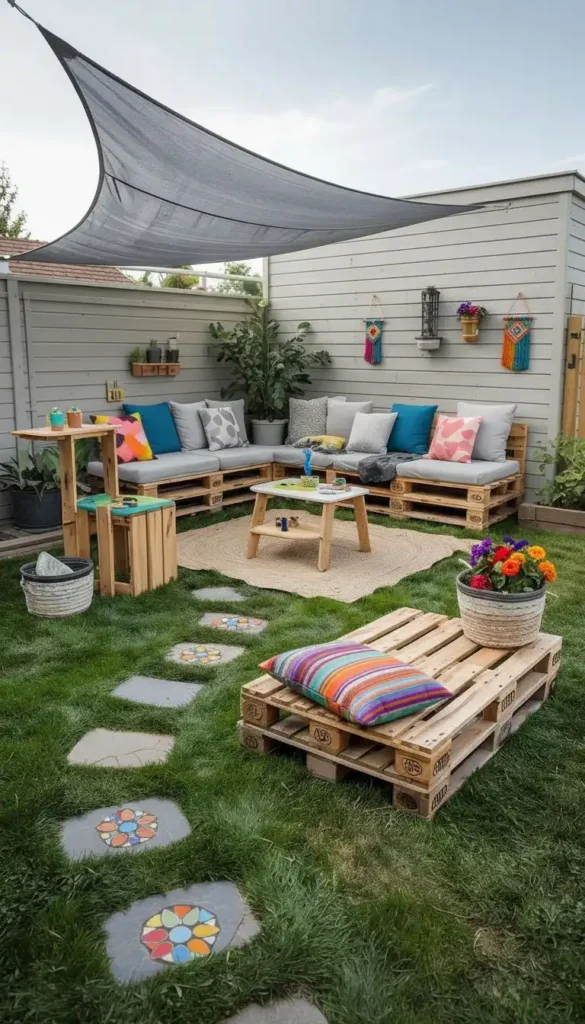
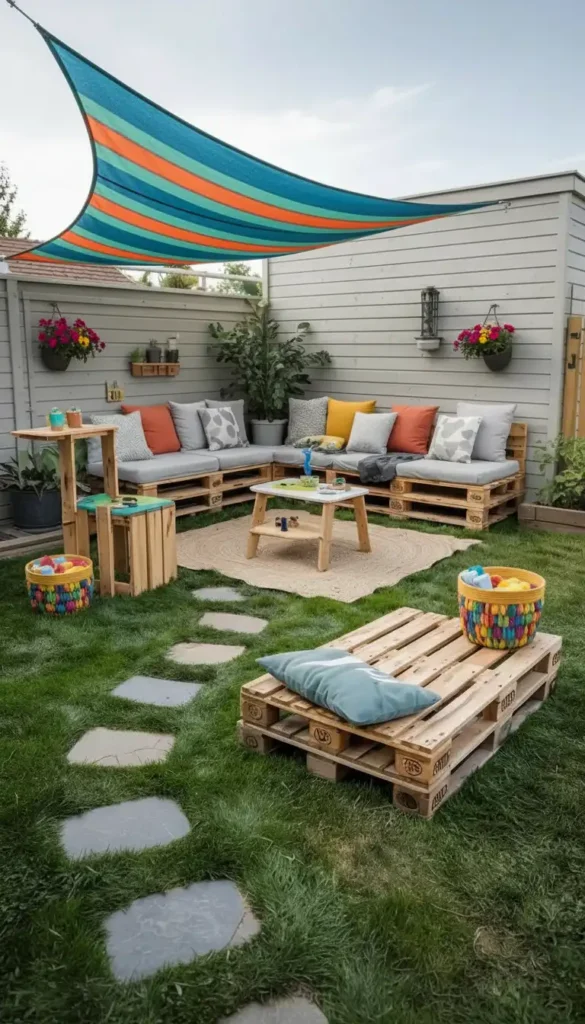
Repurposed Pallets Become Functional Foundations
Pallets offer incredible versatility when properly prepared:
- Sand and seal thoroughly to prevent splinters and weather damage
- Stack and secure to create low platforms or stage areas
- Top with outdoor cushions for instant kid-sized lounging spots
- Add casters to one or two for movable play surfaces
A single pallet project can transform in an afternoon for under $50 in materials.
Zone Creation Without Major Construction
Define distinct play areas using simple, affordable methods:
- Low balance beams from treated 4×4 lumber ($15-25)
- Stepping stone paths using affordable concrete pavers ($2-4 each)
- Tire planters filled with sand or topped with plywood for tables
- Rope boundaries strung between posts to separate messy from clean zones
These DIY elements create structure that makes the space feel designed.
📌 Pin this budget zone framework! 📌
Ground Surfacing That Transforms the Space
The single biggest visual upgrade for budget play areas:
- Pea gravel in contained borders creates clean, defined zones ($3-5 per cubic foot)
- Rubber mulch provides cushioning and never needs replacing ($6-8 per cubic foot)
- Interlocking foam tiles offer portability and easy installation ($1-2 per square foot)
- Wood chips or playground mulch deliver natural aesthetics affordably ($3-4 per cubic foot)
Defined surfacing instantly elevates the entire play area from “random toys on grass” to “intentional play space.”
The Compact Activity Table Principle
One proper work surface encourages longer, calmer engagement:
- DIY picnic table scaled to kid height (24-inch table height for ages 3-8)
- Repurposed outdoor side table with weatherproof paint treatment
- Simple plywood on sawhorses that can be stored when not needed
- Tree stump slices sealed and arranged as natural work surfaces
Children naturally settle into longer craft sessions and snack times when there’s a dedicated surface.
Single Statement Climbing Element Strategy
Choose one climbing feature instead of multiple scattered toys:
- Compact A-frame ladder that folds or leans against walls
- DIY rope ladder attached to a sturdy tree branch
- Homemade climbing wall using 2×4 frame and climbing holds
- Monkey bar section built from galvanized pipe and fittings
One well-built climbing element delivers more developmental value than five plastic ride-on toys.
The Two-Bin Storage Rule
Simplicity in organization prevents budget spaces from looking cheap:
- Establish exactly two large bins for all outdoor toys
- Label clearly (“Active Toys” and “Creative Play”)
- Choose matching bins in the same color or style
- Position prominently so cleanup becomes automatic
This rigid system prevents the scattered-toy aesthetic that undermines otherwise nice spaces.
📌 Save this high-impact budget upgrade list! 📌
Repetition Creates Perceived Luxury
Consistent finishes elevate budget materials:
- Same wood stain on all DIY projects
- Matching hardware across different elements
- Coordinated color palette limited to 2-3 colors maximum
- Uniform storage containers rather than mismatched bins
This professional design principle transforms “we built this ourselves” into “this was thoughtfully designed.”
DIY Kids Outdoor Play Area Ideas For A Garden Play Corner
Garden play corners blend educational value with outdoor fun, creating nature-inspired spaces that adults genuinely enjoy looking at.
The key is integrating play elements so naturally that they enhance the landscape rather than cluttering it.
Start With Accessible Growing Zones
Make gardening participation genuinely child-friendly:
- Raised beds at 18-24 inch height for comfortable reach without step stools
- Container gardens that children can move and rearrange independently
- Dedicated child plot separate from adult vegetables to encourage ownership
- Fast-growing plants (radishes, lettuce, sunflowers) for quick gratification
When children can actually reach and manage their plants, engagement lasts beyond the first week.
The Work Surface Makes the Difference
Every garden play corner needs a proper activity station:
- Child-height potting bench (24-30 inches high depending on age)
- Weatherproof work table for sorting seeds, washing vegetables, arranging flowers
- Sealed wood surfaces that handle water and soil without deteriorating
- Tool hooks at child height so equipment has designated homes
This dedicated surface transforms random digging into purposeful activity.
Sensory Garden Strips Add Engagement Layers
Multi-sensory elements create richer play experiences:
- Fragrant herb border (lavender, mint, rosemary, basil)
- Textured plant variety (lamb’s ear, ornamental grasses, succulents)
- Smooth stone collection area for tactile exploration
- Wind chimes or garden bells for auditory interest
These elements encourage observation and mindfulness alongside physical play.
📌 Pin this garden play integration method! 📌
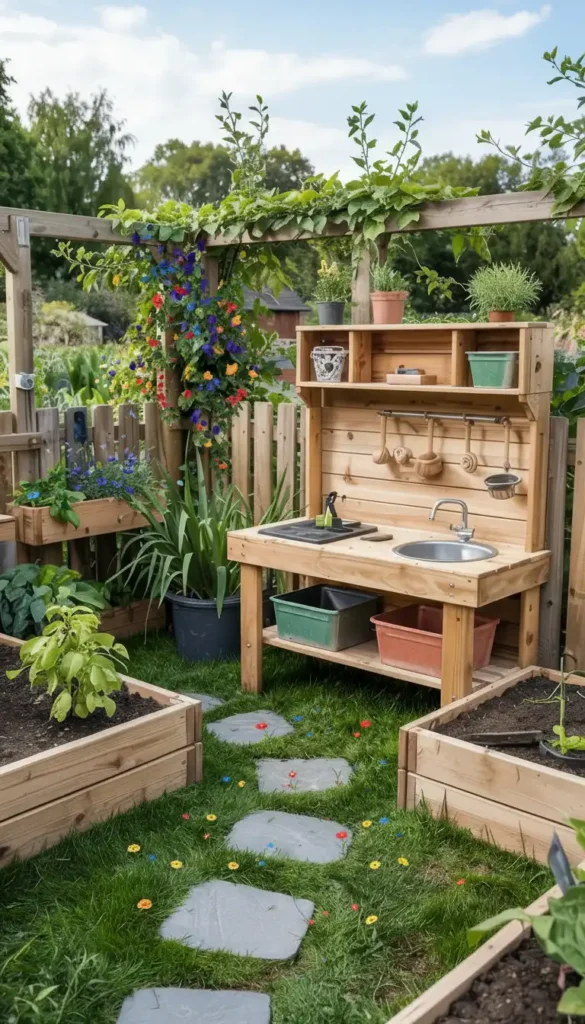
The Mud Kitchen Revolution
Messy play zones are non-negotiable for garden corners:
- Simple outdoor kitchen using sealed wood frame and metal hooks
- Water basin (large bowl, small sink, or bucket with spigot)
- Utensil storage via pegboard or hanging S-hooks
- Dirt/sand supply in a dedicated container with scoop
Mud kitchens keep the messiest play contained while supporting hours of imaginative engagement.
Pathways That Protect Plantings
Clear circulation prevents trampled gardens:
- Stepping stone paths that define where feet should go
- Narrow gravel walkways between growing beds
- Wood plank bridges over particularly wet or muddy sections
- Designated play zones clearly separated from “look but don’t touch” areas
These boundaries teach spatial awareness while protecting your gardening investment.
Vertical Growing for Visual Interest
Height variation creates the “designed garden” aesthetic:
- Trellis or bamboo teepee for climbing beans or peas
- Tall sunflowers at the back border
- Hanging baskets with trailing flowers or strawberries
- Privacy screen plantings (ornamental grasses, flowering shrubs)
Layered heights make even small garden corners feel lush and intentional.
The Weekly Garden Reset Routine
Sustainability requires built-in maintenance rhythms:
- Friday afternoon tidy where children help reset their area
- Sunday morning watering as a family ritual
- Mid-week harvest to keep production plants productive
- Monthly deep clean of tools, surfaces, and storage
When maintenance becomes routine rather than emergency response, the space stays inviting.
📌 Save this nature-based play design! 📌
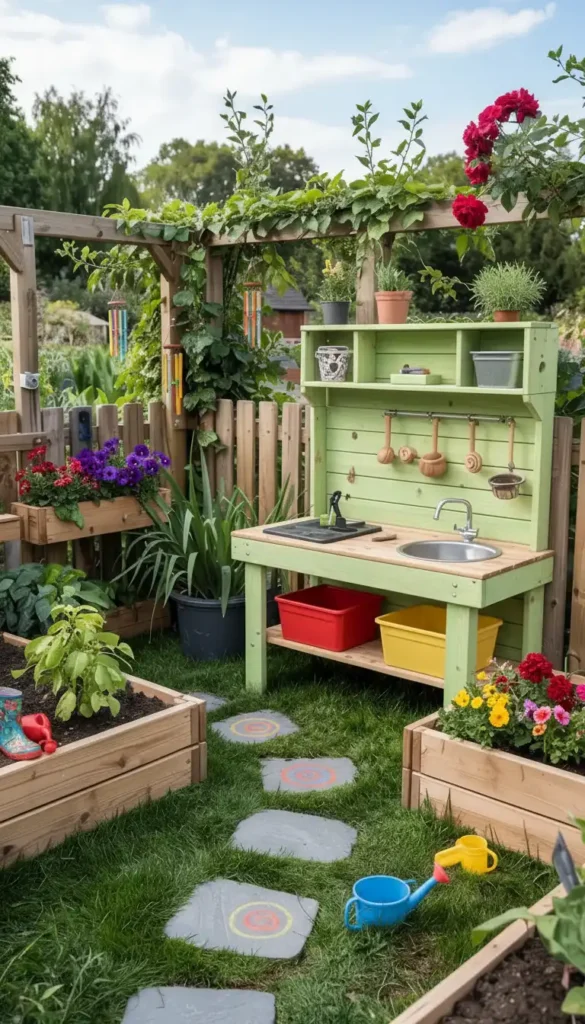
Seasonal Rotation Keeps It Fresh
Plan quarterly updates to maintain interest:
- Spring: Planting seeds, new herb starts, fresh mulch
- Summer: Water play additions, shade improvements, harvest activities
- Fall: Pumpkin growing, leaf collection, nature crafts
- Winter: Covered storage, pinecone gathering, bird feeding stations
These seasonal shifts give children something new to anticipate while using the same basic infrastructure.
Backyard Playground Design Plan That Grows With Your Kids
The smartest playground investments are the ones that adapt as children develop, eliminating the need for complete replacements every few years.
Strategic planning from day one creates a flexible framework that accommodates toddlers through tweens.
The Campus Layout Philosophy
Divide your yard into distinct, age-appropriate zones:
- Toddler corner (1-3 years): low structures, sensory elements, contained spaces
- Active play zone (4-8 years): climbing, swinging, sliding, running space
- Skill-building area (7-12 years): sports practice, obstacle courses, challenge elements
- Calm retreat (all ages): reading nooks, nature observation, quiet conversation
This zoning allows simultaneous play for mixed-age siblings without conflict.
Modular Equipment Allows Phased Investment
Build your playground incrementally rather than all at once:
- Start with base platform and simple slide (ages 2-4)
- Add swing attachment when children can pump independently (ages 4-6)
- Introduce climbing net or wall for skill progression (ages 6-8)
- Incorporate advanced challenges like rings or rope climbs (ages 8+)
This approach spreads costs over years while matching development stages.
The Central Open Area Principle
Preserve flexible space that never becomes obsolete:
- Minimum 20×20 foot clear zone for running games and sports
- Grass or turf surface for barefoot play and soft landings
- No permanent structures in this multi-use area
- Portable goals or bases that can be set up and stored
Tag, soccer, relay races, and imaginative play all need this open canvas.
📌 Pin this growth-focused playground framework! 📌
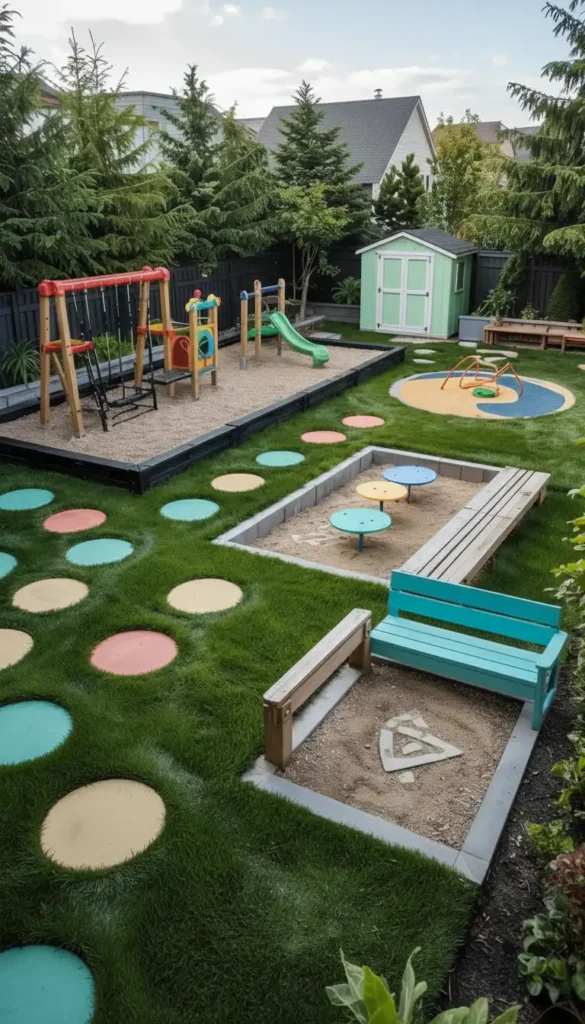
Perimeter Seating for Supervision and Rest
Adult comfort directly impacts how much time children spend outside:
- Long bench along fence line for extended supervision sessions
- Shaded seating option for hot summer afternoons
- View of all play zones from seated position
- Storage underneath for balls, jump ropes, and equipment
When parents can comfortably supervise for 90 minutes instead of 20, play sessions naturally extend.
Storage Planning From Day One
Protect your investment and maintain visual order:
- Weatherproof deck box for daily-use items (balls, chalk, bubbles)
- Small storage shed for seasonal equipment and ride-on toys
- Wall-mounted organizers for helmets, sports gear, and tools
- Covered bins for sand toys, water play items, and art supplies
Built-in storage prevents the “toys scattered across the yard” aesthetic that degrades the space.
The Multipurpose Platform Strategy
One versatile structure serves many functions across years:
- Low deck platform (18-24 inches high) becomes:
- Fort base with fabric walls (ages 3-5)
- Stage for performances (ages 5-7)
- Reading retreat with cushions (ages 7-10)
- Hangout spot for friends (ages 10+)
This single investment adapts through imagination rather than requiring physical changes.
Future-Proofing With Planned Expansion Zones
Leave space for interests that haven’t emerged yet:
- Reserved area for basketball hoop (ages 8+)
- Potential hammock zone for teens
- Water play expansion for summer fun
- Garden bed conversion as interests shift
Planning these zones prevents having to demolish existing structures when needs change.
📌 Save this adaptable playground timeline! 📌
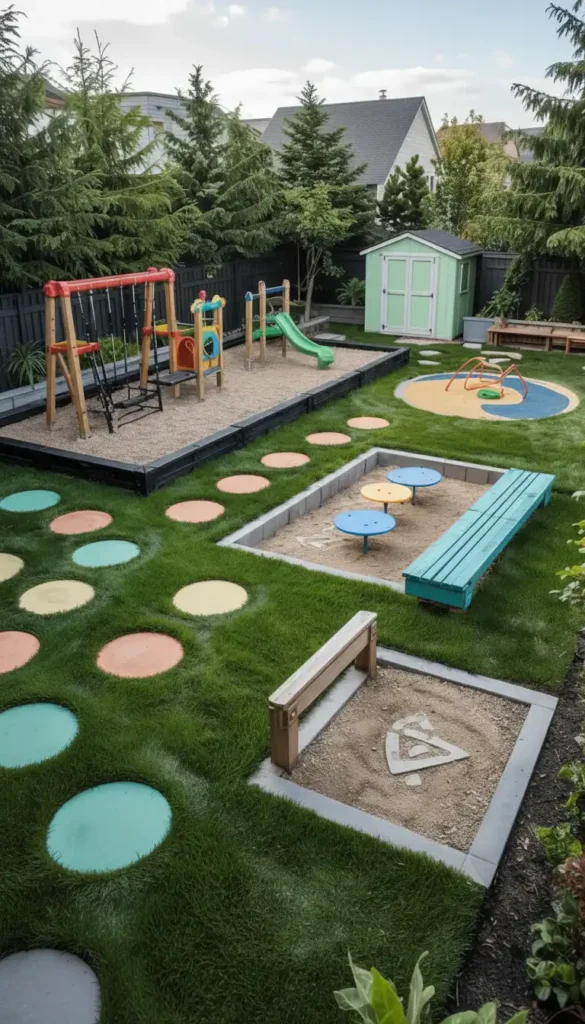
Safety Clearance Standards by Age
Maintain appropriate spacing as equipment evolves:
- Toddler structures: 6-foot fall zones on all sides
- Swing sets: 8-10 feet front and back minimum
- Climbing equipment: 9-12 feet depending on height
- Slide exits: 6-8 feet of clear landing space
These dimensions prevent collisions and ensure safe play as children become more active and daring.
Outdoor Play Area For Kids With A Simple Jungle Gym Layout
A single, well-chosen jungle gym creates a cleaner, more intentional play space than multiple scattered pieces.
The key is treating the structure as the hero element and designing everything else to support it.
Strategic Positioning for Visual Impact
Place your jungle gym where it makes the strongest statement:
- Visible from main living areas to encourage use and enable supervision
- Adequate fall zones on all sides (minimum 6 feet, ideally 9-12 feet)
- Natural shade nearby or plan for shade sail addition
- Clear approach path that feels inviting rather than obstructed
This positioning makes the play area feel designed rather than randomly placed.
The Supporting Elements Approach
Limit accessories to maintain focus and reduce clutter:
- One swing attachment (belt swing or toddler seat depending on age)
- Single climbing challenge (rope ladder, cargo net, or rock wall)
- Compact slide if space allows and structure supports it
- Nothing else—resist the urge to add more
This restraint keeps the space readable and prevents the “equipment graveyard” aesthetic.
Shade Integration Is Essential
Active play requires cool-down options:
- Pergola extension from house or fence
- Sail shade positioned to cover structure during peak sun hours
- Strategic tree planting (fast-growing options like red maples or river birch)
- Umbrella station near bench or recovery seating
Children play longer and more safely when they have respite from direct sun.
📌 Pin this focused jungle gym strategy! 📌
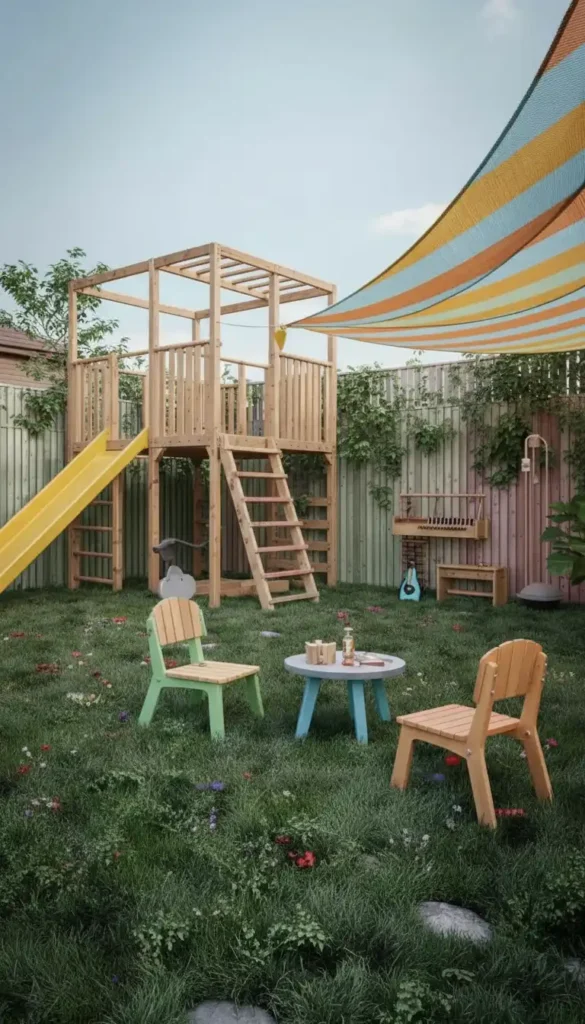
Kid-Sized Seating for Recovery Time
Active play needs built-in rest opportunities:
- Two small chairs or bench scaled to child height
- Positioned in shade near but not under the main structure
- Water bottle storage nearby to encourage hydration
- Visual connection to the play equipment without being in the fall zone
These spots naturally regulate play intensity by providing designated rest spaces.
The Music Wall Addition
Add variety without consuming more floor space:
- Wall-mounted outdoor instruments (chimes, drums, xylophones)
- Weatherproof materials specifically designed for outdoor use
- Fence-mounted installation to preserve ground space
- Accessible height range for multiple ages (24-48 inches high)
This vertical feature adds creative play without expanding the footprint.
Natural Wood Finishes for Visual Warmth
Material choice dramatically impacts how the play area feels:
- Cedar or pressure-treated pine stained in natural tones
- Rope elements in neutral colors (tan, gray, brown)
- Metal hardware in matte black or galvanized finish
- Avoid bright primary plastics that clash with landscape
Natural materials blend into yards rather than dominating them.
The Studio Gym Mindset
Think of your play area like a focused fitness space:
- One main station (the jungle gym itself)
- Quality surfacing (rubber mulch, pea gravel, or safety tiles)
- Recovery corner (shade and seating)
- Everything else removed to maintain clarity
This minimalist approach feels more sophisticated and requires less maintenance.
📌 Save this streamlined playground layout! 📌
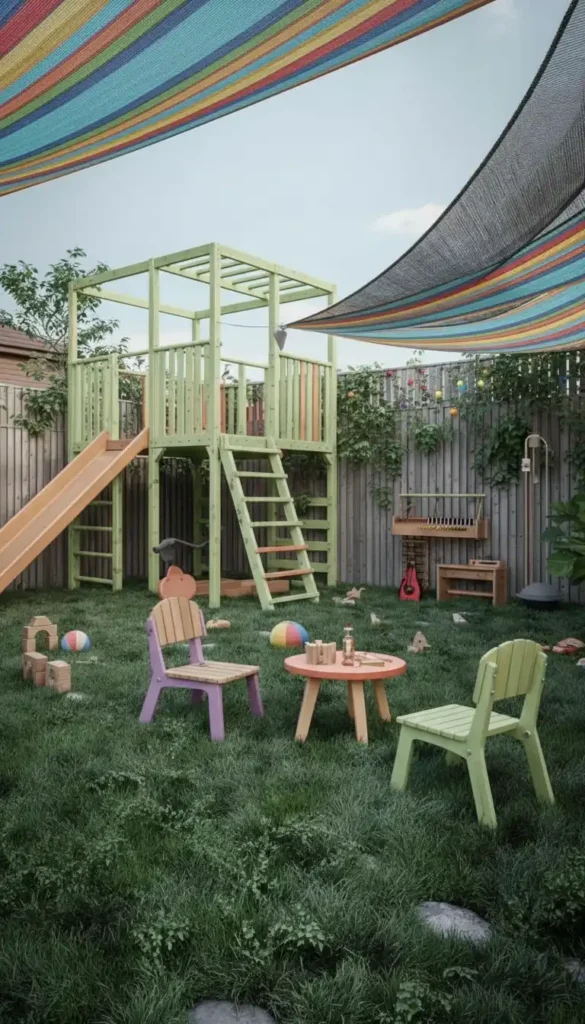
Layout Variations for Different Yard Shapes
Adapt positioning to your specific space:
For narrow yards:
- Position jungle gym along long fence line
- Create linear play path with accessories on opposite side
- Use vertical features (climbing wall, music panel) to maximize narrow width
For square yards:
- Center the jungle gym with radial clearance
- Position seating and shade on north side to avoid blocking sun
- Create circular movement pattern around structure
For sloped yards:
- Install on level area or create terraced platform
- Use slope naturally for slide exit or hill climbing
- Build retaining wall to create flat play zone if needed
These positioning strategies optimize safety and play value regardless of your specific constraints.
Conclusion
The outdoor play spaces that become family favorites aren’t necessarily the biggest or most expensive—they’re the ones designed around your specific reality. Whether you’re working with a small balcony, a tight budget, or planning for years of growth, the principles remain consistent: intentional layout, focused spending, and flexibility that accommodates changing needs.
Start with one zone, one strong element, or one weekend project. The play area that gets your children outside every day is worth infinitely more than the elaborate setup that never quite happens. Build something that works for your family right now, and trust that small, strategic improvements will transform the space into exactly what your kids need.

“I share simple, beautiful and affordable home decor ideas to help you style every corner of your home with ease.