

There’s something deeply personal about a bedroom. It’s the first thing you see when you wake up and the last thing you feel before you close your eyes. In 2026, more people are realizing that their bedroom shouldn’t just look good in photos — it should feel like a hug at the end of a hard day. If your room has ever felt cold, disconnected, or just “not quite right,” you already know how much that affects your sleep, your mood, and even your mornings.
These five cozy bedroom ideas aren’t about following trends blindly. They’re about creating a space that genuinely feels like yours — warm, soft, and emotionally grounding. Whether you’re starting from scratch or just want to refresh what you already have, each idea here gives you something real to work with. Something that actually makes a difference when you walk through that door.
Soft Linen Retreat Bedroom
There’s a reason linen has become one of the most beloved materials in modern bedroom design. It breathes. It softens with time. And it creates a kind of effortless calm that’s almost impossible to fake with synthetic alternatives. The Soft Linen Retreat Bedroom is built around that honest, tactile warmth — a space that looks relaxed because it genuinely is.
Why Linen Works So Well in Bedrooms
Linen is a natural fiber that regulates temperature, which means it keeps you cool in summer and warm in winter. That alone makes it one of the smartest bedding choices you can make.
- It gets softer with every wash, improving over time
- The natural wrinkles give it an “lived-in” look that feels intentional, not messy
- Neutral linen tones pair with almost any wall color or wood tone
- It absorbs moisture without feeling damp, supporting deeper sleep
The key insight: Linen doesn’t try too hard. That’s exactly what makes it feel luxurious.
Choosing the Right Neutral Wall Palette
The walls in a linen retreat bedroom should feel like a quiet backdrop — not competing with the texture of the fabric, but supporting it. Think soft whites, warm grays, and barely-there greiges.
- Avoid bright whites — they read as clinical and cold
- Warm off-whites like cream or alabaster make the linen pop gently
- Greige (gray-beige) walls create depth without heaviness
- Matte finishes absorb light softly, reducing harshness in the room
If you already have linen bedding and your walls feel too stark, a simple coat of warm white paint can change everything.
Layering Bedding for Depth and Warmth
One flat duvet isn’t enough to create that layered, cozy-retreat look. The secret is building depth through intentional layering.
- Start with a fitted sheet in a soft natural tone
- Add a lightweight linen duvet as your base layer
- Layer a knitted or waffle-weave throw folded at the foot of the bed
- Use two or three pillow sizes — standard, euro, and a lumbar — for visual fullness
Pin this Soft Linen Layering Guide! 📌
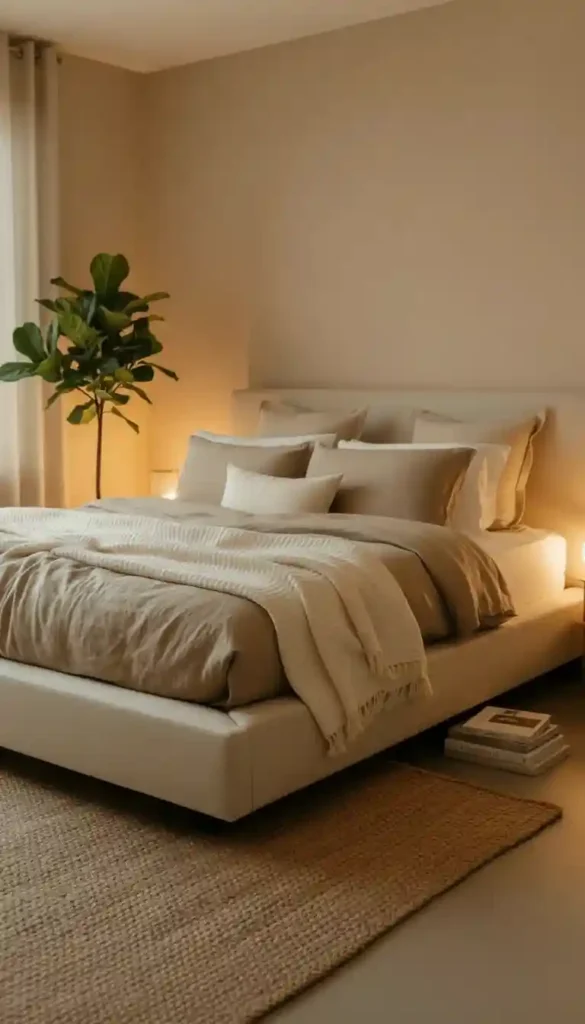
You don’t need to match everything perfectly. Slight tonal variations — a cream sheet, a warm white duvet, a tan throw — create richness that feels collected rather than coordinated.
Lighting That Encourages Rest
Overhead lighting is one of the most common mistakes in bedroom design. Bright, direct light signals to your brain that it’s time to be awake. For a linen retreat, you want the opposite.
- Replace ceiling fixtures with wall sconces or table lamps
- Use bulbs with a warm color temperature (2700K–3000K)
- Dimmer switches give you full control without replacing existing fixtures
- A single lamp on each nightstand creates balanced, soft light from mid-level
The goal is to make the room feel like it’s glowing from within — not lit from above.
Grounding the Space with a Textured Rug
A rug does more than protect the floor. In a soft linen bedroom, it anchors the entire visual composition and adds another layer of tactile comfort.
- Jute, wool, or boucle rugs complement linen beautifully
- Choose a size large enough so your feet land on it when getting out of bed
- A low pile is easier to maintain and works well under furniture
- Neutral tones echo the bedding without being matchy-matchy
Save this Linen Bedroom Setup Strategy! 📌
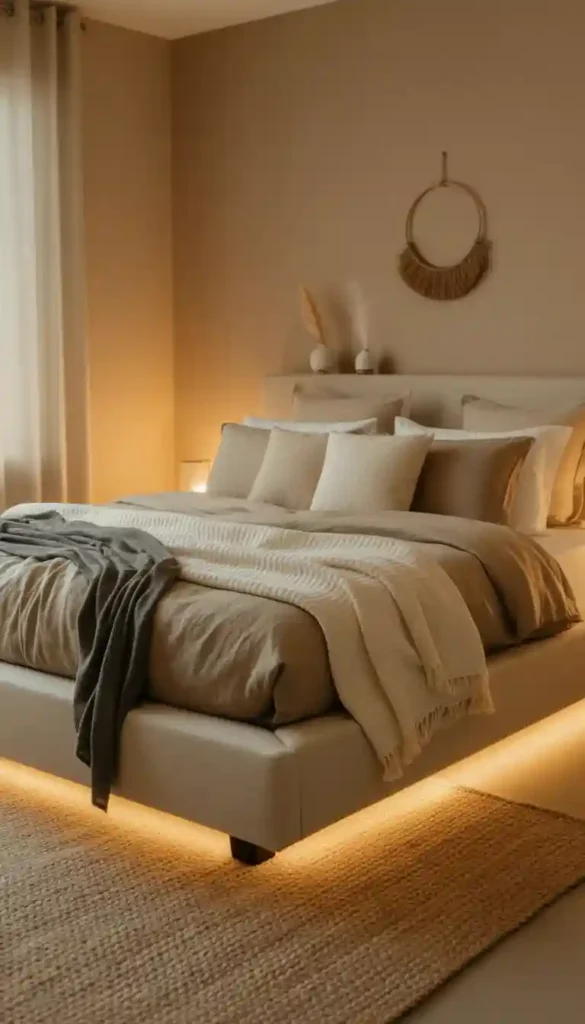
When all these elements come together — textured walls, layered bedding, warm lamps, and a grounding rug — the room stops feeling “designed” and starts feeling like a place where you genuinely exhale.
Keeping Decoration Intentional
The linen retreat isn’t about minimalism for minimalism’s sake. It’s about editing with purpose.
- Choose one or two meaningful objects for the nightstand, not five
- A single plant adds life without visual noise
- Avoid art that’s too bold or busy — soft abstract prints or nature-based photography work best
- Keep the floor as clear as possible to maintain that breathable, calm feeling
A good rule: if something doesn’t make you feel calm when you look at it, it probably doesn’t belong in this bedroom.
Warm Almond Comfort Bedroom
There’s something almost edible about almond tones. They’re not beige. They’re not tan. They sit somewhere between the two — soft, creamy, and deeply warm in a way that makes a room feel like it’s been wrapped in something gentle. The Warm Almond Comfort Bedroom takes that quality and builds an entire sleep environment around it, resulting in a space that feels instantly familiar and emotionally safe.
What Makes Almond Tones So Effective
Color psychology tells us that warm neutrals reduce anxiety and signal safety — two things that are absolutely essential in a sleep space. Almond sits in a sweet spot that feels neither cold nor overwhelming.
- It works in both natural and artificial light without shifting green or orange
- Almond tones pair with cream, soft white, warm wood, and dusty rose effortlessly
- The color reads as sophisticated without trying to be trendy
- It ages beautifully — the more you live with it, the more it settles
The result: A bedroom that immediately communicates rest, safety, and comfort the moment you walk in.
The Plush Upholstered Bed as a Centerpiece
In an almond comfort bedroom, the bed isn’t just furniture — it’s the emotional anchor of the entire space. An upholstered bed in a complementary fabric elevates the sense of luxury and softness.
- Velvet upholstery in warm beige, cream, or dusty taupe pairs beautifully with almond walls
- A tall, padded headboard creates a visual focal point without needing artwork above it
- Choose a bed frame with clean lines to avoid competing with the soft color palette
- Linen-upholstered frames are a great option for a more relaxed, breathable look
A well-chosen upholstered bed can reduce the need for many other decorative elements because it carries so much visual and tactile weight on its own.
Adding Cozy Throws Without Overdoing It
Throws are one of the easiest ways to add warmth and texture to a bedroom — but placement matters.
- Fold a chunky knit throw at the foot of the bed for visual layering
- Drape a lighter linen throw over the back of a reading chair if space allows
- Stick to tones within the warm neutral family — camel, ivory, soft brown
- Limit yourself to one or two throws so the space doesn’t feel cluttered
Pin this Warm Bedroom Comfort System! 📌
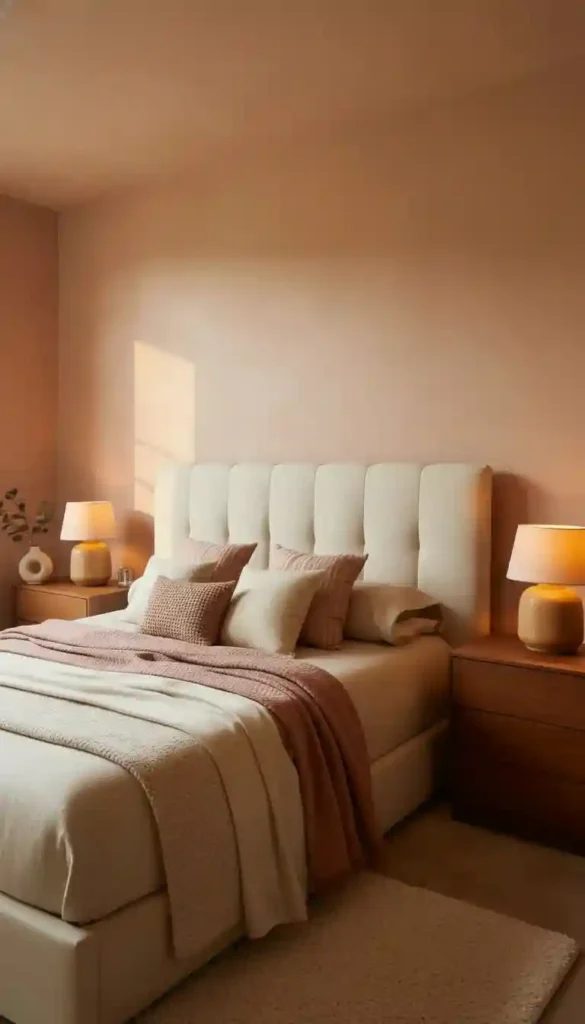
The throw should look like it was casually placed, not styled for a photoshoot. The more natural it feels, the more “lived-in comfort” the room communicates.
Using Wood Nightstands to Introduce Natural Balance
Wood is one of the most grounding natural materials you can bring into a bedroom. In an almond palette, it adds texture without competing with the warmth of the walls.
- Light oak or walnut nightstands both work well in this palette
- Keep the wood finish matte rather than glossy to maintain the room’s soft mood
- Choose nightstands with at least one drawer to reduce surface clutter
- Round-cornered or tapered-leg styles feel softer and less corporate
The contrast between the plush upholstered bed and the solid wood nightstands creates a beautiful balance — soft meeting structured, organic meeting refined.
Lighting That Creates a Restful Glow
Lighting in an almond bedroom should feel like candlelight — not quite, but close. The goal is warmth, softness, and that feeling of winding down.
- Fabric lampshades diffuse light gently and add another textural layer
- Antique brass or warm bronze lamp bases tie into the almond and wood palette
- Table lamps at nightstand height create the most flattering, restful light
- Avoid blue-toned bulbs entirely — they disrupt melatonin production and make warm colors look flat
Save this Almond Bedroom Lighting Approach! 📌
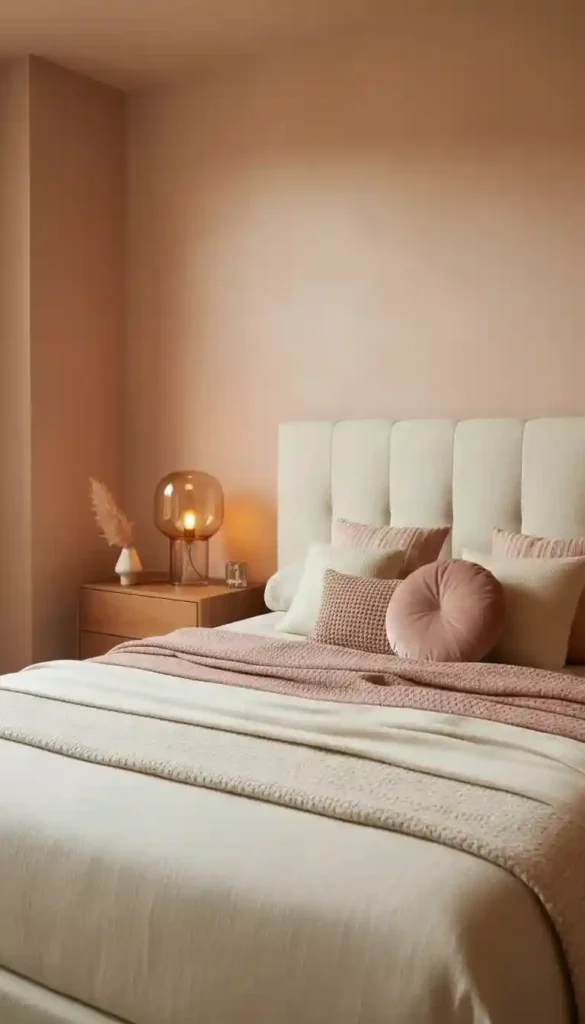
When the lamps are on and the overhead light is off, an almond bedroom transforms completely. The color deepens, the room feels smaller (in a good way), and everything just feels safe.
Completing the Atmosphere with Soft Textiles
Beyond the bed and throws, consider every soft surface in the room as an opportunity to add warmth.
- Curtains in ivory linen or warm cotton frame the windows without blocking natural light
- A soft area rug in cream or warm gray adds underfoot comfort
- Cushions in varying textures — velvet, boucle, cotton — add dimension on the bed
- A padded bench at the foot of the bed ties the entire look together while adding function
The Warm Almond Comfort Bedroom succeeds because every element whispers the same message: this is a place built for rest, for warmth, and for you.
Soft Taupe Nest Bedroom
Some colors feel neutral without feeling flat. Taupe is one of them. It carries just enough warmth to feel inviting and just enough gray to feel modern and composed. The Soft Taupe Nest Bedroom uses that unique quality to create a cocoon-like space — somewhere between a cloud and a woodland, visually calm and emotionally grounding.
Why Taupe Is the Ideal Nest Color
The word “nest” says everything. A nest is protective, soft, warm, and perfectly proportioned to make you feel held. Taupe does the same thing on walls.
- It reflects light softly without bouncing it harshly
- In the evening, taupe reads warmer and deeper — perfect for a restful mood
- It pairs with virtually every natural material: linen, wood, rattan, cotton, jute
- Taupe doesn’t date quickly — it’s been a design staple for decades and continues to evolve
The truth: Taupe isn’t boring. It’s disciplined. And discipline in a bedroom creates calm.
The Padded Headboard Effect
A padded headboard does several things at once — it adds a layer of visual softness, creates a focal point, and provides actual physical comfort for those who like to sit up and read.
- Choose fabric that echoes the wall tone — dove gray, warm sand, or cream
- A tall headboard (over 48 inches) makes low ceilings feel higher
- Tufting adds elegant texture without requiring additional wall art
- Channel-stitch or flat-panel headboards offer a cleaner, more modern version of the same softness
Pin this Taupe Nest Bedroom Formula! 📌
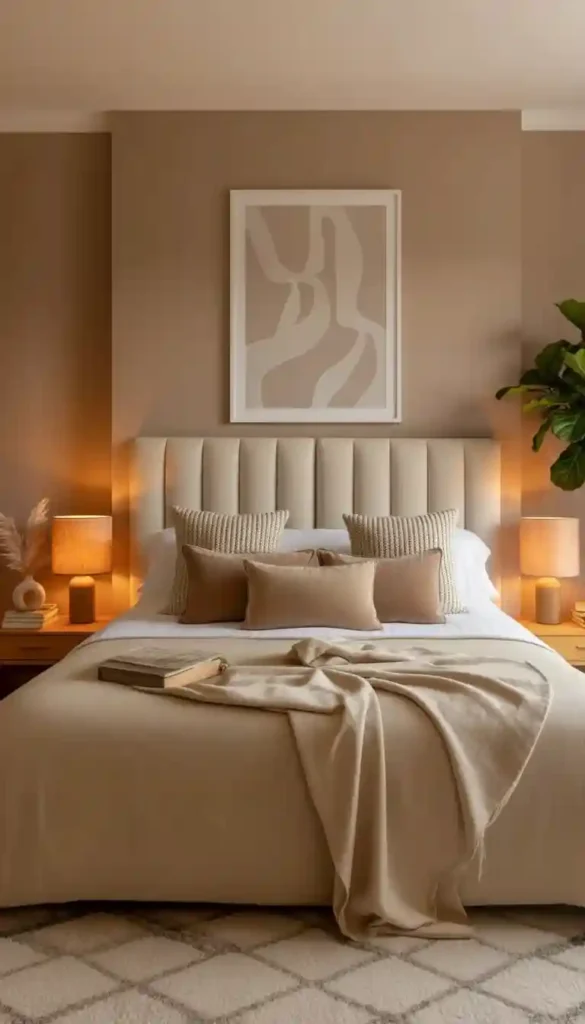
Pair a padded headboard with taupe walls and soft white bedding and you’ve already created 80% of the visual work the room needs to feel complete.
Layering Textiles to Build Warmth
In a nest bedroom, warmth isn’t just about temperature — it’s about the visual sensation of softness layering upon softness.
- Start with high-thread-count cotton sheets in warm white or cream
- Add a lightweight waffle-weave blanket as a mid-layer
- Place a heavier knit or faux-fur throw at the foot for visual and physical warmth
- Use pillowcases in slightly different textures to add subtle variety
The goal is to make the bed look like something you’d sink into happily — effortlessly inviting without looking overdone.
Replacing Harsh Lighting with Warm Lamps
Overhead lighting kills bedroom atmosphere. In a taupe nest, warm lamp light is everything.
- Use amber-toned bulbs (2700K maximum) in fabric-shaded lamps
- Consider plug-in wall sconces if nightstand space is limited
- A small lamp on a dresser adds a third light source that enhances depth
- Candles or LED candle alternatives add warmth and ambiance safely
Save this Nest Bedroom Lighting Setup! 📌
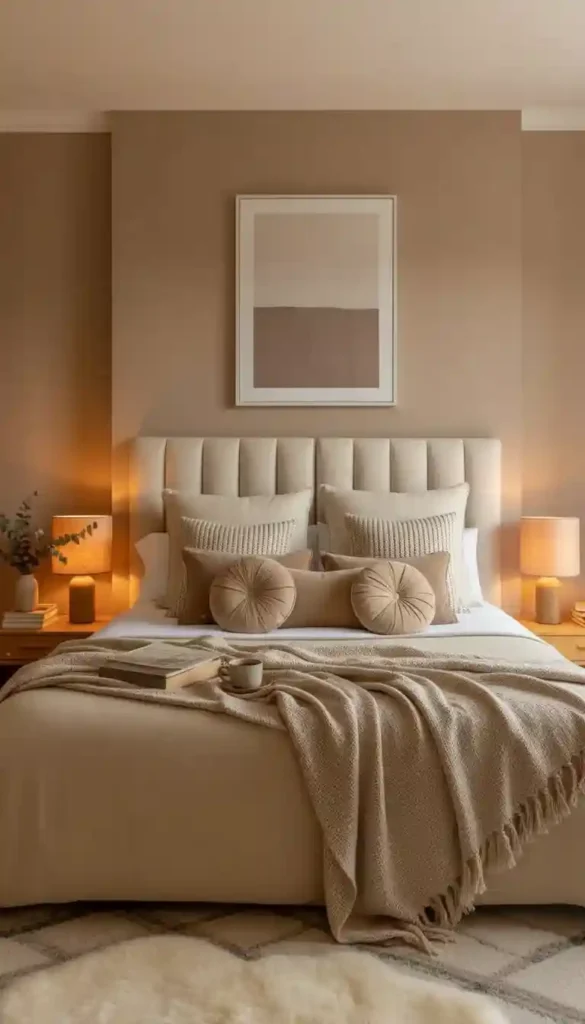
When evening falls and only the warm lamps are on, a taupe nest bedroom becomes almost hypnotic in its calmness. The color deepens, the textures come alive, and the room does exactly what a bedroom should — it invites you to stop.
Keeping the Layout Open and Uncluttered
The “nest” feeling depends heavily on simplicity of layout. Visual clutter breaks the cocoon effect immediately.
- Leave clear floor space on both sides of the bed
- Limit furniture to what you genuinely use: bed, nightstands, one dresser
- If you have a small bedroom, a floating shelf replaces a bulky nightstand beautifully
- Use hidden storage — baskets under the bed, drawers built into bed frames — to eliminate surface mess
A bedroom with open floor space and clear surfaces feels instantly larger and more restful, even if the square footage hasn’t changed at all.
The Role of Curtains in Creating the Nest Effect
Curtains are often underestimated. In a taupe nest bedroom, they’re one of the most powerful tools you have.
- Floor-to-ceiling curtains in warm linen or cotton make the room feel taller and more enclosed in the best way
- Hang the rod 4–6 inches above the window frame to extend the visual height
- Choose curtains that are at least 2x the window width for a full, gathered look
- Blackout lining is essential for quality sleep — you can add it invisibly behind decorative panels
The curtains frame the entire room, softening the edges and reinforcing that nest-like sense of being wrapped in something warm and private.
Cream and Wood Haven Bedroom
There are bedroom combinations that feel timeless because they draw from nature — from the things that have always made humans feel safe and grounded. Cream and wood is one of those combinations. Light without being cold, natural without being rustic, this pairing creates a haven that feels genuinely human in the best possible way.
The Psychology Behind Cream and Wood
Biophilic design — the idea that humans are naturally drawn to organic materials and natural light — explains exactly why cream walls and wood furniture make us feel so calm.
- Cream reflects natural light warmly, brightening the room without harshness
- Wood introduces organic texture that no synthetic material can fully replicate
- Together, they mimic the calm of a sunlit forest clearing — bright, warm, and sheltered
- The combination reduces visual “noise” and signals safety to the nervous system
Why it works: These aren’t just aesthetic choices. They’re deeply intuitive ones.
Choosing the Right Wood Bed Frame
The bed frame is the backbone of this design concept. Get this right and the rest of the room follows naturally.
- Light oak creates a fresh, Scandinavian-influenced feel that pairs beautifully with cream
- Walnut adds richness and depth — better for rooms that need more grounding
- Avoid dark mahogany or ebony — they compete too heavily with the lightness of cream
- Slatted headboards add texture while keeping the overall feeling airy and open
Pin this Cream and Wood Haven Design Plan! 📌
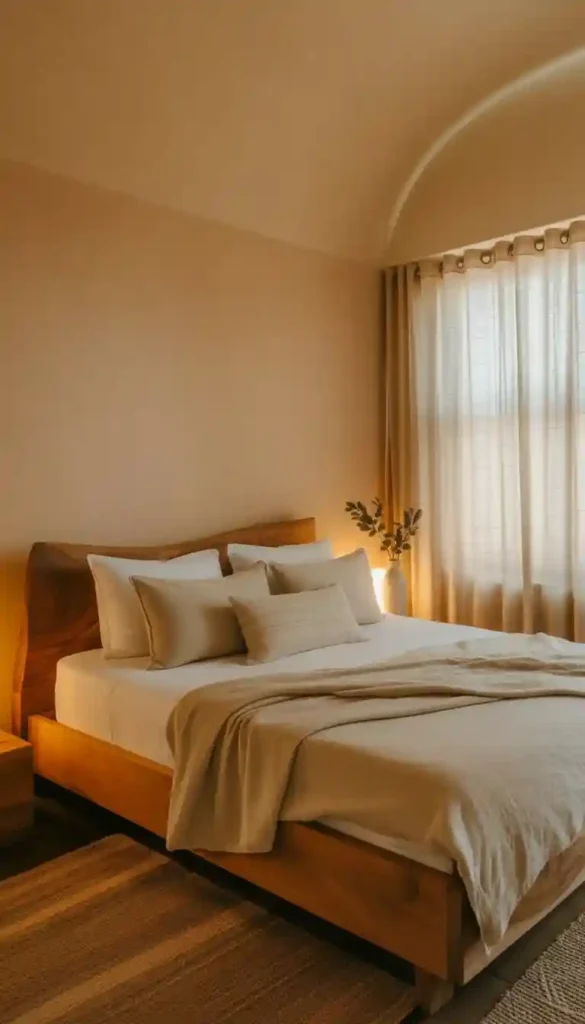
A wood bed frame with clean lines and honest joinery is a long-term investment that never really goes out of style. In a cream and wood haven, it becomes the quiet hero of the room.
Building Soft Bedding Layers
With such a calm, natural backdrop, the bedding needs to carry warmth without overwhelming the palette.
- Start with cream or warm white cotton sheets — they disappear beautifully into the walls
- Add a light quilt or duvet in a tone just slightly warmer than the walls — ecru, oat, or soft sand
- Layer a woven cotton or linen throw at the foot for texture and warmth
- Use natural-fiber pillow inserts — down or down-alternative — for the fullest, softest look
Avoid bright white bedding in this design — it reads as too clinical and disrupts the warmth of the wood.
Softening Window Light with Textured Curtains
Natural light is a gift in a cream and wood bedroom, but it needs to be filtered to maintain the haven feeling throughout the day.
- Sheer linen panels allow light in while softening harsh direct sun
- Layer with a heavier curtain panel that can be drawn for afternoon naps or privacy
- Warm beige, pale sand, or cream curtains blend with the walls and make the room feel larger
- Wooden curtain rings or a matte brass rod tie the materials together cohesively
Save this Window Treatment Strategy for Haven Bedrooms! 📌
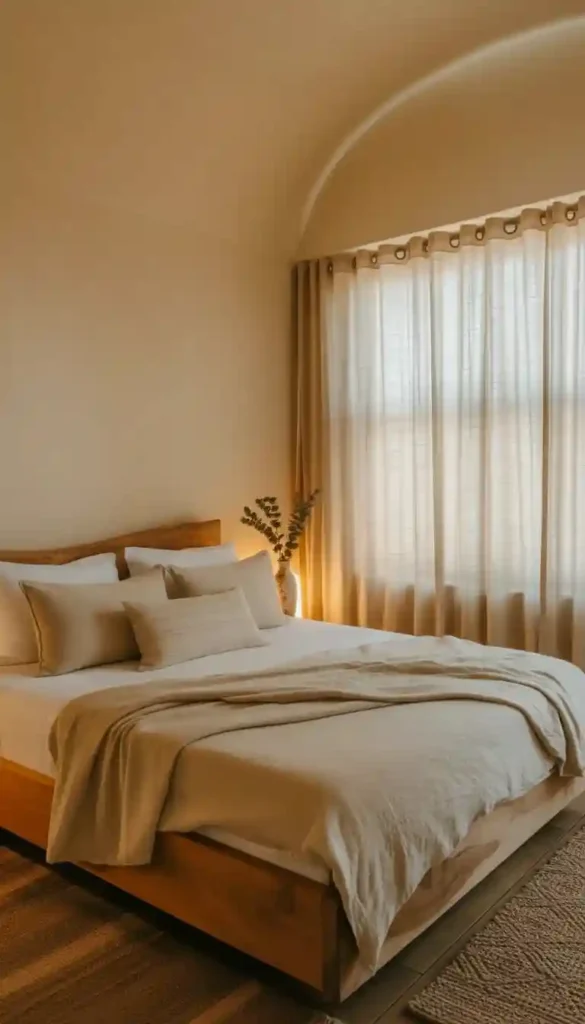
Light filtered through natural linen curtains creates one of the most beautiful mid-morning atmospheres a bedroom can have — soft, golden, and completely calming.
Incorporating Warm Lighting Thoughtfully
Even in a bright, cream-walled bedroom, lamp lighting is essential for evenings.
- Ceramic or natural stone lamp bases in cream or warm sand blend seamlessly with the palette
- Wooden lamp bases are a natural extension of the overall theme
- Linen or cotton lampshades diffuse light softly and add texture at eye level
- Under-bed LED strips set to warm white create a floating effect that feels luxurious
The lighting should feel like a natural extension of the daylight — same warmth, just from a different source.
The Haven Effect: Making It Feel Complete
A haven is more than beautiful. It’s functional, personal, and deeply comfortable.
- Add a small reading nook with a cream linen chair if space allows
- Keep one tray on the dresser for keys, jewelry, and daily essentials — organized calm
- Introduce a single potted plant in a terracotta or natural ceramic pot for life and color
- A light, natural scent — cedarwood, vanilla, or white tea — completes the sensory experience
The Cream and Wood Haven Bedroom proves that you don’t need drama or bold choices to create something genuinely beautiful. Sometimes the most restful rooms are the ones that simply get out of your way.
Muted Clay Cozy Bedroom
Clay is having a moment — and it deserves it. Unlike terracotta, which can feel intense, muted clay sits in a softer register. It’s earthy without being heavy, warm without being orange, and grounded without being dark. The Muted Clay Cozy Bedroom harnesses that balance to create a space that feels emotionally rooted and visually satisfying in a way that’s hard to explain but immediately felt.
Understanding the Muted Clay Color Family
Muted clay refers to clay tones that have been softened with gray, white, or beige undertones — reducing the intensity while keeping the earthiness alive.
- True clay can be bold; muted clay is composed and livable
- It works in both north-facing rooms (which can feel cold) and south-facing rooms without becoming overpowering
- The color shifts beautifully between natural and artificial light — warmer at night, softer by day
- It pairs naturally with cream, off-white, warm wood, and deep sage green for accents
Why people love it: Muted clay feels like the earth — stable, reliable, and deeply comforting.
The Upholstered Bed in a Clay Bedroom
An upholstered bed in this design pulls everything together. The softness of the fabric responds to the warmth of the walls in a way that solid wood or metal frames simply can’t.
- Cream, warm sand, or soft camel velvet or boucle upholstery sings against clay walls
- A low-profile platform bed keeps the room feeling grounded and modern
- A curved headboard adds a sculptural softness that complements the organic clay tone
- Avoid cool gray or blue fabric — it fights the warmth of the clay and creates visual tension
Pin this Muted Clay Bedroom Strategy! 📌
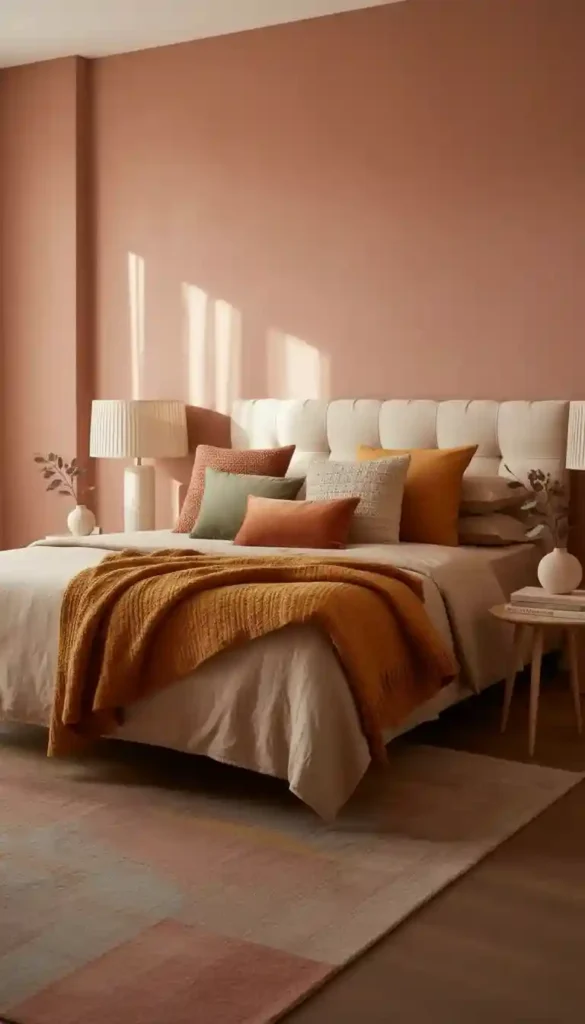
One of the most effective combinations: a curved boucle headboard in cream against muted clay walls. It’s warm, sculptural, modern, and deeply cozy all at once.
Building Textile Layers That Invite Rest
In a clay bedroom, every textile choice should lean into the earthy, grounded palette.
- Terracotta or rust-toned throw blankets add depth without overpowering
- Cream and warm white bedding keeps the base fresh against the richer wall tone
- A chunky knit pillow or rust-toned lumbar pillow adds a pop of warmth without being jarring
- Linen and cotton remain the best fabric choices — breathable and authentically earthy
Mix two or three textures on the bed — smooth, knit, and woven — for a richness that reads as truly cozy rather than flat.
Preventing Heaviness with Thoughtful Lighting
The most common concern with clay walls is that the room will feel dark or heavy. Thoughtful lighting solves this completely.
- Use a mix of light sources — never rely on one lamp alone
- Place one lamp on each nightstand for balance and symmetry
- A floor lamp in the corner adds ambient fill light that lifts the room
- Use warm white bulbs throughout — 2700K–3000K — to honor and enhance the clay tone
Save this Clay Bedroom Lighting Balance Guide! 📌
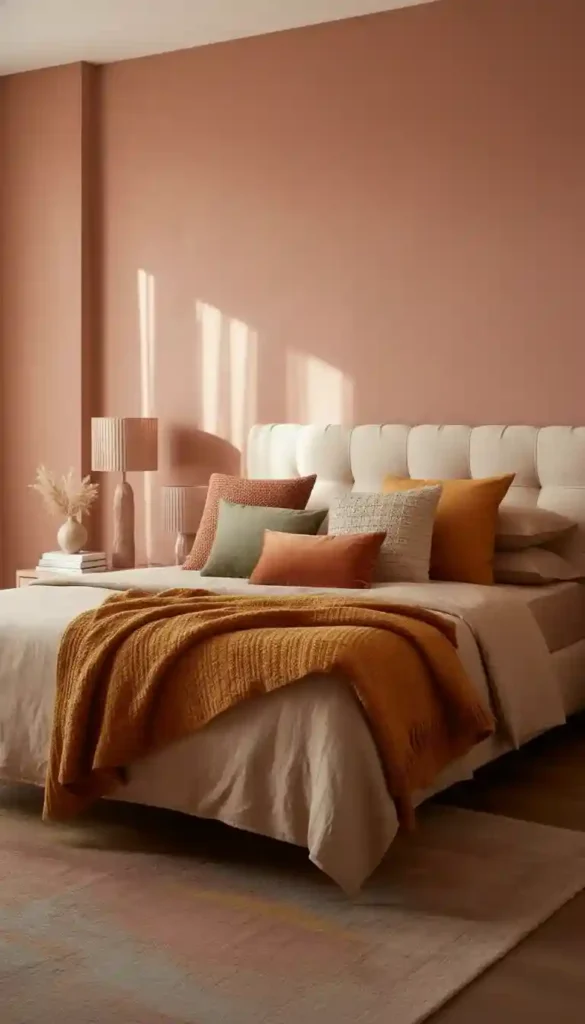
The right lighting makes muted clay walls glow rather than close in. The room feels warm and intimate — not dark and heavy.
Why Muted Clay Feels Emotionally Grounding
This isn’t just aesthetics. There’s a real emotional response that clay tones produce in most people.
- Earth tones are processed by the brain as “safe” — they reference nature, stability, shelter
- The muted quality removes visual stimulation, which is essential for a room built around rest
- Clay doesn’t demand attention — it holds space, which is exactly what a bedroom should do
- People consistently report feeling “calmer” and “more themselves” in earth-toned rooms
A bedroom that feels emotionally grounding is one you’ll actually want to return to at the end of the day — not just one that photographs well.
Completing the Clay Bedroom with Finishing Touches
The final layer of a muted clay bedroom is the small, personal details that make it feel truly yours.
- A ceramic or clay-toned vase with dried pampas or eucalyptus adds organic beauty
- Woven baskets on open shelving keep things organized while adding texture
- A single piece of warm-toned abstract art ties into the palette without being too literal
- A jute or wool rug in cream or warm oat grounds the space underfoot
These finishing touches don’t need to be expensive. They need to feel intentional. In a muted clay bedroom, intentionality is what separates a space that looks good from one that genuinely feels like home.
Conclusion
A bedroom isn’t just a room. It’s where you recover, reset, and begin again. These five cozy bedroom ideas for 2026 — the Soft Linen Retreat, the Warm Almond Comfort, the Soft Taupe Nest, the Cream and Wood Haven, and the Muted Clay Cozy — all share one thing: they prioritize how a space feels over how it looks.
The best bedroom you can create isn’t necessarily the most expensive or the most dramatic. It’s the one that makes you exhale when you walk through the door. Choose one idea that resonates with you, start with one or two changes, and let the room grow from there. Comfort is always worth the effort.

“I share simple, beautiful and affordable home decor ideas to help you style every corner of your home with ease.