

There is something deeply magical about stepping outside your back door and entering a world that feels completely different from everyday life. The smell of fresh air, the glow of string lights overhead, the laughter of your kids as they crawl into a cozy tent — backyard camping creates memories that no screen ever could. If you have been dreaming of turning your yard into a real campsite, this guide is exactly what you need.
In 2026, backyard camping has evolved far beyond throwing a tent on the grass. Today’s setups are thoughtful, beautiful, and genuinely comfortable. Whether you are planning your first family campout or looking to upgrade your current layout, these five creative ideas will help you design a space that feels like a true escape — right in your own home.
The Cohesive Outdoor Room: Designing a Backyard Camping Layout That Feels Intentional
Most backyard camping setups feel random. A tent here, a chair there, a cooler somewhere in the middle. The best setups in 2026 are designed like outdoor rooms — with purpose, flow, and visual harmony. When every element has a place and a reason, the whole space feels special.
Start with a central focal point. Then build outward.
Start With a Strong Focal Point
Your focal point anchors the entire layout. It sets the mood before anyone sits down.
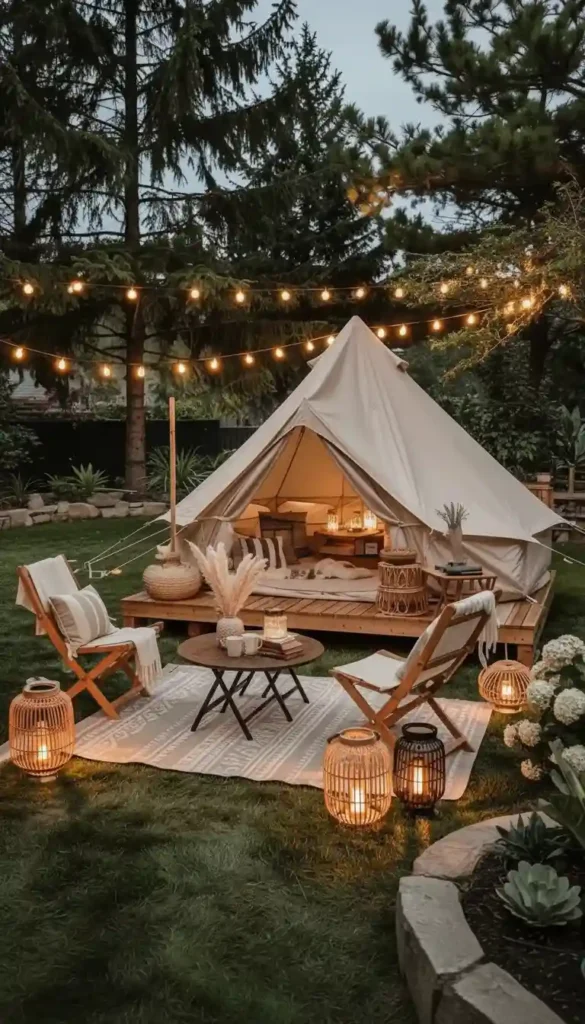
- A canvas bell tent on a wooden platform creates instant drama
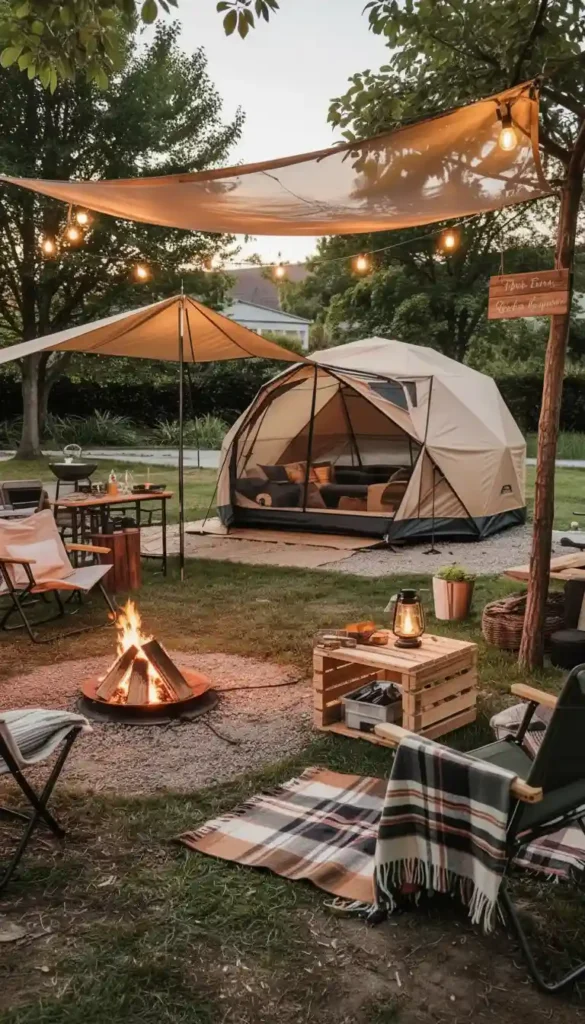
- A fire pit surrounded by gravel establishes a natural gathering zone
- A statement lighting feature like a chandelier of Edison bulbs draws the eye upward
Pick one and commit. Everything else radiates from that center.
Define Clear Zones for Each Activity
A well-zoned yard prevents chaos and confusion — especially with kids.
- Sleeping zone: Tents and bedding, positioned away from foot traffic
- Dining zone: Folding table, camp chairs, and a prep station
- Lounging zone: Poufs, rugs, and low seating for relaxing
- Fire zone: Safe distance from tents, with seating arranged in a circle
Each zone should feel connected but distinct. Use rugs and lighting to define boundaries without building walls.
Use Pathways to Guide Movement
Clear pathways make a campsite feel organized and safe, especially at night.
- Line the path with solar stake lights for nighttime visibility
- Use gravel or stepping stones to separate zones
- Keep pathways at least 3 feet wide for easy movement with kids
Good flow means no one trips over a cooler at 10pm.
Choose Furniture That Serves Double Duty
Every piece of furniture should earn its spot.
- Folding wood chairs that look great and pack flat
- Wicker storage baskets that hold gear and add texture
- A compact prep table that doubles as a serving station
- Outdoor poufs that work as seating, footrests, or side tables
Avoid single-purpose clutter. If it only does one thing, leave it inside.
📌 Pin this outdoor room layout strategy! 📌
Add String Lights as Your Primary Overhead Layer
String lights do more than illuminate — they transform the mood.
- Suspend them between wooden posts or trees at 8–10 feet high
- Choose warm white (2700K) for a cozy, firelight feel
- Layer with solar lanterns at ground level for depth and safety
Test your lighting at night before your first campout. You will be surprised how different things look after dark.
Incorporate Weather-Resistant Textiles
Textiles are what make an outdoor space feel lived in and warm.
- Outdoor rugs anchor the seating zone and soften the ground
- Woven throws in neutral tones add warmth without looking fussy
- Canvas cushions resist moisture and hold their shape
Stick to a palette of earth tones, warm neutrals, and forest greens for a cohesive, natural look.
Plan Your Safety Details Before You Decorate
Style should never come at the expense of safety.
- Level the ground before placing any tent or furniture
- Protect extension cords with cord covers or route them along fences
- Check the forecast the morning of your campout
- Keep a first aid kit and flashlight within easy reach
A beautiful setup that is also safe is a setup you will use again and again.
📌 Save this safety planning checklist! 📌
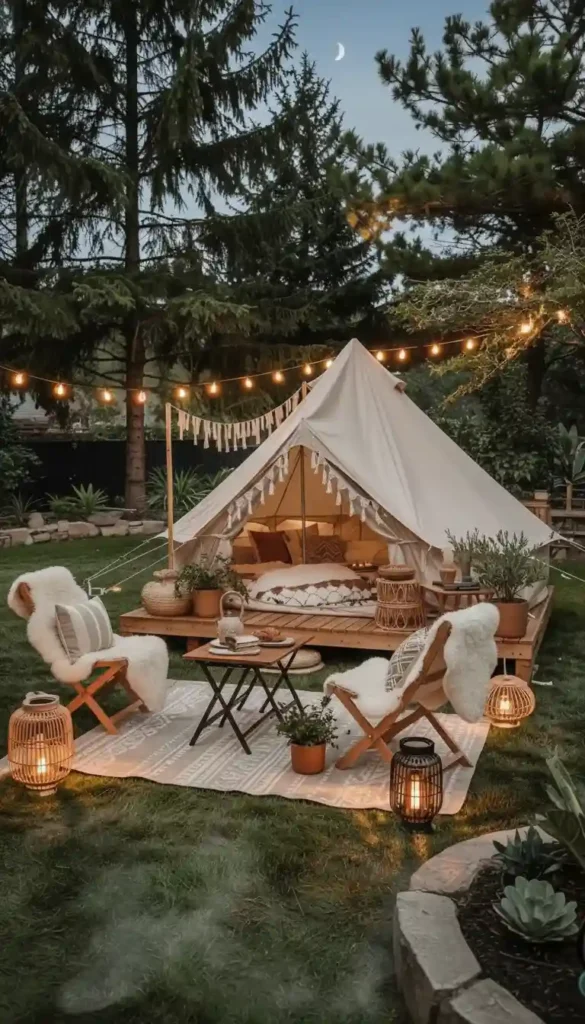
The principle here is simple: intentional design creates an experience. Random placement creates stress. Plan your layout like a room, and your backyard will feel like a destination.
Creative Backyard Camping Setups That Capture the Real Campsite Feel
Some families want more than a pretty backyard. They want the feeling of being truly away — surrounded by nature, with the sounds, textures, and atmosphere of a real campground. You do not need to leave home to get there. With the right setup, your backyard can feel like the woods.
This is about immersion. Every detail counts.
Face the Tent Toward Your Best View
Orientation changes everything. The direction your tent door opens affects the entire experience.
- Face it toward a tree line, garden bed, or natural hedge for a nature-forward feel
- Avoid facing toward the house, fence, or street if possible
- Consider morning sun direction — east-facing tents get gentle morning light
This small choice creates a sense of arrival every time someone unzips the door.
Use Natural Ground Covers for Authenticity
What is under the tent matters as much as what is inside it.
- Gravel under the tent improves drainage and crunches underfoot like a real campsite
- Mulch or wood chips add an earthy smell that deepens the outdoor feel
- A ground tarp first, then natural cover on top, keeps moisture out
Skip bare grass or concrete if you want the campground atmosphere.
Build a Dedicated Fire Circle Area
A fire circle is the heart of any authentic campsite.
- Mark the circle with river stones or a metal fire ring
- Keep seating at least 3 feet back from the fire edge
- Position camp chairs in a partial circle, leaving an open side for visibility
- Keep a bucket of water or sand nearby — always
The fire circle is where stories get told. Design it like it matters.
📌 Pin this authentic campsite layout guide! 📌
Set Up a Small Camp Kitchen Zone
A cooking zone makes the experience feel complete.
- Use a portable camp stove on a folding table
- Organize supplies in enamel containers and wooden crates
- Hang a small lantern above the prep area for visibility
- Keep a small cooler nearby with drinks and snacks
Even if you only make hot cocoa and s’mores, having a dedicated kitchen area makes the whole thing feel real.
Choose Gear That Looks the Part
Visual cohesion makes a campsite feel curated, not cobbled together.
- Dome or bell tent in canvas or khaki — avoid bright synthetic colors
- Enamel-style dishware in forest green or navy
- Plaid wool throws or cotton blankets for bedding
- Battery lanterns in classic black or bronze metal
When the gear matches, the campsite looks like something out of a magazine — and feels even better in person.
Layer in Sensory Details for Full Immersion
The best campsites engage more than just your eyes.
- Use a portable speaker with ambient forest sounds or soft acoustic music
- Hang wind chimes in a tree nearby for a gentle auditory layer
- Burn a citronella candle or outdoor incense for scent
- Serve warm drinks in tin mugs for that authentic campfire feeling
These small touches are what guests remember long after the tent comes down.
Add Waterproof Storage Without Ruining the Look
Storage is the detail most people forget — until they need it.
- Waterproof canvas bins blend in beautifully with a natural campsite aesthetic
- Woven trunks with lids double as seating and keep gear dry
- A hanging organizer inside the tent holds phones, flashlights, and books
- Label bins clearly so kids can find what they need independently
Good storage keeps the magic alive. Clutter breaks it.
📌 Save this campsite immersion strategy! 📌
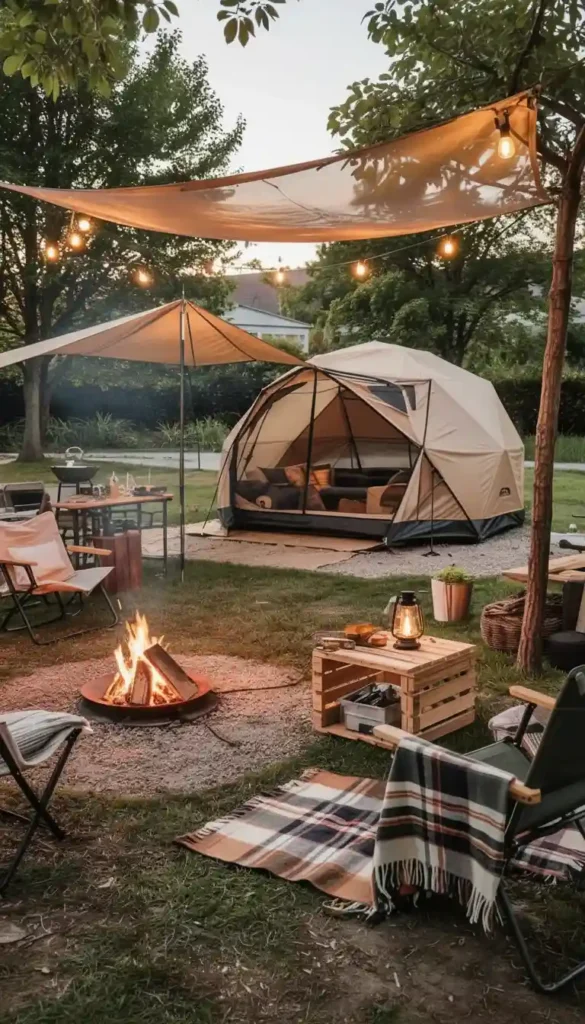
Authenticity is about details. When every sensory layer — sight, sound, smell, touch — works together, your backyard stops feeling like a backyard. It becomes somewhere else entirely.
Backyard Camping Setup For Families – Fun, Safe, and Totally Functional
Designing a backyard campsite for a family is a different challenge than designing for adults. Kids need more space, more structure, and more fun built into the layout. Parents need visibility, safety, and enough comfort to actually enjoy themselves. The good news is that with the right design, you can have all of it.
The key is strategic zoning — giving everyone a place without crowding anyone.
Divide the Yard Into Three Clear Zones
Family campsites work best when activities are separated, not mixed.
- Active zone: Open grass area for games, movement, and play
- Sleeping zone: Tents set slightly apart for quiet and rest
- Relaxation zone: Adult seating with sightlines to the active zone
This separation prevents the campsite from feeling chaotic and helps kids transition between activities naturally.
Choose a Multi-Room Tent for Sleeping Comfort
Not all tents are created equal for families.
- Look for tents with two or three separate rooms divided by zip-up panels
- A 10×10 foot footprint comfortably fits a family of four
- Ensure the tent has good ventilation panels to prevent condensation overnight
- Choose a freestanding design so setup does not require staking into hard soil
Separate sleeping rooms mean the kids can go to bed while adults stay up — a huge win.
Make the Dining Area Kid-Friendly and Practical
Mealtime outdoors can be wonderful or chaotic. Good design tips the balance.
- Use a folding picnic table with attached benches — stable and easy to clean
- Place an outdoor rug underneath to catch crumbs and define the space
- Add a small snack station (a crate with labeled bins) for self-service snacking
- Use weighted cups or camping mugs with lids to prevent spills on uneven surfaces
📌 Pin this family campsite zone layout! 📌
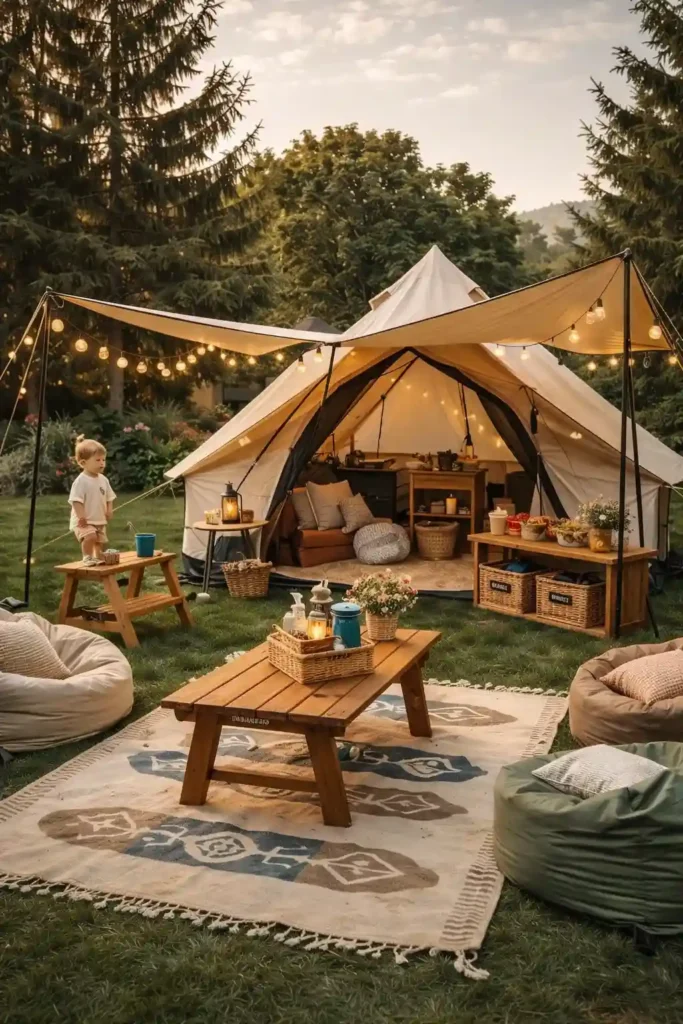
Add Interactive Elements That Keep Kids Engaged
A campsite that entertains itself is a campsite you will actually use.
- Chalkboard sign at the entrance for a fun welcome message kids can update
- A glow-in-the-dark ring toss or lawn game for evening entertainment
- A storytelling corner with floor cushions and a lantern for reading aloud
- A small craft station with paper, crayons, and nature supplies for daytime activities
When kids are engaged, parents can relax. It is that simple.
Use Kid-Friendly Lighting Throughout
Children feel safer when they can see clearly. Lighting is not just aesthetic for families — it is functional.
- Place kid-level lanterns near tent entrances so children can find their way
- Use color-changing LED string lights for a playful vibe kids love
- Add glow sticks or fairy light jars as decorative nighttime elements
- Ensure pathways are well lit from the activity zone to the sleeping area
Avoid open flames near kid zones. Battery and solar lighting is always the safer choice.
Organize Gear With Labeled Storage Systems
Families generate a lot of stuff. Plan for it from the start.
- Dedicate one large basket per family member for personal items
- Use labeled bins for flashlights, blankets, snacks, and toys
- Keep a central supply crate stocked with bug spray, sunscreen, and a first aid kit
- Store everything in waterproof containers in case of overnight dew or surprise rain
When kids know where things go, they are far more likely to put them back. Organization is a form of fun design.
Create a Simple Weather Backup Plan
Families need contingency. A covered patio or pergola nearby changes everything.
- Set up the main campsite outdoors but keep the covered patio as a backup base
- Store extra blankets and rain gear under the covered area in advance
- Know the forecast, but have a plan B that does not require full pack-up
The evening does not have to end just because it starts to drizzle.
📌 Save this family campsite planning strategy! 📌
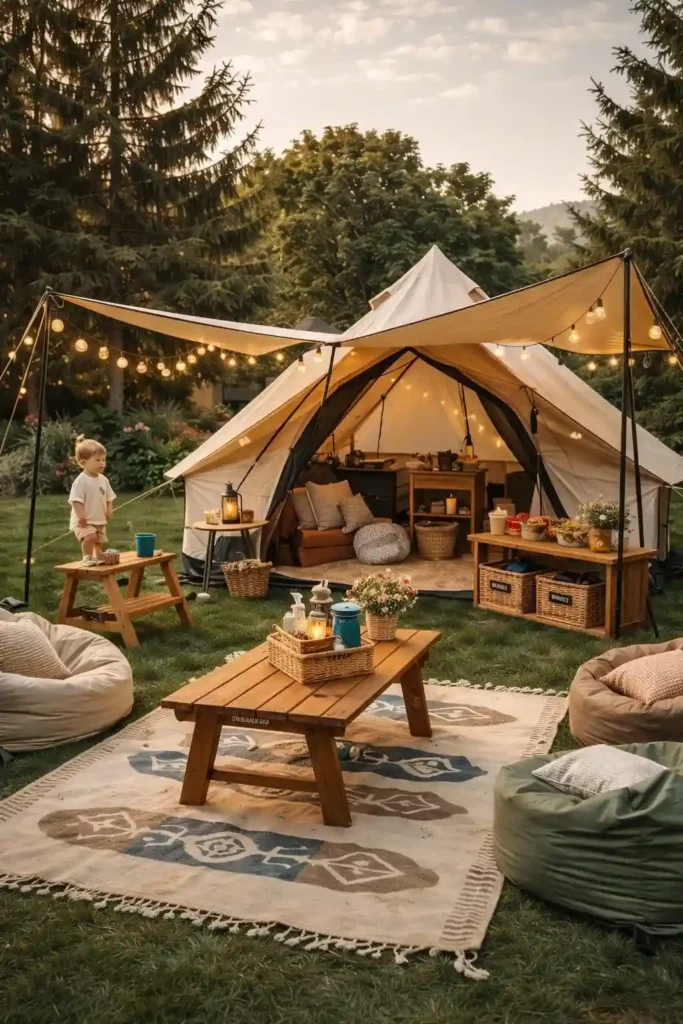
The best family campsites combine playful energy with calm structure. When the layout supports both, everyone — kids and adults — actually relaxes and enjoys the night.
Tips For Creating a Cozy and Inviting Setup For Backyard Camping With Kids
Comfort is the secret ingredient that turns a backyard campout into something kids ask to do every weekend. When children feel warm, safe, and cozy, they stop worrying and start being present. The goal of this section is to make the space feel like a hug — soft, warm, and deeply familiar even in an unfamiliar outdoor setting.
It starts with textiles, lighting, and a little intentional routine.
Layer Soft Textiles From the Ground Up
Texture is the first thing kids notice. Make it irresistible.
- Foam mats under rugs soften hard or uneven ground — this matters more than anything else
- Sherpa or fleece throws are warmer and softer than cotton blankets for cooler evenings
- Plush floor cushions create a reading nook or lounging area inside and outside the tent
- Choose washable fabrics — outdoor adventures get messy
The more textural layers you add, the cozier the space feels. Do not hold back.
Use Warm-Toned Lighting Exclusively in the Sleep Zone
Lighting affects mood and sleep readiness, especially in children.
- Stick to warm yellow or amber tones (2200–2700K) in sleeping areas
- Use fairy lights draped inside the tent ceiling for a magical canopy effect
- A small nightlight or soft lantern inside the tent gives comfort without disruption
- Avoid blue-toned or bright white light near bedtime — it signals waking, not sleep
Warm light tells the body it is time to wind down. Science supports this, and parents will appreciate the difference.
Position Tents Close Together for Security
Proximity creates psychological safety for young children outdoors.
- Place family tents within arm’s reach of each other, with zippers facing inward
- A shared entry vestibule area between tents creates a connecting space
- Kids who can see or hear their parents sleep far more soundly outdoors
- Consider a small two-person tent adjacent to the family tent for older kids who want independence
Closeness is cozy. Design for connection.
📌 Pin this cozy family tent arrangement! 📌
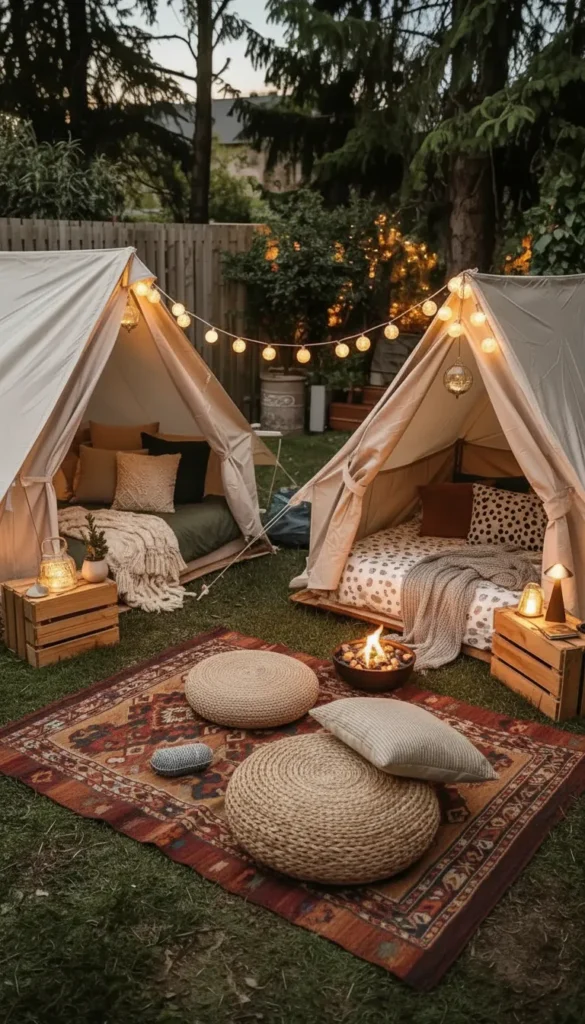
Keep Bedtime Routines Familiar and Consistent
The single biggest comfort factor for kids camping is routine.
- Bring the bedtime book from home — same story, new setting
- Use the same pajamas and bedtime order as you would indoors
- A familiar scent like lavender on a pillow can ease anxiety about sleeping outside
- Dim the lights gradually over 20–30 minutes to signal the transition to sleep
Children thrive on predictability. The tent changes; the routine should not.
Build a Bedside Setup Inside the Tent
A small, organized area within easy reach gives kids confidence at night.
- A small wooden crate beside each sleeping pad serves as a nightstand
- Stock it with: a water bottle, a flashlight, and one comfort toy
- Add a clip-on book light for late-night reading
- Keep a pair of shoes right by the tent entrance for quick midnight bathroom trips
When kids feel prepared, they feel capable. That confidence helps them sleep.
Address Temperature With Practical Solutions
Temperature is the most overlooked comfort factor in outdoor sleeping.
- In summer: Use a small battery-powered fan inside the tent for air circulation
- In fall or spring: Add an extra insulating layer under the sleeping pad, not just on top
- Dress kids in moisture-wicking base layers rather than heavy cotton, which traps dampness
- A hot water bottle wrapped in a cloth inside a sleeping bag adds overnight warmth naturally
Comfort at the right temperature means no one wakes up at 3am cold and upset.
Add Personal Touches That Make the Space Feel Theirs
Kids connect deeply to spaces that feel personal and special.
- Let each child decorate their sleeping area with a few small items from home
- Hang a name banner or flag at each tent entrance
- A small photo printed and taped inside the tent makes it feel like their own room
- Let them choose the fairy light color for their corner
When children feel ownership, they feel belonging. That is the deepest form of cozy.
📌 Save this cozy kids camping setup checklist! 📌
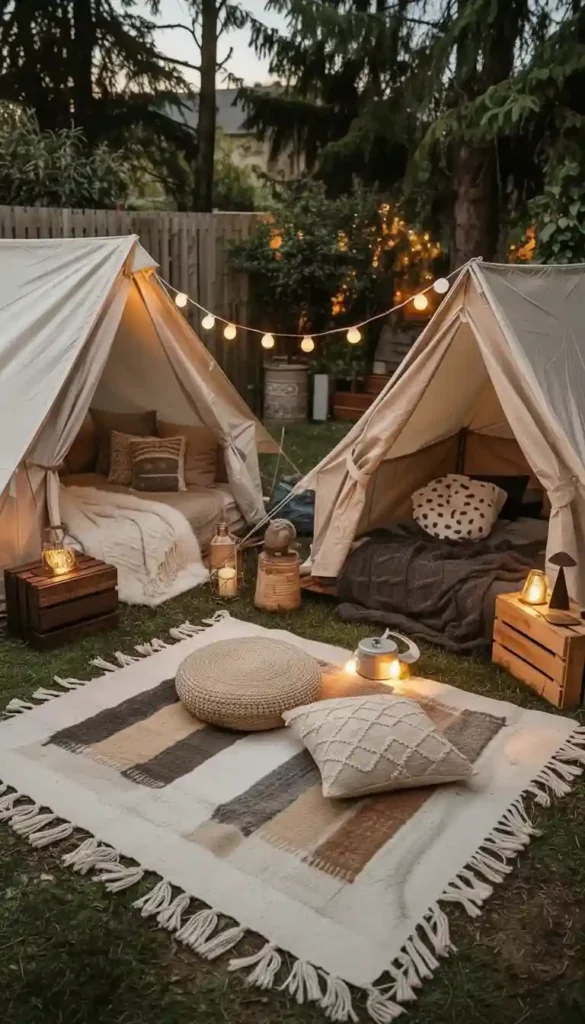
Coziness is not an accident — it is a series of small, deliberate choices. When warmth, safety, and familiarity come together in one space, kids stop thinking about being outside and start just being happy.
Comfy Sleep Setups For Backyard Camping Under The Stars
Here is the truth most backyard campers learn the hard way: if you sleep badly, nothing else matters. The best lighting, the prettiest tent, the most delicious s’mores — none of it compensates for waking up stiff, cold, or damp at 5am. Sleep quality is what determines whether your family asks to do this again.
In 2026, there is no excuse for uncomfortable outdoor sleep. The products and strategies exist to make it genuinely restful.
Start With the Ground: Level Is Everything
Before you buy a single piece of bedding, evaluate your ground.
- Walk the area barefoot and feel for dips, rocks, or roots
- Use a long level tool or the level app on your phone to check for slope
- Fill any low spots with sand before laying a ground tarp
- A slope of even 2–3 inches across the tent length causes you to slide all night
Five minutes of ground prep saves hours of interrupted sleep.
Layer Your Sleep Surface Like a Bed
The floor of your tent should feel like a bed, not the floor.
- Ground tarp first: blocks moisture from below
- Foam or inflatable pad second: insulation from cold ground
- Memory foam topper third: comfort layer for pressure points
- Breathable cotton or bamboo sheet on top: regulates temperature naturally
This four-layer system works for any season and any age group.
Choose the Right Sleeping Surface for Each Person
Not everyone sleeps the same way. Match the surface to the sleeper.
- Elevated cots: Best for adults with back issues or anyone who struggles with floor sleeping
- Self-inflating pads: Lightweight, packable, and comfortable for teens and older kids
- Thick inflatable mattresses: Great for younger kids who move a lot during sleep
- Memory foam cut to size: The premium option for adults who want a truly hotel-like feel
📌 Pin this outdoor sleep surface guide! 📌
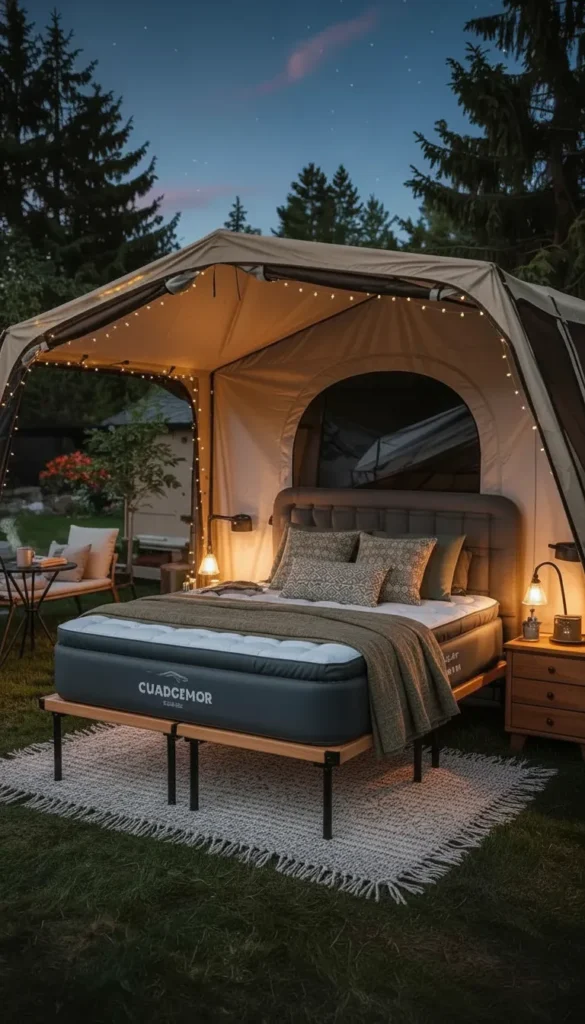
Orient the Sleeping Area Away From Wind
Wind direction affects temperature and sleep quality more than most people realize.
- Check your yard’s prevailing wind direction — usually from one consistent side
- Position tent doors facing away from the wind source
- Use natural windbreaks like hedges, fences, or garden walls strategically
- A small mesh windscreen panel near the tent entrance prevents cold drafts
Blocking wind can make a 60°F night feel like a 70°F night. It makes a real difference.
Select Bedding That Works With the Temperature
The wrong bedding is the most common sleep mistake in backyard camping.
- Above 65°F: A lightweight cotton blanket and breathable sheet is enough
- 50–65°F: Add a fleece mid-layer or low-fill sleeping bag liner
- Below 50°F: Use a rated sleeping bag plus an extra blanket for the shoulders
- Always bring one more layer than you think you need — night temperatures drop fast
The rule of thumb: if you are comfortable when you lie down, you will be cold by 3am. Dress the bed one level warmer.
Set Up a Nightstand Inside the Tent
A well-organized tent interior makes nighttime comfortable and calm.
- A small folding stool or crate beside each sleeping area works perfectly
- Stock it with: a water bottle, a headlamp, tissues, and a phone charger (battery pack)
- Keep shoes inside the tent vestibule — not outside, where they collect dew
- A hanging mesh organizer from the tent ceiling keeps items visible and accessible
When everything has a place at night, no one is fumbling around in the dark.
Manage Moisture to Prevent Condensation Buildup
Condensation is the silent enemy of comfortable outdoor sleep.
- Open ventilation panels at the top of the tent, even slightly, every night
- Use moisture-wicking fabrics for all bedding layers — avoid straight cotton in humid climates
- Place a waterproof mattress cover between the pad and the sheet
- A ground tarp that extends slightly beyond the tent footprint redirects rain runoff away
Damp bedding ruins sleep faster than almost anything else. Moisture management is not optional — it is essential.
Create a Calming Pre-Sleep Environment
How you wind down matters as much as what you sleep on.
- Dim the campsite lights gradually over 30 minutes before everyone turns in
- Use soft ambient music or nature sounds at low volume
- Avoid screens for at least 20 minutes before sleep — blue light disrupts melatonin
- A warm drink like chamomile tea or hot cocoa signals the body it is time to rest
Sleep begins before you close your eyes. Design the wind-down experience.
📌 Save this complete outdoor sleep system guide! 📌
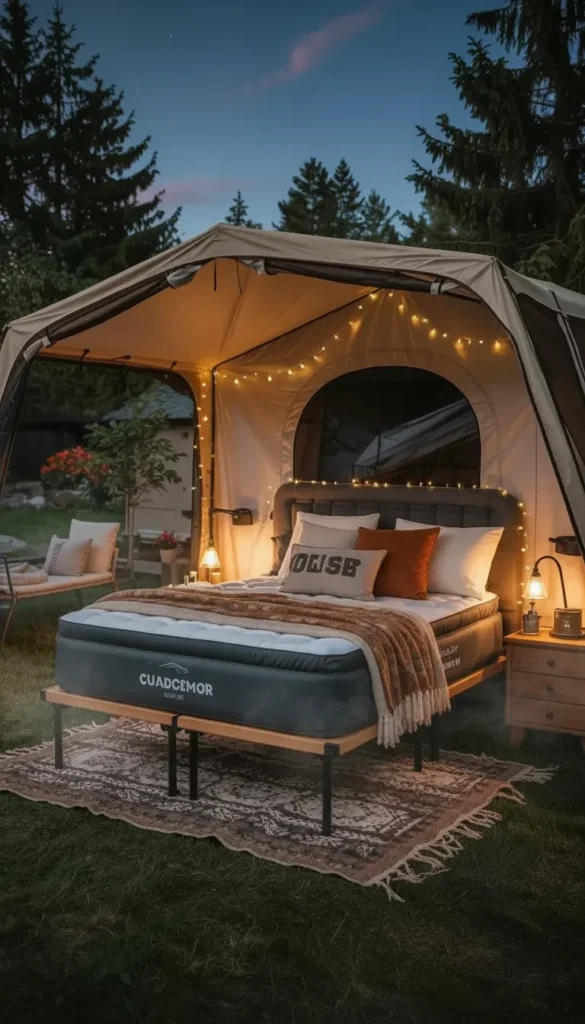
When you sleep well under the stars, the whole experience shifts. You wake up refreshed, the morning feels magical, and everyone asks when you are doing it again. That is the goal. That is worth designing for.
Conclusion
Backyard camping in 2026 is about so much more than pitching a tent and hoping for the best. It is about creating a real experience — one with intention, comfort, beauty, and the kind of warmth that only comes from being outside together as a family. When your setup is thoughtful, the memories become unforgettable.
You do not need a forest or a mountain to feel the magic of camping. You need a good plan, the right gear, and the willingness to make your backyard into something worth remembering. Start with one section from this guide, build from there, and watch your outdoor space transform into the campsite your family will talk about for years.

“I share simple, beautiful and affordable home decor ideas to help you style every corner of your home with ease.