
There is something deeply moving about standing in a garden full of lavender. The soft purple haze, the gentle hum of bees, the fragrance that seems to quiet everything around you — it feels less like gardening and more like healing. If you have been dreaming of that kind of outdoor space, you are not alone. In 2026, lavender has become the defining plant of intentional, beautiful landscaping, and homeowners everywhere are falling in love with what it can do.
Whether you are searching for lavender garden ideas front yards, creative lavender garden ideas landscaping, elegant lavender garden ideas flower beds, or flexible lavender garden ideas pots, this guide was written for you. I will walk you through five design-forward concepts that are practical, stunning, and achievable — no matter the size of your outdoor space. Let’s build your calming retreat together.
Lavender Garden Ideas Front Yards For Stunning Curb Appeal In 2026
Your front yard is your home’s first impression. When lavender is part of that picture, it speaks volumes — calm, curated, and effortlessly beautiful. The secret to a great front yard lavender design is structure and repetition, not just planting and hoping for the best.
Done right, lavender along a front yard creates rhythm. It guides the eye, frames the entry, and makes your home feel like it was designed with intention.
Why Structure Makes the Difference
Lavender thrives in symmetrical layouts — think matching hedges flanking a central walkway, or mirrored groupings beside garage pillars.
- Symmetry creates visual calm and order
- Repetition of the same variety ensures consistent bloom color and height
- Defined planting zones prevent the chaotic look of random plantings
When you treat lavender like an architectural element rather than just a plant, the result is always more polished.
Pairing Lavender With Stone and Gravel
One of the most effective front yard combinations is lavender with stone edging and gravel mulch.
- Stone borders define the bed and prevent grass encroachment
- Gravel mulch improves drainage, which lavender loves
- The contrast between silver-gray gravel and purple blooms is visually striking
- Gravel also reflects heat upward, keeping roots dry and happy
For a modern edge, use clean-cut limestone or dark slate rather than rounded river rock. Flat stones read as intentional; rounded stones read as casual.
Designing a Central Walkway Feature
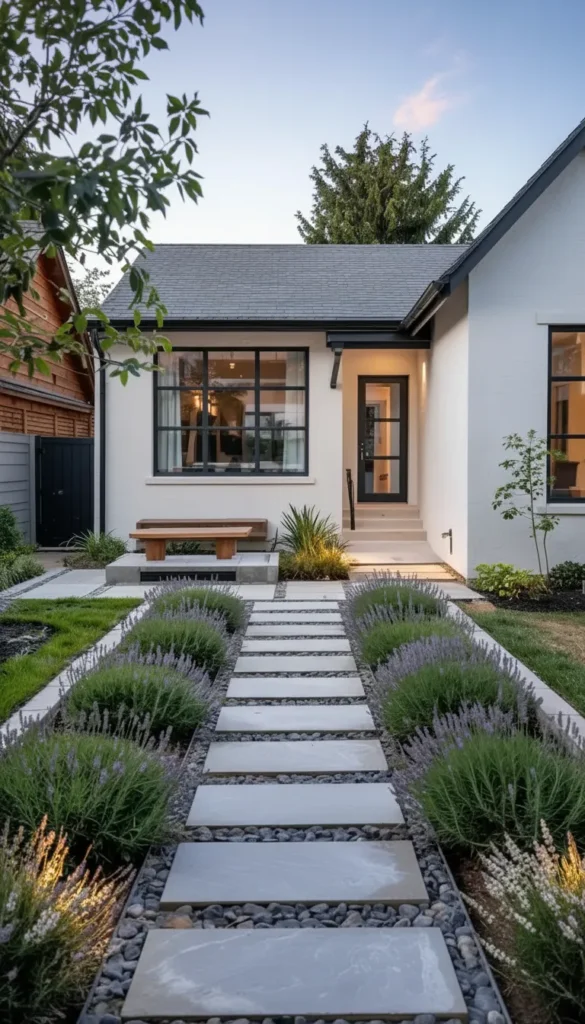
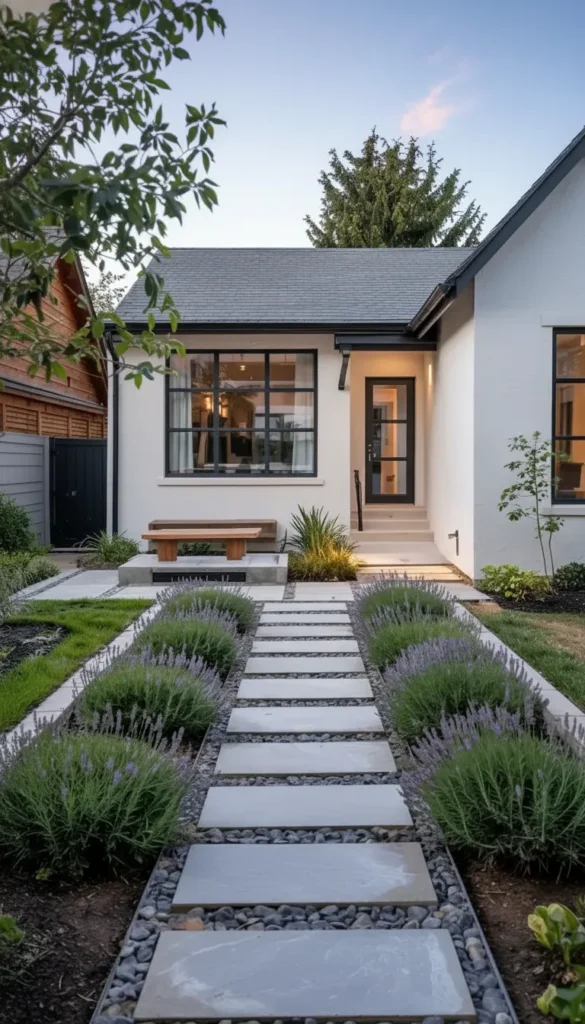
A classic and rewarding approach: line both sides of your front walkway with lavender.
- Use a single variety for uniformity — English lavender (Lavandula angustifolia) is ideal for compact hedging
- Plant 18 to 24 inches apart for a full, continuous look after two seasons
- Keep plants pruned to the same height for a formal, tidy appearance
- Allow them to slightly overhang the path — this creates intimacy and releases fragrance as you walk through
This design works brilliantly against white facades, light brick, and modern grey exteriors. The soft purple acts as a natural accent color that flatters almost every home tone.
📌 Pin this front yard lavender walkway idea! 📌
Choosing the Right Lavender for Your Climate
Not all lavender varieties are equal when it comes to cold hardiness.
- Zones 5–8: Lavandula angustifolia (English lavender) — most cold hardy, great for structured hedging
- Zones 8–11: Lavandula stoechas (Spanish lavender) — showier blooms, less cold tolerant
- Zones 6–9: Lavandula x intermedia (Lavandin hybrids) — taller plants, stronger fragrance, good for larger spaces
Before purchasing plants, check your USDA hardiness zone. Selecting the wrong variety means losing plants over winter — a costly and frustrating mistake.
Incorporating Architectural Accents
A lavender-lined front yard becomes extraordinary when you add thoughtful hardscape details.
- Low ornamental grasses (like Blue Fescue) add movement without overpowering lavender
- Minimalist wooden benches or stone seating near the entry softens the transition from hardscape to garden
- Landscape lighting — low, warm-toned uplighting — highlights the texture and color of lavender at dusk
- Structured topiary spheres in neutral green provide vertical contrast without visual clutter
Every element should support the lavender, not compete with it. Restraint is always the right choice.
Irrigation and Soil Prep: Getting It Right Before You Plant
Lavender is drought-tolerant once established, but proper preparation ensures long-term success.
- Amend clay-heavy soil with coarse sand or fine gravel to improve drainage
- Raised beds (4 to 6 inches above grade) are ideal in areas with heavy rainfall
- Install drip irrigation rather than overhead sprinklers — lavender hates wet foliage
- Set irrigation to water deeply but infrequently — once a week during establishment, then reduce
Skipping soil prep is the number one reason lavender fails in front yards. A well-drained bed is non-negotiable.
Scale, Proportion, and Maintenance Cycles
Publications like Better Homes and Gardens consistently emphasize one principle: scale to the architecture.
- A small bungalow needs compact lavender hedges at 12 to 18 inches tall
- A large Colonial or Craftsman home can support taller varieties at 24 to 36 inches
- Plan for the mature size — lavender spreads 18 to 24 inches wide after two to three seasons
- Schedule light pruning after first bloom to maintain shape and encourage a second flush
When lavender complements the architecture rather than overwhelming it, the front yard feels balanced and purposeful.
📌 Save this front yard lavender design strategy! 📌
Creative Lavender Garden Ideas Landscaping For A Fragrant Outdoor Retreat
Great lavender landscaping is about more than planting in rows. On larger properties, lavender becomes the thread that ties a landscape together — defining outdoor rooms, softening hard edges, and filling the air with fragrance that makes people pause and breathe deeper.
Think of it as designing with all five senses, not just the visual.
Creating Outdoor Rooms With Lavender
On medium to large properties, use lavender as a living divider between functional zones.
- Define the edge of a seating area with a low lavender hedge
- Use a lavender border to separate a dining terrace from an open lawn
- Plant lavender along a retaining wall to soften its hard edge and disguise concrete
- Create a fragrant corridor between two garden areas with double-sided lavender rows
This approach transforms a flat yard into an experience — a series of connected spaces with distinct moods and purposes.
Combining Lavender With Natural Materials
The materials you pair with lavender dramatically affect the overall feel of the space.
- Gravel paths: Clean, modern, and ideal for drainage
- Timber decking: Warm and natural, creates a beautiful contrast against purple
- Natural stone terraces: Timeless, elegant, and heat-retaining (which lavender loves)
- Exposed aggregate concrete: Contemporary option for modern homes
Avoid dark synthetic materials like black rubber mulch — they absorb excessive heat and can stress plant roots in hot climates.
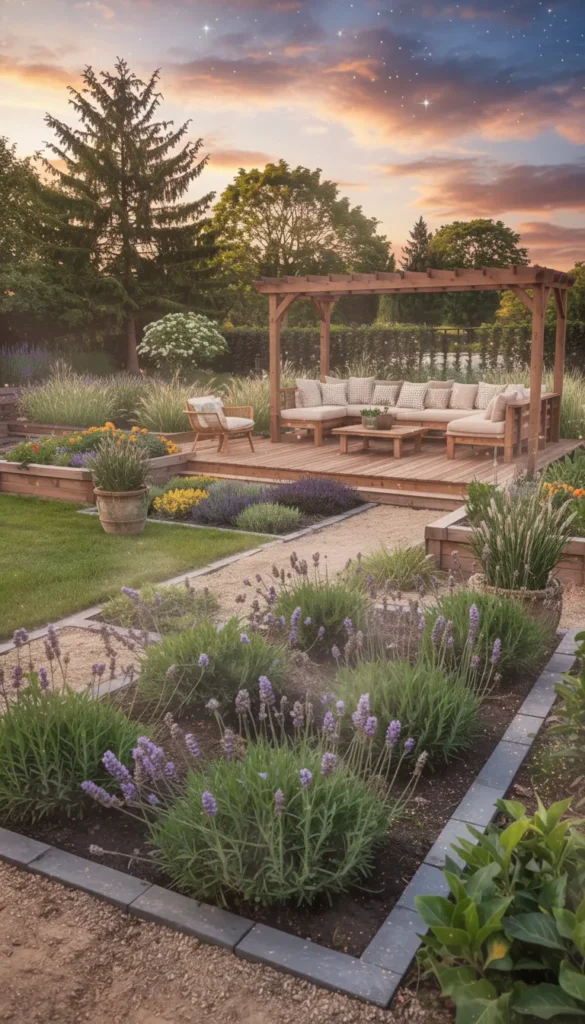
Designing for Relaxation Near Patios and Pergolas
Lavender near a seating area is one of the most powerful moves in garden design.
- Plant lavender within 3 to 5 feet of where people sit — close enough to enjoy the fragrance without being overwhelming
- Use mid-height varieties (18 to 24 inches) so plants are at nose level when seated
- Combine with soft-textured ornamental grasses for movement in the breeze
- Add subtle uplighting beneath the lavender to extend the enjoyment into evenings
The fragrance of lavender has documented relaxation benefits. Designing it into your primary relaxation space is both beautiful and intentional.
📌 Pin this lavender outdoor retreat design idea! 📌
Choosing Furniture and Decor That Enhances Lavender
Outdoor furniture color can make or break a lavender landscape.
- Neutral tones (white, cream, warm grey, natural teak) enhance purple without visual competition
- Avoid bright primaries like red or yellow — they clash with lavender’s soft palette
- Linen cushion covers in sage, stone, or dusty blue pair beautifully
- Woven rattan and weather-resistant wood feel cohesive with the organic softness of lavender
Think of the furniture as part of the palette. Every element in the space should feel like it belongs to the same calm, cohesive world.
Planting in Layers for a Retreat Feel
A flat lavender field looks lovely in Provence. In a backyard retreat, layering creates depth and drama.
- Foreground: Low-growing lavender at 12 to 18 inches (Hidcote or Munstead varieties)
- Middle ground: Ornamental grasses or salvias at 24 to 36 inches
- Background: Tall ornamental grasses, rosemary hedges, or olive trees at 4 to 6 feet
This three-layer structure makes even a modest garden feel lush and considered. Each layer frames the one in front of it.
Limiting the Plant Palette for Maximum Impact
Landscape designers featured in publications like Gardenista consistently return to one principle: restraint in the palette creates cohesion.
- Stick to three to five plant varieties maximum in a lavender-centered landscape
- Pair lavender with silver-leaved plants (like Artemisia or Stachys) for tonal harmony
- Avoid too many competing bloom colors — the goal is calm, not carnival
- A limited palette looks intentional; a crowded one looks accidental
When every plant choice reinforces the mood, the entire garden feels like a single, curated thought.
Incorporating Raised Beds and Water Management
In wetter climates or heavy clay soils, raised beds are essential for lavender landscaping success.
- Build raised planting areas 6 to 12 inches above grade using stone, timber, or Corten steel
- Use a mix of 60% topsoil, 30% coarse sand, and 10% fine gravel for raised beds
- Space lavender plants 18 to 24 inches apart in raised sections to allow airflow
- Plan drainage channels or French drains to divert excess water from the planting zones
Proper water management is what separates a thriving lavender landscape from one that needs replacing every two years.
📌 Save this layered lavender landscaping approach! 📌
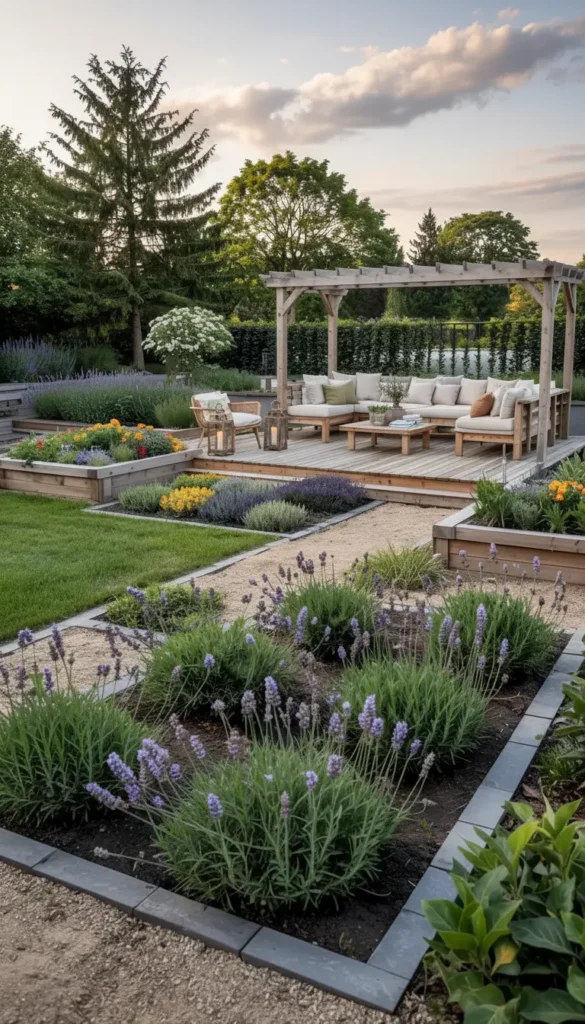
Elegant Lavender Garden Ideas Flower Beds For Layered Color And Texture
A flower bed built around lavender is one of the most rewarding garden projects you can undertake. Lavender provides structure, fragrance, and a consistent bloom that anchors everything around it. When you add companion plants thoughtfully, the result is a bed that looks abundant without feeling chaotic.
The key is understanding depth, texture, and the rhythm of blooming cycles.
Making Lavender the Backbone of Your Bed
Every great mixed flower bed needs a structural anchor — and lavender is one of the best.
- Plant lavender in groups of three to five for visual weight
- Space groups evenly across the bed to create rhythm
- Use the same variety within each group for consistency
- Leave space between lavender groups for companion plants to fill and spill
This approach gives the bed a foundation. Without it, mixed beds often look random and restless.
Companion Plants That Make Lavender Shine
The right companions amplify lavender’s beauty rather than compete with it.
- Silver-leaved plants: Artemisia, Lamb’s Ear, and Santolina provide tonal contrast and visual harmony
- Soft pink perennials: Echinacea (coneflower), Phlox, and Salvia create a warm, romantic color story
- Ornamental grasses: Feather Reed Grass or Blue Oat Grass add movement and vertical contrast
- White blooms: Shasta Daisies or white Catmint provide brightness without competing with purple
Avoid orange and red companions — they clash with lavender’s cool-toned purple. Stick to the pink-white-silver spectrum for a cohesive result.
📌 Pin this lavender flower bed companion planting guide! 📌
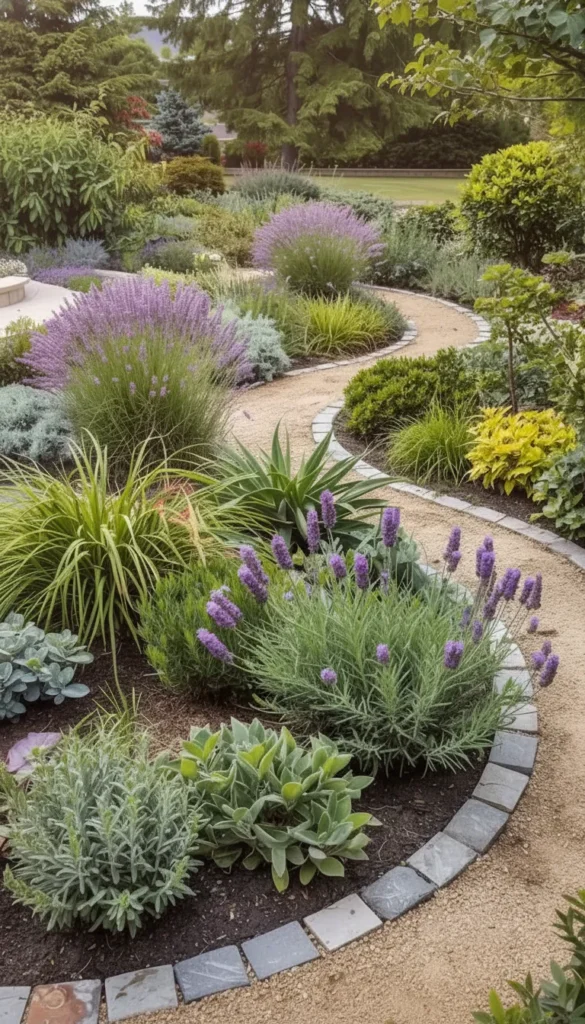
Shaping Beds for Visual Softness
The shape of your flower bed matters as much as what grows in it.
- Curved beds soften rigid lawn edges and feel more naturalistic
- Avoid perfectly straight rectangular beds unless the design is formally structured
- A gentle S-curve creates movement and invites the eye to travel through the garden
- Widen the bed at intervals to create planting pockets for focal plants
A curved lavender bed reads as intentional and designed, not just planted. It immediately elevates the visual quality of any garden.
Edging and Mulching for a Polished Look
The edges of a flower bed tell people whether a garden is cared for or neglected.
- Use low stone borders (flat limestone or dark slate) to define the bed cleanly
- Avoid plastic edging — it lifts over time and looks cheap
- Mulch with light gravel (pea gravel or white marble chips) rather than dark bark — it drains better and highlights the lavender’s color
- Keep mulch 2 to 3 inches deep and pulled back from plant stems to prevent rot
A well-edged, well-mulched bed looks professional even when the plants are small and young.
Extending Visual Interest With Staggered Blooms
A common mistake is planting everything that blooms at the same time — you get one glorious week, then nothing.
- Pair lavender (peak bloom June to August) with early spring bulbs (Alliums, Tulips)
- Add late-summer bloomers like Rudbeckia or Echinacea to carry color past lavender’s peak
- Include evergreen structural plants like Rosemary for winter form
- Use ornamental seed heads (grasses, Echinacea) for fall and winter interest
Horticulture experts consistently recommend staggered bloom cycles to keep gardens visually engaging through all four seasons.
Sun Exposure and Bed Placement
Lavender has non-negotiable requirements when it comes to sunlight.
- Minimum 6 hours of direct sun per day — 8 hours is ideal
- Avoid planting in the shadow of buildings, fences, or large trees
- South-facing or west-facing beds typically provide the best light exposure
- In very hot climates (Zone 9+), light afternoon shade can actually extend bloom time
Place your lavender flower beds where they receive the most unobstructed sun. This single factor determines success more than any other.
Plant Spacing to Prevent Overcrowding
Lavender needs room to breathe — literally and figuratively.
- Space plants 18 to 24 inches apart for medium varieties
- For larger Lavandin hybrids, allow 24 to 30 inches between plants
- Resist the urge to plant densely for immediate fullness — overcrowding leads to poor airflow, disease, and early plant death
- Beds will look full and lush by the second or third growing season with proper spacing
📌 Save this lavender flower bed design and spacing guide! 📌
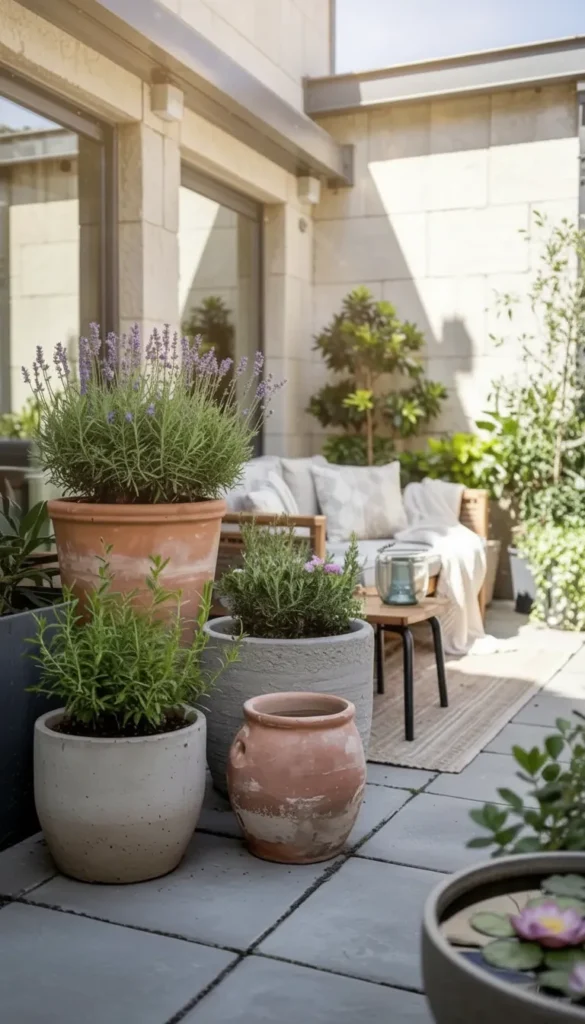
Lavender Garden Ideas Pots For Patios, Balconies, And Entryways
Not everyone has a sprawling garden — and that should not stop anyone from growing lavender. Container lavender brings all the beauty and fragrance of a garden bed into a balcony, patio, or entry porch. Done well, potted lavender looks just as intentional and lush as anything planted in the ground.
The key is matching the right containers to the right care approach.
Choosing Containers That Work for Lavender
Not all pots are created equal when it comes to lavender’s drainage needs.
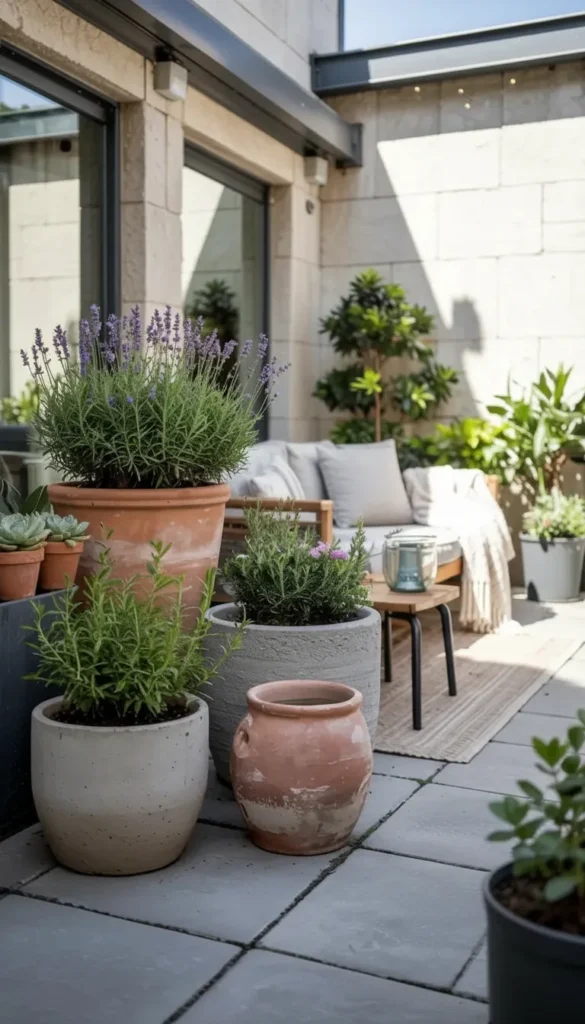
- Terracotta: The classic choice — breathable, drainage-friendly, and beautiful
- Concrete or stone: Modern and heavy (good for windy balconies), with excellent drainage
- Glazed ceramic: Works if it has adequate drainage holes — avoid waterproof-sealed interiors
- Avoid plastic: Retains moisture, heats up in sun, and looks cheap over time
Choose pots that are at least 12 inches wide and 12 inches deep for a single lavender plant. Larger is always better for root development.
Creating Visual Rhythm With Grouped Containers
A single pot of lavender is nice. A curated grouping is stunning.
- Group pots in odd numbers (three or five) for visual balance
- Vary heights using different-sized pots or pot risers
- Place the tallest pot at the back or center, smaller pots cascading forward
- Use matching or complementary container materials to maintain visual cohesion
This approach creates a focal point rather than just a plant. It is the difference between decoration and design.
📌 Pin this container lavender grouping idea! 📌
The Right Soil Mix for Container Lavender
In-ground lavender tolerates average soil. Container lavender needs a more specific mix.
- Use 60% standard potting mix, 30% coarse perlite or pumice, and 10% coarse sand
- Avoid moisture-retaining potting mixes labeled “water control” — these hold too much moisture for lavender
- Add a layer of gravel or broken pottery at the base of the pot for additional drainage
- Replenish the top layer of soil annually as nutrients leach out through watering
Good soil mix eliminates the most common container lavender failure: root rot from poor drainage.
Placement Strategies for Maximum Health and Beauty
Where you place your lavender pots is as important as what you put them in.
- South or west-facing walls: Provide warmth, reflected heat, and wind protection
- Near seating areas: Maximizes the fragrance experience during outdoor dining or lounging
- Either side of an entryway: Creates a welcoming, symmetrical arrival experience
- Elevated surfaces: Pot stands or raised planters bring lavender closer to nose level
Avoid placing pots in corners that trap moisture or receive less than 6 hours of direct sunlight. Lavender in shade becomes leggy and stops blooming.
Combining Lavender With Trailing Companions in Pots
A solo lavender plant in a pot is lovely. Paired with a trailing companion, it becomes layered and lush.
- Trailing Rosemary: Herbal companion with similar care needs, cascades beautifully
- Silver Artemisia: Spills over the pot edge, creating a soft, silver contrast
- Creeping Thyme: Low-maintenance, aromatic, and proportionally balanced
- White Alyssum: Delicate, honeyed fragrance that complements lavender beautifully
When mixing plants in a single container, always choose companions with similar water and sun requirements.
Watering and Maintenance for Container Lavender
Container lavender requires more attention than garden-planted varieties.
- Water only when the top 2 inches of soil are dry — stick your finger in to check
- In hot summer months, this may mean every 2 to 3 days
- In cooler seasons, reduce to once a week or less
- Check drainage holes regularly — blocked drainage is the fastest way to kill container lavender
Prune lightly after each bloom cycle, removing spent flower stalks and about one-third of the green foliage. This keeps plants compact and encourages repeat blooming.
Winter Protection for Potted Lavender
Unlike in-ground lavender, container plants are more vulnerable to frost.
- Move pots indoors or into an unheated garage when temperatures drop below 10°F (-12°C)
- If outdoor storage is required, wrap pots in horticultural fleece and elevate them off cold concrete
- Place near a south-facing wall outdoors for maximum winter warmth
- Do not water during dormancy — reduce watering to once every three to four weeks in winter
📌 Save this container lavender care guide for all seasons! 📌
Lavender And Roses Garden Ideas For A Romantic Rose And Purple Paradise
If there is a more romantic garden combination than lavender and roses, most gardeners have yet to find it. The pairing is timeless — soft purple spires, velvety rose petals, layered fragrance, and a color palette that feels like a painting. In 2026, this combination is being reimagined with modern structure and practical design thinking, moving it far beyond the nostalgic English cottage cliché.
When planned carefully, a lavender and roses garden is also one of the most low-maintenance pairings in perennial gardening.
Why Lavender and Roses Are a Perfect Match
This combination is beloved for good reason — it works on multiple levels simultaneously.
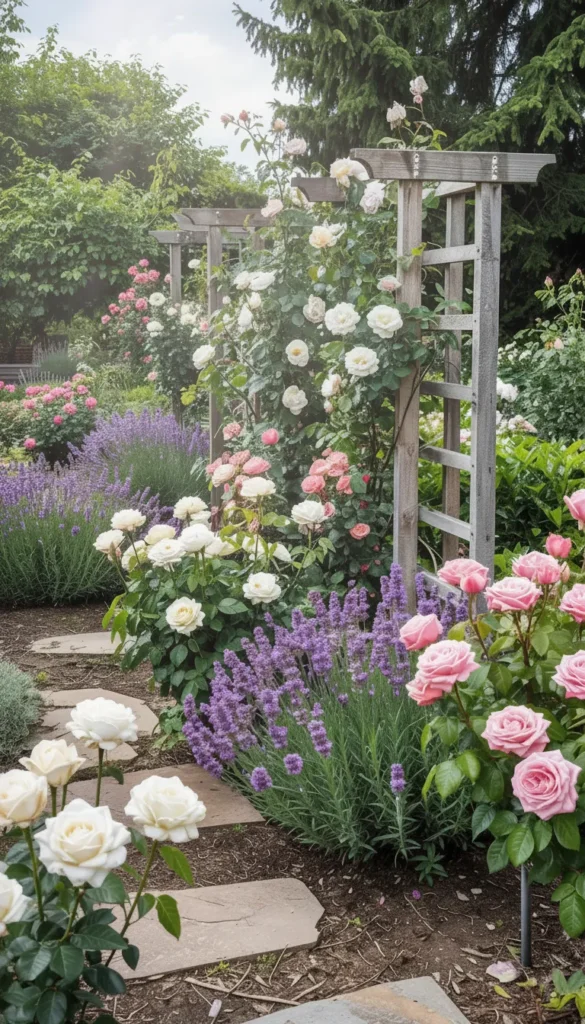
- Visually: The spiky vertical texture of lavender contrasts beautifully with the soft, rounded form of roses
- Practically: Lavender is known to deter aphids and other pests that commonly target roses
- Fragrance: The two scents layer rather than compete — lavender provides depth, roses provide sweetness
- Timing: Both bloom through summer, creating a long season of simultaneous color
Landscape designers consistently highlight this pairing for its pest-repelling properties and air circulation benefits, making it as functional as it is beautiful.
Designing Structured Beds With Alternating Rows
The most elegant lavender-rose beds use alternating rows or repeated groupings for visual rhythm.
- Plant roses every 3 to 4 feet, with lavender groups of three planted between each rose
- Alternate rows of roses and lavender across a wider bed for a field-like effect
- Keep rose varieties consistent within a bed — mixing too many types creates visual noise
- Use one or two lavender varieties to maintain color cohesion throughout the bed
This structured approach also improves airflow between plants, reducing the fungal disease risk that plagues roses in crowded conditions.
📌 Pin this romantic lavender and roses bed design! 📌
Choosing the Right Rose Varieties
Not every rose variety is a natural partner for lavender. Select based on scale, color, and habit.
- David Austin English Roses: Soft pink, blush, and white varieties like ‘Olivia Rose’ or ‘Princess Alexandra of Kent’ are ideal
- Floribunda roses: Mid-height, multi-bloom varieties that match lavender’s scale well
- Climbing roses on arches: Add vertical drama when trained over wrought iron or timber arches positioned at bed entries
- Avoid hybrid tea roses: Their stiff, formal habit clashes with lavender’s soft, natural growth
White and soft pink roses are the safest color partners for lavender. Deeper reds and oranges can work but require more careful palette management.
Using Structural Elements to Elevate the Design
A lavender-rose garden becomes truly exceptional when architectural elements are introduced.
- Wrought iron arches: Position at entry points to the bed, with climbing roses trained upward
- Wooden pergolas: Create a defined room within the garden, with lavender edging the base
- Stone pathways: Run between planting rows for maintenance access — at least 18 inches wide for comfortable kneeling
- Low timber edging: Defines the bed perimeter and keeps the lavender contained
These structural additions transform a planted area into a designed destination within the garden.
Mulching for Moisture and Color Contrast
The right mulch makes a significant difference in both plant health and visual appeal.
- Use composted bark or fine straw mulch for rose and lavender beds rather than gravel
- Keep mulch 2 to 3 inches deep but away from plant stems (leave a 2-inch clear zone)
- Mulch retains soil moisture for roses while still allowing adequate drainage for lavender
- Dark mulch provides a rich contrast background that makes both purple blooms and rose petals pop
Refresh mulch annually in spring before the growing season begins.
Spacing for Airflow and Long-Term Health
The most common mistake in lavender-rose gardens is planting too closely together.
- Allow 24 to 30 inches between each lavender plant and the nearest rose
- Roses should be spaced 36 to 48 inches apart depending on variety
- Leave a minimum 18-inch clear zone around each rose for pruning access
- Avoid letting lavender grow directly under rose canes — this traps moisture and invites disease
Proper spacing is what keeps this combination looking beautiful year after year without requiring intervention from fungicides or insecticides.
Pruning Schedules for Synchronized Beauty
Both lavender and roses require pruning, but on slightly different schedules.
- Lavender: Light trim immediately after first bloom (typically late June or early July); harder prune in early spring before new growth emerges
- Roses: Deadhead spent blooms regularly through summer; main structural prune in late winter or very early spring
- Avoid heavy pruning of either plant in late summer or fall — this stimulates new growth that can be damaged by frost
- Fertilize roses in early spring with a balanced rose fertilizer; lavender rarely needs feeding beyond an initial compost amendment at planting
Keeping both plants on a consistent care schedule ensures they bloom simultaneously and support rather than compete with each other.
Fertilization Timing for Synchronized Growth
Roses are heavy feeders; lavender is not. Managing this difference is key.
- Apply a slow-release rose fertilizer in early spring and again in midsummer
- Do not fertilize lavender with high-nitrogen products — excessive nitrogen produces lush foliage but few flowers
- Topdress the entire bed with a thin layer of compost in spring — this benefits roses more than lavender, which is fine
- Avoid late-season fertilization for either plant — pushing new growth before frost is a mistake
With thoughtful care, a lavender and rose garden rewards you with one of the most memorable sensory experiences in home gardening.
📌 Save this lavender and roses pairing guide for your dream garden! 📌
Conclusion
Lavender is not a trend. It is a commitment to beauty, fragrance, and a calmer way of living outdoors. Whether you are redesigning a front yard, creating a layered flower bed, planting pots for a small balcony, or building a romantic rose and lavender paradise, every idea in this guide comes back to the same principle: design with intention, and the result will always feel special.
Start with one idea that genuinely excites you. Prepare the soil well. Choose the right variety for your climate. Give your plants space to breathe and grow. Then stand back in your garden on a warm summer evening, close your eyes, and breathe in everything you built. That is what lavender gardens are really about.

“I share simple, beautiful and affordable home decor ideas to help you style every corner of your home with ease.