

There is something quietly heartbreaking about walking into your living room and feeling like the walls are closing in. You look around and see a space that is supposed to feel like home — a place to breathe, relax, and recharge — but instead it feels cramped, cluttered, and impossible to enjoy. If that feeling sounds familiar, you are not alone. Millions of people are living in small apartments and compact homes right now, wishing they could love the space they are in.
The good news? A tiny living room does not have to feel tiny. In 2026, interior design has evolved in brilliant ways that make small spaces feel open, cozy, and completely livable. Whether you have a studio apartment, a small condo, or a compact open-plan layout, the right design choices can change everything. These five design concepts will show you exactly how to make every single inch work harder — and feel better — than you ever thought possible.
Tiny Living Room Designs That Maximize Every Inch
Most people try to solve a small living room by removing furniture. The smarter move is choosing the right furniture and arranging it with intention. A well-planned tiny living room layout turns a tight rectangle into a room that feels purposeful, polished, and surprisingly spacious.
The core idea is simple: every piece must earn its place. Nothing goes into the room just to fill a gap. Everything serves a function, and ideally, more than one.
Start With the Layout First
Before you buy a single piece of furniture, measure the room carefully. Know your dimensions. Sketch a basic floor plan.
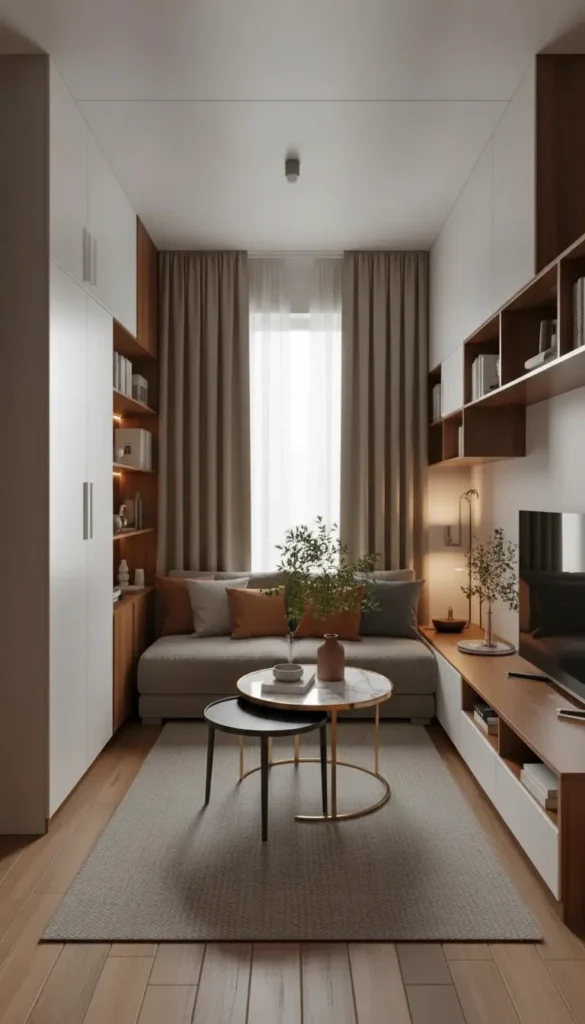
- Push the sofa against the longest wall to open up the center of the room
- Leave a clear walkway of at least 30 to 36 inches through the main traffic path
- Keep the center of the room as open as possible — visual breathing room makes a space feel larger
- Face seating toward a focal point, whether that is a window, TV unit, or fireplace wall
In very narrow rooms, floating furniture away from the wall (as designers often suggest) can actually feel awkward. In those cases, wall-hugging placement works better and keeps circulation clear.
Choose a Slim Sofa With Built-In Storage
The sofa is usually the biggest piece in a small living room, so it needs to do double duty.
- Look for a two-seat sofa with under-seat storage compartments
- Slim profile sofas with tight arms take up less visual and physical space
- Avoid bulky roll arms and deep cushions in very small rooms — they eat up square footage fast
- A sofa in a light neutral fabric (cream, warm gray, soft taupe) will keep the room feeling open
Pair the sofa with a nesting coffee table set. Two smaller tables that tuck together give you flexibility. Spread them out when guests visit, nest them together when you need walking space.
Use Vertical Space Like a Pro
When floor space is limited, the walls become your best storage resource.
- Mount shelves above the TV unit to keep the floor clear
- Use wall-mounted shelves on either side of a window or sofa for books and small decor
- Install a floating media console rather than a bulky entertainment center
- Add hooks near the entrance for bags, coats, and keys — it keeps clutter off surfaces
Pin this small space layout strategy! 📌
Add a Multi-Use Console Table
A slim console table near the entrance does more than you might think.
- Doubles as a drop zone for mail, keys, and everyday items
- Provides a surface for a lamp, which adds warm evening lighting without taking up floor space
- Can anchor the entrance of an open-plan space to define the living area from the kitchen
- Choose one with a lower shelf for additional storage baskets
Think About Armchair Placement
A low-profile accent armchair can shift the entire energy of a small living room.
- Choose a chair with exposed legs — it shows more floor and makes the room feel less crowded
- Position it at a slight angle toward the sofa for a conversational feel
- When extra space is needed (for yoga, kids playing, or hosting), pull it toward the kitchen zone
- Avoid oversized recliners or barrel chairs in rooms under 180 square feet
Layer Open and Closed Storage
One of the most effective tricks in tiny living room design is combining visible and hidden storage.
- Open shelves display books, plants, and personal objects — they add personality
- Closed cabinets or doors on lower units hide everyday clutter like remote controls, chargers, and blankets
- This balance keeps the room from looking sterile (like a showroom) or chaotic (like a storage unit)
- Decorative baskets on lower shelves give you flexibility and texture at the same time
Add a Folding Wall Desk and Track Lighting
Two small upgrades can dramatically improve function without adding bulk.
- A wall-mounted folding desk on one side of the room creates a work zone that folds flat when not in use
- Install a ceiling track with adjustable spotlights to direct light exactly where you need it — over the reading chair, the shelves, or the work desk
- Picture ledge shelves above the sofa are a smarter choice than large wall frames — you can swap art easily without putting more holes in the wall
- A low-profile area rug in a solid light color anchors the seating zone without adding visual weight
Save this every-inch layout guide! 📌
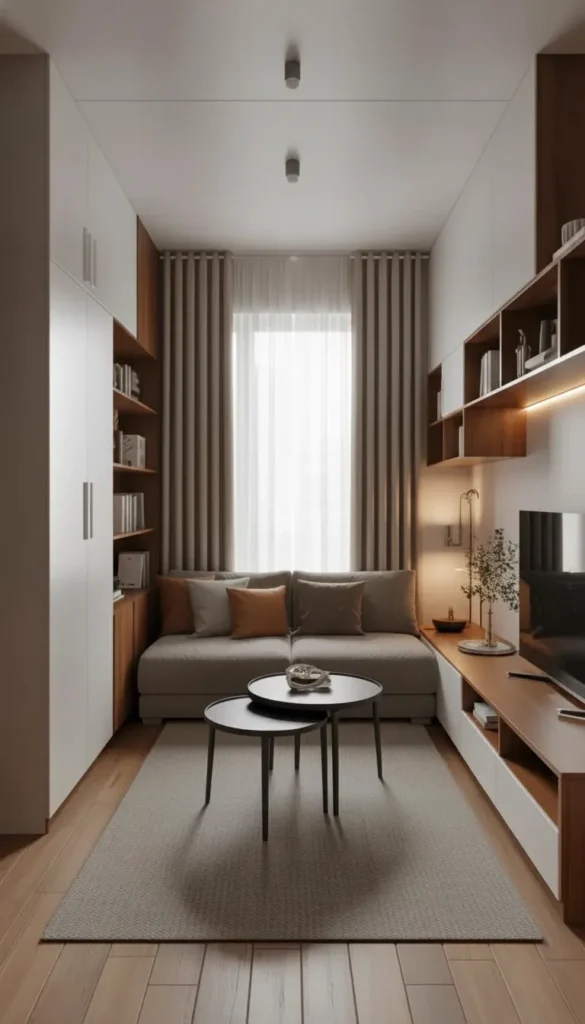
The key principle: Fewer, better pieces always beat a room full of small things. One well-chosen sofa, one smart table, one great storage unit. Edit ruthlessly and the room will reward you.
Smart Tiny Living Room Designs for Small Spaces
The modern tiny living room is not just about making things fit — it is about making them function beautifully across multiple scenarios. In 2026, the smartest small living rooms are built like systems, where every object has a home and the room can shift from work mode to lounge mode in minutes.
This approach is especially valuable for people who work from home and need their living room to pull double duty throughout the day.
Design the Room as a System, Not a Collection
Most small room mistakes happen when people buy furniture piece by piece without a plan.
- Before purchasing anything, decide what activities the room needs to support — relaxing, working, hosting, exercising
- Organize items by activity: work tools near the desk zone, entertainment accessories near the media area
- Store things at their point of use — charging cables near the lift-top table, remote controls in the media cabinet
- Think in categories: one sofa, one table, one storage object — not five of everything
When the room is organized this way, transitioning between uses takes two minutes, not twenty.
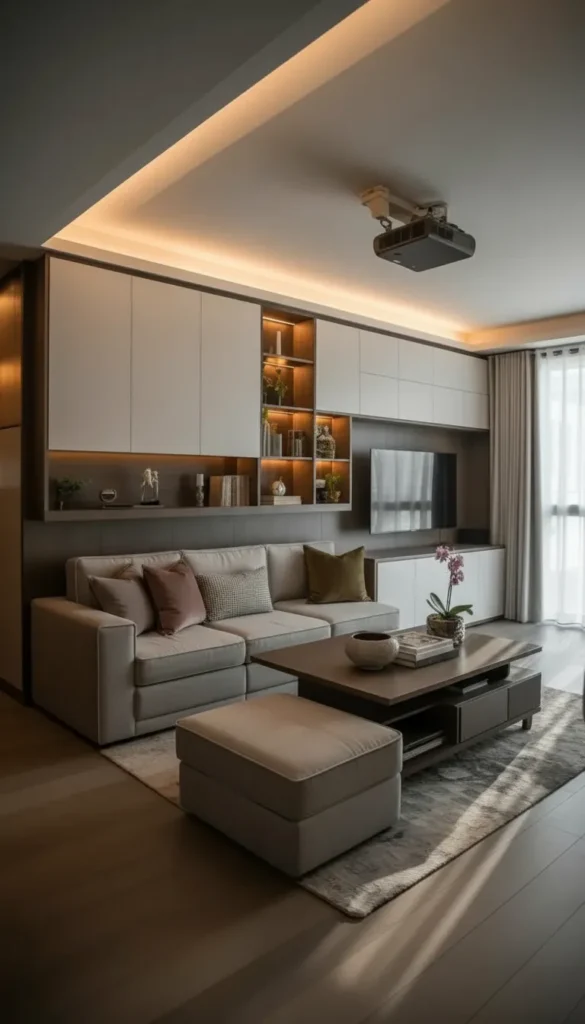
Replace the Big TV With a Projector
This single swap can dramatically open up a small living room.
- A wall-mounted projector and pull-down screen eliminates the need for a bulky TV and stand
- When not in use, the screen rolls up and the wall disappears — you get visual space back
- Projectors work well in rooms where you want a clean, modern aesthetic
- Pair it with a slim sideboard behind the seating area to store electronics and media accessories
The color palette for this type of room works best in light grays, warm whites, and black contrast — modern without being cold.
Choose a Modular Sofa With Portable Ottomans
Flexibility is the secret weapon of a smart small living room.
- Modular sofas can be rearranged from an L-shape lounge to a straight sofa for more formal conversation
- Portable ottomans serve as footrests, extra seating, and impromptu side tables
- Look for ottomans with lids that open for hidden storage — blankets, magazines, or kids’ toys disappear instantly
- Choose pieces in the same color family so rearranging never looks messy
Pin this flexible living room system! 📌
Invest in a Lift-Top Coffee Table
This piece alone can replace the need for a separate desk in a small living room.
- The top lifts and extends to create a laptop desk at the right working height
- Lowers flat when you just need a surface for coffee or snacks
- Often includes storage compartments underneath the main surface for notebooks, chargers, and accessories
- Available in a range of styles from Scandi-minimalist to industrial and mid-century
This is exactly the kind of multi-use thinking that makes small rooms work harder than they look.
Install Wall-Mounted Cabinets to Clear the Floor
In a small city apartment, the floor is prime real estate.
- Wall-mounted cabinets above seating height keep storage completely off the floor
- Closed cabinet doors in the same color as the wall make storage almost invisible — the room looks cleaner
- This approach also makes vacuuming and cleaning faster, which genuinely matters in small spaces
- Choose smooth, handleless doors for the most streamlined look
Hide Your Cables and Add Smart Lighting
Visual clutter from cables is one of the biggest culprits in making small rooms feel messy.
- Use concealed cable channels along walls and baseboards to route cords invisibly
- Smart plugs group multiple devices onto one tidy power strip
- Adjustable floor lamps and app-controlled ceiling lights let you dial in the right mood — bright for work, warm and dim for evenings
- Warm-toned bulbs (2700K to 3000K) make even small rooms feel inviting and comfortable
Add a Slim Bench, Pegboard, and Curtains
Three finishing touches that complete the smart tiny living room without crowding it.
- A slim bench against one wall serves as extra seating when guests arrive, or a landing spot for bags and plants when they leave
- A pegboard or rail system above the bench adapts to whatever you need — hooks for headphones, small shelves for books, a spot for a small plant
- Floor-length curtains in a light, airy fabric soften the room and add visual height without stealing depth from the walls
Save this smart living room setup approach! 📌
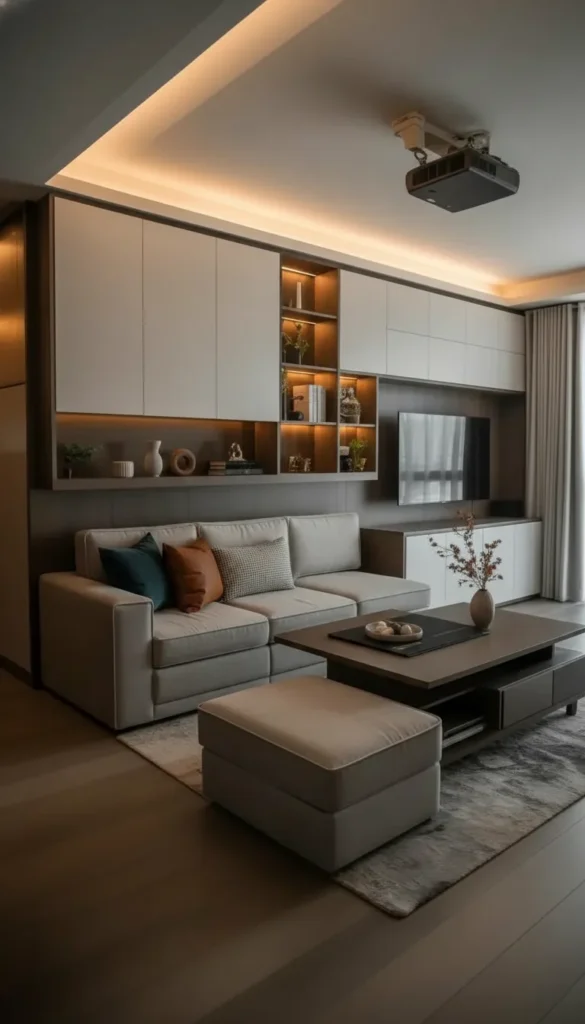
The key principle: A smart tiny living room is not defined by any single piece of furniture. It is defined by how quickly and easily the whole room can shift to meet the moment.
Creative Tiny Living Room Design Ideas to Try in 2026
Not every small living room needs to be neutral and minimal. Some of the most beautiful tiny rooms are the most personal — full of color, art, unexpected combinations, and real character. The challenge is expressing personality without creating visual chaos.
The answer is curation. You can be bold and creative in a small space. You just have to be intentional about it.
Choose a Color Palette of Two to Three Tones
Color is one of the fastest ways to give a small room a strong identity.
- Pick two or three primary colors and repeat them across fabrics, artwork, and accessories
- Good creative palettes for 2026: dusty terracotta with warm beige and dusty blue, or sage green with cream and warm wood tones
- Repeating the same colors in different materials — a terracotta pillow, a terracotta candle, a terracotta-toned print — creates cohesion without monotony
- Avoid more than three dominant colors or the room will start to feel visually noisy
Even in a small space, color signals personality and intention. The room will feel designed, not random.
Choose a Two-Seat Sofa and Add Color Through Accessories
In a creative small living room, the sofa acts as a canvas.
- Start with a neutral fabric sofa — cream, warm gray, or soft oatmeal
- Add an upholstered accent chair in a bolder color or pattern to bring energy into the room
- Layer patterned cushions in your chosen palette across the sofa
- A throw blanket in a contrasting texture (chunky knit, velvet, or linen) adds warmth without clutter
This approach keeps the large anchor pieces quiet while letting accessories do the expressive work.
Pin this creative color strategy for small rooms! 📌
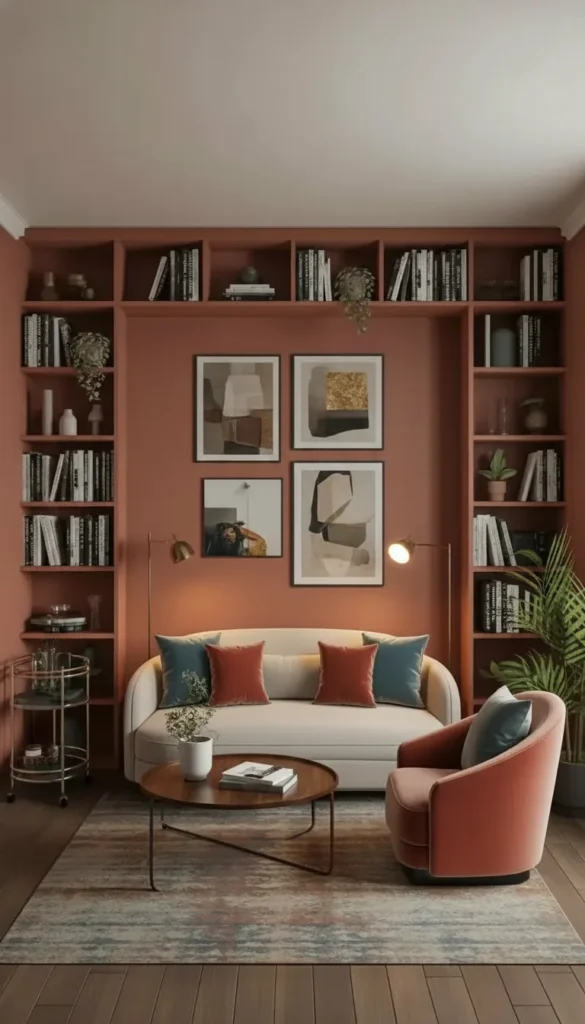
Install a Wall Bookcase Around the Sofa
A built-in bookcase that wraps around the sofa is one of the most striking moves you can make in a tiny living room.
- It creates a built-in, custom look without actual construction — floating shelves in an L or U-shape achieve the same effect
- Provides maximum vertical storage without taking any floor space
- Books, plants, candles, and small art objects fill the shelves and make the room feel curated
- The sofa nestled within the shelving creates a cozy reading nook feel even in a city apartment
This design move works especially well for book lovers, artists, and creatives who want their room to feel like a reflection of who they are.
Use a Round Coffee Table for Better Flow
In a small, creative living room where traffic flow can get awkward, table shape matters.
- A circular coffee table removes sharp corners that people bump into in tight spaces
- Easier to move around than a rectangular table when you need to reconfigure the room
- Creates a natural focal point without dominating the space
- Works well in smaller dimensions — a 28 to 32 inch diameter is ideal for most two-seat sofas
Add a Bar Cart or Rolling Trolley
This is one of the most practical and stylish additions to a creative tiny living room.
- A slim bar cart can serve as a side table, a display surface for plants and candles, or a drinks station for hosting
- Because it rolls, it can shift position based on the occasion — next to the sofa for movie night, tucked against the wall when you need more floor space
- Frequently appears on design lists specifically for small rooms because of its adaptability
- Style it with a few bottles, a small plant, a candle, and some books to make it feel intentional
Use Walls for Art, Hats, Bags, and Plants
In a small creative room, every wall surface is an opportunity.
- Hang framed prints in a small gallery arrangement rather than one large piece — it adds character without weight
- A peg rail at mid-height is functional and decorative — hang hats, lightweight bags, a small mirror, or trailing plants
- Mix wall-mounted swing arm lamps with the gallery wall to free up side table surfaces completely
- The result is a room that looks like it belongs to someone with real taste
Add a Fold-Down Desk, Corkboard, and Window Bench
Three additions that take the creative tiny living room from beautiful to fully functional.
- A fold-down wall desk in a corner gives a work surface that disappears completely when not in use
- A corkboard or magnetic panel above the desk becomes a creative command center — notes, inspiration images, to-do lists
- A low bench under the window with storage baskets underneath adds seating, storage, and a natural connection to natural light
Save this creative small room design plan! 📌
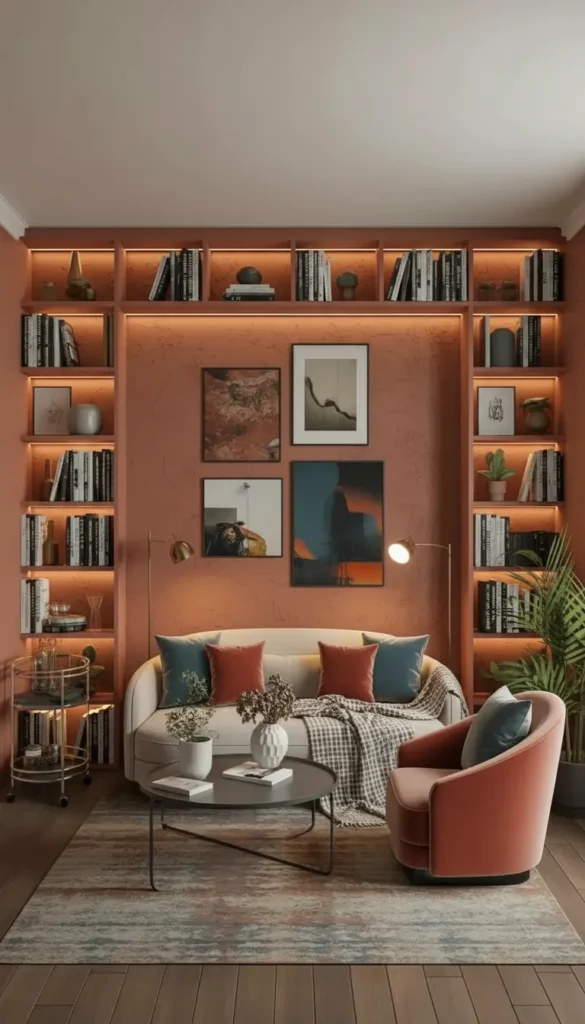
The key principle: Designers and editors consistently agree that small creative rooms succeed through editing, not accumulation. Choose what is meaningful. Repeat two or three colors. Every object should say something true about the person who lives there.
Cozy Tiny Living Room Designs for Comfortable Living
Some rooms are beautiful in photographs but exhausting to actually live in. A cozy tiny living room gets the balance right — it looks good, but more importantly, it feels good. It is the kind of room you want to come home to at the end of a long day.
In 2026, cozy design is not about overstuffing a room with cushions and throws. It is about warmth, texture, layered light, and a sense that the room was made for the person who lives there.
Start With a Warm Neutral Color Palette
The foundation of a cozy tiny living room is always the color.
- Choose warm neutrals as the base: cream, taupe, caramel, warm white, or soft terracotta
- Wood tones and natural materials reinforce the warmth — a wood coffee table, a rattan side table, a linen cushion
- Avoid cool grays and stark whites if coziness is the goal — they read as modern but not warm
- Add depth through varying shades of the same neutral rather than adding contrasting colors
This palette creates a room that feels like a hug the moment you walk in.
Choose a Deep-Seat Loveseat as the Anchor Piece
In a cozy tiny living room, comfort is non-negotiable — especially in the seating.
- A deep-seat loveseat with soft, plush cushions is the ideal anchor for a small cozy room
- Pair it with a chaise or ottoman to stretch out and rest your feet — lounging capability is essential for cozy design
- Look for removable, washable covers in performance fabrics — linen, boucle, or brushed cotton — that soften over time
- A loveseat rather than a full sofa preserves more floor space while still feeling generous and comfortable
Pin this cozy small living room setup! 📌
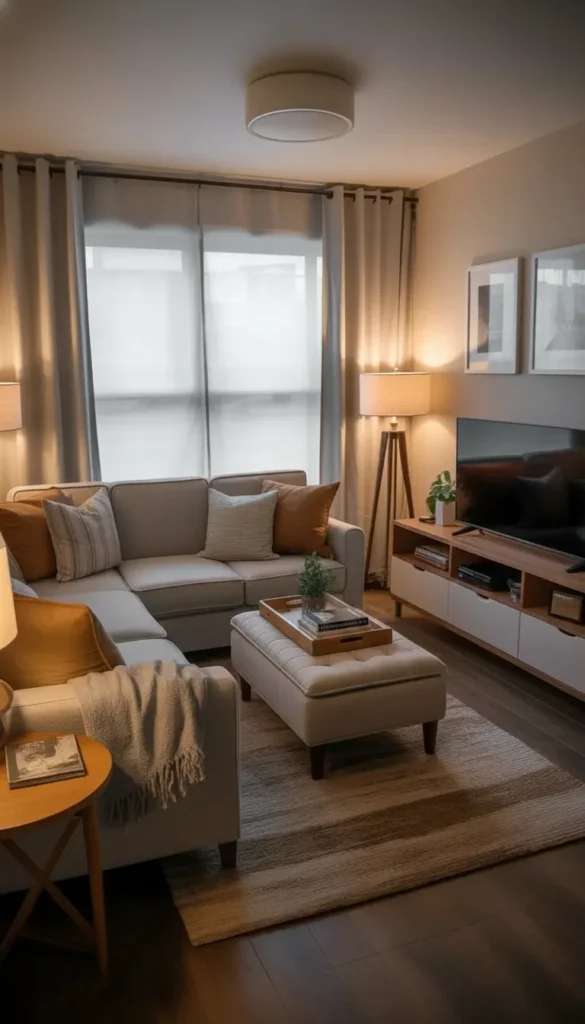
Add Upholstered Stools for Flexible Seating
When hosting guests in a tiny living room, flexibility is key.
- Two small upholstered stools can be tucked under the coffee table when not in use
- Pull them out when guests arrive to add seating without crowding the room
- Works especially well in open-plan spaces where the living room flows into a dining area
- Choose stools in a fabric that coordinates with the sofa and rug — contrast is fine, mismatch is distracting
This trick is used consistently in small living-dining room design to add seating capacity without permanent bulk.
Use a Padded Ottoman as the Coffee Table
This one swap changes the entire feel of a cozy tiny living room.
- A tray-top padded ottoman replaces the hard coffee table and doubles as a footrest
- Place a wooden or acrylic tray on top to create a stable surface for drinks, books, and candles
- When guests arrive, the ottoman becomes an extra seat — no additional furniture needed
- Available in a wide range of sizes and fabrics, making it easy to match any cozy palette
Layer Your Lighting at Multiple Heights
This is the single most impactful change you can make for a cozy tiny living room, and almost every experienced interior designer agrees on it.
- Overhead lighting alone makes a room feel flat and clinical — it is almost never cozy
- Combine floor lamps, table lamps, and wall sconces for layered, multi-level light
- Use a dimmer on overhead fixtures so you can lower the brightness in the evening
- Choose bulbs in the 2700K range — warm, amber-toned light that mimics candlelight and firelight
In rooms that double as a bedroom or office, this flexibility is especially important. The room needs to transition from bright and functional to warm and restful.
Add Tactile Materials Throughout the Room
Coziness is as much about touch as it is about sight.
- A chunky knit throw draped over the loveseat adds instant warmth
- A sheepskin-style rug layered over a flat-weave base rug adds depth and softness underfoot
- Linen curtains in a natural, undyed fabric soften the windows without blocking light
- A small electric fireplace or a grouping of candles creates a warm focal point that the eye naturally gravitates toward
Display Personal Photos and Meaningful Objects
A cozy room should feel lived-in and personal — not like a hotel lobby.
- Simple frames with family photos or travel prints create warmth without clutter
- Keep frames in a consistent color (all black, all natural wood, or all white) so the collection looks intentional
- Limit personal objects to what genuinely brings you joy — a small collection of meaningful things beats a shelf crowded with generic decor
- Books, candles, and small plants are the easiest objects to style because they are both practical and personal
Save this cozy tiny living room checklist! 📌
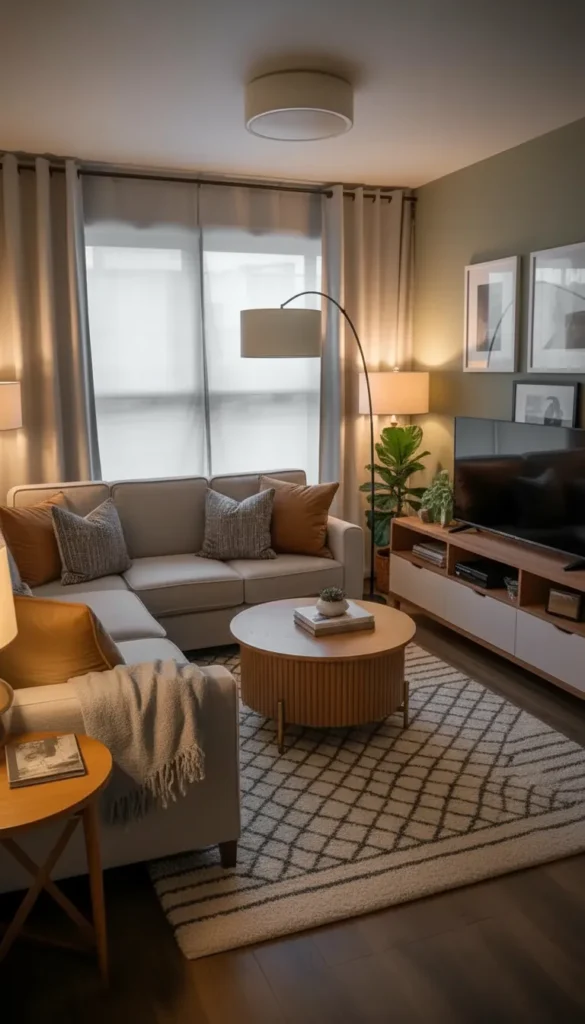
The key principle: A cozy tiny living room is built on warm light, soft textures, and meaningful objects. It does not require a large budget or a large space. It requires intention and a willingness to prioritize comfort over aesthetics.
Minimalist Tiny House Living Room Ideas for Small Spaces
The minimalist approach to a tiny living room is perhaps the most demanding — and the most rewarding. When done well, it creates a sense of calm and space that no other design style can quite match. When done poorly, it feels cold, empty, and impersonal. The difference is in the quality of the choices, not the quantity.
In 2026, the strongest minimalist influence comes from Japandi design — a fusion of Japanese wabi-sabi philosophy and Scandinavian simplicity. It is the perfect framework for a tiny house living room.
Understand What Japandi Minimalism Actually Means
Japandi is not about bare walls and empty rooms. It is about deliberate choices.
- Every object in the room is chosen because it is beautiful, functional, or both
- Natural materials are prioritized: light wood, linen, ceramic, rattan, stone
- The color palette stays very tight: light walls, light wood floors, soft gray or warm white fabrics
- The room is low to the ground — low-profile furniture creates a sense of visual calm and makes ceilings feel higher
This is a design style that rewards you most when you commit to it fully.
Choose a Low-Profile Sofa With Slim Legs
The sofa choice in a minimalist tiny living room has an outsized impact on the whole space.
- A low-profile sofa in a simple, clean line without rolled arms is the foundation
- Slim tapered legs on the sofa reveal more floor space underneath — this is one of the most effective tricks for making a small room feel larger
- Choose a fabric in warm gray, stone, or soft off-white — no patterns, no textures beyond subtle weave
- Avoid sectional sofas in minimalist tiny rooms — they consume too much visual and physical space
Pin this minimalist Japandi small room setup! 📌
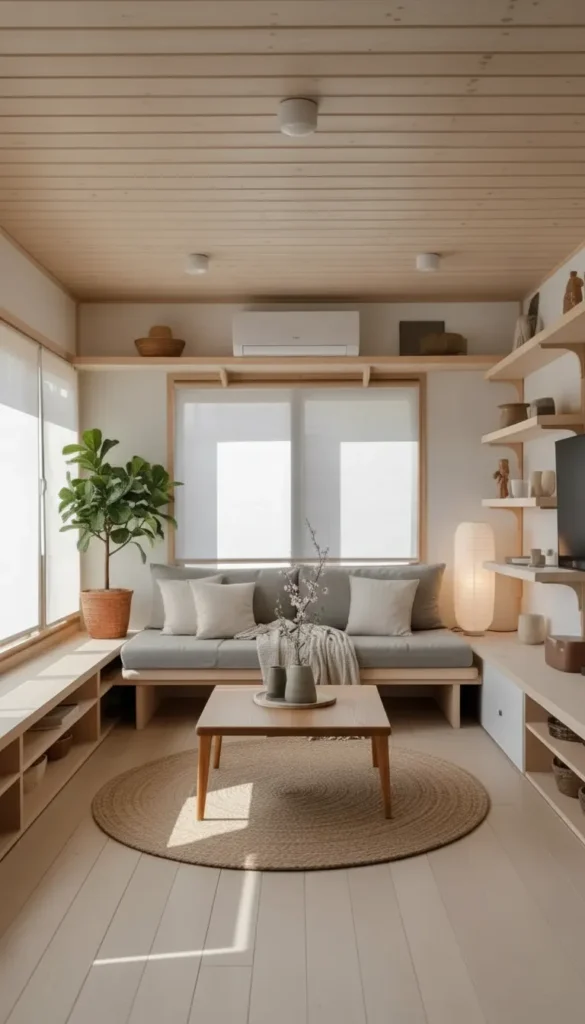
Use a Thin Wood Coffee Table and One Accent Chair
Two additional pieces are usually all a minimalist tiny living room needs.
- A thin wood coffee table — solid oak, ash, or walnut — in a simple rectangular or oval form
- One low-profile accent chair that coordinates with the sofa — the same family of neutral tones
- The accent chair can double as a workspace seat if the wall-mounted shelf is used as a desk
- Avoid adding extra occasional tables, poufs, or accent pieces — resist the urge to fill space
One of each major category is the rule: one sofa, one table, one chair, one storage object.
Maximize Storage With Built-In Benches and Under-Window Seats
Hidden storage is essential in minimalist design because visible clutter breaks the entire aesthetic.
- Built-in benches along one wall provide seating and storage in a single, seamless piece
- An under-window seat with a hinged top stores blankets, seasonal items, and books invisibly
- The exterior of built-in storage should be completely smooth — no hardware, no decorative panels
- Paint built-in storage the same color as the walls to make it visually recede
This approach is both practical and beautiful — one of the defining moves of minimalist tiny house living.
Skip Heavy Curtains and Maximize Natural Light
Light is the most valuable design element in a minimalist tiny living room.
- Use roller shades in a light, neutral fabric — they roll up completely and disappear during the day
- Linen panels in a very pale tone are an alternative — they filter light gently without blocking it
- Never use blackout curtains in a tiny minimalist room unless the window faces direct harsh sunlight
- Let natural light do the work of making the room feel spacious — it costs nothing and delivers everything
Keep Decor to the Absolute Minimum
This is where most people struggle with minimalist design — they know they should edit but they do not know where to stop.
- Two to three ceramic vases in varying heights on a shelf or console
- One or two framed prints in simple, thin frames
- One live plant — a sculptural variety like a fiddle leaf fig, snake plant, or monstera
- That is it. The empty space around these objects is not wasted — it is intentional and necessary
The restraint is the design. The negative space is as important as the objects.
Add a Coat Rail, Concealed Charging, and a Zoning Rug
Three practical upgrades that strengthen a minimalist tiny house living room without disturbing the aesthetic.
- A skinny wall rail near the entrance with three or four hooks keeps coats and bags from piling on seats
- Concealed charging points built into the bench surface eliminate cable clutter completely
- A large plain rug in a solid, light color defines the living zone in an open-plan space — it creates a visual boundary between the living area and the kitchen or dining area without any walls or dividers needed
Save this minimalist tiny house living room plan! 📌
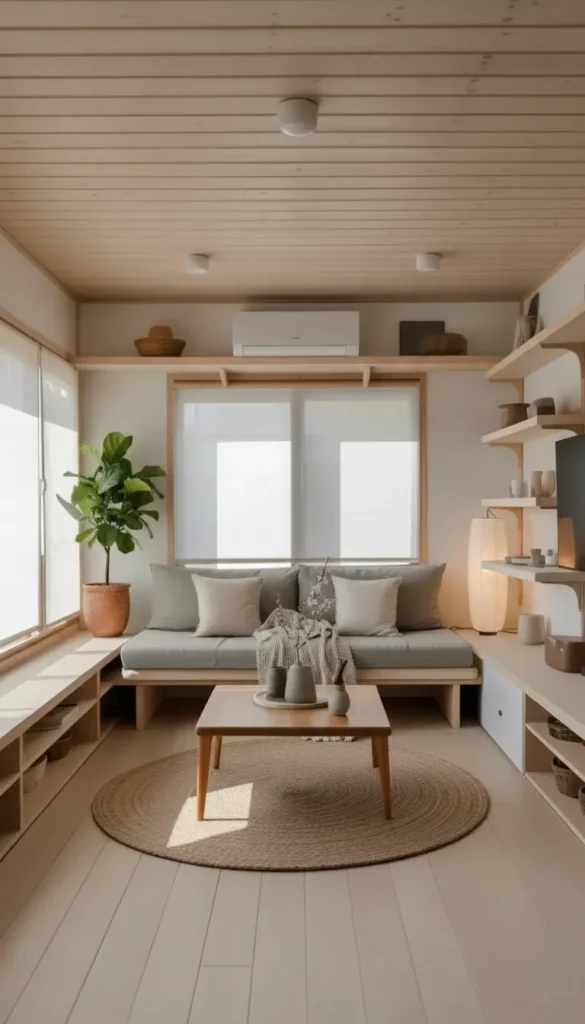
The key principle: Minimalist tiny living rooms succeed through ruthless editing and a commitment to quality over quantity. Choose fewer things. Choose them well. Then leave the space around them alone. Declutter regularly — the discipline of maintenance is as important as the initial design.
Conclusion
A tiny living room is not a design problem. It is a design opportunity — one that forces you to be more thoughtful, more intentional, and ultimately more creative than a large room ever would. The five design concepts in this guide cover a wide range of styles and lifestyles, from the smart and tech-forward to the warm and cozy, from the artistic and personal to the serene and minimalist. Whatever your taste, there is a version of a tiny living room that can feel completely right for the way you actually live.
Start with one section that resonates most with how you want your room to feel. Make one or two changes — a better sofa, smarter lighting, a wall shelf instead of a floor unit. Small shifts compound quickly in small spaces. Before long, the room that once felt like a problem will feel like the most comfortable, most personal, and most loved room in your home.

“I share simple, beautiful and affordable home decor ideas to help you style every corner of your home with ease.