

There are mornings when you walk outside, look at your yard, and feel nothing but noise. The world moves fast, your mind moves faster, and somewhere along the way you stopped noticing the sky. That feeling — that quiet hunger for stillness — is exactly why zen gardens have never felt more necessary than right now in 2026.
This guide is for anyone who wants to slow down and actually feel it. Whether you have a full backyard, a narrow patio, a corner shelf in your living room, or just a small strip of outdoor space, there is a zen garden idea here that will work for your life. Let’s build something that breathes.
Zen Garden Ideas For Backyard Spaces In 2026
A backyard zen garden is not a decoration. It is a destination. When you design it with intention, it becomes the place your mind goes to exhale — and the view you love from your kitchen window on a Tuesday morning.
Start With One Strong Focal Point
Every great backyard zen garden is organized around a single anchor element. Don’t skip this step.
- A sculptural boulder, stone basin, or low lantern works best
- Place it slightly off-center for a natural, organic feel
- Let every other element in the space support it, not compete with it
When your eye has somewhere to land, the whole space feels settled.
Choose The Right Ground Plane
The floor of your zen garden sets the mood before anything else does.
- Raked gravel is the classic choice — calm, textural, and easy to reset
- Compacted decomposed granite reads as quieter and more modern
- Both work beautifully because they make everything placed on top feel intentional
Keep it simple. One ground material is almost always better than two.
Plan A “Pause Spot”
This is one of the most overlooked steps in backyard zen garden design.
- A pause spot is a single place to sit and look — not walk through
- A low cedar bench or a spare teak chair works perfectly
- Position it so you face the focal point with a slight angle, not head-on
The goal is not to move through the garden. The goal is to stop.
📌 Pin this backyard zen garden layout guide! 📌
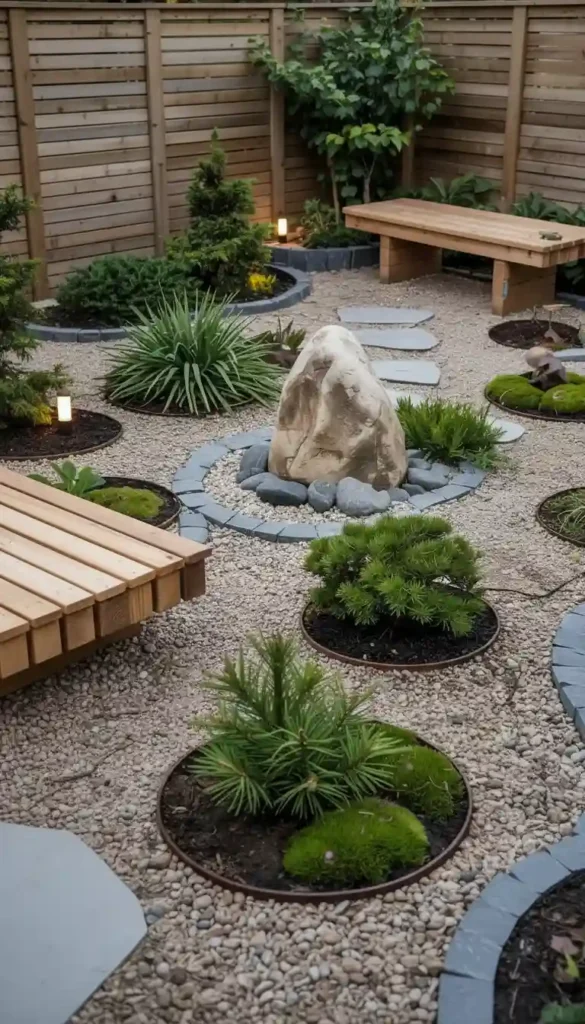
Use Clean Edge Lines
The edge of your zen garden is what makes it feel finished or unfinished.
- A crisp boundary between gravel and lawn signals intention
- Use steel, stone, or timber edging for a clean, modern line
- Avoid plastic borders — they look cheap and warp over time
One sharp edge line does more for the feeling of calm than almost any plant or object you add.
Pick A Limited Plant Palette
Two or three plant forms are all you need. Seriously.
- One dwarf pine, boxwood, or cloud-pruned shrub for structure
- One soft groundcover to break up the hardscape feeling
- Stepping stones that are slightly irregular — they slow you down naturally
More plants add more noise. Zen is about space, not abundance.
Add A Seasonal Maintenance Plan
A zen garden only stays zen if you can keep it tidy without it becoming a chore.
- Store your rake and broom in a small, discreet spot nearby
- Plan one seasonal refresh per quarter — it takes less than an hour
- Low shielded path lights keep the garden readable and peaceful after dark
If the space is windy, a slatted screen or low hedge on the windward side will protect your gravel patterns and keep everything looking intentional year-round.
Look At It From Inside The House
This is a test most people forget to do before they finalize a layout.
- Stand at your main interior window and look out
- Leave at least one-third of the visible ground plane visually open
- Empty space is not wasted space — it gives your designed objects weight and meaning
📌 Save this backyard design approach! 📌
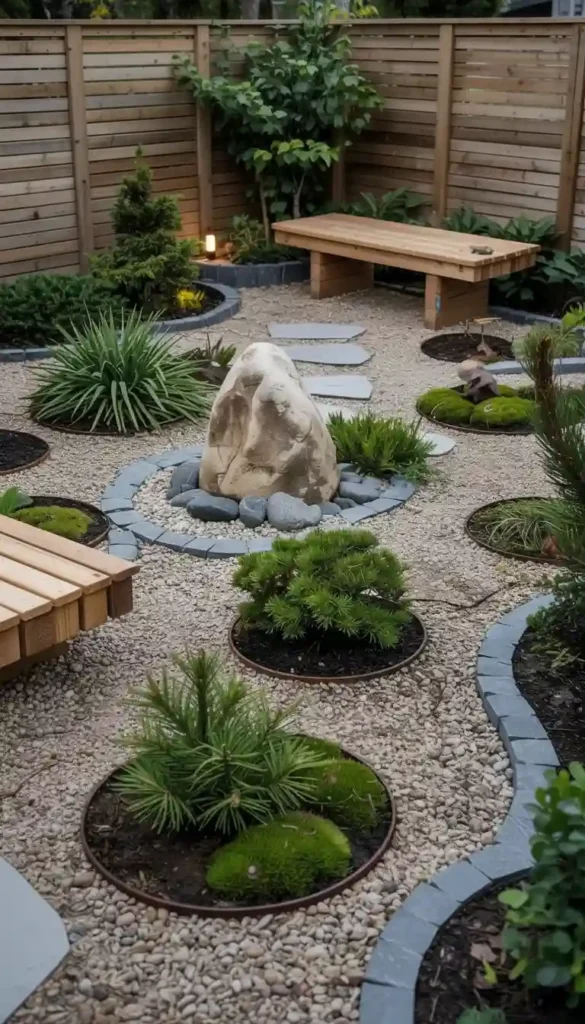
The backyards that feel the most peaceful are always the ones with less going on. That restraint is a design decision, and it is the right one.
Indoor Zen Garden Ideas For Peaceful Living
An indoor zen garden is not a hobby. It is a micro-ritual. When you place it correctly and keep it simple, it becomes a one-minute reset that genuinely changes how your day feels — and that is not an exaggeration.
Choose The Right Location First
Placement matters more than any object you put inside the garden.
- Pick a spot you naturally pass through every day: a living room corner, entry console, or home office shelf
- Avoid kitchen counters — too much activity, too much visual competition
- Keep it away from air vents, which blow sand around and dry out plants fast
When the garden lives in your daily path, it becomes part of your rhythm without effort.
Build A Simple, Tactile Base
The foundation of a good indoor zen garden is clean and satisfying to touch.
- Use a shallow wood tray or a low ceramic dish with a flat lip
- Fill with pale sand or fine gravel — both are easy to rake and reset
- Choose a tray color that is neutral and warm, not bright or glossy
The base should disappear. Your eye should go to the stones and the space between them, not the container.
Select Stones With Care
Stone selection is where indoor zen gardens go right or wrong.
- Use two sizes: one larger anchor stone and three to five smaller companion stones
- Choose stones with smooth texture and muted color — grey, cream, or warm tan
- Arrange them asymmetrically, because perfect symmetry feels static, not serene
📌 Pin this indoor zen garden setup! 📌
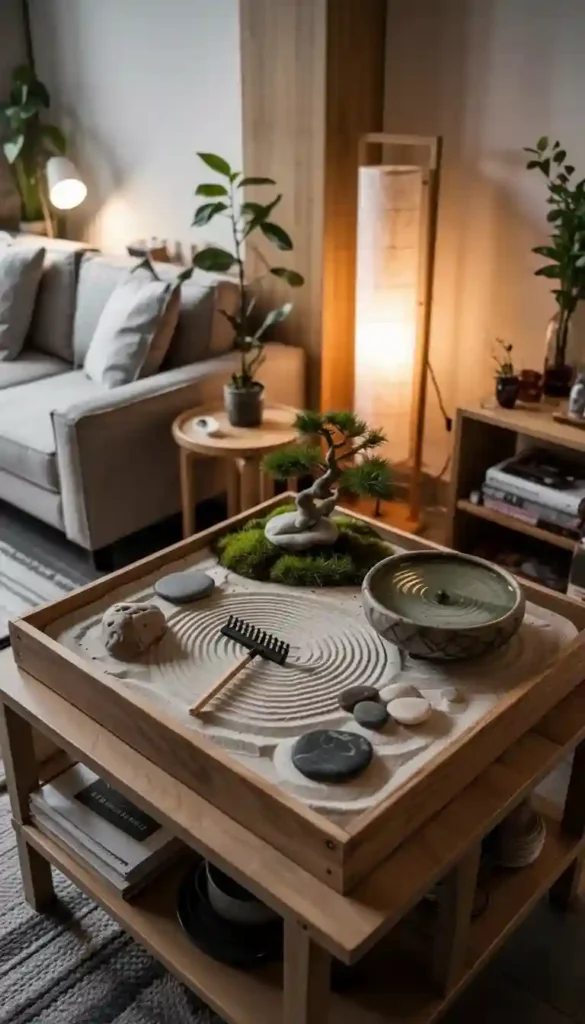
Add One Living Element
One small plant brings the whole composition to life.
- A moss mound is ideal — low maintenance, beautifully textural
- A compact fern or bonsai-style ficus works well too
- Avoid anything that needs frequent watering or drops leaves often
One living thing is enough. Two can start to feel crowded in a small tray.
Consider A Quiet Water Element
Water can elevate an indoor garden — but only if it is truly quiet.
- A small recirculating bowl with a soft ripple is perfect
- Avoid loud tabletop fountains — they create stress, not calm
- If you can hear it clearly from across the room, it is too loud
A water element is entirely optional. If you are not sure, skip it and start without one.
Light It Intentionally
Lighting is the most underrated factor in indoor zen garden design.
- Use a warm, dimmable lamp positioned to one side of the arrangement
- Avoid overhead glare — it flattens the textures and kills the mood
- A warm bulb in the 2700K range creates the best atmosphere
The right light makes sand shadows visible. That small detail makes the whole thing feel alive.
Interact With It Daily
The sand-raking is the point — not just the presentation.
- Treat raking as a one-minute reset between tasks
- Keep a small brush and miniature rake stored right next to the tray
- Change the pattern every few days to keep it from feeling static
📌 Save this indoor zen ritual guide! 📌
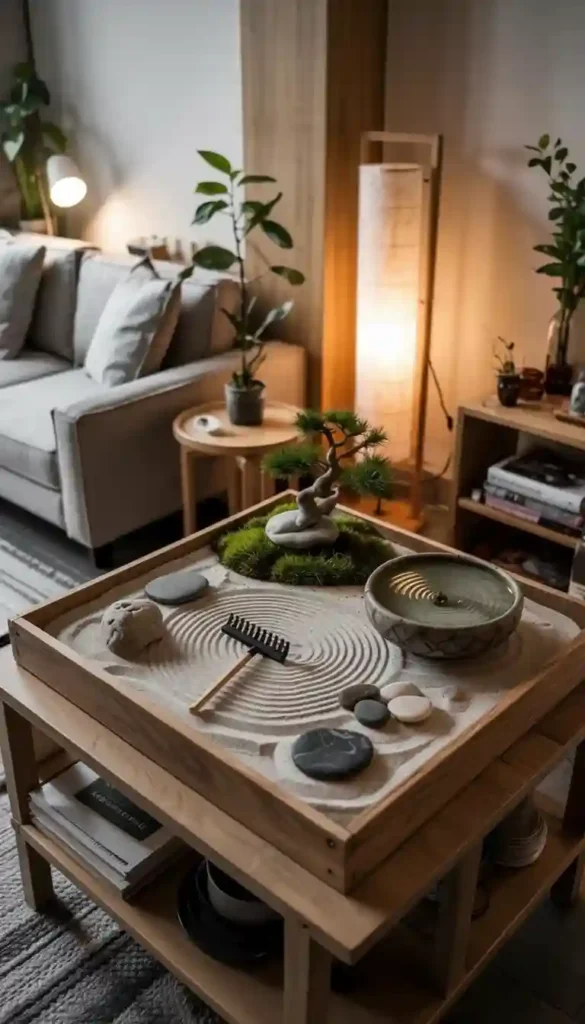
If you live with pets or small children, add a glass cloche or choose a tray with a higher lip. A disrupted garden stops being a sanctuary and starts being a source of frustration. Protect the peace.
Outdoor Zen Garden Ideas For Modern Homes
Modern homes need zen gardens that match their architecture — clean geometry, honest materials, and a connection between inside and outside that feels deliberate rather than accidental. This section is about getting that right.
Match The Garden’s Geometry To The House
A zen garden next to a modern home should feel like it belongs there.
- Use oversized pavers with consistent spacing for a contemporary feel
- Polished river stones and dark-stained wood reflect modern lines naturally
- Let the patio edge fade into gravel and stones for a soft indoor-outdoor transition
Hard geometry softens when the transition between materials is handled well.
Choose Materials That Age With Dignity
Modern outdoor zen gardens are only as good as the materials you choose.
- Thermally modified wood handles outdoor conditions beautifully and does not warp
- Concrete with a warm wood top creates a cool-versus-warm contrast that feels thoughtful
- Avoid materials that discolor quickly or require heavy sealing every season
The right stone will stay beautiful for decades. The wrong one looks tired within two years.
Keep The Furniture Low And Sculptural
Furniture in a modern zen garden is almost architecture.
- A low concrete bench or simple platform reads as calm and deliberate
- Avoid chairs with high backs — they draw too much visual attention
- One or two seating pieces maximum; the space itself should do most of the work
📌 Pin this modern outdoor zen approach! 📌
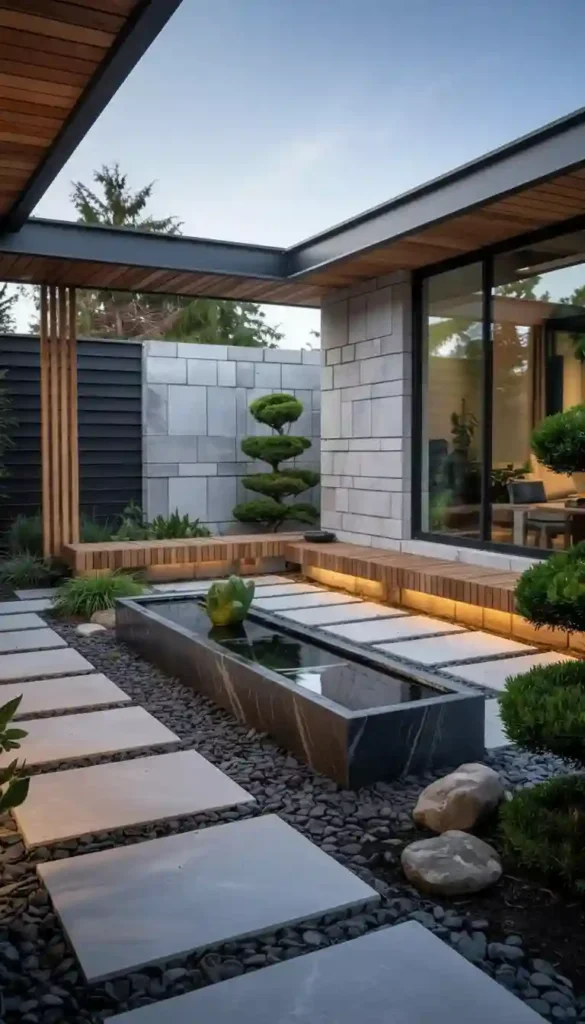
Add A Linear Water Feature
A still, clean water element is one of the most powerful things you can do in a modern zen garden.
- A linear reflecting trough works better than a round basin in most modern settings
- Keep the water surface completely still — calm water reflects the sky and doubles your space visually
- Choose a water feature that is simple to drain and clean, because neglected water ruins everything
A dirty water feature is worse than no water feature. Plan maintenance before you install.
Use Privacy Screens Strategically
Privacy matters for any outdoor space to feel truly restful.
- Tall slatted screens in wood or black metal create enclosure without heaviness
- Place them on the sides that face neighbors or traffic, not on the garden view side
- A screen at the right height blocks sightlines without blocking sky
The goal is to feel enclosed enough to relax, not so enclosed it feels like a box.
Design The Lighting For Night Use
If the garden is used after dark — and it should be — lighting needs careful thought.
- Concealed LED strips under benches create warm, grounded light without glare
- Discreet uplights on one or two trees add depth and drama without brightness
- Avoid overhead fixtures or spotlights — they destroy the mood completely
📌 Save this outdoor lighting strategy! 📌
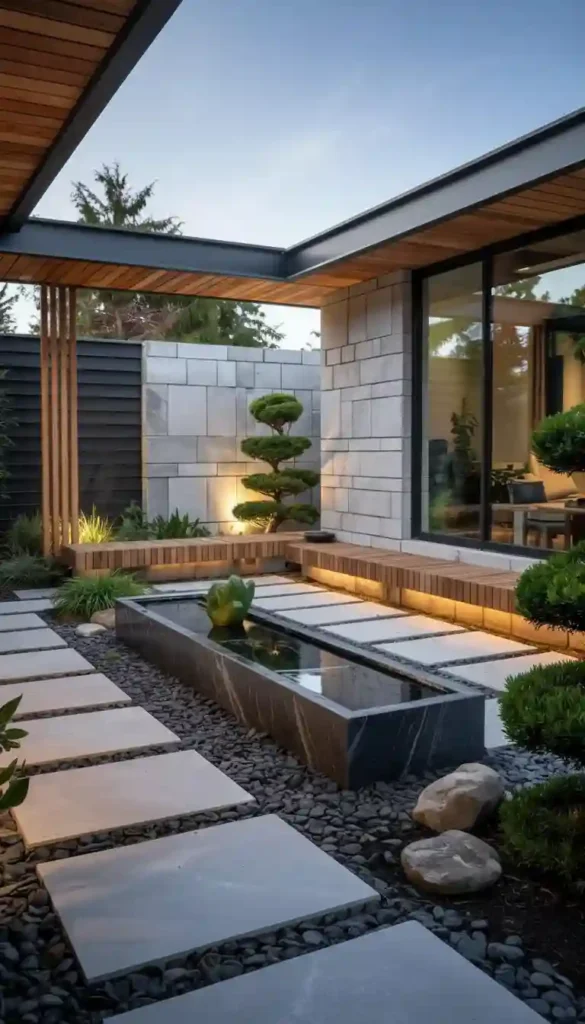
One well-placed uplight on a sculptural tree is worth more than ten bright path lights. Scale matters in modern zen design — one large, right element always beats five small decorative ones.
Zen Garden Ideas For Small Backyard Layouts
Small does not mean limited. Some of the most powerful zen gardens ever designed are tiny. The constraint forces you to edit harder, and editing harder is exactly what zen is about.
Map Your Smallest Usable Rectangle
Start by defining the edges before you think about anything else.
- Treat even a narrow strip behind a townhouse as a small courtyard
- Work out the actual dimensions before buying anything
- A clearly mapped boundary makes the space feel more intentional immediately
A small zen garden that is well-defined always feels larger than a big one that is not.
Keep The Path Simple
One clear path is all a small zen garden needs.
- A single line of stepping stones is usually enough
- A thin run of pavers works equally well
- Avoid branching paths — in a small space, they create visual clutter
The path should move you through the garden, not compete with it for attention.
Choose One Focal Point
In a small backyard, one focal point is a rule, not a suggestion.
- A stone lantern, water basin, or single sculptural boulder all work well
- Place it where it is visible from your main seating spot and from the house
- Everything else in the garden plays a supporting role — no exceptions
📌 Pin this small backyard zen layout! 📌
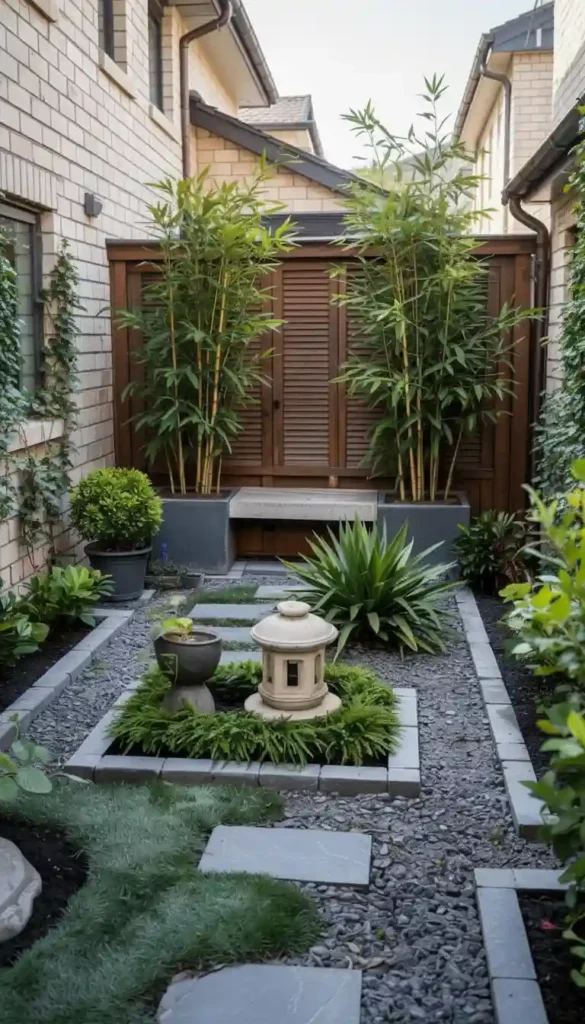
Use Height Thoughtfully
In tight spaces, vertical elements do the heavy lifting.
- A narrow trellis or slatted screen adds height and privacy without using floor space
- Bamboo in a large pot creates strong vertical form and can be contained easily
- A cloud-pruned shrub offers structure and visual interest without spreading wide
Going up is always smarter than going out in a small zen garden.
Choose Gravel Over Lawn
Gravel reads as open space, which is exactly what a small garden needs.
- Use consistent gravel throughout the main ground plane for a unified feel
- Define the perimeter with bold edging — steel or stone — so it does not feel messy
- Avoid mixing gravel with mulch or bark; it creates visual noise
One gravel type, one edging material, full stop.
Use Built-In Furniture Only
Freestanding furniture eats floor space in small zen gardens.
- A narrow bench with hidden storage beneath is ideal
- Built-in seating along a fence or screen keeps the center open
- Avoid chairs or tables you have to move around — they interrupt the flow
📌 Save this small space zen approach! 📌
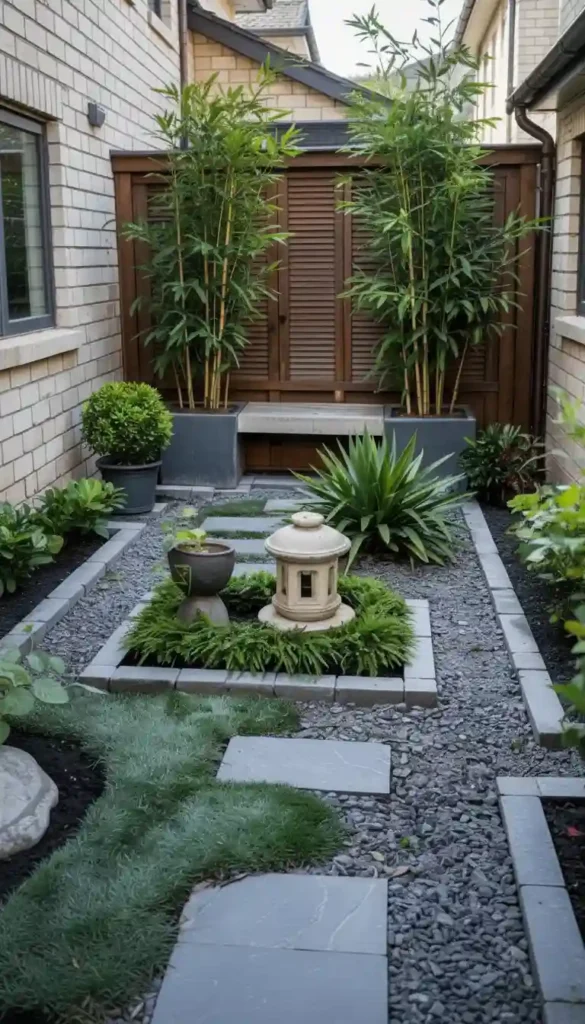
The best small backyard zen gardens I have seen all share one thing: something was removed to make them work. When everything is fighting for attention, the space is restless, not calm. Edit hard. Keep one rustling grass for soft sound, one blank fence as a visual reset, and one clear path to follow. That is enough.
Japanese Style Zen Garden Ideas For Backyards
Japanese style zen gardens work because they follow a clear logic — not a set of symbols. When you borrow that logic and apply it to a modern backyard, you get something that feels timeless rather than themed.
Lay The Ground Plane First
In Japanese garden design, the ground is not the background. It is the composition.
- Use gravel or fine crushed stone to represent a sea or open water
- Place larger stones as “islands” within that field
- Maintain clear, unobstructed sightlines from your main viewing bench or platform
The ground plane sets the entire mood before a single plant is added.
Limit The Color Palette
Japanese style gardens are intentionally restrained in color.
- Use greens, greys, cream, and brown as your base palette
- Avoid bright flower colors — they pull the eye and disturb the stillness
- One deciduous accent, like a small Japanese maple, adds seasonal change without chaos
📌 Pin this Japanese garden design principle! 📌
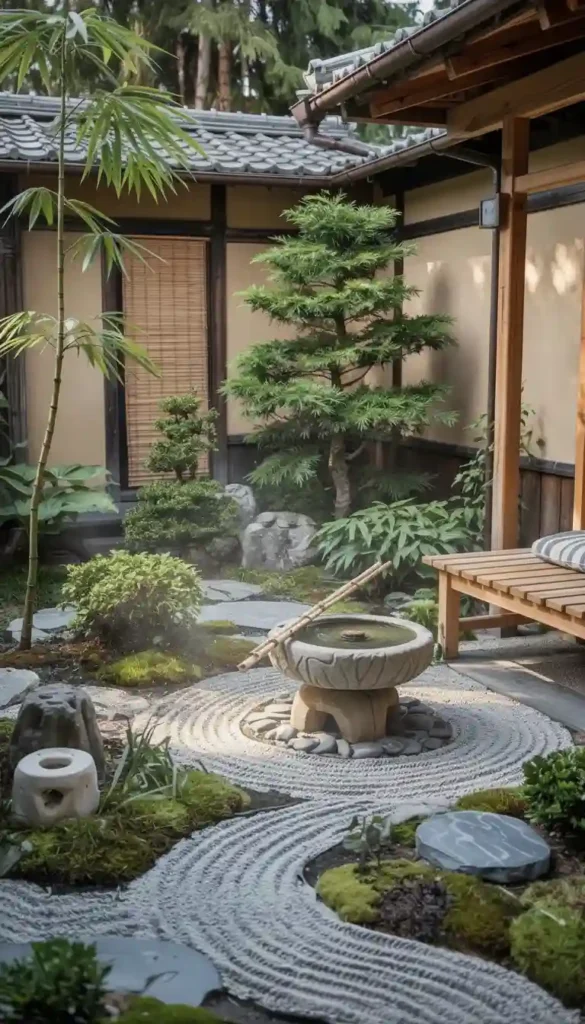
Create An Enclosed Atmosphere
Enclosure is what separates a Japanese style garden from an open backyard.
- Use fences, screens, or hedges to create a quiet perimeter
- The goal is to feel separated from the outside world, even slightly
- A bamboo fence or dark-stained slatted screen works particularly well
Once enclosed, even a small space begins to feel like a retreat.
Use Classic Elements With Modern Restraint
The traditional elements of Japanese garden design still work — they just need to be scaled correctly.
- A tsukubai-style stone basin paired with a bamboo spout is beautiful if the vibe fits
- A stone lantern works as an accent, placed off-center and lit subtly — not as a centerpiece
- A low wooden bench or platform references a veranda without becoming theatrical
Every element should earn its place. If it does not, remove it.
Build From Large To Small
This is the sequencing principle that makes Japanese gardens feel structured and calm.
- Place the largest stone first — it sets the scale for everything else
- Add medium stones next, arranging them so they relate to the anchor stone
- Introduce plants last, using them to soften edges, not to fill space
The rocks provide the structure. The plants are the finishing touch, not the foundation.
Modulate The Views
A Japanese garden should be discovered in layers, not seen all at once.
- Use half-screens or low hedges to partially conceal parts of the garden
- A view that unfolds as you move through a space feels larger and more interesting
- Even a single well-placed screen can create the feeling of depth in a small backyard
📌 Save this Japanese garden layout technique! 📌
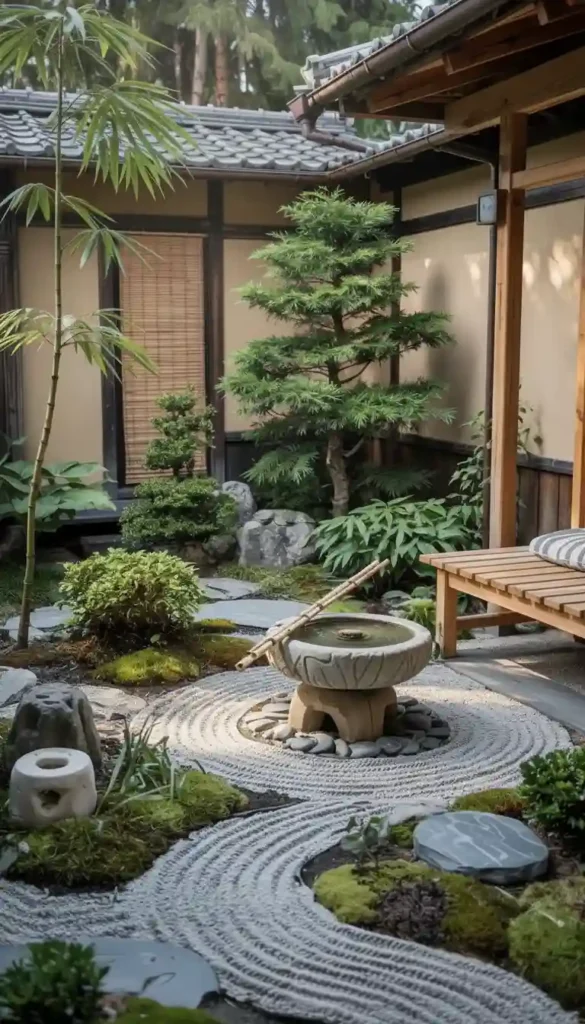
Handle Bamboo Carefully
Bamboo is beautiful in a Japanese style garden — but it needs a clear plan.
- Always plant running bamboo in a buried root barrier or a large container
- Clumping bamboo is slower to spread and easier to manage in small spaces
- Check the spread annually and cut back hard if it starts to exceed its boundary
A bamboo clump that escapes its boundary corrupts the clean appearance of the whole garden within a single season. Plan containment before you plant.
Choose Gravel Color Deliberately
This is a detail most people underestimate until it is too late.
- Pale grey or cream gravel reads as calm and traditional
- White gravel can feel harsh in bright sunlight — test it in situ first
- Tan or warm beige gravel works well against dark wood and green foliage
The gravel color interacts with every other material in the garden. Get a sample before you commit to a full delivery. One wrong choice and the whole palette fights itself.
Conclusion
A zen garden is not a project you finish. It is a practice you return to. Whether you build a full backyard layout, a small courtyard, a modern outdoor room, a Japanese-style retreat, or a tray of sand on a shelf — the principle is the same. Less, but better. Space, not stuff. Stillness, not silence.
Start with one element. Get it right. Then add the next one only when you are sure it earns its place. That discipline is the design, and the design is the point.

“I share simple, beautiful and affordable home decor ideas to help you style every corner of your home with ease.