

There is something deeply personal about a kitchen remodel. It is not just about cabinets and countertops. It is about the mornings you want to feel calm, the dinners where everyone gathers around, and the small daily moments that make a house feel like home. When the layout works against you, every meal feels like a battle. When it works for you, even Monday feels manageable.
This guide gives you five real, tested kitchen remodel concepts for 2026, covering both open and closed layouts, with smart strategies for every home size and style. Whether you are starting from scratch or updating a 1970s floor plan, you will find a clear path forward here, with dimensions, finishes, lighting tricks, and storage ideas that actually work in real life.
Transforming a Small Open Concept Kitchen Living Room Remodel
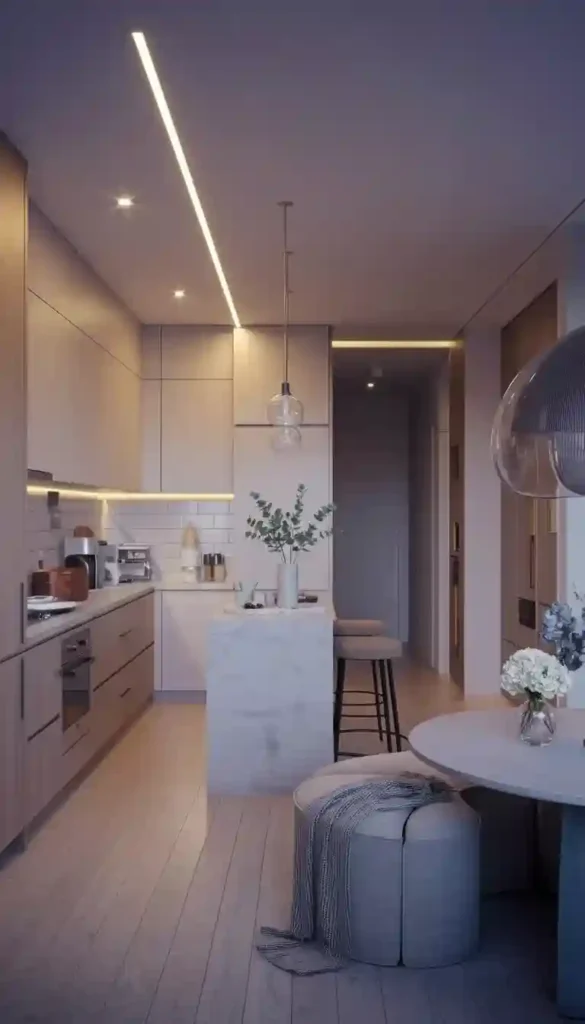
A small open concept kitchen living room remodel sounds exciting, but without a clear zone plan, it turns into chaos fast. The key is mapping out exactly where cooking ends and lounging begins, so both spaces feel intentional, not accidental. When done right, even a compact footprint can feel generous and connected.
Start With a Zone Map
Before you move a single cabinet, sketch out three zones: cooking, dining, and lounging. These zones do not need walls to exist. They need clear visual boundaries and smart furniture placement.
- Keep sightlines long and low, especially toward windows
- Use low-profile furniture and glass-front uppers to extend visual depth
- Float a slim peninsula in narrow homes to guide traffic flow naturally
- Aim for 42 to 48 inches of clearance around key prep zones
Choose the Right Kitchen Layout for Small Spaces
In tight footprints, every layout decision multiplies in impact. A wrong placement can make cooking feel cramped and socializing feel impossible.
- Place the sink on the window wall to borrow natural light
- Group tall storage in one block to reduce visual clutter
- A slim peninsula works better than a full island in narrow rooms
- Counter-depth fridges are essential in small open layouts
Pick Appliances That Fit the Scale
Oversized appliances kill small open spaces. Go scaled down, go quiet, and go built-in wherever possible.
- Order a counter-depth refrigerator to keep the footprint lean
- Choose a 30-inch range with a quiet ventilation hood
- Select bar stools that slide completely under a thin-edge counter
- A quiet dishwasher protects conversation in open layouts
📌 Pin this small space zone strategy! 📌
Arrange Furniture to Keep the Cook in the Circle
One of the biggest wins in a small open concept kitchen living room remodel is keeping the chef connected to guests, not hidden behind a wall of cabinets.
- Face a modular sofa toward the kitchen, not away from it
- Add a compact round table between the kitchen and lounge as a natural bridge
- Place a narrow console behind the sofa as a landing spot that does not block sightlines
- Floating furniture keeps traffic lanes clean
Layer Lighting Across Both Zones
Lighting is the single most powerful tool in an open plan. One type of light does not serve two very different activities.
- Install dimmable recessed cans as your base layer
- Add two small pendants over the island or peninsula
- Place a floor lamp at the lounge edge to anchor that zone softly
- Use one consistent color temperature throughout to read as a single room
Keep Cabinet Finishes Consistent
Visual noise is the enemy of a small open concept. Switching finishes between the kitchen and living area makes both feel smaller and more cluttered.
- Match cabinet colors to furniture tones or keep them neutral
- Use full-height pantry doors to hide everyday clutter
- A washable area rug defines the lounge zone without adding visual weight
- Store remotes and cookbooks on a thin shelf at the transition point
Add One Smart Bonus Feature
One thoughtful addition can eliminate a surprising amount of daily friction in small open layouts.
- A small built-in beverage station pulls guest traffic out of the primary prep area
- A movable butcher block adds flexibility on busy nights in tight townhouse footprints
- Acoustic curtains and soft-close hardware reduce noise bleed between zones
- A water filter at the beverage station means fewer trips across the kitchen
📌 Save this open concept kitchen layout guide! 📌
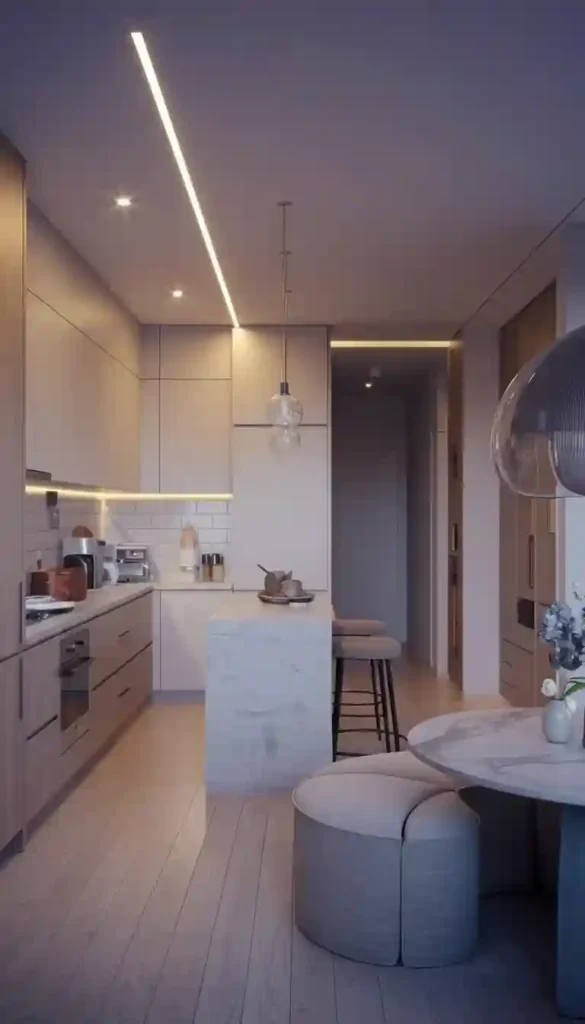
The most important principle here is this: consistency ties an open plan together. When surfaces, lighting, and furniture speak the same visual language, the rooms feel like one thoughtful space rather than two rooms that happened to share a wall.
Inspiring Open Concept 1970s Kitchen Remodel Ideas for Modern Homes
Many 1970s homes have incredible bones. Split-level layouts, raised ranch plans, and bi-level designs have natural zones that invite smart updates. The challenge is modernizing them without losing the structural logic that made them work in the first place. Open concept 1970s kitchen remodel ideas are about subtraction as much as addition.
Understand the 1970s Floor Plan First
Before you demo anything, understand what you have. Most 1970s homes have segmented rooms connected by cased openings, hallways, and partial walls.
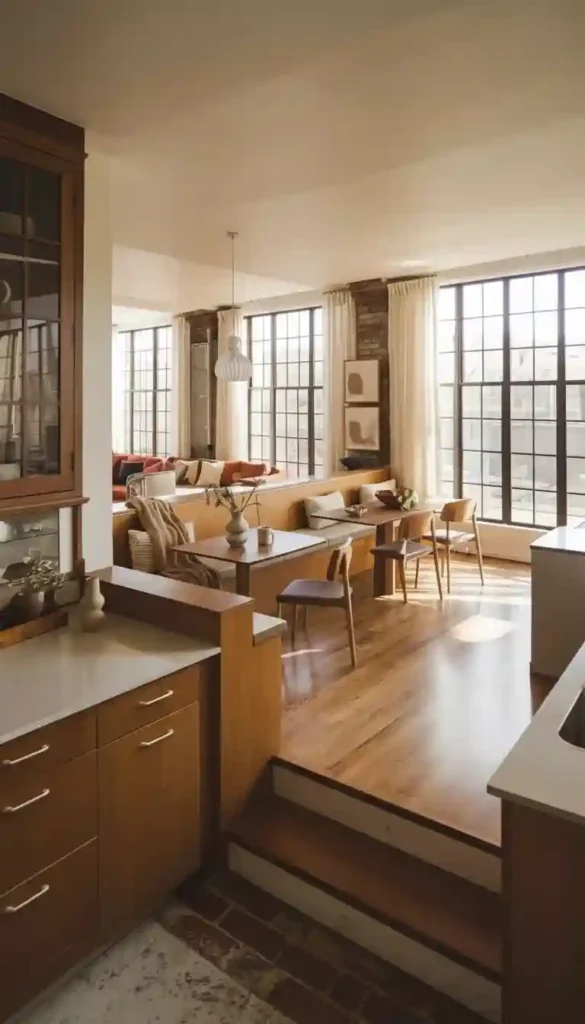
- Split-level homes often have a step between the kitchen and family room
- Ranch homes run long and linear, ideal for widening existing openings
- Bi-level plans separate social and private zones naturally
- The goal is a clear sightline from entry to backyard on the main floor
Widen Openings Before Removing Walls
Full wall removal sounds dramatic, but it is often unnecessary and expensive. Widening a cased opening can achieve 80 percent of the visual impact at a fraction of the cost.
- A widened cased opening preserves structure and keeps costs predictable
- It allows light and sightlines to improve without full demo
- On ranch homes, this move unifies ceiling lines beautifully
- Always consult a structural engineer before touching any load-bearing wall
Choose Finishes That Respect the Era
A 1970s remodel does not need to erase its roots. The best results respect the bones while modernizing the surfaces.
- Flat-panel cabinetry with warm wood grain bridges old and new effortlessly
- Quartz countertops replace the dated laminate without visual shock
- An inset cooktop reduces visual chop on the perimeter
- Matte finishes update 1980s glass-block and lighter wood cues with better proportions
📌 Pin this 1970s kitchen remodel concept! 📌
Add a Dining Banquette to Handle Level Changes
Split-level homes often have a step between the kitchen and the lower family room. A dining banquette bridges this transition elegantly.
- The banquette handles the height change with built-in seating
- Hidden storage underneath makes it doubly functional
- It anchors the dining zone without requiring a separate furniture piece
- Align a linear chandelier above it to reinforce the new sightline
Use Lighting to Modernize Without Demolition
Lighting upgrades give 1970s kitchens the biggest return for the smallest investment. The right layers eliminate the dim, flat feel of original overhead fixtures.
- Ceiling-mounted track lighting works beautifully in low-headroom spaces
- A low-profile hood keeps the ceiling clean above the range
- Concealed LED uplights inside retained soffits turn structural limitations into design features
- Layer ambient, task, and accent light to create depth
Calibrate Openness by Home Type
Not every 1970s home needs the same level of openness. The best outcome is one that matches how the family actually lives.
- A split ranch can open the kitchen to the dining while keeping a half-wall to the sunken den for sound control
- Soffits required by ductwork can become design moments with integrated lighting
- Brick fireplaces and original millwork should be preserved, not buried
- Paint samples should be tested in both morning and evening light to catch orange wood-tone shifts
Finish With Practical Daily-Life Upgrades
The difference between a remodel that photographs well and one that lives well is in the small decisions.
- A built-in bench near the entry manages shoes and bags before they reach the kitchen
- A pocket door to the laundry keeps noise contained when it opens off the kitchen
- A modern insert into an existing chimney chase solves ventilation without heavy additions
- Paint in both morning and evening light to ensure warm tones read correctly throughout the day
📌 Save this 1970s kitchen modernization strategy! 📌
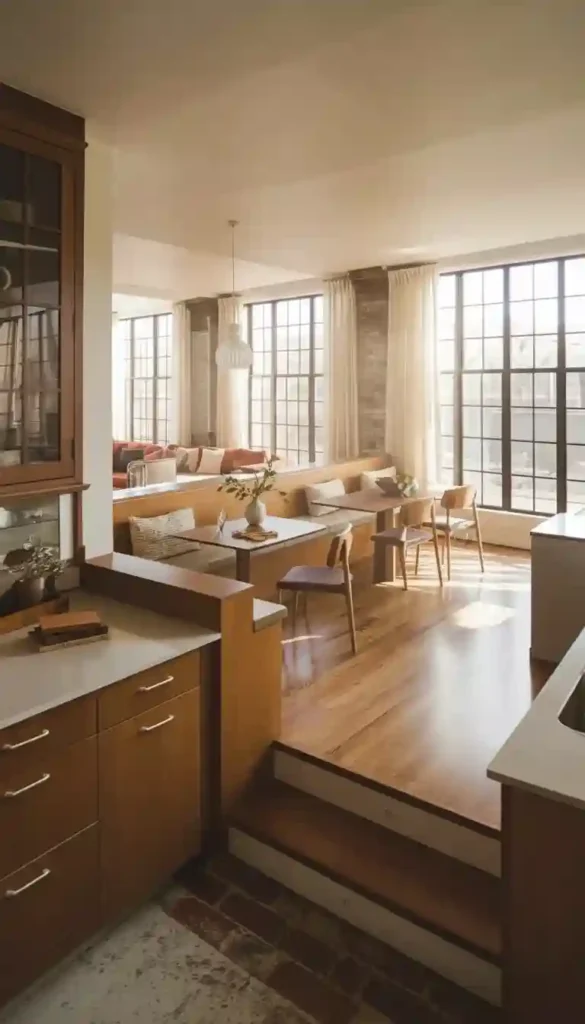
The principle that guides every successful 1970s remodel is this: respect the structure, update the surfaces, and let light do the heavy lifting. These homes were built to last. Your job is to help them live well in 2026.
Stylish and Functional Closed Concept Kitchen Remodel Designs
Not every kitchen should be open. For serious cooks, families with young children, and people who value a calm living room, a closed concept kitchen remodel delivers something open plans simply cannot: focus. When the kitchen has walls, it becomes a proper workspace rather than a performance stage.
Know When Closed Is the Right Call
The decision to go closed is not a compromise. It is a deliberate choice that reflects how you actually use your home.
- Condos and heritage houses benefit from odor control and acoustic separation
- Serious cooks and bakers prefer a workspace free from living room traffic
- A closed kitchen keeps mess hidden, making the adjacent living room permanently calm
- Floor-to-ceiling storage becomes possible when walls exist on all four sides
Design a High-Performance Closed Layout
A closed kitchen should work like a professional kitchen. Every inch should be accounted for and every movement should be efficient.
- A U-shaped configuration is the gold standard for workflow efficiency
- Separate prep runs and cleanup zones prevent cook-and-clean collisions
- Undercounter freezer drawers replace a standing freezer and save significant floor space
- A powerful 36-inch range with a high-capture hood handles serious cooking without compromise
📌 Pin this closed concept kitchen design guide! 📌
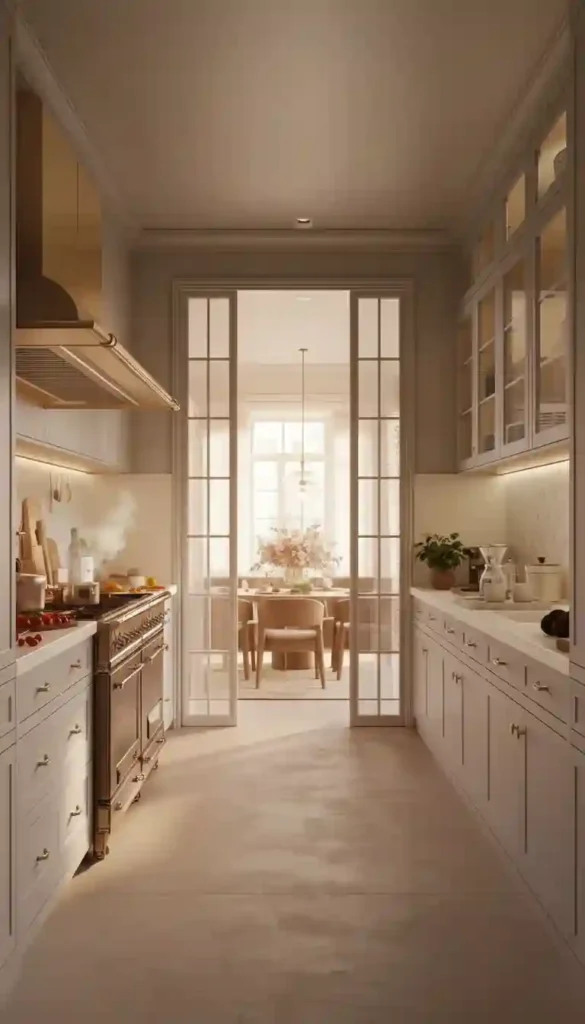
Add a Chef’s Table for Dual Purpose
One of the most underused ideas in a closed concept kitchen remodel is a small chef’s table or plating station along one wall.
- It doubles as a homework desk, a coffee station, or a plating area
- It creates a natural second zone within the kitchen without crowding the main prep run
- Keeps kids or helpers nearby without putting them in the hot zone
- A wall-mounted fold-down version works in tighter footprints
Maximize Every Inch of Storage
A closed kitchen has more wall space than an open one. Use it completely.
- Door-mounted spice racks use otherwise wasted vertical space
- Pull-out trays in lower cabinets eliminate the need to crouch and dig
- Vertical sheet pan storage keeps baking supplies organized and accessible
- Cabinetry to the ceiling eliminates the dust-collecting gap above upper cabinets
Layer Lighting for Both Work and Mood
Closed kitchens can feel dim and utilitarian if lighting is not planned carefully. Layer it deliberately.
- Under-cabinet LED strips provide focused task lighting at every prep surface
- A central ceiling fixture provides general ambient light
- A sconce above the sink adds warmth and reduces glare on dishes
- All three should be on separate switches for maximum control
Borrow Professional Kitchen Logic
Professional chefs have been designing closed kitchens for a century. Their principles translate directly to residential spaces.
- Maintain 24 inches of clear landing space on either side of the range for safe plating
- Keep at least 18 inches of counter space adjacent to the refrigerator for safe unloading
- Stage trash, recycling, and compost next to the prep zone to reduce unnecessary movement
- A small counter-depth pantry near the entry door speeds up morning routines dramatically
📌 Save this high-performance closed kitchen strategy! 📌
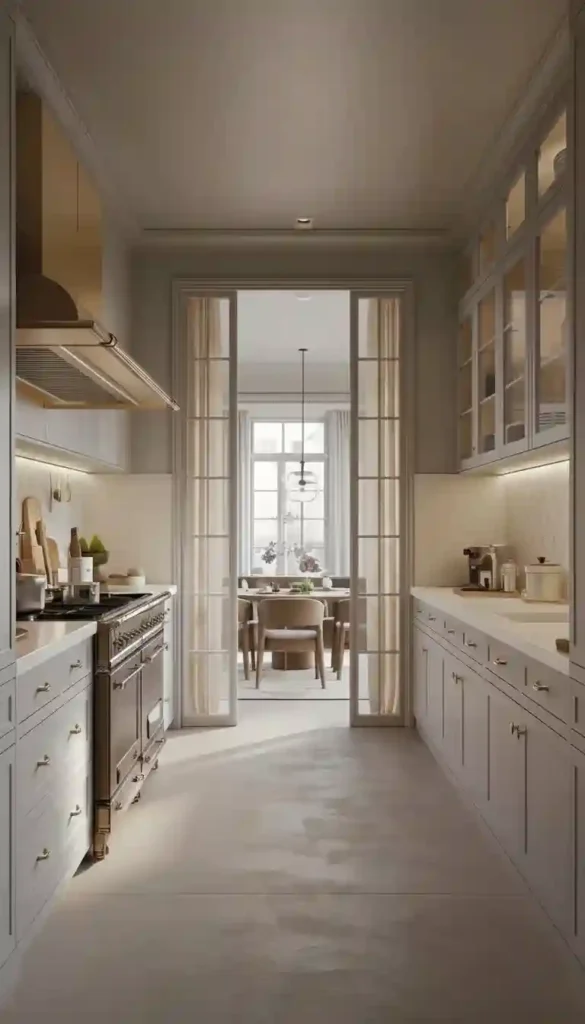
Connect Without Committing to Full Openness
You do not have to choose between a sealed box and full open concept. There is a productive middle ground.
- A glazed pocket door allows light to pass through while maintaining acoustic separation
- A pass-through with sliding panels creates connection to the dining room without full commitment
- Magnetic knife strips and shallow utensil rails keep counters clean and tools accessible
- An automatic make-up air solution keeps air balanced when the hood operates above code thresholds
The guiding principle of a closed concept kitchen is this: separation is not isolation. It is specialization. A kitchen designed to cook well produces better meals, better focus, and a calmer home.
Fresh Approaches to a Kitchen Remodel Open Concept Layout
An open concept kitchen remodel for 2026 is not about tearing down every wall and calling it done. It is about treating the combined space like a landscape with distinct zones that flow naturally into one another. The island is the social center. The perimeter handles the work. Everything else supports those two priorities.
Treat the Space Like a Hub and Spoke Plan
The most successful open layouts use the island as a hub and place function around it on the perimeter.
- Refrigerator, sink, and range line up on the perimeter to free the central lane for movement
- The island becomes the social anchor, not just a prep surface
- A second prep sink on the island enables a two-cook workflow in larger homes
- During entertaining, the island doubles as a buffet without disrupting the cooking zone
Right-Size the Island First
One of the most common mistakes in open concept kitchen remodels is installing an island that is too large for the space. Test before you commit.
- Tape out the island footprint on the floor before ordering anything
- Maintain 42 to 48 inches of clearance on all sides for comfortable traffic flow
- Not every home needs a large block; a 36-by-72-inch island works in most open plans
- A narrower island keeps the space feeling open rather than blocked
📌 Pin this open concept island planning guide! 📌
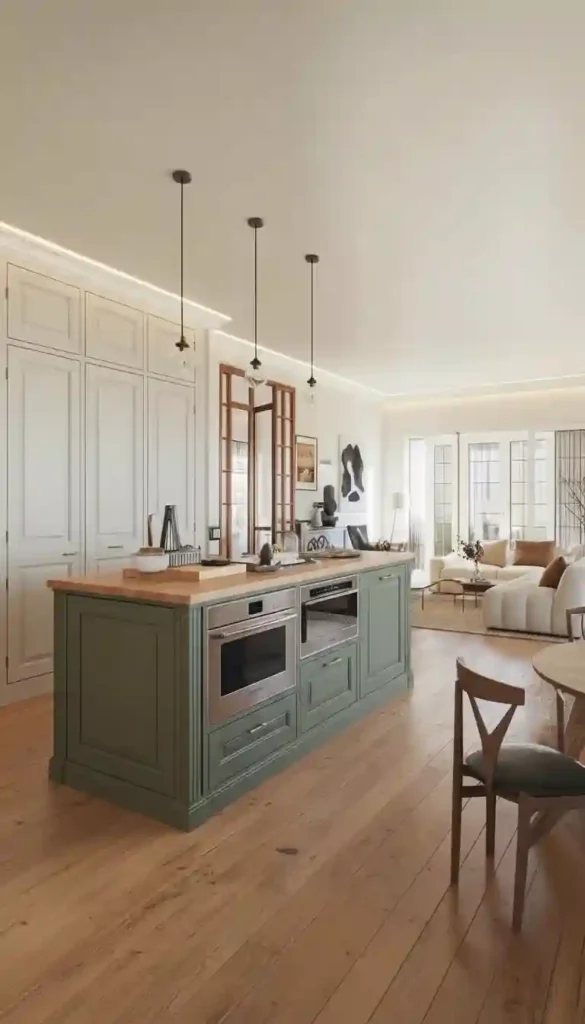
Choose Finishes That Visually Unify the Space
When the kitchen and living room share a room, their finishes need to speak to each other. Clashing materials create visual tension that makes both spaces feel smaller.
- Waterfall quartz on the island edge creates a clean, modern anchor
- Integrated pulls and paneled appliances reduce visual noise on the perimeter
- Wide-plank oak floors extending from kitchen to lounge tie both zones together
- Storage walls with concealed doors hide small appliances and maintain a calm composition
Design Lighting From Morning to Night
Open plans serve many moods across a single day. The lighting needs to shift with them.
- Three small pendants over the island on a dimmer create adjustable ambient warmth
- A flush-mount fixture over the dining table provides focused light for meals
- Recessed cans on a separate circuit handle general cooking illumination
- Smart dimmers allow single-touch transitions from prep mode to dinner party mode
Use Seating to Serve Multiple Moments
Open concept layouts need to serve both quick weekday breakfasts and formal weekend dinners. Seating should do both.
- Island stools handle casual mornings and kids’ homework hours
- A generous table nearby handles formal dinners and holiday gatherings
- This combination makes open concept kitchen dining room remodel layouts functional all day
- Choose stools with low backs to keep sightlines clear across the island
Protect Acoustics in Open Plans
Sound travels fast in open plans. A well-designed space accounts for this without resorting to ugly acoustic tiles.
- Soft fabrics on the sofa and area rugs absorb mid-range kitchen noise
- Acoustic panels designed to look like art on the shared wall reduce echo
- Soft-close hardware on every cabinet and drawer significantly lowers ambient noise
- Avoid hard surfaces on every wall; introduce upholstered elements to break up sound reflection
📌 Save this open concept kitchen remodel strategy for 2026! 📌
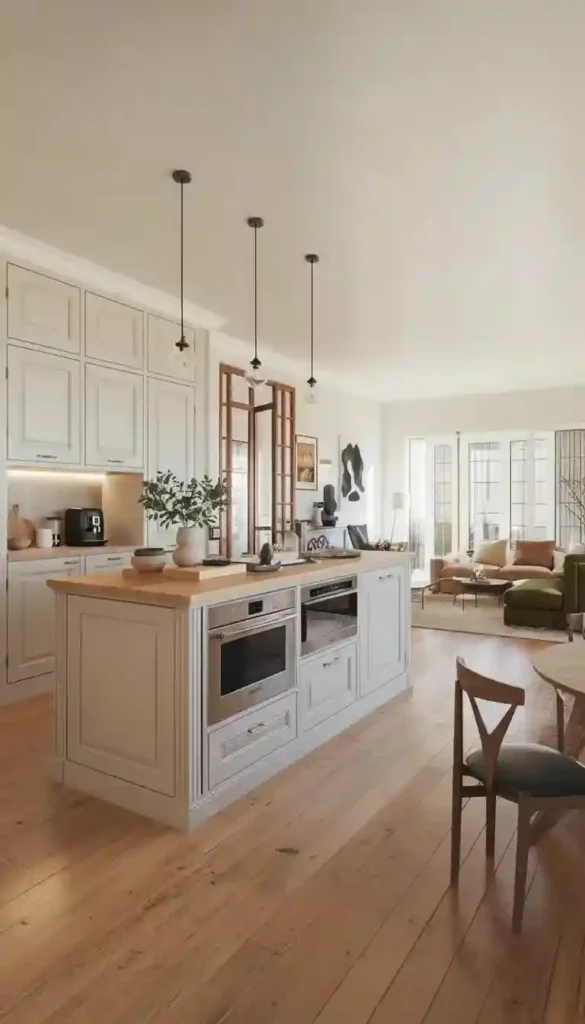
Add Finishing Details That Work Every Day
The best open layouts are the ones that work as hard on a Tuesday as they do on a Saturday.
- A shallow hutch near the dining area stores serveware and linens within arm’s reach during entertaining
- A charging drawer built into the island keeps devices off the counter permanently
- A framed opening with a display shelf subtly zones the rooms if a partial wall must remain
- Smart dimmers complete the system, allowing lighting scenes to change with the time of day
The fundamental rule of an open concept layout is this: right-size everything. An island that is too big, a sofa that is too deep, or lighting that is too bright will undermine the entire plan. When every element is proportionate, the room breathes.
Creative Kitchen Remodel Not Open Concept Solutions
There is a growing movement away from fully open kitchens, and it makes complete sense. A kitchen remodel that is not open concept can still feel airy, modern, and connected if you use the right tools. The goal is light and visual connection without the noise, smell, and sight-line problems that come with a fully open plan.
Use Interior Windows to Borrow Light
A solid wall does not have to mean a dark kitchen. Interior windows solve the light problem without sacrificing separation.
- Reeded or frosted glass panels transmit light while maintaining privacy
- Interior windows can be framed like art and become a design feature in their own right
- They allow cooking smells and noise to stay contained while daylight flows freely
- A fixed glass panel above a pass-through offers light plus practical communication between rooms
Design a Galley Layout for Maximum Efficiency
A closed kitchen with a galley layout is one of the most efficient workspaces in residential design. Every step is productive.
- Symmetrical runs on both sides create a natural workflow from fridge to prep to range to plating
- A narrow island on wheels can be added for extra prep and parked when not needed
- A counter-depth refrigerator keeps the galley lane clear and traffic moving
- Ceiling-height cabinetry with a stored step stool maximizes every square inch of vertical space
📌 Pin this closed kitchen efficiency guide! 📌
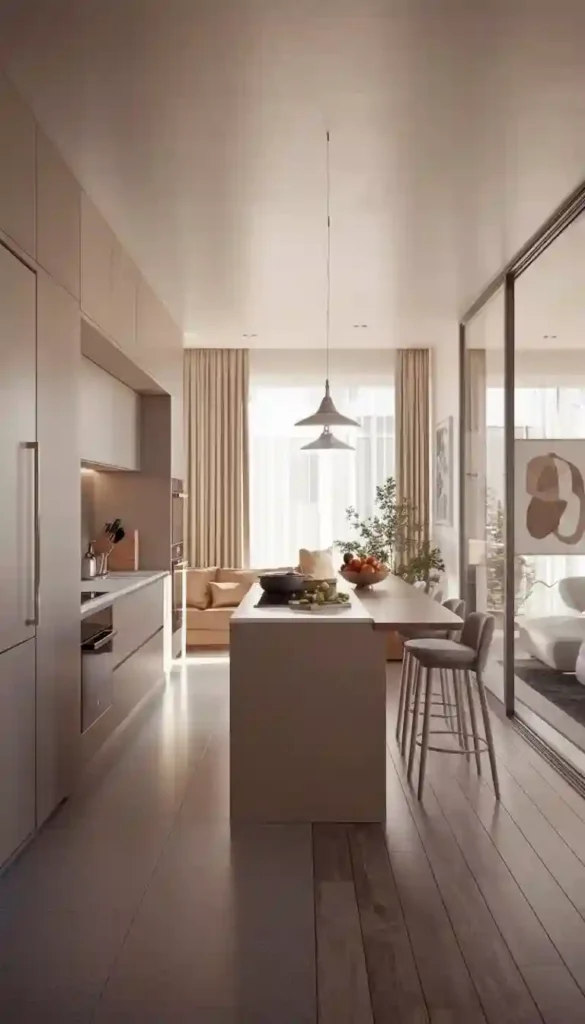
Build in a Breakfast Nook for Connection
One of the easiest ways to soften a not-open-concept kitchen is to add a breakfast nook adjacent to the cooking space.
- A built-in banquette just outside the kitchen door creates a transition zone between cooking and living
- Meals stay close to the source without pulling guests into the hot zone
- Built-in storage under the banquette handles linens, seasonal items, and overflow pantry goods
- A pendant above the nook creates visual warmth and draws people toward the cooking zone
Organize Tools to Keep Counters Clean
In a closed kitchen, clutter has nowhere to hide. Organization is not optional; it is structural.
- Magnetic knife strips mounted on the wall free up counter and drawer space simultaneously
- A wall-mounted rail system keeps frequently used utensils visible and within reach
- Pegboards with hooks handle irregular items like cutting boards, colanders, and pans
- A narrow pull-out pantry beside the refrigerator stores dry goods in vertical space that would otherwise be wasted
Choose Materials That Create Visual Continuity
Even with walls, a not-open-concept kitchen can feel connected to the rest of the home through material choices.
- Continuous flooring from kitchen through the adjacent hallway or dining room visually extends the space
- Matching trim profiles and paint colors on both sides of the kitchen wall create a sense of flow
- Consistent hardware finishes on kitchen and living room cabinetry tie the home together
- Matte paint finishes reduce glare and help small kitchens feel larger and calmer
📌 Save this not-open-concept kitchen solution guide! 📌
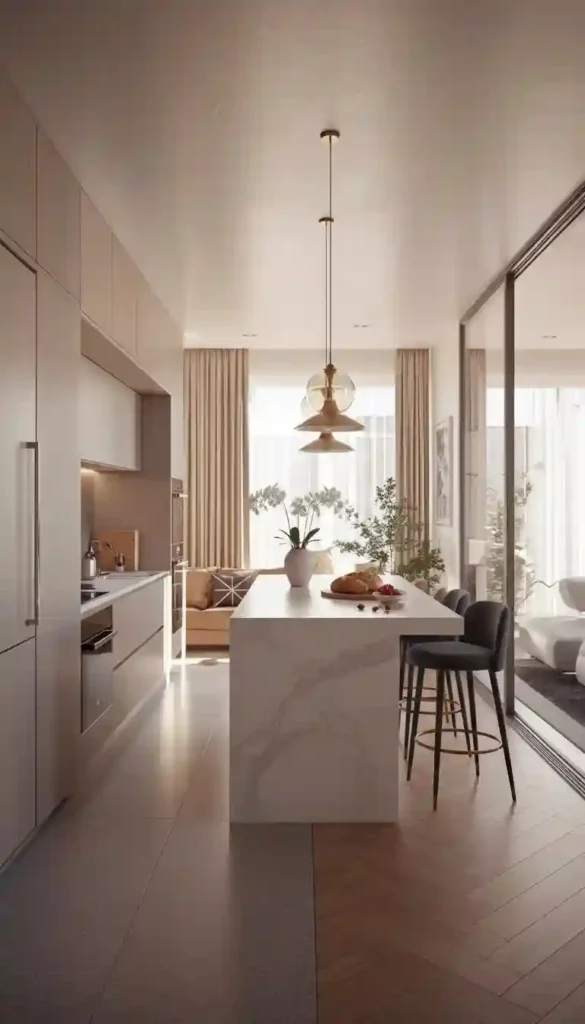
Add a Dedicated Coffee and Tea Station
One of the smartest moves in a closed kitchen is removing the morning rush from the main prep zone entirely.
- A dedicated coffee and tea station away from the range keeps mornings peaceful
- A built-in water filter at this station eliminates kettle-filling trips to the main sink
- Open shelving above the station displays mugs and creates a warm, welcoming moment
- Placing it near the kitchen entry means family members can grab coffee without entering the full kitchen
Solve Ventilation and Glare Properly
Two things that ruin closed kitchens are poor ventilation and harsh lighting. Both are solvable.
- A strong but quiet ventilation hood handles heavy cooking without dominating the sound environment
- Make-up air systems maintain air balance when the hood pulls above code thresholds
- Switching to matte finishes on countertops and cabinets eliminates glare under bright task lighting
- Layered lighting with dimmers on every circuit allows the kitchen to shift from work mode to calm mode
The governing principle of a not-open-concept kitchen is this: separation enables craft. When the kitchen has its own domain, the cook can focus, the mess stays contained, and the rest of the house remains a sanctuary. A closed kitchen is not a step backward. In 2026, it is a smart, confident design choice.
Conclusion
A kitchen remodel is one of the most personal investments you will make in your home. It touches every morning, every meal, and every gathering you host for years to come. Whether you open the walls completely, keep them in place, or find a creative middle path, the right layout is the one that matches how your family actually lives, not how a trend says you should.
Take the ideas from this guide and test them against your real life. Tape out island footprints. Paint color samples in different lights. Sit in your living room and think about whether you want to see your kitchen from the sofa. The best remodel is not the most dramatic one. It is the one you still love five years from now.

“I share simple, beautiful and affordable home decor ideas to help you style every corner of your home with ease.